Jan 27, 2026
Vitamin C and peptides can absolutely work together. The key lies in understanding the science behind their interaction, choosing the right forms of each ingredient, and following a strategic application approach that maximizes benefits while avoiding the pitfalls that make both ingredients less effective.
This guide will walk you through everything you need to know about using vitamin C and peptides in your skincare routine. You will learn which peptide types play nicely with vitamin C, which combinations require careful timing, and exactly how to structure your routine for optimal results. Whether you are using copper peptides like GHK-Cu, signal peptides like SNAP-8, or collagen-boosting peptides, you will find practical protocols that actually work. SeekPeptides has compiled research from clinical studies and real-world applications to give you the definitive answer on this much-debated topic.
Understanding how vitamin C works in skincare
Vitamin C, known scientifically as L-ascorbic acid in its pure form, stands as one of the most researched and validated skincare ingredients available. Its mechanisms of action extend far beyond simple antioxidant protection, touching on collagen synthesis, melanin regulation, and cellular defense systems that directly complement how peptides work at the molecular level.
The antioxidant function gets the most attention.
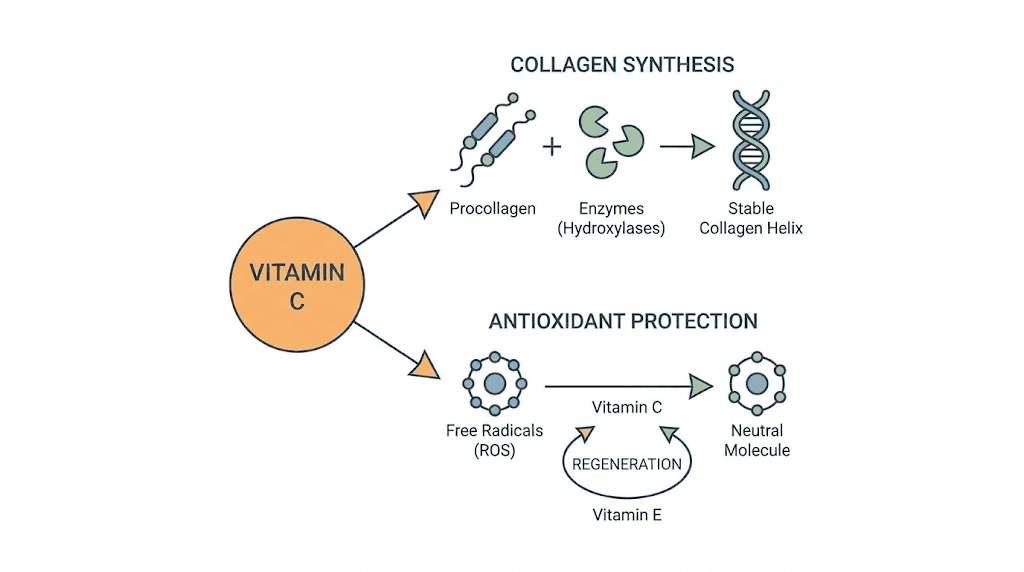
Free radicals from UV exposure, pollution, and normal metabolic processes damage skin cells constantly. Vitamin C neutralizes these reactive oxygen species before they can trigger the cascade of inflammation and collagen breakdown that accelerates aging. This protective effect explains why vitamin C serums have become morning routine staples, working alongside sunscreen to shield skin throughout the day.
But vitamin C does far more than defense. It serves as an essential cofactor in the hydroxylation of proline and lysine residues during collagen synthesis. Without adequate vitamin C, the collagen your body produces cannot form the proper triple helix structure that gives skin its firmness and resilience. This makes vitamin C not just protective but genuinely regenerative, a partner in the same rebuilding processes that tissue repair peptides stimulate.
The brightening effects come from vitamin C inhibiting tyrosinase, the enzyme responsible for melanin production. By interrupting this pathway, vitamin C helps fade existing hyperpigmentation while preventing new dark spots from forming. Those dealing with post-inflammatory hyperpigmentation from acne or scars often find vitamin C accelerates the fading process considerably.
The pH factor that changes everything
Here is where things get complicated for peptide users. Pure L-ascorbic acid requires an acidic environment to penetrate skin effectively. The ideal pH range falls between 2.5 and 3.5, well below the neutral 7.0. At higher pH levels, L-ascorbic acid becomes increasingly unstable and loses its ability to absorb into the stratum corneum.
This low pH creates the primary conflict with many peptides.
Peptides, being short chains of amino acids, are susceptible to hydrolysis in strongly acidic conditions. The bonds holding amino acids together can break apart, effectively destroying the peptide structure and rendering the ingredient useless. When you layer a pH 3.0 vitamin C serum directly onto a peptide treatment, you risk degrading the peptides before they can penetrate and signal your cells.
The good news? This applies specifically to pure L-ascorbic acid formulations. The skincare industry has developed numerous vitamin C derivatives that remain stable at skin-friendly pH levels, work effectively without the same peptide-destroying acid load, and still deliver vitamin C benefits once absorbed into skin cells.
Forms of vitamin C and their peptide compatibility
Understanding the different vitamin C forms allows you to make strategic choices about peptide stacking and timing. Each form has distinct properties that affect how well it plays with your peptide routine.
L-Ascorbic Acid (LAA) remains the gold standard for potency. Research consistently shows it delivers the strongest antioxidant protection and collagen synthesis support. However, its low pH requirement (2.5-3.5) makes it the most problematic for direct peptide layering. If you are using LAA, separation by time of day becomes essential.
Ascorbyl Glucoside offers a gentler alternative. This water-soluble derivative combines vitamin C with glucose, creating a stable compound that works at neutral pH levels close to your skin natural pH of 5.5. The stability means you can safely layer it with most peptides, though you sacrifice some potency compared to LAA. Clinical studies suggest dividing ascorbyl glucoside concentration by two to estimate equivalent L-ascorbic acid effects.
Tetrahexyldecyl Ascorbate (THD) provides an oil-soluble option. Its lipid nature allows it to penetrate deeper into skin layers where peptides are working, and its stability at neutral pH eliminates the acid conflict entirely. Copper peptide users in particular find THD ascorbate an excellent partner that does not trigger the oxidation reaction pure vitamin C causes.
Sodium Ascorbyl Phosphate (SAP) and Magnesium Ascorbyl Phosphate (MAP) represent phosphate-stabilized forms that convert to active vitamin C after absorption. Their higher pH stability makes them peptide-compatible, with the added benefit of some research showing antimicrobial properties helpful for acne-prone skin using peptide treatments.
How peptides work and why pH matters
Peptides function as molecular messengers in your skin. These short chains of amino acids, typically between 2 and 50 amino acids long, communicate specific signals to cells that trigger targeted biological responses. The diversity of peptide functions in skincare is remarkable, spanning everything from wrinkle reduction to skin firming to dark circle improvement.
The signaling process works through receptors on cell surfaces. When a peptide locks into its matching receptor, it triggers an intracellular cascade that might increase collagen production, reduce muscle tension, stimulate growth factors, or modulate inflammatory responses. Each peptide has its own receptor affinity and resulting effect.
But here is the critical point. This signaling only works if the peptide structure remains intact.
When peptide bonds break through hydrolysis, deamination, or oxidation, you are left with individual amino acids rather than a functional peptide. Your skin cannot distinguish between a carefully designed signal peptide and random amino acid soup. The sophisticated messaging system fails entirely.
Different peptide categories and their vitamin C tolerance
Not all peptides respond identically to acidic conditions. Understanding the categories helps you make smarter formulation and layering decisions.
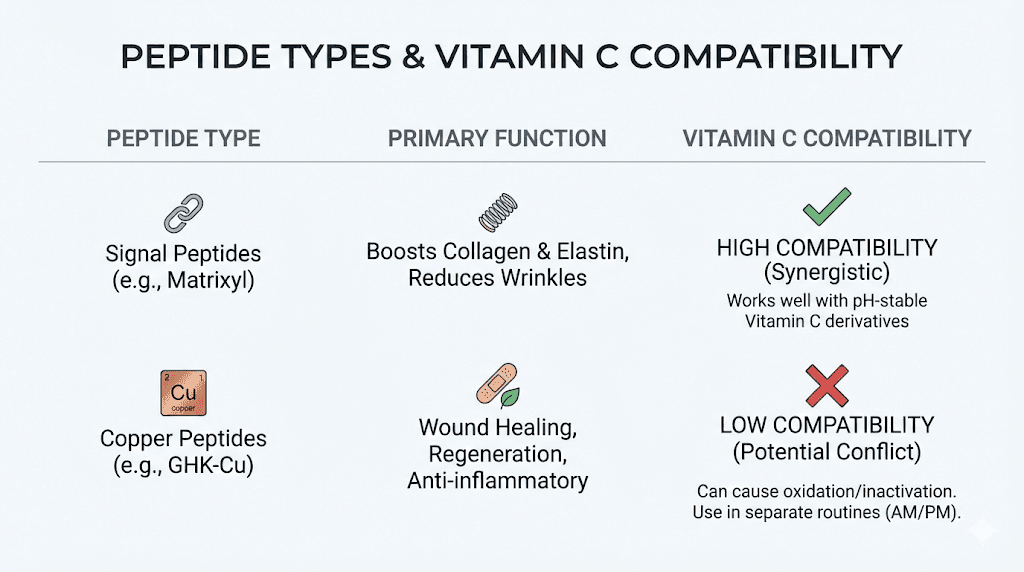
Signal Peptides like Matrixyl (palmitoyl pentapeptide-4) and Argireline (acetyl hexapeptide-3) tell skin cells to produce more collagen, elastin, or other structural proteins. These peptides work at concentrations where pH disruption can meaningfully reduce efficacy. The SYN-AKE peptide that mimics snake venom to relax expression lines falls into this category. Signal peptides benefit most from separation from low-pH vitamin C.
Carrier Peptides bind to trace elements like copper and deliver them into skin cells. GHK-Cu represents the most researched carrier peptide, transporting copper ions that catalyze healing and collagen-building processes. Carrier peptides face a unique challenge with vitamin C. The copper ions can oxidize ascorbic acid while the acid destabilizes the peptide-copper bond. This creates a situation where both ingredients become less effective.
Enzyme Inhibitor Peptides block enzymes that break down collagen or other skin structures. These peptides often show more resilience to pH variation, though prolonged exposure to strong acids can still compromise their function.
Neurotransmitter Peptides reduce muscle contractions that create expression lines. Argireline belongs to this category, working similarly to botulinum toxin but with topical delivery. The peptides vs Botox comparison often comes down to whether users want injectable or topical approaches. Neurotransmitter peptides prefer stable pH environments for optimal penetration and function.
The copper peptide and vitamin C conflict explained
The most documented interaction between vitamin C and peptides involves copper peptides specifically. Understanding this reaction in detail illuminates why caution matters and how to work around it.
GHK-Cu consists of a tripeptide, glycyl-L-histidyl-L-lysine, bound to a copper ion. This copper is not decoration. It is essential for the peptide biological activity. The copper catalyzes wound healing, stimulates collagen production, promotes blood vessel formation, and triggers anti-inflammatory responses. Without copper properly bonded to the peptide, you lose these benefits entirely.
When ascorbic acid contacts copper, a reduction reaction occurs. The copper oxidizes the vitamin C, neutralizing its antioxidant capacity. Simultaneously, the reaction destabilizes the copper-peptide bond, potentially releasing free copper ions that can actually promote oxidative damage rather than healing.
The result? Both ingredients become less effective, and you may introduce new problems.
This is not a theoretical concern. Cosmetic chemists formulating products routinely separate copper peptide and vitamin C ingredients because stability testing shows degradation when combined. Copper peptide serum formulations almost never include vitamin C precisely because of this interaction.
Practical strategies for copper peptide users
If you want both GHK-Cu benefits and vitamin C benefits, timing becomes your primary tool. The simplest approach splits your routine by time of day.
Morning routine: Apply vitamin C serum after cleansing and before sunscreen. This gives you antioxidant protection during daytime UV exposure while leaving no active vitamin C on your skin by evening.
Evening routine: Apply copper peptide products after cleansing, allowing overnight to work without vitamin C interference. The best time to apply copper peptides aligns naturally with nighttime skin repair cycles.
Another option involves using vitamin C derivatives with higher pH stability. THD ascorbate in particular shows minimal reactivity with copper ions compared to L-ascorbic acid. Some users successfully layer THD-based vitamin C with copper peptides without significant degradation, though separating by 20-30 minutes remains wise.
For those using injectable GHK-Cu rather than topical, the concern largely disappears. Systemic administration does not create the same direct contact with topical vitamin C. Your serum still provides facial benefits while injected peptides work throughout the body.
Signal peptides and vitamin C: a more compatible pairing
The good news for those intimidated by the copper peptide situation is that most non-copper peptides coexist far more peacefully with vitamin C. Natural peptides and synthetic signal peptides that do not contain metal ions face primarily pH-related challenges rather than chemical reactivity.
Matrixyl 3000, one of the most popular anti-aging peptides, contains palmitoyl tripeptide-1 and palmitoyl tetrapeptide-7. These peptides stimulate collagen and hyaluronic acid production without any metal component. The primary concern with vitamin C layering relates to the pH environment rather than direct chemical interaction.
Studies testing peptide plus vitamin C formulations show positive results when pH is managed properly. A 2021 study published in the International Journal of Cosmetic Science evaluated a formulation containing biopeptides from rice and lupin combined with 10% natural vitamin C. After 28 days of twice-daily application, subjects showed 9% reduction in crow feet wrinkles, 11% reduction in forehead wrinkles, and 5% reduction in nasolabial folds.
This suggests the pairing can work synergistically when formulated correctly.
How vitamin C enhances peptide results
Beyond simple compatibility, vitamin C and peptides may actually amplify each other effects through complementary mechanisms. Understanding this synergy explains why combining them, done properly, often outperforms using either alone.
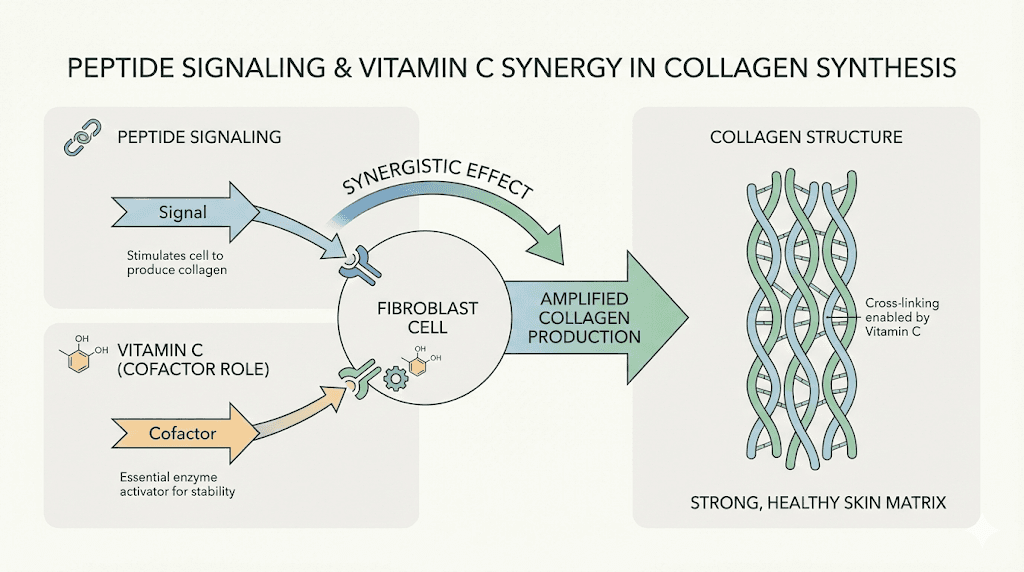
Peptides signal your cells to produce more collagen. Vitamin C provides the essential cofactor needed for that collagen to form correctly. Without vitamin C present, even strong peptide signaling results in malformed, weak collagen that provides less structural benefit. The two ingredients address different steps in the same process.
The antioxidant protection vitamin C provides also preserves peptide efficacy. Oxidative stress damages peptides just as it damages collagen and other proteins. By neutralizing free radicals before they can attack peptide molecules, vitamin C extends the functional window for peptides to work.
Longevity-focused peptide protocols often recommend vitamin C supplementation for exactly this reason. Whether using peptides topically or systemically, having adequate antioxidant status improves outcomes.
Building your vitamin C and peptide routine
Theory matters, but you need practical protocols you can actually follow. This section provides specific routine frameworks for different combinations and goals, building on the copper peptides skincare routine principles and expanding to cover all major peptide categories.
Protocol 1: L-ascorbic acid with non-copper peptides
Goal: Maximum vitamin C potency plus peptide anti-aging benefits
Morning:
Cleanse
Apply L-ascorbic acid serum (10-20%)
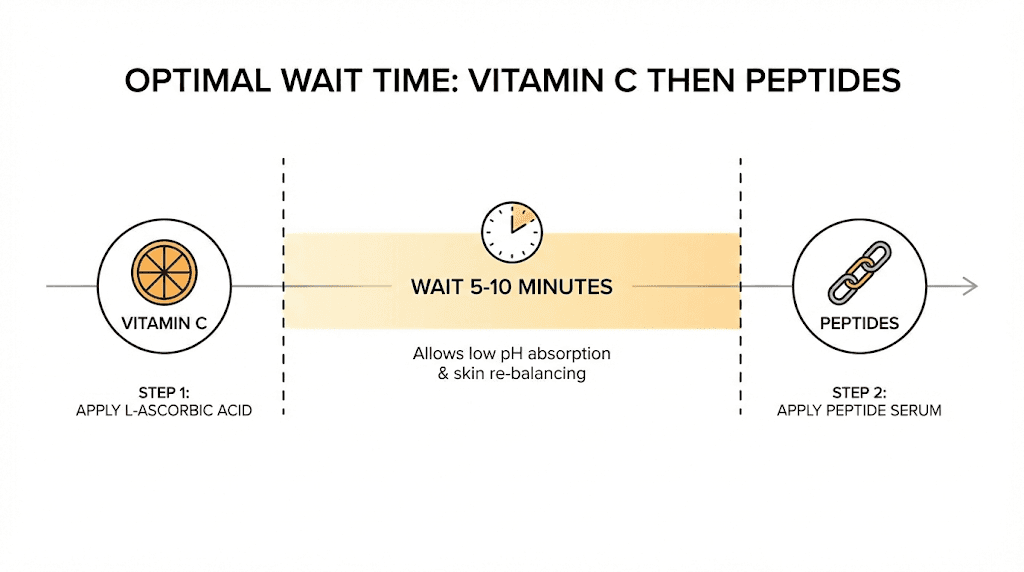
Wait 15 minutes for absorption and pH normalization
Apply peptide serum (Matrixyl, Argireline, or other non-copper formula)
Moisturize
Sunscreen
Evening:
Cleanse
Apply peptide serum
Allow 5-10 minutes
Apply any additional treatments
Moisturize
Notes: The 15-minute wait allows your skin pH to begin returning toward its natural 5.5 after the low-pH vitamin C absorbs. This creates a more hospitable environment for the peptide layer. Some common mistakes with peptides include rushing this wait time or applying too much product.
Protocol 2: Vitamin C derivative with copper peptides
Goal: Use both ingredients while minimizing interaction
Morning:
Cleanse
Apply THD ascorbate or ascorbyl glucoside serum
Moisturize
Sunscreen
Evening:
Cleanse
Apply copper peptide cream or serum
Allow full absorption
Light moisturizer if needed
Notes: By using a pH-stable vitamin C derivative in the morning and copper peptides only at night, you eliminate direct contact while capturing benefits of both. The storage requirements for copper peptides also favor evening application since refrigerated products work best when not competing with sunscreen application timing.
Protocol 3: Alternating days for sensitive skin
Goal: Avoid layering conflicts entirely while building tolerance
Day 1 (Vitamin C Day):
AM: Cleanse, vitamin C serum, moisturize, sunscreen
PM: Cleanse, hyaluronic acid, moisturize
Day 2 (Peptide Day):
AM: Cleanse, light serum, moisturize, sunscreen
PM: Cleanse, peptide treatment, moisturize
Notes: This approach works well for those new to active ingredients or with reactive skin that struggles with multiple actives. It also ensures each ingredient gets dedicated absorption time without any competition or interaction concerns.
Protocol 4: Comprehensive anti-aging stack
Goal: Maximum results using multiple peptide types plus vitamin C
Morning:
Cleanse
Vitamin C serum (LAA or derivative depending on sensitivity)
Wait 10-15 minutes
Signal peptide serum (Matrixyl, DNF-10, or similar)
Moisturizer with collagen peptides
Sunscreen
Evening:
Cleanse
Retinol (3 nights per week) OR copper peptide serum (other nights)
Eye cream with peptides for dark circles
Moisturize
Notes: This protocol maximizes active ingredients while respecting the peptides and retinol compatibility rules. Copper peptides and retinol alternate nights because their combination can also cause irritation for some users.
Research on vitamin C and peptide combinations
Clinical evidence supports the combined use of vitamin C and peptides when formulated appropriately. Understanding what research actually shows helps separate marketing claims from validated benefits.
The most comprehensive study comes from a 2021 three-part clinical trial evaluating a formula containing 10% natural vitamin C, rice biopeptides, lupin peptides, and hyaluronic acid. Researchers tested the formula across three separate studies with different endpoints.
Study one examined fibroblast behavior in vitro, finding the peptide-vitamin C combination increased collagen synthesis markers significantly compared to controls. Study two evaluated 47 subjects over 28 days, documenting measurable wrinkle reduction across multiple facial areas. Study three focused on skin radiance and texture, with 65% of subjects reporting visible improvement in fine lines.
A larger observational study published in 2022 followed 1,382 women across nine countries using a peptide-vitamin C ampoule formula. After 30 days, 63% showed improvement in forehead wrinkles and 64% showed improvement in crow feet. The study included subjects aged 30 and above with various skin phototypes.
Mouse model studies provide mechanistic insights. Research on superoxide dismutase 1 deficient mice, which age rapidly due to oxidative stress, showed combined collagen peptide and vitamin C treatment attenuated skin atrophy better than either ingredient alone. The combination addressed both the structural deficit (peptides) and the oxidative cause (vitamin C) simultaneously.
What research tells us about pH management
Formulation studies consistently emphasize pH as the critical variable. Peptides undergo degradation processes including deamination and oxidation at pH levels below 4.5. L-ascorbic acid requires pH below 3.5 for optimal stability and penetration. This creates an inherent tension that formulators must address.
Successful commercial products containing both ingredients typically use one of three strategies. First, vitamin C derivatives with higher pH stability eliminate the conflict entirely. Second, encapsulation technologies protect peptides from the acidic environment until absorption. Third, phase-separated formulas keep ingredients isolated until application, relying on skin pH buffering to manage the interaction.
For home layering, the wait time approach mimics these formulation strategies. Your skin natural buffering capacity returns pH toward 5.5 after acidic product absorption, creating a safer environment for subsequent peptide application.
Specific peptide and vitamin C pairings
Not all peptides deserve equal caution around vitamin C. This section examines specific popular peptides and their individual compatibility profiles, helping you make ingredient-level decisions rather than broad category generalizations.
Matrixyl and vitamin C
Matrixyl (palmitoyl pentapeptide-4) represents one of the safest peptides to combine with vitamin C. The peptide contains no metal ions and shows reasonable stability across pH ranges encountered in layered skincare routines. Research demonstrates that Matrixyl nearly doubles collagen production in fibroblast cultures, and this effect can theoretically combine with vitamin C collagen cofactor role for enhanced results.
The palmitoyl group attached to Matrixyl provides lipid solubility that aids penetration. This oil-soluble character also provides some protection against immediate pH disruption, as the peptide tends to sink into lipid-rich skin layers rather than sitting in the acidic water phase.
Verdict: Compatible with both pure LAA and vitamin C derivatives. A brief wait time of 5-10 minutes between layers is sufficient.
Argireline and vitamin C
Argireline (acetyl hexapeptide-3) relaxes facial muscles to reduce expression lines, earning its nickname as topical Botox. The peptide mechanism involves inhibiting SNARE complex formation, preventing the neurotransmitter release that triggers muscle contraction.
Studies on Argireline stability show sensitivity to extreme pH environments. While the peptide functions at a wide range, prolonged exposure to pH below 4.0 reduces efficacy over time. For daily routines, this means avoiding direct mixing with high-concentration LAA serums.
The Ordinary, a brand known for science-focused formulations, explicitly advises against combining their direct acids with peptide products. Their Argireline solution carries recommendations to use vitamin C derivatives rather than pure ascorbic acid on the same routine days.
Verdict: Use vitamin C derivatives, or separate LAA by 15-20 minutes minimum. Alternating AM/PM is safest for those using high-concentration LAA.
GHK-Cu and vitamin C
As discussed, GHK-Cu presents the most significant interaction concern. The copper-ascorbic acid reaction is not merely about pH but involves direct electron transfer that degrades both ingredients.
For topical use, strict separation remains the recommendation. Morning vitamin C and evening copper peptides ensures no product contact. Even stable vitamin C derivatives should not be applied directly before or after copper peptide products.
The reports of GHK-Cu making skin worse sometimes trace back to inappropriate vitamin C combination causing irritation or oxidative stress from degraded copper. Following proper separation protocols prevents this issue.
Verdict: Strict AM/PM separation required. No layering regardless of vitamin C form.
Collagen peptides and vitamin C
Oral and topical collagen peptides come from hydrolyzed collagen protein, broken into small chains that skin can recognize and utilize as building signals. These peptides differ fundamentally from the synthesized signal peptides discussed above.
Collagen peptides actually benefit from vitamin C presence. The same reason vitamin C helps natural collagen formation, acting as hydroxylation cofactor, applies to peptide-stimulated collagen production. Taking collagen peptide supplements alongside vitamin C supplementation may enhance results.
Topically, collagen peptide moisturizers layer well over vitamin C serums. The peptides are essentially protein fragments that benefit from the antioxidant environment vitamin C creates.
Verdict: Highly compatible. Vitamin C enhances collagen peptide benefits through complementary mechanisms.
Injectable peptides and vitamin C considerations
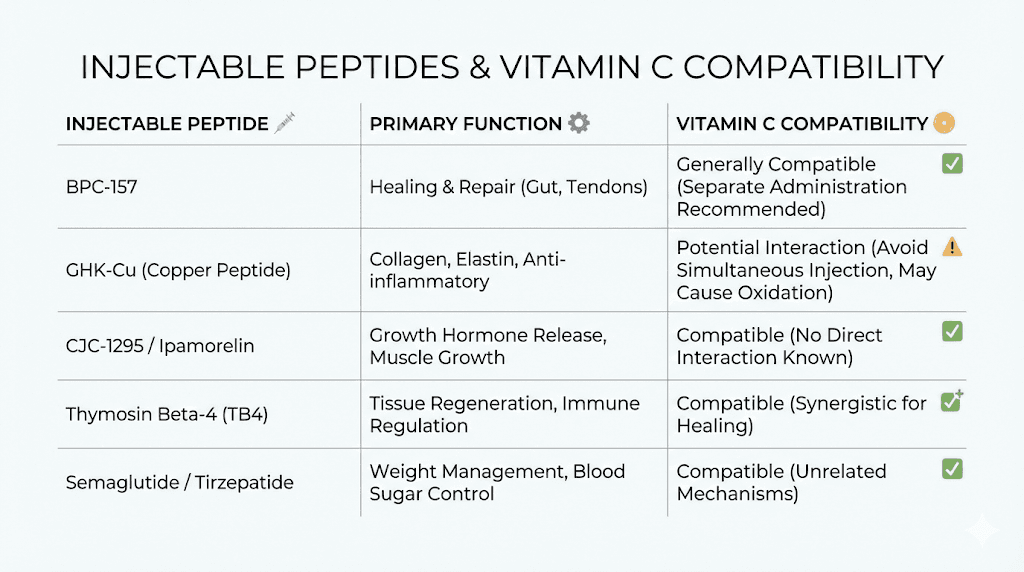
The discussion so far has focused primarily on topical skincare, but many SeekPeptides readers use injectable peptides for therapeutic purposes beyond cosmetic improvement. The vitamin C interaction profile changes significantly for systemic peptide use.
When peptides are injected subcutaneously, they enter the bloodstream and distribute throughout the body. Topical vitamin C serum on your face does not meaningfully interact with peptides circulating systemically. The separation of compartments prevents the direct contact that causes problems.
Oral vitamin C supplementation is actually recommended alongside many injectable peptide protocols. BPC-157 users often take vitamin C to support the healing processes the peptide stimulates. TB-500 protocols similarly benefit from antioxidant support during tissue repair.
The exception involves injectable copper peptides, which can still interact with high-dose IV vitamin C therapy. This specialized medical treatment is rare enough that most users need not worry, but anyone receiving both should discuss timing with their healthcare provider.
BPC-157 and vitamin C
The popular healing peptide BPC-157 shows no concerning interactions with vitamin C. The peptide mechanism involves promoting nitric oxide synthesis, angiogenesis, and growth factor expression, none of which conflict with vitamin C biochemistry.
Many BPC-157 dosing protocols recommend concurrent vitamin C supplementation. The antioxidant support helps manage inflammation during healing while vitamin C collagen cofactor role aids tissue rebuilding.
Topical skincare with vitamin C can continue normally while using injectable BPC-157. The peptide works systemically while your serum works locally without interference.
GH-releasing peptides and vitamin C
Growth hormone releasing peptides like Ipamorelin and CJC-1295 similarly show no vitamin C interactions. These peptides act on the pituitary gland to stimulate natural GH release, a process entirely separate from the antioxidant pathways vitamin C influences.
The growth hormone increase these peptides provide actually complements vitamin C effects on skin. GH promotes collagen synthesis and skin elasticity, while vitamin C ensures that synthesis produces properly structured collagen. Users often report enhanced before and after results when combining GH peptides with comprehensive skincare including vitamin C.
Troubleshooting vitamin C and peptide combinations
Even with proper protocols, you may encounter challenges when using both ingredients. This section addresses common problems and their solutions, helping you optimize your routine for the best possible outcomes.
Signs of ingredient conflict
Ingredient interactions do not always announce themselves dramatically. Subtle signs might include your products seeming less effective than expected, a slight orange tinge developing on skin (oxidized vitamin C), or increased skin sensitivity without other cause.
If your copper peptide treatment suddenly causes irritation when it did not before, check whether you have changed your vitamin C product recently. A new serum with different pH could be creating interactions where none existed previously.
Pilling, where products ball up on the skin during application, often indicates incompatibility between formulation bases rather than active ingredient conflict. This is annoying but not usually damaging. Try applying products when skin is slightly damp, or adjust wait times between layers.
What to do if you suspect degradation
Vitamin C turning brown or orange indicates oxidation. This degraded vitamin C provides minimal benefits and may even contribute to skin irritation. If your vitamin C serum changes color, it is time for a fresh bottle regardless of any peptide interactions.
Peptide degradation is harder to observe directly. The primary sign is simply that results plateau or decline despite consistent use. If your anti-wrinkle peptide stops working, consider whether your routine might be compromising its stability.
The peptide storage requirements matter here too. Heat, light, and time degrade peptides independent of any vitamin C issues. Proper storage extends the window where your products remain effective.
Adjusting for sensitive skin
Some skin types react strongly to the low pH of L-ascorbic acid, particularly when combined with other active ingredients. If you experience stinging, redness, or prolonged sensitivity, consider these adjustments.
First, try reducing vitamin C concentration. Move from a 20% LAA serum to a 10% version, or switch to a vitamin C derivative that works at higher pH. Your skin may tolerate lower concentrations perfectly well while still delivering benefits.
Second, extend wait times between products. Instead of 10-15 minutes, try 20-30 minutes between vitamin C and peptide application. Some people even apply vitamin C, wait an hour while doing other morning activities, then apply remaining products.
Third, consider the alternating day protocol. Using vitamin C one day and peptides the next eliminates any layering conflict entirely while still providing both benefits over time.
The role of other skincare ingredients
Vitamin C and peptides do not exist in isolation. Your complete routine likely includes additional actives that influence how these two ingredients work together. Understanding the broader formulation context helps optimize your overall approach.
Niacinamide with vitamin C and peptides
Niacinamide (vitamin B3) pairs excellently with most peptides and works well alongside vitamin C despite old advice suggesting otherwise. Modern research shows the supposed niacinamide-vitamin C conflict was based on conditions not relevant to skincare formulations.
The ingredient trio of vitamin C, niacinamide, and peptides appears in many high-performance serums. Niacinamide strengthens skin barrier, reduces inflammation, and helps regulate sebum, all while supporting the collagen-building work of peptides and vitamin C.
For routine building, niacinamide can layer with either vitamin C or peptides without concern. It works at a neutral pH that does not disrupt either ingredient.
Retinol with vitamin C and peptides
Retinol and peptides represent another commonly discussed combination. Retinol increases cell turnover and collagen production through vitamin A receptor pathways, mechanisms distinct from but complementary to peptide signaling.
The challenge with adding vitamin C involves cumulative irritation potential. Retinol, low-pH vitamin C, and some peptides can each cause sensitivity. Layering all three risks overwhelming skin tolerance, particularly for those new to actives.
A sensible approach separates retinol to evening use (a few nights per week), vitamin C to morning use, and peptides distributed between both routines based on the specific types you are using.
AHAs, BHAs, and peptide-vitamin C routines
Alpha and beta hydroxy acids create even lower pH environments than vitamin C, potentially reaching pH 2.0 or below. These exfoliating acids should never layer directly with peptides due to the hydrolysis risk.
If your routine includes glycolic, lactic, or salicylic acid treatments, use them on separate days or at minimum separate times of day from peptide applications. The standard approach applies acids in the evening (on non-retinol nights) and keeps peptides for morning application or alternating evenings.
Vitamin C can tolerate acid layering better than peptides since it also prefers acidic conditions. Some users apply vitamin C after acid toner, before other treatments. However, this combination increases irritation potential for sensitive skin.
Product recommendations for vitamin C and peptide users
Choosing the right products makes following protocols easier. Look for specific characteristics when shopping for vitamin C and peptide products intended for combined use.
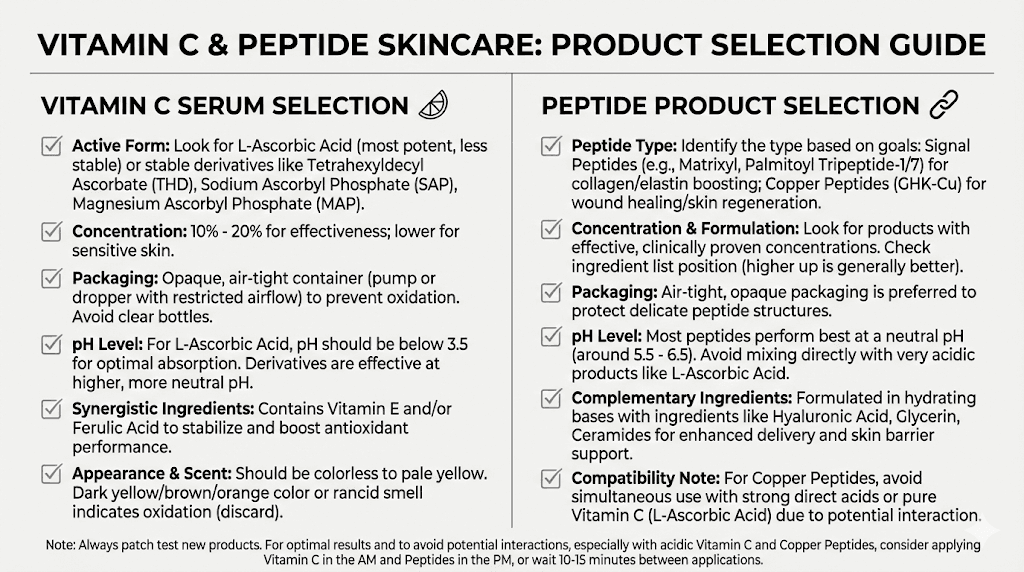
Ideal vitamin C products for peptide routines
If you are using copper peptides, prioritize vitamin C derivatives over pure LAA. Look for ingredient names like ascorbyl glucoside, tetrahexyldecyl ascorbate, sodium ascorbyl phosphate, or magnesium ascorbyl phosphate. These forms provide vitamin C benefits without the aggressive pH and copper reactivity concerns.
For non-copper peptide users, you have more flexibility. Pure LAA serums work fine with appropriate wait times. However, derivatives offer convenience without the timing constraints.
Concentration matters too. Higher is not always better, especially when combining with other actives. A 10-15% vitamin C product often delivers comparable results to 20% formulas with less irritation potential.
Ideal peptide products for vitamin C routines
When shopping for peptides to use alongside vitamin C, check formulation pH if possible. Products designed for layering often state their pH range. Look for formulas in the 5.0-6.5 range for best compatibility with post-vitamin C application.
Multi-peptide products that combine several peptide types often layer better than single-peptide treatments. The formulator has already considered internal compatibility, and the blended approach reduces layering steps in your routine.
The Depology peptide serum, PCA peptide serum, and Geek and Gorgeous peptide offerings represent products designed with layering in mind, though always check current formulations as brands update their products.
Long-term strategy for maximum results
Beyond daily layering protocols, thinking strategically about your vitamin C and peptide use over weeks and months optimizes outcomes. Both ingredients work through mechanisms that build over time, requiring consistent use rather than sporadic application.
Building tolerance progressively
Start with lower concentrations and simpler routines, then build complexity as your skin adapts. Week one might involve vitamin C every other morning. Week three adds daily vitamin C. Week five introduces a single peptide product. Week eight layers multiple peptides.
This progressive approach prevents the overwhelming sensitivity that makes some people abandon effective ingredients. Your skin barrier strengthens with gradual exposure, eventually tolerating combinations that would have caused irritation initially.
Cycling for sustained results
Some practitioners recommend cycling peptides to prevent receptor desensitization. The theory suggests that constant exposure to the same peptide signal might reduce cell responsiveness over time.
One approach alternates peptide types by month or season. A collagen-focused peptide phase might run three months, followed by a smoothing peptide phase, then a brightening peptide phase. Vitamin C continues throughout as the antioxidant foundation.
The peptide cycle planning guide provides detailed protocols for those interested in structured cycling approaches.
Monitoring and adjusting
Track your results with periodic photos in consistent lighting. The gradual improvements peptides and vitamin C provide are easy to miss day-to-day but visible over months.
If results plateau, consider whether you have optimized timing and layering, whether product quality has declined (oxidized vitamin C or degraded peptides), or whether your skin might benefit from adjusting concentrations or switching peptide types.
SeekPeptides members often track progress through structured logs that document product use, timing, and observed changes. This data helps identify which combinations deliver the best personal results.
Oral vitamin C and peptide supplementation
Beyond topical use, both vitamin C and peptides can be supplemented orally. The systemic approach complements topical skincare by supporting skin health from within.
Why oral vitamin C matters for peptide users
Your body cannot synthesize vitamin C, making dietary intake essential. Skin contains high concentrations of vitamin C relative to other organs, but this vitamin C depletes rapidly during UV exposure and does not readily replenish from topical application alone.
Oral vitamin C supplementation ensures systemic levels remain optimal to support collagen synthesis throughout your body, not just where topical products reach. This matters especially for those using peptides for hair or peptides for joints where topical vitamin C cannot reach.
Standard recommendations suggest 500-1000mg daily for general antioxidant support. Those using injectable healing peptides might benefit from higher doses during active protocols, though this should be discussed with a healthcare provider.
Collagen peptide supplements
Oral collagen peptides represent the intersection of peptide and skincare supplementation. These hydrolyzed collagen proteins, typically sourced from bovine, marine, or porcine collagen, provide amino acid building blocks that skin can use for collagen synthesis.
Studies show oral collagen peptides can improve skin hydration, elasticity, and wrinkle depth when taken consistently over 8-12 weeks. The effect appears to involve both providing raw materials and signaling increased collagen production.
Combining oral collagen peptides with oral vitamin C creates an internal version of the topical synergy, providing both the signal and the cofactor for collagen building. Bone broth versus collagen peptides debates often center on convenience and concentration, with both providing collagen-supporting nutrition.
Special considerations for different skin types
Your individual skin characteristics influence how to optimize vitamin C and peptide combinations. What works for oily, resilient skin might overwhelm sensitive, dry skin.
Oily and acne-prone skin
Oil production provides some buffer against low-pH products, but acne-prone skin requires careful ingredient selection. Some peptides can trigger breakouts in sensitive individuals, particularly those with congesting ingredients in their formulation.
Choose lightweight, water-based peptide serums rather than heavy creams. The collagen peptides and acne connection usually relates to product formulation rather than the peptides themselves.
Vitamin C actually benefits acne-prone skin through its anti-inflammatory and post-inflammatory hyperpigmentation fading effects. L-ascorbic acid also has some antimicrobial properties that may help with acne bacteria.
Dry and mature skin
Dry skin often tolerates higher concentrations of active ingredients better than oily skin due to reduced sebum diluting products. However, compromised barriers common in dry skin can increase sensitivity.
Use vitamin C products in hydrating bases that deliver moisture alongside actives. Follow with peptide products in richer formulations that support barrier function.
Mature skin benefits enormously from the vitamin C plus peptide combination. The peptides for women over 40 often focus on collagen and elastin support that vitamin C enhances.
Sensitive and reactive skin
Sensitivity requires the most careful approach. Start with vitamin C derivatives at low concentrations, minimal peptide products, and extended wait times or alternating day protocols.
The alternating approach works particularly well for sensitive skin. Monday, Wednesday, Friday might feature vitamin C, while Tuesday, Thursday, Saturday focus on peptides. Sunday provides a rest day with only gentle, soothing products.
If reactions occur, simplify immediately. A single vitamin C product for several weeks, confirming tolerance, followed by gradual peptide introduction, prevents the confusion of not knowing which ingredient caused problems.
Frequently asked questions
Can I apply peptides immediately after vitamin C serum?
For most non-copper peptides, waiting 10-15 minutes after applying L-ascorbic acid allows your skin pH to normalize before peptide application. If using vitamin C derivatives like ascorbyl glucoside or THD ascorbate, you can layer more quickly since these forms work at higher pH levels. Copper peptides specifically require complete separation, ideally using vitamin C in the morning and copper peptides only at night.
Which should I apply first, vitamin C or peptides?
Apply vitamin C first in your routine, especially when using L-ascorbic acid that requires low pH for absorption. After the vitamin C absorbs and your skin pH begins returning toward neutral, apply your peptide products. This order follows the principle of applying products from lowest to highest pH. The peptide dosing guide covers application order in more detail.
Will vitamin C make my copper peptide serum less effective?
Yes, directly mixing or rapidly layering vitamin C with copper peptides reduces efficacy of both ingredients. The copper ions in GHK-Cu react with ascorbic acid, oxidizing the vitamin C and potentially destabilizing the copper-peptide bond. Maintain strict AM/PM separation when using both. Review our copper peptides and vitamin C guide for detailed protocols.
What vitamin C form works best with peptides?
Vitamin C derivatives with neutral pH stability work best for simultaneous use with peptides. Ascorbyl glucoside, tetrahexyldecyl ascorbate (THD), sodium ascorbyl phosphate (SAP), and magnesium ascorbyl phosphate (MAP) all maintain efficacy without the low-pH concerns of pure L-ascorbic acid. THD ascorbate in particular shows minimal reactivity even with copper peptides.
How long should I wait between applying vitamin C and peptides?
For L-ascorbic acid followed by non-copper peptides, 10-15 minutes provides adequate time for skin pH to begin normalizing. If you experience any sensitivity, extend this to 20-30 minutes. Vitamin C derivatives at neutral pH require minimal wait time, typically just until the product absorbs. Copper peptides should not be layered with vitamin C at all, requiring complete AM/PM separation.
Can peptides make vitamin C oxidize faster?
Copper peptides specifically can accelerate vitamin C oxidation through redox reactions between copper ions and ascorbic acid. Other peptides do not typically affect vitamin C stability. Signs of oxidized vitamin C include color change from clear or light yellow to orange or brown. If your vitamin C serum changes color, replace it regardless of any peptide interaction.
Should I use vitamin C in the morning and peptides at night?
This represents the safest and most straightforward approach, particularly for copper peptide users. Vitamin C antioxidant protection aligns well with daytime UV exposure, while many peptide repair processes align with nighttime skin regeneration cycles. However, non-copper peptide users can successfully layer both in the same routine with appropriate wait times and pH-compatible formulations.
Are there any peptides I should avoid using with vitamin C?
Copper peptides (GHK-Cu, AHK-Cu) require strict separation from vitamin C due to documented chemical interactions. Other peptides present primarily pH-related concerns when layered with L-ascorbic acid. Signal peptides like Argireline and Matrixyl benefit from brief wait times after low-pH vitamin C but do not require complete separation. Review the complete peptide list for individual compatibility notes.
For researchers committed to optimizing their peptide and skincare protocols, SeekPeptides provides comprehensive resources including detailed peptide stacking guides, dosage calculators, and evidence-based protocols developed from current research and real-world outcomes.