Jan 4, 2026

The natural peptides market for skin has exploded as consumers seek plant-based alternatives to synthetic anti-aging treatments. Collagen peptides from marine, bovine, and plant sources now dominate skincare formulations, promising wrinkle reduction, improved elasticity, and enhanced hydration. But distinguishing effective natural peptides from marketing hype gets complicated.
Plant-based peptides derived from soy, rice, pea, and hemp compete with traditional animal-sourced collagen. Topical serums claim superior absorption compared to oral supplements. Pricing ranges from $15 drugstore options to $200+ medical-grade formulations. Research quality varies from rigorous clinical trials to unsubstantiated manufacturer claims.
Here's what matters: natural peptides for skin include collagen peptides (oral and topical), plant-derived signal peptides stimulating collagen production, copper peptides (GHK-Cu) accelerating healing and regeneration, and enzyme-inhibiting peptides preventing collagen degradation. Clinical studies show oral collagen peptides (2.5-15g daily) improve skin elasticity, hydration, and wrinkle appearance within 4-12 weeks. Topical peptides in 2-5% concentrations deliver visible results at 8-12 weeks with consistent application.
This guide covers types of natural peptides for skin health, plant-based versus animal-derived sources, topical peptides versus oral supplementation, best natural peptide sources and dosing, clinical evidence for anti-aging effects, and how to choose quality natural peptide products.
Let's start with understanding natural peptides and their skin benefits.
What are natural peptides for skin
Natural peptides are short chains of amino acids (typically 2-50 amino acids) derived from plant, animal, or marine protein sources through enzymatic hydrolysis, fermentation, or extraction processes. Unlike synthetic peptides created in laboratories, natural peptides maintain structures found in biological systems.
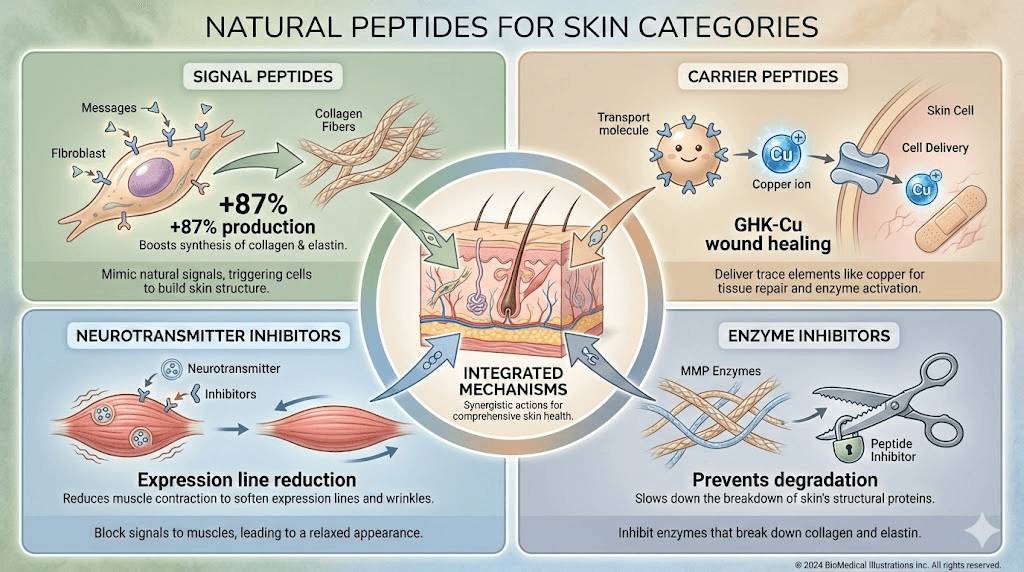
For skin health, natural peptides function through multiple mechanisms. They act as signaling molecules instructing fibroblasts to increase collagen production, serve as building blocks for new collagen and elastin synthesis, inhibit enzymes (MMPs) that break down existing collagen, and deliver essential trace elements like copper supporting wound healing and regeneration.
The skin naturally produces thousands of peptide types, but production declines approximately 1% annually after age 30. This decline manifests as reduced elasticity, increased wrinkling, decreased moisture retention, slower wound healing, and compromised barrier function. Supplementing with natural peptides addresses these deficiencies.
Natural peptides differ fundamentally from complete proteins. Proteins like intact collagen (molecular weight 300,000+ Daltons) cannot penetrate skin barriers or survive digestive processes intact. Peptides (molecular weight 500-5,000 Daltons) are small enough for absorption through skin when applied topically or through intestinal walls when consumed orally.
This size advantage enables natural peptides to reach target cells and trigger biological responses. When collagen peptides are absorbed, they signal fibroblasts detecting collagen fragments, triggering increased collagen synthesis to "repair" perceived damage. This mechanism explains why small amounts of peptides produce disproportionate effects.
Natural peptides for skin fall into four primary categories: signal peptides stimulating collagen, elastin, and glycosaminoglycan production, carrier peptides stabilizing and transporting trace elements like copper, neurotransmitter-inhibiting peptides relaxing facial muscles reducing expression lines, and enzyme-inhibiting peptides preventing MMP degradation of collagen and elastin.
Understanding how peptides work at cellular levels helps evaluate marketing claims and select effective natural sources.
Natural sources of skin peptides
Natural peptides for skin derive from diverse plant, animal, and marine sources, each offering unique amino acid profiles and bioactive properties.
Marine collagen peptides
Marine collagen peptides extracted from fish skin, scales, and bones dominate the natural peptide market for bioavailability and sustainability. Fish collagen consists primarily of Type I collagen (the same type comprising 80% of human dermal collagen), making it structurally compatible.
Marine peptides have smaller particle sizes (average molecular weight 2,000-5,000 Daltons) compared to bovine or porcine collagen, theoretically improving absorption. Clinical studies using marine collagen peptides at 2.5-10g daily show significant improvements in skin hydration (up to 28% increase), elasticity (up to 13% improvement), and wrinkle depth reduction (up to 20% decrease) after 8-12 weeks.
Common marine sources include wild-caught fish (cod, haddock, pollock), farmed fish (tilapia, salmon), and sustainable catch byproducts. Quality varies based on extraction methods (enzymatic hydrolysis preferred over acid/alkaline), source fish species and farming practices, molecular weight distribution, and purity testing for heavy metals and contaminants.
Marine collagen peptides cost $20-$80 for monthly supply (10g daily) depending on source and purity. Look for products specifying Type I collagen, molecular weight under 5,000 Daltons, third-party testing for contaminants, and sustainable sourcing certifications.
Bovine collagen peptides
Bovine collagen peptides derived from grass-fed cattle hide and bones provide Types I and III collagen. Type III collagen supports skin structure alongside Type I, potentially offering advantages for comprehensive skin support.
Bovine peptides typically have slightly larger molecular weights (3,000-8,000 Daltons) compared to marine sources, though high-quality hydrolyzed bovine collagen achieves similar bioavailability. Clinical research demonstrates bovine collagen peptides at 5-10g daily improve skin elasticity, reduce cellulite appearance, and support dermal density.
Quality indicators include grass-fed, pasture-raised sourcing, enzymatic hydrolysis processing, molecular weight specifications, and third-party testing. Bovine peptides cost $15-$60 monthly, generally less expensive than marine alternatives while delivering comparable results.
For those avoiding fish products or seeking Type III collagen specifically, bovine peptides provide effective natural alternative. Some individuals report better tolerance to bovine versus marine sources.
Plant-based collagen peptides
True plant-based collagen doesn't exist as plants don't produce collagen protein. However, plant-derived peptides can stimulate human collagen production through alternative mechanisms.
Soy peptides containing high concentrations of proline, glycine, and alanine (collagen's primary amino acids) support collagen synthesis. Research shows soy peptides improve skin firmness and elasticity when consumed at 40mg daily for 12 weeks. Topical soy peptides in 2-3% concentrations demonstrate similar benefits.
Rice peptides rich in antioxidants and amino acids provide skin-protective benefits while supporting collagen production. Rice-derived peptides show particular effectiveness for reducing hyperpigmentation and improving skin tone alongside anti-aging effects.
Pea peptides (Pisum sativum) demonstrate remarkable collagen-stimulating capacity despite plant origin. A 2020 study showed pea-derived peptides increased dermal fibroblast production and enhanced collagen density significantly. Pea peptides work well for vegan consumers or those with soy sensitivities.
Hemp peptides recently developed through fermentation processes offer complete amino acid profiles supporting collagen synthesis. Hemp-derived peptides (trademarked as Chrono Control Penta) show impressive clinical results: 87% increase in collagen production, 61% increase in elastin production, and visible wrinkle reduction (11.55%) after 6 weeks.
Yeast-fermented collagen alternatives created through biotechnology mimic collagen's glycoprotein structure without animal sources. These provide moisture-binding properties and skin conditioning effects, though lacking collagen's complete triple-helix structure.
Plant peptides cost $25-$100 monthly depending on source and concentration. They appeal to vegan consumers and those seeking sustainable options, though clinical evidence remains less extensive than marine/bovine collagen.
Copper peptides (GHK-Cu)
GHK-Cu (copper peptides) naturally occur in human blood plasma, declining with age from 200ng/mL at age 20 to 80ng/mL at age 60. This tripeptide (glycyl-L-histidyl-L-lysine) bound to copper ion exhibits extraordinary regenerative properties.
GHK-Cu stimulates collagen and elastin synthesis, acts as antioxidant neutralizing free radicals, promotes wound healing and tissue repair, reduces inflammation, and improves skin tightening and firmness. Clinical studies demonstrate GHK-Cu effectiveness for reducing wrinkle depth, improving skin density and thickness, fading hyperpigmentation and age spots, and accelerating healing post-procedure.
GHK-Cu works both orally (1-3mg daily) and topically (0.05-2% concentration in serums). Injectable forms used by clinics deliver 2-5mg subcutaneously. Most research supports topical application for facial anti-aging and oral/injectable for systemic regeneration.
Natural GHK-Cu sources are limited; supplementation typically uses synthetically produced peptides identical to natural forms. Cost runs $30-$150 monthly for topical serums, $80-$200 for oral/injectable forms.
Learn about GHK-Cu storage requirements, duration of effects, and what happens when you stop.
Peptide Source | Primary Types | Molecular Weight | Monthly Cost | Best For | Sustainability |
|---|---|---|---|---|---|
Marine Collagen | Type I | 2,000-5,000 Da | $20-$80 | Bioavailability, absorption | Medium (wild-catch) |
Bovine Collagen | Types I & III | 3,000-8,000 Da | $15-$60 | Comprehensive support, value | Medium (grass-fed) |
Soy Peptides | Plant signal peptides | 1,000-3,000 Da | $25-$80 | Vegan, firmness | High |
Rice Peptides | Plant signal peptides | 1,500-4,000 Da | $30-$90 | Tone, antioxidants | High |
Pea Peptides | Plant signal peptides | 1,800-3,500 Da | $35-$100 | Collagen stimulation, vegan | High |
Hemp Peptides | Plant bioactive | 1,500-3,000 Da | $40-$120 | Multi-benefit, sustainable | High |
GHK-Cu | Copper peptide | 340 Da | $30-$200 | Regeneration, healing | Synthetic |
Each natural source offers distinct advantages. Marine and bovine provide direct collagen building blocks, plant peptides stimulate endogenous collagen production sustainably, and copper peptides deliver comprehensive regenerative effects.
Topical versus oral natural peptides
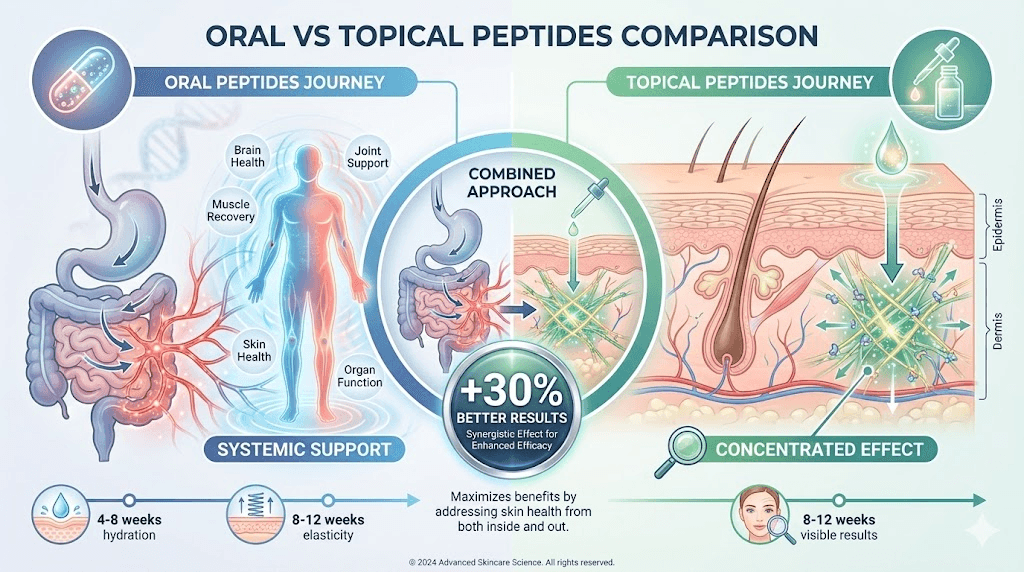
Debate continues whether topical application or oral supplementation delivers superior results for skin health. Science suggests both approaches work through different mechanisms, potentially offering synergistic benefits when combined.
Oral collagen peptides
Oral collagen peptides survive digestion and reach systemic circulation intact. After ingestion, peptides are absorbed in the small intestine, enter bloodstream as dipeptides and tripeptides, distribute throughout body including skin dermis, and trigger fibroblast activity increasing collagen synthesis.
Research demonstrates oral collagen peptide effectiveness. A 2023 meta-analysis in Nutrients reviewing 26 randomized controlled trials concluded oral collagen supplementation significantly improves skin hydration, elasticity, and wrinkle appearance. Effective dosing ranges 2.5-15g daily, with most studies using 5-10g.
Benefits manifest within 4-8 weeks for hydration improvements, 8-12 weeks for elasticity and wrinkle reduction, and 12-24 weeks for maximal collagen density increases. Effects depend on consistent daily supplementation; benefits diminish when supplementation stops.
Oral peptides provide systemic benefits affecting entire body (not just facial skin), support joint, bone, and connective tissue health, deliver amino acids for overall protein synthesis, and prove convenient for daily compliance.
Limitations include less targeted delivery to specific facial areas, portion of peptides metabolized before reaching skin, individual variation in absorption and response, and requirement for ongoing supplementation to maintain benefits.
Use our peptide dosing guide for oral collagen peptide protocols.
Topical peptide serums and creams
Topical peptides work by penetrating outer skin layers (stratum corneum and epidermis), reaching upper dermis where fibroblasts reside, triggering local collagen and elastin synthesis, and providing direct antioxidant and anti-inflammatory effects.
Clinical evidence supports topical peptide efficacy. Studies show peptide serums at 2-5% concentration significantly reduce wrinkle depth and improve skin firmness after 8-12 weeks twice-daily application. Copper peptide creams demonstrate visible improvements in skin density, wrinkle reduction, and healing enhancement.
Advantages of topical application include targeted delivery to specific areas (face, neck, hands), higher local concentrations at application sites, combination with other active ingredients (retinol, vitamin C, hyaluronic acid), and no digestive system involvement eliminating absorption variability.
Disadvantages include skin barrier limiting penetration depth, requirement for consistent twice-daily application, potential for irritation depending on formulation, and limited systemic benefits beyond application areas.
Topical peptide effectiveness depends heavily on formulation quality, molecular weight (smaller peptides penetrate better), delivery systems (liposomes, nanoparticles enhancing penetration), concentration (typically 2-5% for collagen peptides, 0.05-2% for copper peptides), and complementary ingredients supporting absorption.
Combining oral and topical approaches
Research increasingly suggests combining oral and topical peptides provides superior results versus either approach alone. A 2019 study in Journal of Cosmetic Dermatology found women using both oral collagen supplementation (2.5g daily) and topical peptide cream showed greater improvements in skin elasticity, hydration, and dermal echogenicity compared to either treatment alone.
Combined approach works through systemic support from oral peptides providing building blocks throughout body, targeted enhancement from topical peptides concentrating effects on facial skin, synergistic mechanisms addressing skin aging from multiple angles, and comprehensive benefits for both appearance and structural integrity.
Practical combined protocol: oral collagen peptides 5-10g daily (marine or bovine), topical peptide serum 2-5% concentration twice daily, copper peptide cream 0.1-1% concentration evening application, and complementary ingredients (vitamin C, hyaluronic acid, retinol) as tolerated.
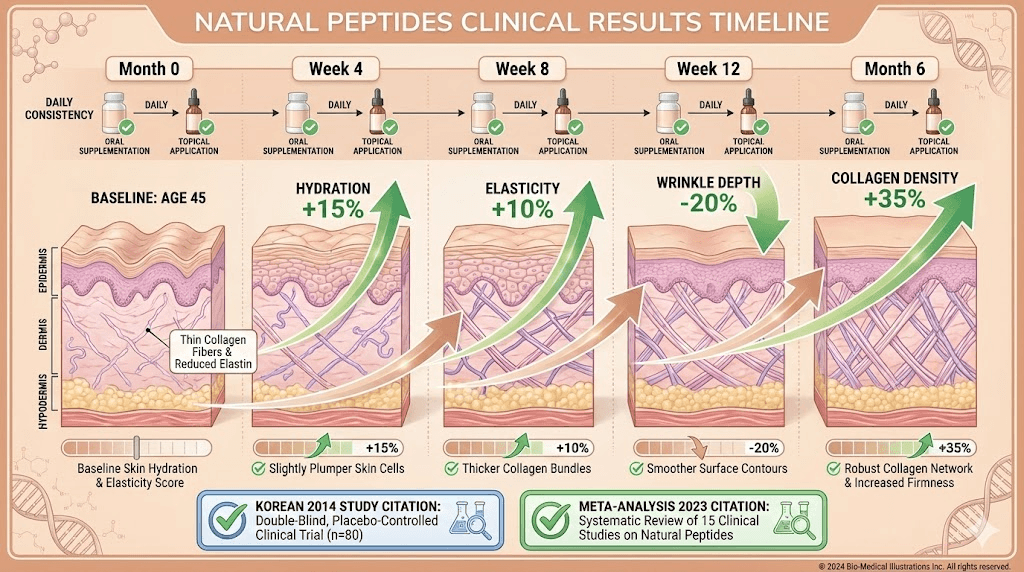
Timeline expectations: weeks 1-4 (improved hydration from both oral and topical), weeks 4-8 (enhanced elasticity, subtle firmness improvements), weeks 8-12 (visible wrinkle reduction, improved skin texture), and months 3-6 (significant collagen density improvements, sustained benefits).
Review peptide therapy timelines and before/after expectations for realistic outcomes.
Clinical evidence for natural peptides
Scientific research supporting natural peptides for skin health has expanded significantly. Understanding evidence quality helps distinguish marketing claims from proven benefits.
Oral collagen peptide studies
Multiple randomized controlled trials demonstrate oral collagen effectiveness. Key findings include:
Korean women study (2014): 64 women aged 40+ received 1,000mg low-molecular-weight collagen daily for 12 weeks. Results showed significant increases in skin hydration at 6 weeks, improvements in all three wrinkle parameters measured, and enhanced skin elasticity in one-third of parameters versus placebo.
Chinese women study (2019): 85 women aged 35+ received varying doses of collagen hydrolysate containing bioactive dipeptides. All treatment groups showed dose-dependent improvements in wrinkle depth, skin elasticity, and hydration compared to placebo after 8 weeks.
Meta-analysis (2023): Systematic review of 26 RCTs involving 1,721 participants concluded oral collagen peptides significantly improve skin hydration (effect size 0.49), elasticity (effect size 0.42), and wrinkle appearance (effect size -0.35). Benefits were consistent across dosages of 2.5-15g daily.
Marine versus bovine comparison: Direct comparison studies show both sources deliver similar benefits, with marine collagen demonstrating slightly faster absorption but bovine providing comparable long-term results at lower cost.
Topical peptide research
Topical peptide formulations show effectiveness in controlled trials:
Palmitoyl peptides study (2009): Women using 3% triple peptide complex (palmitoyl tripeptide-1, palmitoyl tetrapeptide-7) showed significant reduction in total wrinkle surface, number of wrinkles, and average wrinkle depth versus placebo after 12 weeks.
Copper peptide research (2021): GHK-Cu serum at 1% concentration demonstrated wrinkle depth reduction of 24.62% within 28 days, significantly outperforming commercial products containing other peptides. Participants also showed improved skin firmness and elasticity.
Combined topical and oral study (2019): Comparison of topical peptide treatment, oral collagen supplementation, and combined approach showed topical group achieved faster hydration improvements (1 month), oral group demonstrated better long-term dermal density changes (3 months), and combined group showed superior overall results across all parameters.
Plant-based peptide evidence
Research on plant-derived peptides shows promising results:
Pea peptide study (2020): Pisum sativum peptides increased dermal fibroblast production and enhanced collagen density in vitro. Molecular weight 1,819 Daltons proved optimal for stimulating main dermal proteins affected by aging.
Hemp peptide clinical trial (2025): Chrono Control Penta (hemp-derived pentapeptide) showed 87% increase in collagen production and 61% increase in elastin production in aged dermal fibroblasts. Clinical application demonstrated 9.3% pigmentation reduction, 11.55% anti-wrinkle effect, and 6.35% firmness improvement after 6 weeks.
Soy peptide research: Multiple studies demonstrate soy-derived peptides improve skin firmness and elasticity comparable to marine collagen when used at 40mg daily for 12 weeks.
Safety and limitations
Natural peptides demonstrate excellent safety profiles. Extensive research shows oral collagen peptides are well-tolerated at doses up to 15g daily with minimal side effects (occasional digestive discomfort), topical peptides cause minimal irritation in properly formulated products, and plant-based peptides offer alternatives for those with fish or bovine sensitivities.
Limitations of current research include variation in peptide sources, molecular weights, and dosing making direct comparisons difficult, relatively short study durations (most 8-24 weeks) with limited long-term data, individual response variability not fully understood, and optimal combinations of oral and topical application requiring further investigation.
Despite limitations, cumulative evidence strongly supports natural peptides for anti-aging skin benefits when used consistently at appropriate doses.
Choosing quality natural peptide products
Selecting effective natural peptide products requires evaluating multiple factors beyond marketing claims.
Key quality indicators
Molecular weight specification: Look for products listing molecular weight under 5,000 Daltons for optimal absorption. Hydrolyzed collagen should specify peptide size. Products without this information may contain intact proteins with poor bioavailability.
Source transparency: Quality products clearly state peptide source (specific fish species, grass-fed bovine, organic plant source). Vague sourcing ("marine collagen" without species, "collagen blend" without ratios) suggests inferior quality or questionable origins.
Third-party testing: Reputable brands provide certificates of analysis showing purity testing for heavy metals (especially important for marine sources), microbiological contamination, and actual peptide content matching label claims. Look for NSF, USP, or similar certifications.
Processing method: Enzymatic hydrolysis produces higher quality peptides than acid or alkaline processing. Check product descriptions for hydrolysis method. Cold processing for plant peptides preserves bioactivity better than heat extraction.
Concentration specifications: Topical products should list peptide concentration (typically 2-5% for collagen peptides, 0.05-2% for copper peptides). Products listing peptides far down ingredient lists may contain insufficient amounts for effectiveness.
Clinical backing: Brands conducting or citing peer-reviewed research demonstrate commitment to efficacy. Be skeptical of products making clinical claims without published studies or those citing irrelevant research.
Reading supplement labels
Oral collagen supplement labels should specify:
Type of collagen (I, III, or combination)
Molecular weight or "hydrolyzed" specification
Serving size providing 5-10g peptides
Source animal/plant with location
Additional ingredients supporting absorption
Avoid products with excessive fillers, artificial ingredients, or proprietary blends hiding actual peptide amounts.
Evaluating topical formulations
Effective peptide serums and creams feature:
Peptides listed in first 5-7 ingredients
Concentration specified (2-5% standard)
Complementary actives (hyaluronic acid, vitamin C, niacinamide)
Appropriate pH (slightly acidic 4.5-6 for peptide stability)
Airless pump or opaque packaging protecting peptides from degradation
Red flags include peptides listed very low in ingredients suggesting minimal amounts, fragrances and irritants potentially causing inflammation, poor packaging allowing oxidation, and unrealistic timeframe claims (results typically require 8-12 weeks minimum).
Cost versus value
Natural peptide product pricing varies dramatically. Understanding value helps optimal selection:
Oral collagen peptides:
Budget ($15-$30/month): Often effective if sourcing is transparent and molecular weight appropriate
Mid-range ($30-$60/month): Typically higher purity, better sourcing, third-party testing
Premium ($60-$100+/month): May include additional bioactives (vitamin C, hyaluronic acid) or specialized sources
Topical peptide serums:
Budget ($15-$40): May work if peptide concentration adequate, though formulation quality variable
Mid-range ($40-$100): Usually better delivery systems, complementary actives, stability
Premium ($100-$200+): Often medical-grade formulations with patented peptide complexes
Higher price doesn't guarantee superior results. Focus on quality indicators rather than cost alone. Sometimes budget products from reputable brands outperform expensive options with inferior formulations.
Timing and consistency
Natural peptide effectiveness requires consistent use. Establish realistic expectations:
Oral supplementation: Daily use essential for results. Benefits typically appear 4-8 weeks (hydration), 8-12 weeks (elasticity, wrinkles), and 12-24 weeks (maximal collagen density). Stopping supplementation gradually reverses benefits over weeks to months.
Topical application: Twice-daily application (morning and evening) provides best results. Skipping applications reduces effectiveness. Visible improvements typically 8-12 weeks with consistent use.
Long-term commitment: Natural peptides work cumulatively. Expecting dramatic results after 2-3 weeks leads to disappointment. Plan minimum 3-month trial before evaluating effectiveness.
Review our peptide storage guide for maintaining product quality and common mistakes to avoid when starting peptide supplementation.
How SeekPeptides helps with peptide research
SeekPeptides provides comprehensive educational resources for anyone exploring natural peptides for skin health or therapeutic applications. Our platform helps informed decision-making about products, protocols, and realistic expectations.
SeekPeptides offers evidence-based information about every major therapeutic peptide, helping you understand what natural skin products contain and why. Our guides cover mechanisms, expected results, potential side effects, and optimal usage so you can evaluate whether product claims align with research.
Understanding peptide fundamentals and biological mechanisms helps you ask better questions and recognize unsupported marketing claims.
Our calculators help protocol planning and dosing verification. Use our peptide calculator, cost calculator, and specialized calculators for therapeutic peptides to understand exactly what protocols involve.
SeekPeptides doesn't replace medical consultation or professional skincare advice, but it empowers you as informed consumer who can evaluate product quality, understand ingredient rationale, and recognize red flags before purchase.
Final thoughts
Natural peptides for skin offer scientifically-supported benefits for reducing visible aging signs, improving skin health, and supporting collagen production. Oral collagen peptides at 5-10g daily demonstrate consistent improvements in hydration, elasticity, and wrinkle appearance across multiple clinical trials. Topical peptide serums at 2-5% concentrations deliver targeted benefits to facial skin with visible results after 8-12 weeks consistent use.
Plant-based alternatives provide sustainable options for vegan consumers while delivering comparable collagen-stimulating effects. Copper peptides (GHK-Cu) offer comprehensive regenerative benefits through unique mechanisms beyond simple collagen supplementation.
Combining oral and topical approaches may provide synergistic benefits exceeding either method alone.
Success with natural peptides requires selecting quality products from transparent sources, maintaining consistent daily use for minimum 8-12 weeks, setting realistic expectations about timelines and degree of improvement, and potentially combining oral supplementation with topical application for optimal results.
Natural peptides represent legitimate anti-aging and skin health tools supported by substantial research. They won't completely reverse aging or replace medical treatments for serious skin conditions, but they provide accessible, safe options for gradual improvements in skin quality, appearance, and resilience.
Research product quality carefully, commit to consistent long-term use, and trust science-backed ingredients over marketing hype.
Helpful resources
Peptide calculator - Calculate exact dosing protocols
Peptide cost calculator - Estimate monthly costs
Copper peptides guide - Complete GHK-Cu information
GHK-Cu dosing - Proper copper peptide dosing
Peptide storage guide - Maintain product quality
Common mistakes - Avoid errors
Related guides worth reading
What are peptides - Complete introduction
How peptides work - Biological mechanisms
Peptides for wrinkles - Anti-aging applications
Peptides for skin tightening - Firmness and elasticity
In case I don't see you, good afternoon, good evening, and good night. Take care of your skin, take care of yourself, explore SeekPeptides.