Jan 24, 2026

Cellulite affects 85-90% of women at some point, regardless of weight or fitness level. The beauty industry has capitalized on this, generating billions in revenue from treatments that often deliver disappointing results. But buried in the noise of marketing claims lies something with actual clinical evidence: collagen peptides.
A landmark double-blind, placebo-controlled study followed 105 women taking just 2.5 grams of specific bioactive collagen peptides daily. After six months, they showed a statistically significant 9% reduction in cellulite severity and 8% decrease in skin waviness compared to placebo. Normal weight women saw even better results, with 11.1% improvement in thigh skin smoothness.
Those numbers may not sound dramatic. They are not. But unlike the empty promises from topical treatments and massage devices, these results come from rigorous clinical research. Collagen peptides work by addressing the actual structural cause of cellulite, not merely masking its appearance temporarily.
This guide covers what cellulite actually is and why it forms, how collagen peptides address the root cause, the specific types and dosages proven in research, realistic timelines for seeing results, which collagen sources work best, and how to maximize your results. SeekPeptides members access detailed protocols for skin improvement, but this comprehensive guide gives you everything you need to understand whether collagen peptides can help your cellulite.
What is cellulite and why does it form
Cellulite is not simply fat. It is a structural condition involving the interaction between subcutaneous fat, connective tissue bands called septae, and the overlying skin. Understanding this helps explain why losing weight alone often fails to eliminate cellulite.
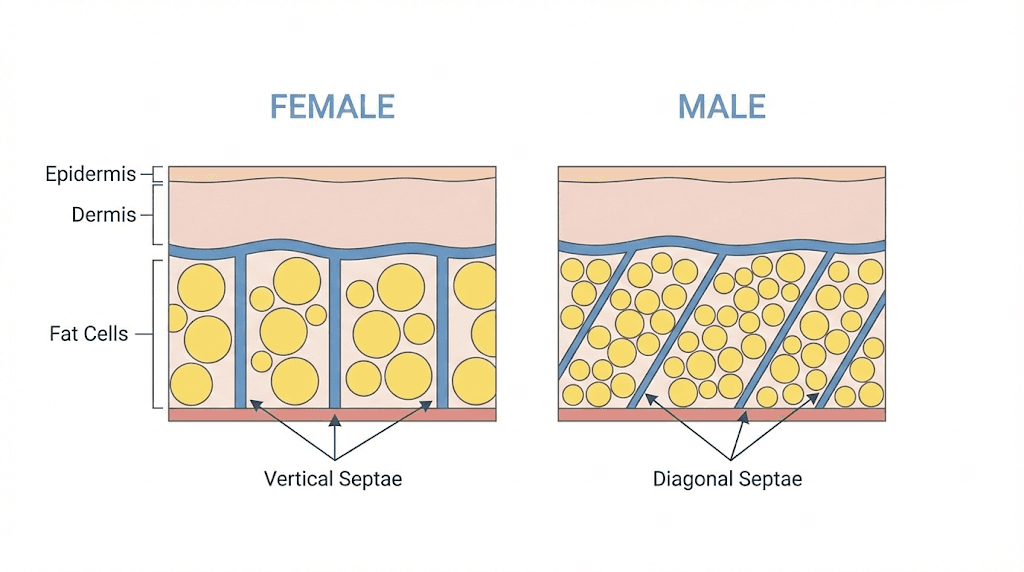
The dermis of your skin connects to deeper tissue through fibrous bands called septae. In women, these septae run vertically like columns from muscle to skin. When fat cells expand or connective tissue weakens, those fat cells push upward between the septae. The skin dimples.
Men rarely get cellulite. Their septae run diagonally in a criss-cross pattern, creating a mesh that prevents fat from pushing through. This structural difference explains why cellulite is almost exclusively a female concern.
The role of collagen in cellulite formation
Collagen provides structural integrity to your skin and connective tissue. It keeps the dermis thick, elastic, and strong enough to resist the upward pressure of fat cells. When collagen degrades, problems begin.
After age 25, collagen production decreases approximately 1% per year. The septae weaken. The dermis thins. Fat cells that previously stayed contained can now herniate into the overlying tissue. Even women who maintain the same weight often notice worsening cellulite with age.
Hormones accelerate this process. Estrogen influences fat distribution and connective tissue structure. This explains why cellulite often worsens during pregnancy, menopause, and hormonal fluctuations. The interplay between declining collagen, hormonal changes, and fat cell behavior creates the perfect storm for cellulite development.
Other factors contribute: poor circulation limiting nutrient delivery to connective tissue, inflammation damaging the extracellular matrix, genetic predisposition affecting septae orientation and fat distribution, and lifestyle factors like inactivity and poor diet. But the fundamental issue remains structural, involving collagen and connective tissue integrity.
How collagen peptides address cellulite
Collagen peptides work differently than topical treatments. They do not mask cellulite or temporarily improve circulation. They address the structural deficit causing the problem in the first place.
When you consume hydrolyzed collagen peptides, they survive digestion and enter your bloodstream as small peptide fragments. These fragments travel throughout your body, including to your skin and connective tissue. What happens next is where the magic occurs.
Your fibroblasts, the cells responsible for producing collagen and elastin, detect these collagen fragments. They interpret them as signals of damage, as if collagen is being broken down faster than normal. In response, fibroblasts ramp up production of new collagen, elastin, and other extracellular matrix proteins.
This mechanism explains something important. You do not need massive doses of collagen peptides. Small amounts trigger a signaling cascade producing disproportionately large effects. The research bears this out. Just 2.5 grams daily, less than a teaspoon, produced measurable improvements in dermal density and cellulite appearance.
What the research shows
The landmark cellulite study published in the Journal of Medicinal Food provides our strongest evidence. Researchers gave 105 women aged 24-50 either 2.5 grams of bioactive collagen peptides (Verisol brand) or placebo daily for six months.
Results were measured using:
Skin waviness measurements via surface profilometry
Cellulite severity scoring by dermatologists
Dermal density assessment via ultrasound
After three months, researchers observed statistically significant cellulite score reductions. By six months:
9% reduction in cellulite severity in normal weight women
4% reduction in overweight women
8% average reduction in skin waviness overall
11.1% reduction in thigh skin waviness for normal BMI group
Significantly improved dermal density compared to placebo
The difference between normal weight and overweight participants matters. It suggests collagen peptides work best when not fighting against excessive fat cell expansion. This does not mean weight loss is required, but maintaining a healthy body composition appears to enhance results.
Additional research supports these findings. Studies on skin elasticity and hydration using the same collagen peptides showed 65% higher procollagen type I content and 18% higher elastin content in treated subjects after just 8 weeks. These matrix components directly influence skin firmness and resistance to the upward pressure causing cellulite dimpling.
Why topical treatments fall short
Understanding how collagen peptides work explains why topical creams and treatments often disappoint. They cannot address the structural issue occurring in the dermis and subcutaneous tissue.
Caffeine creams may temporarily improve circulation and reduce water retention, creating a short-lived smoothing effect. Retinoids can slightly thicken the epidermis. Massage devices claim to break up fat cells, but cellulite is not a fat problem. It is a structural problem.
Even effective topical ingredients like copper peptides and retinol combinations primarily affect the outer layers of skin. They cannot rebuild the connective tissue septae or increase dermal collagen density where cellulite originates.
This is not to say topical treatments have no value. Combining them with oral collagen supplementation may enhance overall skin quality. But alone, they cannot deliver the structural improvements needed for lasting cellulite reduction.
Types of collagen that work for cellulite
Not all collagen supplements are created equal. The type of collagen, its source, and how it is processed all affect results. Here is what you need to know.
Type I collagen
Type I collagen comprises approximately 80% of your skin collagen. It provides tensile strength and structural integrity. The dermis, where cellulite originates, relies heavily on Type I collagen for its ability to resist fat cell herniation.
Type I collagen is found in skin, tendons, bones, and ligaments. It forms the dense, organized fibrils that give connective tissue its strength. When Type I collagen degrades, skin loses firmness and the septae weaken.
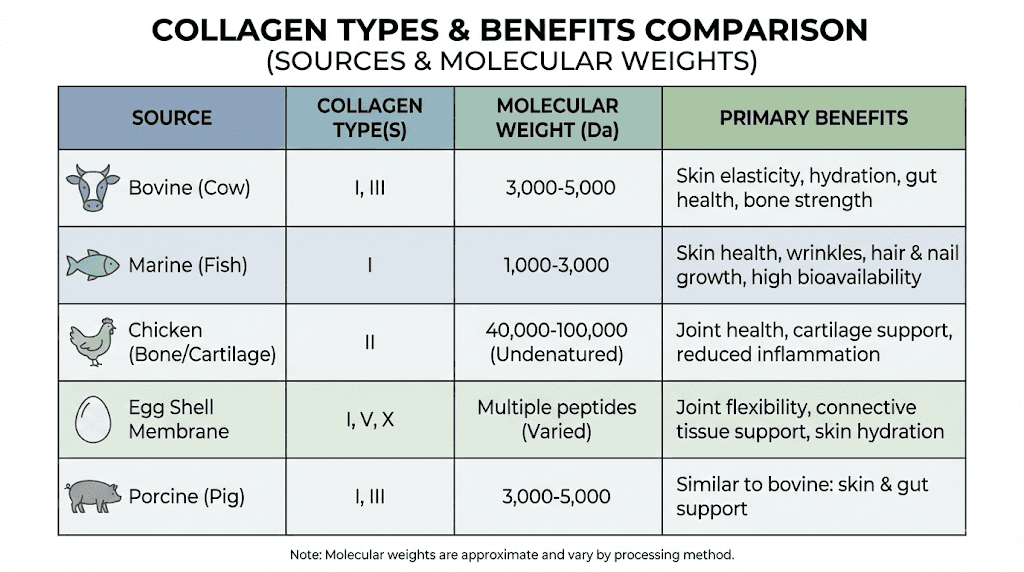
Marine collagen from fish skin and scales is predominantly Type I, making it particularly relevant for cellulite treatment. The landmark cellulite study used Type I collagen peptides derived from porcine sources.
Type III collagen
Type III collagen works alongside Type I in skin and connective tissue. It is more elastic and flexible, contributing to skin resilience. Interestingly, your body needs Type III collagen to synthesize Type I, making this combination especially important.
Bovine collagen from grass-fed cattle typically contains both Types I and III. This dual-type composition may offer advantages for comprehensive skin and connective tissue support. Some researchers believe the Type I and III combination more closely mirrors natural skin collagen composition.
Hydrolyzed versus native collagen
Hydrolyzed collagen, also called collagen peptides, has been enzymatically broken down into smaller fragments. This matters enormously for absorption and effectiveness.
Native collagen molecules are massive, around 300,000 Daltons in molecular weight. They cannot cross intestinal walls intact or penetrate skin barriers. Your body must break them down before any absorption can occur.
Hydrolyzed collagen peptides typically range from 2,000-5,000 Daltons. They can be absorbed directly through the small intestine and enter circulation intact. This explains their effectiveness at relatively low doses.
The Verisol collagen peptides used in cellulite research have an average molecular weight of 2,000 Daltons. This small size ensures efficient absorption and delivery to target tissues.
Source comparison
Different collagen sources offer distinct advantages:
Marine collagen from fish skin and scales provides predominantly Type I collagen with small molecular weights (2,000-5,000 Daltons). It may offer superior bioavailability and is sustainable when sourced from fishery byproducts. However, it costs more than bovine alternatives.
Bovine collagen from grass-fed cattle provides Types I and III collagen. It is widely available, cost-effective, and backed by extensive research. The cellulite study used porcine (pig) derived collagen, which has similar properties to bovine.
Chicken collagen is primarily Type II, focused on joint health rather than skin. It is less relevant for cellulite treatment.
Plant-based alternatives cannot provide actual collagen as plants do not produce it. Vegan products contain amino acids or plant peptides that may support collagen production, but lack direct evidence for cellulite reduction.
For cellulite specifically, bovine or marine collagen containing Types I and/or III with molecular weights under 5,000 Daltons represents the evidence-based choice.
Dosing collagen peptides for cellulite
Research provides clear guidance on effective dosing. This section covers what works, when to take it, and how long you need to continue.
The effective dose
The cellulite study used 2.5 grams of bioactive collagen peptides daily. This relatively small dose produced statistically significant results because the mechanism relies on signaling rather than providing raw building materials.
However, general skin health research suggests potential benefits from higher doses. Studies on skin hydration and elasticity often use 5-10 grams daily. Some practitioners recommend:
Early cellulite or prevention: 2.5 grams daily
Moderate cellulite: 5 grams daily
Severe cellulite or faster results: 7.5-10 grams daily
Higher doses are not necessarily better. Your body can only use so much at once. Splitting doses between morning and evening may improve utilization compared to taking everything at once.
The key is consistency rather than quantity. Taking 2.5 grams daily for six months will outperform taking 10 grams sporadically for two months.
Timing and absorption
Morning consumption on an empty stomach may optimize absorption. When you have not eaten, competition from other proteins and nutrients is reduced. The collagen peptides can be absorbed more efficiently.
Practical recommendations:
Take collagen first thing in the morning
Wait 30 minutes before eating other foods
Alternatively, take before bed on an empty stomach
Split larger doses between morning and evening
That said, research shows collagen peptides work whether taken with food or on an empty stomach. Convenience and consistency matter more than perfect timing. If taking it with your morning coffee ensures you never miss a dose, do that.
Vitamin C synergy
Vitamin C is essential for collagen synthesis. Without adequate vitamin C, your body cannot properly form the triple helix structure of collagen molecules. Deficiency impairs the very process collagen peptides are meant to stimulate.
Consider pairing collagen peptides with vitamin C supplementation or consuming vitamin C rich foods. Many collagen supplements now include added vitamin C for this reason. Fresh fruits and vegetables provide natural vitamin C that supports peptide effectiveness.
How long until results appear
Patience is essential. Cellulite developed over years; it will not disappear in weeks. The research timeline provides realistic expectations:
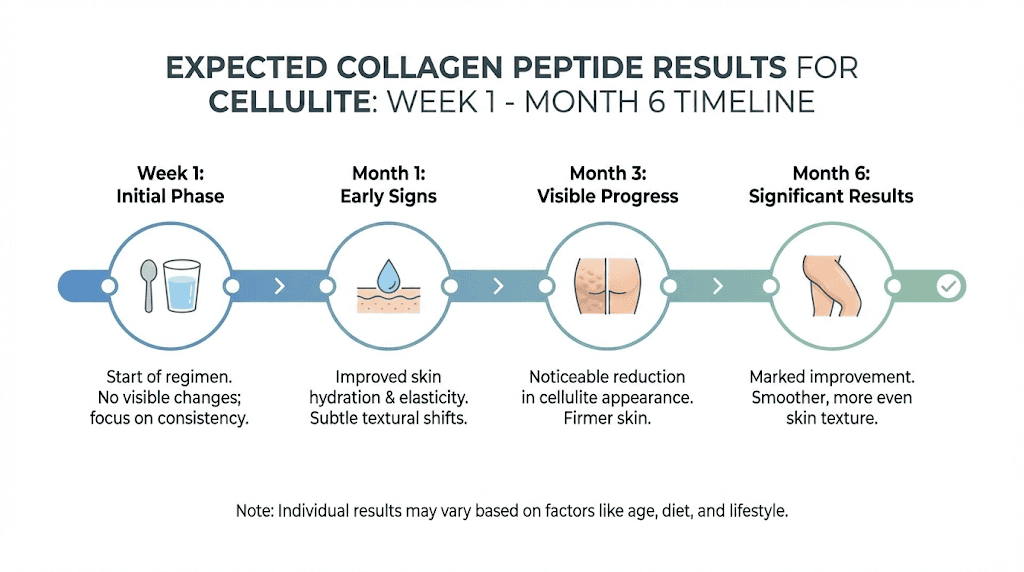
Weeks 1-4: No visible changes. Peptides are being absorbed and beginning to influence fibroblast activity. You might notice subtle improvements in skin hydration.
Weeks 4-8: Skin may feel slightly firmer. Dermal density is beginning to increase. Cellulite appearance remains largely unchanged.
Weeks 8-12: First visible improvements in skin texture. Some reduction in skin waviness may become noticeable. This is when many people start seeing encouraging results.
Months 3-6: Statistically significant cellulite reduction begins. The research showed meaningful improvements at three months, with continued progress through six months.
Beyond 6 months: Continued supplementation maintains and may further improve results. Benefits gradually diminish if supplementation stops.
Most people need minimum three months of consistent daily use before making any judgment about effectiveness. Six months provides the best assessment of what collagen peptides can do for your cellulite.
Maximizing collagen peptide results
Collagen peptides work better when supported by complementary strategies. These do not replace supplementation but enhance the structural improvements collagen provides.
Exercise and muscle building
Strength training, particularly for lower body, builds muscle beneath the skin. This creates a firmer foundation that improves the overall appearance of areas prone to cellulite. Think of it as creating a smoother surface under the skin rather than addressing the skin itself.
Regular exercise also improves circulation, enhancing nutrient delivery to connective tissue. Blood flow brings amino acids, vitamins, and oxygen to fibroblasts producing collagen. The combination of collagen supplementation with consistent exercise likely outperforms either strategy alone.
Peptides for muscle growth and performance peptides can complement exercise programs, though they address different mechanisms than collagen supplementation for cellulite.
Hydration
Dehydration worsens cellulite appearance and impairs collagen synthesis. Your body requires adequate water to produce collagen effectively. Dehydrated skin also appears more textured and dimpled.
Aim for at least 2 liters of water daily. More if you exercise heavily or live in hot climates. Hydration is a simple, free intervention that supports collagen peptide effectiveness.
Nutrition beyond collagen
Specific nutrients support collagen production and skin health:
Protein: Your body needs amino acids to build collagen. While collagen peptides provide specific amino acids like glycine and proline, adequate overall protein intake supports the synthesis process.
Vitamin C: Essential cofactor for collagen synthesis. Deficiency prevents proper collagen formation regardless of peptide supplementation.
Zinc: Required for collagen synthesis enzymes. Found in meat, shellfish, legumes, and seeds.
Copper: Necessary for crosslinking collagen fibers into stable structures. Copper peptides like GHK-Cu can provide copper while delivering additional skin benefits.
Antioxidants: Protect existing collagen from degradation. Colorful fruits and vegetables, green tea, and dark chocolate provide various antioxidant compounds.
Anti-inflammatory foods may also help by reducing chronic inflammation that damages connective tissue. Omega-3 fatty acids, turmeric, and reduced sugar intake all support an anti-inflammatory state.
What to avoid
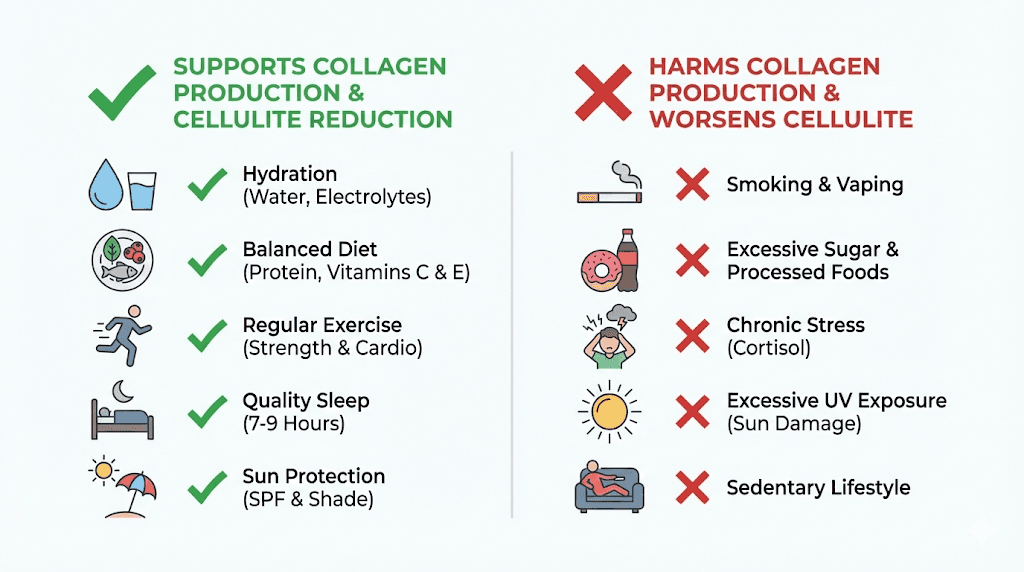
Certain habits accelerate collagen breakdown and worsen cellulite:
Smoking: Directly damages collagen and impairs circulation to skin. The connection between smoking and premature skin aging is well established.
Excessive sun exposure: UV radiation breaks down collagen and elastin. Use sunscreen and limit prolonged sun exposure.
Excessive alcohol: Dehydrates tissues and may interfere with collagen synthesis.
Crash dieting: Rapid weight fluctuations stress connective tissue. Yo-yo dieting may worsen cellulite over time compared to maintaining stable weight.
Sedentary lifestyle: Poor circulation limits nutrient delivery to connective tissue. Regular movement supports skin health.
Collagen peptides versus other cellulite treatments
Understanding how collagen compares to other options helps you make informed decisions about treatment strategies.
Dry brushing
Dry brushing has become popular for cellulite, promoted on social media and in wellness circles. The claim: brushing stimulates circulation and lymphatic drainage while breaking up fat deposits.
The reality: no scientific evidence supports dry brushing for cellulite reduction. It exfoliates skin, removing dead cells and potentially creating temporary smoothness. Some people enjoy the ritual. But it cannot address the structural collagen and connective tissue issues underlying cellulite.
Cost: $5-20 for a brush. Effort: daily brushing routine. Expected results: smoother surface skin, no cellulite reduction.
Massage and cupping
Anti-cellulite massage and cupping aim to increase blood flow, reduce fluid retention, and theoretically break up fat. Various devices from rollers to vacuum suction machines claim cellulite-busting benefits.
Research shows massage may temporarily improve skin appearance through increased circulation. One study found massage improved skin elasticity and thickness by stimulating collagen production. However, effects are modest and require repeated treatments to maintain.
Cost: $50-200 per professional session, $30-300 for home devices. Effort: regular sessions required. Expected results: temporary improvement, requires ongoing treatment.
Radiofrequency treatments
Professional radiofrequency (RF) devices heat tissues to stimulate collagen production and potentially reduce fat cell volume. Some research supports effectiveness.
A review found 8-16 RF treatments over several weeks produced significant cellulite reduction. However, duration of results remains unclear, and treatment costs add up quickly.
Cost: $1,000-4,000 for treatment series. Effort: multiple clinic visits. Expected results: measurable reduction lasting months to potentially years.
Laser treatments
Medical laser treatments like Cellulaze insert fiber beneath skin to directly disrupt the fibrous septae causing dimpling. The American Academy of Dermatology recognizes laser as among the more effective options.
Cost: $3,000-10,000 per treatment area. Effort: single or few sessions with recovery time. Expected results: significant reduction lasting a year or longer.
Where collagen peptides fit
Collagen peptides occupy a unique position. They are:
Affordable: $15-60 per month
Non-invasive: oral supplementation only
Clinically proven: double-blind, placebo-controlled research
Slow-acting: 3-6 months for visible results
Modest: 8-11% improvement, not elimination
Systemic: benefits skin throughout body, not just treated areas
Collagen peptides will not match the dramatic results of surgical interventions. But they address the root cause, cost a fraction of professional treatments, and provide systemic benefits for anti-aging and longevity.
For many women, the practical approach combines collagen peptides as a foundation with other treatments as desired. The peptides provide structural support while exercise builds muscle, hydration improves skin appearance, and optional professional treatments offer additional enhancement.
Choosing a collagen peptide product
Quality varies dramatically across collagen supplements. Here is how to identify products likely to deliver results.
Key quality indicators
Molecular weight specification: Look for products stating molecular weight under 5,000 Daltons or describing peptides as hydrolyzed. Unspecified molecular weight suggests the manufacturer may not be using optimally processed collagen.
Type specification: Products should clearly state Type I, Type III, or combination. For cellulite, Types I and III from bovine or Type I from marine sources are appropriate. Vague labeling like collagen blend without type specification raises questions.
Source transparency: Quality products specify exactly where collagen comes from, whether specific fish species, grass-fed bovine, or pasture-raised sources. Vague marine collagen or collagen peptides without source details may indicate lower quality or questionable origins.
Third-party testing: Reputable brands provide certificates of analysis showing purity testing for heavy metals, particularly important for marine sources, along with microbiological testing and verification of actual peptide content matching label claims.
Processing method: Enzymatic hydrolysis produces higher quality peptides than acid or alkaline processing. Look for mention of enzymatic processing in product descriptions.
What to avoid
Proprietary blends: When actual collagen content is hidden behind proprietary formulas, you cannot know how much active ingredient you are getting.
Excessive additives: Simple collagen peptides do not need long ingredient lists. Fillers, artificial flavors, and unnecessary additives may indicate a product prioritizing palatability over potency.
Unrealistic claims: Any product promising rapid cellulite elimination or dramatic results in days is misrepresenting what collagen can do. The research shows modest improvements over months.
Very low prices: While expensive does not guarantee quality, extremely cheap collagen supplements often cut corners on sourcing, processing, or testing.
Recommended specifications for cellulite
Based on the research, optimal collagen for cellulite should feature:
Type I collagen, or Types I and III combined
Molecular weight 2,000-5,000 Daltons
Bovine or marine source
Third-party tested for purity
Enzymatically hydrolyzed
Dose of at least 2.5g per serving
The specific product used in cellulite research was Verisol from GELITA, a porcine-derived bioactive collagen peptide with 2,000 Dalton average molecular weight. Products using this specific ingredient offer closest alignment with research evidence.
Body weight and cellulite results
The cellulite research revealed something important: body mass index affects results. Understanding this helps set realistic expectations.
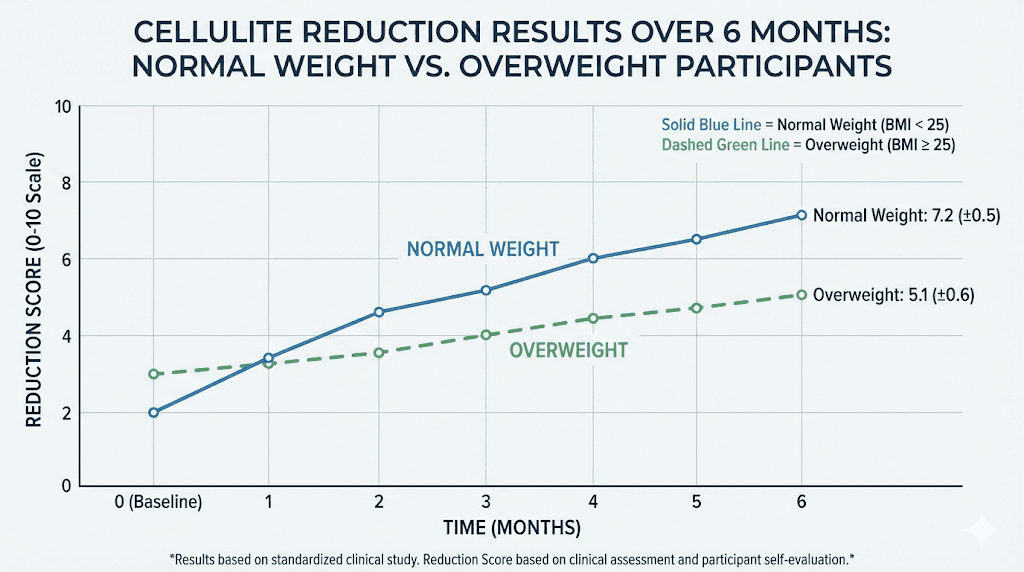
Normal weight women (BMI under 25) showed 9% cellulite reduction and 11.1% skin waviness improvement after six months. Overweight women (BMI 25+) showed 4% cellulite reduction with less pronounced skin smoothing.
Why the difference? Several possibilities:
Fat cell volume: More fat pushing against weakened connective tissue creates more significant dimpling. Strengthening collagen helps, but cannot fully counteract excessive upward pressure from expanded fat cells.
Inflammation: Excess adipose tissue produces inflammatory compounds that may impair collagen synthesis and accelerate breakdown. Chronically inflamed tissues may respond less effectively to collagen supplementation.
Circulation: Increased body fat can impair blood flow to peripheral tissues including skin. Reduced circulation may limit delivery of collagen peptides and nutrients to fibroblasts.
This does not mean overweight women should not take collagen peptides. The research showed benefits across all weight categories, just less pronounced in higher BMI groups. Collagen supplementation combined with weight management strategies may optimize results.
The research also has limitations. It studied women aged 24-50 with moderate cellulite. Severe cellulite or older age groups may respond differently. Individual variation exists, some women may see better or worse results than study averages.
Combining collagen with other peptides
SeekPeptides members often ask about stacking collagen with other therapeutic peptides. Here is guidance on potentially beneficial combinations.
Copper peptides (GHK-Cu)
GHK-Cu stimulates collagen and elastin production through different pathways than oral collagen supplementation. It provides copper needed for collagen crosslinking and offers antioxidant protection. Combining oral collagen peptides with topical or injectable GHK-Cu may provide synergistic skin benefits.
Topical GHK-Cu in serum form at 0.1-2% concentration can be applied directly to cellulite-prone areas. While it cannot penetrate to the depth where cellulite originates, it may improve overlying skin quality. Injectable GHK-Cu at 1-2mg daily provides systemic effects that complement oral collagen.
Growth hormone releasing peptides
Peptides like Ipamorelin and CJC-1295 stimulate growth hormone release. Growth hormone supports tissue repair and may enhance collagen synthesis. Some women report improved skin quality when using these peptides.
However, growth hormone releasing peptides require injection, carry more significant side effect profiles, and are not as well-studied specifically for cellulite. They represent a more advanced approach for those already optimizing other factors. Review our peptide stacking guide for combination protocols.
BPC-157 and TB-500
These tissue repair peptides enhance healing and may support connective tissue health. BPC-157 and TB-500 are typically used for injury recovery rather than cellulite specifically, but their connective tissue benefits could theoretically support collagen peptide effects.
Practical stacking approach
For cellulite specifically, a practical stack might include:
Oral collagen peptides: 5g daily (foundation)
Topical GHK-Cu serum: twice daily to problem areas
Vitamin C: 500-1000mg daily to support synthesis
More advanced stacks with injectable peptides should be discussed with healthcare providers familiar with peptide therapy. SeekPeptides provides detailed protocol information for members exploring these options.
Safety and side effects
Collagen peptides have an excellent safety profile. They are simply protein fragments, nutrients your body already produces and consumes through diet.
Common experiences
Most people tolerate collagen peptides without any issues. Reported experiences include:
Occasional mild bloating when first starting, usually resolving within days
Feeling of fullness as collagen is protein
Improved nail and hair quality as side benefits
Subtle improvements in joint comfort
Allergies and sensitivities
Collagen is derived from animal sources. Those with fish allergies should avoid marine collagen. Shellfish allergies typically do not crossreact with fish collagen, but those with severe allergies should exercise caution.
Bovine collagen suits those with fish sensitivities. Those avoiding all animal products will not find true collagen options, as plants do not produce collagen protein.
Medical considerations
Collagen peptides do not appear to interact significantly with medications. However, anyone with kidney disease should consult healthcare providers before adding protein supplements, as impaired kidneys may struggle to process increased amino acid loads.
Pregnant and breastfeeding women should consult healthcare providers, though collagen peptides are generally considered safe during these periods. Review our guide on peptides for women for more considerations.
Long-term safety
Studies using collagen peptides for up to 24 months report no significant adverse effects. Collagen supplementation essentially provides amino acids you would obtain from eating meat, fish, or bone broth, just in more concentrated, bioavailable form.
The main caution is quality. Poorly sourced collagen may contain contaminants. Stick to third-party tested products from reputable manufacturers.
Realistic expectations
Let us be direct about what collagen peptides can and cannot do for cellulite.
What collagen can do
Reduce cellulite severity by approximately 5-10% over six months
Decrease skin waviness by approximately 8-11% in normal weight women
Improve dermal density, making skin firmer overall
Enhance skin hydration and elasticity
Provide systemic benefits for skin, hair, nails, and joints
Address the structural cause rather than masking symptoms
What collagen cannot do
Eliminate cellulite completely
Produce dramatic results in days or weeks
Override the effects of significant weight gain
Work if used inconsistently
Replace the effects of invasive medical procedures
Change the fundamental female anatomy predisposing to cellulite
Who will see best results
Based on research, the best candidates for collagen peptide cellulite improvement are:
Women with mild to moderate cellulite
Those at or near healthy body weight
Those committed to consistent daily supplementation for 6+ months
Those with realistic expectations about gradual, modest improvement
Those willing to support supplementation with lifestyle factors
Who may be disappointed
Less ideal candidates include:
Those expecting rapid, dramatic results
Those with severe, longstanding cellulite
Those unwilling to commit to long-term supplementation
Those with significant excess weight they do not plan to address
Those looking for a single solution without lifestyle support
Cellulite is normal. Extremely normal. The vast majority of women have it regardless of fitness level. Collagen peptides offer modest, evidence-based improvement for those who want it. They do not offer transformation.
Getting started with collagen for cellulite
If you decide collagen peptides are worth trying, here is a practical implementation guide.
Week 1: Setup
Select a quality collagen product meeting specifications above
Take baseline photos of cellulite areas in consistent lighting
Note current skin hydration and texture
Begin with 2.5g daily, taken morning on empty stomach
Weeks 2-4: Establish routine
Maintain consistent daily dosing at same time
Increase water intake if not already at 2+ liters daily
Add vitamin C if not already supplementing or eating C-rich foods
Begin or maintain exercise program, emphasizing lower body
Do not expect visible changes yet
Weeks 5-8: Evaluate tolerance
If tolerating well, consider increasing to 5g daily
Note any improvements in skin hydration or overall skin feel
Continue exercise and hydration
Do not assess cellulite results yet, too early
Weeks 9-12: First assessment
Take comparison photos in same conditions as baseline
Look for subtle improvements in skin texture and waviness
Note any improvements in firmness
Do not be discouraged if changes are minimal, continue
Months 4-6: Full assessment
Take photos for comparison with baseline
Assess overall skin quality changes
Evaluate cellulite severity compared to start
Decide whether to continue based on results
Ongoing: Maintenance
If results are positive, continue supplementation to maintain
Benefits gradually reverse if supplementation stops
Consider periodic assessment every 3 months
Adjust dose based on results and budget
Use the SeekPeptides calculator for precise dosing and the cost calculator to estimate ongoing investment. Members access detailed tracking tools and protocol guidance through the SeekPeptides platform.
Frequently asked questions
How long until I see results from collagen for cellulite?
Most people need 3-6 months of consistent daily supplementation before seeing meaningful cellulite improvement. Peptide timelines vary by application, but collagen for cellulite specifically requires patience. Subtle hydration improvements may appear within 4-8 weeks, but structural changes to connective tissue take longer.
Can collagen completely get rid of cellulite?
No. The research shows 8-11% improvement in skin waviness and cellulite severity, not elimination. Cellulite is a structural feature influenced by genetics, hormones, and anatomy. Collagen peptides reduce severity but cannot override fundamental anatomy.
What type of collagen is best for cellulite?
Type I collagen, or a combination of Types I and III, with molecular weight under 5,000 Daltons. Marine or bovine sources both work. The specific Verisol collagen peptides used in research had 2,000 Dalton average molecular weight.
Should I take collagen on an empty stomach for cellulite?
Taking collagen on an empty stomach may improve absorption by reducing competition from other proteins. However, research shows benefits regardless of food timing. Consistency matters more than timing. Take it whenever you will actually remember to take it daily.
Will collagen help cellulite if I am overweight?
Yes, but results may be less pronounced. The research showed 4% cellulite reduction in overweight women compared to 9% in normal weight women. Weight management alongside collagen supplementation likely optimizes results.
Can I use topical collagen creams for cellulite?
Topical collagen cannot reach the dermal and subcutaneous layers where cellulite originates. Oral collagen peptides are the evidence-based approach. Topical products may improve surface skin quality but will not address cellulite structure.
How much collagen should I take daily for cellulite?
The cellulite study used 2.5 grams daily. General recommendations for skin health range from 2.5-10 grams. Starting with 2.5-5 grams daily is appropriate, potentially increasing based on response. See our dosing guide for more detail.
Do collagen peptides have side effects?
Collagen peptides are well-tolerated with minimal side effects. Some people experience mild bloating initially. Those with fish allergies should avoid marine collagen. Overall, collagen peptides have an excellent safety profile as they are simply protein fragments.
For researchers serious about optimizing their skin health protocols, SeekPeptides provides comprehensive resources, calculators, and community support for navigating the peptide landscape with confidence.
In case I do not see you, good afternoon, good evening, and good night. Join here.