Jan 22, 2026
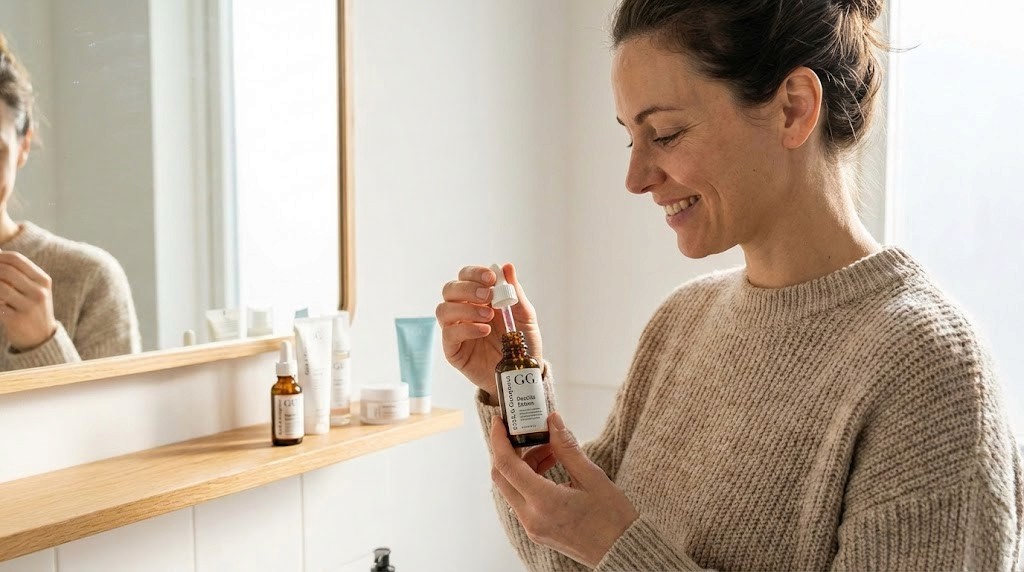
A $15 serum should not work this well. That is the consensus emerging from skincare communities worldwide, and it presents an interesting problem for anyone accustomed to believing that effective peptide products require premium price tags.
Geek and Gorgeous, a Hungarian skincare brand known for making professional-grade formulations accessible, has created something unusual with their Power Peptides serum. The formula packs four clinically-studied peptide technologies into a lightweight, milky texture that absorbs faster than most water-based serums. Users report visible improvements in fine lines and wrinkles within weeks. Dermatologists are recommending it to patients who cannot tolerate retinoids. And the ingredient list reads like something you would expect from a $100 product.
But here is where things get complicated.
The peptide skincare market has exploded in recent years. Walk into any Sephora or scroll through any skincare subreddit and you will encounter dozens of peptide serums making similar claims. Matrixyl this. Copper peptide that. Signal peptides, carrier peptides, enzyme-inhibiting peptides. The terminology alone could fill a biochemistry textbook. And most consumers have no idea whether the products they are buying contain peptides at effective concentrations or simply sprinkle them in for marketing purposes.
This guide breaks down everything you need to know about Geek and Gorgeous peptide products. We will analyze the specific peptide technologies they use, compare them to alternatives like other power peptide formulations, explain exactly how to incorporate them into your skincare routine, and help you decide whether this product deserves a spot in your regimen. Whether you are a peptide newcomer curious about the hype or an experienced skincare enthusiast comparing options, the information here will give you what you need to make an informed decision.
What makes Geek and Gorgeous different from other peptide brands
Founded in Hungary in 2018, Geek and Gorgeous operates on a philosophy that sounds almost too simple. Take proven active ingredients, formulate them at clinically effective concentrations, skip the luxury markup, and sell directly to consumers. The brand name itself signals the approach. Geek for the science-forward formulation philosophy. Gorgeous for the results-driven focus.
This model produces some striking price comparisons. Their retinal serums compete with products costing five to ten times more. Their vitamin C formulations match professional-grade concentrations at drugstore prices. And their peptide serum, Power Peptides, contains ingredient concentrations that rival serums selling for $80 to $150.
The company publishes their active ingredient percentages directly on product pages. This practice remains surprisingly rare in skincare, where many brands hide behind proprietary blend language to obscure how much of each ingredient actually ends up in the formula. When Geek and Gorgeous says their serum contains 3% Matrixyl 3000, that means exactly what it says. Not a trace amount. Not a token gesture. Three percent of the clinically studied concentration.
Transparency extends to their formulation decisions as well. The brand regularly publishes explanations of why they include certain ingredients and exclude others. They discuss stability considerations, pH requirements, and ingredient interactions in detail that most brands reserve for internal documentation. For consumers trying to understand what peptides actually do and whether specific products can deliver on their promises, this transparency proves invaluable.
The science-first formulation philosophy
Most skincare companies start with marketing concepts and work backwards to formulations. They identify trending ingredients, develop compelling narratives, and then figure out how to incorporate those ingredients into products, often at concentrations too low to produce meaningful results.
Geek and Gorgeous inverts this process.
Their product development begins with published research. What concentrations showed efficacy in clinical studies? What delivery systems improved ingredient penetration? What supporting ingredients enhanced stability or reduced irritation? Only after answering these questions do they move to formulation.
Power Peptides exemplifies this approach. The serum contains four distinct peptide technologies, each included at or above clinically studied concentrations. The base formula incorporates panthenol for barrier support, glycerin for hydration, and tapioca starch for a smooth finish. Every ingredient serves a specific purpose. Nothing exists purely for label appeal.
This methodology produces products that dermatologists and skincare professionals can recommend with confidence. When a patient asks about affordable anti-aging peptide options, Power Peptides consistently appears on recommendation lists alongside products costing three to five times more.
Breaking down the Power Peptides formula
The serum contains four primary peptide technologies, each targeting different aspects of skin aging. Understanding these ingredients requires a brief dive into peptide science, but the knowledge proves essential for evaluating any peptide product, not just this one.
Matrixyl 3000 (3%)
Matrixyl 3000 represents one of the most extensively studied peptide complexes in skincare. Developed by Sederma, a French ingredient company known for pioneering cosmetic peptide research, this technology combines two peptides that work synergistically to stimulate collagen production.
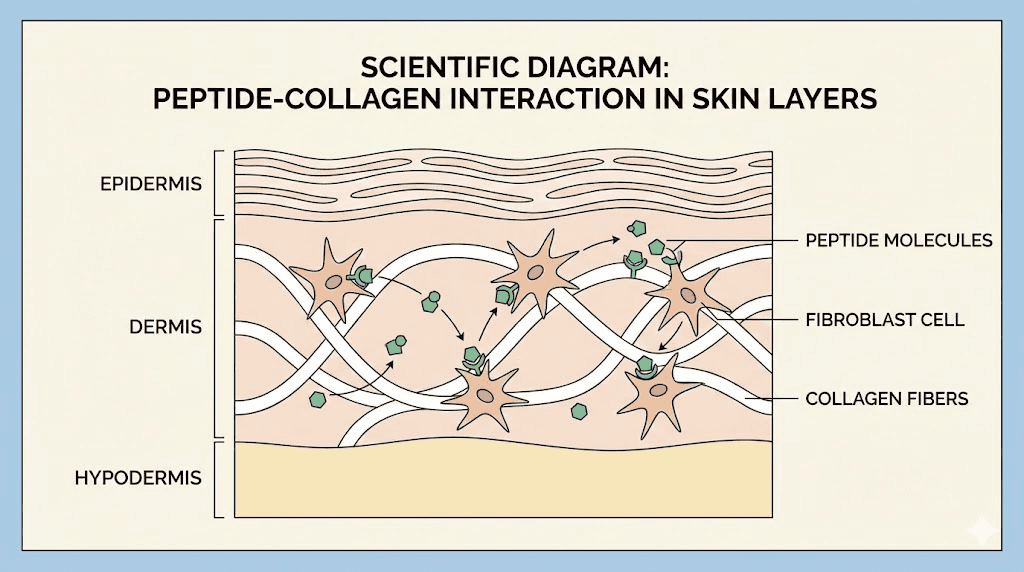
The first component, Palmitoyl Tripeptide-1, acts as a signal peptide. When skin breaks down collagen, it produces small peptide fragments as byproducts. These fragments signal to fibroblasts, the cells responsible for producing collagen, that repair work is needed. Palmitoyl Tripeptide-1 mimics these natural signaling fragments, essentially tricking the skin into ramping up collagen production without requiring actual tissue damage.
Palmitoyl Tetrapeptide-7, the second component, serves a protective function. This peptide helps reduce inflammation and prevent glycation, a process where sugars bind to proteins like collagen and elastin, causing them to become stiff and dysfunctional. By inhibiting glycation, this peptide helps preserve existing collagen while the first peptide stimulates new production.
Clinical studies on Matrixyl 3000 show impressive results. In one trial, participants applying a 3% concentration twice daily for two months experienced a 45% reduction in the area occupied by deep wrinkles. Skin tonicity increased by nearly 20%. A separate study on male participants showed similar results, with wrinkle volume decreasing by 17% and the surface area of deep wrinkles reduced by almost 30%.
Perhaps most notably, a four-month comparative study found Matrixyl 3000 matched the wrinkle-reducing effects of retinol without the irritation typically associated with retinoid use. This makes peptides particularly valuable for those with sensitive skin or those who struggle to tolerate stronger actives.
Matrixyl Synthe 6 (2%)
If Matrixyl 3000 focuses on collagen stimulation, Matrixyl Synthe 6 takes a broader approach to skin matrix repair. This peptide, also developed by Sederma, stimulates the production of six major components of the extracellular matrix.
The active ingredient, Palmitoyl Tripeptide-38, triggers the synthesis of collagen types I, III, and IV. It also promotes production of hyaluronic acid, fibronectin, and laminin. Each of these proteins plays a specific role in maintaining skin structure, hydration, and resilience.
Type I collagen provides tensile strength, the firmness that keeps skin from sagging. Type III collagen offers elasticity and flexibility. Type IV collagen forms the basement membrane, the interface between the epidermis and dermis that ensures proper communication between skin layers. Hyaluronic acid binds water to maintain hydration. Fibronectin acts as a scaffolding protein, helping other components organize properly. Laminin contributes to the structural integrity of the dermal-epidermal junction.
Clinical research on Matrixyl Synthe 6 demonstrates meaningful wrinkle reduction. In studies using 2% concentrations, participants reported wrinkle decreases ranging from 31% to 100% after two months of daily application. The peptide also improves skin roughness parameters by 8% to 9% and increases skin isotropy, producing a smoother, more uniform texture.
TEGO Pep 4-17 (4%)
Tetrapeptide-21, marketed as TEGO Pep 4-17 by ingredient supplier Evonik, brings a unique mechanism to the formula.
This peptide repeats a sequence found in multiple extracellular matrix proteins, including collagen types I through V, elastin, and pro-elastin.
Research comparing Tetrapeptide-21 to Matrixyl, one of the original peptide technologies, shows superior performance on multiple metrics. In an eight-week study involving 60 volunteers, Tetrapeptide-21 outperformed Matrixyl for skin volume, roughness, and elasticity improvements. A separate comparison found Tetrapeptide-21 increased skin elasticity by 41%, compared to 35% for Matrixyl.
In vitro studies on human dermal fibroblasts show even more dramatic differences. Collagen production in the presence of Tetrapeptide-21 measured almost double that achieved with Matrixyl, and approximately 2.5 times higher than control samples. The peptide also enhances the expression of hyaluronic acid synthase and fibronectin genes, contributing to improved hydration and skin structure.
Beyond collagen stimulation, Tetrapeptide-21 demonstrates the ability to cross the skin barrier into the dermis. This penetration capability addresses one of the persistent challenges with topical peptides. Many peptides show impressive results in lab settings but struggle to reach their target cells when applied to intact skin.
Understanding peptide penetration helps explain why some peptide products outperform others despite similar ingredient lists.
Copper Palmitoyl Heptapeptide-14 complex
The final peptide technology in Power Peptides brings copper peptide benefits without the stability challenges that plague many copper-containing formulations.
Traditional copper peptides like GHK-Cu offer powerful collagen-stimulating and wound-healing properties. However, they oxidize easily, losing potency when exposed to light, incompatible actives, or incorrect pH levels. The characteristic blue color of copper peptide serums often fades as the active ingredient degrades.
The Copper Palmitoyl Heptapeptide-14 complex used in Power Peptides addresses these stability issues through encapsulation technology. The copper peptide is paired with Heptapeptide-15 Palmitate and protected within a delivery system that releases the active gradually while protecting it from degradation.
This approach preserves the anti-wrinkle benefits of copper peptides while making the ingredient compatible with a wider range of formulations. Users can incorporate the serum into routines containing vitamin C or other actives that would typically degrade traditional copper peptides.
The complete ingredient analysis
Beyond the four primary peptide technologies, Power Peptides contains a thoughtfully designed supporting cast of ingredients. Each serves a specific function in delivering the active ingredients or maintaining skin health.
Water (Aqua) forms the base of the formula, providing the medium in which water-soluble ingredients dissolve and penetrate the skin.
Glycerin acts as a humectant, drawing moisture from the environment and deeper skin layers to maintain hydration. This ingredient also helps peptides penetrate more effectively by keeping the stratum corneum, the outermost skin layer, properly hydrated.
Butylene Glycol and Pentylene Glycol serve dual purposes as humectants and penetration enhancers. They also provide antimicrobial properties that help preserve the formula.
Panthenol, present at approximately 1.4% to 2%, provides significant barrier support. This vitamin B5 derivative reduces inflammation, accelerates healing, and helps maintain the integrity of protective barriers. Its inclusion addresses the potential for sensitization that can occur with some peptide formulations.
Caprylic/Capric Triglyceride, Dicaprylyl Carbonate, and Dicaprylyl Ether contribute emollient properties, creating the smooth, milky texture that characterizes the serum. These ingredients also help deliver fat-soluble peptide components while providing a non-greasy finish.
Saccharide Isomerate offers deep hydration through a mechanism distinct from glycerin. This ingredient binds to the skin through a process that provides lasting moisture without the sticky feel some humectants produce.
Allantoin adds soothing and healing properties, complementing the panthenol in supporting barrier function and reducing potential irritation.
Tapioca Starch absorbs excess oil and contributes to the elegant finish. This ingredient allows the serum to work for all skin types, including those with oily or combination skin who might find other peptide serums too rich.
What the formula excludes proves equally important. Power Peptides contains no harsh alcohols that could damage the barrier. No common allergens that might trigger reactions. No fragrances that could cause sensitization over time. No silicones that might interfere with ingredient penetration. No parabens that some consumers prefer to avoid. This clean formulation makes the product suitable for sensitive skin types and allows it to layer compatibly with most other skincare products.
How to use Geek and Gorgeous peptides in your routine
Peptide serums offer remarkable flexibility in skincare routines.
Unlike retinoids, which require careful introduction and sun avoidance, or acids, which demand attention to pH and layering order, peptides play well with almost everything.
Basic application method
Apply Power Peptides to clean, dry skin. Dispense three to four drops, about one pump, onto fingertips and gently press into the face and neck. The milky texture absorbs quickly, leaving skin soft without tackiness.
The serum works in both morning and evening routines. Unlike light-sensitive ingredients such as retinoids, peptides remain stable when exposed to sunlight. Their non-irritating nature means twice-daily application poses no risk of over-exfoliation or sensitization.
For optimal results, allow the serum to absorb for thirty seconds to one minute before applying subsequent products. This brief wait time ensures the peptides contact the skin directly rather than mixing with the next layer before absorption.
Morning routine integration
Peptides make excellent partners for morning skincare.
Their anti-inflammatory properties help calm skin before makeup application, and their hydrating base provides a smooth canvas for subsequent products.
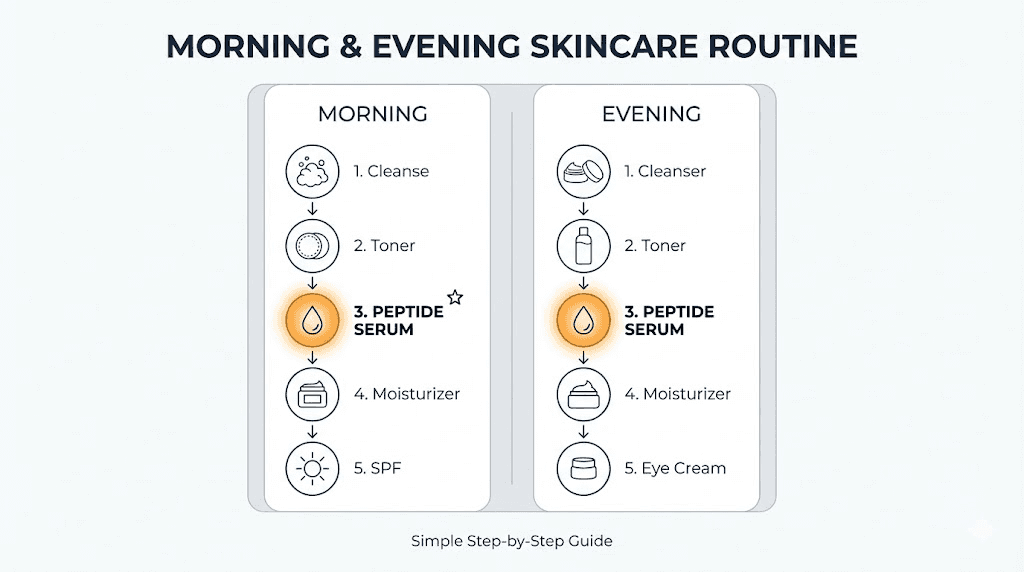
A typical morning routine might flow as follows. Cleanse with a gentle, non-stripping cleanser. Apply any water-based actives such as vitamin C serum or niacinamide. Follow with Power Peptides. Add a moisturizer if needed, though the serum provides enough hydration for some skin types. Finish with broad-spectrum sunscreen.
The combination of vitamin C and peptides in the morning offers complementary benefits. Vitamin C provides antioxidant protection against environmental damage, while peptides support collagen maintenance and repair. Neither ingredient interferes with the other, making them ideal routine partners.
Evening routine integration
Evening routines allow for more powerful actives, and peptides help buffer their effects while amplifying their benefits.
For those using retinoids, peptides can apply before or after the retinoid depending on texture and preference. Thinner formulations typically go first, so if using a cream-based retinoid, apply the peptide serum first. If using a thin retinol serum, the peptide serum might go second.
Peptides help reduce the irritation associated with retinoid use. Their barrier-supporting ingredients like panthenol calm the skin while the peptides themselves support the collagen-building goals of retinoid therapy. Many users find they can tolerate stronger retinoids or use them more frequently when incorporating peptide serums.
A typical evening routine for anti-aging focused care might include cleansing, possibly a gentle toner, Power Peptides, retinoid, and occlusive moisturizer. This layering delivers multiple collagen-supporting mechanisms while protecting the skin barrier.
Combinations to embrace
Peptides and hyaluronic acid: This combination amplifies hydration while supporting collagen. Since Matrixyl Synthe 6 stimulates hyaluronic acid production in the skin, adding topical hyaluronic acid provides immediate hydration while the peptides work on longer-term production.
Peptides and niacinamide: Both ingredients support barrier function and work through complementary mechanisms. Niacinamide boosts ceramide production while peptides stimulate collagen and elastin. Together they create a comprehensive approach to skin structure and resilience.
Peptides and vitamin C: As noted, these morning routine partners provide antioxidant protection alongside collagen support. The specific copper peptide complex in Power Peptides maintains stability even when used alongside vitamin C.
Peptides and retinoids: This evening combination targets aging from multiple angles. Retinoids accelerate cell turnover and prevent collagen breakdown, while peptides stimulate new collagen production. The supportive ingredients in peptide serums help minimize retinoid-related irritation.
Peptides and moisturizers: Simple but effective. Applying peptides under a moisturizer helps seal them against the skin and can enhance penetration through occlusion.
Combinations to avoid
While peptides prove remarkably compatible, a few combinations warrant caution.
Peptides and strong acids: Alpha hydroxy acids and beta hydroxy acids at high concentrations can hydrolyze peptide bonds, breaking them into less effective fragments. This does not mean you cannot use acids and peptides in the same routine, but apply them at different times. Use acids in the evening and peptides in the morning, or vice versa. If using both at night, apply acid first, wait twenty minutes for pH to normalize, then apply peptides.
Peptides and benzoyl peroxide: This acne treatment can oxidize and degrade some peptide ingredients. If using benzoyl peroxide, apply it at a different time than peptide serums.
Too many peptide serums at once: While layering different types of actives often makes sense, using multiple peptide serums simultaneously rarely provides additional benefit. The skin can only produce so much collagen at once, and the signaling pathways overlap significantly between different peptide technologies. Choose one well-formulated peptide serum rather than layering several.
Comparing Geek and Gorgeous to alternatives
The peptide serum market includes options at every price point, from drugstore formulas under $10 to luxury serums exceeding $300. Understanding how Power Peptides compares requires examining both ingredient quality and real-world results.
Versus The Ordinary Buffet
The Ordinary Multi-Peptide + HA Serum, commonly called Buffet, represents the other dominant player in affordable peptide skincare. At roughly $17, it matches Power Peptides on price while taking a different formulation approach.
Buffet contains Matrixyl 3000 and Matrixyl Synthe 6, overlapping with Power Peptides on these core technologies. It adds Argireline, a peptide that works similarly to Botox by relaxing muscle contractions. It also includes Syn-Ake, another muscle-relaxing peptide, and a different copper peptide complex.
The key differences lie in what each serum emphasizes. Buffet focuses on muscle-relaxing peptides alongside collagen stimulators. This approach particularly targets expression lines, the wrinkles that form from repeated facial movements. Power Peptides concentrates on collagen stimulation and elasticity, addressing overall skin firmness and texture rather than specific expression lines.
Texture also differs significantly. Buffet has a thinner, more watery consistency that absorbs quickly but can leave some skin types feeling insufficiently moisturized. Power Peptides offers a richer, milky texture that provides more immediate hydration while still absorbing cleanly.
Neither product is objectively better. The choice depends on primary concerns. If expression lines around the eyes and forehead represent the main aging concern, Buffet might prove more targeted. If overall firmness, elasticity, and texture take priority, Power Peptides addresses those more comprehensively.
Versus Drunk Elephant Protini Polypeptide Cream
Moving up in price, Drunk Elephant Protini ($68) offers a cream rather than serum format, with signal peptides, growth factors, and a supporting cast of amino acids.
The significantly higher price reflects Drunk Elephant marketing and packaging more than dramatically different or more effective ingredients. Protini works well as an all-in-one product for those who prefer minimal steps, but Power Peptides delivers comparable peptide technology at a fraction of the cost, allowing users to choose their own moisturizer rather than accepting a bundled format.
Versus high-end options
Premium peptide serums from brands like SkinCeuticals, Revision, or Olay Regenerist Pro-X can exceed $100 while containing similar core ingredients to Power Peptides.
The main differences typically involve elegant textures, proprietary delivery systems, and extensive clinical testing on final formulations rather than individual ingredients.
For budget-conscious consumers, these differences rarely justify three to seven times the price. For those who value specific textures, enjoy luxury skincare experiences, or want products tested as complete formulations rather than relying on ingredient studies, premium options may hold appeal.
The practical takeaway? Geek and Gorgeous Power Peptides delivers legitimate, clinically studied peptide technologies at concentrations that match or exceed most alternatives regardless of price point. The brand accomplishes this through direct-to-consumer sales, minimal marketing budgets, and a focus on formulation over packaging.
Real results and realistic expectations
Peptides work, but they work slowly. Managing expectations requires understanding both the timeline for visible changes and the limitations of what topical products can achieve.
Timeline for results
Week 1-2: Immediate improvements in hydration and skin texture become apparent quickly. The humectants and emollients in the formula provide instant benefits that continue to build with consistent use. Fine dehydration lines, which result from dryness rather than collagen loss, may diminish within the first week.
Week 2-4: Skin begins to look more resilient and plump. The barrier-supporting ingredients like panthenol show cumulative effects, and the initial collagen-stimulating signals from peptides start producing measurable changes at the cellular level, though these remain invisible to the naked eye.
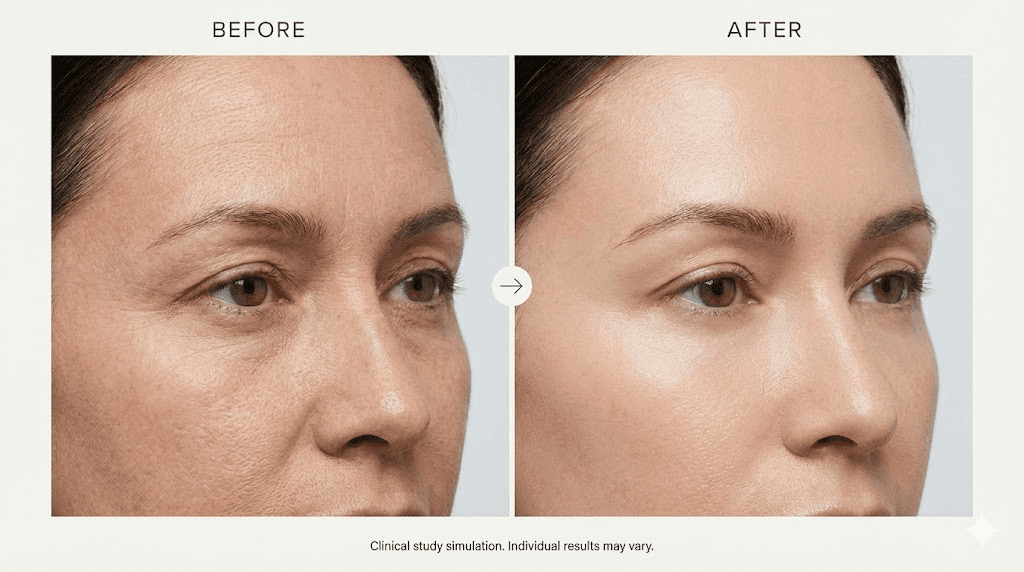
Week 4-8: Clinical studies show this timeframe for visible wrinkle reduction to become apparent. Users report improvements in fine lines around the eyes and mouth, smoother skin texture, and a more even, luminous complexion. One bottle of Power Peptides typically lasts about four months with twice-daily use, meaning meaningful results should emerge before the first bottle finishes.
Week 8-12: Continued improvement as collagen production accumulates. Deeper wrinkles may show modest improvement, though expectations should remain realistic. Topical peptides cannot duplicate the results of cosmetic procedures, but they can meaningfully slow aging progression and improve overall skin quality.
Beyond 12 weeks: Maintenance and continued gradual improvement. Peptides offer greatest benefit as part of a consistent long-term routine rather than as an occasional treatment. Stopping use will not immediately reverse results, but the ongoing collagen-stimulating effects cease.
What peptides can and cannot do
Peptides CAN:
Reduce the appearance of fine lines and shallow wrinkles
Improve skin firmness and elasticity over time
Enhance skin texture and smoothness
Support barrier function and reduce sensitivity
Provide hydration and plumping effects
Work compatibly with most other skincare actives
Offer an alternative for those who cannot tolerate retinoids
Complement retinoid therapy for enhanced anti-aging benefits
Peptides CANNOT:
Eliminate deep wrinkles or significant volume loss
Replicate the effects of Botox or dermal fillers
Produce dramatic overnight transformations
Treat severe sun damage or precancerous lesions
Replace the effects of professional treatments
Work without consistent, long-term use
SeekPeptides provides comprehensive resources for understanding realistic expectations from various peptide applications, helping users distinguish between marketing promises and achievable outcomes.
Documented user experiences
Reviews from verified purchasers consistently highlight several themes.
Texture receives universal praise. Users describe the serum as lightweight, non-sticky, and fast-absorbing. Unlike some peptide products that leave a tacky film, Power Peptides creates a smooth, slightly velvety finish that layers well under other products.
Efficacy reports align with clinical study timelines. Users noting improvement in fine lines typically report changes appearing around the four to six week mark. Those using the product alongside retinoids frequently mention reduced irritation and faster adaptation to stronger formulations.
Value perception stands out as perhaps the most common theme. Reviewers who previously used expensive peptide serums express surprise that a $15 product performs comparably or better. Several describe switching permanently from products costing $60 to $100.
One detailed review describes using the product daily for four months, resulting in noticeable improvement in deeper forehead lines and fine lines around the eyes. The reviewer notes that a single bottle covered the entire period with twice-daily application, making the cost per use remarkably low.
Understanding peptide science for skincare
To evaluate any peptide product, understanding basic peptide science helps distinguish legitimate formulations from marketing fluff.
What are peptides
Peptides are short chains of amino acids, the building blocks of proteins. When amino acid chains exceed roughly 50 units, scientists typically classify them as proteins rather than peptides. The peptides used in skincare typically contain between two and fifty amino acids.
Different peptide sequences perform different functions. Some sequences signal cells to produce collagen or other structural proteins. Some carry other ingredients into the skin. Some inhibit enzymes that break down existing collagen. Some relax muscles to reduce expression lines.
The specific sequence matters enormously. Changing even one amino acid can dramatically alter a peptide function. This explains why skincare companies patent specific peptide sequences rather than generic peptide categories.
Types of peptides in skincare
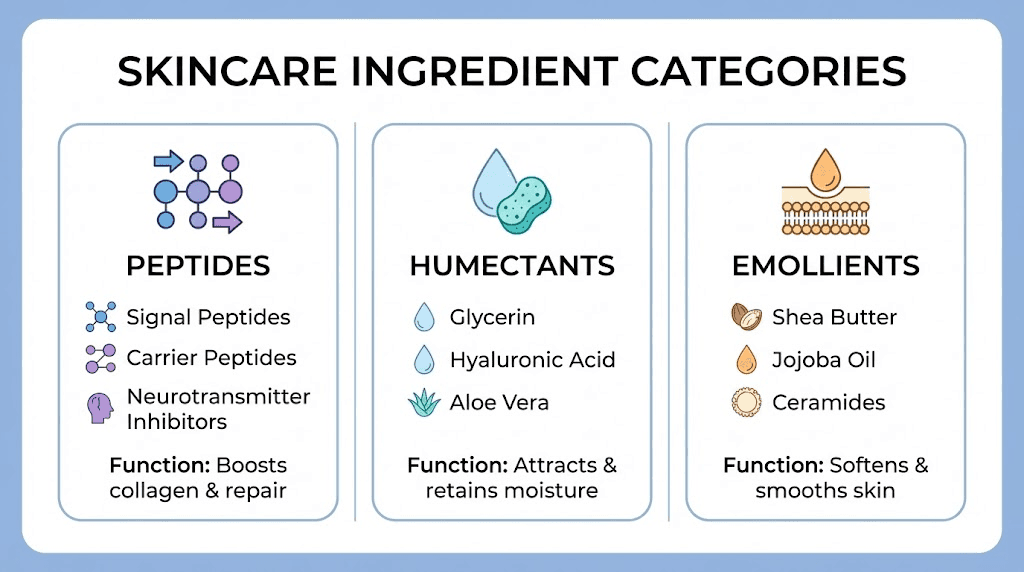
Signal peptides: These sequences tell cells to produce specific proteins. Matrixyl 3000, Matrixyl Synthe 6, and TEGO Pep 4-17 all function as signal peptides, triggering collagen and other structural protein production.
Carrier peptides: These sequences transport other molecules into the skin. Copper peptides often fall into this category, using the peptide portion to deliver copper to target cells where it participates in enzymatic reactions.
Enzyme inhibitor peptides: These sequences block enzymes that break down collagen or other structural proteins. Rather than stimulating new production, they preserve existing proteins by preventing degradation.
Neurotransmitter inhibitor peptides: Argireline and Syn-Ake work by relaxing muscle contractions, similar to Botox but through topical application. Their effects prove more subtle than injectable alternatives.
Snap-8 and similar peptides represent another approach to muscle relaxation, targeting different steps in the nerve-to-muscle communication pathway.
Why formulation matters
Having the right peptides in a formula means nothing if they cannot reach their target cells.
Several factors determine whether topical peptides actually work.
Concentration: Clinical studies use specific concentrations. Products containing trace amounts of peptides, included solely for label appeal, cannot replicate study results. Power Peptides publishes exact percentages that match or exceed studied concentrations.
Stability: Peptides can degrade through exposure to light, air, or incompatible ingredients. Formulation must protect peptide integrity throughout the product shelf life. Airless pumps, opaque packaging, and compatible supporting ingredients all contribute to maintaining potency.
pH: Some peptides require specific pH ranges to remain stable and effective. Formulations at incorrect pH levels may contain degraded peptides regardless of what the label claims.
Penetration: The stratum corneum, the skin outer barrier, prevents most large molecules from passing through. Lipid-modified peptides, like the palmitoyl versions used in Matrixyl technologies, attach fatty acid chains that improve penetration through lipid-rich skin layers.
Delivery systems: Advanced formulations use encapsulation or other delivery technologies to improve peptide penetration and protect actives from degradation. The copper peptide complex in Power Peptides uses encapsulation for both purposes.
Copper peptides deserve special attention
Among the peptide technologies in Power Peptides, the copper component warrants additional discussion. Copper peptides have a fascinating history and unique benefits that set them apart from other skincare peptides.
The discovery of copper peptides
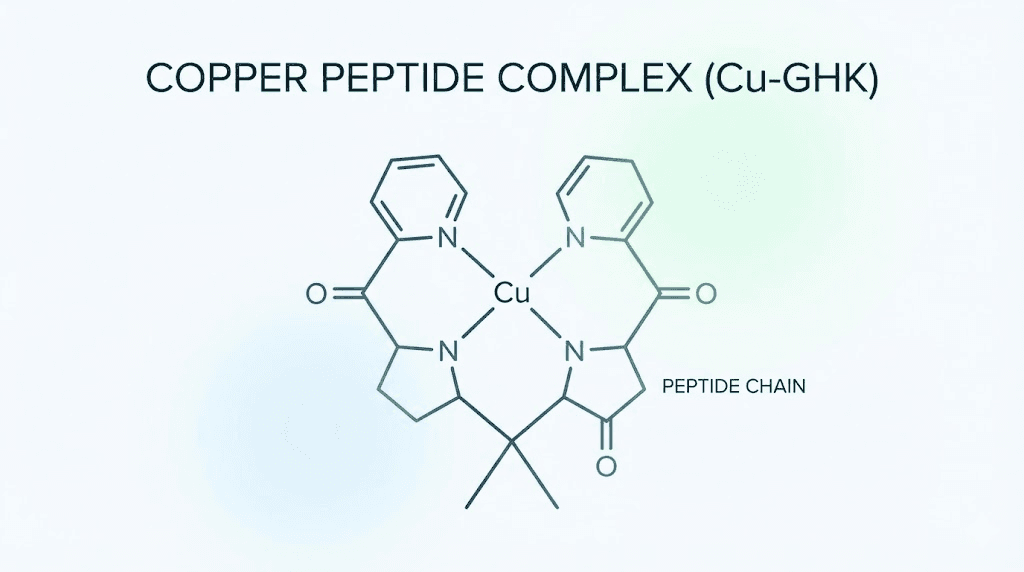
In 1973, researcher Loren Pickart discovered GHK-Cu while studying wound healing. He isolated this tripeptide-copper complex from human blood plasma, where it appeared to play a role in tissue regeneration. The original research had nothing to do with cosmetics. Scientists were investigating fundamental mechanisms of healing.
Over subsequent decades, research revealed that copper peptides stimulate collagen and elastin production, promote blood vessel growth, support wound healing, and demonstrate anti-inflammatory effects.
The cosmetic applications emerged as scientists recognized that aging skin shares characteristics with wounded skin, including collagen breakdown, impaired healing, and increased inflammation.
How copper peptides work
Copper serves as a cofactor for several enzymes essential to skin health. Lysyl oxidase, an enzyme that crosslinks collagen and elastin fibers to provide structural integrity, requires copper to function. Superoxide dismutase, an antioxidant enzyme that protects against free radical damage, also depends on copper.
The peptide portion of copper peptides delivers copper to specific cellular targets while also providing independent signaling functions. This dual mechanism explains why copper peptides often outperform either copper alone or similar peptides without copper.
Research demonstrates that copper peptides improve wrinkle depth, increase skin thickness, enhance elasticity, and accelerate wound healing.
Some studies show improvements in approximately 70% of participants after twelve weeks of topical use.
Stability challenges and solutions
Traditional copper peptides present formulation challenges. They oxidize readily, losing potency when exposed to air. They can react with other common skincare ingredients. The characteristic blue color fades as the copper oxidizes, providing a visible indicator of degradation but no way to prevent it.
Geek and Gorgeous addressed these challenges by using an encapsulated copper peptide complex rather than traditional free copper peptides. The Copper Palmitoyl Heptapeptide-14 paired with Heptapeptide-15 Palmitate maintains stability while preserving efficacy. Users can incorporate the serum into routines containing vitamin C or retinol without the incompatibility concerns that plague traditional copper peptide formulations.
This stability advantage extends shelf life and ensures consistent potency throughout the product use period. It also simplifies routine building for consumers who previously had to carefully separate copper peptides from other actives.
Copper peptides versus other peptide types
Different peptide categories offer complementary rather than competing benefits. Signal peptides like Matrixyl tell cells to produce collagen. Copper peptides provide the cofactors cells need to actually produce functional collagen and crosslink it properly. Using both together addresses the signaling side and the execution side of collagen production.
This explains why comprehensive formulations like Power Peptides include multiple peptide types. The technologies work through different mechanisms that amplify rather than duplicate each other effects.
For those interested in exploring copper peptides further, SeekPeptides offers extensive resources on GHK-Cu dosing, before and after results, and application methods beyond topical skincare.
Common questions and troubleshooting
New users often encounter questions during their first weeks with peptide serums. Addressing common concerns helps set appropriate expectations and resolve issues that might otherwise lead to product abandonment.
Why am I not seeing results yet
Peptides require patience. Unlike acids that exfoliate immediately or retinoids that can cause visible peeling within days, peptides work at the cellular level on processes that take weeks to manifest visibly.
If using for less than four weeks, continue the product before evaluating effectiveness. Most clinical studies run eight to twelve weeks before measuring outcomes. Early discontinuation may occur precisely when results would begin appearing.
If using for over eight weeks without improvement, consider whether other factors limit efficacy. Sun exposure without adequate protection can damage collagen faster than peptides can stimulate replacement. Poor sleep, high stress, smoking, or inadequate nutrition all impair the skin ability to respond to topical treatments. Addressing these factors may allow the peptide serum to work more effectively.
Can I use this if I have sensitive skin
Peptides rank among the gentlest active ingredients in skincare. Unlike retinoids, acids, or vitamin C, which can all trigger irritation in sensitive individuals, peptides rarely cause adverse reactions. The Power Peptides formula specifically excludes common sensitizers like fragrance, essential oils, and harsh preservatives.
Those with extremely reactive skin might patch test before full-face application. Apply a small amount behind the ear or on the inner arm daily for three to five days. If no reaction occurs, proceed with facial use.
Paradoxically, peptides often help sensitive skin types by supporting barrier function. The panthenol in Power Peptides specifically calms inflammation and accelerates healing. Regular use may reduce overall sensitivity over time.
My skin looks worse initially
True purging, where skin breaks out as existing clogs come to the surface, occurs with cell-turnover accelerating ingredients like retinoids and acids. Peptides do not significantly accelerate cell turnover and should not cause purging.
If breakouts begin after starting a peptide serum, consider whether other factors might explain the timing. New laundry detergent, dietary changes, hormonal fluctuations, stress, or other product changes could coincide with the peptide introduction.
Alternatively, some people react to specific ingredients in any skincare product. While Power Peptides excludes common irritants, individual sensitivities vary. If breakouts persist beyond two weeks without improvement, discontinue use and consult a dermatologist.
Can I use this while pregnant or breastfeeding
Peptide serums generally receive the green light during pregnancy and breastfeeding, unlike retinoids which carry documented risks. The peptides in Power Peptides do not penetrate deeply enough or reach concentrations that raise safety concerns.
As always, discuss any skincare products with a healthcare provider during pregnancy. While peptides pose no known risks, individual circumstances may warrant personalized guidance.
How do I store this product
Room temperature storage works fine for Power Peptides. The formulation maintains stability under normal household conditions. Refrigeration is not necessary but will not harm the product if preferred.
Avoid storing in hot locations like bathroom cabinets near shower steam or in direct sunlight. Heat can degrade ingredients faster, though the airless pump packaging provides protection against many environmental factors.
The product should last through its entire contents when used at recommended rates. Unlike some copper peptide products that visibly change color as they degrade, the encapsulated technology in Power Peptides maintains consistent appearance throughout use.
Building a complete anti-aging routine around peptides
While Power Peptides delivers meaningful anti-aging benefits alone, optimal results come from comprehensive routines addressing multiple aging mechanisms.
The foundation: sun protection
No anti-aging routine matters without adequate sun protection. UV radiation causes an estimated 80% to 90% of visible skin aging. Stimulating collagen production while simultaneously destroying it through sun exposure creates an endless cycle that peptides cannot overcome.
Use broad-spectrum SPF 30 or higher daily, regardless of weather or indoor plans. UV rays penetrate clouds and windows. Reapply every two hours during extended sun exposure.
The accelerator: retinoids
Retinoids remain the gold standard for anti-aging. They accelerate cell turnover, prevent collagen breakdown, and stimulate collagen production through mechanisms distinct from peptides. Using retinoids and peptides together addresses aging from multiple angles.
Geek and Gorgeous offers companion retinal serums at various strengths. Their A-Game line provides stabilized retinaldehyde, a retinoid form that converts directly to active retinoic acid in the skin. Starting with lower concentrations and gradually increasing allows the skin to adapt while minimizing irritation.
Peptides help buffer retinoid irritation. The barrier-supporting ingredients in Power Peptides specifically address the dryness and sensitivity that often accompany retinoid initiation. Many users find they tolerate stronger retinoids when incorporating peptide support.
The antioxidants: vitamin C and beyond
Antioxidants protect against environmental damage while providing additional collagen support. Vitamin C in particular serves as a necessary cofactor for collagen synthesis, similar to copper but through different enzymatic pathways.
Morning routines benefit from antioxidant serums applied before peptides. The antioxidants provide immediate protection while peptides work on longer-term structural improvement. Vitamin E, ferulic acid, and resveratrol offer complementary antioxidant benefits when included in vitamin C formulations.
The hydrators: hyaluronic acid and beyond
Dehydrated skin ages faster and shows existing aging more prominently.
Maintaining hydration through humectants like hyaluronic acid supports all other anti-aging efforts while providing immediate visual improvement.
Power Peptides contains glycerin and saccharide isomerate for hydration, but those with very dry skin or living in arid climates might benefit from additional hyaluronic acid layers. Apply hyaluronic acid to damp skin, follow with peptides, then seal with moisturizer.
Sample routine for comprehensive anti-aging
Morning:
Gentle cleanser or water rinse
Vitamin C serum (wait one to two minutes to absorb)
Power Peptides
Moisturizer if needed
Broad-spectrum SPF 30+
Evening:
Oil cleanser or micellar water for makeup removal
Gentle foaming or gel cleanser
Hyaluronic acid serum on damp skin (optional)
Power Peptides (wait one minute)
Retinal serum (A-Game 5, 10, or 20 depending on tolerance)
Rich moisturizer or facial oil
This routine incorporates multiple anti-aging mechanisms: antioxidant protection, collagen stimulation through peptides, cell turnover acceleration through retinoids, and barrier maintenance through hydration and occlusion.
Adjust frequencies based on skin tolerance, potentially using retinoids every other night initially.
Peptide skincare myths debunked
Marketing claims and internet rumors create confusion around peptides. Separating fact from fiction helps consumers make informed decisions.
Myth: expensive peptide products work better
Price correlates poorly with efficacy in skincare generally, and peptides specifically. What matters is concentration, stability, and formulation quality. A $150 serum containing trace amounts of peptides in an unstable base performs worse than a $15 serum with clinical concentrations in a stable formula.
Geek and Gorgeous demonstrates this principle clearly. Their transparent labeling shows ingredient concentrations that match or exceed products costing ten times more. The brand achieves this through direct-to-consumer sales, minimal marketing budgets, and focusing resources on formulation rather than packaging.
Myth: peptides can replace Botox
Some peptides, like Argireline and Syn-Ake, work through mechanisms similar to Botox, relaxing muscle contractions that cause expression lines. However, topical application cannot replicate injectable results.
Injected Botox delivers precise concentrations directly to target muscles. Topical peptides must penetrate the skin, reach underlying muscles, and achieve sufficient concentrations to produce meaningful effects. The muscles receiving topical treatment show modest relaxation at best.
This does not mean these peptides lack value. They can soften expression lines over time, particularly with consistent use. But anyone expecting Botox-like results from a serum will find disappointment.
Myth: you need multiple peptide serums
More is not always better with peptides. A well-formulated serum containing multiple peptide technologies at effective concentrations delivers comprehensive benefits. Adding additional peptide serums rarely provides proportional benefits.
The collagen-producing pathways in skin have limited capacity. Once stimulated, additional signals produce diminishing returns. And most peptide serums target overlapping mechanisms, duplicating rather than complementing each other.
Power Peptides contains four distinct peptide technologies addressing different aspects of skin aging. This comprehensive approach eliminates the need for additional peptide products in most routines.
Myth: peptides work immediately
Some skincare ingredients do work immediately. Hyaluronic acid plumps skin within minutes by drawing water. Silicones smooth texture by filling fine lines optically. Illuminating ingredients add instant radiance through light-reflecting particles.
Peptides do none of these things. They work by stimulating biological processes that take weeks to produce visible results. Anyone expecting immediate transformation from peptides fundamentally misunderstands how they work.
The immediate benefits from peptide serums come from supporting ingredients, not the peptides themselves. Glycerin provides instant hydration. Panthenol calms inflammation. Emollients smooth texture. These effects appear immediately and improve with continued use, but the peptide-specific benefits require patience.
Myth: peptides are just marketing hype
Skepticism toward skincare claims makes sense given the industry history of exaggerated promises. However, dismissing peptides as pure hype ignores substantial clinical evidence.
Matrixyl technologies have been studied in randomized, placebo-controlled trials showing statistically significant wrinkle reduction.
Tetrapeptide-21 has demonstrated collagen production increases measured in cell culture and visible improvements measured in human subjects. Copper peptides have decades of research supporting their wound-healing and anti-aging properties.
Not all peptide products deliver on their promises. Formulations with trace amounts at unstable pH levels in compromised packaging may indeed be pure marketing. But well-formulated products with proven ingredients at effective concentrations produce real results, even if those results require weeks of consistent use to manifest.
Beyond skincare: understanding peptides comprehensively
For those whose interest in peptides extends beyond topical skincare, SeekPeptides provides comprehensive resources on peptide research across applications.
The same mechanisms that make peptides effective for skin, signaling cells to produce specific proteins, supporting healing, reducing inflammation, apply throughout the body. Researchers study peptides for muscle growth, fat loss, cognitive function, injury healing, and numerous other applications.
Understanding peptide science at a fundamental level helps evaluate any peptide product, whether for skin or other purposes. The principles of concentration, stability, and delivery system quality apply regardless of the specific peptide or application method.
SeekPeptides members access detailed guides on peptide dosing, storage, reconstitution, and safety considerations. The platform provides evidence-based information to help researchers make informed decisions about peptide protocols.
Where to buy and what to expect
Geek and Gorgeous sells directly through their website with shipping to most countries. The brand also has presence on Amazon in some markets, though purchasing directly ensures freshest stock and access to complete product range.
Power Peptides typically costs around $15 to $18 depending on location and currency. A 30ml bottle lasts approximately four months with twice-daily use, making the cost per application remarkably low compared to alternatives.
The brand frequently runs promotions and offers bundle discounts for purchasing multiple products. Combining Power Peptides with A-Game retinal serums provides a comprehensive anti-aging routine at prices most brands charge for a single product.
Shipping times vary by location. European customers typically receive orders within days. International shipping can take one to three weeks. The brand packages products carefully with appropriate insulation during temperature extremes.
Frequently asked questions
Is Geek and Gorgeous Power Peptides good for oily skin?
Yes. The lightweight, milky texture absorbs quickly without leaving residue. Tapioca starch in the formula absorbs excess oil. Many oily-skinned users find they can use this serum without additional moisturizer in warm weather, as the formula provides sufficient hydration without heaviness.
Can I use Power Peptides around my eyes?
Absolutely. The formula contains no ingredients likely to irritate the delicate eye area. Many users apply it directly to crow feet, under-eye lines, and even eyelids. The peptide technologies specifically target fine lines, making the eye area an ideal application zone.
How does Power Peptides compare to prescription treatments?
Topical peptides cannot replicate results from prescription retinoids, injectables, or professional treatments. They offer a gentler, more gradual approach suitable for maintenance between treatments, for those who cannot tolerate stronger options, or as part of comprehensive routines. Professional peptide treatments and clinical options provide stronger effects for those seeking more dramatic results.
Will this product cause my skin to purge?
No. Purging occurs with ingredients that accelerate cell turnover, pushing existing clogs to the surface. Peptides do not significantly affect cell turnover rates. Any breakouts coinciding with peptide serum use likely result from other factors or individual ingredient sensitivities rather than purging.
Can men use this product?
Peptide skincare works identically regardless of gender. Clinical studies on Matrixyl 3000 specifically included male participants and demonstrated similar wrinkle reduction to female subjects. Men seeking to address aging concerns benefit equally from peptide formulations. Peptides for men represent a growing category as more men incorporate active skincare.
How long does a bottle last?
Using three to four drops twice daily, a 30ml bottle typically lasts four months. This extended duration contributes to the exceptional value proposition, as the per-use cost falls well below one cent even at full retail price.
External resources
NIH: Regenerative and Protective Actions of the GHK-Cu Peptide
MDPI: Topical Peptide Treatments with Effective Anti-Aging Results
In case I do not see you, good afternoon, good evening, and good night.