Jan 16, 2026
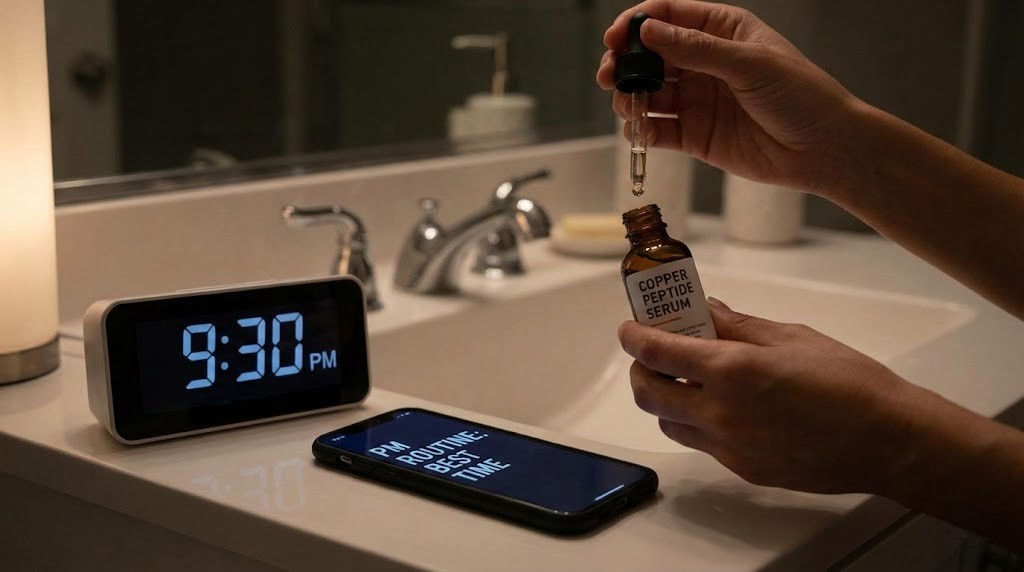
Some researchers apply copper peptides in the morning and see remarkable results. Others use them exclusively at night and swear by the difference. The timing debate has fractured the skincare community into opposing camps, each convinced their approach is superior. Both are partially right. And both are missing something crucial about how GHK-Cu actually works with your skin's natural rhythms.
The confusion makes sense. Copper peptides behave differently than most active ingredients. They don't cause photosensitivity like retinol, so morning application seems safe. But they also support collagen synthesis and tissue repair, processes that accelerate while you sleep. This creates a genuine question that generic advice can't answer.
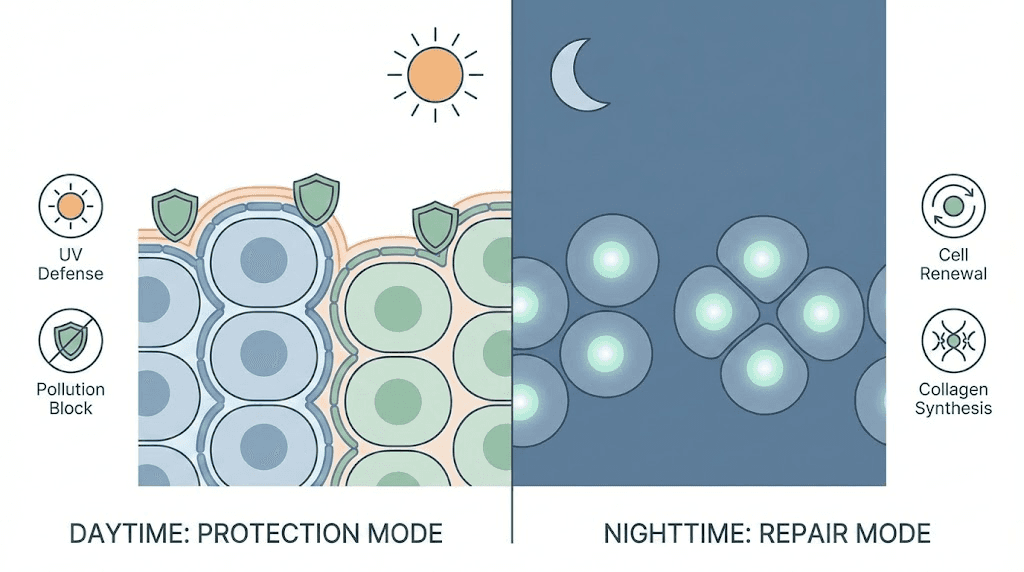
Your skin follows a circadian rhythm, a biological clock that shifts between protection mode during daylight and repair mode after dark.
GHK-Cu interacts with both phases, but not equally. Understanding when your skin is most receptive to copper peptide signals changes everything about how you structure your routine.
This guide breaks down the science of timing, explains what actually happens at the cellular level during different parts of your day, and gives you specific protocols for maximizing results based on your goals, whether that's anti-aging, wound healing, hair growth, or scar reduction.
Understanding your skin's daily rhythm
Your skin operates on a 24-hour cycle that dictates when certain processes happen. This isn't marketing language or wellness trends. It's fundamental biology documented across decades of research.
The circadian rhythm affects everything from how peptides penetrate your skin to how quickly your body synthesizes new collagen.
During daylight hours, your skin prioritizes defense. It thickens slightly. Sebum production increases. Your barrier function strengthens to protect against UV radiation, pollution, and environmental stressors.
This is protection mode, and your skin is literally less permeable during this phase.
After sunset, the shift begins. Melatonin release triggers a cascade of changes. Blood flow to the skin increases by up to 30%. Cell division accelerates. DNA repair mechanisms activate. Most importantly for copper peptide users, skin permeability increases by approximately 60% during nighttime hours. Your skin is literally more receptive to active ingredients while you sleep.
This explains why so many peptide therapy protocols recommend evening application. But it doesn't mean morning application is wrong. It means morning and evening applications serve different purposes.
The protection versus repair paradigm
Think of your skin as having two jobs. During the day, it's a security guard. At night, it's a construction crew.
Morning skincare should support the security guard. Antioxidants like vitamin C neutralize free radicals. Protective ingredients reinforce barrier function. Sunscreen creates a physical shield. The goal is defense, not building.
Evening skincare supports the construction crew. Collagen-stimulating ingredients have the most impact when your body is already in repair mode. Peptides that signal tissue regeneration work with, rather than against, your body's natural processes.
GHK-Cu occupies a unique position. It functions as both an antioxidant and a repair signal. This dual nature is why the timing debate exists in the first place.
Why evening application often wins
Research consistently shows that nighttime creates optimal conditions for copper peptide absorption and activity. The evidence is compelling.
First, there's the permeability factor. Studies demonstrate that skin permeability increases significantly after dark. This means more of your copper peptide product actually reaches the dermis where it can trigger collagen synthesis. Less product sits on the surface. More reaches the target cells.
Second, GHK-Cu has a short half-life in tissue, less than one hour in serum according to pharmacokinetic studies. This rapid clearance means timing your application to coincide with peak repair activity maximizes the window of effectiveness. When you apply at 10 PM and your skin's repair mechanisms peak between midnight and 4 AM, you're aligning the peptide's active period with your body's most receptive state.
Third, evening application eliminates ingredient conflicts that complicate morning routines. You don't need to worry about vitamin C interactions because vitamin C belongs in your morning routine anyway. You can focus on a straightforward protocol without managing pH levels or waiting between products.
The collagen synthesis connection
Your body produces most of its collagen during sleep. Growth hormone secretion peaks in the first few hours after you fall asleep, and growth hormone directly stimulates collagen production. Copper peptides applied before bed work alongside this natural surge.
GHK-Cu influences gene expression related to collagen synthesis. It upregulates genes that code for collagen I, III, and IV while simultaneously suppressing genes associated with collagen degradation. This dual action, building new collagen while protecting existing collagen, happens most effectively when your body is already primed for regeneration.
Think about what happens when you sleep.
Your parasympathetic nervous system takes over. Blood flows away from muscles toward skin and organs. Cellular repair processes accelerate.
Applying a concentrated copper peptide product into this environment is like sending construction workers to a job site that's already been prepped and cleared.
Absorption timing research
A study on human skin penetration found that GHK-Cu has a lag time of 2 to 7 hours depending on the skin layer being measured. The stratum corneum showed a 2-hour lag, while the full epidermis required up to 7 hours for significant penetration.
This has practical implications.
If you apply copper peptides at 10 PM, they begin reaching deeper skin layers between midnight and 5 AM, precisely when your skin's repair mechanisms are most active. Apply them at 7 AM, and peak penetration occurs during the day when your skin is in protection mode rather than repair mode.
The mismatch isn't fatal to results, but it's suboptimal. Evening application creates better alignment between when the peptides arrive at target tissues and when those tissues are most receptive to regenerative signals.
When morning application makes sense
Despite the advantages of evening application, morning use has legitimate benefits for certain goals and certain routines.
GHK-Cu functions as a potent antioxidant. It chelates metal ions that would otherwise catalyze oxidative damage. It directly scavenges free radicals. It activates your skin's own antioxidant defenses.
These protective effects are most valuable during the day when environmental stressors are highest.
If you live in a polluted urban environment, work outdoors, or have high UV exposure, morning copper peptide application adds a layer of protection that complements your sunscreen. The antioxidant activity persists for several hours after application, providing ongoing defense during peak exposure periods.
The twice-daily approach
Many copper peptide products are formulated for twice-daily use. The Ordinary's Multi-Peptide + Copper Peptides 1% explicitly recommends both AM and PM application. This approach captures both the protective daytime benefits and the regenerative nighttime benefits.
Here's the issue: twice-daily application isn't necessary for most people. It can actually be counterproductive. More isn't always better with peptides. Overdoing copper peptide application can trigger paradoxical effects, including irritation, dryness, and even the skin worsening issues that some users report.
For most users, once daily in the evening provides optimal results without overloading the skin. Twice daily works best for those with specific goals like aggressive anti-aging protocols or scar treatment where maximum peptide exposure accelerates results.
Morning application protocols
If you choose morning application, structure your routine to maximize effectiveness.
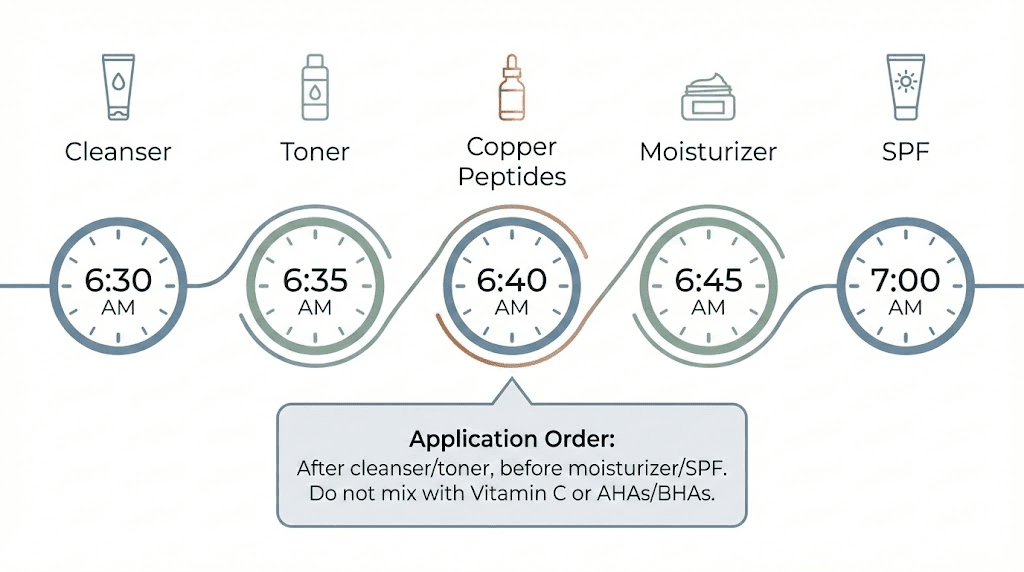
Apply to clean, slightly damp skin immediately after cleansing. Skip the toner if it contains acids, these can destabilize copper peptides. Use a light touch, patting rather than rubbing, to enhance absorption without disturbing the product's penetration.
Wait 2 to 3 minutes before layering additional products. This allows the copper peptide serum to begin absorbing without being diluted or pushed aside by subsequent layers. Follow with a hydrating serum if desired, then moisturizer, then sunscreen.
The sunscreen step is non-negotiable. While copper peptides themselves don't cause photosensitivity, they're working to build new collagen and protect existing skin structures. Fresh collagen is more vulnerable to UV damage than mature collagen. Protecting your skin during the day protects your investment in nighttime repair.
Ingredient interactions that dictate timing
The real complexity in copper peptide timing comes from how GHK-Cu interacts with other active ingredients in your routine. Some combinations work beautifully. Others cancel each other out. And a few can cause irritation or even damage.
Copper peptides and vitamin C
This is the most important interaction to understand. Copper peptides and L-ascorbic acid vitamin C don't play well together. The copper ion can oxidize vitamin C, reducing its effectiveness. Simultaneously, the acidic pH that vitamin C requires (around 3.5) destabilizes copper peptides, which prefer neutral pH environments.
The solution is simple: separate them by time of day. Use vitamin C in the morning for its antioxidant and brightening benefits. Use copper peptides in the evening for regeneration and collagen support. This eliminates the interaction entirely while giving you the full benefits of both ingredients.
If you absolutely must use both at the same time, wait at least 15 to 20 minutes between applications. Apply the vitamin C first, let your skin's pH return to normal, then apply the copper peptide product. This minimizes interaction but doesn't eliminate it entirely. Separated routines remain the better approach.
Copper peptides and retinol
Retinol and copper peptides present a different challenge. Both are evening ingredients. Both accelerate cell turnover and collagen production. Using them together isn't necessarily bad, but it can overwhelm sensitive skin.
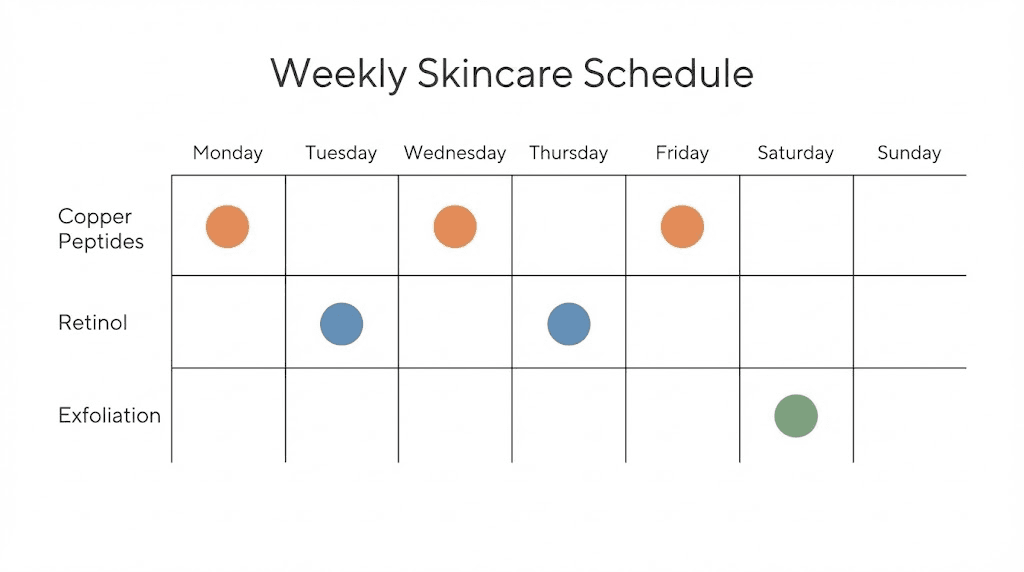
The safest approach is alternating nights. Monday: copper peptides. Tuesday: retinol. Wednesday: copper peptides. This gives your skin the benefits of both without the cumulative irritation potential of nightly active ingredient exposure.
For resilient skin that tolerates retinol well, you can layer them on the same night. Apply the copper peptide serum first, wait 5 minutes, then apply retinol.
The copper peptides may actually buffer some of retinol's irritation potential while supporting the collagen-building effects both ingredients promote.
Copper peptides and acids
Exfoliating acids, both AHAs like glycolic acid and BHAs like salicylic acid, should be kept separate from copper peptides. The low pH of these acids destabilizes the copper peptide complex, potentially reducing its effectiveness and increasing irritation risk.
If you use chemical exfoliants, apply them in the morning or on alternating evenings from your copper peptide routine.
This separation ensures each ingredient works at its optimal pH without compromising the other.
Physical exfoliants like scrubs should be used at least 12 hours before copper peptide application. Freshly exfoliated skin is more sensitive and more permeable. While increased permeability sounds beneficial, it can actually lead to irritation if the copper peptide concentration reaches deeper layers faster than intended.
Ingredients that enhance copper peptide timing
Some ingredients work synergistically with copper peptides regardless of timing.
Hyaluronic acid pairs beautifully with copper peptides. Apply hyaluronic acid to damp skin first, then layer copper peptides on top. The hyaluronic acid creates a hydrated environment that enhances peptide penetration without any conflicting pH requirements.
Niacinamide also works well with copper peptides. Both ingredients support barrier function and have anti-inflammatory properties. They can be layered in the same routine or mixed together without interaction concerns.
Peptide stacking with other peptides is generally safe. GHK-Cu can be combined with signaling peptides, carrier peptides, and neurotransmitter-inhibiting peptides in the same routine. The exception is other copper-containing peptides, where cumulative copper exposure becomes a consideration.
Building your copper peptide schedule
With the science established, let's build practical schedules that work in the real world.
The simplest effective approach
For most people, the simplest approach is the best approach. Apply copper peptides once daily in the evening, after cleansing and before moisturizer.
This single application captures the peak repair window without complicating your routine or increasing product consumption.
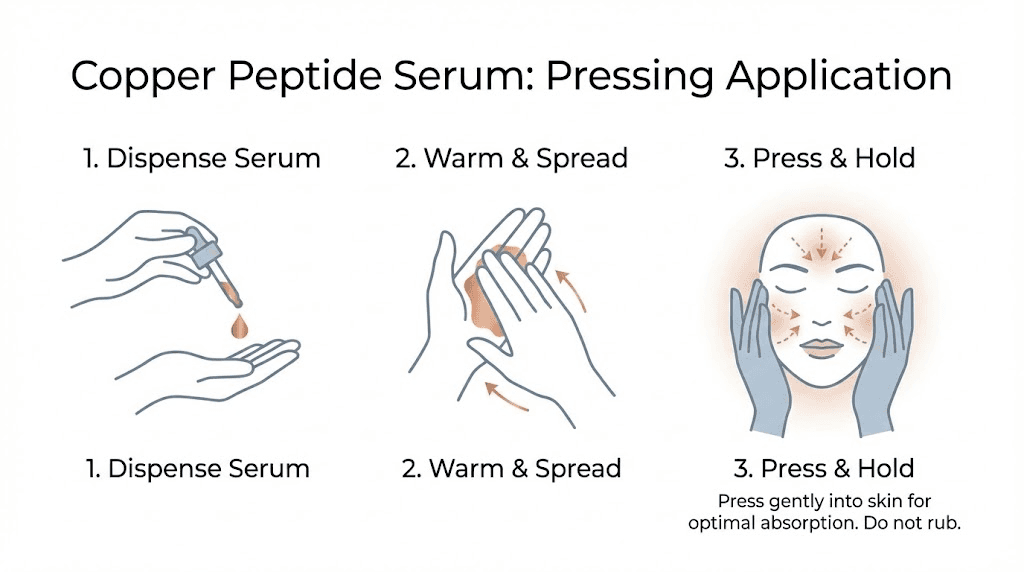
A basic evening routine looks like this. Cleanse with a gentle, pH-balanced cleanser. Pat skin mostly dry, leaving it slightly damp. Apply 4 to 6 drops of copper peptide serum, pressing gently into skin. Wait 2 to 3 minutes. Apply moisturizer. Done.
This routine takes under 5 minutes and delivers excellent results for anti-aging, skin texture improvement, and general skin health. It works for women, men, and most skin types with minimal risk of irritation.
The optimization schedule
For those wanting maximum results, a more structured schedule separates ingredients by day to eliminate any interaction potential while maximizing the benefits of each.
Monday evening: Copper peptide focus. Cleanse, apply copper peptide serum, moisturize. Consider adding a glow peptide or skin tightening peptide for enhanced results.
Tuesday evening: Retinol focus. Cleanse, apply retinol, moisturize heavily. Skip copper peptides entirely.
Wednesday evening: Copper peptide focus. Same as Monday.
Thursday evening: Exfoliation focus. Cleanse, apply AHA or BHA, moisturize. Skip copper peptides.
Friday evening: Copper peptide focus. Same as Monday.
Saturday evening: Treatment mask night. Apply a hydrating or peptide-infused mask. Skip actives to let skin rest.
Sunday evening: Copper peptide focus. Same as Monday.
This schedule delivers 4 copper peptide applications per week while accommodating retinol and exfoliation without ingredient conflicts.
The aggressive anti-aging protocol
For those targeting significant wrinkle reduction or anti-aging results, a more intensive protocol applies copper peptides twice daily while carefully managing other ingredients.
Morning routine: Gentle cleanse. Light copper peptide serum (3-4 drops). Hyaluronic acid serum. Light moisturizer. Sunscreen (SPF 30+).
Evening routine: Full cleanse (double cleanse if wearing sunscreen). Copper peptide serum (5-6 drops). Peptide-rich moisturizer. Occlusive layer if skin tolerates.
Twice weekly: Replace evening copper peptide application with retinol.
Once weekly: Gentle AHA treatment in evening, skip all peptides that night.
This protocol delivers maximum copper peptide exposure but requires skin that tolerates high active ingredient loads. Start with the simpler protocol and escalate only if your skin handles it without irritation, dryness, or the adverse reactions some users experience.
Timing for specific goals
Different goals benefit from different timing strategies. Here's how to adjust your approach based on what you're trying to achieve.
Anti-aging and wrinkle prevention
For anti-aging, evening application is definitively superior. The collagen synthesis that fights wrinkles happens primarily during sleep. Growth hormone release, which peaks in the first few hours of sleep, directly stimulates fibroblast activity. Copper peptides applied before bed work synergistically with this natural anabolic window.
Focus on consistent nightly application rather than high doses or twice-daily protocols. Consistency over weeks and months matters more than intensity on any single day. Results typically become visible around week 4 to 6, with significant improvement by month 3.
Women over 40 and those with established wrinkles may benefit from combining evening copper peptides with morning application 2 to 3 times per week. The additional antioxidant protection during the day helps preserve the collagen being built at night.
Wound healing and scar treatment
Scar treatment and wound healing benefit from more frequent application. The mechanisms, enhanced angiogenesis, accelerated tissue remodeling, and anti-inflammatory effects, work continuously when peptide levels remain elevated.
For active wounds or fresh scars, apply copper peptides twice daily. Morning application supports the initial inflammatory response and early tissue formation. Evening application supports the remodeling phase when collagen reorganization occurs.
For established scars more than 6 months old, evening application alone is sufficient. The tissue has stabilized, and you're now working on gradual remodeling rather than acute healing. Consistency over 3 to 6 months produces better results than intensive short-term protocols.
Acne scar treatment follows similar principles. Fresh post-inflammatory marks respond to twice-daily application. Established pitted or rolling scars respond better to nightly application combined with microneedling or professional treatments.
Hair growth applications
Copper peptides for hair growth follow different rules than skincare. Scalp skin has different absorption characteristics, and the hair follicle cycle operates independently of the circadian rhythm.
For topical hair growth applications, timing matters less than consistency. Apply once daily at whatever time you'll actually stick with. Some prefer morning application so the product doesn't transfer to pillows. Others prefer evening application when they have more time for proper application.
The key factor is applying to a clean, product-free scalp. Styling products, dry shampoo, and even heavy conditioners create a barrier that reduces peptide penetration to the follicle. If you style your hair in the morning, evening application after washing often provides better results.
Injectable GHK-Cu timing
For those using injectable GHK-Cu, timing considerations change significantly. Subcutaneous injection bypasses the stratum corneum entirely, eliminating the lag time associated with topical application.
Most peptide injection protocols recommend evening administration to align with the body's repair phase. Some protocols split the daily dose into morning and evening injections for more consistent tissue levels, taking advantage of the peptide's short half-life by maintaining more frequent, lower doses.
A typical protocol involves 1 to 2 mg GHK-Cu subcutaneously, administered 30 minutes before bed. This timing allows peak tissue levels to coincide with the first sleep cycle when growth hormone release and collagen synthesis are highest.
The SeekPeptides peptide calculator can help determine exact dosing based on your concentration and goals. For injectable protocols, SeekPeptides members access detailed injection timing guides that account for individual factors like sleep schedule and concurrent peptide use.
How long before you see results
Timing isn't just about when you apply. It's also about how long your protocol needs to run before results become visible.
Copper peptide results follow a predictable timeline, though individual variation exists based on age, skin condition, and protocol intensity.
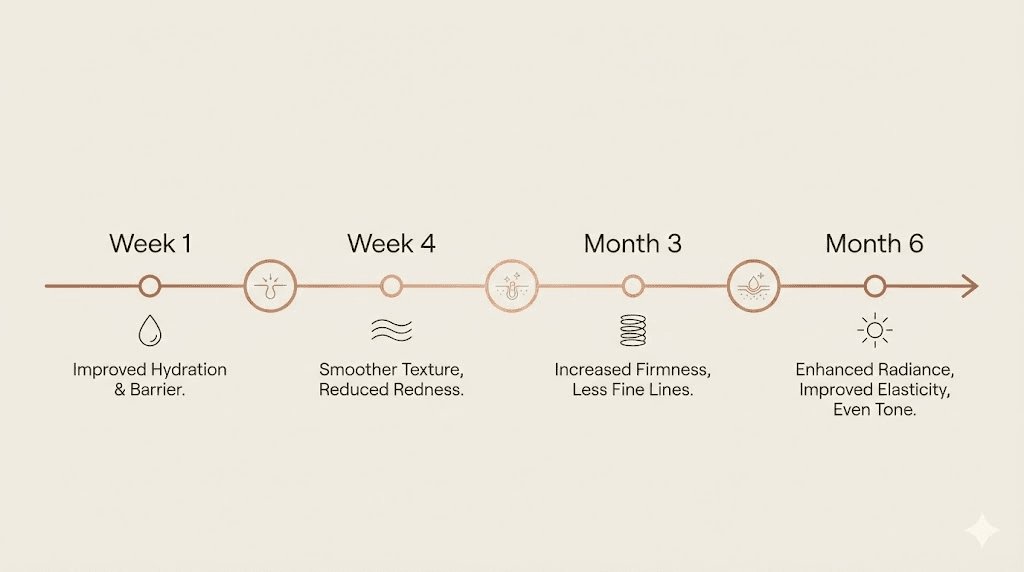
Week 1 to 2: Hydration improvements. Skin feels softer, looks slightly plumper. This is from immediate barrier support, not collagen changes.
Week 3 to 4: Texture improvements. Fine surface texture evens out. Some users notice a subtle glow. This reflects early changes in cell turnover rates.
Week 6 to 8: Fine line reduction begins. The collagen stimulation initiated in weeks 1 to 2 starts producing visible structural changes. This is the minimum time needed for meaningful anti-aging results.
Month 3: Significant improvement in firmness and elasticity. Established fine lines show measurable reduction. Skin density increases. This is when most users become convinced the protocol is working.
Month 6: Full protocol benefits realized. Deeper lines show improvement. Skin quality transformation is complete. Maintenance mode can begin.
Quitting before week 6 means never seeing the real benefits. The early hydration improvements are nice, but they're not why you started using copper peptides. Stick with your protocol through the full timeline before evaluating results.
Common timing mistakes
Understanding what not to do is as important as knowing what to do. These common mistakes undermine copper peptide effectiveness regardless of how well you time your applications.
Applying to dry skin
Water-based copper peptide serums absorb better into slightly damp skin.
Applying to completely dry skin reduces penetration and leaves more product sitting on the surface where it can't work.
After cleansing, pat your face mostly dry but leave it slightly damp. Apply your serum immediately, within 60 seconds of cleansing.
This maximizes absorption while the surface is still receptive.
Not waiting between products
Layering products immediately on top of each other dilutes each layer and can create pilling (those little balls of product that form when serums don't absorb properly). Copper peptide serums need 2 to 3 minutes to begin absorbing before you apply the next layer.
This doesn't mean standing around doing nothing.
Brush your teeth. Pick out tomorrow's clothes.
Do something for 2 to 3 minutes, then return to finish your routine.
Using too much product
More product doesn't mean more results.
The skin has a limited capacity for absorption. Excess product either evaporates, transfers to your pillow, or creates a film that actually impedes the penetration of what you've applied.
For facial application, 4 to 6 drops of serum is sufficient. Press gently into skin rather than rubbing. If product is still sitting on the surface after 5 minutes, you've used too much.
Inconsistent timing
Applying copper peptides at random times disrupts the circadian alignment that makes evening application effective. If you apply at 9 PM one night and 2 AM the next, you're not getting consistent alignment with your skin's repair phase.
Pick a time that works with your schedule and stick with it. Within an hour of the same time every night is ideal. Your skin will adapt to the routine, and results will improve.
Skipping too many days
Copper peptides work through cumulative signaling.
They need to be present consistently to maintain the gene expression changes that drive collagen synthesis.
Applying twice a week and expecting results is unrealistic.
Minimum effective frequency is 4 applications per week. Daily application produces optimal results.
If you're going to skip days, make them your acid or retinol days rather than random absences.
Seasonal timing adjustments
Your copper peptide timing may need seasonal adjustments based on environmental conditions and changes in your other skincare products.
Summer considerations
Longer daylight hours mean your skin spends more time in protection mode. UV exposure is higher. You might be using lighter moisturizers that provide less occlusion over your copper peptide serum.
In summer, evening application becomes even more important.
The contrast between daytime stress and nighttime repair is more pronounced. Consider skipping morning copper peptide application entirely during summer months, focusing all peptide activity on the evening routine.
Pay extra attention to sunscreen.
The new collagen you're building is more susceptible to photoaging than mature collagen.
Summer undoes winter's progress if you're not protecting your skin adequately.
Winter considerations
Shorter days mean your skin shifts to repair mode earlier. Dry heated air compromises barrier function. Heavier moisturizers provide better occlusion over your serums.
Winter creates ideal conditions for copper peptide protocols. The repair window is longer, environmental stress is lower, and you're probably spending more time indoors where conditions are controlled. This is when to run your most aggressive protocols.
You can potentially add morning application during winter without the UV exposure concerns present in summer.
The antioxidant benefits remain valuable even with reduced sun exposure, pollution and indoor heating create their own oxidative stress.
Travel and time zone changes
Traveling across time zones disrupts your circadian rhythm, and your skin's rhythm along with it.
The confusion your body feels, jet lag, affects every tissue including skin.
When traveling, apply copper peptides based on local time rather than home time. Your skin will adjust its rhythm to the new schedule within 2 to 3 days.
Applying at "wrong" times during adjustment is fine. Just maintain consistency once you've arrived and established local time routines.
For short trips of 3 days or less, you can maintain home time application without issue. Your skin won't fully shift rhythms in that period anyway.
Optimizing application technique
When you apply matters. How you apply also matters. Proper technique maximizes the absorption that makes timing differences meaningful.
Preparing the skin
Cleansing removes the sebum, dead cells, and product residue that block peptide penetration. Use a gentle, pH-balanced cleanser that doesn't strip the skin or leave a residue.
For evening application, double cleansing removes sunscreen and makeup more effectively than single cleansing. Oil-based first cleanser dissolves sebum and SPF. Water-based second cleanser removes remaining debris. This creates a clean surface for peptide absorption.
Skip harsh toners, especially those containing alcohol or witch hazel. They dry the skin and can shift pH in ways that destabilize copper peptides. If you love toners, choose hydrating toner-essences without active acids.
Application pressure and movement
Pressing works better than rubbing for copper peptide application. Gentle pressing helps the serum absorb into the skin rather than spreading it across the surface where some evaporates.
Dispense product onto fingertips, then press into forehead, each cheek, nose, and chin. Use small pressing motions to work the product across each area.
This takes slightly longer than quick rubbing but delivers significantly better absorption.
Avoid the immediate eye area unless your product is specifically formulated for eye use. The skin around eyes is thinner and more sensitive. General facial copper peptide serums can be irritating in this delicate zone.
Post-application sealing
After the copper peptide serum has absorbed for 2 to 3 minutes, applying an occlusive layer prevents evaporation and extends the absorption window. The serum continues penetrating even after you feel it's dried down.
A basic moisturizer provides adequate occlusion. For enhanced results, peptide-infused moisturizers or those with ceramides create an ideal environment for continued peptide activity. Heavy oils and occlusives like Vaseline can be used for severe dryness or after intensive treatments.
Combining with professional treatments
Copper peptides interact with professional skincare treatments in ways that require timing adjustments.
Post-microneedling timing
Microneedling creates temporary channels through the stratum corneum. These channels dramatically increase product penetration for 4 to 24 hours after treatment depending on needle depth.
Many practitioners apply copper peptides immediately after microneedling to take advantage of this window. The enhanced penetration delivers peptides directly to the dermis where they can influence fibroblasts and collagen production.
At-home microneedling with 0.25mm to 0.5mm needles creates a smaller penetration window. Apply copper peptides immediately after and again that evening. Resume normal routine the following day.
Professional microneedling with deeper needles requires more careful timing. Follow your practitioner's guidance, which typically involves applying copper peptides immediately after treatment, then resuming normal routine after 24 to 48 hours.
Chemical peel timing
After chemical peels, the skin is more sensitive and more permeable. This might seem like a good opportunity for copper peptide application, but it can actually cause irritation.
Wait 48 to 72 hours after light chemical peels before resuming copper peptide use. Wait 1 week after medium peels. Wait until your practitioner clears you after deep peels.
During the waiting period, focus on gentle hydration and barrier support. Once you resume copper peptides, you may notice enhanced results as the fresh skin surface absorbs products more effectively than pre-peel skin.
Laser treatment timing
Laser treatments create varying degrees of skin trauma depending on the type and intensity. The healing phase requires specific care that may not include copper peptides.
For non-ablative lasers like IPL or gentle fractional treatments, you can typically resume copper peptides after 24 to 48 hours. These treatments don't create significant wounding.
For ablative lasers, follow your practitioner's post-care protocol exactly. Copper peptides may be introduced once the initial healing phase completes, often 1 to 2 weeks post-treatment.
The regenerative signaling can support the remodeling phase, but only if the acute healing phase has completed.
Troubleshooting timing-related problems
When copper peptide results aren't meeting expectations, timing issues are often part of the problem.
No visible results after 6 weeks
First, confirm you're applying consistently. Sporadic application doesn't deliver cumulative signaling effects. Check your calendar, have you actually applied 4+ times per week for 6 full weeks?
Second, evaluate timing conflicts. Are you applying copper peptides at the same time as vitamin C or acids? Are you washing them off with a second cleanse before they've absorbed? Are you applying to completely dry skin where absorption is reduced?
Third, consider product concentration.
Some copper peptide serums contain minimal active ingredient. Check that your product contains meaningful GHK-Cu concentration, typically 1% or higher for topical application.
Irritation or breakouts
If you're experiencing irritation that seems timing-related, you might be overloading your skin with too many actives too close together.
Reduce to once-daily evening application only. Eliminate any acids from the same day. Ensure you're waiting adequate time between copper peptides and other products. If irritation persists, switch to every-other-day application and rebuild tolerance gradually.
Purging differs from irritation. Purging brings existing congestion to the surface faster and appears in areas where you normally break out. Irritation appears randomly and includes symptoms like redness, burning, or unusual dryness. True irritation requires protocol adjustment. Purging resolves on its own within 4 to 6 weeks.
Results plateauing
After initial improvements, some users find results level off. This is normal. The most dramatic changes happen early as your skin responds to new signaling. Maintenance improvements are subtler.
However, if plateau seems premature, consider cycling your protocol. Some evidence suggests that periodic breaks, 1 to 2 weeks off every 8 to 12 weeks, can reset receptor sensitivity. When you resume, results may accelerate again.
You can also intensify during plateaus. If you've been applying once daily, try twice daily for 4 weeks. If concentration is moderate, switch to a higher-concentration product. These adjustments can restart progress.
Protocols by skin type
Skin type influences both timing tolerance and optimal frequency.
Normal skin
Normal skin tolerates daily copper peptide application well. You can use morning, evening, or both without significant irritation risk. Follow the standard protocols outlined earlier, choosing based on your goals rather than tolerance concerns.
Oily skin
Oily skin often absorbs water-based serums quickly and can handle more frequent application. Twice daily application is well-tolerated. However, be cautious about combining with morning vitamin C, the oxidation interaction remains regardless of skin type.
Evening application works particularly well for oily skin since you're not adding additional product layers under makeup and sunscreen. The serum absorbs cleanly into bare skin.
Dry skin
Dry skin benefits enormously from copper peptides' barrier support. However, increased permeability of dry, compromised skin can lead to sensitivity if you push too hard too fast.
Start with every-other-day evening application. Build to nightly application over 2 to 3 weeks. Twice daily application is usually unnecessary, the enhanced permeability means you're getting adequate penetration from single application.
Always follow copper peptides with rich moisturizer. The occlusive layer is especially important for dry skin, trapping the serum where it can continue working.
Sensitive skin
Sensitive skin requires the most careful timing approach. Start with twice weekly evening application. If well-tolerated after 2 weeks, increase to every other night. If still well-tolerated after another 2 weeks, move to nightly.
Never apply copper peptides on the same day as retinol, acids, or other active ingredients. Sensitive skin lacks the resilience to handle multiple potent ingredients simultaneously. Strict ingredient separation prevents cumulative irritation.
Morning application is generally not recommended for sensitive skin. The protective phase of your skin's circadian rhythm provides some buffer against irritation. Adding active ingredients during this phase reduces that protection.
Combination skin
Combination skin can apply copper peptides anywhere, but may notice different absorption rates across zones. The T-zone typically absorbs faster due to higher sebum production affecting the skin surface.
Apply to the entire face, pressing a bit longer into drier cheek areas. The oily T-zone will absorb quickly. The drier areas need a bit more encouragement. Overall timing follows normal skin protocols since the variations are mild.
The research perspective
For those using GHK-Cu in a research context, timing considerations extend beyond skincare optimization to experimental design and data validity.
Circadian variation affects baseline measurements. Skin sampled in the morning shows different characteristics than skin sampled in the evening. If measuring outcomes like transepidermal water loss, elasticity, or biopsy markers, consistent timing eliminates this confounding variable.
SeekPeptides provides comprehensive research protocols for members conducting peptide studies, including timing guidelines that account for circadian variation and sampling requirements.
Frequently asked questions
Can I use copper peptides in the morning and retinol at night?
Yes, this separation works well. Morning copper peptide application provides antioxidant protection during the day. Evening retinol application drives cell turnover during the repair phase. The ingredients never directly interact, eliminating any compatibility concerns.
How long should I wait between copper peptides and moisturizer?
Wait 2 to 3 minutes for the copper peptide serum to begin absorbing before applying moisturizer. This prevents dilution and allows proper penetration. You don't need to wait until completely dry, just until the wet, slippery feel has transitioned to tacky or mostly absorbed.
Is it better to apply copper peptides before or after hyaluronic acid?
Apply hyaluronic acid first on damp skin, then copper peptides. Hyaluronic acid creates a hydrated environment that enhances copper peptide penetration. Reversing the order reduces the hydration benefit and may leave hyaluronic acid sitting on top of the copper peptide layer.
Does it matter what time I apply copper peptides at night?
Applying 30 to 60 minutes before sleep is ideal. This allows initial absorption before you lie down (reducing pillow transfer) while ensuring peak penetration aligns with early sleep when growth hormone release drives collagen synthesis. Applying several hours before bed is fine but slightly suboptimal.
Can I use copper peptides twice a day every day?
You can, but more isn't necessarily better. Twice-daily application increases peptide exposure but also increases product consumption and potential for irritation. For most users, once-daily evening application delivers optimal results without the downsides of aggressive protocols.
How long after vitamin C can I apply copper peptides?
If using both in the same routine, wait 15 to 20 minutes between applications. This allows your skin's pH to normalize after acidic vitamin C and reduces interaction potential. Better approach: use vitamin C in the morning and copper peptides in the evening to avoid the issue entirely.
Should I apply copper peptides before or after niacinamide?
Either order works. These ingredients are compatible and don't have pH or interaction conflicts. If both are water-based serums, apply whichever is lighter first. If one is a serum and one is in moisturizer form, apply the serum first.
Can I use copper peptides if I'm using prescription retinoids?
Yes, but separate them to different nights. Prescription retinoids like tretinoin are more potent than over-the-counter retinol. Using them on the same night creates high cumulative irritation potential. Alternate nights: copper peptides Monday, Wednesday, Friday. Tretinoin Tuesday, Thursday, Saturday. Sunday rest.
External resources
NIH: Regenerative and Protective Actions of the GHK-Cu Peptide
MDPI: Skin Regenerative and Anti-Cancer Actions of Copper Peptides
In case I don't see you, good afternoon, good evening, and good night.