Jan 16, 2026
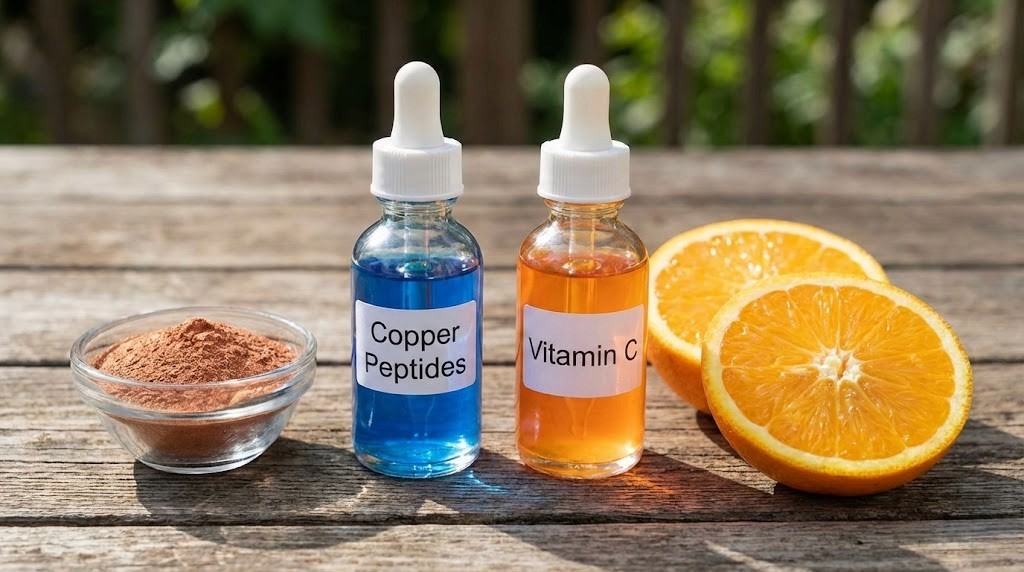
You stand in front of your bathroom mirror holding two serums. One contains copper peptides. The other has vitamin C. Both promise transformative results for your skin. But something nags at you. Can these two powerhouses actually work together? Or are you about to make an expensive mistake?
This question has sparked countless debates in skincare communities. Some swear the combination ruined their products. Others claim they use both without issue. The confusion is understandable because the answer isn't a simple yes or no. It depends on timing, formulation, and understanding the science behind these ingredients.
Here's what actually happens when copper peptides meet vitamin C. The interaction can neutralize both ingredients, wasting your money and leaving your skin without the benefits you're seeking. But this doesn't mean you can't use both. It means you need to use them correctly. Copper peptides and vitamin C each offer remarkable benefits for aging, hyperpigmentation, and overall skin health. The goal is to capture those benefits without creating a chemistry experiment on your face.
The Chemistry Behind the Conflict
Understanding why copper peptides and vitamin C can clash requires a brief chemistry lesson. Don't worry, this won't be complicated. But knowing the basics helps you make better choices about your routine.
Copper peptides, particularly GHK-Cu, operate at a specific pH range. They need slightly acidic to neutral conditions, typically between 5.0 and 6.5 on the pH scale. This range matches your skin's natural pH, which is why copper peptide formulations feel comfortable on most people.
Vitamin C, specifically L-ascorbic acid, requires a much more acidic environment. We're talking pH levels between 2.0 and 3.5. This intense acidity serves a purpose. It allows vitamin C to penetrate the skin barrier effectively. Without that low pH, L-ascorbic acid struggles to deliver its antioxidant benefits.
Here's where problems begin. When you apply an acidic vitamin C product, you drastically lower the pH of your skin's surface. If copper peptides follow, or even if they're applied at the same time, the pH mismatch creates instability. The copper peptides can break down. The vitamin C can oxidize faster. Neither ingredient performs as intended.
The Copper Ion Problem
There's another layer to this chemistry conflict. Copper itself accelerates vitamin C oxidation. Think of it like this: vitamin C is already somewhat unstable. It wants to react with oxygen in the air. Copper ions act as a catalyst, speeding up this process dramatically.
When you mix copper peptides directly with vitamin C, the copper can cause rapid oxidation. Your vitamin C serum might turn brown or orange. This color change signals that the active ingredient has degraded. You're essentially applying oxidized vitamin C, which provides minimal benefits and might even cause irritation.
Research published in pharmaceutical journals demonstrates that copper and other transition metals significantly reduce ascorbic acid stability. In some formulations, the presence of copper reduced vitamin C potency by over 50% within hours. That's not a gradual decline. That's a rapid collapse of effectiveness.
This reaction doesn't require direct mixing in a bottle. It can happen on your skin. If both ingredients are present on your face at the same time, the chemistry proceeds regardless of whether they came from separate products. Your skin becomes the mixing vessel, and the result is the same: compromised ingredients.
Why You Actually Want Both Ingredients
Before diving into solutions, let's establish why this conversation matters. Both copper peptides and vitamin C rank among the most effective skincare ingredients available. Understanding their individual benefits makes the effort to use both correctly worthwhile.
What Copper Peptides Deliver
Copper peptides, especially GHK-Cu, offer a remarkable range of anti-aging benefits. They stimulate collagen production, helping to firm and plump the skin. They promote wound healing, which translates to faster recovery from breakouts and minor damage. They also possess anti-inflammatory properties that calm irritation and redness.
The research on GHK-Cu shows impressive results. Studies demonstrate increased collagen synthesis, improved skin elasticity, and enhanced skin thickness. These aren't subtle changes. Participants in clinical trials showed measurable improvements in skin quality after consistent use.
Copper peptides also support the skin's repair mechanisms. They help regenerate the extracellular matrix, the scaffolding that keeps skin structured and resilient. As we age, this matrix breaks down. Copper peptides help rebuild it, essentially turning back some aspects of skin aging.
For those dealing with skin sensitivity or damage, copper peptides can be particularly valuable. Their wound-healing properties accelerate skin barrier repair. This makes them useful after procedures, during breakouts, or simply when skin feels compromised.
What Vitamin C Delivers
Vitamin C stands as one of the most studied skincare ingredients in existence. Its benefits are well documented across decades of research. The primary advantage is antioxidant protection. Vitamin C neutralizes free radicals, the unstable molecules that cause oxidative damage to skin cells.
This antioxidant action translates to protection against environmental damage. Sun exposure, pollution, and other environmental stressors generate free radicals. Without antioxidant defense, these radicals damage collagen, DNA, and cell membranes. Vitamin C intercepts free radicals before they cause harm.
Beyond protection, vitamin C actively brightens skin. It inhibits tyrosinase, the enzyme responsible for melanin production. This makes vitamin C effective against hyperpigmentation, dark spots, and uneven skin tone. Many people see significant improvement in skin brightness after consistent vitamin C use.
Vitamin C also supports collagen production, similar to copper peptides. It serves as a cofactor in collagen synthesis, meaning your body needs vitamin C to build collagen properly. This provides another anti-aging benefit, contributing to firmer, more resilient skin over time.
The sun protection benefit deserves special mention. Vitamin C doesn't replace sunscreen, but it enhances photoprotection. When used under SPF, vitamin C provides an additional layer of defense against UV damage. Some studies show significantly reduced sunburn cell formation when vitamin C is present.
The Timing Solution: Morning and Evening Separation
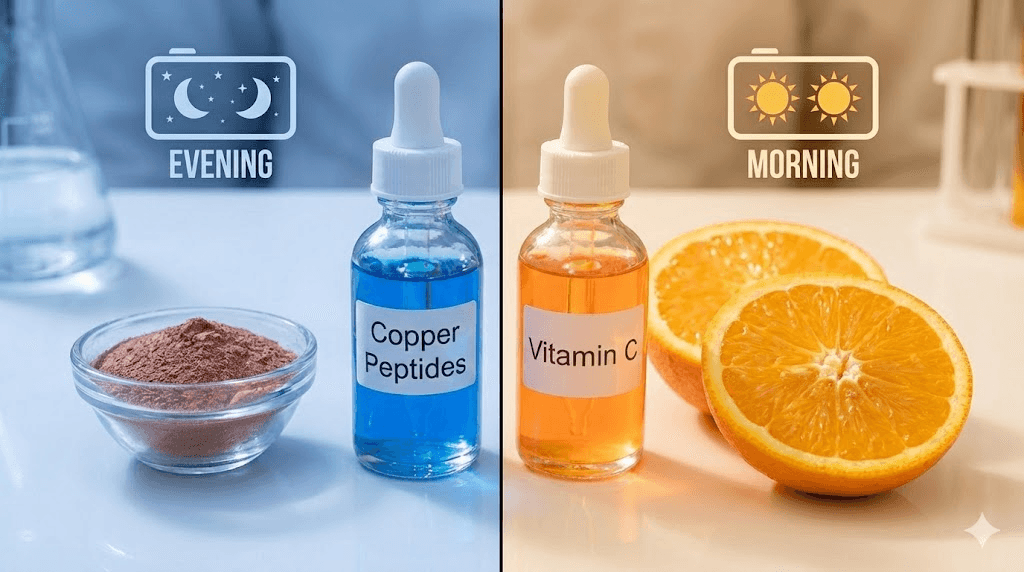
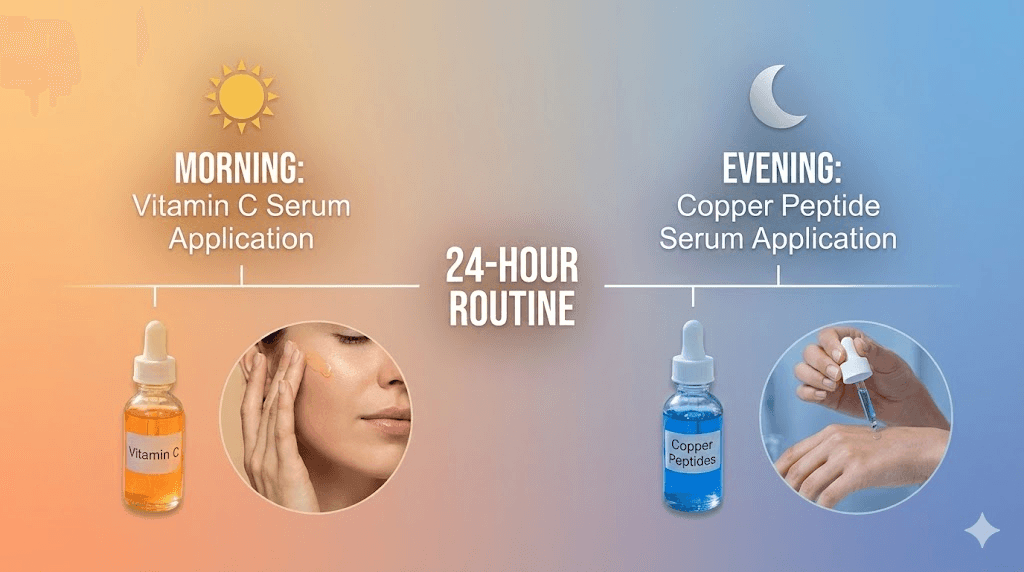
The most reliable way to use both copper peptides and vitamin C is simple: separate them by time. Use one in the morning, the other at night. This prevents any direct interaction on your skin and allows each ingredient to work optimally.
The conventional recommendation places vitamin C in the morning and copper peptides at night. This arrangement makes sense for several reasons.
Why Vitamin C Works Better in the Morning
Morning is when you face the most environmental stress. Sunlight, pollution, and other factors generate free radicals throughout the day. Applying vitamin C in the morning means your skin has antioxidant protection when it needs it most.
The photoprotective benefits of vitamin C amplify this logic. When you layer vitamin C under your sunscreen, you get enhanced UV protection. The vitamin C deals with free radicals that your sunscreen might miss. This combination provides more comprehensive defense than either ingredient alone.
Vitamin C also helps boost sunscreen effectiveness. Research shows that the combination reduces UV-induced damage more effectively than sunscreen alone. For anyone serious about preventing photoaging, this morning combination represents a smart strategy.
Consider your morning routine structure. Cleanse, apply vitamin C serum, wait for absorption, then follow with moisturizer and sunscreen. This simple sequence maximizes vitamin C benefits while protecting your skin throughout the day.
Why Copper Peptides Work Better at Night
Nighttime is when your skin shifts into repair mode. Cell turnover increases. Growth hormone release peaks during sleep. Your skin is literally rebuilding itself while you rest. Copper peptides support these repair processes beautifully.
The wound-healing and collagen-stimulating properties of copper peptides align perfectly with nighttime skin activity. Applying them before bed means they're present when your skin is most receptive to repair signals. You're essentially amplifying your body's natural regeneration processes.
Copper peptides also work well without sunscreen interference. Some formulations have slight color or texture that might affect how makeup or sunscreen applies. At night, this isn't a concern. You can apply a generous amount and let it work undisturbed for hours.
The evening routine might look like this: cleanse thoroughly, apply copper peptide serum, wait for absorption, then follow with moisturizer or night cream. If you use other evening treatments like retinol, you'll need to consider additional timing factors, which we'll address later.
Alternative Vitamin C Forms That Work Better
Not all vitamin C derivatives create the same problems with copper peptides. L-ascorbic acid is the most potent but also the most problematic due to its low pH requirements and instability. Other forms of vitamin C offer gentler alternatives that may be more compatible.
Tetrahexyldecyl Ascorbate (THD Ascorbate)
THD ascorbate represents one of the most stable vitamin C derivatives available. Unlike L-ascorbic acid, it's oil-soluble and operates at a neutral pH. This changes the interaction dynamics with copper peptides significantly.
Because THD ascorbate doesn't require an acidic environment, it doesn't create the pH conflict that L-ascorbic acid does. The pH mismatch that destabilizes copper peptides simply doesn't occur. This makes THD ascorbate a potentially safer choice for those wanting both ingredients in their routine.
THD ascorbate also penetrates skin effectively despite not needing that acidic push. Studies show it converts to active vitamin C within skin cells, providing brightening and antioxidant benefits. Some research suggests it may be even more effective than L-ascorbic acid at boosting collagen production.
The stability benefits extend to the product itself. THD ascorbate doesn't oxidize as readily as L-ascorbic acid. Your serum is less likely to turn brown or degrade quickly. This means more consistent results over the product's lifespan.
Sodium Ascorbyl Phosphate (SAP)
Sodium ascorbyl phosphate is a water-soluble, stable derivative that works at a higher pH than L-ascorbic acid. Formulations typically sit around pH 6 to 7, which overlaps much better with the copper peptide comfort zone.
SAP converts to ascorbic acid in the skin through enzymatic processes. While it may not be quite as potent as L-ascorbic acid, it still delivers meaningful antioxidant and brightening benefits. Many people with sensitive skin prefer SAP because it causes less irritation.
The acne-fighting properties of SAP deserve mention. Research shows it has antimicrobial effects against acne-causing bacteria. This makes it potentially useful for those dealing with both aging concerns and breakouts.
Magnesium Ascorbyl Phosphate (MAP)
MAP shares many characteristics with SAP. It's stable, water-soluble, and operates at a gentler pH. It also converts to active vitamin C within the skin, delivering brightening and antioxidant effects.
Studies on MAP show benefits for hyperpigmentation and collagen synthesis. While comparisons to L-ascorbic acid show somewhat less potency, MAP compensates with better stability and tolerability. For those prioritizing compatibility over maximum potency, MAP presents a reasonable option.
Ascorbyl Glucoside
Ascorbyl glucoside uses a glucose molecule to stabilize the vitamin C. This creates another gentle, stable derivative that works at neutral pH ranges. The glucose is cleaved off in the skin, releasing active vitamin C gradually.
This gradual release might actually benefit some users. Instead of a sudden flood of vitamin C, you get a sustained delivery over time. This can reduce irritation potential while still providing meaningful benefits.
Ascorbyl glucoside shows up in many mainstream skincare products due to its stability and ease of formulation. If you're looking for copper-peptide-friendly vitamin C in accessible products, ascorbyl glucoside options are widely available.
What About Injectable Copper Peptides and Oral Vitamin C?
The conversation shifts when we move beyond topical skincare. Many people use injectable copper peptides for more systemic benefits. Does oral vitamin C supplementation create the same problems?
The short answer is no. The interaction concerns apply primarily to direct topical mixing. When you take vitamin C orally and inject copper peptides, these substances are processed through entirely different pathways. They don't meet in the same concentrated way that happens when you layer serums on your face.
Oral vitamin C is absorbed through the digestive system and distributed throughout the body via bloodstream. Injectable copper peptides enter tissue directly or through subcutaneous absorption. The concentrations that reach any given tissue are far lower than topical applications, and the chemistry of interaction differs substantially.
In fact, both nutrients support similar goals. Vitamin C is essential for collagen synthesis throughout the body. Copper peptides stimulate collagen production and tissue repair. Having adequate vitamin C systemically might actually support the effects of injectable copper peptides rather than undermining them.
Some researchers have explored using copper peptide protocols alongside general antioxidant supplementation. The theoretical basis suggests synergy: antioxidants protect tissues from oxidative stress while copper peptides promote repair and regeneration. This combination approach targets different aspects of aging and tissue maintenance.
If you're using injectable GHK-Cu, continuing your oral vitamin C supplement presents no concerns. The interaction problems are specific to direct topical contact at high concentrations. Your supplement routine and peptide protocol can coexist comfortably.
Creating Your Combined Routine: Practical Protocols
Let's move from theory to practice. Here are specific protocols for incorporating both copper peptides and vitamin C into your skincare routine. Choose the approach that fits your preferences and lifestyle.
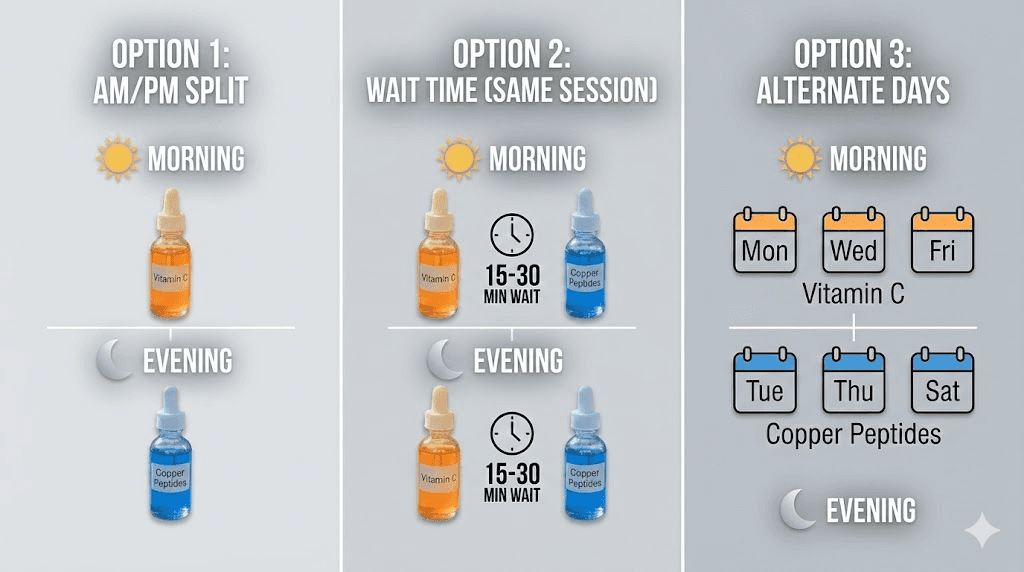
Protocol 1: The Morning/Evening Split
This is the simplest and most foolproof approach. Complete separation by time ensures zero interaction.
Morning:
1. Cleanse with gentle cleanser
2. Apply vitamin C serum (any form)
3. Wait 2-3 minutes for absorption
4. Apply hydrating serum or essence if desired
5. Apply moisturizer
6. Apply sunscreen (SPF 30 or higher)
Evening:
1. Double cleanse (oil cleanser, then water-based cleanser)
2. Apply copper peptide serum
3. Wait 2-3 minutes for absorption
4. Apply additional treatments if using (hyaluronic acid, etc.)
5. Apply moisturizer or night cream
This protocol works with any vitamin C formulation. Whether you use potent L-ascorbic acid or gentle SAP, the timing separation handles any compatibility concerns.
Protocol 2: The Stable Vitamin C Approach
If you prefer using both ingredients in the same time period (both morning or both evening), choose stable vitamin C derivatives and build in some buffer time.
Same-Session Application:
1. Cleanse thoroughly
2. Apply vitamin C derivative (THD, SAP, or MAP)
3. Wait 15-20 minutes for full absorption and pH normalization
4. Apply copper peptide serum
5. Continue with remaining routine
The wait time is crucial here. Those 15-20 minutes allow the vitamin C to absorb completely and give your skin's pH time to normalize. The copper peptides then encounter a more stable environment.
This approach works best with the gentler vitamin C derivatives mentioned earlier. Avoid using L-ascorbic acid in this protocol. The pH difference is too significant to overcome with wait time alone.
Protocol 3: The Alternating Days Approach
Some people prefer to give each ingredient a full day to work. This eliminates any possibility of interaction and might be preferred by those with very reactive skin.
Vitamin C Days (Monday, Wednesday, Friday, Sunday):
Use vitamin C serum both morning and evening. No copper peptides.
Copper Peptide Days (Tuesday, Thursday, Saturday):
Use copper peptide serum both morning and evening. No vitamin C.
This might sound excessive, but some dermatologists recommend exactly this approach for patients with extremely sensitive skin. It provides full 24-hour exposure to each ingredient while maintaining complete separation.
The downside is you lose some frequency of each ingredient. Most research on these actives assumes daily use. However, for those who struggle with both ingredients, reduced frequency with zero interaction may produce better results than daily use with potential compatibility issues.
Signs You're Having an Interaction Problem
Even with careful planning, problems can occur. Maybe your vitamin C oxidizes faster than expected. Maybe your skin reacts poorly to the combination. Here's how to identify interaction-related issues.
Product Color Changes
Vitamin C serums should maintain their original color. L-ascorbic acid serums are typically clear to pale yellow. If your serum turns orange, brown, or develops an unusual color, oxidation has occurred.
Check your vitamin C products regularly. If color changes happen faster than expected, consider whether copper peptide proximity might be accelerating degradation. Even storing products near each other in a warm bathroom could potentially cause issues with sensitive formulations.
Skin Irritation or Sensitivity
Oxidized vitamin C can irritate skin. If you notice redness, stinging, or increased sensitivity after using both products, the interaction might be generating irritating byproducts.
Try extending the time gap between applications. If irritation persists, switch to complete AM/PM separation. If issues continue even with separation, one of the products itself might be causing problems independent of any interaction.
Reduced Effectiveness
This is harder to detect but important to consider. If you've been using both ingredients for months without seeing expected results, the combination might be neutralizing their effects.
Try using just copper peptides for a month, then just vitamin C for a month. Compare results to your combined approach. If single-ingredient use produces better outcomes, your combination method needs adjustment.
Unusual Textures or Pilling
Some interactions create texture issues. Products might pill, form unusual residues, or not absorb properly. While this could indicate formulation incompatibility beyond copper/vitamin C interaction, it's worth investigating.
Pilling often occurs when products with different bases are layered. Water-based serums over silicone-based products, for instance. But pH incompatibility can also contribute to texture problems.
Common Mistakes to Avoid
Learning from others' errors saves you time and skin irritation. Here are the most frequent mistakes people make when combining copper peptides and vitamin C.
Mixing Products Directly
Never combine copper peptide and vitamin C products in your palm before applying. Some people try this thinking it saves time. It doesn't save your active ingredients. The immediate mixing triggers rapid degradation.
Keep products separate until they're on your skin, and even then, maintain time gaps between applications.
Ignoring Formulation Details
Not all copper peptide products are formulated identically. Some contain additional ingredients that might affect compatibility. Read labels carefully and understand what you're working with.
The same applies to vitamin C products. A serum with L-ascorbic acid plus niacinamide presents different compatibility considerations than pure vitamin C. Know your formulations.
Rushing Application
Impatience undermines good skincare. If you decide to use both ingredients in the same routine, rushing the wait time defeats the purpose. Set a timer. Do other bathroom tasks. Give each product time to work before adding the next.
Using Too Many Actives
Copper peptides and vitamin C aren't the only actives in most routines. Adding retinol, AHAs, BHAs, and other potent ingredients creates a complex mix. Each addition increases the potential for compatibility issues and irritation.
Consider simplifying your routine if you're experiencing problems. Use copper peptides and vitamin C as your primary actives, and limit additional treatments until you've established a stable base routine.
Neglecting Storage
Both copper peptides and vitamin C benefit from proper storage. Heat, light, and air accelerate degradation. Keep products in cool, dark locations. Close caps tightly after use. Consider refrigeration for sensitive formulations.
Poor storage causes products to degrade before you even apply them. What looks like an interaction problem might actually be a storage problem. Fresh, well-stored products perform predictably.
What the Research Actually Shows
Let's ground this discussion in science. What does peer-reviewed research actually say about copper, vitamin C, and their interactions?
Studies on Copper and Ascorbic Acid
Research on copper's effect on vitamin C stability spans decades. Studies in pharmaceutical and food science contexts consistently show that copper accelerates ascorbic acid oxidation. The mechanism involves copper catalyzing the conversion of oxygen species that attack vitamin C.
One key study examined vitamin C stability in the presence of various metal ions. Copper showed among the strongest pro-oxidant effects. The researchers concluded that even trace amounts of copper significantly reduced vitamin C shelf life and potency.
These findings come from controlled laboratory conditions. Real-world skincare application introduces additional variables: absorption rates, skin pH buffering, product vehicle effects. But the fundamental chemistry remains relevant.
Clinical Studies on Combination Use
Direct clinical studies on copper peptide plus vitamin C combination use in skincare are limited. Most research examines each ingredient independently. The practical compatibility advice comes from formulation science and anecdotal dermatological experience rather than randomized controlled trials.
This doesn't mean the advice is wrong. The chemistry is well established. But it does mean that personal experimentation with careful observation becomes important. Your skin may respond differently than theoretical predictions.
Research on GHK-Cu Specifically
The research on GHK-Cu peptide shows impressive standalone benefits. Studies demonstrate increased collagen production, improved skin elasticity, reduced fine lines, and enhanced wound healing. These benefits are well documented across multiple clinical trials.
Clinical research typically examines GHK-Cu in isolation or combined with complementary ingredients known to be compatible. The positive results from these studies inform the recommendation to protect GHK-Cu's activity by avoiding problematic combinations.
Integrating With Other Skincare Ingredients
Copper peptides and vitamin C exist within larger skincare routines. Understanding how other common ingredients fit helps you build a comprehensive, compatible regimen.
Retinol Considerations
Retinol is another popular anti-aging active. It works well with copper peptides in general, as both support collagen production and skin renewal. However, the combination can be irritating for some people, especially when starting out.
If you use retinol, consider placing it on different nights than copper peptides initially. Once your skin adapts to each, you might layer them (retinol first, then copper peptides after absorption). Monitor for irritation and adjust as needed.
Vitamin C and retinol together present their own considerations. Some dermatologists recommend separating them (vitamin C morning, retinol evening) while others suggest they can be used together if tolerated. Your routine complexity increases with each active added.
Hyaluronic Acid Compatibility
Hyaluronic acid works well with both copper peptides and vitamin C. It's a hydrating ingredient rather than an active that changes skin function. Feel free to layer hyaluronic acid serums with either or both of your primary actives.
Many copper peptide formulations already contain hyaluronic acid. This creates a convenient combination product. Check ingredient lists to see what's already in your products before adding additional serums.
Niacinamide Dynamics
Niacinamide pairs well with copper peptides. Both are generally gentle, and niacinamide's pore-minimizing and barrier-strengthening effects complement copper peptide benefits.
The niacinamide and vitamin C combination has been debated historically. Old advice suggested they shouldn't be combined due to potential niacin formation. Modern formulations and research have largely debunked this concern. Most people can use niacinamide and vitamin C together without issues.
Acid Exfoliant Timing
AHAs and BHAs (glycolic acid, salicylic acid, etc.) are acidic by nature. Using them alongside vitamin C isn't problematic since both work in acidic ranges. However, combining acid exfoliants with copper peptides requires the same pH considerations as vitamin C.
The simplest approach places acid exfoliants with vitamin C in the morning routine and keeps copper peptides in the evening. This maintains consistent pH environments in each session.
Building Your Ideal Routine: Step by Step
Let's construct a complete routine that maximizes benefits from both copper peptides and vitamin C while avoiding interaction issues.
Morning Routine
Step 1: Gentle Cleanser
Start with a pH-balanced cleanser that removes overnight oils without stripping skin. Avoid harsh sulfates that might compromise your skin barrier.
Step 2: Vitamin C Serum
Apply your vitamin C product to clean, dry skin. Use enough to cover your face and neck with a thin layer. Pat gently to encourage absorption.
Step 3: Wait Period
Allow 2-5 minutes for the vitamin C to absorb. This wait improves efficacy and reduces the chance of pilling with subsequent products.
Step 4: Hydrating Serum (Optional)
A hyaluronic acid or hydrating essence adds moisture without interfering with your vitamin C. This step is optional but beneficial for dry skin types.
Step 5: Moisturizer
Seal in actives with a moisturizer appropriate for your skin type. Lighter formulations work well for oily skin; richer creams suit dry skin.
Step 6: Sunscreen
Finish with broad-spectrum SPF 30 or higher. This protects your skin and allows vitamin C to provide its photoprotective benefits most effectively.
Evening Routine
Step 1: Oil Cleanser
Begin with an oil-based cleanser to dissolve sunscreen, makeup, and accumulated daily grime. Massage thoroughly.
Step 2: Water-Based Cleanser
Follow with your regular cleanser to ensure completely clean skin. The double cleanse removes everything the oil cleanser lifted.
Step 3: Copper Peptide Serum
Apply your copper peptide serum to clean, slightly damp skin. Dampness can help absorption for water-based formulations.
Step 4: Wait Period
Allow 2-5 minutes for absorption before proceeding. Use this time to brush teeth, prepare for bed, or simply relax.
Step 5: Additional Treatments (Optional)
If using retinol, apply it after copper peptides have absorbed. On alternate nights, you might skip this step to reduce irritation potential.
Step 6: Night Cream or Moisturizer
Seal everything with a rich night cream. Evening moisturizers can be heavier since you won't be layering sunscreen or makeup over them.
Special Considerations for Different Skin Types
Your skin type influences how you should approach the copper peptide and vitamin C combination. Here's guidance tailored to specific skin concerns.
Sensitive Skin
Sensitive skin requires extra caution. The pH fluctuations involved in vitamin C use can already cause irritation. Adding copper peptides, even separately, increases the total active load on your skin.
For sensitive skin, strongly consider stable vitamin C derivatives (SAP, MAP, ascorbyl glucoside) over L-ascorbic acid. The gentler pH profile reduces irritation risk. Introduce both ingredients gradually, starting with every other day use before increasing frequency.
Watch carefully for signs of irritation: redness, stinging, flaking, or increased sensitivity. If these occur, reduce frequency or simplify your routine temporarily.
Oily Skin
Oily skin typically tolerates both ingredients well. The main concern is formulation texture rather than ingredient compatibility. Heavy serums can feel greasy on oily skin.
Look for lightweight, gel-based or water-based formulations of both copper peptides and vitamin C. These absorb quickly without adding to surface oiliness. The morning vitamin C serum should layer well under lightweight moisturizer and sunscreen.
Dry Skin
Dry skin benefits from both ingredients' collagen-supporting properties. However, some vitamin C formulations can feel drying. L-ascorbic acid, in particular, might leave skin feeling tight.
Compensate with generous moisturization. Use hydrating serums between actives and moisturizer. Consider vitamin C products that include hydrating ingredients in the formula, or opt for oil-soluble THD ascorbate which often feels more comfortable on dry skin.
Acne-Prone Skin
Both copper peptides and vitamin C can benefit acne-prone skin. Copper peptides help heal post-acne marks and inflammation. Vitamin C (especially SAP) has antimicrobial properties and helps fade hyperpigmentation from past breakouts.
Ensure your products are non-comedogenic. Some serums contain pore-clogging ingredients regardless of the star actives they feature. Read full ingredient lists and patch test new products before full-face application.
Mature Skin
Mature skin stands to benefit most from this combination. Both ingredients address key aging concerns: collagen loss, fine lines, uneven tone, and reduced elasticity. The effort to use both correctly pays dividends in comprehensive anti-aging care.
Mature skin can sometimes tolerate higher active loads than younger skin. However, it may also be thinner and more prone to irritation. Balance ambition with attention to how your skin responds. Effective skincare requires consistency, so a routine you can maintain matters more than maximum ingredient intensity.
Frequently Asked Questions
Can I use copper peptides and vitamin C in the same product?
Products claiming to contain both are rare and should be approached with skepticism. Formulators face significant challenges keeping both ingredients stable and active in the same bottle. If such a product exists, it likely uses very stable vitamin C derivatives and careful pH balancing. Check reviews and clinical data before trusting combination claims.
How long should I wait between applying vitamin C and copper peptides?
If using both in the same routine (morning or evening), wait at least 15-20 minutes between applications. This allows the first product to fully absorb and gives your skin's pH time to normalize. For maximum safety, use one in the morning and one at night with hours of separation.
Will the combination cause purging?
Neither copper peptides nor vitamin C typically cause purging the way retinoids do. Purging involves accelerated cell turnover pushing existing clogs to the surface. If you experience breakouts when starting these ingredients, it's more likely irritation or a reaction to specific product ingredients rather than true purging. Consider checking for copper peptide purging related concerns.
Is the interaction dangerous?
No, the interaction isn't dangerous in the sense of causing harm. The main consequence is reduced effectiveness of both ingredients. You're wasting product and missing out on benefits, but you're not risking serious skin damage from the chemical interaction itself. Irritation from oxidized vitamin C is possible but not dangerous.
Can I use copper peptide eye cream with vitamin C face serum?
Yes, as long as the products don't mix on your skin. Apply vitamin C to your face, avoiding the eye area. Apply copper peptide eye cream to the orbital area. The separation is natural given the different application zones. If serums tend to migrate as you apply them, let each absorb before moving to the next product.
What about copper peptides in injectable form?
As discussed earlier, injectable copper peptides (GHK-Cu injections) operate through different pathways than topical products. Oral vitamin C supplementation doesn't create the same interaction concerns. The high-concentration, direct-contact issues are specific to topical skincare application.
Should I choose one over the other?
If you must choose, consider your primary concerns. Vitamin C excels at brightening, antioxidant protection, and UV damage prevention. Copper peptides excel at firming, wound healing, and supporting skin repair. Most people benefit from both, hence the effort to use them correctly together.
How long before I see results from this combination?
Expect to use these ingredients consistently for 8-12 weeks before seeing significant results. Some benefits (increased hydration, improved texture) may appear sooner. Deeper changes like collagen improvement and fine line reduction require months of consistent use. Learn more about copper peptides before and after results and how long peptides take to work.
Troubleshooting Common Scenarios
Real-world skincare rarely follows perfect protocols. Here's how to handle common situations that might arise.
You Accidentally Applied Both at Once
Don't panic. One accidental overlap won't cause lasting damage. The interaction reduces effectiveness but doesn't create a harmful substance. Wash your face gently if you realize immediately, or simply proceed with your day and be more careful next time.
Your Vitamin C Serum Changed Color
Discard oxidized vitamin C products. The darkened product has lost potency and may cause irritation. Purchase a fresh product and store it properly, away from light and heat. Consider whether copper peptide storage proximity might have contributed.
You're Experiencing Irritation
Stop both ingredients temporarily. Use only gentle cleanser, moisturizer, and sunscreen until irritation resolves. Then reintroduce one ingredient at a time, starting with every other day use. This helps identify whether one product specifically causes problems or whether the combination does.
You're Not Seeing Results
First, ensure you've used products consistently for at least 8-12 weeks. Then consider whether interaction might be reducing effectiveness. Try stricter separation between applications. Also evaluate product quality, as poorly formulated products may not deliver active ingredients effectively regardless of your routine timing.
You Travel Frequently
Travel disrupts routines. Simplify by bringing only one of the two products for short trips.
For longer travel, maintain separation but don't stress if your routine isn't perfect.
Consistency matters most over time; occasional disruption doesn't erase months of good habits.
Product Selection Guidelines
Choosing the right products makes compatibility easier to manage. Here's what to look for when shopping for copper peptide and vitamin C products.
Copper Peptide Product Features
Look for products with adequate copper peptide concentration. GHK-Cu at 1% or higher shows efficacy in studies. Products with much lower concentrations might not deliver meaningful results. However, if you're new to copper peptides, starting with lower concentrations reduces irritation risk.
Check for appropriate packaging. Copper peptides benefit from airless pumps or dark glass bottles that protect from light and air exposure. Jar packaging exposes product to air with each use, potentially reducing shelf stability.
Consider additional ingredients. Many copper peptide serums include complementary ingredients like hyaluronic acid, peptides, or soothing botanical extracts. These additions can enhance benefits without creating compatibility issues.
Vitamin C Product Features
Decide on vitamin C type first. L-ascorbic acid provides maximum potency but requires careful handling. Stable derivatives offer easier compatibility with copper peptides at the cost of some potency. Your choice depends on your priorities and how you plan to structure your routine.
For L-ascorbic acid, look for concentrations between 10% and 20%. Lower isn't worth the compatibility challenges; higher increases irritation without proportional benefit improvement. The product should contain vitamin E and ferulic acid, which enhance stability and effectiveness.
Packaging matters even more for vitamin C. Oxidation happens quickly when products are exposed to air and light. Prefer opaque, airless packaging. Small bottles you'll use quickly are better than large bottles that sit opened for months.
What to Avoid
Skip products with unclear concentrations. If a label doesn't specify active ingredient percentages, the formula might not contain meaningful amounts. Quality brands typically disclose concentrations.
Avoid products with long ingredient lists full of potentially irritating ingredients. Fragrance, certain preservatives, and drying alcohols can cause problems independent of copper peptide/vitamin C concerns. Simpler formulations are often safer.
Be skeptical of unrealistic claims.
Products promising instant results, miracle transformations, or effects that contradict basic skincare science deserve scrutiny.
Effective skincare works, but it works gradually through consistent use.
The Role of Professional Guidance
While this guide provides comprehensive information, consider consulting professionals for personalized advice.
Dermatologist Consultation
A dermatologist can evaluate your specific skin condition, history, and goals. They can recommend appropriate products, concentrations, and routines tailored to your needs. If you have skin conditions like rosacea, eczema, or acne, professional guidance helps you avoid aggravating existing issues.
Dermatologists also have access to prescription-strength products that might be appropriate for your concerns. Over-the-counter options work well for many people, but some skin goals benefit from professional-grade treatments.
Esthetician Input
Licensed estheticians can help with routine building and product selection.
They see many clients with various skin types and goals, giving them practical insight into what works for different people. They can also provide treatments (facials, chemical peels) that complement your at-home routine.
When to Seek Help
Seek professional consultation if you experience persistent irritation that doesn't resolve with routine adjustments. Unusual reactions, severe redness, or concerning changes warrant professional evaluation. When in doubt, a quick consultation provides peace of mind and potentially prevents worsening issues.
The SeekPeptides Approach to Copper Peptides
SeekPeptides understands that navigating skincare and peptide protocols requires reliable guidance. The platform offers resources for those exploring peptide applications beyond basic skincare, including injectable protocols and dosing guidance.
Members access detailed information about peptide reconstitution, storage requirements, and safety considerations. This comprehensive approach helps users understand not just what to use, but how to use it correctly for optimal results.
For those specifically interested in copper peptides, SeekPeptides provides dosage charts, usage protocols, and information about combining copper peptides with other compounds. The goal is empowering informed decisions based on current research and practical experience.
Whether you're exploring anti-aging peptides, healing protocols, or simply want to understand what happens when you stop using GHK-Cu, SeekPeptides membership offers the structured guidance that transforms confusion into clarity.
External Resources
For those seeking additional research and perspectives on copper peptides and vitamin C:
PubMed database provides access to peer-reviewed research on GHK-Cu, ascorbic acid stability, and skincare ingredient interactions.
Dermatology Times publishes accessible summaries of dermatological research including topical treatments.
The role of copper in skin health - comprehensive review article on copper's functions in skin biology.
American Academy of Dermatology offers patient-focused information on skincare ingredients and best practices.
PubMed Central for full-text access to many research articles on vitamin C derivatives and their properties.
The interaction between copper peptides and vitamin C doesn't have to limit your skincare goals. With proper understanding and thoughtful routine design, you can capture the benefits of both ingredients. Morning vitamin C protects against daily environmental stress. Evening copper peptides support your skin's natural repair processes.
Together, they form a comprehensive approach to healthier, more resilient skin.
Start with the morning/evening separation approach. It's the simplest and most reliable method. As you gain experience with both ingredients, you can explore other protocols if your lifestyle demands flexibility. The key is consistency over time. Good skincare habits compound, delivering results that single products or sporadic use can't match.
In case I don't see you, good afternoon, good evening, and good night.