Dec 23, 2025
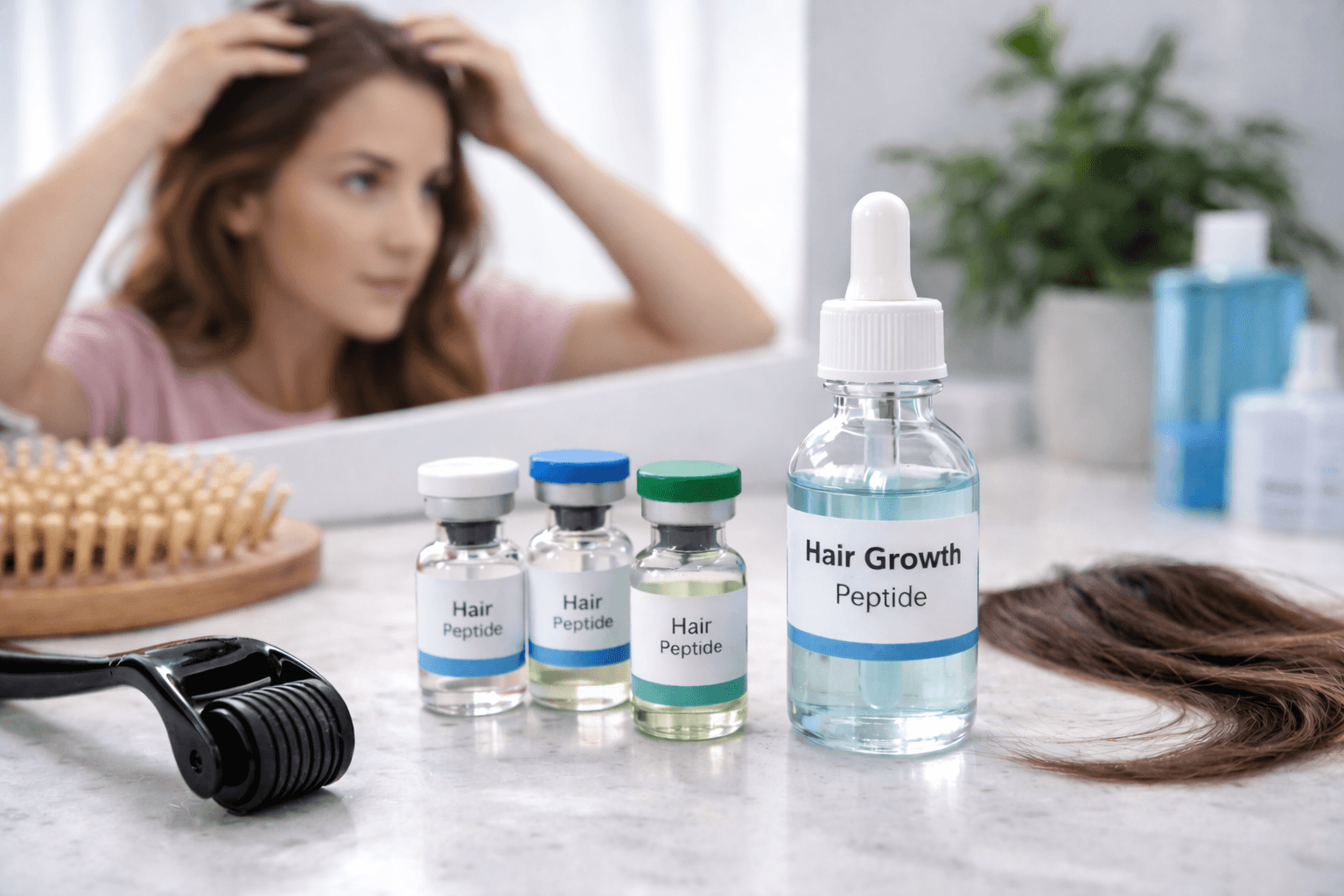
Your hair is thinning.
Maybe it started at the temples, or the crown, or you're noticing more hair in the shower drain than on your head.
You've tried minoxidil.
The foam that makes your scalp itch and doesn't seem to do much.
Maybe finasteride, which comes with sexual side effects you're not willing to accept long-term.
Now you're researching peptides. Specifically, peptides that might actually regrow hair without the side effects, the daily applications, or the feeling that you're fighting a losing battle.
Here's what you need to know: certain peptides can stimulate hair growth through multiple mechanisms - increasing blood flow to follicles, reducing inflammation, promoting tissue repair, and directly stimulating hair follicle cells.
They're not FDA-approved for hair loss (yet), but the mechanisms are well-understood and the results are real.
This isn't a miracle cure. If you're completely bald for 20 years, peptides won't give you a full head of hair. But if you're in the early to moderate stages of hair loss, peptides can slow, stop, and in many cases partially reverse the process.
Let's start with how hair loss actually happens and how peptides interfere with that process.
Understanding hair loss and how peptides help
Hair loss happens through several mechanisms, and understanding them helps you choose the right peptides.
Androgenic alopecia (pattern baldness)
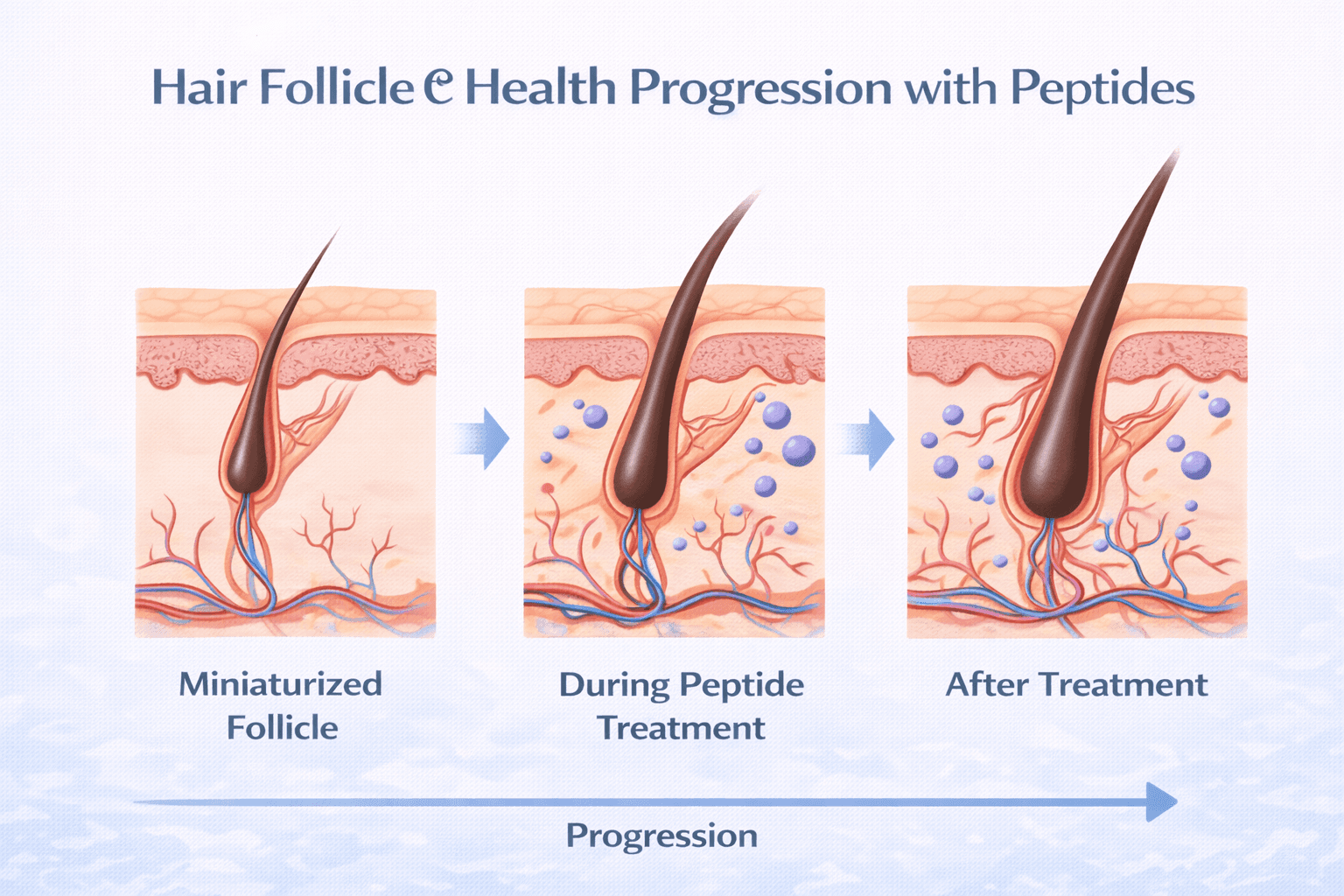
This is the most common cause of hair loss in men and women. Dihydrotestosterone (DHT), a metabolite of testosterone, binds to receptors in hair follicles. This binding gradually miniaturizes follicles - they produce thinner, shorter hairs until eventually they stop producing visible hair altogether.
The follicles don't die (usually). They shrink and enter extended dormant phases. This is why treatments can work - the follicles are still there, just not functioning properly.
How peptides help: Certain peptides reduce inflammation around follicles, improve blood flow delivering nutrients, and stimulate follicular stem cells. This can partially reverse miniaturization and wake up dormant follicles. Peptides don't block DHT like finasteride, but they address other factors maintaining hair loss.
Inflammation and poor circulation
Chronic low-grade inflammation around hair follicles damages them over time. Poor blood flow means follicles don't get adequate nutrients and oxygen. Both accelerate hair loss.
How peptides help: Anti-inflammatory peptides like BPC-157 and KPV reduce follicular inflammation. Copper peptides improve blood flow and angiogenesis (formation of new blood vessels). Better circulation means healthier follicles.
Stress and telogen effluvium
Severe stress, illness, or nutritional deficiency can push large numbers of follicles into telogen (resting) phase simultaneously. Three months later, you experience sudden dramatic shedding.
How peptides help: Growth-promoting peptides can help shift follicles back into anagen (growth) phase more quickly, reducing the duration and severity of stress-related hair loss.
Age-related decline
Follicular stem cells become less active with age. Cell turnover slows. Hair growth cycles shorten. The result is thinner, slower-growing hair even without androgenic factors.
How peptides help: Regenerative peptides stimulate stem cell activity and cellular turnover, partially countering age-related follicle decline.
Peptides won't fix every type of hair loss. Autoimmune conditions like alopecia areata, scarring alopecias that destroy follicles, and genetic conditions affecting hair structure typically don't respond well. But for androgenic alopecia, age-related thinning, and stress-related loss - peptides can make a real difference.
Best peptides for hair growth
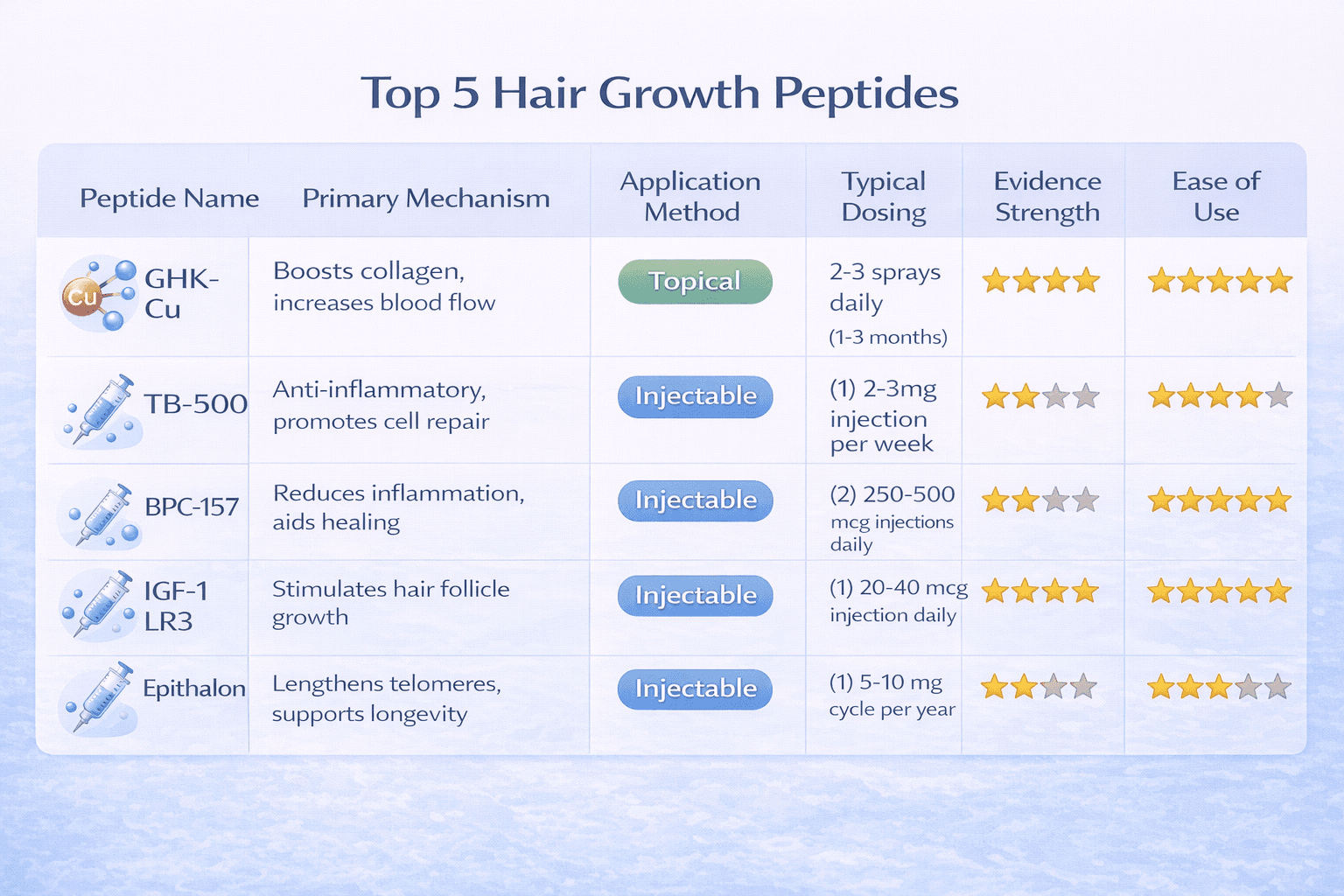
Different peptides work through different mechanisms. Here's what actually works:
GHK-Cu (copper peptides)
This is the gold standard for hair growth peptides. GHK-Cu has the most research backing its effectiveness for hair restoration.
Mechanism: Copper peptides enlarge hair follicles, stimulate hair follicle cell proliferation, increase angiogenesis around follicles, act as anti-inflammatory agents, and function as antioxidants protecting follicles from oxidative damage.
Studies show GHK-Cu can increase hair follicle size by up to 30% and significantly increase the percentage of follicles in anagen (growth) phase. It works for both androgenic alopecia and age-related thinning.
Application: Topical application directly to scalp is most common. Massage into areas of thinning or loss. Some users inject subcutaneously near problem areas, though this is less common for hair loss specifically.
Dosing:
Topical: 1-2% GHK-Cu solution or serum, applied daily to affected areas
Injectable (if used): 1-2mg subcutaneous injection near scalp, 3x per week
Timeline: Visible results typically appear after 3-4 months of consistent use. Peak benefits around 6-9 months.
For comprehensive information on copper peptides, see our GHK-Cu copper peptides guide.
TB-500 (Thymosin Beta-4)
TB-500 is primarily known for injury healing, but it has remarkable effects on hair growth.
Mechanism: TB-500 promotes blood vessel formation, reduces inflammation, stimulates stem cell differentiation and migration, and promotes tissue regeneration. For hair, this translates to better nutrient delivery to follicles, reduced follicular inflammation, and activation of follicular stem cells.
Multiple anecdotal reports from users taking TB-500 for injury recovery note unexpected hair regrowth as a side effect - including regrowth in areas that had been bald for years.
Application: Subcutaneous injection. While you're injecting systemically (not directly into scalp), the peptide circulates and affects follicles throughout your body.
Dosing:
Loading phase: 5-10mg per week (split into 2-3 injections), for 4-6 weeks
Maintenance: 2-5mg per week ongoing
Timeline: Hair changes typically noticed 2-4 months after starting. Some users report darkening of grey hair as a bonus effect.
See our TB-500 complete guide and use our TB-500 calculator for precise dosing.
BPC-157
Body Protection Compound 157 is another healing peptide with hair growth benefits.
Mechanism: BPC-157 promotes angiogenesis, reduces inflammation, accelerates healing, and protects against various types of cellular damage. For hair, the primary benefits come from improved blood flow and reduced follicular inflammation.
BPC-157 isn't specifically a hair growth peptide, but users frequently report improved hair thickness and reduced shedding as secondary benefits when using it for other purposes.
Application: Subcutaneous injection, typically in abdomen or near problem area if targeting specific injury.
Dosing:
Standard: 250-500mcg once or twice daily
Hair-focused protocol: 500mcg daily, ongoing
Timeline: Hair improvements typically noticed after 2-3 months of consistent use.
Learn more in our BPC-157 complete guide and use our BPC-157 calculator.
IGF-1 LR3
Insulin-like Growth Factor 1 Long R3 is a powerful growth factor that affects multiple tissues, including hair follicles.
Mechanism: IGF-1 stimulates cell proliferation and survival, promotes anagen phase entry, and enhances protein synthesis. Hair follicles have IGF-1 receptors, and activating them promotes hair growth.
This is a more advanced peptide with greater systemic effects. It's primarily used by serious athletes and bodybuilders, but the hair growth benefits are well-documented.
Application: Subcutaneous injection, post-workout or before bed.
Dosing:
40-80mcg per day, for 4-6 week cycles
Requires cycling (not continuous use)
Timeline: Hair improvements visible around 6-8 weeks into cycle.
Epithalon
Primarily known as an anti-aging peptide, Epithalon has some interesting effects on hair.
Mechanism: Epithalon activates telomerase, promotes cellular regeneration, and may improve follicular stem cell function. The effects on hair are less dramatic than copper peptides but contribute to overall hair health.
Application: Subcutaneous injection, typically cycled.
Dosing:
10mg per cycle (5-10 days)
1mg injected daily for 10 days, then break for several months
Timeline: Subtle improvements over multiple cycles (6+ months).
Cerebrolysin (off-label use)
Cerebrolysin contains neurotrophic factors that affect more than just the brain. Some users report hair growth benefits.
Mechanism: Contains brain-derived neurotrophic factor (BDNF) and other growth factors that may stimulate follicular stem cells.
This is expensive and primarily used for cognitive benefits. Hair growth is an interesting side effect but probably not worth using Cerebrolysin solely for hair.
Complete hair growth peptide protocols
Here's how to actually use these peptides for maximum hair regrowth:
Protocol 1: Topical-only (beginner-friendly)
Best for: People uncomfortable with injections or with mild hair loss.
Daily routine:
Morning: Apply GHK-Cu serum (1-2% concentration) to thinning areas, massage gently
Evening: Repeat GHK-Cu application
Additional support:
Microneedling once weekly (0.5-1.0mm depth) before applying GHK-Cu
Take oral supplements supporting hair health (biotin, zinc, vitamin D)
Expected results: Visible improvement in hair thickness and reduced shedding after 3-4 months. New growth in previously thinning areas by 6 months.
Cost: Moderate ($50-100/month for quality GHK-Cu serum)
Protocol 2: Injectable healing peptides
Best for: People comfortable with injections who want systemic benefits beyond just hair.
Weekly routine:
TB-500: 5mg total per week (split into 2-3 injections), loading phase for 6 weeks
TB-500: 2-5mg per week maintenance thereafter
BPC-157: 500mcg daily throughout
Timeline:
Weeks 1-6: Loading phase (higher TB-500 dose)
Weeks 7+: Maintenance
Expected results: Reduced hair shedding within 4-6 weeks. Visible new growth and increased thickness by 3-4 months. Bonus benefits for injury healing and gut health.
Cost: Moderate-high ($150-250/month)
Use our peptide reconstitution calculator for accurate mixing ratios.
Protocol 3: Comprehensive stack (advanced)
Best for: Moderate to severe hair loss, people comfortable with multiple peptides.
Daily routine:
Morning: Topical GHK-Cu to scalp
Evening: Topical GHK-Cu to scalp
Every day: BPC-157 500mcg subcutaneous injection
3x per week: TB-500 2-5mg subcutaneous injection (maintenance dose)
Bedtime: IGF-1 LR3 50-60mcg (4-6 week cycles with breaks)
Additional:
Weekly microneedling with GHK-Cu application immediately after
Monthly progress photos and measurements
Expected results: This is the most aggressive protocol. Maximum reduction in shedding within 4-6 weeks. Visible regrowth in most thinning areas by 3 months. Continued improvement through 12 months.
Cost: High ($300-500/month depending on sources and doses)
Important: This protocol affects multiple systems. Monitor for side effects. Consider working with a healthcare provider.
Protocol 4: Maintenance (after regrowth)
Once you've achieved desired results, you need maintenance to keep them.
Maintenance routine:
GHK-Cu topical 3-4x per week (reduced from daily)
BPC-157 250mcg 3-4x per week (reduced from daily)
TB-500 optional periodic cycles (2-4 weeks every 3-4 months)
Continue microneedling monthly
This reduced protocol maintains gains while lowering costs and time commitment.
For help planning your cycles, use our peptide cycle planning guide.
Microneedling and peptide absorption
Microneedling dramatically enhances topical peptide effectiveness. Here's how to do it right:
Why microneedling works
Microneedling creates thousands of tiny channels through the skin barrier. This allows topical peptides to penetrate much deeper than they normally would. It also triggers wound healing responses that synergize with peptide effects.
Studies show microneedling combined with topical treatments can be more effective than either alone.
Proper technique
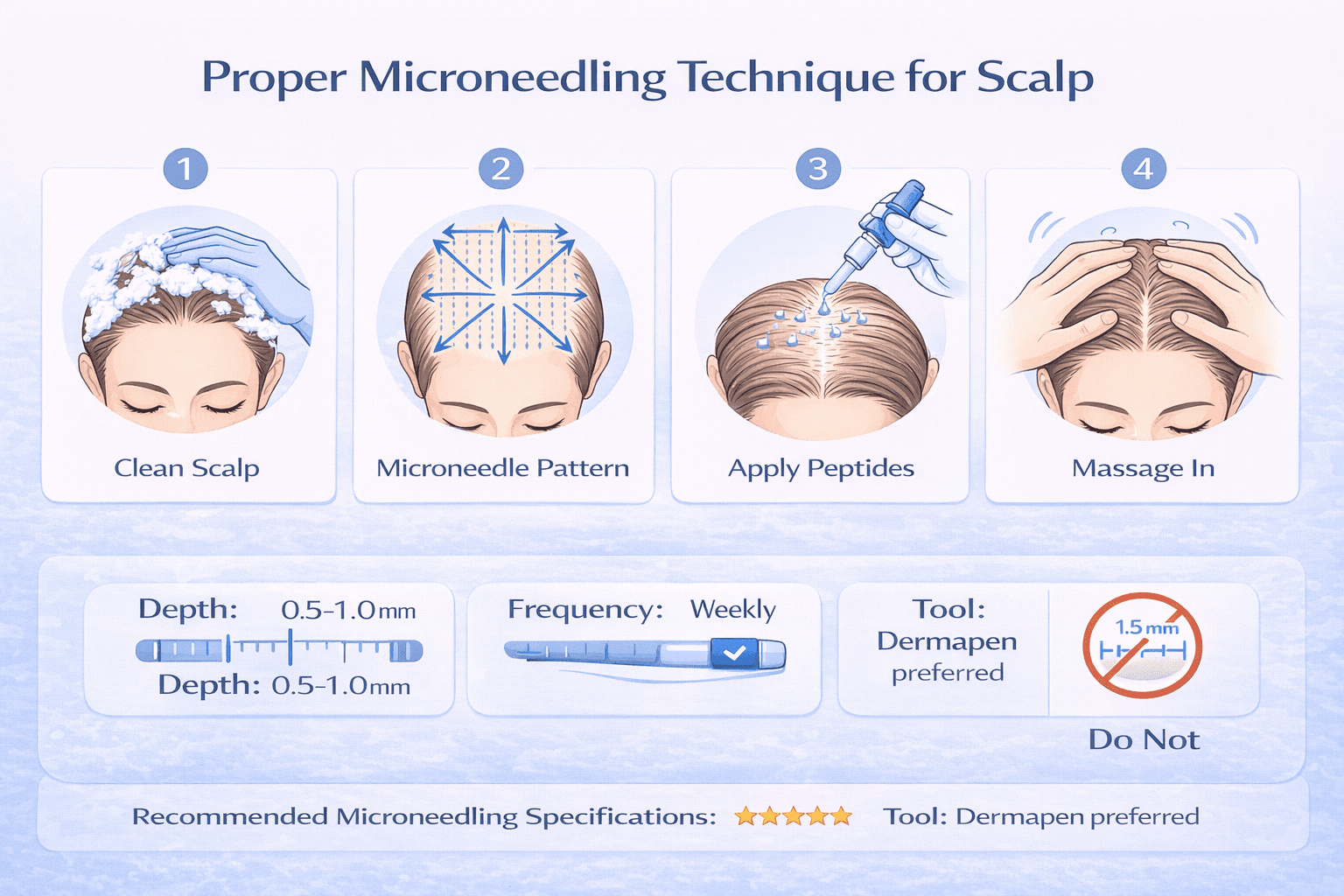
Needle depth: 0.5-1.0mm for hair loss. Deeper needles (1.5mm+) are used for collagen induction but can damage hair follicles if used on scalp.
Frequency: Once per week maximum. More frequent needling doesn't improve results and can cause excessive inflammation.
Procedure:
Clean scalp thoroughly
Apply numbing cream if desired (optional for 0.5-1.0mm)
Microneedle in multiple directions (vertical, horizontal, diagonal)
Apply peptide solution immediately after
Gentle pressure/massage to work peptides into channels
Leave on scalp (don't rinse)
What to avoid:
Don't microneedle over active infections or inflamed areas
Don't share microneedling devices
Don't use dull needles (replace dermaroller every 3-4 uses)
Don't apply harsh products (alcohol, fragrances) immediately after
Best practices:
Use a dermapen if possible (more consistent depth, less painful than dermaroller)
Sanitize device before and after each use
Take progress photos before starting protocol
Combining peptides with other hair loss treatments
Peptides work synergistically with established hair loss treatments. Here's how to stack them:
Peptides + Minoxidil
Minoxidil is a vasodilator that increases blood flow to follicles. Peptides work through different mechanisms, so combining them is safe and potentially more effective than either alone.
How to combine:
Morning: Minoxidil (foam or liquid)
Wait 4 hours
Evening: Topical peptides (GHK-Cu)
Don't apply both simultaneously - they may interfere with each other's absorption. Space them apart.
Peptides + Finasteride/Dutasteride
DHT blockers attack hair loss from a different angle than peptides. Combining addresses multiple pathways.
How to combine:
Take finasteride/dutasteride as prescribed (oral)
Use peptide protocol of choice separately
No timing restrictions since they work through different mechanisms
This combination is popular because finasteride blocks the hormonal cause while peptides promote healing and regrowth.
Peptides + Red Light Therapy
Low-level laser therapy (LLLT) or red light therapy stimulates follicular activity and reduces inflammation through light energy. Peptides provide chemical signaling. Together they hit follicles from multiple angles.
How to combine:
Use red light device daily (10-15 minutes)
Apply peptides after red light session
The red light may enhance peptide absorption
Peptides + PRP (Platelet-Rich Plasma)
PRP injections contain growth factors that stimulate hair growth. Peptides provide similar benefits through different growth factors.
How to combine:
Get PRP injections (typically every 4-6 weeks)
Continue daily peptide protocol between PRP sessions
Consider adding injectable peptides to PRP preparation (some practitioners do this)
This is an aggressive, comprehensive approach usually reserved for significant hair loss.
What NOT to combine
Peptides + Harsh chemicals: Avoid combining peptides with hair dyes, bleach, or harsh chemical treatments immediately.
These can damage follicles and counteract peptide benefits.
If you must color hair, do it between peptide cycles or wait at least 24 hours after peptide application.
Multiple injectable growth factors simultaneously without supervision: Stacking TB-500, IGF-1, and multiple other growth-promoting peptides requires careful monitoring. More isn't always better.
Expected timeline and realistic results
Managing expectations prevents disappointment. Hair growth is slow.
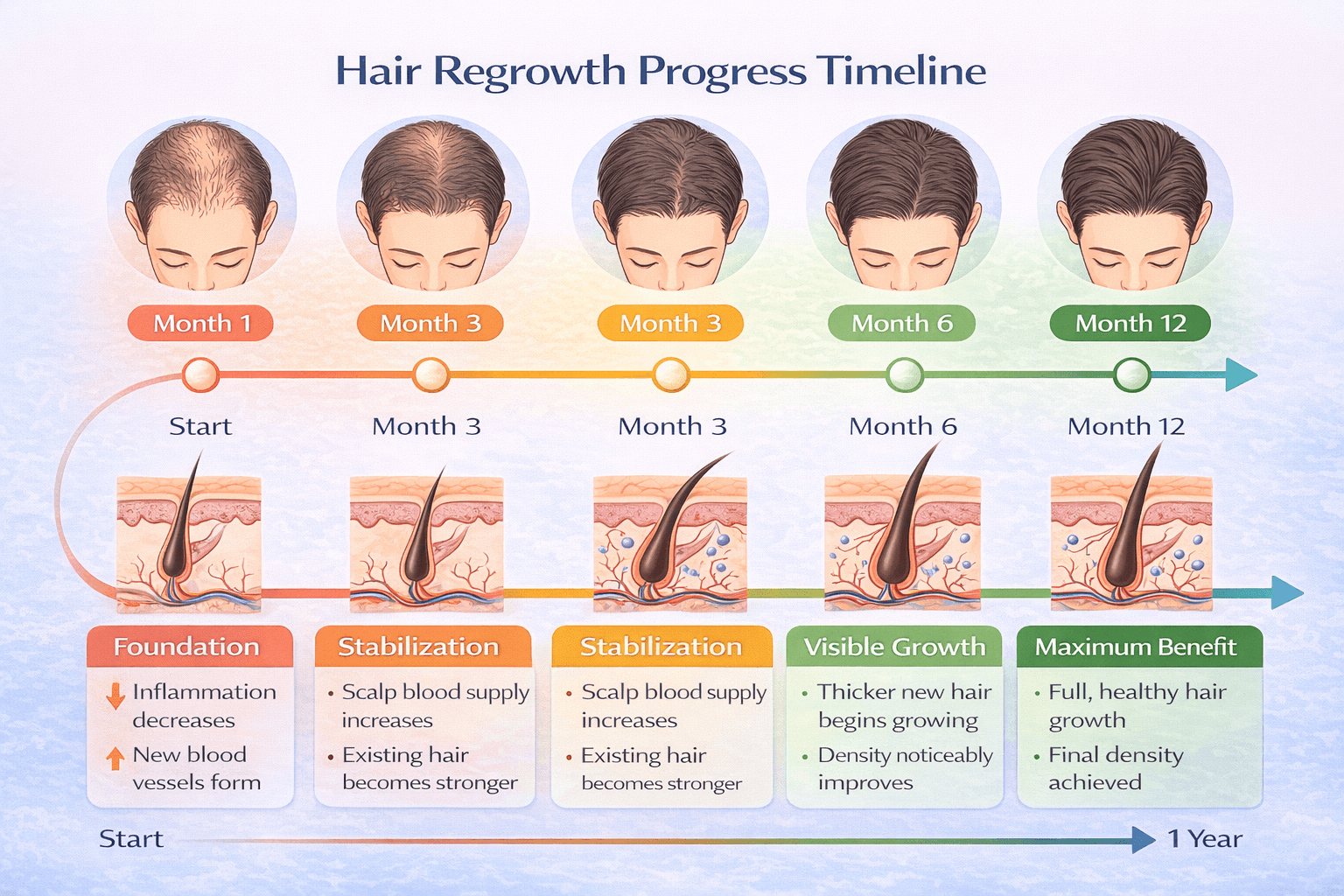
Month 1: Foundation phase
What's happening: Peptides are binding to receptors, reducing inflammation, improving blood flow. Cellular changes are occurring at follicular level.
What you'll notice: Probably nothing visible yet. Some people report reduced shedding by week 3-4. Hair may feel slightly healthier when washing.
What to do: Document baseline with photos and measurements. Stick with protocol consistently.
Months 2-3: Stabilization
What's happening: Follicular inflammation is reduced. Blood supply is improved. Dormant follicles are beginning to wake up. Existing hair is growing in healthier.
What you'll notice: Reduced shedding becomes more obvious. Existing hair looks slightly thicker, shinier. Very fine "baby hairs" may appear in previously thin areas (visible in good lighting).
What to do: Continue protocol. Resist urge to change anything. Take month 3 progress photos.
Months 4-6: Visible improvement
What's happening: Follicles that entered anagen phase are producing visible hair. Miniaturized follicles are enlarging. New follicles activated.
What you'll notice: This is when results become undeniable. Thinning areas look noticeably fuller. Baby hairs from months 2-3 are longer, darker, more visible. Overall hair volume improved. Others start commenting.
What to do: Stay consistent. Consider adjusting protocol based on results - if progress is slower than expected, increase GHK-Cu frequency or add another peptide.
Months 7-12: Maximum benefit
What's happening: Follicles continue enlarging and producing healthier hair. Multiple growth cycles have passed. Full protocol benefits are realized.
What you'll notice: Significant improvement over baseline. Areas that were thin now have reasonable coverage. Existing hair is thicker, healthier, grows faster. The trajectory of hair loss has reversed.
What to do: Transition to maintenance protocol. Continue tracking progress monthly. Adjust as needed.
Realistic expectations
What peptides can do:
Slow or stop ongoing hair loss
Regrow hair in recently thinned areas (within past 5 years)
Increase thickness and health of existing hair
Darken some grey hairs (particularly with TB-500)
Improve scalp health
What peptides probably can't do:
Regrow hair in areas bald for 10+ years (follicles may be too far gone)
Give you more hair than you had in your prime
Work instantly (hair growth takes months)
Fix scarring alopecia or conditions that destroyed follicles
Completely reverse severe pattern baldness alone (best combined with DHT blockers)
Individual results vary dramatically. Genetics, age, duration of hair loss, underlying causes, and protocol adherence all affect outcomes.
Side effects and safety considerations
Peptides used for hair growth are generally safe, but side effects can occur.
Common with topical application
Scalp irritation: Mild redness, itching, or sensitivity where applied. Usually temporary and resolves as skin adjusts.
Solution: Reduce concentration, apply less frequently initially, ensure you're not allergic to carrier ingredients.
Dryness or flaking: Some peptide formulations can be drying to scalp.
Solution: Use a gentle moisturizing scalp treatment between peptide applications.
Common with injectable peptides
Injection site reactions: Redness, slight swelling, minor pain at injection sites.
Solution: Rotate injection sites, use proper sterile technique, inject slowly.
Temporary fatigue: Some users report mild lethargy when starting TB-500 or BPC-157. Usually resolves within 1-2 weeks.
Solution: Start with lower doses, inject before bed.
Potential concerns
Hormonal effects: Peptides like IGF-1 affect hormone systems. Use with caution if you have hormone-sensitive conditions.
Solution: Monitor bloodwork if using growth factor peptides long-term. Consider working with healthcare provider.
Increased hair growth everywhere: TB-500 and other systemic peptides can increase hair growth on arms, legs, chest, back - not just scalp.
This is real: Not necessarily a side effect if you're male and don't mind body hair. For women or men who prefer less body hair, this can be unwanted.
Skin changes with copper peptides: GHK-Cu can affect skin collagen and appearance. Usually this is positive (anti-aging), but some people report increased sensitivity.
Who should avoid hair growth peptides
Pregnant or breastfeeding women: No safety data exists. Better to wait.
Active cancer or cancer history: Growth-promoting peptides could theoretically affect cancer cells. Consult your oncologist before use.
Autoimmune alopecia areata: Peptides aren't typically effective for autoimmune hair loss and could theoretically worsen autoimmune responses.
Allergies to peptide ingredients: Obvious but worth stating. Check formulations for allergens.
For comprehensive peptide safety information, see our peptide safety and risks guide.
Sourcing quality peptides for hair growth
Quality matters enormously with peptides. Bad peptides won't work and could be contaminated.
For topical GHK-Cu serums
What to look for:
Concentration listed clearly (1-2% GHK-Cu)
Stored in opaque, airtight containers (copper peptides degrade in light and air)
Short ingredient lists (avoid unnecessary fragrances and irritants)
Reputable skincare or peptide company
Recent manufacture date
Red flags:
Suspiciously cheap prices
Claims that seem too good to be true
No ingredient listing
Clear bottles (light degrades copper peptides)
Expected cost: $40-100 for 1-2 month supply from quality brands
For injectable peptides
What to look for:
Third-party testing (Certificate of Analysis available)
Purity >95% for research peptides
Proper storage and shipping (cold packs for peptides)
Established supplier with community reputation
Clear reconstitution instructions
Red flags:
No testing documentation
Prices far below market average
Vague about peptide sourcing
Poor customer service or responsiveness
Expected cost:
TB-500: $50-100 per 5mg vial
BPC-157: $25-50 per 5mg vial
IGF-1 LR3: $60-120 per 1mg vial
For detailed vendor evaluation criteria, see our best peptide vendors guide.
Common mistakes that sabotage hair growth results
You can use the right peptides and still fail if you make these errors:
Inconsistent application
Hair growth requires sustained signaling to follicles. Missing doses, applying sporadically, or giving up after a few weeks guarantees failure.
Fix: Set daily reminders. Make peptide application part of your routine like brushing teeth.
Expecting fast results
Giving up after 4 weeks because you don't see regrowth is premature. Hair cycles are measured in months, not weeks.
Fix: Commit to minimum 3 months, ideally 6 months. Track with photos, not daily mirror checks.
Using degraded peptides
Storing GHK-Cu in clear bottles in bathroom humidity degrades it. Using injectable peptides past their stability date means you're injecting inactive compound.
Fix: Store topicals in cool, dark places. Refrigerate reconstituted injectables. Follow expiration guidelines.
Not addressing underlying causes
If you have thyroid issues, severe nutritional deficiencies, or uncontrolled inflammation, peptides alone won't fix your hair loss.
Fix: Get bloodwork. Check thyroid, iron, vitamin D, zinc. Address root causes while using peptides.
Using harsh hair products
Aggressively shampooing, using hair dyes, applying harsh styling products - these damage follicles and counteract peptide benefits.
Fix: Switch to gentle, sulfate-free shampoo. Minimize chemical treatments. Let hair air-dry when possible.
Poor diet and lifestyle
Chronic stress elevates cortisol, which damages follicles. Poor sleep disrupts growth hormone and recovery. Terrible diet provides insufficient building blocks for hair.
Fix: Manage stress. Sleep 7-9 hours. Eat adequate protein (0.7-1g per pound body weight). Stay hydrated.
Over-complicating the protocol
Using 10 different peptides, constantly changing doses, adding new treatments every week - this makes it impossible to know what's working.
Fix: Start simple. GHK-Cu topically or TB-500 + BPC-157 injection. Give it time. Only add more if needed.
Hair growth peptides for women
Women experience hair loss differently than men. Peptides work for both, but protocols differ slightly.
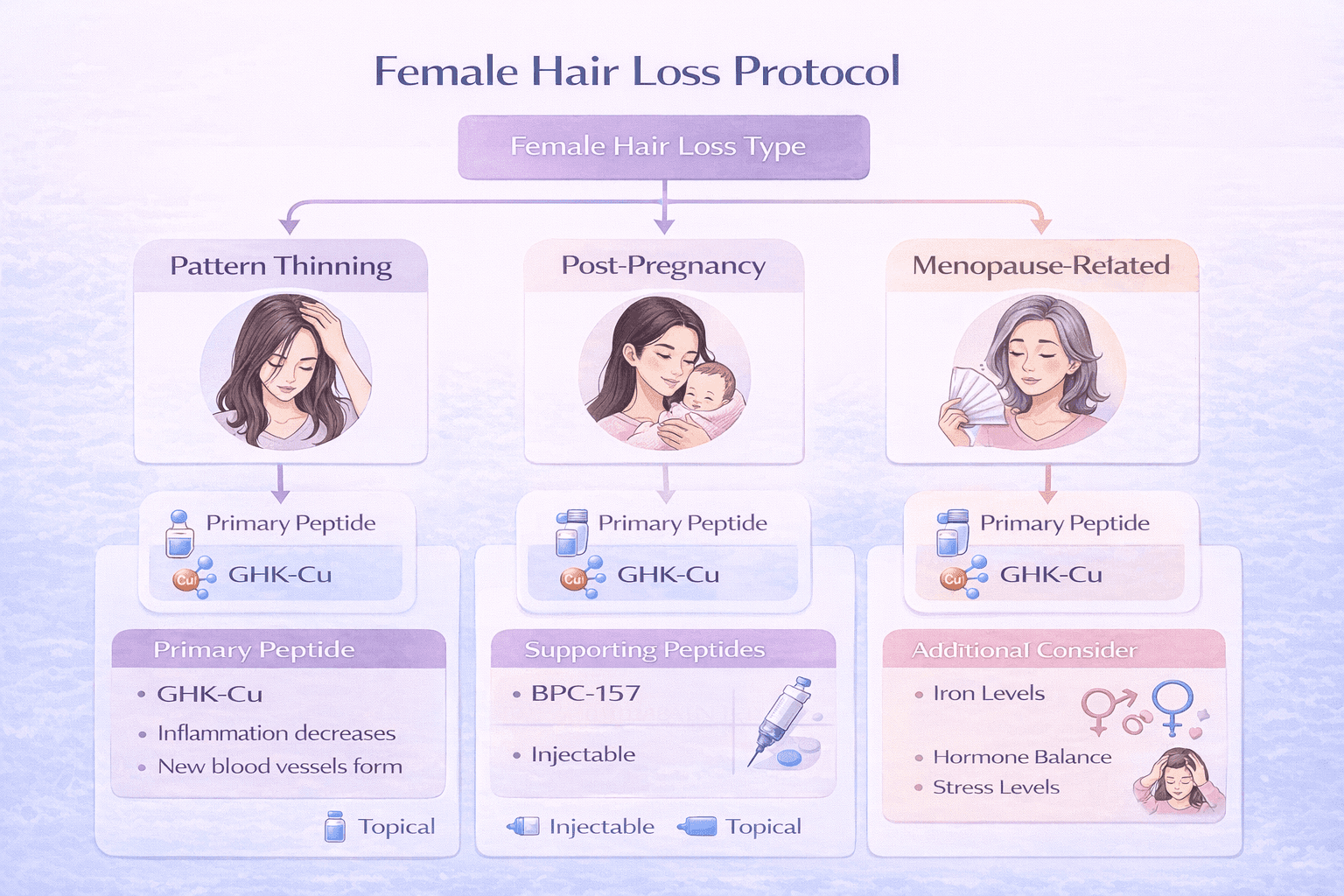
Female pattern hair loss
Women typically experience diffuse thinning across the entire scalp rather than receding hairline or crown balding. Hormonal changes (menopause, post-pregnancy, PCOS) often contribute.
Best peptides for women:
GHK-Cu topical (first line treatment)
BPC-157 injectable (addresses inflammation and hormonal stress)
TB-500 (less commonly used but effective)
Protocol considerations:
Women often respond better to topical peptides than men
Hormonal balance matters more - consider working with endocrinologist
Iron deficiency is common cause of female hair loss - check ferritin levels
Post-pregnancy hair loss
Telogen effluvium after pregnancy is normal but distressing. Peptides can accelerate recovery.
Recommended protocol:
GHK-Cu topical starting 3 months post-pregnancy
BPC-157 if breastfeeding is complete (avoid while breastfeeding)
Focus on nutrition and stress management
Menopause-related thinning
Declining estrogen affects hair growth cycles. Peptides can partially counter this.
Recommended protocol:
GHK-Cu topical daily
Consider TB-500 cycles (3 months on, 1 month off)
Combine with hormone replacement therapy if appropriate
For more targeted female protocols, see our best peptides for women guide.
The role of SeekPeptides in your hair restoration journey
Using peptides for hair growth requires precision, consistency, and knowledge. SeekPeptides provides the tools you need to succeed.
Accurate reconstitution: Our peptide reconstitution calculator ensures you mix injectable peptides correctly every time. No guessing, no wasted expensive peptides.
Precise dosing: Our peptide calculators for TB-500 and BPC-157 tell you exactly how much to inject based on your vial concentration and desired dose.
Protocol planning: Our cycle planning guide helps you map out your complete protocol - what to use, when, for how long, and when to reassess.
Evidence-based information: Our comprehensive guides on copper peptides, TB-500, and BPC-157 give you the science and practical application without marketing hype.
AI-powered assistance: Get answers to your specific questions about combining peptides, managing side effects, optimizing timing, and troubleshooting issues.
You don't need to figure this out through expensive trial and error. Use the tools thousands of successful peptide users rely on.
Final thoughts
Peptides offer real hope for hair regrowth without the side effects of pharmaceutical options. GHK-Cu, TB-500, and BPC-157 work through well-understood mechanisms that address multiple factors in hair loss.
The results aren't instant. You're not going to wake up with a full head of hair after one week. But with consistent use over 3-6 months, the improvements can be dramatic - slowed hair loss, regrowth in thinning areas, thicker and healthier hair overall.
This isn't a miracle cure. Peptides work best when combined with a comprehensive approach - addressing underlying health issues, managing stress, eating properly, using gentle hair care practices.
Start simple. Choose GHK-Cu topical or an injectable protocol with TB-500 and BPC-157. Use it consistently for 6 months. Track progress with photos. Adjust based on results.
Hair growth is possible. Peptides give you a legitimate tool to make it happen.
Related resources
In case I don’t see you, good afternoon, good evening, and good night. Take care of yourself. <3