Jan 20, 2026
The internet is full of warnings about mixing peptides and retinol. Don't do it. They'll cancel each other out. Your skin will freak out. You'll waste your money on products that fight against each other.
Most of this advice is wrong.
Not just outdated or oversimplified. Actually wrong. The reality is more nuanced, more interesting, and far more useful than the blanket prohibitions you've probably encountered. Some peptides pair beautifully with retinol. Others require careful timing. A few need genuine caution. But the idea that these two ingredient categories can't coexist in the same routine? That's a myth that's holding back your skincare results. Understanding how different peptides interact with retinol will transform your approach to anti-aging skincare. This isn't about choosing one or the other. It's about leveraging both for results neither can achieve alone. The science supports combination use. The clinical data supports it. And the thousands of people successfully using both ingredients together prove it works.
This guide covers everything you need to know about combining peptides for anti-aging with retinol, from the basic science to specific layering protocols to troubleshooting when things don't go as planned. No myths. No oversimplifications. Just practical information you can use tonight.
Why the myth about peptides and retinol exists
The confusion started with copper peptides. Specifically, with early formulations of GHK-Cu combined with vitamin A derivatives. There were legitimate concerns. Some studies suggested instability issues when these specific ingredients were mixed in the same formulation.
But here's what happened next.
The skincare community extrapolated one specific interaction to all peptides. Every single one. Regardless of their structure, mechanism, or stability profile. It's like saying you can't eat fruit because grapefruit interacts with certain medications. True for grapefruit. Completely false as a blanket statement about fruit.
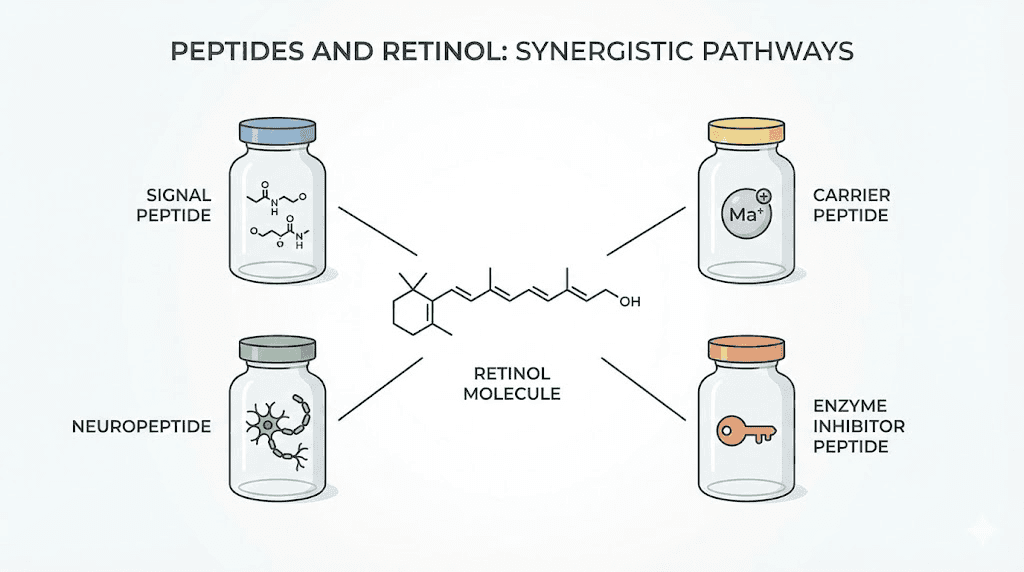
The peptide category includes dozens of distinct compounds. Signal peptides that boost collagen production. Neurotransmitter-inhibiting peptides that relax expression lines. Carrier peptides that deliver trace elements. Enzyme inhibitor peptides that prevent protein breakdown. Each category works differently. Each interacts with retinol differently. Treating them as one homogeneous group makes zero scientific sense.
Modern formulation science has also advanced dramatically. Stability concerns that existed with early products have been largely solved. Encapsulation technologies protect sensitive ingredients. pH-buffered formulations maintain optimal conditions. Time-release mechanisms prevent problematic interactions. The skincare of today operates by different rules than the skincare of a decade ago. SeekPeptides members frequently ask about these combinations, and the research consistently supports thoughtful pairing rather than blanket avoidance.
Understanding how retinol works on skin
Before diving into combinations, you need to understand what retinol actually does. Not the marketing version. The biological reality.
Retinol is a vitamin A derivative. When applied topically, it converts to retinoic acid in your skin through a two-step enzymatic process. First to retinaldehyde. Then to retinoic acid. This conversion happens gradually, which is why retinol is gentler than prescription tretinoin, which delivers retinoic acid directly.
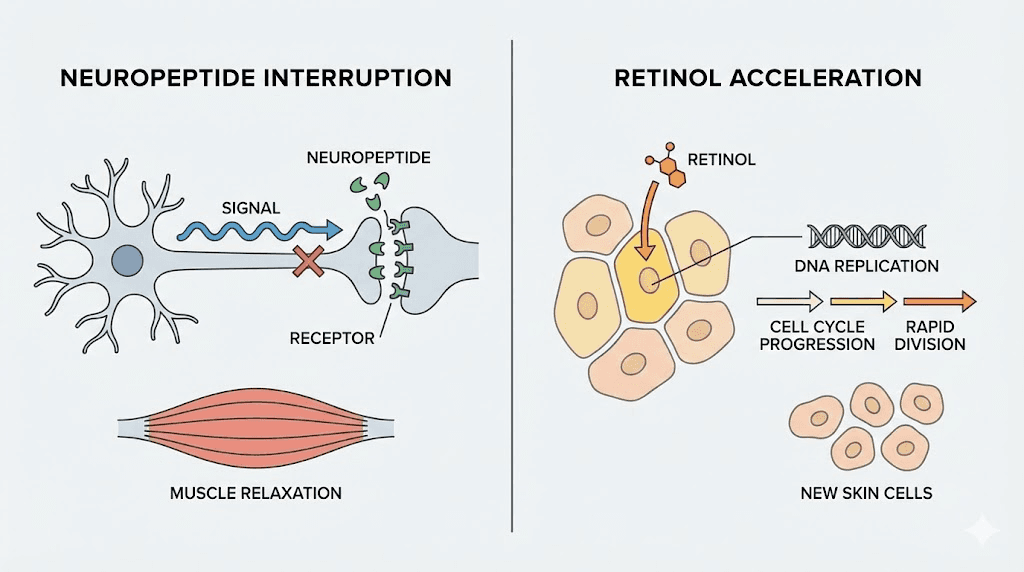
Retinoic acid binds to specific receptors in your skin cells. This binding triggers a cascade of genetic expression changes. Your skin starts producing more collagen. Cell turnover accelerates. The process that moves cells from the deeper layers to the surface speeds up. Dead skin cells shed faster. New, healthier cells take their place.
The results are real. Clinical studies show retinol can increase collagen synthesis by up to 80% in some individuals. Wrinkles soften. Hyperpigmentation fades. Skin texture improves. These aren't marketing claims. They're documented outcomes from decades of research making retinol one of the most studied skincare ingredients in existence.
But there's a cost.
Accelerated cell turnover disrupts the skin barrier. Increased sensitivity follows. Many people experience dryness, peeling, redness, and irritation, especially during the first weeks of use. This adjustment period, sometimes called retinol purging or retinization, can last four to six weeks. Some people never fully adapt.
The retinol adjustment timeline
Week one brings the initial response. Your skin recognizes something has changed. Cell turnover starts accelerating. You might notice nothing, or you might see mild dryness.
Weeks two through four typically represent peak adjustment. This is when side effects hit hardest. Peeling, flaking, redness, and increased sensitivity are common. Some people experience breakouts as congestion hidden beneath the surface comes up faster than usual. This is the phase where most people quit.
Weeks four through eight show stabilization for most users. Side effects decrease. Results start becoming visible. The skin adapts to accelerated turnover. The barrier begins rebuilding.
Months three and beyond deliver the results everyone wants. Consistent use produces cumulative benefits. Fine lines soften. Texture improves. Tone evens out.
The payoff arrives for those who persisted through the difficult early weeks.
Why retinol alone isn't enough
Retinol works through one primary mechanism. Retinoic acid receptor activation. It's extremely effective at what it does. But skin aging involves multiple processes happening simultaneously. Collagen degradation. Elastin breakdown. Reduced hyaluronic acid production. Weakened barrier function. Decreased cellular energy. Increased oxidative stress.
One ingredient, no matter how powerful, cannot address all these factors optimally. This is where peptides enter the picture. Different peptides target different aspects of skin aging. Used alongside retinol, they create a comprehensive approach that addresses aging from multiple angles simultaneously. The combination isn't just safe, it's strategic.
The four categories of skincare peptides
Peptides aren't one thing. They're a diverse category of compounds with different structures, mechanisms, and applications. Understanding these categories is essential for knowing how to combine them with retinol effectively.
Signal peptides
Signal peptides communicate with your skin cells. They send messages that trigger specific biological responses, primarily increased production of structural proteins like collagen and elastin.
The most famous signal peptide is palmitoyl pentapeptide-4, marketed as Matrixyl. This five amino acid chain attached to palmitic acid penetrates the skin barrier effectively due to its lipid solubility. Once it reaches the dermis, it binds to cell surface receptors and triggers collagen types I and III production. Studies show it can be as effective as retinol for repairing sun-damaged skin, without the irritation.
Matrixyl 3000 combines two signal peptides with documented synergy. Palmitoyl tripeptide-1 and palmitoyl tripeptide-7 work together to boost collagen production while simultaneously reducing inflammation. The combination produces better results than either peptide alone.
Other signal peptides include palmitoyl hexapeptide-12, which promotes elastin synthesis, and palmitoyl tripeptide-38, which stimulates multiple components of the extracellular matrix. Each targets slightly different aspects of skin structure, and combining multiple signal peptides can address several structural concerns simultaneously.
Signal peptides pair excellently with retinol. They work through completely different mechanisms. No competition. No interference. They're actually synergistic, both working toward increased collagen but through independent pathways. Use them together without hesitation.
Neurotransmitter-inhibiting peptides
These peptides reduce muscle movement to soften expression lines. Think of them as topical alternatives to Botox, though they work through different mechanisms and produce subtler effects.
Argireline (acetyl hexapeptide-3) was one of the first. It interferes with the SNARE complex, the protein machinery that enables nerve signals to trigger muscle contractions. By competing with natural proteins in this complex, Argireline reduces the intensity of muscle movements that cause expression wrinkles around the eyes, forehead, and mouth.
SNAP-8 (acetyl octapeptide-3) is an improved version with eight amino acids instead of six. Studies suggest it's approximately 30% more effective than Argireline at reducing wrinkle depth. Clinical trials showed up to 63% wrinkle reduction after 28 days of twice-daily application.
Leuphasyl (pentapeptide-18) works through a different mechanism. Instead of targeting the SNARE complex, it modulates nerve activity by mimicking natural enkephalins. A 2014 study showed 34.7% reduction in forehead wrinkle depth after 60 days of twice-daily application.
Syn-Ake is a synthetic tripeptide modeled after waglerin-1, a compound found in temple viper venom. It blocks specific acetylcholine receptors, producing muscle relaxation. Clinical data shows up to 52% reduction in wrinkle depth after 28 days.
Neurotransmitter-inhibiting peptides are completely compatible with retinol. They target muscle activity while retinol targets cell turnover and collagen production. No overlap. No interference. Combining them addresses both dynamic wrinkles (from movement) and static wrinkles (from structural decline) simultaneously. Many advanced formulas combine multiple neuropeptides with retinol for comprehensive wrinkle treatment. SeekPeptides resources cover optimal combinations for different wrinkle types.
Carrier peptides
Carrier peptides transport trace elements into the skin where they're needed for various biological processes. The most important carrier peptide in skincare is GHK-Cu, the copper-carrying tripeptide that's generated so much discussion about retinol compatibility.
GHK-Cu consists of glycine, histidine, and lysine bound to a copper ion. It occurs naturally in human plasma and plays important roles in wound healing, collagen synthesis, and antioxidant defense. Topically applied GHK-Cu delivers copper to skin cells, supporting enzymatic processes that require this trace element.
The benefits are significant. GHK-Cu promotes collagen and elastin synthesis, supports wound healing, reduces inflammation, and provides antioxidant protection. It's one of the most researched peptides in skincare, with documented effects on multiple aspects of skin health and aging.
This is the peptide category requiring the most caution with retinol. Not because they can't be used together. They can. But timing and application order matter more here than with other peptide types.
The concern isn't about dangerous interactions. It's about optimization. Copper peptides and retinol both promote cell turnover. Using high concentrations of both simultaneously might overstimulate the skin, leading to increased irritation, sensitivity, and potentially compromised barrier function. It's not harmful. It's suboptimal.
The solution is simple. Separate their application by time. Use copper peptides in the morning and retinol at night. Or use them on alternating nights if you prefer evening application for both. If you must use them in the same routine, apply copper peptides first, wait 30 minutes for complete absorption, then apply retinol. This prevents direct interaction while allowing you to benefit from both.
Recent research suggests the historical concerns about copper peptide and retinol instability were overblown, particularly with modern formulations. Many skincare professionals now consider them complementary rather than conflicting, with copper peptides supporting skin repair while retinol drives renewal. The key is respecting the potency of both ingredients and not overwhelming the skin.
Enzyme inhibitor peptides
These peptides prevent the breakdown of existing collagen and elastin by inhibiting enzymes called matrix metalloproteinases (MMPs). While other peptides stimulate new protein production, enzyme inhibitors protect what's already there.
UV exposure, pollution, and normal aging all increase MMP activity. These enzymes break down the extracellular matrix, degrading collagen and elastin fibers that give skin its structure and bounce. The result is sagging, wrinkling, and loss of firmness.
Enzyme inhibitor peptides like dipeptide-2, acetyl tetrapeptide-5, tripeptide-2, and tetrapeptide-30 block MMP activity. They bind to enzyme active sites or interfere with enzyme-substrate interactions, preventing the breakdown of structural proteins. Think of it as protecting your investment. What's the point of stimulating collagen production if enzymes are just going to destroy it?
These peptides pair well with retinol. Retinol stimulates new collagen. Enzyme inhibitors protect existing collagen. Different targets. Complementary actions. Together they create a push-pull effect that accelerates net collagen accumulation. Building more while losing less equals faster visible results.
How peptides help you tolerate retinol better
Here's something the blanket prohibition against combining peptides and retinol completely misses. Peptides can actually make retinol easier to use.
Retinol's side effects stem primarily from barrier disruption and inflammation. Accelerated cell turnover outpaces the skin's ability to rebuild its protective layer. Transepidermal water loss increases. Irritation pathways activate. The result is the dryness, peeling, and redness that makes so many people abandon retinol before seeing results.
Many peptides directly address these issues. They're not just compatible with retinol. They're beneficial alongside it.
Barrier support peptides
Certain peptides strengthen the skin barrier, directly counteracting one of retinol's main side effects. Palmitoyl tetrapeptide-7 reduces inflammation and supports barrier function. Palmitoyl tripeptide-5 promotes matrix protein production that reinforces skin structure.
Using these peptides alongside retinol provides a buffer against irritation. Your skin can handle the increased cell turnover because it has additional support for maintaining barrier integrity. The adjustment period shortens. The side effects diminish. You reach the results phase faster with less discomfort along the way.
Soothing and calming peptides
Some peptides have inherent anti-inflammatory properties.
They calm reactive skin and reduce redness. Acetyl dipeptide-1 cetyl ester modulates inflammatory cytokines. Acetyl tetrapeptide-15 reduces skin sensitivity by affecting nerve signaling.
When retinol triggers inflammation, these peptides help resolve it. They're like having a cooling agent working alongside the active ingredient, tempering the heat without diminishing the benefits. People with sensitive skin who've never tolerated retinol often find success when they add calming peptides to their routine.
Hydration-supporting peptides
Retinol can dry out skin by increasing water loss through the compromised barrier.
Peptides that boost hyaluronic acid production or support the skin's natural moisturizing factors help counteract this effect.
Tripeptide-1 stimulates glycosaminoglycan synthesis, including hyaluronic acid. Palmitoyl tripeptide-38 promotes multiple extracellular matrix components. These peptides don't just add moisture. They help your skin produce and retain more of its own hydrating factors, creating a longer-term solution to retinol-induced dryness.
The strategic takeaway is clear. Far from avoiding peptides while using retinol, you should specifically choose peptides that address retinol's weaknesses. Build a routine where retinol handles renewal and peptides handle support and repair. The combination produces better results than either alone and makes retinol tolerable for people who previously couldn't use it.
The complete peptide and retinol layering guide
Application order matters. Get it wrong and you might reduce the effectiveness of one or both ingredients. Get it right and each performs optimally.
The basic rule
Apply skincare products from thinnest to thickest consistency. Water-based products first. Oil-based products last. This ensures proper absorption since heavier products can block lighter ones from reaching the skin.
But peptides and retinol complicate this simple rule because both come in various formulations, serums, creams, oils, and different concentrations. Here's how to handle the most common scenarios.
Peptide serum before retinol
If your peptide product is a lightweight serum and your retinol is in a heavier cream or oil, apply the peptide serum first. Let it absorb for a minute or two. Then apply retinol. The peptides create a foundation layer while allowing retinol to work through to the skin.
This order works well for signal peptides and neuropeptides. They're stable, they absorb quickly, and they don't interfere with retinol's penetration.
Many people find this approach produces excellent results.
Retinol before peptides
Some experts recommend applying retinol first when maximum penetration is the priority. Retinol needs to reach deeper skin layers to trigger retinoic acid receptor activation. Applying it to clean skin before any other products maximizes this penetration.
After the retinol absorbs, typically 20 to 30 minutes, you apply your peptide products. They seal everything in and provide their own benefits while the retinol continues working beneath.
This order works particularly well when using copper peptides at night. Apply retinol first. Wait 30 minutes. Then apply your GHK-Cu product.
The time gap prevents any potential interaction issues while allowing you to use both in the same routine.
The sandwich method
For sensitive skin, the sandwich method provides a buffer. Apply a gentle peptide moisturizer first. Let it absorb. Apply retinol. Let it absorb. Apply another layer of peptide moisturizer. The retinol is sandwiched between protective layers that reduce direct contact with the skin while still allowing the active ingredient to work.
This method is excellent for retinol beginners or anyone experiencing significant irritation.
The trade-off is slightly reduced retinol penetration, but that's actually beneficial when your skin is still adapting. As tolerance builds, you can transition to direct application.
Morning peptides, evening retinol
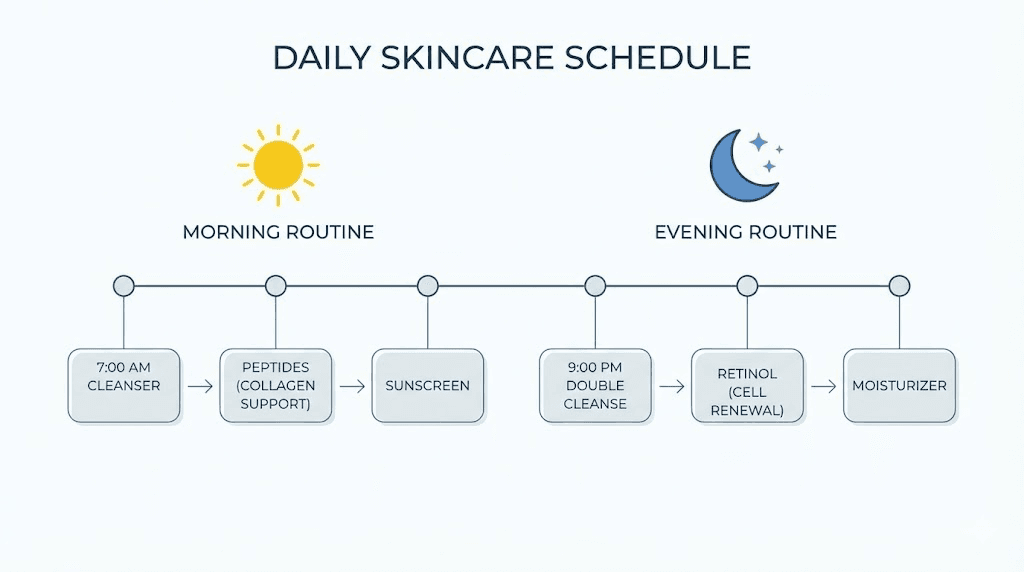
The simplest approach separates the ingredients entirely. Use peptide products in your morning routine. Use retinol at night. No timing calculations. No absorption waiting. No potential interaction concerns.
This approach is mandatory for copper peptides if you don't want to deal with the 30-minute wait time. It's optional but convenient for other peptide types. Morning peptides protect and support your skin through the day. Evening retinol works its renewal magic while you sleep.
The overnight hours are actually ideal for retinol. Your skin shifts into repair mode during sleep. Cell turnover naturally increases. Applying retinol during this period aligns with your body's own rhythms. Plus, retinol can degrade with light exposure, making evening application more effective anyway.
Building your peptide and retinol routine
Theory matters less than implementation. Here's how to actually build a routine that incorporates both ingredients effectively.
For retinol beginners
If you're new to retinol, don't introduce both ingredients simultaneously. Start with peptides. Build them into your routine. Let your skin adapt to the new products for two to four weeks.
Then introduce retinol slowly. Once or twice weekly. Low concentration. Monitor your skin's response. Increase frequency gradually as tolerance builds. Keep your peptides in the routine throughout this process. They'll help your skin tolerate the retinol better.
Week 1-2: Peptide serum morning and evening
Week 3-4: Add retinol once weekly in the evening, following peptide serum
Week 5-6: Increase retinol to twice weekly
Week 7-8: Increase to three times weekly if tolerating well
Week 9 onwards: Work up to every other night, then nightly as tolerated
This gradual approach minimizes the retinol adjustment period. The peptides provide continuous support while your skin adapts to the retinol. Most people can reach nightly retinol use within two to three months using this method.
For experienced retinol users
If you're already using retinol without issues, adding peptides is straightforward. Introduce one peptide product at a time. Use it for at least two weeks before adding another. This lets you identify any products that might not work for your skin specifically.
Consider your goals when selecting peptides. Want to reduce expression lines around the eyes? Add a neuropeptide like Argireline. Want to boost collagen production beyond what retinol provides? Add a signal peptide like Matrixyl. Want antioxidant protection and wound healing support? Consider GHK-Cu on mornings or alternating nights.
Multi-peptide products can simplify your routine.
Many serums combine several peptide types in one formula.
You get signal peptides, neuropeptides, and sometimes carrier peptides together. One product, multiple benefits, no complex layering decisions.
For sensitive skin
Sensitive skin requires more caution but doesn't preclude using both ingredients.
Start with peptides only for at least one month. Choose soothing, barrier-supporting peptides. Make sure your skin is completely comfortable with them before introducing retinol.
When you add retinol, use the sandwich method described earlier. Start with the lowest concentration available. Use it once weekly. Increase frequency only when you're confident your skin can handle more.
Keep extra-gentle peptide products on hand for recovery if you do experience irritation. A rich peptide moisturizer can help your skin bounce back faster from retinol reactions. Some people with very sensitive skin successfully use retinol only one to two times weekly long-term, relying on peptides for anti-aging benefits on other nights.
Specific peptide and retinol combinations
Different goals call for different combinations. Here are specific pairings optimized for common skincare objectives.
Maximum anti-aging
Combine retinol with multiple peptide types for comprehensive anti-aging:
Morning: Signal peptide serum (Matrixyl or similar) + SPF
Evening: Retinol followed by neuropeptide serum (Argireline + SNAP-8)
This combination stimulates collagen from two directions (retinol and signal peptides), while neuropeptides address expression lines that retinol can't touch. Add an enzyme inhibitor peptide if you want to protect existing collagen from breakdown.
Wrinkle reduction focus
For stubborn wrinkles, double down on the wrinkle-targeting ingredients:
Morning: Multi-neuropeptide serum (Argireline + Leuphasyl + Syn-Ake) + SPF
Evening: Retinol + Matrixyl 3000 serum
Studies show combining multiple neuropeptides produces better results than single peptides alone. Argireline and Leuphasyl together have demonstrated up to 47% wrinkle reduction in 28 days. Adding retinol and signal peptides addresses structural wrinkles while the neuropeptides handle dynamic ones.
Firming and elasticity
For sagging and loss of bounce, focus on structural support:
Morning: Copper peptide serum + SPF
Evening: Retinol + elastin-boosting peptide serum
GHK-Cu supports the extracellular matrix and promotes elastin as well as collagen. Retinol drives turnover and new collagen production. The combination addresses firmness from multiple angles. Just keep the copper peptides and retinol separated as discussed earlier.
Barrier repair and anti-aging
For compromised skin that still wants anti-aging benefits:
Morning: Barrier-supporting peptide moisturizer + SPF
Evening: Gentle retinol (low concentration or retinaldehyde) + soothing peptide serum
This combination prioritizes skin health while still providing anti-aging actives. The peptides constantly work on repair while the gentle retinol provides turnover benefits without overwhelming compromised skin. SeekPeptides protocols include specific peptide selections for barrier-compromised skin needing careful active introduction.
Eye area specific
The delicate eye area needs targeted formulas:
Morning: Eye cream with caffeine peptides for depuffing + SPF
Evening: Eye cream with retinol and Argireline
Many eye creams now combine retinol with neuropeptides specifically for crow's feet. The lower retinol concentrations appropriate for the eye area pair well with peptides that address expression lines. Look for products specifically formulated for the eye area that combine both ingredient types.
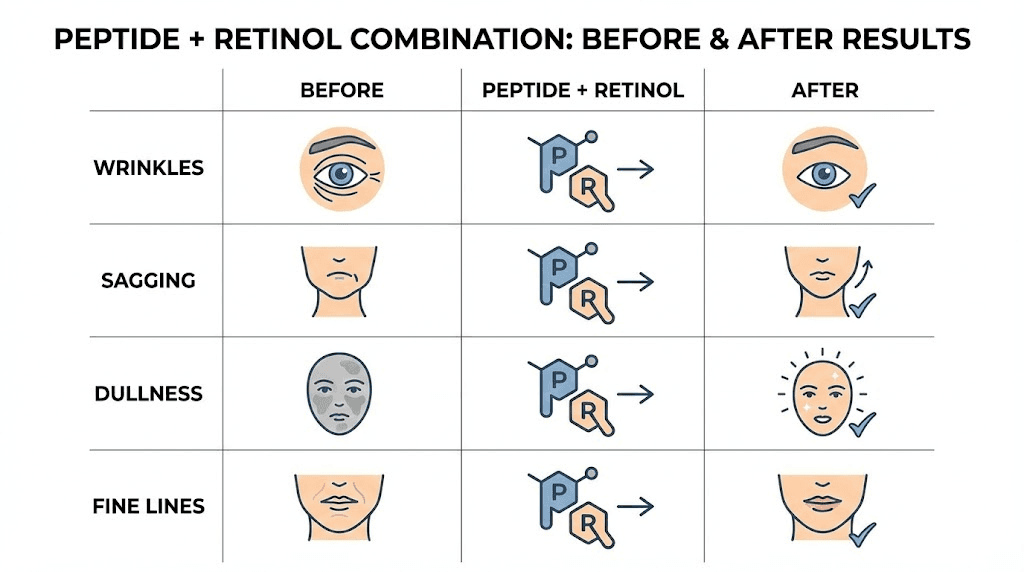
When to use peptides instead of retinol
Sometimes peptides should replace retinol temporarily or permanently. Knowing when to make this switch helps you maintain skincare progress without skin damage.
Pregnancy and breastfeeding
Retinol and other vitamin A derivatives are contraindicated during pregnancy due to potential risks to fetal development. Most healthcare providers recommend avoiding them while breastfeeding as well.
Peptides offer a safe alternative.
They're not absorbed systemically in meaningful amounts, and no safety concerns have been identified for pregnant or nursing women. You can maintain an anti-aging routine using peptides as your primary active ingredient, then reintroduce retinol after breastfeeding ends.
Signal peptides are particularly valuable here. They still boost collagen production, just through a different mechanism than retinol. Many women find their skin remains in good condition throughout pregnancy using peptide-based routines.
Skin recovery periods
After professional treatments like chemical peels, microneedling, or laser resurfacing, your skin needs time to heal. Retinol during this period can cause complications and delay recovery.
Peptides support healing without the aggressive cell turnover that could interfere with recovery. GHK-Cu in particular has wound-healing properties that make it ideal for post-procedure care. Continue using soothing, regenerative peptides until your skincare professional clears you to reintroduce retinol.
Severe barrier damage
If your skin barrier is seriously compromised from overexfoliation, allergic reactions, or conditions like eczema, retinol will make things worse. The last thing damaged skin needs is accelerated turnover that strips away protective layers faster.
Switch to peptides exclusively during barrier repair phases. Barrier-supporting peptides, soothing peptides, and hydrating peptides help skin recover. Once the barrier is functional again, you can gradually reintroduce retinol using the beginner protocol described earlier.
Long-term retinol intolerance
Some people never fully tolerate retinol despite following all the right protocols. Their skin remains reactive no matter how slowly they introduce it or how much support they provide.
Peptides offer these individuals a viable alternative for anti-aging skincare. While retinol may produce faster or more dramatic results, consistent peptide use does produce meaningful improvements in wrinkles, firmness, and skin quality. Signal peptides in particular have been shown to stimulate collagen production at levels comparable to retinol, just without the irritation.
There's no shame in choosing peptides over retinol if your skin demands it. The best skincare routine is one you'll actually stick with. A peptide-based routine you use consistently will outperform a retinol routine you abandon.
Common mistakes when combining peptides and retinol
Even with good intentions, people make errors that reduce effectiveness or increase problems. Avoid these common mistakes.
Introducing too many products at once
Excited about the possibilities, people sometimes add multiple new peptide products alongside increased retinol frequency simultaneously. When irritation occurs, they don't know which product caused it.
Introduce one new product every two weeks minimum. Give your skin time to respond. If something goes wrong, you'll know exactly what caused it. If everything goes right, you'll know which products deserve credit.
Ignoring pH considerations
Peptides and retinol work best at different pH levels. Peptides prefer neutral to slightly alkaline environments. Retinol works best at slightly acidic pH. Mixing certain formulations can push pH outside optimal ranges for one or both ingredients.
The practical solution is waiting time between applications. Two to three minutes between products allows your skin to restabilize. The products perform better when they're not directly competing in the same pH environment.
Combining with incompatible actives
Peptides generally don't mix well with strong acids. AHAs like glycolic acid and BHAs like salicylic acid can degrade peptide bonds, reducing their effectiveness. If you use acid exfoliants, separate them from peptide products by using them on different nights or at different times of day.
Vitamin C is another consideration.
L-ascorbic acid at high concentrations and low pH can be problematic for some peptides.
If you use a strong vitamin C serum, apply it in the morning and save peptides for evening, or choose a vitamin C derivative with more stable chemistry.
Retinol itself is an active that requires consideration in the total picture. Don't stack retinol with multiple other actives (acids, benzoyl peroxide, high-concentration vitamin C) in the same routine while also adding peptides. The skin can only handle so much. Simplify your routine to get the best from each ingredient.
Expecting immediate results
Neither peptides nor retinol work overnight. Retinol typically needs eight to twelve weeks of consistent use before visible improvements appear. Peptides work even more gradually, supporting skin processes that accumulate benefits over months.
Combining both ingredients doesn't accelerate the timeline. It expands the range of benefits you'll eventually see. Stick with your routine for at least three months before judging results. Take photos at regular intervals to track progress since changes happen slowly enough that you might not notice them day-to-day.
Using copper peptides incorrectly with retinol
The specific concerns around copper peptides and retinol lead people to two opposite mistakes. Either they avoid copper peptides entirely when there's no need to, or they mix them directly without the appropriate wait time.
GHK-Cu is a valuable ingredient. Don't skip it just because it requires some timing consideration. But do respect the recommendation to separate application by time, either AM/PM or with a 30-minute wait. It's a minor inconvenience for significant benefits.
Troubleshooting your routine
Even well-designed routines sometimes cause problems.
Here's how to identify and fix common issues.
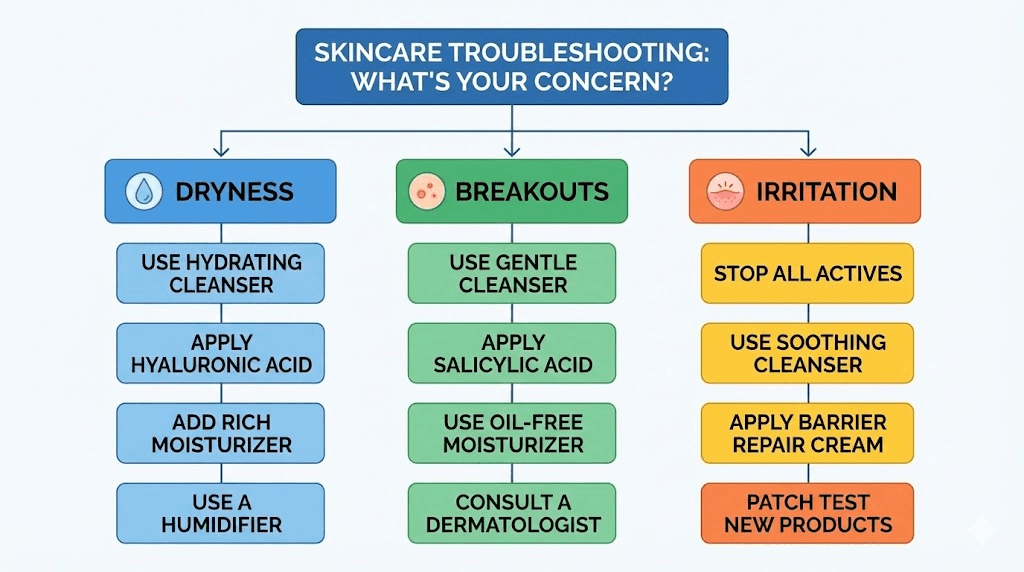
Increased dryness
If adding peptides to your retinol routine increases dryness instead of helping it, consider the formulation. Some peptide serums contain alcohol or other drying ingredients. Check ingredient lists and switch to products with hydrating bases.
Also consider whether you're over-cleansing. Heavy cleansing before applying actives can strip natural oils that help maintain moisture. Try a gentler cleanser or double cleansing method that removes products without over-stripping.
Add a dedicated hydrating step if needed. A hyaluronic acid serum before peptides, or a richer moisturizer after everything, can provide the extra moisture barrier-disrupted skin needs.
New breakouts
Breakouts after adding peptides could be purging (existing congestion coming to the surface faster), reaction to a specific ingredient, or clogged pores from heavier products.
If the breakouts are in places you typically get acne and they resolve within four to six weeks, it's likely purging and will improve. If they're in unusual locations, persist beyond six weeks, or look different from your normal breakouts, suspect a product reaction.
Check for comedogenic ingredients in your new peptide products. Some formulations use rich oils or silicones that can clog pores in acne-prone skin. Switch to lighter, water-based peptide serums and see if the issue resolves.
Persistent redness and sensitivity
If redness won't resolve despite using soothing peptides and following proper protocols, you may need to back off the retinol temporarily.
Reduce frequency. Lower concentration. Use the sandwich method. Your skin is telling you it's overwhelmed.
Consider whether other factors contribute. Hot showers, harsh towels, fragrance in products, excessive sun exposure, and stress can all increase skin sensitivity. Address these factors alongside adjusting your routine.
If problems persist, consult a dermatologist. Some people have underlying conditions like rosacea that make retinol problematic regardless of peptide support. A professional can help identify if there's a condition requiring specific treatment.
No visible improvement
If you've been consistent for three months and see no improvement, evaluate whether your products are actually effective. Not all peptide and retinol products are created equal. Concentrations matter. Formulation stability matters. Some products simply don't contain enough active ingredient to produce results.
Research the specific products you're using. Look for clinical data on the concentrations they contain. Consider upgrading to professional-grade or prescription-strength products if over-the-counter options aren't delivering.
Also manage expectations. Skincare can't reverse severe damage or decades of aging. It can slow progression, improve texture, and reduce fine lines. Deep wrinkles and significant sagging may require procedures rather than topical products.
The science of synergy
Understanding why peptides and retinol work well together requires looking at how skin aging actually happens and how these ingredients address different aspects of it.
The multi-factorial nature of skin aging
Skin aging isn't one process. It's many processes happening simultaneously:
Decreased collagen production: Fibroblasts produce less collagen as we age. The skin loses structural support.
Increased collagen degradation: MMP activity increases with age and UV exposure, breaking down existing collagen faster.
Reduced elastin function: Elastin fibers lose their resilience. Skin doesn't bounce back like it used to.
Slower cell turnover: The cycle of new cell production to dead cell shedding slows down. Skin looks dull and rough.
Decreased hyaluronic acid: Natural moisture factors decline. Skin becomes drier and less plump.
Repeated muscle movements: Expression wrinkles deepen over time from years of facial movements.
Barrier weakening: The skin's protective layer becomes less effective. Sensitivity increases.
No single ingredient addresses all these factors optimally. But the combination of retinol and various peptide types does:
Retinol addresses: Cell turnover, collagen stimulation, hyperpigmentation
Signal peptides address: Collagen and elastin stimulation through additional pathways
Neuropeptides address: Expression wrinkles through muscle relaxation
Enzyme inhibitor peptides address: Collagen degradation prevention
Carrier peptides address: Trace element delivery for enzymatic processes
Barrier peptides address: Skin protection and hydration
Together, these ingredients create a comprehensive approach that tackles aging from multiple directions. It's not redundancy. It's coverage.
Complementary mechanisms
Retinol and peptides don't just target different aspects of aging. They work through completely different biological mechanisms. This is why concerns about interference are largely unfounded.
Retinol works through nuclear receptor activation. It enters cells, binds to receptors in the nucleus, and changes gene expression patterns. The effects are broad and systemic within the skin.
Peptides work through cell surface signaling (signal peptides), neurotransmitter modulation (neuropeptides), enzyme inhibition (enzyme inhibitors), or trace element transport (carrier peptides). These are membrane-level or extracellular effects that don't overlap with retinol's nuclear mechanism.
When mechanisms are independent, there's no competition. Both ingredients can work at full effectiveness simultaneously. The clinical results support this. Studies comparing peptide-only, retinol-only, and combination approaches consistently show combination approaches produce superior outcomes.
The multiplier effect
Some peptide and retinol combinations produce results greater than the sum of their parts. This synergy happens when each ingredient creates conditions that enhance the other's effectiveness.
Retinol increases cell turnover, which means peptides applied to retinol-treated skin reach newer cells that are more responsive. The peptides can signal more effectively to these fresh cells.
Barrier-supporting peptides help maintain skin integrity despite retinol's exfoliation effects. This means retinol can be used more consistently without the breaks needed for skin recovery. More consistent use means better cumulative results.
Collagen-stimulating peptides and retinol both boost collagen but through different pathways. When both pathways are activated simultaneously, net collagen production can exceed what either achieves alone.
This is why advanced skincare routines almost always include both ingredient categories. The combination effect isn't just additive. It's multiplicative.
Product selection considerations
Not all peptide and retinol products are equally effective. Knowing what to look for helps you invest in products that actually work.
Peptide concentration matters
Many cosmetic products contain peptides at concentrations too low to produce meaningful effects.
They're included for marketing purposes rather than functional benefits.
Look for products that list peptides high on the ingredient list. Ideally, you want to see concentrations mentioned, though many brands don't disclose this information. Research specific products to find those with clinical data supporting their formulations.
SeekPeptides members access detailed information about effective peptide concentrations and product recommendations based on evidence rather than marketing claims.
Retinol stability
Retinol degrades when exposed to light and air. Products in clear bottles or jars that expose the product to air with each use lose potency quickly.
Choose retinol products in opaque, airless pump containers.
These protect the active ingredient from degradation and ensure you're getting consistent potency with each application. Some products use encapsulated retinol that's protected until it reaches the skin, offering additional stability benefits.
Formulation compatibility
Some formulation ingredients can affect peptide stability or skin tolerance. Alcohol-heavy bases can dry skin and destabilize some peptides. Heavy silicone bases can impede absorption.
Look for peptide serums with hydrating bases featuring ingredients like hyaluronic acid, glycerin, or niacinamide. These support both the peptides' stability and your skin's health.
Multi-peptide formulas
Products combining several peptide types can simplify your routine while providing broader benefits. Look for serums that include:
A signal peptide (Matrixyl, palmitoyl pentapeptide-4, or similar)
A neuropeptide (Argireline, SNAP-8, or Leuphasyl)
Supporting peptides (for hydration, soothing, or barrier support)
These combination formulas let you get multiple peptide benefits from a single product, making your routine more manageable. The trade-off is that each individual peptide may be at lower concentration than in single-peptide products.
Considering your retinol strength
Match your peptide strategy to your retinol strength. If using prescription-strength tretinoin, you'll likely need more robust peptide support for barrier function and soothing.
Over-the-counter retinol at standard concentrations (0.25% to 1%) is easier on the skin and may need less peptide backup.
Retinaldehyde (retinal) is a middle-ground option that converts to retinoic acid in one step instead of two, making it more potent than retinol but still gentler than tretinoin. It pairs well with peptides and may be a good option for those who've maxed out retinol benefits but aren't ready for prescription strength.
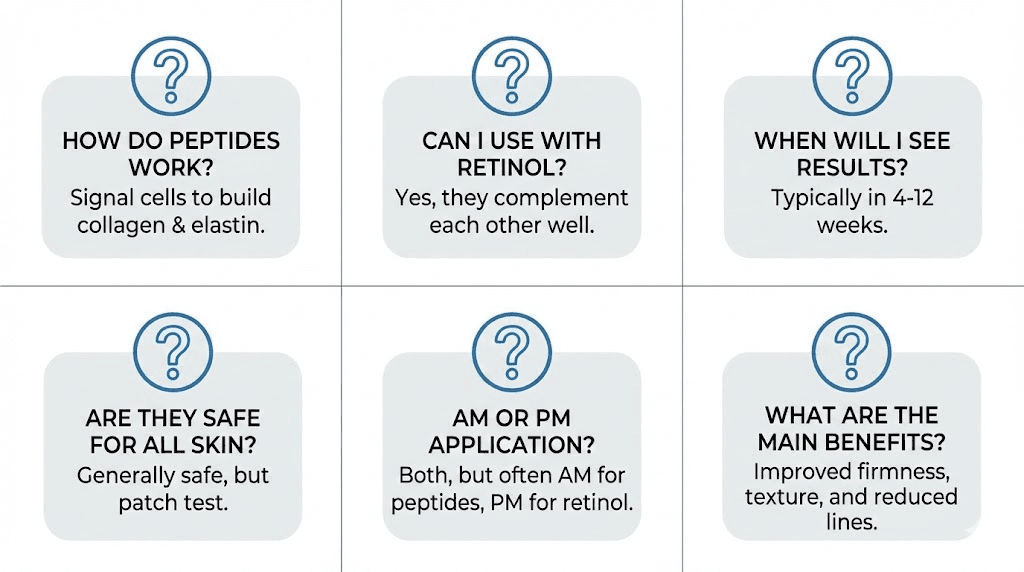
Frequently asked questions
Can I use peptides and retinol in the same product?
Yes. Many products now combine peptides and retinol in single formulations. Modern formulation science has solved most stability concerns. These combination products are convenient and can be very effective, though you may get higher concentrations of each by using separate products.
How long until I see results from combining peptides and retinol?
Initial improvements in skin texture and tone typically appear within four to six weeks. Significant wrinkle reduction and collagen improvements usually require three to six months of consistent use. The combination may produce visible results slightly faster than either alone, but patience remains essential.
Should I use peptides every day even when taking breaks from retinol?
Absolutely. Peptides are gentle enough for daily use and provide continuous benefits regardless of retinol schedule. If you need to reduce retinol frequency due to irritation, maintaining peptide use keeps your anti-aging routine active on non-retinol days.
Can I use peptide eye cream with retinol serum on my face?
Yes. The eye area benefits from peptides, particularly neuropeptides for expression lines. Use your peptide eye cream as directed and keep regular retinol serum away from the immediate eye area. If you want retinol around the eyes, use a product specifically formulated for that delicate zone at appropriate lower concentrations.
Do I need to use sunscreen if I'm using peptides and retinol?
Yes, but primarily because of the retinol. Retinol increases sun sensitivity by accelerating cell turnover and revealing newer, less protected skin cells. Peptides themselves don't increase sun sensitivity, but sunscreen remains essential for any anti-aging routine since UV exposure drives most visible skin aging.
What if I'm already using vitamin C? Can I add both peptides and retinol?
Yes, but timing matters. Vitamin C works best at low pH in the morning. Retinol works best at night. Peptides can go in either routine but separate them from strong vitamin C serums by a few minutes or use them at different times of day.
A common approach: vitamin C morning, retinol evening, peptides morning and/or evening depending on formulation.
Are there any peptides I should definitely avoid with retinol?
No peptides are dangerous with retinol. Copper peptides require timing consideration (separate by 30 minutes or use at different times of day), but they're not harmful when used properly. All other peptide types are fully compatible with retinol without special precautions.
Can teenagers use peptides and retinol?
Teenagers don't need anti-aging products. If using retinol for acne under dermatologist guidance, peptides likely aren't necessary. Anti-aging routines with peptides and retinol are most appropriate starting in the mid-20s to 30s, when early signs of aging begin and prevention becomes relevant.
Advanced strategies
Once you've mastered the basics, these advanced approaches can optimize your results further.
Peptide cycling
Some skincare professionals recommend rotating peptide types to prevent adaptation. The theory suggests that constant exposure to the same signaling peptides might reduce their effectiveness over time as cells downregulate their response.
A practical cycling approach: Use signal peptides for eight weeks, then switch to neuropeptide-focused products for eight weeks, then return to signal peptides. This provides variety while maintaining continuous anti-aging action.
Evidence for cycling benefits remains limited, but the approach doesn't harm results and may help maintain responsiveness long-term.
Seasonal adjustments
Your skin's needs change with seasons.
Winter brings drier air and potential barrier challenges. Summer brings increased sun exposure and humidity.
Consider adjusting your peptide selection seasonally. Winter might call for more barrier-supporting and hydrating peptides. Summer might emphasize antioxidant peptides that help combat UV damage.
Retinol use might also shift. Some people reduce retinol frequency in summer when sun exposure increases, compensating with more peptide use during this period.
Professional treatment enhancement
Peptides can enhance results from professional treatments. Before microneedling, peptide use primes skin with building blocks for repair. After treatment, peptides support faster healing.
Coordinate with your skincare professional about pausing retinol before procedures (usually one week) and how to phase it back in afterwards. Peptides typically don't need this pause and can continue throughout the treatment cycle.
Targeted spot treatment
Not all areas of your face need the same approach. Consider using concentrated neuropeptide products only on expression line areas (forehead, between brows, crow's feet) while using signal peptides more broadly.
Some people use retinol on the full face but apply extra peptide support to areas prone to irritation (around the nose, near the eyes). This targeted approach maximizes results while minimizing problems.
External resources
PubMed - Search for peer-reviewed research on specific peptides and retinol
American Academy of Dermatology - Evidence-based skincare guidance
PMC - Free access to full-text research articles on cosmetic peptides
FDA Cosmetics - Regulatory information on skincare ingredients
For researchers looking to optimize their peptide and retinol protocols with evidence-based guidance, SeekPeptides provides comprehensive resources, detailed comparison tools, and community support from experienced users who've navigated these exact questions.
In case I don't see you, good afternoon, good evening, and good night.