Jan 18, 2026

What if the secret to younger, more radiant skin wasn't another cream or serum, but something working from the inside out?
That's the promise behind the glow stack peptide, a combination that's captured the attention of researchers, biohackers, and anyone tired of surface-level skincare solutions. The glow stack combines three peptides, GHK-Cu (copper peptide), BPC-157, and TB-500, into a single protocol designed to accelerate healing, reduce inflammation, and stimulate the skin's natural regenerative processes.
But does it actually work? How do you dose it properly? What results can you realistically expect? And perhaps most importantly, how do these three very different peptides work together to create something greater than the sum of their parts?
This guide answers all of that. We'll cover the science behind each peptide, walk through specific dosing protocols, explain proper reconstitution, and give you realistic timelines for what to expect. Whether you're new to peptides or looking to optimize an existing stack, this is your complete resource for understanding the glow stack.
What exactly is the glow stack peptide?
The glow stack is a physician-formulated peptide blend combining three research compounds that each contribute unique mechanisms to tissue healing and skin rejuvenation. It's not a single peptide but a strategic combination designed to work synergistically.
The name comes from its primary cosmetic benefit. Users report a visible "glow" to their skin after consistent use, resulting from improved collagen production, better blood flow to tissues, and reduced inflammation. But the benefits extend far beyond aesthetics.
The three peptides in the standard glow stack are:
GHK-Cu (glycyl-L-histidyl-L-lysine copper), the primary skin rejuvenation peptide
BPC-157 (body protection compound), a healing and protective peptide
TB-500 (thymosin beta-4 fragment), a cell migration and tissue repair peptide
Together, these three compounds address healing from multiple angles simultaneously. GHK-Cu handles collagen and elastin synthesis at the cellular level. BPC-157 brings blood flow to damaged tissues and reduces inflammation. TB-500 gets the right cells to migrate where they're needed and reduces scar tissue formation.
The result? Healing that happens faster. Skin that looks better. Recovery that's more complete.
Understanding each component is essential before starting a glow stack protocol. Let's break down what makes each peptide unique.
GHK-Cu: the regenerative core of the glow stack
GHK-Cu forms the backbone of the glow stack. It's a naturally occurring peptide found in human blood plasma, saliva, and urine. At age 20, healthy adults have about 200 ng/ml of GHK in their serum. By age 60, that drops to around 80 ng/ml.
This decline matters. A lot.
GHK-Cu modulates over 4,000 human genes. It upregulates genes involved in tissue remodeling, like collagen I and III production, while downregulating pro-inflammatory pathways like NF-κB. In simpler terms, it tells your cells to build more structural tissue while calming down excessive inflammation.
The copper component is critical. Copper serves as a cofactor in numerous enzymes involved in collagen and elastin synthesis. GHK has an extremely high affinity for copper, forming the GHK-Cu chelate that delivers copper directly to tissues that need it.
What GHK-Cu does at the cellular level
The science gets interesting here. GHK-Cu stimulates blood vessel formation (angiogenesis), nerve outgrowth, and increases synthesis of collagen, elastin, and glycosaminoglycans. These are the structural molecules that keep skin firm, elastic, and hydrated.
In one clinical study examining collagen production in skin, researchers found that GHK-Cu cream increased collagen in 70% of treated subjects. Compare that to 50% for vitamin C cream and 40% for retinoic acid, the gold standards in topical skincare.
But here's where it gets even better. A study using ultrasound imaging of facial skin found an average 28% increase in subdermal echogenic density after 3 months of GHK-Cu use. The top quartile of participants showed a 51% improvement. That echogenic density correlates directly with collagen and elastin content.
GHK-Cu also inhibits elastase, the enzyme that breaks down skin elastin. Less elastin degradation means better structural integrity over time. This isn't just about building new tissue. It's about protecting what you already have.
GHK-Cu dosing in the glow stack
In the standard 70mg glow stack vial, GHK-Cu makes up the largest portion at 50mg. This reflects its central role in the protocol. The typical daily dose provides approximately 1.7mg of GHK-Cu per injection, though this varies based on your specific dosing protocol.
For those using standalone GHK-Cu, doses typically range from 1-4mg daily, administered subcutaneously. The glow stack's 1.7mg falls within the lower to moderate range, balanced by the synergistic effects of the other two peptides.
One thing to note: GHK-Cu can sting at the injection site. This is normal. The copper component creates mild irritation that typically subsides within minutes. Rotating injection sites helps minimize this effect.
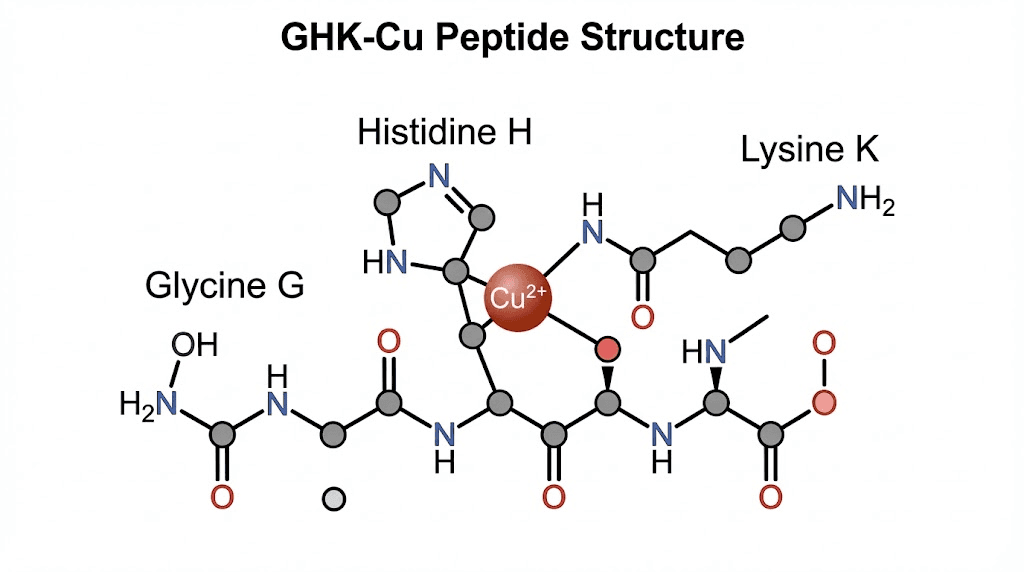
BPC-157: the healing accelerator
BPC-157, or body protection compound, is a 15-amino-acid peptide sequence derived from human gastric juice. It's naturally present in your digestive system, where it protects the gut lining and promotes tissue repair.
What makes BPC-157 remarkable is its systemic healing properties when administered subcutaneously. It promotes angiogenesis, bringing new blood vessels to damaged tissues. Blood brings oxygen, nutrients, and growth factors. More blood flow equals faster healing.
BPC-157 also has significant anti-inflammatory effects. It modulates the nitric oxide system, which influences blood vessel dilation and immune response. This makes it valuable not just for acute injuries but for chronic inflammatory conditions as well.
How BPC-157 complements GHK-Cu
While GHK-Cu works at the cellular level to stimulate collagen production, BPC-157 addresses the infrastructure needed for that production to happen efficiently. Think of it this way: GHK-Cu tells cells what to build. BPC-157 ensures they have the blood supply and reduced inflammation needed to actually build it.
This complementary relationship is why stacking these peptides produces better results than using either alone. The BPC-157 and TB-500 combination (often called the Wolverine stack) is already well-established. Adding GHK-Cu to create the glow stack extends those benefits to skin-specific applications.
For researchers focused on injury recovery, BPC-157's inclusion in the glow stack means you're addressing both cosmetic and functional healing simultaneously.
A tendon or ligament that heals faster also results in less compensatory movement patterns, which can affect posture and even facial tension.
BPC-157 dosing considerations
In the standard glow stack, BPC-157 is present at 10mg per vial, providing approximately 0.33mg per daily injection. This is on the lower end of typical BPC-157 dosing, which usually ranges from 0.25-0.5mg twice daily for injury-specific protocols.
The lower dose in the glow stack reflects its role as a supporting peptide rather than the primary active. For users with specific tendon or ligament concerns, adding standalone BPC-157 to the protocol may be beneficial.
BPC-157 is generally well-tolerated. Some users report gut-related improvements as a welcome side effect, which makes sense given the peptide's origins in gastric protection.
TB-500: the cell migration specialist
The third component of the glow stack, TB-500, brings a unique mechanism that neither GHK-Cu nor BPC-157 provides: it gets cells to move where they need to be.
TB-500 is a synthetic version of thymosin beta-4, a 43-amino-acid peptide that occurs naturally in nearly all human cells. Its primary mechanism involves upregulating actin, a protein fundamental to cell structure, movement, and regeneration.
When tissue is damaged, cells need to migrate to the injury site.
TB-500 facilitates this migration. It also reduces inflammation, decreases scar tissue formation, and promotes new blood vessel growth.
Why TB-500 matters for skin
Skin rejuvenation isn't just about producing more collagen. It's about getting the right cells to the right places to produce that collagen. TB-500's cell migration properties mean that fibroblasts, the cells responsible for collagen synthesis, can move more efficiently to areas where they're needed.
TB-500 also has notable effects on hair growth. It promotes the migration of hair follicle stem cells during the growth phase. While not specifically marketed for hair, users of TB-500 often report improved hair quality as a secondary benefit.
The anti-fibrotic (scar-reducing) properties of TB-500 are particularly relevant for acne scar treatment and surgical recovery. Rather than building up rigid scar tissue, the healing process becomes more organized, resulting in better functional and cosmetic outcomes.
TB-500 dosing in the glow stack
Like BPC-157, TB-500 is present at 10mg per glow stack vial, providing approximately 0.33mg per daily injection.
Standard TB-500 protocols typically use 2-10mg weekly, often front-loaded with higher doses initially before tapering to maintenance.
The daily dosing approach in the glow stack differs from traditional TB-500 protocols, which often use 2-3 larger doses per week. Research suggests TB-500's longer half-life makes it effective at lower daily doses when combined with other peptides that provide complementary mechanisms.
For those with significant injuries or athletic demands, the Wolverine stack (higher-dose BPC-157 and TB-500) may be more appropriate than the glow stack. The glow stack prioritizes skin rejuvenation with healing support, rather than aggressive injury rehabilitation.
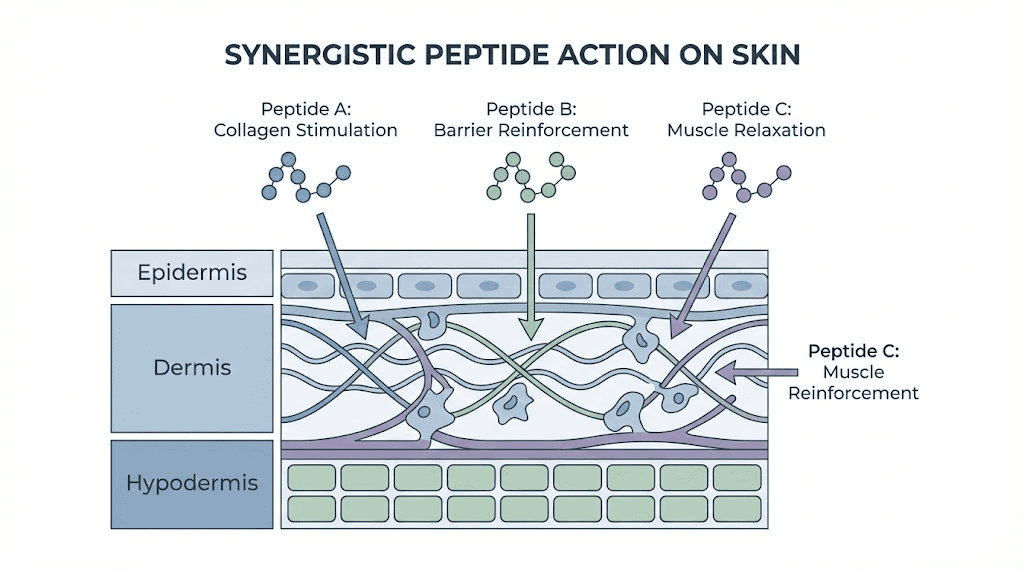
How the three peptides work synergistically
The magic of the glow stack isn't in any single peptide. It's in how they interact.
Consider the healing process. First, there's injury or degradation, whether from aging, sun damage, or physical trauma. Blood needs to reach the damaged area. Inflammatory responses need to be controlled. Cells need to migrate to the site. And finally, new structural tissue needs to be built.
Each peptide addresses a different stage of this process:
BPC-157 brings blood flow to the injury. It promotes angiogenesis and reduces inflammation, creating the conditions necessary for healing to begin. Without adequate blood supply, all the collagen-stimulating peptides in the world won't help.
TB-500 gets the right cells to migrate to the area. Fibroblasts, stem cells, and immune cells need to reach the damaged tissue. TB-500's actin-upregulating properties facilitate this migration while simultaneously reducing excessive scarring.
GHK-Cu tells those cells what to build. It upregulates collagen and elastin synthesis, provides the copper needed for enzyme function, and protects existing tissue from degradation.
This sequential synergy means the glow stack addresses healing comprehensively rather than from a single angle. It's why users often report better results from the combination than from any peptide used alone.
The importance of consistent dosing
Synergy requires consistency. Peptide cycling matters, but so does maintaining stable levels of all three compounds throughout the cycle.
Unlike some peptides that work immediately (like PT-141 for acute effects), the glow stack peptides build effects over time. Collagen synthesis takes weeks. Tissue remodeling takes months. Missing doses disrupts the cumulative process.
This is why the standard glow stack protocol calls for daily injections at a consistent time.
Morning or evening doesn't particularly matter, but consistency does.
Complete glow stack dosing protocol
Let's get specific about dosing. The standard glow stack comes as a 70mg lyophilized vial containing 50mg GHK-Cu, 10mg BPC-157, and 10mg TB-500.
Reconstitution
Add 3.0ml (300 units on an insulin syringe) of bacteriostatic water to the 70mg vial. This creates a concentration of 23.3mg/ml, making dosing calculations straightforward.
Proper reconstitution technique matters:
Allow both the peptide vial and bacteriostatic water to reach room temperature before mixing
Clean both vial stoppers with alcohol swabs
Insert the needle at an angle and direct the stream of water against the glass wall, not directly onto the powder
Gently swirl or roll the vial until the peptide dissolves completely
Never shake vigorously, as this can damage peptide bonds
The solution should be clear and colorless when fully reconstituted. Any cloudiness or particles indicate potential degradation.
Daily dosing
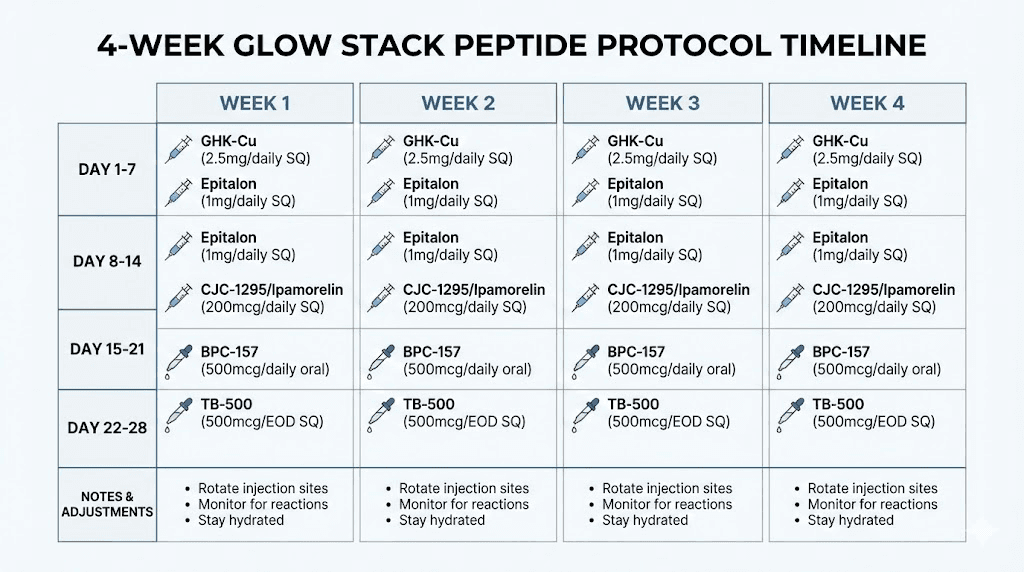
The standard protocol uses 10 units (0.1ml) daily, providing 2.33mg of total peptide blend. This breaks down to approximately:
1.7mg GHK-Cu
0.33mg BPC-157
0.33mg TB-500
Use a 0.3ml (30-unit) insulin syringe for greater measurement precision at these low volumes. Draw up exactly 10 units for each injection.
Inject subcutaneously into fatty tissue. Common sites include:
Lower abdomen (most common)
Upper thigh
Upper arm
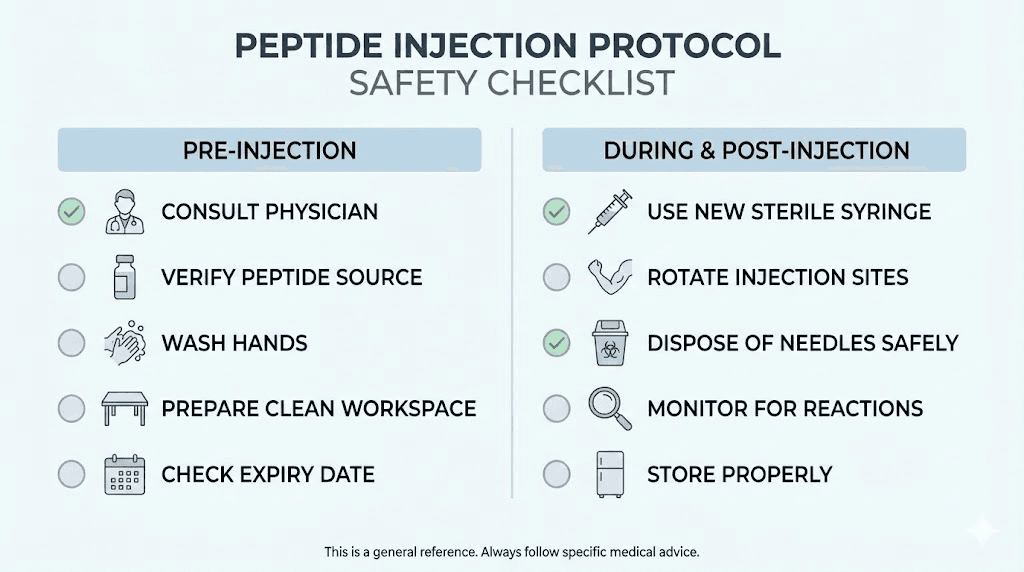
Pinch a fold of skin, insert the needle at a 45-degree angle, and inject slowly over 2-3 seconds. Rotate injection sites daily, maintaining at least 1-2 inches between sites to prevent tissue irritation.
Cycle length and breaks
The standard glow stack protocol runs for 4 weeks of daily dosing, followed by a 2-4 week break before the next cycle. This allows receptor resetting and evaluation of results.
Some researchers prefer longer cycles (6-8 weeks) with equal time off. The key is avoiding receptor desensitization by taking adequate breaks between cycles.
At 10 units daily, a single 70mg vial lasts approximately 30 days, aligning well with a 4-week cycle.
Use our peptide reconstitution calculator to verify your specific dosing calculations before starting.
Storage and handling
Proper peptide storage directly affects potency and safety. The glow stack requires careful handling both before and after reconstitution.
Lyophilized (unreconstituted) storage
Store unreconstituted glow stack vials at -20°C (-4°F) or lower in dry, dark conditions. At these temperatures, lyophilized peptides remain stable for 12-24 months.
If a freezer isn't available, refrigeration at 2-8°C (35.6-46.4°F) is acceptable for shorter durations (weeks to a few months). Avoid temperature fluctuations and keep vials tightly sealed.
Reconstituted storage
After reconstitution with bacteriostatic water, store the vial at 2-8°C (35.6-46.4°F). The benzyl alcohol preservative in bacteriostatic water maintains stability for approximately 30 days under refrigeration.
Critical rules:
Never freeze reconstituted solution
Protect from light
Label with reconstitution date
Use within 30 days
If you reconstituted with sterile water (without preservative), use within 7-10 days due to lack of antimicrobial protection. Always use bacteriostatic water for peptides you'll use over multiple weeks.
Wondering how long peptides last in the fridge? It depends on the specific peptide and how it was reconstituted, but 4 weeks is a safe maximum for most bacteriostatic water-reconstituted solutions.
What results to expect and when
Setting realistic expectations matters. The glow stack isn't an overnight transformation. It's a gradual process that builds over weeks and months.
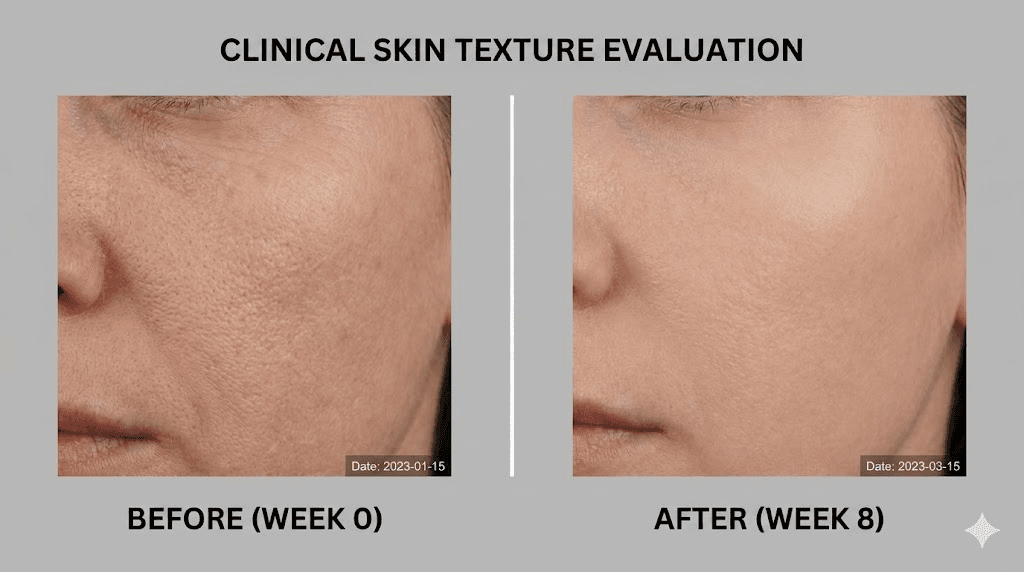
Week 1-2: subtle changes
During the first two weeks, most users don't see dramatic visible changes. However, you may notice:
Improved skin hydration
Slight improvement in texture
Mild reduction in redness or puffiness
Better sleep (some users)
These early changes are the peptides beginning their work, but collagen synthesis takes time. Don't expect significant improvements yet.
Week 3-4: visible improvement begins
By week three, most users start noticing more obvious changes. Skin looks more hydrated and "plump." Fine lines may appear slightly softened. Some users report a general "glow" or improved clarity.
This is also when healing-related benefits become apparent. Minor injuries heal faster. Chronic inflammation may decrease.
Joint stiffness often improves.
Week 6-8: peak protocol effects
For those running longer cycles, weeks 6-8 often show the most dramatic improvements. Dr. Longwill, a peptide therapy specialist, notes that peak collagen production and overall skin-quality changes become most noticeable around the eight to twelve-week mark.
Improvements at this stage may include:
Firmer, tighter skin
Improved elasticity
Reduced fine lines and wrinkles
Better overall skin tone and clarity
Faster wound healing
Long-term (12+ weeks)
Consistent use over multiple cycles produces cumulative benefits. Users who stick with the protocol long-term often report the most significant transformations, though results plateau eventually.
After 12+ weeks of consistent use (with appropriate cycle breaks), expect:
Measurable improvement in skin density (visible on ultrasound)
Lasting improvements in skin quality
Reduced appearance of scars
General anti-aging benefits
Patience matters. Peptides take time to work, and the glow stack is no exception. Expect gradual, progressive improvement rather than sudden transformation.
Side effects and safety considerations
The glow stack peptides have generally favorable safety profiles in research, but understanding potential side effects is important before starting any protocol.
Common side effects
The most frequently reported side effect is injection site reaction. Redness, swelling, itching, or tenderness at the injection site occurs in some users, particularly during the first few weeks as the immune system adjusts.
GHK-Cu specifically can cause stinging at the injection site. This is normal and typically subsides within minutes. The copper component creates mild local irritation.
Other commonly reported effects include:
Temporary fatigue (first few days)
Occasional digestive discomfort
Mild headache
These effects usually resolve on their own and decrease with consistent use.
Regulatory status
Important context: the peptides in the glow stack are not FDA-approved for human use. They're classified as research compounds. In late 2023, the FDA explicitly flagged BPC-157 as a Category 2 substance, citing concerns about immune reactions, peptide impurities, and lack of safety data for human use.
The peptide regulation landscape continues to evolve. Users should understand they're working with research compounds, not approved medications.
Quality matters enormously with research peptides. Low-quality products can cause severe injection site reactions, systemic illness, or simply fail to work. Source from reputable vendors with third-party testing and certificates of analysis. Review our peptide vendor guide for sourcing recommendations.
Dose-response considerations
More isn't always better. Research shows a bell-shaped dose-response curve with BPC-157, meaning excessive dosing may actually reduce or reverse therapeutic effects. Stick to recommended protocols rather than assuming higher doses will produce faster results.
The glow stack's balanced formulation reflects this research. The doses are moderate specifically because synergy allows lower individual doses to produce comparable results to higher single-peptide protocols.
Who should avoid the glow stack
While generally well-tolerated, certain populations should avoid peptide protocols without medical supervision:
Pregnant or breastfeeding women
Those with active cancer (peptides that promote cell growth may be contraindicated)
People with autoimmune conditions
Those taking immunosuppressive medications
Anyone with a history of severe allergic reactions
When in doubt, consult a peptide therapy clinic for personalized guidance.
Comparing the glow stack to other peptide protocols
The glow stack isn't the only peptide combination targeting skin and healing. Understanding how it compares to alternatives helps you choose the right protocol for your goals.
Glow stack vs. Wolverine stack
The Wolverine stack (BPC-157 + TB-500) shares two peptides with the glow stack but omits GHK-Cu. The Wolverine stack focuses primarily on injury healing and recovery rather than skin rejuvenation.
For someone with a major injury like a torn ligament, the Wolverine stack's higher doses of BPC-157 and TB-500 may be more appropriate. For someone prioritizing skin quality with general healing support, the glow stack's inclusion of GHK-Cu makes it the better choice.
Many researchers run Wolverine protocols for acute injuries, then switch to glow stacks for maintenance and skin optimization.
Glow stack vs. standalone GHK-Cu
Using GHK-Cu alone is certainly an option. Standalone protocols typically use 1-4mg daily, higher than the ~1.7mg in the glow stack.
The advantage of standalone GHK-Cu is simplicity and potentially higher dose. The disadvantage is losing the synergistic healing support from BPC-157 and TB-500.
For users focused exclusively on skin with no healing concerns, standalone GHK-Cu at higher doses may produce more rapid visible results. For those wanting comprehensive benefits, the glow stack's combination approach provides better overall value.
Glow stack vs. topical copper peptides
Many people first encounter copper peptides through topical serums. These products can be effective for surface-level improvements but don't address deeper tissue changes.
Injectable GHK-Cu (as in the glow stack) reaches systemic circulation and affects tissues throughout the body. Topical application primarily affects the epidermis and superficial dermis. The mechanisms and results differ accordingly.
For many users, combining topical copper peptide serum with injectable glow stack provides both surface and deep tissue benefits.
Optimizing your glow stack results
Peptides work best as part of a comprehensive approach.
Several factors can enhance or diminish your glow stack results.
Nutrition and hydration
Collagen synthesis requires specific nutrients. Ensure adequate intake of:
Protein: Amino acids are the building blocks of collagen
Vitamin C: Essential cofactor for collagen synthesis
Copper: Though GHK-Cu provides copper, dietary sources support overall function
Zinc: Important for tissue repair
Hydration: Well-hydrated tissue heals better
Some users add collagen peptide supplements to provide additional raw materials for synthesis. While not strictly necessary, it can support the process.
Sleep optimization
Most tissue repair occurs during sleep. Growth hormone release peaks during deep sleep, and this hormone works synergistically with healing peptides. Poor sleep undermines peptide protocols.
Some users time their glow stack injection before bed to align with natural repair cycles.
Others prefer morning dosing for consistency.
Both approaches work, but adequate sleep quality matters regardless of injection timing.
Sun protection
UV radiation damages collagen and accelerates skin aging. Using a glow stack while getting significant unprotected sun exposure is counterproductive, like filling a bathtub with the drain open.
Protect the investment in your peptide protocol with appropriate sun protection, especially on the face and areas you're trying to improve.
Combining with other peptides
The glow stack can be combined with other peptides for enhanced effects. Common additions include:
Epithalon for telomere support and anti-aging
KPV for additional anti-inflammatory effects
Sermorelin for growth hormone support
When stacking multiple peptides, start with the base protocol and add one peptide at a time to assess tolerance and effects.
Glow stack for specific applications
While the glow stack is formulated for general skin rejuvenation and healing, certain applications deserve specific discussion.
Anti-aging and wrinkle reduction
The glow stack's GHK-Cu component directly addresses wrinkle formation by increasing collagen and elastin production while inhibiting elastase. Combined with the improved tissue quality from BPC-157 and TB-500, the glow stack provides comprehensive anti-aging support.
Expect gradual reduction in fine lines over 8-12 weeks. Deep wrinkles require longer consistent use and may benefit from combination with other modalities.
Scar improvement
Both GHK-Cu and TB-500 have anti-fibrotic properties that help remodel scar tissue. The glow stack won't erase scars, but consistent use can improve their texture and appearance over time.
For acne scars specifically, combining glow stack injections with topical copper peptides and microneedling provides multiple angles of attack.
Post-surgical recovery
The healing-accelerating properties of BPC-157 and TB-500 make the glow stack potentially useful for post-surgical recovery. Faster healing means less scar formation and better cosmetic outcomes.
Discuss peptide use with your surgeon before any procedure. Some surgeons are familiar with peptide protocols, others are not. Transparency about what you're using is important for comprehensive care.
Hair improvement
While not the primary application, glow stack users sometimes report improved hair quality. TB-500's effects on stem cell migration may benefit hair follicles, and GHK-Cu has documented effects on hair growth and hair follicle health.
For those prioritizing hair, specialized protocols with higher GHK-Cu doses or combination with hair-specific peptides may be more effective.
Athletic recovery
The healing properties of the glow stack extend beyond skin. Athletes and active individuals often report faster recovery from training, reduced inflammation, and improved joint comfort.
For those with specific injuries, the higher-dose Wolverine protocol may be more appropriate. The glow stack works well as a maintenance protocol between more aggressive healing cycles.
Common mistakes to avoid
Learning from others' mistakes saves time and money. Here are the most common errors with glow stack protocols.
Inconsistent dosing
Missing doses disrupts the cumulative process. Peptides build effects over time, and inconsistency undermines results. Set a daily reminder and make injection a non-negotiable routine.
Poor reconstitution technique
Spraying water directly onto the peptide powder damages bonds. Always direct the stream against the glass wall and let it run down gently.
Never shake, only swirl.
Inadequate storage
Leaving reconstituted peptides at room temperature degrades them rapidly. Refrigerate immediately after each use. A small cooler bag with ice packs works for travel.
Expecting immediate results
The glow stack works gradually. Expecting transformation in one week leads to disappointment and premature discontinuation. Give the protocol at least 4-6 weeks before evaluating results.
Low-quality sourcing
Not all peptides are created equal. Research-grade peptides vary enormously in purity and quality. Source from reputable vendors with third-party testing documentation.
Skipping cycle breaks
Running continuous cycles without breaks risks receptor desensitization. Take at least 15 days off between cycles. Use this time to evaluate results and adjust protocols if needed.
Improper injection technique
Subcutaneous injection into fatty tissue, not muscle. Using the wrong angle or depth can cause increased pain and reduced absorption. Review proper injection technique before starting.
Building a complete skin optimization protocol
The glow stack works best as part of a comprehensive approach.
Here's how SeekPeptides members typically structure their protocols.
Foundation: the glow stack
Start with the standard glow stack protocol: 4 weeks of daily dosing at 10 units (2.33mg total blend). This establishes the base healing and collagen-stimulating effects.
Addition: topical support
Add topical copper peptide skincare to address surface-level concerns. The injectable peptides work from the inside, topicals work from the outside. Both approaches complement each other.
Be mindful of interactions. Copper peptides and vitamin C can interact negatively if used simultaneously. Apply them at different times of day. Similarly, copper peptides and retinol may cause irritation if used together without proper spacing.
Enhancement: complementary peptides
After running your first glow stack cycle, consider adding complementary peptides in subsequent cycles. Options include:
KPV for additional anti-inflammatory effects and gut healing
Epithalon for telomere support
MOTS-c for metabolic and cellular energy support
Lifestyle optimization
Peptides amplify results from good lifestyle habits. They don't compensate for poor ones. Ensure you're addressing:
Adequate sleep (7-9 hours)
Sun protection
Balanced nutrition with adequate protein
Appropriate exercise
Stress management
Tracking and adjustment
Take consistent photos in the same lighting to track progress. It's difficult to notice gradual changes when you see yourself daily. Monthly comparison photos reveal progress that's otherwise invisible.
Keep notes on injection timing, any side effects, and subjective observations. This data helps optimize future cycles and troubleshoot any issues.
For personalized protocol design, SeekPeptides provides comprehensive guidance including dosing calculations, cycle planning, and troubleshooting support. Members access detailed protocols for various goals, from skin optimization to athletic recovery.
Troubleshooting common issues
Even with proper protocols, issues occasionally arise. Here's how to address the most common problems.
Injection site reactions
Redness, itching, or mild swelling at injection sites is common, especially during the first two weeks. This usually resolves as your body adjusts.
To minimize reactions:
Rotate injection sites consistently
Allow alcohol swab to dry completely before injecting
Inject slowly
Apply gentle pressure after withdrawing needle
Avoid touching or rubbing the site
If reactions persist or worsen after two weeks, consider switching injection sites (try thigh instead of abdomen) or reducing dose temporarily.
No visible results
Some users see dramatic results. Others see subtle improvements. If you're not seeing results after 6-8 weeks, consider:
Peptide quality: Are you using a reputable source with verified purity?
Storage: Has the peptide been properly stored? Degraded peptides won't work.
Consistency: Have you been dosing daily without significant gaps?
Lifestyle factors: Is sun exposure, poor sleep, or nutrition undermining results?
Expectations: Are you expecting more than peptides can deliver?
Some individuals are simply low responders to certain peptides. If GHK-Cu isn't producing results, standalone higher-dose protocols or alternative peptides may be worth exploring.
Skin getting worse initially
Rarely, users report skin looking worse before it looks better. This "purging" effect, documented with topical copper peptides as copper peptide purging, can sometimes occur with injectables as well.
If your skin seems worse initially, continue the protocol for at least 2-3 more weeks before evaluating. Purging typically resolves, with improvement following.
Peptide seems less effective over time
If the glow stack seemed more effective in earlier cycles than later ones, you may be experiencing receptor desensitization. This is why cycle breaks matter.
Take an extended break (4-6 weeks) to allow receptors to reset. When you resume, effects should return to previous levels.
Frequently asked questions
How long until I see results from the glow stack?
Most users notice subtle improvements in skin hydration and texture within 2-4 weeks. More significant changes like reduced wrinkles and improved firmness typically become apparent by 6-8 weeks. Peak results often occur around 8-12 weeks of consistent use with appropriate cycling. See our complete guide on how long peptides take to work for detailed timelines.
Can I use the glow stack with other skincare products?
Yes, but be mindful of interactions. Copper peptides and vitamin C should be used at different times of day. Peptides and retinol can be used together but may require spacing if irritation occurs. Most standard skincare routines are compatible with glow stack protocols.
Is the glow stack safe for long-term use?
The individual peptides in the glow stack have favorable safety profiles in research, but long-term human data is limited. Most researchers use cycling protocols (4-6 weeks on, 2-4 weeks off) rather than continuous use. This approach maintains effectiveness while reducing potential for desensitization or unknown long-term effects. Review our peptide safety guide for comprehensive information.
What's the difference between the glow stack and Wolverine stack?
The Wolverine stack contains BPC-157 and TB-500 in higher doses, focusing on injury healing. The glow stack adds GHK-Cu and uses lower doses of BPC-157 and TB-500, prioritizing skin rejuvenation with supporting healing benefits. Choose Wolverine for acute injuries, glow stack for skin optimization with general healing support.
Do I need to inject near the area I want to improve?
No. Subcutaneous injection into any fatty tissue (abdomen, thigh, arm) allows the peptides to enter systemic circulation. They then travel throughout the body to exert their effects. The injection site doesn't need to be near the face or other areas you're targeting.
Can I take the glow stack orally instead of injecting?
The peptides in the glow stack are degraded by digestive enzymes and would not survive oral administration in active form. Injectable administration is necessary for these specific peptides to work. Some vendors sell oral peptides, but the bioavailability is extremely low compared to injection.
How should I store my reconstituted glow stack?
Store reconstituted glow stack at 2-8°C (35.6-46.4°F), protected from light. When reconstituted with bacteriostatic water, the solution remains stable for approximately 30 days. Never freeze reconstituted solution, and always label with the reconstitution date. Learn more in our peptide storage guide.
What if I experience stinging at the injection site?
GHK-Cu commonly causes mild stinging that subsides within minutes. This is normal. To minimize discomfort, allow the solution to warm slightly before injecting, inject slowly, and rotate sites regularly. If stinging persists more than 10-15 minutes or is accompanied by significant swelling, consult a healthcare provider.
In case I don't see you, good afternoon, good evening, and good night. Join SeekPeptides.