Jan 16, 2026

Before you apply another drop of that blue serum, there's something you need to know. Copper peptides have earned their reputation as one of skincare's most powerful regenerative ingredients. But power comes with responsibility. And responsibility requires understanding exactly what can go wrong.
Most side effects from copper peptides aren't dangerous.
They're manageable. Often preventable. Yet the difference between a transformative skincare experience and weeks of irritation frequently comes down to knowledge you don't have yet.
The internet is full of copper peptide horror stories. Redness that wouldn't fade. Breakouts that appeared from nowhere. Skin that looked worse before it looked better. Some of these experiences were genuine adverse reactions. Many were predictable responses to improper use. And a surprising number were simply normal adjustment periods misinterpreted as problems. This guide separates fact from fear, giving you the complete picture of copper peptide effects so you can make informed decisions about your skincare routine.
SeekPeptides has compiled research from clinical studies, dermatological literature, and thousands of user experiences to create the most comprehensive copper peptide side effect guide available. Whether you're considering topical serums or injectable GHK-Cu protocols, you'll find the safety information you need here.
Understanding how copper peptides work in your body
Copper peptides don't work like typical skincare ingredients. They're signaling molecules. When GHK-Cu enters your skin, it triggers a cascade of biological responses that go far beyond surface-level hydration or exfoliation. Understanding this mechanism explains both the benefits and the potential for adverse reactions.
The tripeptide glycyl-L-histidyl-L-lysine binds to copper ions, creating a complex that your body recognizes as a wound-healing signal. This triggers collagen synthesis, attracts immune cells, promotes blood vessel formation, and activates dozens of genes involved in tissue repair. It's powerful biology. And powerful biology sometimes creates powerful responses.
Your skin contains natural copper peptides. Levels decline with age, dropping significantly after 20. When you reintroduce copper peptides topically or through injection, you're essentially telling your skin to behave younger. Most skin responds positively. Some skin needs time to adjust. A small percentage reacts negatively.
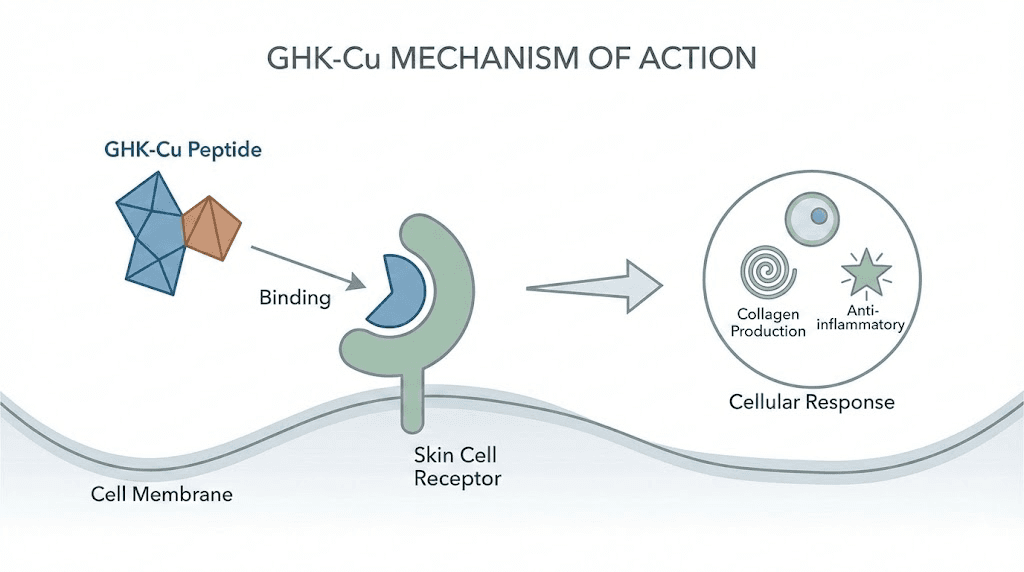
The copper component matters significantly for side effects.
Free copper ions are pro-oxidant, meaning they can cause cellular damage through oxidative stress. But when copper binds to the GHK peptide, something remarkable happens. The peptide essentially neutralizes copper's harmful potential while preserving its regenerative signaling capacity.
This is why properly formulated copper peptides rarely cause the oxidative damage that free copper might. Quality matters. Formulation matters. And understanding this chemistry helps you evaluate products and recognize when something isn't working as intended.
Common topical side effects and what causes them
Let's start with what most people experience. The majority of copper peptide users report zero side effects. Clinical studies consistently show GHK-Cu to be well-tolerated across skin types. But "most people" isn't "all people," and knowing what to watch for protects you from unnecessary problems.
Initial skin irritation
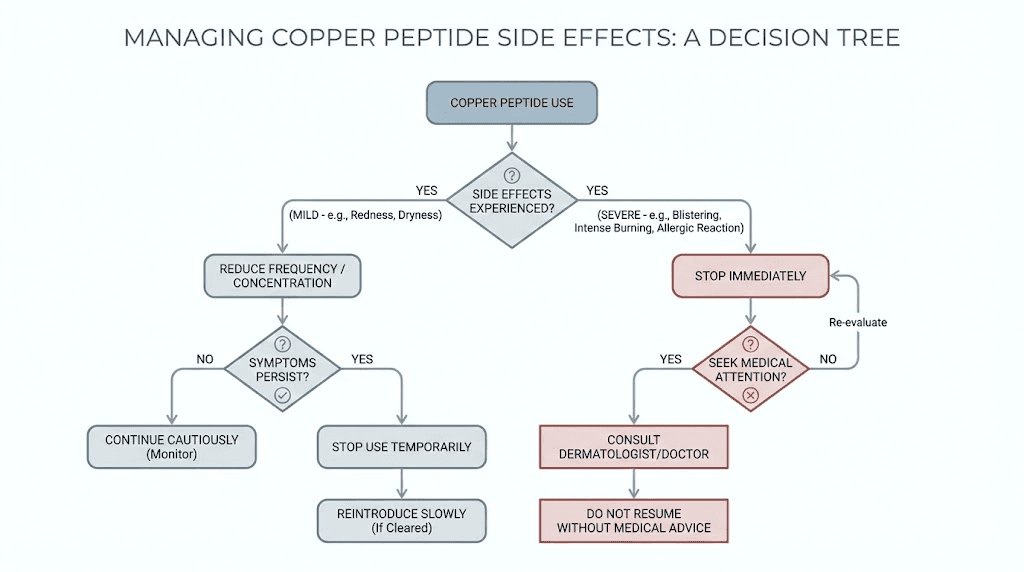
Mild irritation affects roughly 5-10% of new copper peptide users. Symptoms include redness, tingling, slight burning sensation, and occasionally itching. This typically appears within the first few applications and resolves within one to two weeks of continued use.
Why does this happen? Your skin barrier encounters a new active ingredient. Even beneficial ingredients can trigger a mild inflammatory response as your skin's immune system evaluates the new substance. Think of it as your skin asking questions before accepting the new ingredient into its routine.
The distinction between irritation and allergy matters enormously here. Irritation is localized, dose-dependent, and usually improves with continued use at lower frequency. Allergic reactions are immune-mediated, can worsen with each exposure, and may spread beyond the application area. If your symptoms intensify rather than improve after two weeks, stop use and consult a dermatologist.
Managing initial irritation is straightforward. Reduce application frequency from daily to every other day. Use a lower concentration product. Apply a buffer like a light moisturizer before the copper peptide serum. Most users who experience initial irritation find they can eventually use copper peptides daily without problems once their skin adjusts.
The purging phenomenon
Copper peptides can cause purging. This is different from breakouts, though it looks similar and causes similar frustration. Understanding the difference saves you from abandoning an effective ingredient prematurely.
Purging occurs because copper peptides accelerate skin cell turnover. Microcomedones, tiny clogged pores that were already forming beneath your skin's surface, get pushed up faster than they would naturally. The result is a temporary increase in whiteheads, blackheads, or small pimples in areas where you typically break out.
Key characteristics of purging versus reaction:
Purging appears only in your usual breakout zones. Reactions can appear anywhere. Purging pimples come and go quickly, often within days. Reaction pimples tend to be more painful, inflamed, and persistent. Purging typically resolves within four to six weeks. Reactions don't improve with continued use.
If you're experiencing purging, the counterintuitive solution is often to continue use. The congestion already existed in your skin. The copper peptides are simply revealing it faster. Once the existing microcomedones clear, many users find their skin is actually clearer than before they started.
However, if breakouts persist beyond six weeks, appear in unusual locations, or are accompanied by other symptoms like widespread redness or swelling, you're likely experiencing a true adverse reaction rather than purging.
Skin dryness and tightness
Some users report their skin feeling dry or tight after copper peptide application. This side effect is almost always related to overuse rather than the ingredient itself.
Copper peptides are potent. Using them twice daily when your skin only needs them once, or applying a high-concentration serum when a moderate one would suffice, can overwhelm your skin's ability to maintain its moisture barrier. The result is that characteristic tight, dry feeling that makes you reach for extra moisturizer.
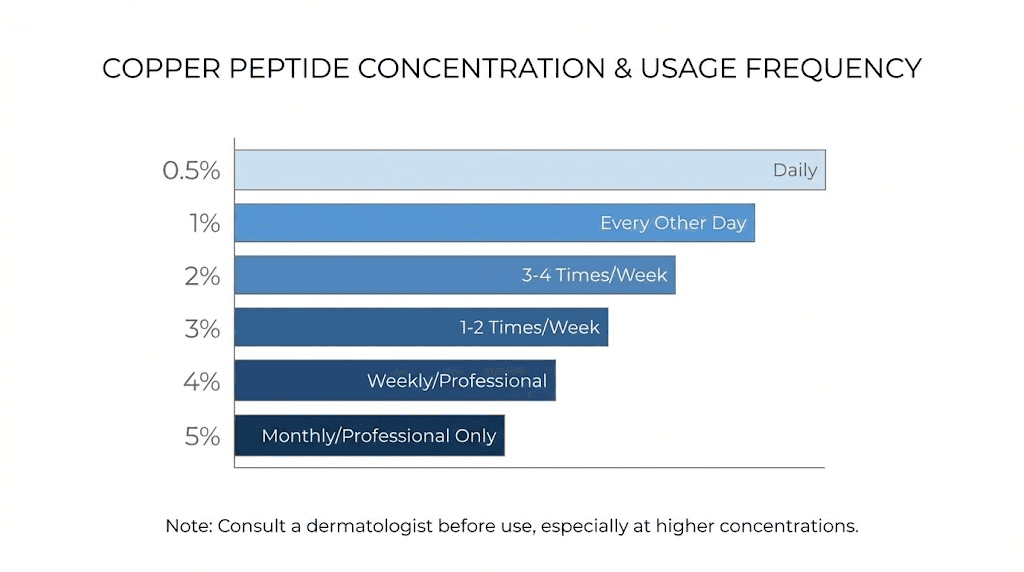
The solution isn't to abandon copper peptides but to calibrate your use. Most people do well with once-daily application of a 1-3% GHK-Cu product. Starting at lower frequency and concentration, then gradually increasing, prevents this problem almost entirely. If dryness persists despite reduced use, try applying copper peptides to slightly damp skin and following immediately with a hydrating serum or moisturizer.
Blue or green skin discoloration
Perhaps the most alarming, though least harmful, side effect is temporary skin discoloration. Copper peptide serums have a characteristic blue color. In some cases, this color can transfer to the skin, creating a blue or greenish tint that understandably concerns users.
This discoloration has several causes. Product quality plays a significant role. Lower-quality formulations may contain excess free copper ions that deposit on or in the skin. Improper storage can cause oxidation, similar to how copper metal develops a green patina over time. pH imbalances in the formula can cause copper ions to react with skin oils.
The discoloration itself isn't dangerous. It typically fades within hours of washing the face. However, persistent staining suggests a product quality issue. Pharmaceutical-grade GHK-Cu, properly formulated and stabilized, shouldn't cause noticeable skin discoloration. If your copper peptide serum leaves you looking faintly blue, consider switching to a higher-quality product rather than assuming this is normal.
To prevent discoloration, store your copper peptide products according to label instructions, usually in a cool, dark place. Check expiration dates. And observe the product itself. If a blue serum has turned green or developed a cloudy appearance, it's oxidized and should be replaced.
Injectable GHK-Cu side effects
Injectable copper peptides involve different considerations than topical products. The route of administration, dosage, and injection technique all influence potential side effects. Research protocols have established safety parameters, but understanding the risks helps you make informed decisions.
Injection site reactions
Local reactions at the injection site are the most common side effect of subcutaneous GHK-Cu. These include redness, swelling, tenderness, itching, bruising, and occasionally a small lump or bump under the skin that may persist for several days.
These reactions occur because of the injection process itself and the body's response to the copper peptide solution. When GHK-Cu is injected, free copper can temporarily separate from the peptide backbone before rebinding in tissues.
This brief liberation of copper ions triggers a localized inflammatory response, including histamine release that causes the redness and itching many users experience.
Minimizing injection site reactions involves several strategies. Rotate injection sites consistently, never using the same spot twice in a row. Dilute the GHK-Cu solution with additional bacteriostatic water before injection. Some researchers add 30-90 units of water to each dose specifically to reduce local inflammation. Ice the injection site before and after if reactions are bothersome.
Most injection site reactions resolve within 24-48 hours. Reactions that spread beyond the immediate injection area, involve significant swelling, or are accompanied by fever or systemic symptoms require medical evaluation.
Systemic effects
Systemic side effects from GHK-Cu injections are rare in research settings but have been documented. These may include mild nausea, fatigue, lightheadedness, and flu-like symptoms. These effects are typically transient and resolve within hours to days.
The mechanism behind systemic effects likely involves the immune-modulating properties of GHK-Cu.
The peptide activates various immune pathways, and in some individuals, this activation may produce symptoms similar to fighting off an infection. Starting with lower doses and gradually increasing allows the body to adjust and reduces the likelihood of systemic reactions.
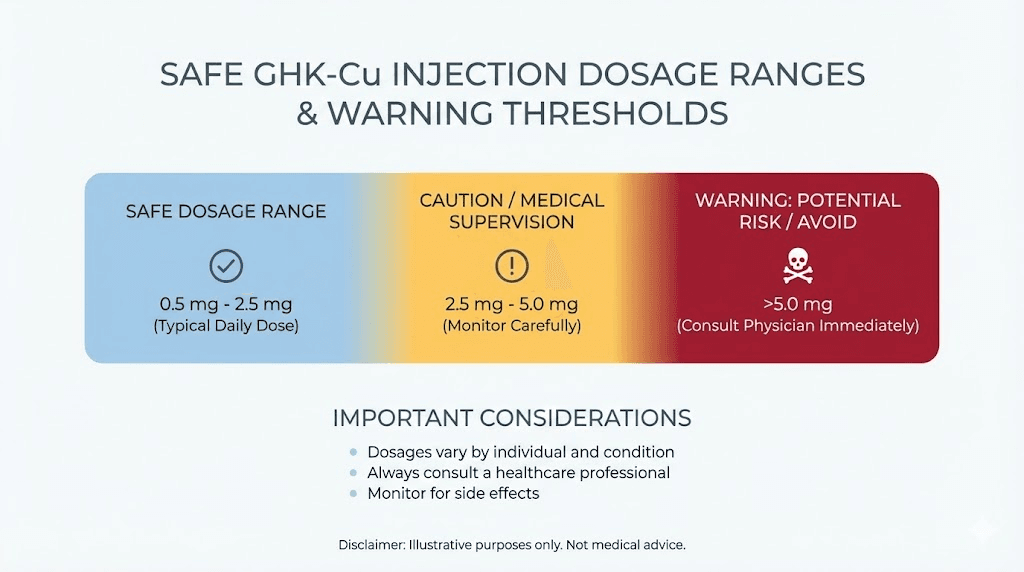
Dosing protocols in research typically start at 1-2mg daily, administered subcutaneously. This conservative approach allows for assessment of individual tolerance before increasing to the 2-5mg range used in more intensive protocols. Rushing to higher doses significantly increases the risk of both local and systemic side effects.
Copper toxicity considerations
Copper toxicity from GHK-Cu is extremely unlikely at standard doses but remains a theoretical concern worth understanding. The body tightly regulates copper levels, and excess copper is normally excreted through bile. Problems arise only when copper intake dramatically exceeds the body's elimination capacity.
Research has estimated that GHK-Cu would need to be administered at approximately 22,500mg to produce toxic effects in humans. For context, typical research protocols use 2-5mg daily. The safety margin is enormous. However, this doesn't mean copper accumulation is impossible, particularly with long-term use or in individuals with impaired copper metabolism.
Signs of copper excess include nausea, vomiting, abdominal pain, and in severe cases, liver damage. These symptoms would develop gradually with chronic overexposure, not suddenly after a single dose. Anyone using injectable GHK-Cu long-term should consider periodic monitoring of copper and ceruloplasmin levels.
In the unlikely event of significant copper toxicity, treatment involves IV chelation therapy using EDTA, which binds to excess copper and allows it to be excreted through the kidneys. This is an extreme scenario that proper dosing and monitoring makes virtually impossible.
Who should avoid copper peptides
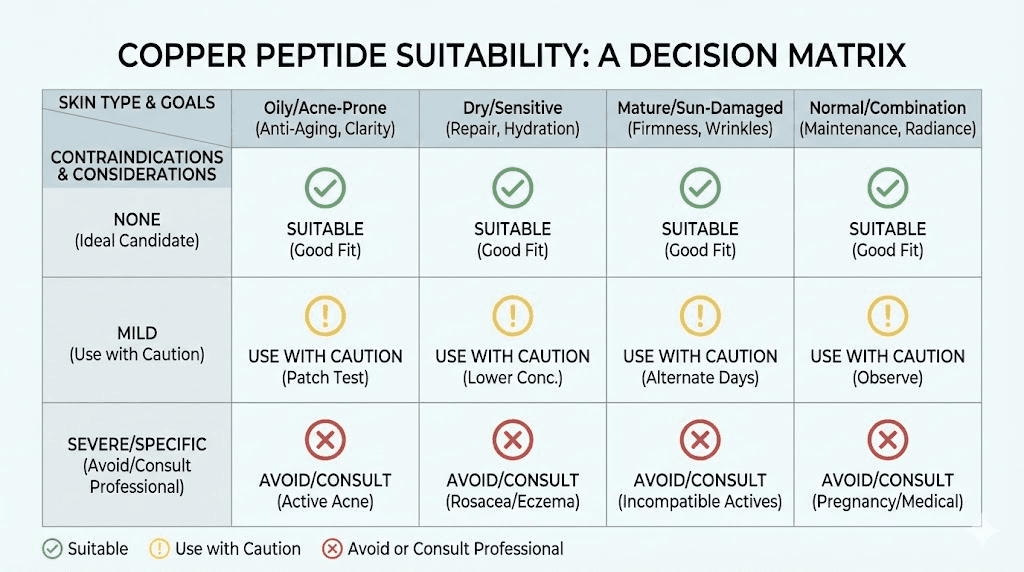
While copper peptides are safe for most people, certain populations should exercise caution or avoid use entirely. These contraindications are based on the mechanisms of copper peptide action and the potential for harm in specific circumstances.
Wilson's disease
Wilson's disease is an inherited disorder that prevents the body from properly eliminating excess copper. People with this condition accumulate copper in the liver, brain, and other organs, leading to serious health problems. Adding copper peptides, whether topically or through injection, could potentially worsen copper accumulation.
The risk with topical use is relatively low since systemic absorption is limited.
However, injectable GHK-Cu should be absolutely avoided by anyone with Wilson's disease or a family history suggesting they might be carriers. If you haven't been tested but have unexplained liver problems, neurological symptoms, or a family history of copper-related disorders, consult a physician before using any copper peptide products.
Pregnancy and breastfeeding
Insufficient research exists on copper peptide safety during pregnancy and breastfeeding.
While GHK-Cu is a naturally occurring molecule, the effects of supplementation on fetal development or nursing infants haven't been adequately studied.
The precautionary principle suggests avoiding copper peptide use during pregnancy and while breastfeeding. This is particularly true for injectable forms, which have greater systemic distribution. Topical use presents lower theoretical risk but should still be discussed with a healthcare provider.
Copper itself is an essential nutrient during pregnancy, and severe deficiency can cause developmental problems.
The concern isn't copper per se but rather the uncertainty about how supplemental copper peptides might affect a developing fetus or nursing infant. Until research clarifies these questions, avoidance is the safest approach.
Active or suspected cancer
GHK-Cu has complex effects on cancer biology that remain incompletely understood. On one hand, research suggests the peptide may have anti-cancer properties, including the ability to reset gene expression patterns toward healthier states. On the other hand, GHK-Cu promotes angiogenesis, the formation of new blood vessels, which is a process that tumors exploit to fuel their growth.
This creates a theoretical concern that copper peptides might accelerate tumor development in individuals with active cancer or dormant tumors. The research is conflicting, and no human studies have definitively established either benefit or harm in cancer patients. Given this uncertainty, most experts recommend avoiding copper peptides if you have active cancer, a history of cancer, or are at high risk for cancer development.
If you're a cancer survivor who wants to use copper peptides for skin rejuvenation, discuss this with your oncologist. They can help you weigh the theoretical risks against the benefits in your specific situation.
Copper allergy
True copper allergy is rare but does exist. Individuals with confirmed copper allergy, typically identified through jewelry reactions or patch testing, should avoid copper peptides. The allergic response involves the immune system recognizing copper as a threat and mounting an inflammatory reaction.
Symptoms of copper allergy include contact dermatitis, hives, itching, and in severe cases, anaphylaxis. If you've experienced allergic reactions to copper jewelry or copper-containing products, consult an allergist before trying copper peptide skincare.
A patch test can help determine whether you can safely use these products.
Note that contact dermatitis from copper jewelry doesn't always indicate true allergy. It may result from nickel contamination in the copper alloy or from irritant reactions unrelated to immune activation. An allergist can distinguish between these possibilities.
Ingredient interactions that cause problems
Copper peptides don't exist in isolation. They interact with other skincare ingredients, sometimes beneficially, sometimes problematically. Understanding these interactions prevents inadvertent side effects and maximizes the benefits of your routine.
Vitamin C and copper peptides
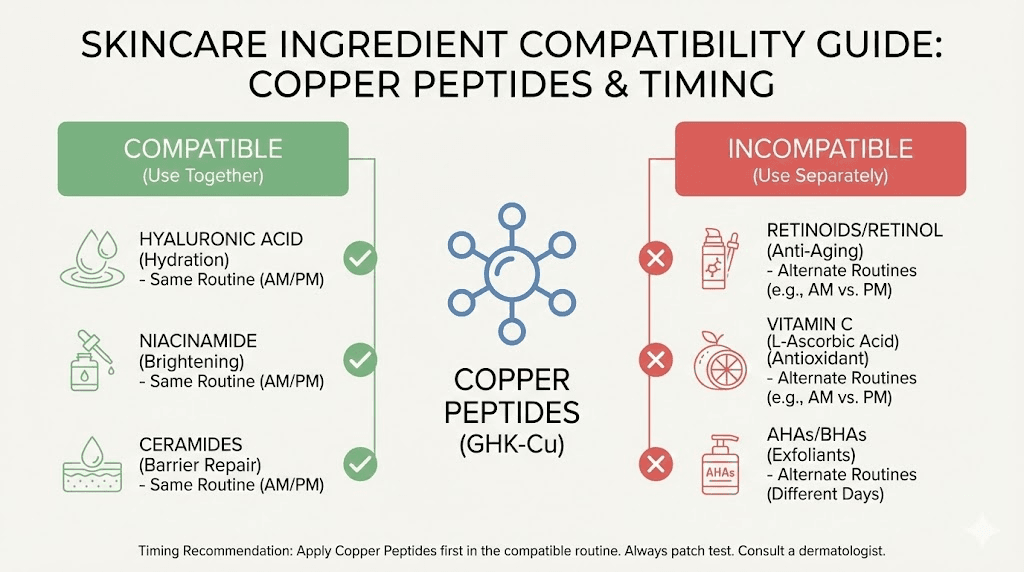
The vitamin C and copper peptide interaction is one of the most discussed in skincare. High concentrations of ascorbic acid can destabilize copper peptides, reducing their effectiveness. Simultaneously, copper ions can oxidize vitamin C, rendering it less potent.
This doesn't mean you can't use both ingredients. Timing matters more than elimination. Apply vitamin C in the morning and copper peptides at night. Or wait at least 30 minutes between applications to allow each ingredient to absorb and stabilize before adding the next.
Some formulations combine copper peptides with vitamin C derivatives that are less prone to oxidation. If you're using such a product, the formulator has presumably addressed compatibility concerns. Read ingredient lists carefully and follow product instructions.
Retinoids and copper peptides
The retinol and copper peptide combination requires careful management. Both ingredients are active, both can cause initial irritation, and using them simultaneously may overwhelm sensitive skin. However, they work through different mechanisms and can complement each other when used thoughtfully.
Research suggests separating retinoid and copper peptide applications by at least 30 minutes, or better yet, using them on alternate nights. This reduces the cumulative irritation potential while allowing each ingredient to work effectively.
Once your skin has adjusted to both ingredients individually, some users successfully combine them in a single routine.
The specific retinoid matters. Prescription tretinoin is more potent and potentially irritating than over-the-counter retinol or retinaldehyde. If you're using a strong retinoid, be especially cautious about adding copper peptides. Start slowly, monitor your skin's response, and back off if irritation develops.
Alpha and beta hydroxy acids
Exfoliating acids like glycolic acid, salicylic acid, and lactic acid can interfere with copper peptide efficacy. The acidic pH these products require may destabilize the copper-peptide bond, and the exfoliating action may remove copper peptides from the skin before they can be absorbed.
Additionally, both acids and copper peptides can cause irritation. Combining them, especially when you're new to either ingredient, increases the likelihood of redness, peeling, and discomfort. If your routine includes both, separate them by several hours or use them on different days.
Some users successfully combine a mild AHA/BHA toner with copper peptides by applying the acid first, waiting for it to dry completely, then applying copper peptides. This approach works best with lower-concentration acid products and well-established skin tolerance.
Concentration and frequency matters
Many copper peptide side effects stem not from the ingredient itself but from using too much, too often, or too concentrated a product. Understanding optimal use parameters prevents most problems before they start.
Finding your concentration sweet spot
Copper peptide products range from 0.5% to over 5% GHK-Cu. Higher isn't automatically better. Research by Dr. Loren Pickart, who discovered GHK-Cu's skincare applications, found no additional benefit from concentrations above 3% and noted that higher concentrations may actually be counterproductive.
For beginners, a 0.5-1% concentration applied two to three times weekly provides a gentle introduction. After two weeks of tolerance, you can increase frequency to daily use. If no irritation occurs after another two weeks, you might consider moving to a 2-3% product.
Signs you're using too high a concentration include persistent redness, increased sensitivity to other products, dryness that doesn't respond to moisturizer, and skin that looks worse rather than better over time.
If you experience these symptoms, reduce concentration or frequency rather than abandoning copper peptides entirely.
The danger of product stacking
Enthusiastic skincare users sometimes make the mistake of using multiple copper peptide products simultaneously. A copper peptide serum, eye cream, and moisturizer might each contain moderate concentrations, but combined, they deliver a copper dose far beyond what skin can productively use.
The result is often exactly the problems copper peptides are supposed to solve: irritation, premature aging signs from inflammation, and compromised skin barrier function. If copper peptides work well for you, pick one high-quality product and use it consistently rather than layering multiple copper sources.
SeekPeptides members often ask about optimal product selection and sequencing. The answer is almost always simplification. One well-formulated copper peptide serum, used consistently at the right frequency for your skin, outperforms a complex routine every time.
Building tolerance gradually
Your skin's ability to tolerate active ingredients increases with exposure. This is true for retinoids, acids, and copper peptides alike. The adjustment period typically lasts two to four weeks, during which mild side effects may occur before resolving.
A sensible introduction schedule looks like this.
Week one: apply every third day.
Week two: apply every other day.
Week three: apply daily if no irritation.
Week four and beyond: consider morning and evening use if desired and tolerated.
Rushing this process causes most of the negative experiences you read about online. Someone buys a strong copper peptide serum, applies it twice daily from day one, experiences significant irritation, and concludes that copper peptides don't work for them. In reality, their skin never had a chance to adjust. Patience during the introduction period prevents this outcome.
Managing and treating side effects
Despite best practices, side effects sometimes occur. Knowing how to respond allows you to address problems quickly and decide whether to continue, modify, or discontinue copper peptide use.
For mild irritation
Reduce frequency immediately. If you've been using copper peptides daily, drop to every other day or every third day. Apply a simple, fragrance-free moisturizer before and after the copper peptide product to buffer its effects.
Avoid combining with other actives until irritation resolves. This means temporarily pausing retinoids, vitamin C, and exfoliating acids. Focus on gentle cleansing, hydration, and sun protection. Most mild irritation resolves within one to two weeks with this approach.
If irritation doesn't improve after two weeks of reduced use, discontinue copper peptides entirely for a month. Some skins simply don't tolerate certain ingredients well. This isn't a failure; it's useful information about your individual biology.
For allergic reactions
Allergic reactions require immediate discontinuation. Do not try to push through or reduce frequency. Remove the product from your routine completely and avoid reintroduction unless cleared by an allergist.
Mild allergic reactions, limited to localized redness and itching, can often be managed at home with over-the-counter hydrocortisone cream and oral antihistamines.
More severe reactions involving widespread hives, swelling, difficulty breathing, or dizziness require emergency medical care.
After an allergic reaction, consider patch testing future copper peptide products before facial application. Apply a small amount to the inner arm and wait 48 hours. If no reaction occurs, the product may be safe to use. If reaction occurs, that specific formulation should be avoided.
For injection site reactions
Minor injection site reactions typically resolve without intervention. Ice application can reduce swelling and discomfort. Over-the-counter pain relievers help with tenderness. Keep the area clean and avoid touching or scratching.
For persistent lumps or bumps, gentle massage may help disperse the injected solution and speed resolution. If a lump remains hard, grows, or becomes increasingly painful, seek medical evaluation to rule out infection or other complications.
Prevention is the best treatment. Proper injection technique, site rotation, and appropriate dilution minimize reactions.
If you consistently experience problematic injection site reactions despite good technique, the route of administration may not be right for you. Topical copper peptides offer an alternative with different risk profiles.
For persistent or severe symptoms
Any side effect that worsens over time, spreads beyond the application area, or is accompanied by systemic symptoms like fever, malaise, or swollen lymph nodes requires professional evaluation. These patterns suggest something beyond typical skin sensitivity.
Bring the product with you to your dermatology or medical appointment. The ingredient list helps identify potential allergens or irritants. Be prepared to describe your complete skincare routine, as interactions between products may contribute to symptoms.
Document your experience with photos if possible. Visual records help healthcare providers assess severity and track improvement. They also help you evaluate whether symptoms are truly improving with treatment modifications.
Long-term safety considerations
Copper peptides have been used in skincare since the 1990s. Injectable protocols are newer but have accumulated substantial safety data. Understanding what we know, and what we don't know, about long-term use helps you make informed decisions.
What the research shows
Studies examining GHK-Cu use over periods of 2-3 months consistently show favorable safety profiles. The peptide doesn't thin the skin like some actives. Instead, research suggests it increases dermal thickness and resilience. No accumulation effects or delayed toxicity have been observed in controlled studies.
However, no human studies have examined truly long-term use extending over years or decades. This doesn't indicate danger, just absence of data.
Given that GHK-Cu is a naturally occurring molecule present in human plasma, concerns about long-term topical use seem largely theoretical.
Injectable use presents more unknowns. The safety data, while reassuring, comes primarily from shorter-duration studies. Anyone using injectable GHK-Cu long-term is essentially participating in an ongoing safety evaluation. Periodic monitoring of relevant biomarkers provides some assurance that no harmful accumulation is occurring.
Monitoring recommendations
For topical users, formal monitoring isn't typically necessary. Pay attention to your skin's appearance and feel. If you notice persistent negative changes, increased sensitivity over time, or diminished benefits after extended use, consider taking a break from copper peptides.
For injectable users, especially those using GHK-Cu long-term, periodic blood work makes sense.
Copper and ceruloplasmin levels assess copper status. Liver function tests evaluate whether the liver is handling copper metabolism appropriately.
Annual testing is probably sufficient for most users; more frequent testing may be warranted if you have any concerning symptoms.
These monitoring suggestions aren't because injectable GHK-Cu is known to cause problems. They're because we can't know what we haven't studied. Erring on the side of caution with periodic assessment provides peace of mind and early warning of any unexpected effects.
The importance of quality products
Long-term safety depends partly on the quality of products you're using. Pharmaceutical-grade GHK-Cu, properly synthesized and purified, has a well-characterized safety profile. Products of uncertain quality, potentially containing impurities, degradation products, or incorrect concentrations, introduce unknowns.
This matters more for injectables than topicals.
You're injecting directly into your body, bypassing the skin's protective barrier.
Using peptides from reputable sources with third-party testing documentation protects you from quality-related side effects that have nothing to do with GHK-Cu itself.
For topical products, quality still matters for efficacy and to avoid the irritation that can come from poorly formulated products. But the consequences of using a suboptimal topical are generally limited to skin irritation and wasted money rather than systemic harm.
Separating myths from facts
The internet circulates many claims about copper peptide side effects. Some are accurate. Some are exaggerated. Some are completely fabricated. Let's address the most common misconceptions.
Myth: Copper peptides cause permanent skin damage
Fact: No credible evidence supports this claim. GHK-Cu promotes tissue repair and regeneration. While improper use can cause temporary irritation, the skin heals readily once the irritant is removed. No mechanism exists by which properly formulated copper peptides would cause permanent damage.
The origin of this myth likely traces to experiences where skin looked worse during the adjustment period or due to product incompatibilities. These temporary setbacks, while frustrating, resolve with appropriate management. Conflating temporary irritation with permanent damage spreads unnecessary fear.
Myth: Copper peptides are toxic to the liver
Fact: At normal cosmetic or research doses, copper peptides don't stress the liver. The amounts used topically or in injectable protocols are tiny compared to dietary copper intake. The liver processes copper continuously as part of normal metabolism.
Liver toxicity would require sustained copper intake far exceeding normal use. Even then, the body has regulatory mechanisms to prevent accumulation. People with Wilson's disease are an exception because their regulatory mechanisms are impaired, which is why they should avoid supplemental copper.
Myth: You can overdose on copper peptide serum
Fact: Topical overdose isn't possible in any meaningful sense. You cannot absorb enough GHK-Cu through intact skin to cause systemic toxicity. At worst, excessive topical use causes local irritation, which resolves when you reduce application.
Injectable overdose is theoretically possible but would require dosages hundreds or thousands of times higher than research protocols.
Following established dosing guidelines makes injectable overdose essentially impossible.
Myth: Copper peptides make you age faster
Fact: This myth likely stems from misunderstanding the temporary inflammatory response some users experience. Inflammation can temporarily make skin look worse, with redness and puffiness that might be interpreted as aging.
The actual research shows the opposite. GHK-Cu promotes collagen synthesis, reduces inflammation long-term, and helps repair UV damage. It's one of the few ingredients with genuine anti-aging evidence. Short-term irritation, if it occurs, doesn't negate long-term benefits.
Myth: Natural is always safer
Fact: GHK-Cu is a naturally occurring peptide in human plasma. But "natural" doesn't automatically mean safe, and "synthetic" doesn't automatically mean dangerous. The safety of an ingredient depends on its specific properties, not its origin.
Plenty of natural substances are toxic. Plenty of synthetic substances are safe. GHK-Cu happens to be both natural (in origin) and well-studied (in application). Its safety comes from its biochemistry, not from marketing claims about naturalness.
Real-world experiences and what they teach us
Beyond clinical data, thousands of users have shared their copper peptide experiences online. Patterns in these reports provide practical insights that complement formal research.
Success factors
Users who report positive experiences typically share several characteristics. They introduced copper peptides gradually, allowing their skin to adjust. They used moderate concentrations rather than jumping to the highest available. They avoided combining copper peptides with other irritating actives during the introduction period. They were patient through any initial adjustment symptoms.
Product quality also emerges as a consistent factor. Users of well-regarded brands report fewer side effects than those using budget alternatives. This doesn't mean expensive always equals better, but it does suggest that formulation expertise matters for tolerability.
Common pitfalls
Negative experiences often follow predictable patterns. Using too much too soon tops the list. Combining copper peptides with retinoids, acids, and vitamin C simultaneously overwhelms skin that might tolerate each ingredient separately. Ignoring early warning signs of irritation and pushing through leads to more severe problems.
Unrealistic expectations also contribute to negative experiences. Some users expect immediate visible results and interpret the adjustment period as evidence that the product doesn't work. Abandoning copper peptides after one or two weeks doesn't give them a fair chance to demonstrate benefits.
Individual variation
Perhaps the most important lesson from real-world experiences is the extent of individual variation.
Some people tolerate high-concentration copper peptides immediately with no adjustment period. Others struggle with even low concentrations.
Genetics, baseline skin condition, other products in your routine, and factors we don't fully understand all influence your personal response.
This variation means you shouldn't assume your experience will match anyone else's, positive or negative. Use others' experiences as data points, not predictions. Your skin will tell you how it responds to copper peptides. The key is listening and adjusting accordingly.
Making informed decisions about copper peptide use
Armed with comprehensive side effect information, you can now make informed decisions about whether and how to use copper peptides. The decision framework involves weighing benefits against risks in your specific situation.
For topical use
The risk-benefit ratio for topical copper peptides favors use for most people. Side effects are typically mild, temporary, and manageable. Benefits include reduced wrinkles, improved skin texture, enhanced hair growth, and accelerated healing. Unless you have specific contraindications, there's little reason not to try copper peptides topically.
Start conservatively. Choose a moderate-concentration product from a reputable brand. Introduce gradually over several weeks. Monitor your skin's response and adjust accordingly. This approach maximizes your chance of success while minimizing side effect risk.
For injectable use
Injectable GHK-Cu involves more complexity. The benefits may be greater for certain goals, but so are the considerations. Injection technique, source quality, and dosing precision all matter more than with topical use.
If you're considering injectable copper peptides, SeekPeptides provides detailed protocol guidance for members. Understanding proper reconstitution, storage, injection technique, and dosing schedules reduces risk and improves outcomes.
This isn't an ingredient to approach casually.
Knowing when copper peptides aren't right for you
Not everyone should use copper peptides. If you have Wilson's disease, are pregnant or breastfeeding, have active cancer, or have demonstrated copper allergy, avoidance is the prudent choice. If you've tried copper peptides multiple times with different products and consistently experienced problems, your skin may simply not be compatible.
There's no shame in this. Skincare is personal. What works wonderfully for one person may not work for another. Many effective ingredients exist for skin rejuvenation and repair. If copper peptides aren't your match, alternative approaches await exploration.
Frequently asked questions
Can copper peptides cause breakouts?
Copper peptides can cause temporary purging in acne-prone areas as they accelerate cell turnover, bringing existing microcomedones to the surface faster. This typically resolves within four to six weeks. True breakouts from copper peptide allergy or irritation are uncommon but possible. If breakouts appear in unusual areas or persist beyond six weeks, discontinue use and consult a dermatologist.
How long do copper peptide side effects last?
Most side effects resolve within one to two weeks of discontinuing or reducing copper peptide use. Initial adjustment symptoms like mild redness and tingling often improve within days of reducing application frequency.
Allergic reactions may require longer healing time and potentially medical treatment. Injection site reactions typically resolve within 24-48 hours.
Are copper peptides safe for sensitive skin?
GHK-Cu is generally well-tolerated even by sensitive skin when introduced properly. Start with a low concentration (0.5-1%), apply every third day initially, and increase frequency gradually. Copper peptides support barrier function rather than disrupting it, making them potentially gentler than many other active ingredients.
Can I use copper peptides with niacinamide?
Yes. Niacinamide and copper peptides are compatible and can be used together. Niacinamide's calming properties may actually help offset any irritation from copper peptides. Many users successfully combine these ingredients in their routines.
Do copper peptides interact with prescription medications?
Topical copper peptides have minimal systemic absorption and aren't known to interact with medications. Injectable GHK-Cu has more systemic presence but no documented drug interactions at research doses. However, inform your healthcare provider about any peptide use, especially if you're on medications affecting copper metabolism or have copper-related conditions.
What happens if I stop using copper peptides?
Your skin won't become dependent on copper peptides. If you stop using them, you'll gradually lose the benefits they provided, similar to stopping any skincare active. There's no rebound effect or withdrawal period. Learn more about what happens when you stop GHK-Cu.
Can copper peptides cause hyperpigmentation?
Copper peptides are unlikely to cause hyperpigmentation and may actually help reduce it by promoting even skin tone and cellular turnover. The temporary blue discoloration some users experience isn't hyperpigmentation but surface staining from copper ions, which washes off easily.
Is it safe to use copper peptides around the eyes?
Yes. Copper peptides are commonly used in eye creams and can be applied to the delicate under-eye area. Use gentle application pressure and choose formulations specifically designed for the eye area if available. Avoid getting product directly in the eyes.
External resources
For researchers serious about optimizing their peptide protocols safely, SeekPeptides offers comprehensive safety guides, interaction databases, and expert support to navigate side effect concerns with confidence.
In case I don't see you, good afternoon, good evening, and good night. Join us.