Jan 16, 2026
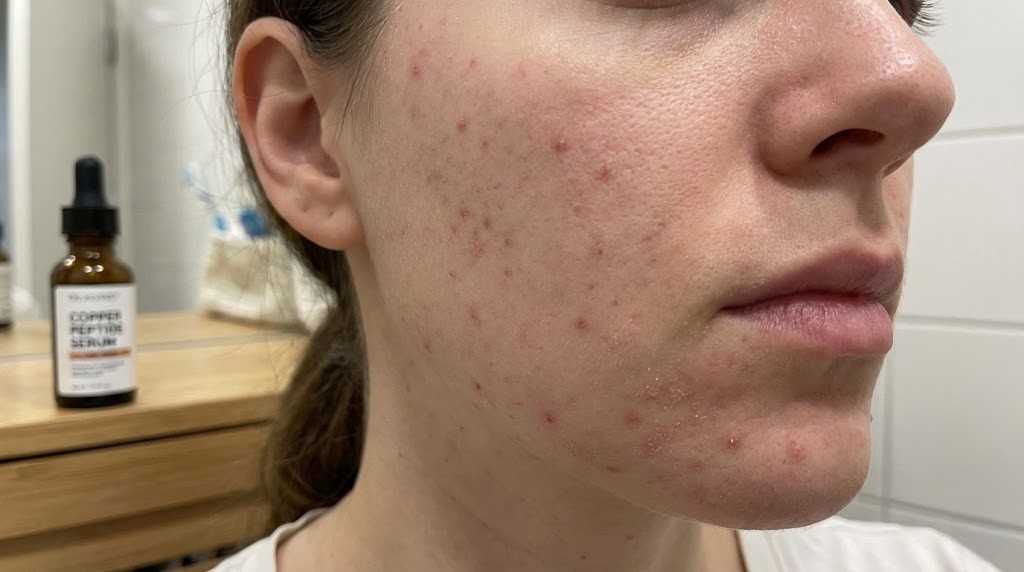
Your skin looks worse. You started copper peptides two weeks ago and now there are pimples where there weren't pimples before. The natural instinct is to throw the product away.
To conclude it doesn't work for you. To move on to something else.
Wait.
What you're experiencing might be purging, a temporary phenomenon where skin looks worse before it looks dramatically better. Or it might be a genuine reaction signaling you should stop. The difference between these two scenarios determines whether you're about to make the best skincare decision of your life or the worst.
This guide explains exactly what copper peptide purging looks like, how long it lasts, and most importantly, how to distinguish it from a real problem. Armed with this knowledge, you'll know whether to push through or pivot. No more guessing. No more wasted products. No more damaged skin from misreading the signals.
What is skin purging and why does it happen
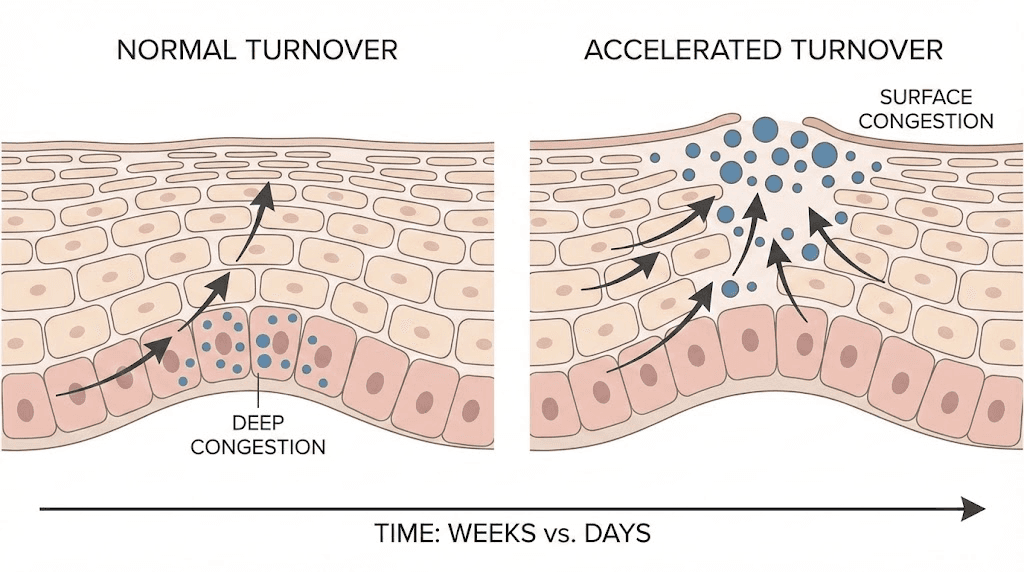
Purging is your skin's response to ingredients that accelerate cellular turnover. When you apply something that speeds up how quickly skin cells renew, all the congestion lurking beneath the surface gets pushed up faster than it would naturally. Microcomedones, the tiny clogged pores you couldn't see or feel, suddenly become visible pimples.
Think of it this way. Your skin always has pimples in development. They're forming in the deeper layers, working their way toward the surface over weeks or months. Normally, they appear gradually. One here, one there. When you use an ingredient that accelerates turnover, those developing pimples all arrive at once. The result looks like a breakout. It's actually a clearing out.
GHK-Cu copper peptides trigger this process because they signal skin cells to behave younger. Part of behaving younger is renewing faster. Cell turnover that might normally take 28-40 days accelerates. Congestion that would have surfaced over the next two months appears in the next two weeks.
This is good news disguised as bad news. The congestion was always there. The peptides just revealed it sooner. Once you clear out that backlog, you're left with cleaner, healthier skin than you would have had otherwise. But only if you recognize purging for what it is and give it time to resolve.
The four signs that confirm you're purging
Not every breakout is purging. Actual reactions to copper peptides exist, though they're uncommon. Learning to distinguish purging from reaction protects you from abandoning an effective product prematurely or continuing one that's causing genuine harm.
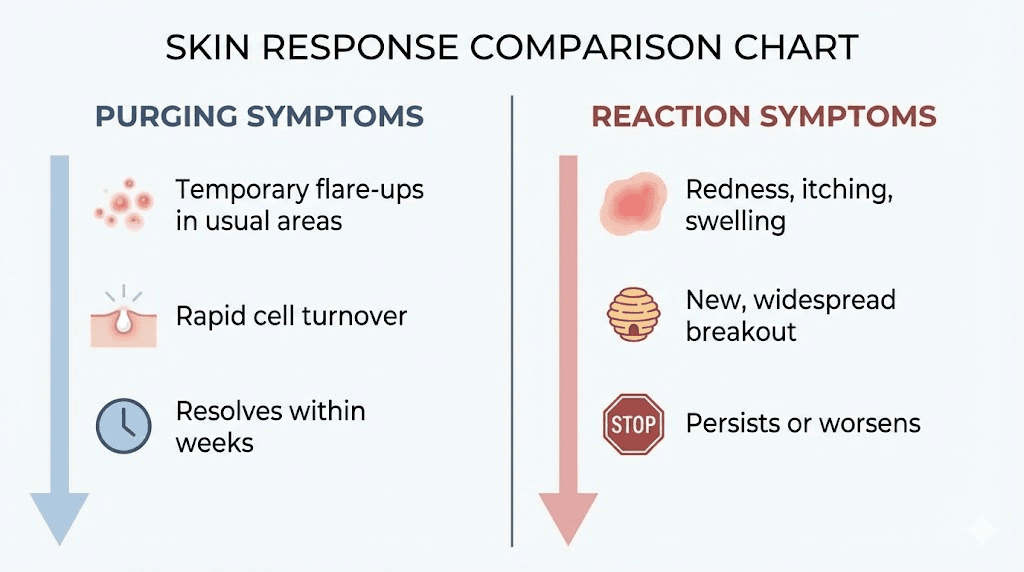
Sign one: breakouts appear in your usual problem zones
Purging happens where you already have congestion. If you typically break out along your jawline, that's where purging pimples appear. If your T-zone is usually problematic, expect purging there.
This pattern makes sense when you understand the mechanism. Copper peptides aren't creating new congestion. They're pushing existing congestion to the surface. That existing congestion lives in the pores that are already prone to clogging, your usual breakout areas.
If you're suddenly breaking out on your cheeks when you never break out there, that's not purging. If pimples appear on your forehead but your forehead has been clear for years, something else is happening. Location is your first diagnostic clue.
Sign two: pimples cycle through faster than normal
Purging pimples have accelerated lifecycles. A normal pimple might take two to three weeks to form, surface, and resolve. Purging pimples often complete this cycle in seven to ten days. They appear quickly and they resolve quickly.
This speed reflects the same accelerated turnover causing the purging in the first place. Everything is moving faster, including how quickly the body clears the inflammation.
Pay attention to how long individual pimples stick around.
Fast turnover suggests purging. Lingering, stubborn pimples suggest something else.
Sign three: pimples are small and superficial
Most purging manifests as small whiteheads, tiny red bumps, or microcomedones finally becoming visible. These are the surface-level results of accelerated turnover pushing minor congestion upward.
Deep, cystic acne is rarely a purging response. If you're developing large, painful, inflamed lesions that weren't part of your typical acne pattern, that signals irritation or reaction rather than purging. The copper peptides aren't creating deep inflammation. Something else is wrong.
Sign four: the timeline fits
Purging lasts four to six weeks. This timeline corresponds to one complete skin cell turnover cycle. Once the backlog of developing congestion has cleared, purging stops. The skin settles into its new, improved rhythm.
If breakouts persist beyond six weeks with no improvement, you're not experiencing purging. Either the product is causing ongoing irritation, your skin is reacting to another ingredient in the formula, or the product simply isn't right for you.
The six-week mark is your decision point.
The four signs that confirm you're having a reaction
Reactions to copper peptides are uncommon. True copper allergies affect roughly 0.3% of the population according to patch testing data. But reactions do happen, and recognizing them early prevents unnecessary skin damage.
Sign one: breakouts appear in unusual locations
When copper peptides cause a reaction, breakouts don't respect your usual patterns. They appear wherever you applied the product, regardless of whether those areas typically break out.
Pimples on your temples when you never break out there. Bumps across your cheeks when your cheeks are usually clear. Random lesions appearing in places that make no sense given your acne history.
These patterns suggest the product itself is causing problems, not revealing problems that already existed.
Sign two: accompanying symptoms beyond breakouts
Pure purging involves pimples. That's it. If you're experiencing itching, burning, stinging, widespread redness, tightness, flaking, or other symptoms alongside breakouts, something more than purging is happening.
These symptoms indicate irritation or allergic response. Your skin barrier is being compromised. The peptide or another ingredient in the formula is triggering inflammatory responses beyond simple accelerated turnover.
Mild tingling immediately after application is normal for many active ingredients. Persistent burning, itching, or discomfort is not. The difference matters.
Sign three: breakouts worsen over time
Purging starts bad and gets progressively better. Reactions start bad and get progressively worse. Track your skin's trajectory over two to three weeks. Are things slowly improving? That's purging. Are things staying the same or worsening?
That's a reaction.
The improving trajectory is crucial.
Even during purging's worst phases, you should see individual pimples resolving. Old ones clear while new ones appear. If nothing is clearing, if every pimple just joins the existing ones without anything resolving, the mechanism isn't purging.
Sign four: no improvement by week six
The six-week rule is absolute. Copper peptide purging cannot last longer than one skin cell cycle. If you're still breaking out at week seven with no clear improvement trend, the product is causing ongoing problems.
Some people give products too much credit. They keep using something that's clearly not working, hoping it will eventually improve. Don't fall into this trap. Six weeks is generous. If things haven't turned around by then, they're not going to.
Week-by-week timeline of copper peptide purging
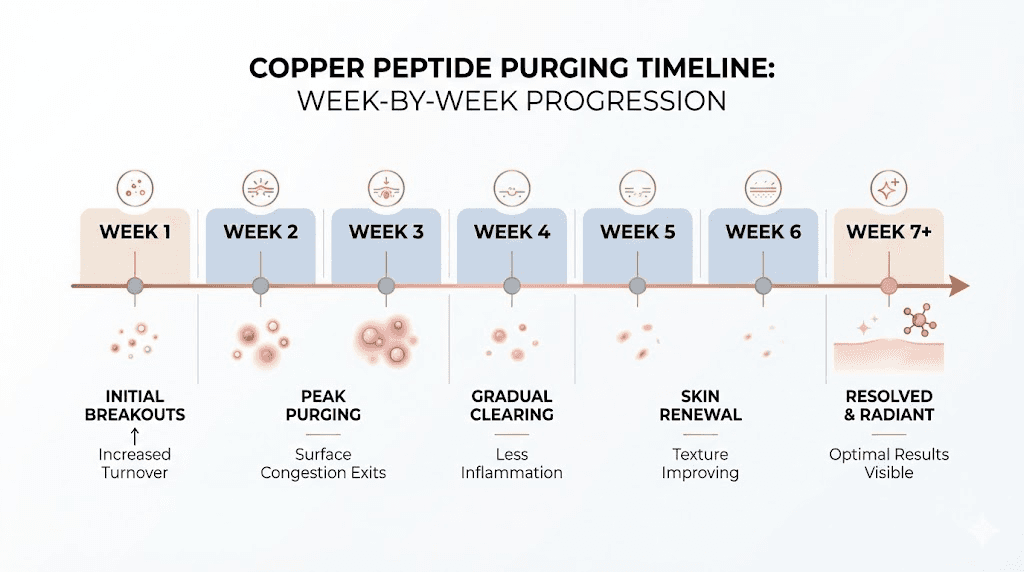
Knowing what to expect at each stage helps you evaluate whether your experience falls within normal purging parameters. Here's what a typical copper peptide purging timeline looks like.
Week one: initial adjustment
The first week often involves minimal visible change. Copper peptides are beginning to signal cells to turn over faster, but the effects haven't reached the surface yet. You might notice slight tingling during application, minor redness that fades within an hour, or no changes at all.
Some people skip purging entirely and never experience it.
Their skin simply adjusts without incident. If you finish week one with no problems, you may be one of the lucky ones. Continue using the product and monitor.
Week two: purging begins
For those who will purge, week two is typically when it starts. Small pimples begin appearing, usually in your familiar problem zones. They come up quickly and feel different from your usual breakouts, somehow faster and more superficial.
This is the phase where many people panic and quit.
Don't. Evaluate whether your experience matches the purging criteria. If breakouts are in usual locations, small and superficial, with quick lifecycles, you're purging.
Continue the product.
Weeks three and four: peak purging
Purging often intensifies before it resolves. Weeks three and four can be the worst, with the highest concentration of pimples appearing as the backlog of congestion clears. This is psychologically challenging.
Your skin looks worse than when you started.
Pay attention to turnover. Are individual pimples coming and going quickly? Are some areas starting to look clearer even as others still break out? These signs indicate the process is working.
The congestion is clearing. Hold steady.
Weeks five and six: resolution
By week five, purging should be visibly improving. Fewer new pimples appear.
The ones that do appear are smaller. Your skin starts showing the benefits of copper peptides, smoother texture, improved tone, reduced fine lines.
Week six marks the end of the purging window. By now, your skin should be clearly better than it was at the purging peak. If it's not, if things are still getting worse or staying the same, the product isn't working for you.
Week seven and beyond: results phase
Post-purging skin often looks better than it did before you started. The accelerated turnover has cleared years of accumulated congestion. The copper peptides are now working on their primary benefits: collagen stimulation, wound healing, anti-aging effects.
This is why pushing through purging is worth it.
The temporary setback leads to permanent improvement. Those who quit during week two or three never discover what their skin could have become.
Why some people purge and others don't
Not everyone experiences purging from copper peptides. Several factors determine whether you'll purge and how intensely.
Existing congestion levels
Purging requires something to purge. If your skin has minimal subsurface congestion, there's nothing for accelerated turnover to push upward. You'll simply enjoy faster cellular renewal without the breakout phase.
People with acne-prone skin, enlarged pores, or history of blackheads and whiteheads are more likely to purge. They have more subsurface material waiting to be cleared. People with clear skin that rarely breaks out often experience no purging at all.
Previous skincare routine
If you've been using other cell-turnover accelerating ingredients like retinoids or chemical exfoliants, you may have already cleared most congestion.
Adding copper peptides to an already-active routine produces less dramatic purging than adding them to a basic routine.
Conversely, if you're coming from a minimal skincare routine with no actives, introducing copper peptides represents a significant change. Your skin has more adjusting to do, and purging may be more pronounced.
Product concentration
Higher concentration copper peptide products may trigger more intense purging because they accelerate turnover more dramatically. Starting with a lower concentration reduces purging intensity, though it may also reduce ultimate efficacy.
The best copper peptide serums balance potency with tolerability. Products in the 1-3% range typically provide meaningful benefits without overwhelming the skin.
Application frequency
Applying copper peptides twice daily when your skin only needs once daily amplifies all effects, including purging. If you're experiencing intense purging, reducing frequency can ease the transition while still allowing the product to work.
Many dermatologists recommend starting with every-other-day application for the first week, then progressing to daily use once skin shows no signs of severe irritation.
This graduated approach reduces purging intensity.
How to minimize purging while still getting results
You can't completely prevent purging if your skin has congestion to clear. But you can minimize intensity and duration through strategic product introduction.
Start with lower frequency
Instead of daily application from day one, begin using copper peptides every third day for the first week. Progress to every other day in week two. Move to daily application in week three only if your skin tolerates the previous frequency well.
This graduated introduction slows the rate of turnover acceleration. Congestion still clears, but more gradually. The same total clearing happens over a longer period, making each day's purging less intense.
Buffer with hydration
Well-hydrated skin handles active ingredients better. Apply hyaluronic acid or a light moisturizer before your copper peptide serum.
This creates a buffer layer that slightly dilutes the active ingredient concentration reaching your skin while maintaining hydration.
Some practitioners recommend applying copper peptides to damp skin rather than dry skin for similar reasons.
The additional moisture moderates the product's intensity.
Avoid stacking actives during introduction
While you're introducing copper peptides, pause other actives that accelerate turnover. Using retinoids, vitamin C, and AHA/BHA exfoliants simultaneously creates compounding effects that intensify purging beyond what copper peptides alone would cause.
Wait until your skin has adjusted to copper peptides, typically six to eight weeks, before reintroducing other actives. Layer them back in one at a time, monitoring your skin's response to each addition.
Support your skin barrier
Purging stresses the skin barrier. Support it with barrier-reinforcing ingredients like ceramides, niacinamide, and squalane.
These don't interfere with copper peptide efficacy but help your skin maintain its protective function during the adjustment period.
A compromised barrier leads to more inflammation, more sensitivity, and potentially worse purging. Keeping the barrier healthy while introducing new actives is always smart strategy.
Don't pick or squeeze
Purging pimples resolve faster when left alone. Picking extends their lifecycle, increases inflammation, and risks scarring. The very qualities that make purging pimples distinctive, their speed and superficiality, mean they'll clear quickly if you don't interfere.
Apply a spot treatment if desired, but resist the urge to extract. The accelerated turnover that caused the pimple will also clear it, usually within days.
What to do if you can't tell whether it's purging or reaction
Sometimes the signs are ambiguous. Breakouts appear in mostly-usual locations with one or two outliers. Pimples cycle through at medium speed. You're not sure what you're seeing.
The two-week assessment
If you're uncertain, continue using the copper peptide product for two more weeks while carefully observing.
Take photos every few days under consistent lighting. Note which pimples are new, which are resolving, and where they appear.
After two weeks, review your documentation.
Are things trending better, staying the same, or getting worse? Is the pattern becoming clearer?
Two weeks of careful observation usually reveals the answer.
The reduction test
Another diagnostic approach: reduce copper peptide application to every third day for one week. If your skin immediately improves, the product was causing irritation or reaction. If purging continues at the same rate but less intensely, you're genuinely purging and the reduced frequency simply slowed it down.
This test helps distinguish between "too much product" problems and "wrong product" problems. Sometimes the answer isn't stopping copper peptides but simply using them less frequently.
The patch test restart
If you're truly confused, stop the product entirely for one week. Let your skin calm down.
Then perform a proper patch test: apply copper peptides to a small area of your inner arm and wait 48 hours.
If no reaction occurs on your arm, apply to a small facial area, perhaps just your chin, for another week. Monitor that isolated area.
This controlled approach reveals whether your skin fundamentally reacts to copper peptides or whether broader routine factors caused the original problems.
Purging with different copper peptide formats
The format you use affects purging patterns. Understanding these differences helps you choose the right approach for your skin.
Topical serums
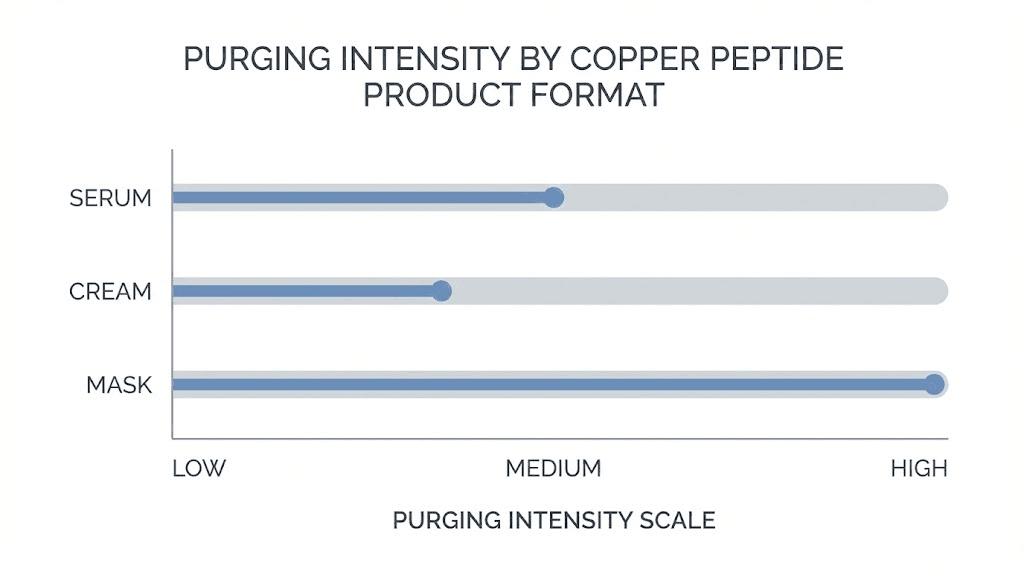
Copper peptide serums are the most common format and the most likely to cause purging. The concentrated delivery ensures meaningful amounts of GHK-Cu reach skin cells, triggering the turnover acceleration that leads to purging.
Serums also allow easy frequency adjustment. You can start every other day and increase to daily, or reduce from daily to every other day if purging becomes intense. This flexibility helps manage the purging process.
Copper peptide moisturizers
Moisturizers containing copper peptides typically have lower active concentrations than serums.
They're designed for daily use without significant irritation or purging. The trade-off is potentially slower or less dramatic results.
If you're concerned about purging, starting with a copper peptide moisturizer rather than a serum provides a gentler introduction. You can always upgrade to a serum later once your skin has demonstrated tolerance.
Injectable GHK-Cu
Injectable copper peptides work systemically rather than topically. They don't typically cause the same kind of facial purging because they're not being applied directly to congested facial skin. However, they may accelerate skin renewal throughout the body.
Some users of injectable peptides report improvement in body acne or back breakouts as part of their adjustment period. This is the same purging mechanism occurring in different locations.
Combination with microneedling
Applying copper peptides after microneedling enhances penetration dramatically. This can intensify both benefits and purging. The micro-channels created by needling allow copper peptides to reach deeper into the skin, affecting more cells and potentially triggering more aggressive turnover.
If you're combining these treatments, expect more intense purging than copper peptides alone would cause. The payoff is accelerated results once purging resolves.
When to stop copper peptides
Sometimes stopping is the right decision. Knowing when to quit, rather than pushing through, protects your skin from unnecessary damage.
Stop immediately if you experience
Severe burning or stinging that doesn't fade within minutes. Hives or welts appearing anywhere on your body. Significant swelling, especially around eyes or lips. Difficulty breathing or other systemic symptoms. Any sign suggesting allergic reaction rather than simple skin irritation.
These symptoms require immediate product discontinuation and potentially medical attention. They're not purging. They're your body signaling that something is seriously wrong.
Stop after six weeks if
Your skin shows no improvement from peak purging. Breakouts continue appearing at the same rate as week two or three. New symptoms like persistent redness, texture changes, or sensitivity have developed. The trajectory is flat or downward rather than upward.
Six weeks is a fair trial. Copper peptides should show some benefit by then. If they haven't, continuing use wastes product and potentially harms your skin.
Consider stopping early if
Purging is so severe it's affecting your quality of life. Deep, cystic lesions are appearing when you normally get only superficial pimples. Breakouts are spreading to areas where you've never had problems. Your skin barrier seems compromised with increased sensitivity to everything.
Sometimes the juice isn't worth the squeeze. Extreme purging, even if it would eventually resolve, may not be acceptable depending on your circumstances. A job interview, wedding, or other important event coming up might warrant pausing treatment until a less critical time.
Recovery after stopping copper peptides
If you've stopped copper peptides due to reaction or severe purging, your skin needs recovery time before trying again or introducing other actives.
The recovery protocol
Simplify your routine immediately. Gentle cleanser, basic moisturizer, sunscreen. Nothing else. Your skin needs to repair its barrier and calm inflammation without interference from active ingredients.
This simplified routine should continue for at least two weeks, longer if symptoms persist. Don't rush to replace the copper peptides with another active. Let your skin fully recover first.
Supporting recovery includes keeping skin hydrated with gentle moisturizers containing ceramides or fatty acids. Avoiding hot water, which strips protective oils. Protecting from sun exposure, which can worsen inflammation. Not picking or manipulating existing breakouts.
Timeline for trying again
If you want to try copper peptides again after a reaction, wait at least one month after your skin has fully recovered. Then start with the most conservative approach possible: lowest concentration, every-third-day application, with careful monitoring.
Some skins simply don't tolerate certain ingredients well.
If you've had multiple negative experiences with copper peptides despite proper introduction protocols, the ingredient may not be right for you.
Other peptide options exist that might suit your skin better.
What your experience taught you
Even failed copper peptide experiments provide useful information. You learned something about your skin's tolerance, your congestion levels, or your sensitivity patterns. This knowledge helps you make better decisions about future skincare choices.
SeekPeptides members often discuss their purging experiences and adjustment challenges. The community knowledge helps contextualize individual experiences and suggests alternatives for those who can't tolerate specific ingredients.
Frequently asked questions
Do all copper peptides cause purging?
No. Purging depends on your existing skin congestion levels and the product concentration. People with minimal subsurface congestion often experience no purging at all. Those with significant congestion from acne-prone skin are more likely to purge.
Can I wear makeup during purging?
Yes, but choose non-comedogenic products that won't add to congestion. Keep makeup application gentle to avoid irritating purging pimples. Remove makeup thoroughly each evening before your skincare routine. Some people prefer to let skin breathe during intense purging phases.
Should I use acne treatments during copper peptide purging?
Gentle spot treatments on individual pimples are fine. Avoid harsh, drying acne treatments that could further compromise your skin barrier. Strong actives like benzoyl peroxide or salicylic acid may intensify irritation when combined with copper peptides during the adjustment phase.
Is purging a sign that copper peptides are working?
Purging indicates the product is accelerating cell turnover, which is part of how copper peptides work. However, many people get full benefits without purging. Absence of purging doesn't mean absence of efficacy. Your skin may simply not have had much congestion to clear.
Can I speed up the purging process?
Theoretically, using copper peptides more frequently or at higher concentrations would accelerate purging. In practice, this often causes excessive irritation and barrier damage. Patience produces better outcomes than aggressive treatment.
Will the purging scars be permanent?
Purging pimples are typically superficial and short-lived, making permanent scarring unlikely. The greater scarring risk comes from picking at purging pimples. Leave them alone and they'll resolve without lasting marks. Copper peptides actually help reduce scarring over time through their wound-healing properties.
Should I warn people about my purging?
That's personal preference. Some people feel more comfortable explaining that they're going through a skincare adjustment period. Others prefer not to draw attention to their skin. Purging is temporary and not reflective of poor hygiene or health, so there's no need to feel embarrassed.
External resources
For researchers navigating copper peptide protocols and adjustment phases, SeekPeptides offers comprehensive guidance, community support, and personalized recommendations to maximize results while minimizing discomfort.