Jan 16, 2026
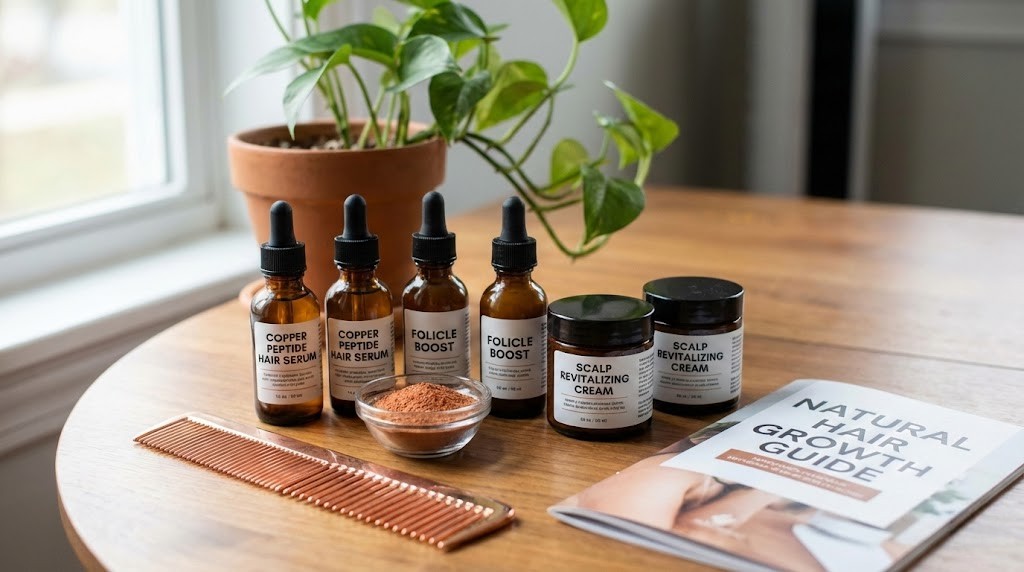
The Science of Copper Peptides and Hair Regrowth
Your hair follicles are dying. Not dramatically. Not all at once. But slowly, steadily, they're shrinking. The medical term is miniaturization.
The result is the same whether you call it thinning, pattern baldness, or just getting older. Hair that once grew thick and strong now emerges wispy and weak, if it emerges at all.
But here's what most people don't realize.
Those follicles aren't dead. Not yet. They're dormant, waiting for the right signal to wake up and start producing healthy hair again. And a naturally occurring copper peptide called GHK-Cu might be exactly that signal.
Discovered in human plasma back in the 1970s, GHK-Cu has spent decades proving itself in wound healing and skin regeneration research. Now the peptide community has turned its attention to hair. The early results are promising. In some studies, copper peptides promoted hair growth faster than minoxidil, the FDA-approved gold standard. Follicles entered their growth phase in just six days compared to eight or nine days with traditional treatments.
This guide covers everything you need to know about using copper peptides for hair regrowth. The mechanisms behind how GHK-Cu stimulates follicles. The research supporting its use. Detailed protocols for topical application and microneedling. Realistic timelines for results. And honest comparisons to treatments you might already be using. If you're exploring peptides for hair growth, understanding copper peptides is essential.
What Are Copper Peptides?
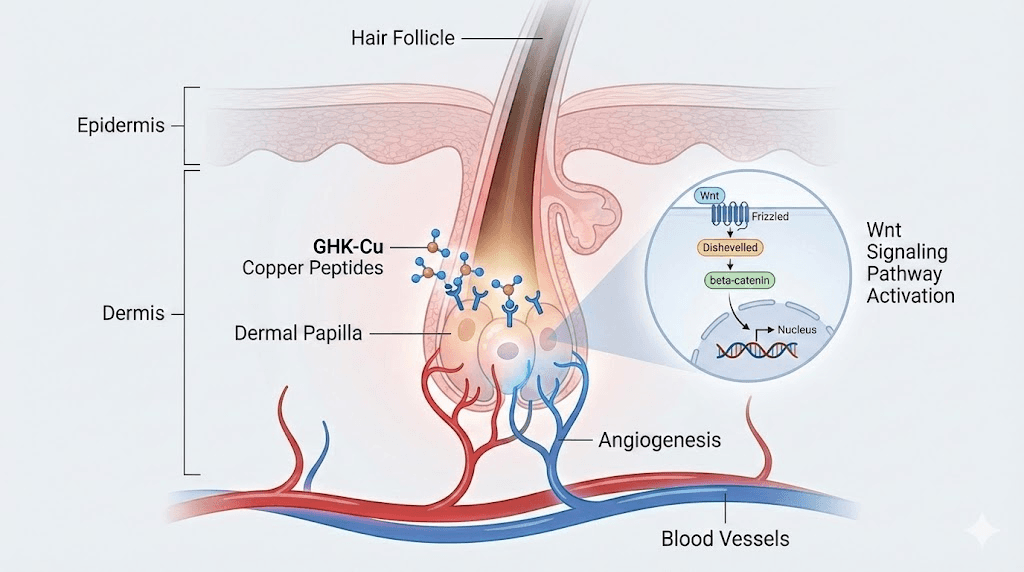
Copper peptides are small protein fragments bound to copper ions. The most studied is GHK-Cu, which stands for Glycyl-L-Histidyl-L-Lysine-Copper. Three amino acids. One copper ion. A molecule small enough to penetrate skin and scalp tissue.
Your body produces GHK-Cu naturally. It circulates in your blood plasma, saliva, and urine. The peptide plays crucial roles in tissue repair, wound healing, and cellular regeneration. When you cut yourself, GHK-Cu helps orchestrate the healing response.
There's a problem though. Production declines with age. Dramatically. At twenty years old, your plasma contains roughly 200 nanograms per milliliter of GHK-Cu. By sixty, that number drops to around 80 nanograms per milliliter. A 60% decline over four decades. This reduction correlates directly with slower wound healing, visible skin aging, and yes, hair thinning.
The decline isn't random. It's part of the broader pattern of aging that affects every regenerative process in your body.
Supplementing with exogenous GHK-Cu, whether through topical copper peptide serums or injections, aims to restore what time has taken away.
GHK-Cu vs Other Copper Peptides
Not all copper peptides are created equal. The research literature focuses overwhelmingly on GHK-Cu because it's the form found naturally in human tissue. But you'll encounter other variants in commercial products.
AHK-Cu, or Alanyl-Histidyl-Lysine-Copper, substitutes alanine for glycine. Some studies suggest it may stimulate hair follicle elongation and dermal papilla cell proliferation in vitro. The mechanisms overlap with GHK-Cu but aren't identical.
Copper Tripeptide-1 is often used interchangeably with GHK-Cu in skincare marketing, though they're the same compound. If you're comparing products, understanding GHK-Cu versus other copper peptides helps you make informed decisions.
For hair regrowth specifically, most research and clinical protocols use GHK-Cu. It has the longest safety record and the most supporting evidence. Unless you have specific reasons to try alternatives, GHK-Cu remains the standard.
How Copper Peptides Stimulate Hair Growth
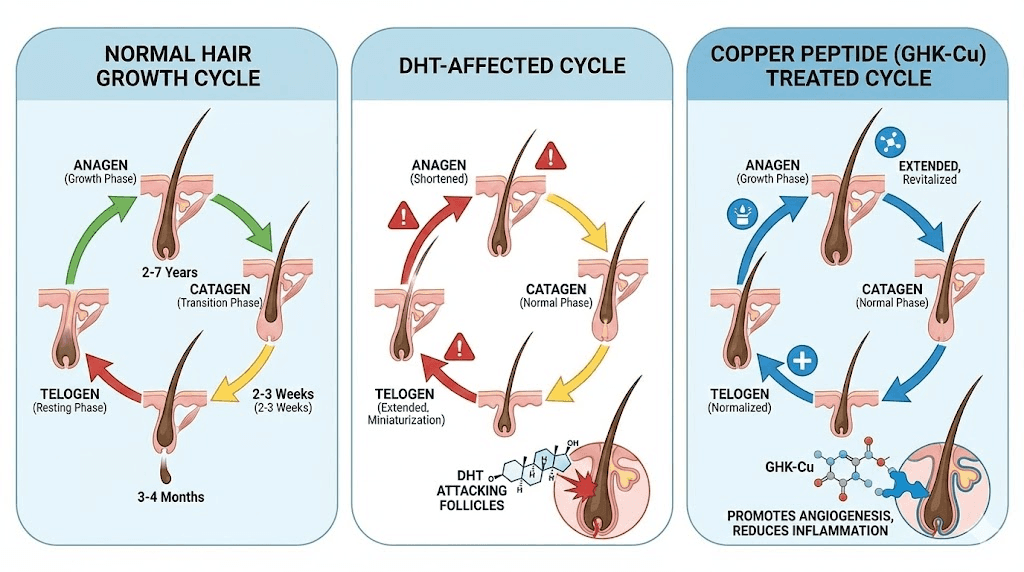
Hair doesn't grow continuously. It cycles through distinct phases. Anagen is the active growth phase, lasting two to seven years for scalp hair. Catagen is the transitional phase, a brief two-week period of regression. Telogen is the resting phase, lasting about three months before the hair sheds and a new cycle begins.
Hair loss happens when follicles spend less time in anagen and more time resting. The growth phase shortens. Hairs emerge thinner and shorter. Eventually, some follicles stop producing visible hair entirely.
GHK-Cu works through multiple mechanisms to reverse this pattern. Understanding each pathway helps explain why copper peptides show such promise for hair regrowth.
Activating the Wnt/Beta-Catenin Pathway
The Wnt/beta-catenin signaling pathway is central to hair follicle regeneration. When this pathway activates, follicles transition from telogen (resting) to anagen (growing). Block the pathway and hair growth stops. Stimulate it and dormant follicles wake up.
Research shows GHK-Cu activates Wnt/beta-catenin signaling. A 2024 study using specialized delivery systems found that copper peptide formulations increased activation of key proteins in this pathway. Follicles entered the growth phase faster than controls, with hair regrowth appearing in as few as six days.
This mechanism explains why GHK-Cu may help even when follicles appear completely inactive. The signal to grow still exists. It just needs the right trigger.
Promoting Angiogenesis and Blood Flow
Hair follicles need nutrients and oxygen to grow. They get both through the blood supply. As we age, circulation to the scalp diminishes. Capillaries narrow or disappear entirely. Follicles starve.
GHK-Cu promotes angiogenesis, the formation of new blood vessels. The peptide stimulates production of VEGF (vascular endothelial growth factor) and HGF (hepatocyte growth factor), both critical for building new capillary networks.
This mechanism mirrors how minoxidil works, but with important differences. Minoxidil primarily opens potassium channels to dilate existing blood vessels. GHK-Cu actually creates new ones. The comparison matters when you're evaluating peptide options for hair loss treatment.
Reducing Inflammation
Chronic inflammation damages hair follicles. It disrupts the growth cycle, accelerates miniaturization, and can lead to permanent follicle death. Conditions like seborrheic dermatitis and folliculitis create inflammatory environments hostile to healthy hair.
GHK-Cu reduces inflammatory markers including TNF-alpha and IL-6. The anti-inflammatory effect protects follicles from damage while creating conditions favorable for regrowth.
For anyone dealing with scalp conditions alongside hair loss, the dual benefit of GHK-Cu, stimulating growth while reducing inflammation, makes it particularly attractive. The full copper peptides guide covers these mechanisms in additional detail.
Stimulating Dermal Papilla Cells
Dermal papilla cells sit at the base of each hair follicle. They're the command center for hair growth, regulating the cycle and determining hair characteristics. When these cells proliferate and stay healthy, hair grows thick and strong.
Research shows GHK-Cu stimulates dermal papilla cell proliferation while preventing their apoptosis (programmed cell death). The peptide binds directly to these cells and triggers regenerative responses.
One study found that copper peptide treatment increased the elongation of human hair follicles ex vivo. The follicles didn't just survive in the lab. They actively grew longer, demonstrating the peptide's direct effect on hair production machinery.
Extending the Anagen Phase
The length of your anagen phase determines how long each hair can grow. Shorten that phase and you get shorter, thinner hairs. Extend it and hairs have more time to reach their full potential.
Copper peptides prolong anagen while shortening telogen. The result is more time growing, less time resting. Over months of treatment, this shift produces visibly thicker, longer hair.
The mechanism works synergistically with other GHK-Cu effects. Better blood supply provides the nutrients needed for extended growth. Reduced inflammation prevents premature transition to catagen. Activated Wnt signaling keeps follicles in growth mode longer.
The DHT Question: Do Copper Peptides Block It?
DHT (dihydrotestosterone) is the primary culprit in androgenetic alopecia. The hormone binds to receptors in hair follicles, triggering miniaturization in genetically susceptible individuals. Treatments like finasteride work by blocking the enzyme that converts testosterone to DHT.
Can copper peptides do the same? The answer is complicated. And controversial.
Some sources claim GHK-Cu inhibits 5-alpha reductase, the enzyme responsible for DHT production. If true, this would make copper peptides a direct competitor to pharmaceutical DHT blockers.
But scientific analysis raises doubts. GHK-Cu is a peptide, a small chain of amino acids. Finasteride is a steroid analogue designed specifically to fit the active site of 5-alpha reductase. The molecular structures are completely different. It's unclear how a hydrophilic peptide would interact with an enzyme that processes steroid hormones.
The more likely explanation involves follicle resilience rather than DHT blocking. GHK-Cu may reduce the sensitivity of hair follicles to DHT without actually lowering hormone levels. Healthier follicles with better blood supply and reduced inflammation might simply withstand DHT's effects better.
For practical purposes, this distinction matters less than you might think. Whether copper peptides block DHT directly or protect follicles from its effects, the end result, reduced hair loss and improved regrowth, is what counts. Understanding testosterone and peptide interactions provides additional context for hormonal considerations.
What the Research Shows
The evidence for copper peptides in hair growth continues to accumulate. While large-scale human trials remain limited, the existing research paints a promising picture.
In Vitro Studies
Laboratory research consistently shows GHK-Cu stimulating hair-related cells. A study published in the International Journal of Cosmetic Science found that copper peptide complexes increased hair follicle size and proliferation of dermal papilla cells. The effects were measurable and reproducible.
Another study evaluated AHK-Cu's effects on human hair follicles grown outside the body. The peptide stimulated elongation of follicles and proliferation of dermal papilla cells. Hairs didn't just survive in culture. They actively grew.
Animal Studies
Mouse models provide the bridge between test tubes and humans. Multiple animal studies demonstrate copper peptides accelerating hair regrowth.
In one experiment using an advanced delivery system, copper peptide-treated mice showed hair follicles entering early growth stages within six days. The minoxidil control group took eight to nine days. Copper peptides not only matched minoxidil's effectiveness but exceeded it for speed of response.
The delivery system matters enormously.
Standard topical application struggles to get peptides through the skin barrier. Advanced formulations using ionic liquid microemulsions improved local delivery approximately three-fold while maintaining biological function.
Human Evidence
Clinical human data for GHK-Cu specifically remains limited but growing. A study by Pickart et al. found copper peptides effective in promoting hair regrowth and improving scalp health in individuals with androgenetic alopecia. Participants also reported reduced shedding.
A 2024 clinical study combined minoxidil, dutasteride, and copper peptides delivered via scalp tattooing (dermal drug delivery). After five monthly sessions, researchers observed median regrowth of 35.5% in treated scalp areas. While this wasn't a copper peptide-only study, the combination therapy demonstrated synergistic potential.
User reports and before-after documentation provide additional real-world evidence. Most users note reduced shedding within the first month, visible density improvements by month three or four, and continued gains through six months of consistent use.
Copper Peptides vs Minoxidil: How Do They Compare?
Minoxidil has been the go-to topical treatment for hair loss since the FDA approved it in 1988. It works. It has decades of safety data. And it's available over the counter.
So why consider copper peptides? The comparison reveals important differences that might make GHK-Cu the better choice for some users.
Mechanism Differences
Minoxidil primarily works by vasodilation, opening potassium channels in blood vessel walls to increase blood flow. The improved circulation delivers more nutrients to follicles.
GHK-Cu works through broader mechanisms. It doesn't just improve blood flow. It creates new blood vessels, reduces inflammation, activates growth signaling pathways, and directly stimulates dermal papilla cells. The multi-pathway approach addresses hair loss from several angles simultaneously.
This breadth of action may explain why some users respond better to copper peptides when minoxidil hasn't worked. Different mechanisms mean different pathways to results.
Side Effect Profiles
Minoxidil commonly causes scalp irritation, itching, and dryness. The alcohol-based formulas can be harsh, especially with twice-daily application. Some users experience unwanted facial hair growth or systemic effects like heart palpitations.
Copper peptides are generally well-tolerated with minimal side effects. Rarely, users report mild scalp irritation or tingling immediately after application.
The peptide is naturally occurring, non-toxic, and effective at very low concentrations.
For anyone who's struggled with minoxidil's side effects, copper peptides offer a gentler alternative. The comparison of peptides versus other treatments helps contextualize these differences.
Speed of Results
Minoxidil typically requires three to six months before visible results appear. The slow timeline discourages many users who quit before seeing benefits.
Animal research suggests copper peptides may work faster. Follicles entered growth phases within six days versus eight to nine days for minoxidil. Whether this translates to faster visible results in humans remains to be definitively proven, but early user reports are encouraging.
Combination Potential
Here's where things get interesting. Copper peptides and minoxidil aren't mutually exclusive. Many protocols combine them for synergistic effects.
Minoxidil improves blood flow through existing vessels. GHK-Cu creates new vessels while addressing inflammation and signaling. Used together, they attack hair loss from complementary angles.
Clinical research on combination protocols, including the tattooing study mentioned earlier, supports this approach. If you're already using minoxidil with partial results, adding copper peptides might provide the boost needed for meaningful improvement.
Types of Hair Loss: Where Copper Peptides Work Best
Not all hair loss is created equal. Understanding your specific type helps set realistic expectations for copper peptide treatment.
Androgenetic Alopecia (Pattern Baldness)
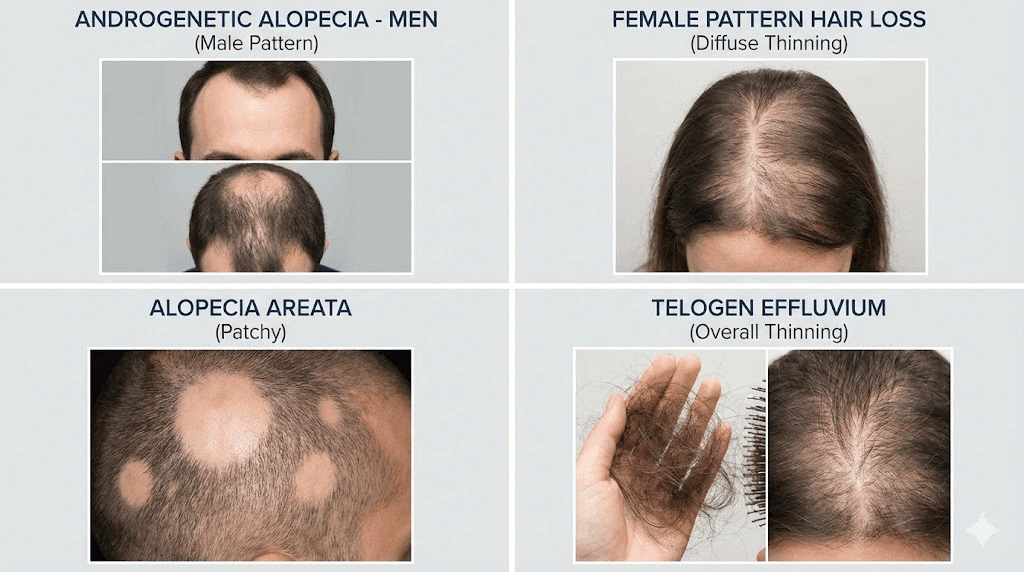
This is the most common form of hair loss, affecting roughly 50% of men by age 50 and a significant percentage of women. Genetic sensitivity to DHT causes progressive follicle miniaturization in characteristic patterns.
Copper peptides show particular promise for androgenetic alopecia. The combination of improved follicle health, extended anagen phase, and potential DHT resistance addresses the condition's underlying mechanisms.
Research specifically examining androgenetic alopecia found copper peptides effective for combating follicular miniaturization. By improving scalp health, stimulating blood circulation, and protecting follicles, GHK-Cu may slow progression and promote thicker growth in affected areas.
Early intervention matters. Copper peptides work best when follicles are still present but inactive. Once follicles are completely destroyed, no treatment can bring them back.
Alopecia Areata
This autoimmune condition causes the immune system to attack hair follicles, resulting in patchy hair loss. Treatment approaches differ fundamentally from androgenetic alopecia because the root cause is immune dysfunction rather than hormones.
Evidence for copper peptides in alopecia areata remains preliminary.
The anti-inflammatory properties may help reduce follicular damage, but the autoimmune component requires addressing the underlying immune response.
Some practitioners include copper peptides as part of broader alopecia areata protocols, combining them with treatments that modulate immune function. Results vary significantly based on disease severity and individual response.
Telogen Effluvium
Stress, illness, hormonal changes, and nutritional deficiencies can trigger excessive hair shedding by pushing many follicles into telogen simultaneously.
The good news: this type of hair loss is usually temporary once the triggering factor resolves.
Copper peptides may accelerate recovery from telogen effluvium. By promoting transition from telogen back to anagen and supporting follicle health during the recovery period, GHK-Cu could shorten the timeline from shedding to regrowth.
The anti-inflammatory and antioxidant effects prove particularly valuable here.
Stress and illness often involve systemic inflammation that damages follicles. Copper peptides help protect them during vulnerable periods.
Women's Hair Loss and Menopause
Hormonal changes during menopause and perimenopause significantly impact hair health. Declining estrogen and progesterone, combined with relative androgen dominance, can trigger diffuse thinning across the scalp.
Copper peptides offer particular benefits for menopausal hair loss. The non-hormonal mechanism makes them safe to use alongside hormone therapy if desired. The anti-inflammatory and collagen-supporting effects address multiple aspects of aging-related hair changes.
Clinical data suggests copper peptides can boost hair density by 30-40% and reduce shedding by 25-30% within two to six months. For women experiencing hormonal thinning, these numbers represent meaningful improvement.
The peptides for perimenopause guide and peptides for women over 40 provide additional context for female-specific protocols.
How to Use Copper Peptides for Hair Growth
Knowing that copper peptides work is only half the battle. Proper application technique, dosing, and timing determine whether you see results.
Topical Application Protocol
Most users begin with topical copper peptide serums applied directly to the scalp. This approach is non-invasive, easy to incorporate into daily routines, and carries minimal risk.
Concentration: Most cosmetic formulations contain 0.5% to 2% GHK-Cu. Lower concentrations (0.5-1%) work for general scalp maintenance. Higher concentrations (1-2%) are typically used in active hair restoration protocols.
Application frequency: Apply once or twice daily to clean, dry (or towel-dried) scalp. Consistency matters more than timing. Pick a schedule you can maintain for months.
Application technique: Dispense a few drops and apply to areas of thinning, usually the temples, crown, or hairline. Massage gently with fingertips using small circular motions. This improves absorption and stimulates circulation. Do not rinse out.
Amount: Serums are concentrated. A drop or two per area is sufficient. More isn't better and may cause irritation.
The GHK-Cu peptide dosage guide provides detailed protocols for various applications.
Patch Testing
Before applying any new product to your scalp, perform a patch test. Apply a small amount to the inside of your elbow and wait 24 hours. Monitor for redness, itching, or other signs of reaction.
Starting slowly is wise. Begin with every-other-day application before moving to daily use. This gives your scalp time to adjust and lets you identify any sensitivity issues before committing to full treatment.
Product Interactions
GHK-Cu can be combined with other products, but timing matters. Leave at least 10-15 minutes between applying different serums or treatments.
Certain ingredients may interfere with copper peptide effectiveness. Vitamin C (ascorbic acid) can oxidize copper. Retinoids may alter peptide stability. Apply these at different times of day, such as copper peptides in the morning and retinoids at night.
The peptides and retinol combination guide covers these interactions in detail.
Microneedling with Copper Peptides
Microneedling creates tiny channels in the scalp that dramatically improve peptide absorption.
The combination of controlled micro-injury and GHK-Cu application produces synergistic effects beyond either treatment alone.
Why Microneedling Works
The skin is an effective barrier, which is normally a good thing. But that barrier limits how much topically applied GHK-Cu actually reaches the follicles. Most stays on the surface.
Microneedling bypasses this barrier. The micro-channels allow direct access to deeper skin layers where dermal papilla cells reside. Studies show approximately three-fold improvement in copper peptide delivery with advanced penetration techniques.
The controlled injury itself triggers wound healing responses. Your body ramps up collagen production, growth factor release, and stem cell activity. GHK-Cu amplifies these natural healing processes.
At-Home Protocol
For at-home use, dermarollers with 0.25mm to 0.5mm needle depth are appropriate. These lengths penetrate the epidermis without significant pain or recovery time.
Frequency: Once per week maximum for at-home treatment. Your scalp needs time to heal between sessions.
Technique: Roll the device across thinning areas in multiple directions, longitudinal, vertical, and diagonal. Apply moderate pressure. Stop when you see mild redness (erythema), which indicates adequate penetration.
GHK-Cu Application: Apply copper peptide serum immediately after microneedling while channels remain open. The enhanced absorption window lasts roughly 30 minutes.
Recovery: Avoid washing hair for at least four hours post-treatment. Skip harsh styling products for 24 hours.
Clinical Protocols
Professional treatments use longer needles (1.0mm to 1.5mm) for deeper penetration. One clinical study used 1.5mm needles rolled until mild erythema appeared, followed by immediate peptide application.
Clinical sessions typically occur monthly due to the more intensive nature of treatment. The longer needles create more significant micro-injury requiring extended recovery.
Results from combined microneedling and copper peptide protocols consistently exceed either treatment alone. The synergy makes professional treatment worth considering for stubborn hair loss.
Safety Considerations
Always sanitize dermarollers before use. Replace devices regularly, dull needles cause more trauma and increase infection risk. Allow 24-48 hours recovery between microneedling sessions and other scalp treatments.
Do not microneedle over active infections, open wounds, or inflamed areas. If you have scalp conditions like psoriasis or severe seborrheic dermatitis, consult a dermatologist before starting.
The microneedle peptide patches guide provides additional information on combining these approaches.
Injectable GHK-Cu for Hair Growth
Some practitioners use injectable GHK-Cu for hair regrowth. This approach delivers peptide directly to target tissues, bypassing skin absorption limitations entirely.
Subcutaneous Injection Protocol
Injectable GHK-Cu typically comes as a lyophilized powder requiring reconstitution with bacteriostatic water. Standard dosing ranges from 1-2mg per day for general protocols, with some sources suggesting 2-5mg administered two to three times weekly for hair-specific applications.
Injections are administered subcutaneously, typically in abdominal fat or other convenient sites. The peptide distributes systemically, benefiting not just hair but skin, wound healing, and other tissues throughout the body.
The GHK-Cu injection dosage guide covers reconstitution and administration in detail. For general peptide preparation, see the peptide reconstitution guide and reconstitution calculator.
Topical vs Injectable: Which Is Better?
Injectable GHK-Cu delivers more peptide more reliably. The systemic distribution means benefits beyond hair, including skin quality improvements and accelerated healing throughout the body.
But injections require more commitment. You need to source quality peptides, handle reconstitution properly, and administer injections correctly. For hair specifically, targeted topical application combined with microneedling may deliver comparable local effects with less complexity.
Many users combine approaches: daily topical application for consistent follicle exposure plus periodic injections for systemic support. This layered strategy addresses hair loss from multiple angles.
The injectable peptides guide and peptide injection protocols provide comprehensive information for those considering this route.
16:9 step-by-step instructional image showing proper scalp microneedling technique with dermaroller, including sanitization, rolling directions, mild erythema endpoint, and serum application, clean medical illustration style
Timeline for Results: What to Expect Month by Month
Patience separates successful hair regrowth journeys from abandoned ones. Understanding realistic timelines helps you stick with treatment long enough to see results.
Weeks 1-4: Foundation Phase
Don't expect dramatic visible changes in the first month. This is the foundation phase where GHK-Cu begins working at the cellular level.
What you might notice: Reduced shedding. Fewer hairs in your brush or shower drain. The follicles aren't growing new hair yet, but they're stabilizing.
Some users experience temporary increased shedding during this period. This "purging" happens when copper peptides reset the hair cycle, pushing telogen hairs out to make way for new growth. It's disconcerting but typically resolves within a few weeks.
Weeks 4-8: Early Response
By the second month, scalp condition often improves noticeably. Healthier, less inflamed scalp with better texture. You may see "peach fuzz" or baby hairs appearing around the hairline and other thinning areas.
The dermal papilla cells are responding. Blood supply is improving. Growth signals are activating. The infrastructure for visible regrowth is building.
Months 2-3: Visible Progress
Between two and three months, most consistent users start seeing real progress. Hair feels denser and more resilient. The baby hairs from month two are lengthening and thickening.
This is when before-and-after photos become useful. Daily changes are too subtle to notice, but comparing images weeks apart reveals meaningful improvement.
Months 3-6: Meaningful Improvement
The three to six month window is when copper peptide treatment really shows its potential. Visible density increases. Thinning areas fill in. Hair quality improves with thicker individual strands.
Clinical data suggests 30-40% increases in hair density are achievable during this period for consistent users. Shedding reductions of 25-30% are commonly reported.
Months 6-12: Full Results
Maximum benefits typically appear between six months and one year of consistent use. Follicles that responded are now producing mature, healthy hairs. The cumulative effect of months of treatment becomes clearly visible.
This is also when you can evaluate whether copper peptides work for your specific situation. Not everyone responds equally. Genetic factors, type of hair loss, and follicle condition all influence outcomes.
Understanding how long peptides take to work helps set appropriate expectations across different applications.
Potential Side Effects and Safety
Copper peptides have an excellent safety profile. GHK-Cu is naturally occurring, non-toxic, and effective at very low concentrations. But understanding potential side effects helps you use them wisely.
Common Side Effects
Mild scalp irritation: Some users experience temporary tingling, slight burning, or redness immediately after application. This usually subsides within minutes and decreases with continued use.
Dryness: Depending on the formulation, copper peptide products may cause scalp dryness in some users. Adjusting application frequency or switching products often resolves this.
Localized redness: Particularly at higher concentrations or with microneedling, temporary redness can occur. This typically fades within hours.
Purging and Temporary Shedding
The most distressing side effect is temporary increased shedding. Copper peptides can accelerate cell turnover and reset the hair cycle, pushing resting hairs out before new growth begins.
This purging phase typically lasts two to four weeks. The shedding hairs were already in telogen and destined to fall out. Copper peptides simply accelerate the process while simultaneously stimulating new growth.
Understanding that purging is normal (and often a sign the treatment is working) helps users push through this uncomfortable phase rather than abandoning treatment prematurely.
The "Copper Uglies"
A rare phenomenon called "copper uglies" involves skin appearing temporarily worse before improving. In skin applications, this manifests as increased aging signs. For scalp, it could theoretically mean temporary worsening of hair appearance.
Research suggests elevated MMP-1 (a collagen-degrading enzyme) may contribute. GHK-Cu can increase MMP-1 gene expression while simultaneously promoting collagen synthesis. The net effect is usually positive, but the transition period may be rocky for some.
For comprehensive information on potential issues, see the copper peptides side effects guide.
Who Should Avoid Copper Peptides
Most people can safely use copper peptides, but caution is warranted in certain situations:
Wilson's disease or other copper metabolism disorders
Known allergy to copper or peptide ingredients
Active scalp infections or open wounds
Pregnancy and breastfeeding (insufficient safety data)
When in doubt, consult a dermatologist or healthcare provider before starting treatment.
Combining Copper Peptides with Other Treatments
Copper peptides work well as part of comprehensive hair restoration protocols. Strategic combinations can produce results exceeding any single treatment.
With Minoxidil
The combination makes scientific sense. Minoxidil improves blood flow through vasodilation. GHK-Cu creates new blood vessels and addresses inflammation. Together, they ensure follicles receive maximum nutrient supply through multiple mechanisms.
Apply treatments at different times, minoxidil morning and evening per standard protocol, copper peptides at a separate time to avoid interactions. Or combine microneedling sessions with GHK-Cu while using minoxidil on non-microneedling days.
With Finasteride or Dutasteride
DHT blockers address the hormonal component of androgenetic alopecia. Copper peptides support follicle health and regrowth. The combination targets different aspects of the problem.
Clinical research combining dutasteride, minoxidil, and copper peptides showed impressive results. The multi-modal approach attacks hair loss from every available angle.
With PRP (Platelet-Rich Plasma)
PRP therapy involves injecting concentrated growth factors from your own blood into the scalp. The growth factors stimulate follicle activity and healing.
GHK-Cu enhances similar pathways. Using copper peptides between PRP sessions may extend and amplify results. Some practitioners apply GHK-Cu immediately after PRP for synergistic effects.
With Other Peptides
Certain peptides complement GHK-Cu for hair regrowth. BPC-157, known for tissue healing, may enhance scalp repair. Thymosin beta-4 supports hair follicle migration and growth.
Combination peptide protocols require careful planning. Understanding interactions and appropriate dosing becomes crucial. The peptide stacking guide and BPC-157 and TB-500 stacking guide provide frameworks for combining peptides safely.
[SeekPeptides](https://www.seekpeptides.com/) members access detailed protocols for combining copper peptides with other treatments, including specific timing recommendations and dosage adjustments based on individual goals.
Choosing Quality Copper Peptide Products
Not all copper peptide products are created equal. Quality matters enormously for results.
What to Look For
GHK-Cu concentration: Products should clearly state the peptide concentration. Effective formulations typically contain 0.5-2% GHK-Cu. Vague labeling like "copper peptide complex" without percentages is a red flag.
Proper storage: Peptides degrade with heat and light exposure. Products should come in dark or opaque containers with proper storage instructions. Understanding copper peptide storage requirements helps maintain potency.
Minimal conflicting ingredients: Avoid products combining GHK-Cu with high concentrations of vitamin C or other potentially reactive ingredients in the same formula.
Reputable sourcing: For injectable peptides especially, source quality determines safety and effectiveness. The peptide vendor guide helps identify reliable suppliers.
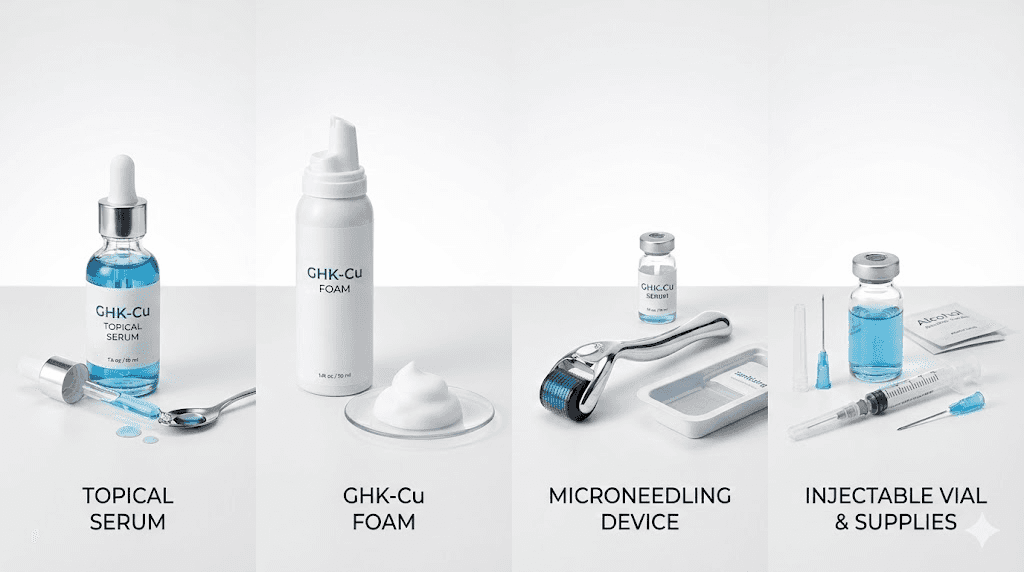
Serums vs Other Formats
Serums are the most common format for topical copper peptides. They allow precise application, absorb well, and can be easily combined with other products.
Some products come as foams (often combined with minoxidil) or patches. These formats may improve convenience or absorption but typically cost more.
For injectable use, lyophilized (freeze-dried) powder requiring reconstitution is standard. This format preserves stability better than pre-mixed solutions. See the bacteriostatic water guide for proper reconstitution.
DIY Considerations
Some users purchase raw GHK-Cu and create their own topical formulations. This requires understanding proper concentrations, pH levels, and stability considerations. Mistakes can result in ineffective or potentially irritating products.
Unless you have formulation experience, commercial products from reputable brands provide more reliable results with less risk of error.
Special Considerations for Women
Women's hair loss differs from men's in patterns, causes, and treatment approaches. Copper peptides offer particular advantages for female users.
Hormonal Hair Loss
Female pattern hair loss often involves diffuse thinning rather than the receding hairline typical in men. Hormonal fluctuations during menstruation, pregnancy, postpartum, and menopause all impact hair.
GHK-Cu's non-hormonal mechanism makes it safe across hormonal states. Unlike finasteride (contraindicated in women of childbearing age), copper peptides don't carry teratogenicity concerns.
For menopausal hair loss specifically, copper peptides address the accelerated aging and inflammation that accompany hormone decline. The collagen-supporting effects benefit both hair and facial skin simultaneously.
Pregnancy and Postpartum
Insufficient safety data exists for copper peptide use during pregnancy and breastfeeding. While GHK-Cu is naturally occurring, the effects of supplementation during these periods haven't been studied.
Most practitioners recommend discontinuing treatment while pregnant or nursing. Postpartum hair loss (telogen effluvium) typically resolves naturally within six to twelve months. If considering copper peptides for postpartum recovery, consult your healthcare provider.
PCOS and Androgen-Related Thinning
Polycystic ovary syndrome often involves elevated androgens that can trigger hair loss. While GHK-Cu's relationship to DHT remains debated, the follicle-protective effects may help offset androgen impact.
Comprehensive PCOS hair management typically involves addressing the underlying hormonal imbalance alongside supportive treatments like copper peptides. The safe peptides for women guide and best peptides for women provide additional gender-specific information.
Frequently Asked Questions
How long does it take for copper peptides to work for hair growth?
Most users notice reduced shedding within the first month. Visible new growth typically appears between months two and four. Maximum results develop over six to twelve months of consistent use. Individual response varies based on type of hair loss, follicle condition, and genetic factors.
Can copper peptides regrow hair on a bald scalp?
Copper peptides work best on areas where follicles are still present but dormant or miniaturized. They cannot regenerate follicles that have been completely destroyed. If a scalp area has been bald for many years with no visible follicle activity, expectations should be modest.
Do I need to use copper peptides forever?
Like most hair loss treatments, benefits typically depend on continued use. Stopping treatment may allow gradual return to pre-treatment patterns. Some users maintain results with reduced frequency (a few times weekly instead of daily) after achieving desired improvement.
Can I use copper peptides with minoxidil?
Yes, many protocols combine these treatments. They work through different mechanisms and can produce synergistic effects. Apply at different times to avoid potential interactions. Some users do minoxidil morning and evening with copper peptides mid-day or after microneedling.
Will copper peptides cause hair growth on my face?
Unlike minoxidil, which can cause unwanted facial hair through systemic absorption, topical copper peptides applied to the scalp typically don't cause facial hair growth. The targeted application and localized action minimize this risk.
Are copper peptides safe for long-term use?
GHK-Cu has a strong safety profile with no significant long-term risks identified. The peptide is naturally occurring and well-tolerated. However, long-term human studies specifically examining extended use remain limited.
How do copper peptides compare to hair transplants?
They serve different purposes. Hair transplants physically relocate follicles from donor areas to balding regions. Copper peptides support existing follicles and may improve transplant results when used as adjunctive therapy. Many transplant patients use copper peptides to enhance healing and maximize graft survival.
What's the best concentration of GHK-Cu for hair growth?
Effective concentrations range from 0.5% to 2%. Start with lower concentrations to assess tolerance, then increase if needed. Higher concentrations aren't necessarily better and may increase irritation risk without proportional benefits.
Should I refrigerate my copper peptide serum?
Check product instructions. Many commercial formulations are stable at room temperature. Injectable peptides after reconstitution typically require refrigeration. Proper storage maintains potency, see the peptide storage guide and reconstituted peptide shelf life guide for details.
Can copper peptides help with thinning eyebrows or eyelashes?
Some users apply diluted copper peptide solutions to brows and lashes with reported benefits. Be extremely careful around eyes. Use only products specifically formulated for periorbital use, or dilute standard serums significantly.
Creating Your Copper Peptide Protocol
Armed with this information, you can design a protocol tailored to your situation. Here's a framework for getting started.
Beginner Protocol
Start simple. A quality copper peptide serum applied once daily to clean scalp. Massage gently into thinning areas. No microneedling initially.
Continue for three months before evaluating results. Document your starting point with photos and notes about shedding patterns. This baseline makes progress easier to assess.
Intermediate Protocol
After establishing tolerance, add weekly microneedling with a 0.25-0.5mm dermaroller. Apply copper peptide immediately after needling for enhanced absorption.
Consider increasing application frequency to twice daily if no irritation occurs. Continue tracking progress monthly.
Advanced Protocol
For stubborn hair loss, combine copper peptides with other treatments. Add minoxidil at a different time of day. Consider monthly professional microneedling sessions with longer needles.
Some advanced users add injectable GHK-Cu for systemic benefits. This requires proper sourcing, reconstitution, and administration knowledge.
[SeekPeptides](https://www.seekpeptides.com/) members gain access to customized protocols based on specific hair loss types, including dosing schedules, product recommendations, and progress tracking tools.
What Success Looks Like
Realistic expectations: 30-40% improvement in density. Thicker individual hairs. Reduced shedding. Filling in of thin areas. Maintained results with continued use.
Unrealistic expectations: Full regrowth of long-bald areas. Complete reversal of advanced pattern baldness. Permanent results without maintenance.
Copper peptides are powerful tools, not miracles. Understanding their capabilities and limitations leads to satisfaction rather than disappointment.
External Resources
PMC: Ionic liquid microemulsions for copper peptide delivery
PubMed: Tripeptide-copper complex effect on human hair growth
Moving Forward with Copper Peptides
Hair loss is frustrating. It affects confidence, self-image, and quality of life in ways that people who haven't experienced it struggle to understand. The search for effective treatments often leads through disappointment before finding something that works.
Copper peptides represent one of the most promising developments in hair regrowth research. The science is solid. The safety profile is excellent. The early results are encouraging. For many people, GHK-Cu will become an essential part of their hair restoration toolkit.
But knowledge without action changes nothing. If thinning hair bothers you, start treatment. Pick a protocol appropriate to your situation. Document your baseline. Commit to consistent use for at least three months before judging results.
[SeekPeptides](https://www.seekpeptides.com/) provides the resources to make informed decisions about copper peptides and other hair growth treatments. From detailed protocol guides to personalized recommendations based on your specific type of hair loss, members access the information needed to maximize their chances of success.
Your follicles are waiting. They're not dead. They just need the right signal to start growing again.
Copper peptides might be exactly that signal.
And in case I don't see you, good afternoon, good evening, and good night.