Jan 17, 2026

Some researchers see new hair growth within eight weeks. Others wait six months and notice almost nothing. The peptide is the same. The application method is the same. So what explains the difference?
GHK-Cu, a copper tripeptide naturally occurring in human plasma, has emerged as one of the most promising peptides for hair growth. Unlike minoxidil, which forces blood to the scalp, or finasteride, which blocks hormones, GHK-Cu works through regeneration. It tells your body to heal. To rebuild. To grow.
The science is compelling. Clinical studies document improvements in hair count, hair diameter, and overall scalp coverage. Research shows copper peptides can boost hair density by up to 30-40% and reduce shedding by 25-30% within two to six months. The peptide activates dormant follicles, extends the anagen growth phase, and increases follicle size for thicker individual strands.
But here's what separates success from frustration. GHK-Cu requires understanding. It demands proper delivery. And it rewards patience. Get the protocol right, and you're working with one of the most effective non-hormonal hair restoration compounds available. Get it wrong, and you'll join the forums wondering why nothing changed.
This guide covers everything: how GHK-Cu actually stimulates hair follicles, the optimal dosing protocols for injection and topical use, the critical role of microneedling in absorption, realistic timelines for results, and how to combine copper peptides with other treatments for maximum efficacy.
SeekPeptides members get access to detailed protocols that account for these variables, but whether you're researching independently or seeking guided support, understanding these mechanisms is essential.
What is GHK-Cu and why does it work for hair
GHK-Cu stands for Glycyl-L-Histidyl-L-Lysine-Copper. That's a fancy way of saying it's three amino acids bound to a copper ion. Your body already produces this compound. It circulates in your blood plasma, shows up in your saliva, and appears in your urine. First discovered in the 1970s by biochemist Dr. Loren Pickart, GHK-Cu initially attracted attention for its wound healing properties before researchers noticed something interesting about hair.
The peptide does remarkable things.
It stimulates tissue repair at the cellular level. It promotes collagen synthesis. It encourages new blood vessel formation through angiogenesis. And when applied to the scalp, these regenerative properties translate directly to hair follicle health. Understanding what peptides are helps contextualize why GHK-Cu works differently than conventional hair loss treatments.
But age creates a problem. At 20 years old, your plasma contains around 200 ng/ml of GHK-Cu. By age 60, that number drops to approximately 80 ng/ml. A 60% decline. This correlates almost perfectly with the pattern of age-related hair thinning most people experience. Your body produces less of the peptide that helps maintain healthy hair follicles precisely when you need it most.
The mechanisms behind follicle stimulation
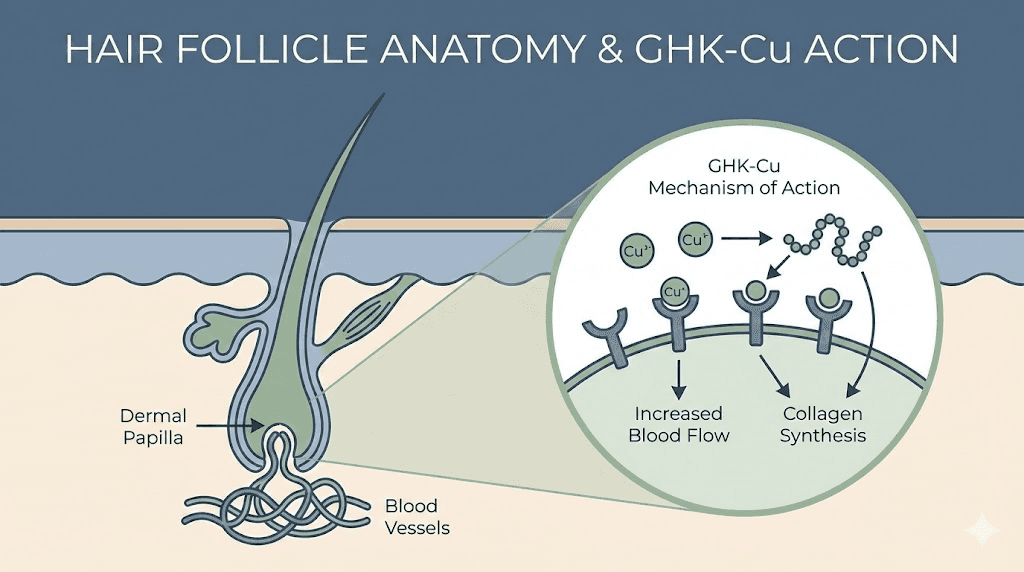
Hair doesn't just grow from nowhere. Each strand emerges from a hair follicle, a complex mini-organ containing multiple cell types working in coordination. At the base of every follicle sits the dermal papilla, a cluster of specialized mesenchymal cells that act as the command center for hair production. Whatever happens in the dermal papilla determines whether hair grows thick and strong or thin and weak.
GHK-Cu targets these cells directly. Research demonstrates the peptide supports activation of dermal papilla cells and follicle stem cells. When these cells receive the right signals, they initiate the hair growth cycle. When they don't, follicles remain dormant. The complete copper peptides guide explains these cellular interactions in greater detail.
The Wnt/β-catenin signaling pathway plays a crucial role here. This pathway essentially tells hair follicles to grow. Studies confirm that enhancing β-catenin signaling in dermal papilla cells allows faster and denser hair growth. GHK-Cu activates this pathway, providing the molecular signal for follicle regeneration. Inactivation of β-catenin, by contrast, results in dramatically reduced proliferation of hair progenitor cells and premature induction of the catagen (destructive) phase.
The peptide also addresses inflammation. Chronic scalp inflammation damages follicles over time, contributing to miniaturization and eventual hair loss. GHK-Cu reduces key inflammatory markers including TNF-alpha and IL-6, calming the scalp environment. This anti-inflammatory action allows follicles to function optimally rather than fighting constant immune assault. For those dealing with hair loss, this inflammation reduction proves critical.
Blood flow and nutrient delivery
Starved follicles produce weak hair. Or no hair at all.
Every hair follicle requires constant nutrient supply through tiny blood vessels called capillaries. When circulation diminishes, follicles receive less oxygen, fewer growth factors, and inadequate building blocks for keratin production. The result is progressive thinning even in areas with healthy follicles.
GHK-Cu improves scalp blood flow through angiogenesis, the formation of new capillaries. This isn't just increased flow through existing vessels. The peptide encourages actual new vessel growth, expanding the network that feeds your follicles. Better vascularization means more nutrients, more oxygen, and healthier hair. The transformative potential of peptides often depends on this improved circulation.
This mechanism differs significantly from minoxidil, which simply dilates existing blood vessels. GHK-Cu builds new infrastructure. The distinction matters because vasodilation is temporary, requiring continuous application to maintain. Angiogenesis creates permanent improvements in scalp blood supply. Once new vessels form, they remain.
Antioxidant protection for follicles
Free radicals attack everything. Including your hair follicles.
Oxidative stress damages cellular structures, accelerates aging, and contributes to follicle miniaturization. The scalp faces particular exposure from UV radiation, environmental pollutants, and metabolic byproducts. Without adequate antioxidant defense, follicles deteriorate faster than they should.
GHK-Cu increases production of superoxide dismutase (SOD), one of the body's most important antioxidant enzymes. SOD neutralizes superoxide radicals before they can damage cellular structures. By boosting this enzyme, the peptide provides ongoing protection against oxidative damage. Hair follicles maintain healthier function for longer periods.
The peptide simultaneously stimulates production of glycosaminoglycans and collagen around follicles. These structural proteins create a supportive matrix that protects follicles physically while improving the local environment for hair growth. This dual action, chemical protection through antioxidants and physical protection through structural support, explains much of GHK-Cu's effectiveness for anti-aging applications including hair.
GHK-Cu dosing protocols for hair growth
The most frequently asked question about GHK-Cu for hair comes down to dosing. How much do you need? How often? And does the delivery method change the equation?
The answers depend on your chosen administration route. Injectable protocols follow different guidelines than topical applications.
Mesotherapy requires different considerations than subcutaneous injection. And combining methods creates its own set of variables. Understanding how to calculate peptide dosages provides the foundation for personalizing any protocol.
Let's break down each approach systematically.
Subcutaneous injection protocols
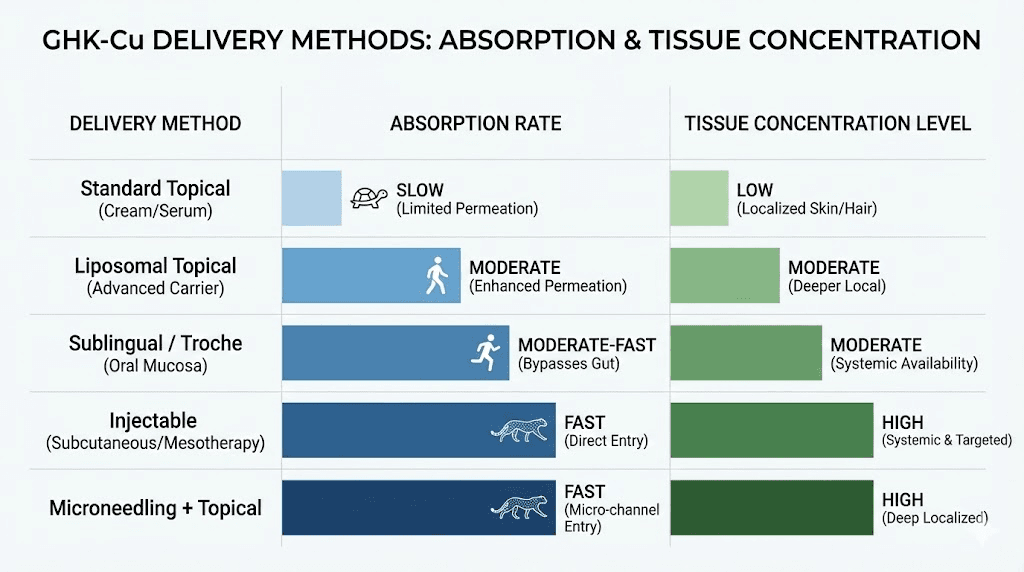
Injectable GHK-Cu delivers the peptide directly into tissue, bypassing the absorption limitations of topical application. This route achieves tissue concentrations 10-20 times higher than topicals, making it the preferred method for researchers seeking maximum effect. The GHK-Cu injection dosage guide covers specific reconstitution and administration details.
Standard dosing ranges from 2-5mg administered subcutaneously two to three times weekly. A typical U.S. clinical practice uses 2mg injected three times per week (Monday, Wednesday, Friday), totaling approximately 6mg weekly. This maintains consistent peptide levels without daily injection requirements. The complete GHK-Cu dosage guide explains how body weight and treatment goals influence these numbers.
Some protocols use daily administration at lower doses. Research suggests 1-2mg per day injected subcutaneously or intramuscularly produces comparable results to the three-times-weekly approach. The dose can be split into two administrations (morning and evening) for those preferring smaller individual amounts.
Protocol duration typically runs 8-16 weeks. Cycling is important. Continuous use without breaks can reduce receptor sensitivity and potentially cause copper dysregulation. A standard approach involves injection for the protocol period followed by an equivalent off period. This maintains effectiveness while minimizing risks.
Injection sites commonly include the abdomen, thigh, or upper arm. For hair-specific applications, some practitioners inject subcutaneously near the scalp to maximize local concentration. However, standard subcutaneous injection elsewhere also produces systemic effects that benefit hair follicles throughout the scalp. Using the peptide calculator helps determine exact dosing based on vial concentration.
Reconstitution requirements
GHK-Cu typically comes lyophilized (freeze-dried) and requires reconstitution before injection. This process dissolves the powder into an injectable solution using bacteriostatic water. Proper reconstitution ensures accurate dosing and maintains peptide stability. The GHK-Cu reconstitution guide walks through this process step by step.
Standard formulations include 10mg/mL solutions in 5mL vials. Following manufacturer or compounding pharmacy instructions for reconstitution is essential. Adding water too quickly or agitating the vial vigorously can damage the peptide structure.
Gentle swirling until fully dissolved preserves potency.
The peptide reconstitution calculator simplifies the math. Input your vial size, peptide amount, and desired concentration to determine exactly how much bacteriostatic water to add. This eliminates guesswork and ensures consistent dosing throughout your protocol. Understanding which water to mix with peptides is critical for maintaining sterility and stability.
Topical application protocols
Not everyone wants to inject. Topical GHK-Cu offers a non-invasive alternative that still delivers meaningful results for many users. The tradeoff is reduced bioavailability compared to injection, but proper application technique can partially compensate. The guide to using copper peptides covers optimal application methods.
Topical serums typically contain 1-3% GHK-Cu concentration. Application involves dispensing product onto the scalp once or twice daily, massaging thoroughly to maximize absorption. The best copper peptide serums use formulations designed specifically for scalp penetration rather than facial skincare.
Timing matters. The best time to apply copper peptides is typically on clean, dry scalp. Some users prefer nighttime application to allow overnight absorption without interference from styling products. Others split applications morning and evening for sustained presence throughout the day.
Consistency proves more important than timing. Daily application over months produces results. Sporadic use does not. The peptide works through cumulative effects on follicle function, not immediate action. Expect to commit to regular application for minimum three months before evaluating effectiveness.
Concentration and absorption challenges
Copper peptides face a fundamental delivery problem. GHK-Cu is hydrophilic (water-loving), which limits its ability to penetrate the lipid-based skin barrier. This explains why topical applications achieve far lower tissue concentrations than injection.
The copper peptide concentration guide explains how different formulations attempt to overcome this limitation. Some use liposomal delivery systems that encapsulate the peptide in lipid spheres. Others employ penetration enhancers that temporarily increase skin permeability. Advanced formulations use ionic liquid-based microemulsions that improve local delivery by approximately three-fold while retaining biological function.
Understanding these formulation differences helps explain why not all topical copper peptide products perform equally. A 2% serum in one formulation may deliver less actual peptide to follicles than a 1% serum using superior delivery technology. Product selection requires attention to formulation details, not just concentration percentages.
Microneedling and GHK-Cu synergy
Here's where things get interesting.
Microneedling alone stimulates hair growth through controlled micro-injuries that trigger wound healing responses. GHK-Cu alone provides regenerative peptide signals that support follicle function. Combine them, and you get synergistic effects that exceed what either approach achieves independently.
The micro-channels created by needling dramatically improve peptide absorption. Research demonstrates that in 9 hours, 134 ± 12 nanomoles of GHK-Cu peptide and 705 ± 84 nanomoles of copper permeated through microneedle-treated human skin. Almost no peptide permeated untreated skin over the same period. This represents a massive increase in bioavailability, potentially elevating topical applications to levels approaching injectable delivery.
Optimal needling protocols
Needle depth affects results significantly. For scalp applications targeting hair growth, depths of 0.5-1.5mm are commonly used. Shallower depths (0.25-0.5mm) enhance product absorption with minimal trauma. Deeper depths (1.0-1.5mm) trigger stronger wound healing responses that may independently stimulate follicle activity.
Application force also matters. Studies show the depth and percentage of microneedle penetration correlate with application forces, which influence the extent of enhancement in skin permeability of GHK-Cu. Firmer pressure creates more complete channels. However, excessive force causes unnecessary tissue damage. Finding the balance requires attention to technique.
Frequency recommendations typically range from once to twice weekly. More frequent needling doesn't allow adequate healing between sessions. Less frequent application reduces cumulative benefits over time. The peptide injections guide discusses how puncture techniques affect absorption for various peptide applications.
Protocol sequencing
The sequence is critical. Microneedle first, then apply GHK-Cu immediately after.
Channels created by microneedling begin closing within minutes. Applying the peptide solution immediately after needling maximizes penetration through open channels. Waiting even 10-15 minutes significantly reduces absorption as the skin's barrier function begins restoring.
Clean the scalp before needling. Oil, styling products, and debris can be pushed into channels, causing infection or inflammation. Many protocols recommend washing with gentle cleanser and allowing complete drying before the microneedling session.
After applying GHK-Cu, avoid washing the scalp for at least several hours. This allows maximum absorption time before the peptide is removed. Some users prefer nighttime microneedling sessions specifically to allow overnight absorption.
Professional vs home microneedling
Professional mesotherapy treatments deliver GHK-Cu through tiny injections directly into the scalp. This ensures controlled dosage and maximum efficacy but requires clinic visits and higher costs. Trained practitioners use consistent technique and sterile equipment.
Home microneedling devices, including dermarollers and dermapens, offer a more accessible alternative. Results can approach professional treatments with proper technique and quality devices. However, the approach carries risks. Improper sterilization causes infection. Excessive pressure damages tissue. Incorrect needle depth reduces effectiveness or increases complications.
SeekPeptides provides guidance on safe microneedling protocols for peptide delivery, helping researchers achieve professional-grade results with home equipment while avoiding common pitfalls.
Comparing GHK-Cu to other hair loss treatments
Where does GHK-Cu fit in the landscape of hair restoration options? Understanding how it compares to established treatments helps you determine whether copper peptides should be part of your protocol.
The comparison isn't straightforward. Each treatment works through different mechanisms, targets different aspects of hair loss, and suits different situations.
Some complement GHK-Cu well. Others represent alternatives for those who can't use copper peptides.
The complete peptide list shows the full range of options available for various health goals.
GHK-Cu vs minoxidil
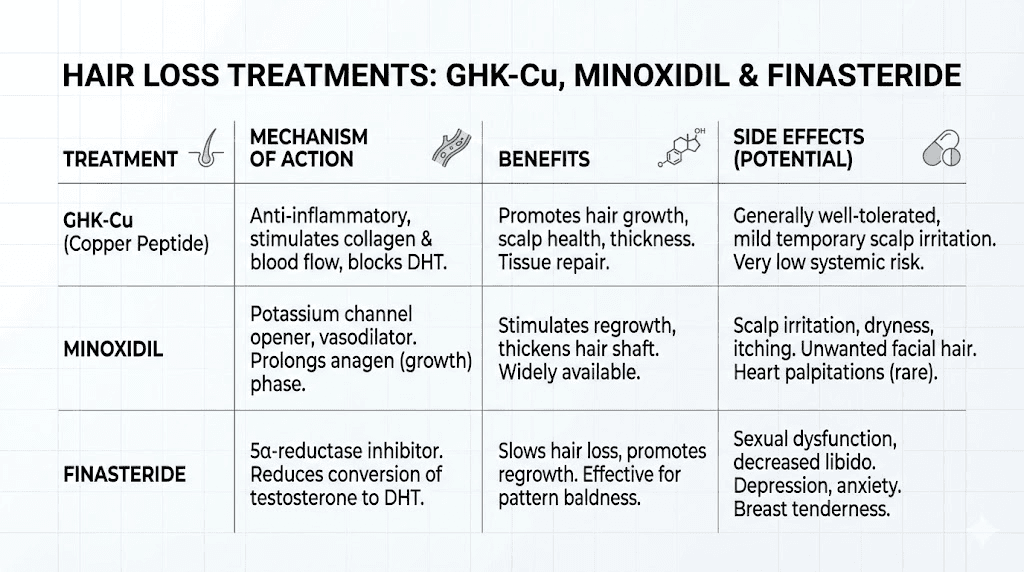
Minoxidil (Rogaine) remains the most widely used topical hair loss treatment. It works primarily as a vasodilator, increasing blood flow to hair follicles. This mechanism provides follicles more nutrients and oxygen, supporting healthier growth.
GHK-Cu also improves scalp circulation but through angiogenesis rather than vasodilation. Where minoxidil temporarily widens existing blood vessels, GHK-Cu builds new ones. This creates potentially more lasting vascular improvements. Additionally, GHK-Cu provides benefits minoxidil doesn't: stem cell activation, anti-inflammatory effects, antioxidant protection, and collagen stimulation.
Research suggests copper peptides produce comparable or superior results with minimal side effects when compared with minoxidil. However, head-to-head clinical trials remain limited. Many researchers combine both treatments, using minoxidil for immediate blood flow enhancement while GHK-Cu provides regenerative support.
GHK-Cu vs finasteride
Finasteride works hormonally, blocking conversion of testosterone to DHT (dihydrotestosterone). Since DHT causes follicle miniaturization in androgenetic alopecia, reducing it helps maintain existing hair. The approach works well for many men but carries significant hormonal side effects including sexual dysfunction.
GHK-Cu is non-hormonal. It doesn't block DHT, affect testosterone levels, or alter hormone balance. This makes it suitable for those who can't tolerate finasteride's side effects or prefer non-hormonal approaches. One user reported: "I have used GHK-cu injectable and topical and found no effect on E2 or DHT."
The tradeoff is that GHK-Cu doesn't address the underlying hormonal cause of androgenetic alopecia. For hormone-driven hair loss, combining GHK-Cu with DHT-blocking treatments may produce superior results than either alone. The peptide supports follicle health while the anti-androgen protects against hormone-mediated damage.
GHK-Cu vs other peptides for hair
GHK-Cu isn't the only peptide targeting hair growth. Understanding how it compares to alternatives helps optimize protocol selection. The GHK-Cu comparison guide explores differences between copper peptide variants in detail.
AHK-Cu (Alanyl-Histidyl-Lysine-Copper) is a synthetic copper peptide sometimes favored over GHK-Cu specifically for hair. Community discussions indicate some researchers prefer AHK-Cu for hair growth applications while using GHK-Cu for broader regenerative purposes. Both peptides activate similar pathways, but subtle differences in receptor affinity may influence results for specific applications.
PTD-DBM is a peptide specifically developed for hair growth that works through different mechanisms than copper peptides. Thymulin zinc complex (Zn-Thymulin) targets immunological factors affecting hair follicles. Some advanced protocols combine multiple hair-specific peptides, using each for its unique mechanism. The peptide stack calculator helps plan multi-peptide protocols.
BPC-157 and TB-500 offer wound healing and tissue repair properties that complement GHK-Cu's regenerative effects. The BPC-157 and TB-500 stacking guide discusses how these peptides work together. While not hair-specific, their systemic regenerative effects may support overall follicle health, particularly following scalp trauma or procedures.
Combination therapy approaches
The most effective hair restoration protocols typically combine multiple treatments targeting different mechanisms. GHK-Cu integrates well with most other approaches, providing additive or synergistic benefits.
A comprehensive protocol might include:
Finasteride or dutasteride for DHT blocking (if appropriate). Minoxidil for vasodilation. GHK-Cu for regenerative peptide signaling. Microneedling for enhanced absorption and wound healing stimulus. Platelet-rich plasma (PRP) or growth factor treatments for additional growth factors. Nutritional support including biotin, iron, and zinc where deficient.
This multi-target approach addresses hair loss from multiple angles simultaneously. Clinical studies examining combination approaches document improvements exceeding any single treatment. The peptide stacks guide covers how to combine peptides effectively for various goals.
Realistic timeline for results
Patience is non-negotiable. Hair grows slowly, about half an inch per month under optimal conditions. No treatment produces overnight transformation.
Anyone promising rapid results is misleading you.
Understanding what to expect and when helps maintain compliance through the critical early months when visible changes remain minimal.
The timeline for peptide results varies by compound and goal, but hair restoration follows predictable patterns.
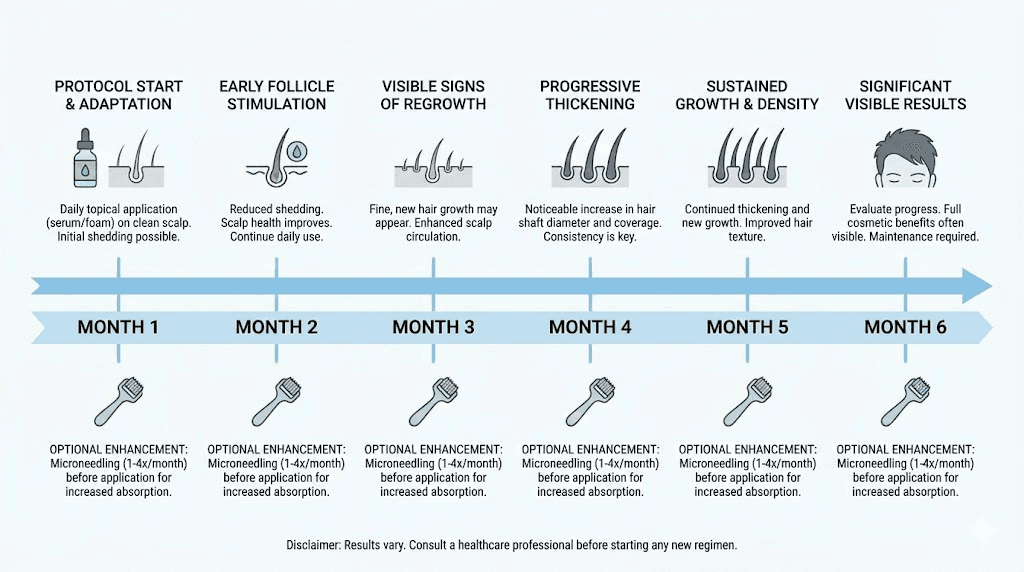
Month one: foundation building
Don't expect visible changes in the first month. This period establishes the foundation for future growth.
GHK-Cu begins working immediately at the cellular level. Receptor activation starts. Signaling cascades initiate. Dermal papilla cells receive growth signals. Inflammatory markers decrease. Blood vessel formation begins. But none of this shows visibly yet.
Some users notice improved scalp condition during this phase. Less oiliness, reduced flakiness, calmer skin overall. These changes indicate the peptide is active even before hair changes become apparent. If you experience initial shedding (increased hair fall in the first 2-4 weeks), this may actually indicate follicles transitioning from telogen (resting) to anagen (growth) phase. It's typically a positive sign, though understandably concerning.
Months two to three: early indicators
Subtle changes may become noticeable around the 4-8 week mark. The most common early indicator is reduced shedding. Fewer hairs in the shower drain. Less accumulation on your pillow. The normal daily hair loss seems to decrease.
This matters more than it might seem. Hair follicles cycle between growth (anagen), transition (catagen), and rest (telogen) phases. Extended telogen and shortened anagen contribute to thinning over time. If GHK-Cu extends anagen and reduces telogen, you'll notice less shedding before seeing new growth. The peptide before and after results page shows typical progression patterns.
Some users report hair feeling thicker or stronger during this phase, even without visible density increase. This may reflect improved individual strand diameter as follicles produce more robust keratin structures. Running fingers through hair feels different. Styling holds better.
Months three to six: visible progress
Most users begin noticing visible improvements between months three and six. One testimonial captured it well: "By month 3 I could actually style my hair differently. It felt thicker, not just a feeling, but visibly fuller."
The changes are gradual. Day-to-day differences remain imperceptible. But comparing photos from month one to month four often reveals meaningful improvement. This is why progress photos matter. Take consistent photos under identical lighting conditions monthly to document changes your daily mirror view might miss.
Results vary significantly between individuals during this phase. Factors affecting response include:
Duration of hair loss (recent loss responds better than long-standing). Degree of follicle miniaturization (partially functioning follicles respond better than completely dormant ones). Underlying cause (non-hormonal causes may respond differently than androgenetic alopecia). Protocol adherence (consistent application produces better results). Delivery method (injection typically outperforms topical).
Combination treatments (multi-target protocols often exceed single treatments).
Months six to twelve: optimization
Continued improvement typically occurs through month twelve and beyond. Hair growth is slow. Building visible density requires many growth cycles. Most follicles take 2-4 months to produce a visible hair once activated. That hair then needs months to reach meaningful length.
Clinical studies document sustained improvements over extended use. One study noted density improvements of 30-40% over 2-6 months of consistent copper peptide application. Longer protocols may produce greater results as more follicle cycles complete.
After initial results, many researchers maintain lower frequency protocols rather than stopping entirely. Since GHK-Cu levels decline naturally with age, ongoing supplementation helps maintain the gains achieved during intensive treatment phases.
When GHK-Cu won't work
Honest assessment: GHK-Cu doesn't work for everyone.
The peptide cannot revive follicles that no longer exist. Completely bald areas where follicles have died and scarred over won't respond. GHK-Cu works on areas where follicles are present but inactive or miniaturized. It cannot create follicles where none remain.
Some conditions respond poorly to copper peptides. Scarring alopecia, where inflammation destroys follicles permanently, requires different approaches. Certain autoimmune hair loss conditions need immunological treatment rather than regenerative peptides. If hair loss stems from ongoing medical conditions, addressing those underlying causes takes priority.
Non-responders exist even among ideal candidates. Individual biochemistry, receptor sensitivity, and unknown factors mean some people simply don't respond to GHK-Cu as expected. If six months of consistent, properly-dosed application produces no noticeable change, alternative approaches may be needed.
Safety considerations and side effects
GHK-Cu enjoys a generally favorable safety profile.
The peptide occurs naturally in the human body. Your plasma already contains it. Your cells already have receptors for it. This natural presence suggests inherent compatibility that synthetic compounds lack.
But "generally safe" doesn't mean "risk-free." Understanding potential issues helps you use copper peptides responsibly. The peptide safety and risks guide covers general principles, while copper peptide side effects addresses specific concerns.
Common side effects
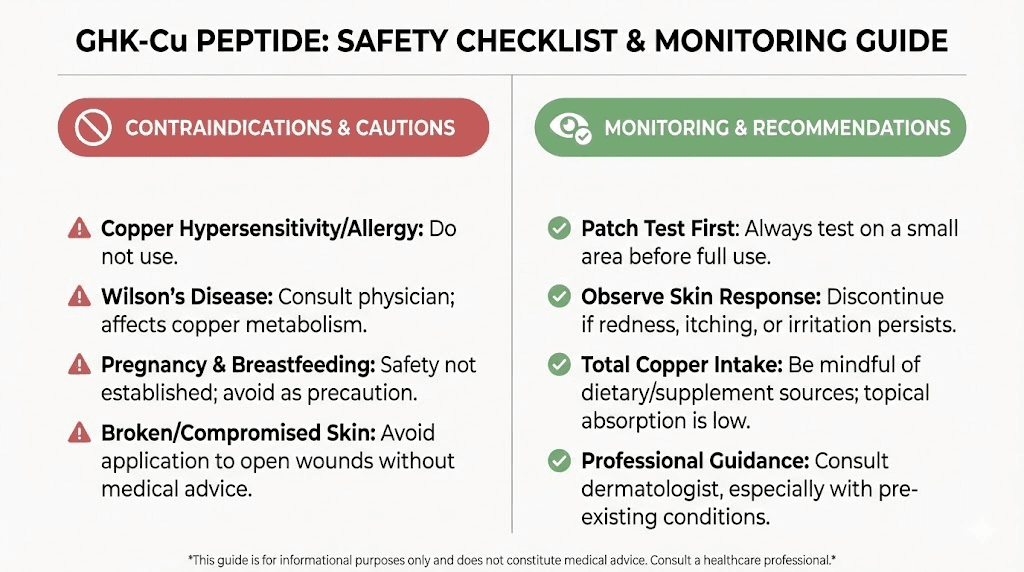
Topical applications may cause temporary redness, tingling, or dryness at application sites. These effects typically resolve within hours and decrease with continued use as skin adapts. Reducing application frequency or concentration can minimize irritation for sensitive individuals.
Microneedling combined with GHK-Cu increases potential for irritation. The micro-wounds themselves cause temporary redness and sensitivity. Adding any product to freshly needled skin intensifies this response. However, these effects are expected with the procedure rather than specific to the peptide.
Injectable administration carries standard injection-site risks: temporary pain, redness, bruising, or swelling. Proper sterile technique minimizes infection risk. Rotating injection sites prevents localized tissue irritation from repeated administration.
The "copper uglies" phenomenon
Some users report a concerning pattern called "copper uglies": copper peptide products appearing to accelerate skin aging rather than reverse it.
This typically manifests as increased fine lines, thinning skin, or generally worse appearance despite consistent product use.
The mechanism may involve metalloproteinases (MMPs). Copper can enhance expression of MMP-1, an enzyme that breaks down collagen. Normally, GHK-Cu's collagen-stimulating effects outweigh this degradation. But in some individuals, possibly those with already elevated MMP activity, the balance tips wrong.
The copper peptides troubleshooting guide and GHK-Cu making skin worse page address this phenomenon in detail. If you notice worsening rather than improvement, discontinuing use and reassessing is appropriate. Most users don't experience this issue, but awareness helps catch it early if it occurs.
Copper metabolism considerations
Copper is an essential mineral but becomes toxic at high levels. Injectable GHK-Cu delivers copper directly into tissue, potentially contributing to total body copper load. For most healthy individuals, the amounts involved in standard protocols pose minimal risk. The body efficiently regulates copper through hepatic metabolism and biliary excretion.
However, individuals with copper metabolism disorders require caution. Wilson's disease causes copper accumulation due to impaired excretion. Menkes disease involves copper absorption problems. Anyone with known copper metabolism issues should consult physicians before using copper peptides in any form.
Cycling protocols help minimize copper accumulation concerns. The recommended approach of active treatment periods followed by equivalent rest periods allows the body to normalize copper levels between cycles. This maintains effectiveness while reducing potential for excess accumulation.
Regulatory status
Injectable GHK-Cu is not FDA-approved for any condition. Compounding pharmacies prepare it for individual prescriptions when practitioners judge potential benefits outweigh theoretical risks. This regulatory status means long-term human safety data remains limited compared to FDA-approved drugs.
Topical copper peptide products face less regulatory scrutiny when marketed as cosmetics rather than drugs. However, cosmetic classification means manufacturers can't make specific treatment claims. The research supporting hair growth benefits exists, but products can't legally advertise these applications.
Understanding peptide legality helps navigate these complexities. Personal use for research purposes occupies a different regulatory space than commercial distribution for therapeutic claims. Working with knowledgeable practitioners helps ensure compliance with applicable regulations.
Optimizing your GHK-Cu hair protocol
Generic protocols provide starting points. Optimized protocols produce superior results.
The difference lies in attention to details that most guides overlook.
SeekPeptides members access personalized protocol optimization based on individual factors, but understanding the principles helps anyone improve their approach.
Sourcing quality peptides
Quality varies dramatically between suppliers. Peptide purity, accurate concentrations, and proper storage all affect results. Low-quality products may contain degraded peptide, incorrect amounts, or contaminants that reduce effectiveness or cause adverse effects.
The peptide vendor guide discusses how to evaluate suppliers. Key factors include third-party testing documentation, proper storage and shipping practices, reputation within research communities, and transparent business practices.
The peptide cost calculator helps compare pricing, but cheapest isn't always best when quality determines results.
For injectable preparations, compounding pharmacies with proper licensing provide quality assurance that grey-market sources cannot. The additional cost often proves worthwhile in terms of purity, accuracy, and legal compliance.
Storage and handling
Proper storage maintains peptide potency. Lyophilized (powder) GHK-Cu remains stable at room temperature but benefits from refrigeration for long-term storage. The peptide storage guide covers optimal conditions for various peptides.
Once reconstituted, solutions require refrigeration. The reconstituted peptide shelf life article explains how long solutions remain viable. Generally, reconstituted GHK-Cu maintains potency for 2-4 weeks refrigerated when prepared with bacteriostatic water. Longer storage increases degradation risk.
The copper peptide refrigeration guide and GHK-Cu shelf life page provide specific recommendations. Avoid freezing reconstituted solutions, which can damage peptide structure. Protect from light exposure, which accelerates degradation.
Use sterile technique throughout handling to prevent contamination.
Timing and consistency
Consistency matters more than perfection. Daily application at roughly the same time produces better results than sporadic use even at higher doses. The body responds to regular signaling. Erratic application sends mixed signals.
For injectable protocols, maintaining consistent spacing between administrations optimizes blood levels. Monday-Wednesday-Friday dosing creates relatively stable peptide presence. Random scheduling creates peaks and valleys that may reduce effectiveness.
The peptide dosing guide discusses timing considerations for various compounds.
For GHK-Cu specifically, some researchers prefer morning administration to align with natural growth hormone patterns. Others find evening dosing more convenient without apparent difference in results.
Complementary lifestyle factors
Peptides work within your body's larger systems. Supporting overall health enhances their effects. Undermining health limits what any peptide can achieve.
Nutritional factors affect hair growth directly. Protein provides amino acids for keratin production. Iron carries oxygen to follicles. Zinc supports cellular division. Biotin participates in keratin synthesis. Deficiencies in any of these impair hair growth regardless of peptide use. The peptides for energy article discusses how nutrition interacts with peptide effectiveness.
Sleep quality influences growth hormone release, which affects tissue regeneration including hair follicles. Chronic sleep deprivation impairs the anabolic processes peptides are trying to stimulate. Optimizing sleep amplifies peptide benefits.
Stress management matters more than many realize. Chronic stress causes telogen effluvium (stress-related hair shedding) and elevates inflammation throughout the body. No amount of GHK-Cu fully compensates for severely elevated cortisol. Addressing stress improves response to any hair restoration protocol.
Tracking progress effectively
Subjective assessment misleads. You see yourself daily. Gradual changes escape notice. Expectations bias perception. Effective tracking requires objective measures.
Progress photos taken under consistent conditions provide the most useful documentation. Same lighting, same angle, same distance from camera. Monthly photos allow comparison over time that daily observation misses. Pull hair back identically each time. Mark the camera position to ensure reproducibility.
Hair counts offer quantitative data but require significant effort. Some researchers count hairs lost during washing or brushing over standard periods. Others photograph defined scalp areas and count visible hairs. The effort involved limits practical application for most users.
Scalp dermascopy (magnified scalp imaging) provides detailed follicle-level assessment when available. Professional evaluations before and during treatment offer objective measurement of density, follicle size, and vellus vs terminal hair ratios. This level of tracking helps optimize protocols with precision difficult to achieve through self-assessment.
Advanced stacking strategies
For researchers seeking maximum results, single-compound protocols rarely produce optimal outcomes. Strategic combination of complementary compounds addresses multiple hair loss mechanisms simultaneously. The peptide stacking guide covers general principles for combining peptides effectively.
GHK-Cu and other copper peptides
AHK-Cu (Alanyl-Histidyl-Lysine-Copper) sometimes appears in advanced hair protocols alongside or instead of GHK-Cu. The synthetic variant may have superior hair-specific activity based on community reports, though controlled comparisons remain limited.
Some researchers use both, with GHK-Cu providing broader regenerative effects and AHK-Cu targeting hair specifically. Others alternate between them, using each for periods before switching. The copper peptides for hair growth page discusses how different variants compare for this application.
Combining with growth factors
Growth factors directly stimulate cellular proliferation and tissue development. Platelet-rich plasma (PRP) concentrates growth factors from your own blood for injection into the scalp. Growth factor concentrates (GFC) and exosome therapies provide similar benefits through different preparation methods.
GHK-Cu stacks well with these treatments. The peptide provides sustained regenerative signaling while growth factor treatments deliver concentrated stimulation. Many clinics offering PRP now include GHK-Cu in their protocols for enhanced results.
The healing peptides guide discusses how different regenerative compounds interact.
Multi-peptide hair protocols
Advanced researchers sometimes combine multiple hair-active peptides:
GHK-Cu for regenerative signaling and follicle activation. Thymulin-Zinc for immunomodulation affecting follicle health. PTD-DBM for specific hair growth pathway activation. BPC-157 for general tissue repair and anti-inflammatory effects. TB-500 for systemic healing support.
The BPC-157 vs TB-500 comparison helps understand how these healing peptides differ. Understanding BPC-157 and TB-500 benefits provides foundation for evaluating whether adding these compounds makes sense for your goals.
Multi-peptide protocols require careful planning. Dosing, timing, and potential interactions all need consideration. The guide to combining peptides and peptide cycling guide address these complexities. Working with knowledgeable practitioners helps navigate multi-compound protocols safely.
Addressing specific hair loss patterns
Hair loss isn't uniform. Pattern matters for protocol design. GHK-Cu's effectiveness varies somewhat depending on the type and location of hair loss you're addressing.
Male pattern baldness (androgenetic alopecia)
The classic receding hairline and crown thinning pattern affects most men eventually. DHT-mediated follicle miniaturization drives this process. Follicles gradually shrink, producing finer hair until they stop producing visible hair entirely.
GHK-Cu addresses aspects of this process but not the root hormonal cause. The peptide can support remaining active follicles and potentially reactivate recently miniaturized ones. It cannot block DHT. For maximum effectiveness in androgenetic alopecia, combining GHK-Cu with DHT blockers (finasteride, dutasteride, or natural alternatives like saw palmetto) addresses both the cause and the symptoms.
Response varies by stage. Early-stage thinning with mostly intact follicles responds better than advanced loss where follicles have been miniaturized for years. If you're noticing initial thinning, early intervention with GHK-Cu may help maintain density. Waiting until significant loss has occurred reduces potential for recovery.
Female pattern hair loss
Women experience hair loss differently, typically showing diffuse thinning across the crown rather than distinct bald areas. Hormonal factors differ from male pattern baldness, with estrogen decline, thyroid function, and other factors playing significant roles.
GHK-Cu's non-hormonal mechanism makes it suitable for women who can't or prefer not to use hormonal treatments. The safe peptides for women guide and best peptides for women page discuss considerations specific to female researchers. The peptides for women over 40 article addresses age-related changes affecting hair.
For female pattern loss, addressing underlying hormonal or thyroid issues alongside peptide use typically produces better results than peptides alone.
Comprehensive evaluation helps identify contributing factors that need direct treatment.
Alopecia areata and autoimmune hair loss
Autoimmune conditions cause the immune system to attack hair follicles. Alopecia areata produces patchy hair loss. Alopecia totalis and universalis represent more extensive forms. These conditions require immunological management rather than simple regenerative support.
GHK-Cu's anti-inflammatory properties may provide some benefit in autoimmune hair loss, reducing the inflammatory assault on follicles. However, it doesn't address the underlying immune dysregulation. Managing these conditions requires working with dermatologists or immunologists who can prescribe appropriate immunomodulatory treatments.
Some researchers use GHK-Cu alongside immunological treatments, providing regenerative support once immune attacks are controlled.
The peptide may help follicles recover more quickly after autoimmune flares resolve.
Traction and traumatic hair loss
Mechanical stress from tight hairstyles, repeated pulling, or physical trauma damages follicles. Unlike pattern baldness, this represents physical injury rather than biological process. GHK-Cu's wound healing properties make it particularly well-suited for trauma-related hair loss.
The peptide accelerates tissue repair, reduces scarring, and supports follicle regeneration after injury. For traction alopecia caught early, GHK-Cu combined with discontinuing damaging hairstyles often produces good recovery. The fast injury healing guide discusses how peptides support recovery from various types of tissue damage.
Late-stage traction alopecia where scarring has occurred responds poorly. Scar tissue replaces follicles permanently. GHK-Cu cannot regenerate follicles that no longer exist. Early intervention before scarring develops offers the best outcomes.
Troubleshooting common issues
Protocols don't always work as expected. Understanding why and how to adjust can salvage otherwise failed attempts.
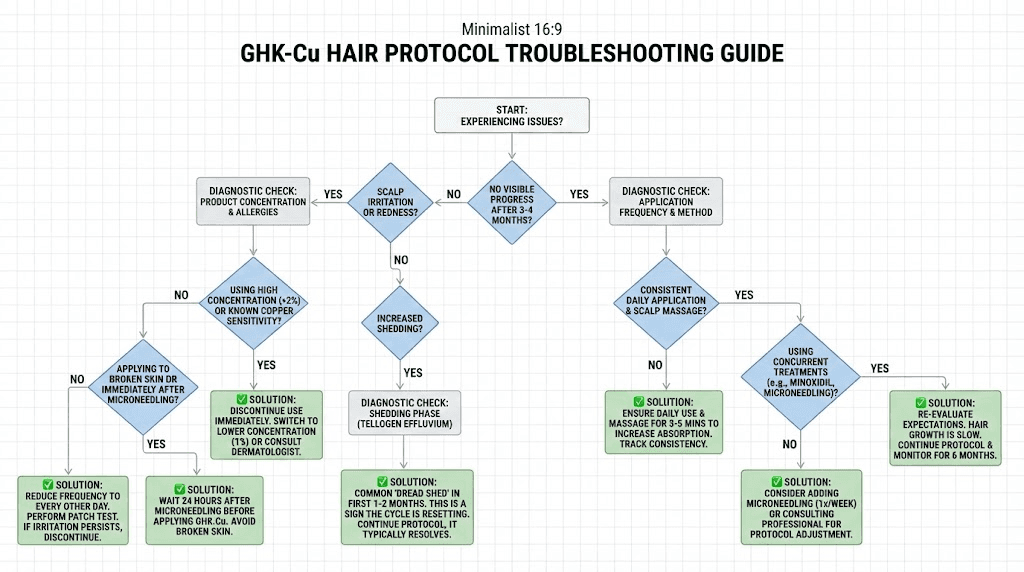
No results after three months
Three months of consistent use should produce at least subtle improvements for most responders. If nothing has changed, consider:
Product quality issues. Low-purity or degraded peptide produces poor results regardless of protocol. Switching to a verified quality source rules out this variable.
Absorption problems. Topical applications may not penetrate adequately. Consider adding microneedling to enhance absorption or switching to injectable delivery.
Dosing insufficient. Conservative doses may fall below effective threshold for some individuals. Gradually increasing within standard ranges may help.
Underlying causes unaddressed. If hormonal, nutritional, or medical factors drive your hair loss, GHK-Cu alone won't overcome them. Comprehensive evaluation helps identify contributing factors requiring direct treatment.
Non-responder status. Some individuals simply don't respond to copper peptides. Genetic factors affecting receptor expression or downstream signaling may limit effectiveness. Recognizing non-response allows pivoting to alternative approaches rather than continuing ineffective treatment.
Initial shedding
Increased hair fall in the first 2-4 weeks alarms many users. This temporary shedding often indicates follicles shifting from telogen (resting) to anagen (growth) phase. Old hairs must shed before new growth emerges.
The copper peptides purging guide explains this phenomenon. Patience through this phase is essential. Discontinuing at the first sign of shedding may prevent the regrowth that would have followed.
However, prolonged or excessive shedding (lasting more than 4-6 weeks or resulting in visible thinning) suggests problems rather than transition. Discontinue and reassess if shedding seems disproportionate to expected adjustment.
Irritation or adverse reactions
Skin irritation from topical application usually responds to reducing frequency or concentration. Apply every other day instead of daily. Dilute concentrated products. Allow skin to adapt before increasing intensity.
For persistent irritation, consider formulation issues rather than peptide intolerance. Different carriers and additives in various products affect skin tolerance. Switching brands while maintaining the same peptide may resolve irritation.
The common peptide mistakes guide addresses many issues that derail protocols. Often, problems stem from preparation or administration errors rather than fundamental issues with the peptide itself.
Plateau after initial improvement
Some users experience initial gains that then stall. This may reflect receptor downregulation from continuous use. Cycling (taking periodic breaks) helps maintain receptor sensitivity. Standard recommendations suggest treatment periods followed by equivalent rest periods.
Alternatively, plateaus may indicate reaching the limits of what GHK-Cu alone can achieve for your situation. Adding complementary treatments (minoxidil, PRP, DHT blockers) may restart progress by addressing mechanisms the peptide doesn't target.
The what happens when you stop GHK-Cu article discusses how results change with discontinuation and can inform decisions about ongoing use versus cycling.
Practical protocol examples
Theory matters, but practical implementation determines results. These example protocols illustrate how principles translate to actual practice.
Beginner topical protocol
Goal: Mild to moderate hair thinning, non-invasive approach, minimal complexity.
Products: Quality topical GHK-Cu serum (1-3% concentration)
Protocol:
Apply once daily to clean, dry scalp. Massage thoroughly for 1-2 minutes to distribute product and stimulate absorption. Allow to absorb completely before applying other products. Use consistently for minimum 3 months before evaluating results.
Expected timeline: Reduced shedding by month 2. Subtle density improvements by month 4-6. Continued improvement through month 12.
Cost: Variable by product, typically $30-80 monthly for quality serums.
Intermediate topical plus microneedling protocol
Goal: Moderate hair thinning, enhanced absorption, home-based protocol.
Products: Quality topical GHK-Cu serum. Dermapen or dermaroller (0.5-1.0mm needle depth).
Protocol:
Daily topical application as above. Weekly microneedling session: clean scalp thoroughly, microneedle affected areas with moderate pressure, immediately apply GHK-Cu serum to needled areas. Allow overnight absorption after microneedling sessions.
Expected timeline: Similar pattern to topical-only but potentially accelerated and more pronounced results due to enhanced absorption.
Important: Maintain strict hygiene with needling devices. Sterilize before each use. Replace devices according to manufacturer recommendations.
Advanced injectable protocol
Goal: Maximum efficacy, willing to inject, committed to comprehensive protocol.
Products: Lyophilized GHK-Cu (10-50mg vials). Bacteriostatic water for reconstitution. Insulin syringes for subcutaneous injection.
Protocol:
Reconstitute per the reconstitution guide. Calculate dose using the peptide calculator based on vial concentration. Inject 2mg subcutaneously three times weekly (Monday/Wednesday/Friday). Continue for 12 weeks. Take 12 weeks off. Repeat cycles as needed.
Optional addition: Weekly microneedling with topical GHK-Cu on non-injection days for combined systemic and local effects.
Expected timeline: Faster onset than topical-only. Noticeable improvements typically by month 2-3. Substantial results by cycle completion.
Cost: Higher than topical approaches but potentially more cost-effective per result due to improved efficacy.
Comprehensive combination protocol
Goal: Maximum hair restoration, addressing multiple mechanisms, supervised protocol.
Components:
DHT blocker (finasteride 1mg daily or alternatives) if appropriate. Minoxidil 5% applied twice daily. GHK-Cu injectable 2mg three times weekly. Monthly PRP or growth factor treatments. Weekly microneedling with topical GHK-Cu. Nutritional optimization (adequate protein, iron, zinc, biotin).
Expected timeline: Multi-mechanism approach typically produces superior results compared to any single treatment. Visible improvement often apparent by month 2-3 with continued gains through month 12 and beyond.
Important: This level of protocol benefits from professional supervision. Working with practitioners experienced in peptide therapy and hair restoration optimizes results and minimizes risks. The peptide therapy clinics guide helps locate qualified providers.
Frequently asked questions
How long before I see results from GHK-Cu for hair?
Most users notice reduced shedding within 4-8 weeks. Visible density improvements typically appear between months 3-6 of consistent use. Full results may take 12 months or longer, since peptides take time to work through cumulative cellular effects.
Can I use GHK-Cu with minoxidil and finasteride?
Yes. GHK-Cu works through different mechanisms than both treatments and combines safely with them. Many researchers use all three together for multi-target hair restoration. The stacking guide covers combining treatments effectively.
Is GHK-Cu injection or topical better for hair?
Injectable delivery achieves tissue concentrations 10-20 times higher than topical application. For maximum results, injection typically outperforms topical. However, topical application with microneedling can significantly enhance absorption, approaching injectable effectiveness for some users.
What's the best GHK-Cu dose for hair growth?
Standard injectable dosing ranges from 2-5mg administered 2-3 times weekly. The GHK-Cu dosage chart provides specific recommendations based on vial size and treatment goals. Topical concentrations typically range from 1-3% applied daily.
Can GHK-Cu regrow hair on completely bald areas?
GHK-Cu cannot regenerate follicles that no longer exist. It works on areas where follicles remain but are dormant or miniaturized. Completely bald areas with no surviving follicles won't respond. Early intervention before total follicle loss produces best results.
Does GHK-Cu have side effects?
GHK-Cu is generally well-tolerated since it occurs naturally in the body. Possible side effects include injection-site reactions, temporary skin irritation from topical use, and in rare cases, the "copper uglies" phenomenon. The side effects guide covers what to watch for.
How should I store GHK-Cu?
Lyophilized (powder) GHK-Cu remains stable refrigerated for extended periods. Reconstituted solutions require refrigeration and maintain potency for 2-4 weeks. Detailed storage instructions help maximize shelf life and effectiveness.
Can women use GHK-Cu for hair loss?
Yes. GHK-Cu's non-hormonal mechanism makes it suitable for women. The peptides for women guide discusses considerations specific to female users. Women should still address any underlying hormonal or thyroid issues contributing to hair loss.
External resources
National Institutes of Health: Regenerative and Protective Actions of GHK-Cu Peptide
PubMed: Microneedle-Mediated Delivery of Copper Peptide Through Skin
PMC: Ionic Liquid Microemulsions for Topical Peptide Delivery
For researchers committed to optimizing their hair restoration protocols, SeekPeptides provides comprehensive resources including detailed protocols, personalized guidance, and community support from thousands of experienced researchers who've navigated these exact questions.
In case I don't see you, good afternoon, good evening, and good night. Join us.