Dec 23, 2025

Your hair is falling out faster than it's growing back, the shower drain is full of it, your pillow collects more each night, the thinning spots are getting harder to ignore.
You've tried the usual solutions.
Minoxidil foam that irritates your scalp and doesn't seem to help. Finasteride that might work but comes with side effects you're not willing to accept. Hair thickening shampoos that do exactly nothing.
Now you're looking at peptides. Not the surface-level topical solutions that barely penetrate. Real peptides that work at the follicular level, reducing inflammation, improving blood flow, stimulating dormant follicles, and addressing the root causes of hair loss.
Here's what you need to know: certain peptides can genuinely slow, stop, and in many cases reverse hair loss.
They work through mechanisms completely different from minoxidil or finasteride, which means they can be used alone or stacked with traditional treatments for maximum effect.
This isn't a miracle cure. If you've been completely bald for 20 years, peptides won't give you a full head of hair. But if you're in the early to moderate stages of hair loss - or if you're losing hair from stress, inflammation, or poor follicular health - peptides offer real hope.
This guide covers which peptides actually work for hair loss, the mechanisms behind their effectiveness, complete treatment protocols, realistic timelines, and how to combine them with other treatments for maximum regrowth.
Let's start with understanding why hair loss happens and how peptides interfere with that process.
Understanding hair loss mechanisms
Hair loss isn't one condition. It's multiple processes that can occur simultaneously. Understanding them helps you choose the right peptides:
Androgenic alopecia (pattern baldness)
This is the most common form of hair loss in both men and women, though it manifests differently.
The process: Dihydrotestosterone (DHT), a metabolite of testosterone, binds to androgen receptors in genetically susceptible hair follicles. This binding triggers a process called follicular miniaturization - the follicles gradually shrink, producing thinner and shorter hairs with each growth cycle until they eventually produce only barely visible vellus hairs or stop producing hair entirely.
The follicles aren't dead (usually). They're miniaturized and dormant. This is crucial because it means reversal is possible.
How peptides help: While peptides don't block DHT like finasteride, they address other factors that accelerate androgenic hair loss - inflammation around follicles, poor blood flow, reduced growth factor signaling, and follicular stem cell exhaustion. By optimizing these factors, peptides can partially reverse miniaturization even in the presence of DHT.
Telogen effluvium (stress-related hair loss)
Severe physical or emotional stress, illness, surgery, dramatic weight loss, or major life events can push large numbers of follicles into telogen (resting) phase simultaneously. Three months later, you experience sudden, dramatic shedding.
The process: Normally about 10% of your hair follicles are in telogen at any time. With telogen effluvium, 30-50% enter telogen simultaneously. When they all shed months later, it looks catastrophic.
How peptides help: Growth-promoting and anti-inflammatory peptides can help shift follicles back into anagen (growth) phase more quickly, reducing the duration and severity of shedding. They also support recovery from the stress that triggered the effluvium in the first place.
Inflammatory hair loss
Chronic low-grade inflammation around hair follicles damages them over time. This inflammation can stem from autoimmune reactions, scalp infections, harsh hair treatments, environmental toxins, or systemic inflammation.
The process: Inflammatory cytokines damage follicular stem cells and create a hostile environment for hair growth. Follicles shrink, growth cycles shorten, and hair becomes progressively thinner and more fragile.
How peptides help: Anti-inflammatory peptides like BPC-157 and KPV directly reduce follicular inflammation. Copper peptides act as antioxidants and reduce oxidative stress. This creates an environment where follicles can function properly.
Poor follicular circulation
Hair follicles need robust blood supply to receive nutrients and oxygen. Poor circulation means malnourished follicles that produce weak, thin hair or enter dormancy.
The process: Aging, lifestyle factors, and chronic tension in scalp muscles can all reduce blood flow to follicles. Without adequate circulation, follicles literally starve.
How peptides help: Several peptides promote angiogenesis (formation of new blood vessels) and improve microcirculation. Better blood flow means better-fed follicles.
Age-related decline
Follicular stem cells become less active with age. Cell turnover slows. Hair growth cycles shorten. The result is thinner, slower-growing hair even without strong androgenic factors.
The process: Stem cells in the follicle bulge are responsible for generating new hair. As these stem cells age and become less active, hair growth becomes weaker with each cycle.
How peptides help: Regenerative peptides stimulate stem cell activity and cellular turnover, partially countering age-related follicle decline.
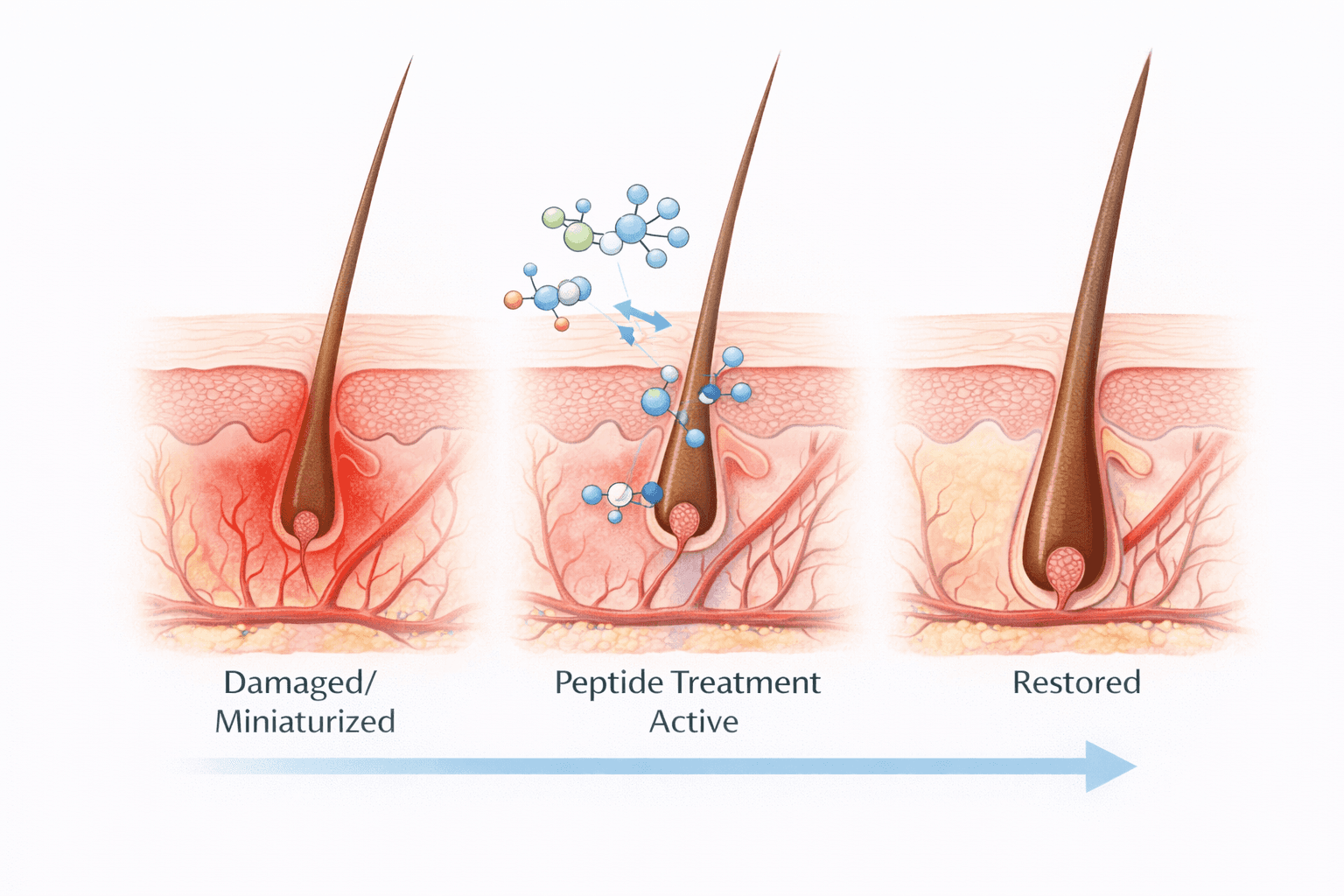
Best peptides for stopping hair loss
Different peptides work through different mechanisms. Here's what actually stops hair loss:
GHK-Cu (copper peptides)
Copper peptides are the most researched and most effective peptides for hair loss. Multiple studies confirm their ability to reverse follicular miniaturization.
Mechanism:
Enlarges hair follicles (reverses miniaturization)
Stimulates follicular cell proliferation
Increases angiogenesis around follicles
Acts as powerful antioxidant
Reduces inflammation
Inhibits 5-alpha-reductase (the enzyme that converts testosterone to DHT)
Studies show GHK-Cu can increase follicle size by up to 30% and significantly increase the percentage of follicles in anagen phase. It works for both androgenic alopecia and age-related thinning.
Application: Topical to scalp or subcutaneous injection near problem areas
Dosing:
Topical: 1-2% GHK-Cu serum/solution, applied daily to affected areas
Injectable: 1-2mg subcutaneous near scalp, 3x weekly
Timeline: Reduced shedding within 6-8 weeks. Visible regrowth typically appears 3-4 months into treatment. Peak benefits at 6-12 months.
Why it's #1: GHK-Cu has the most evidence, works through multiple mechanisms, and has the longest track record of success for hair loss specifically.
For comprehensive information, see our GHK-Cu copper peptides guide.
TB-500 (Thymosin Beta-4)
TB-500 is primarily known for injury healing, but it has remarkable effects on hair growth as an unexpected benefit.
Mechanism:
Promotes blood vessel formation (angiogenesis)
Reduces inflammation systemically and at follicles
Stimulates stem cell differentiation and migration
Promotes tissue regeneration
May directly affect follicular stem cells
Multiple anecdotal reports from TB-500 users note significant hair regrowth, including in areas bald for years. Some report reversal of grey hair (hair darkening) as an additional benefit.
Application: Subcutaneous injection (systemic, not directly into scalp)
Dosing:
Loading phase: 5-10mg per week (split into 2-3 injections), 4-6 weeks
Maintenance: 2-5mg per week ongoing
Timeline: Hair changes typically noticed 2-4 months after starting. Continued improvement through 6-9 months.
Why it works: TB-500's regenerative properties appear to reactivate follicular stem cells and dramatically improve follicular health through improved circulation and reduced inflammation.
See our TB-500 complete guide and use our TB-500 calculator.
BPC-157
Body Protection Compound 157 is another healing peptide with hair retention benefits.
Mechanism:
Promotes angiogenesis (new blood vessel formation)
Reduces inflammation at follicular level
Accelerates healing of scalp tissue
Protects against cellular damage
May improve nutrient delivery to follicles
BPC-157 isn't specifically a hair growth peptide, but users consistently report reduced shedding and improved hair thickness when using it for other purposes.
Application: Subcutaneous injection
Dosing:
Standard: 250-500mcg once or twice daily
Hair loss focus: 500mcg daily, ongoing
Timeline: Reduced shedding noticed 4-6 weeks. Improved thickness 2-3 months. Continued benefit with ongoing use.
Why it works: By reducing inflammation and improving blood flow, BPC-157 creates an optimal environment for follicular health.
Learn more in our BPC-157 complete guide and use our BPC-157 calculator.
KPV peptide
KPV is a potent anti-inflammatory peptide with specific benefits for inflammatory hair loss conditions.
Mechanism:
Powerful anti-inflammatory effects (inhibits NF-κB pathway)
Reduces inflammatory cytokines at follicles
Promotes healing of inflamed scalp tissue
May improve immune regulation (helpful for autoimmune-related hair loss)
Application: Topical to scalp or subcutaneous injection
Dosing:
Topical: 1-2mg applied to affected areas daily
Subcutaneous: 500-1,000mcg daily
Timeline: Reduced scalp inflammation within 2-3 weeks. Hair improvements 2-3 months.
Why it works: If your hair loss has an inflammatory component (itchy scalp, redness, sensitivity), KPV directly addresses the cause.
See our KPV peptide benefits guide for detailed information.
IGF-1 LR3
Insulin-like Growth Factor 1 Long R3 is a powerful growth factor with documented hair growth effects.
Mechanism:
Stimulates cell proliferation and survival
Promotes anagen phase entry and extension
Enhances protein synthesis
Hair follicles have IGF-1 receptors that respond to stimulation
Application: Subcutaneous injection
Dosing:
40-80mcg per day, 4-6 week cycles
Requires cycling (not continuous use)
Timeline: Hair improvements visible 6-8 weeks into cycle. Benefits continue with repeated cycles.
Why it's advanced: IGF-1 LR3 has systemic effects beyond hair. It's primarily used by athletes but the hair growth benefits are well-documented.
GHK-Cu nasal spray (systemic)
Some users report hair benefits from intranasal GHK-Cu used for anti-aging purposes.
Mechanism:
Systemic delivery of copper peptides
May affect follicles throughout body
Anti-inflammatory and regenerative effects
Dosing:
1-2 sprays (500-1,000mcg) twice daily
Timeline: Slower than topical application directly to scalp. Benefits at 4-6 months.
When to use: If you're using GHK-Cu for broader anti-aging benefits, hair improvement is a bonus. Not optimal as primary hair loss treatment.
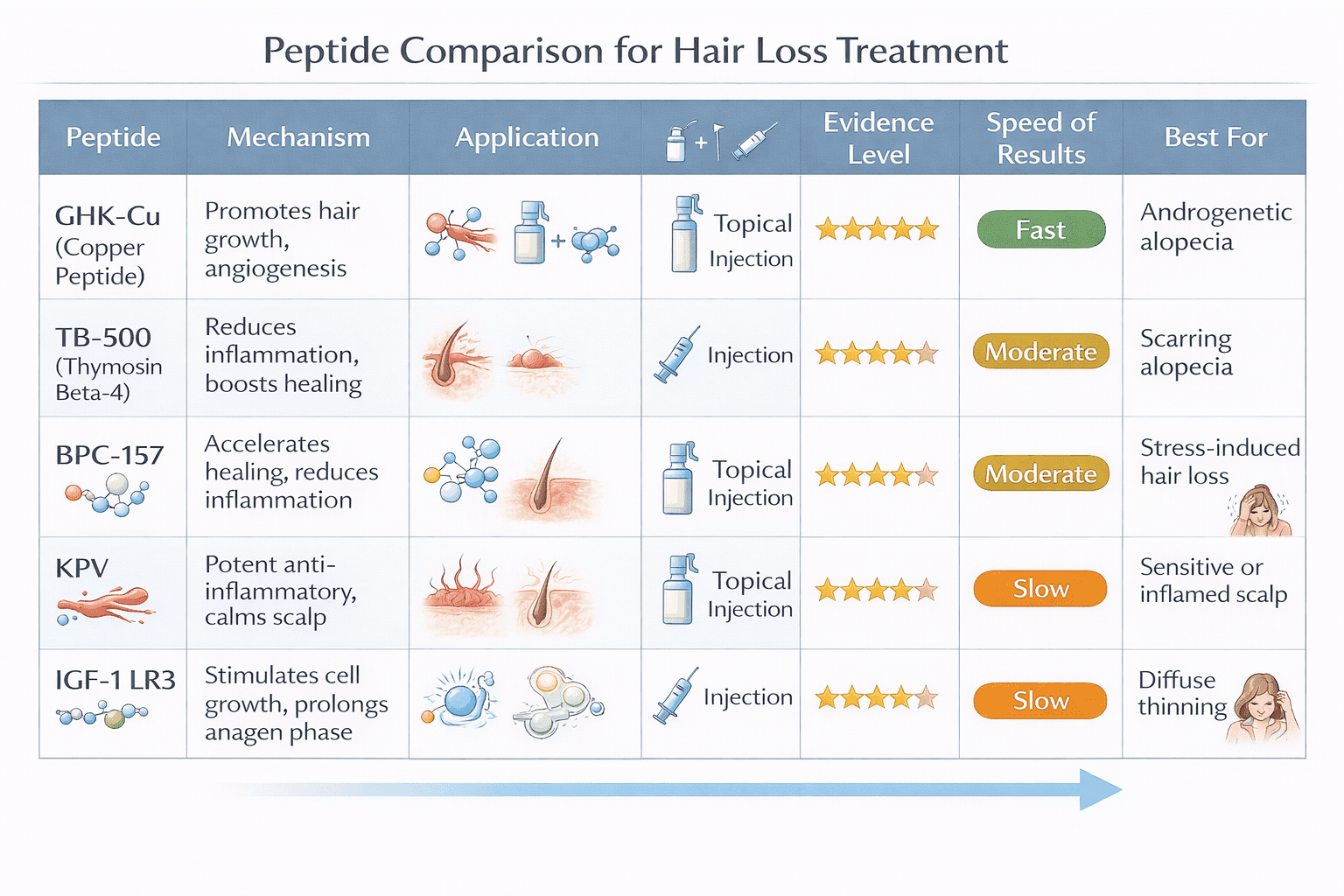
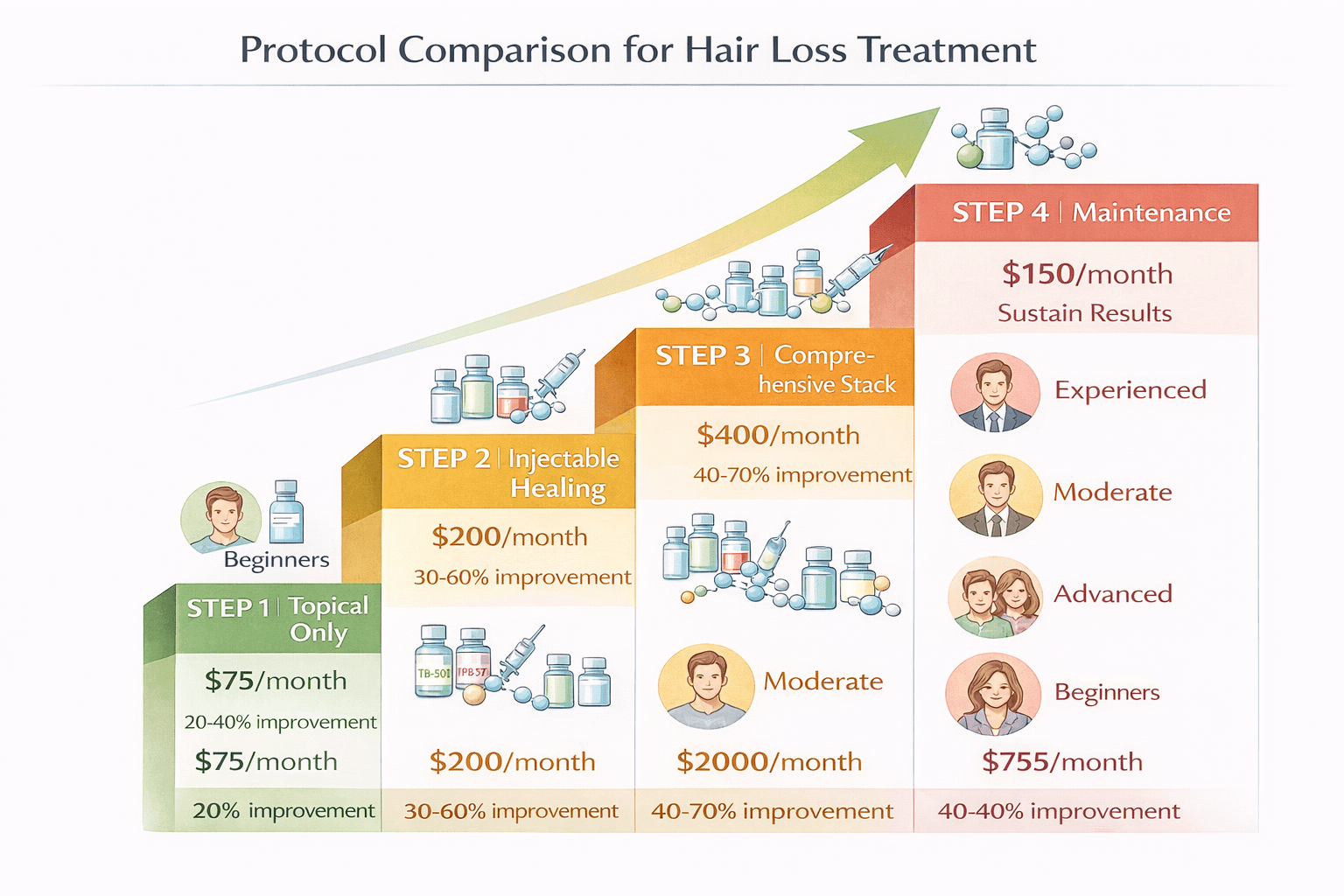
Complete hair loss treatment protocols
Here's how to actually use these peptides to stop hair loss:
Protocol 1: Topical-focused (beginner, non-invasive)
Best for: Early hair loss, people uncomfortable with injections, mild thinning
Daily routine:
Morning: Apply GHK-Cu serum (1-2%) to thinning areas, massage gently for 2-3 minutes
Evening: Repeat GHK-Cu application and massage
Weekly addition:
Microneedling once per week (0.5-1.0mm depth) immediately before GHK-Cu application
Supporting supplements:
Biotin 5,000-10,000mcg daily
Zinc 30mg daily (if not getting adequate from diet)
Vitamin D 2,000-4,000 IU daily
Timeline:
Reduced shedding: 6-8 weeks
Visible improvement: 3-4 months
Significant regrowth: 6-9 months
Cost: Moderate ($50-100/month for quality GHK-Cu)
Expected results: 20-40% improvement in hair density. Best for those who catch hair loss early or have mild thinning.
Protocol 2: Injectable healing peptides (intermediate)
Best for: Moderate hair loss, people comfortable with injections, faster results desired
Weekly routine:
TB-500: 5mg total per week (split into 2-3 injections), loading phase 6 weeks
TB-500: 2-5mg per week maintenance thereafter
BPC-157: 500mcg daily throughout
Optional: GHK-Cu topical daily for additional benefit
Timeline:
Reduced shedding: 4-6 weeks
New growth visible: 2-3 months
Significant improvement: 4-6 months
Peak results: 9-12 months
Cost: Moderate-high ($150-250/month)
Expected results: 30-60% improvement in hair density. Works for moderate hair loss and provides additional healing/recovery benefits throughout body.
Use our peptide reconstitution calculator for accurate mixing.
Protocol 3: Comprehensive stack (advanced, maximum regrowth)
Best for: Significant hair loss, aggressive treatment approach, people who've tried other options
Daily routine:
Morning: GHK-Cu topical to scalp
Evening: GHK-Cu topical to scalp
Daily: BPC-157 500mcg subcutaneous
Daily: KPV 500mcg subcutaneous (if inflammatory component)
3x weekly: TB-500 2-5mg subcutaneous
Optional additions:
IGF-1 LR3 50-60mcg daily (4-6 week cycles with breaks)
Microneedling weekly with immediate peptide application
Timeline:
Reduced shedding: 3-4 weeks
New growth visible: 2-3 months
Significant regrowth: 4-6 months
Maximum benefit: 12+ months
Cost: High ($300-500/month)
Expected results: 40-70% improvement in hair density. This is the most aggressive peptide approach. Maximum results but requires commitment and monitoring.
Protocol 4: Maintenance (after regrowth achieved)
Once you've achieved desired results, maintenance prevents relapse:
Maintenance routine:
GHK-Cu topical 3-4x per week (reduced from daily)
BPC-157 250mcg 3-4x per week (reduced from daily)
TB-500 periodic cycles (2-4 weeks every 3-4 months)
Continue microneedling monthly
Maintain supplement regimen
Cost: Moderate ($100-200/month)
Why necessary: Hair follicles remain susceptible to the same factors that caused initial loss. Maintenance protocols keep gains while reducing cost and time commitment.
For help planning your cycles, use our peptide cycle planning guide.
Microneedling for enhanced peptide absorption
Microneedling dramatically increases the effectiveness of topical peptides. Here's how to do it properly:
Why microneedling works for hair loss
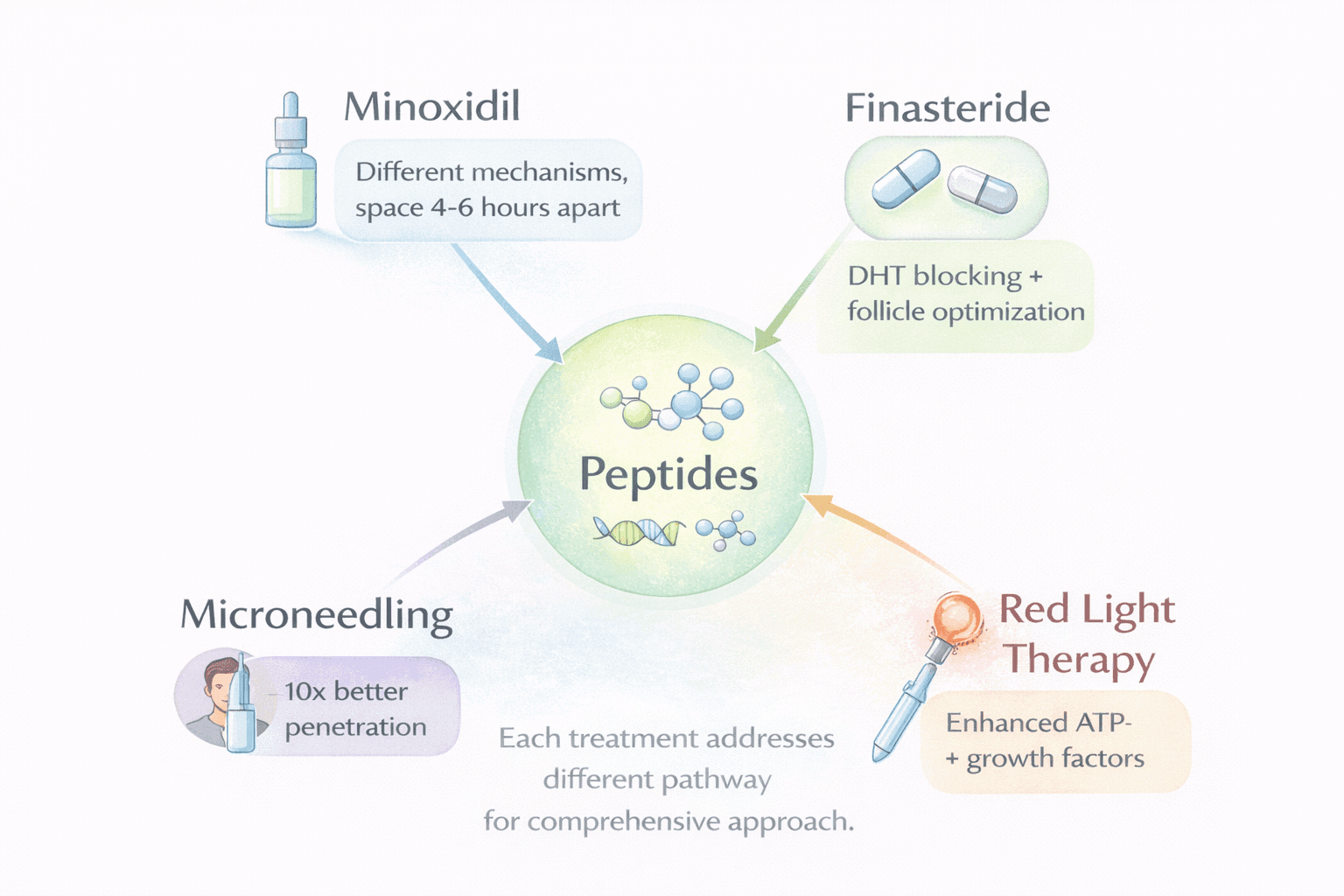
Microneedling creates thousands of tiny channels through the skin, allowing topical peptides to penetrate to follicular depth rather than staying on the surface. It also triggers wound healing responses that stimulate follicular stem cells and promote hair growth independently of the peptides.
Studies show microneedling alone can improve hair density. Combined with peptides, results are significantly better than either treatment alone.
Proper technique for scalp
Needle depth: 0.5-1.0mm for hair loss treatment. This depth penetrates to the follicle level without causing excessive trauma.
Do NOT use: Depths above 1.5mm on scalp. Deeper needling can damage follicles rather than help them.
Frequency: Once per week maximum. More frequent needling causes excessive inflammation and doesn't improve results.
Procedure:
Clean scalp thoroughly (gentle shampoo, let dry)
Optional: Apply numbing cream for 20-30 minutes (0.5-1.0mm usually tolerable without numbing)
Microneedle in multiple directions - vertical, horizontal, diagonal passes
Apply peptide solution immediately after needling
Massage gently to work peptides into channels
Leave peptides on (don't wash out)
What to avoid:
Don't microneedle over active scalp infections, open wounds, or severe inflammation
Don't share microneedling devices
Don't use dull needles (replace dermaroller every 3-4 uses, dermapen cartridges per manufacturer guidelines)
Don't apply harsh products immediately after (alcohol-based products, fragrances, irritants)
Best practices
Device choice: Dermapen (electric microneedling pen) is superior to dermaroller. It provides consistent depth, causes less pain, and is more hygienic. Dermarollers work but are less ideal.
Sanitization: Clean device before and after each use with 70% isopropyl alcohol. Let air dry.
Timing: Microneedle in evening, apply peptides, let work overnight. Wash hair next morning if desired.
Progress tracking: Take photos every 2 weeks before microneedling sessions. Lighting and angle matter - be consistent. You won't see changes day to day, but comparing photos 2 months apart shows real progress.
What to expect
Immediate: Scalp will be red and sensitive for 12-24 hours. This is normal. Mild discomfort is expected.
Short-term: Some people experience temporary shedding 2-3 weeks after starting microneedling. This is follicles entering new growth cycles. Don't panic - it resolves and new growth follows.
Long-term: Enhanced results from peptide protocols. Most people see meaningfully better results with microneedling than without.
Combining peptides with traditional hair loss treatments
Peptides work synergistically with established treatments. Here's how to stack:
Peptides + Minoxidil
Minoxidil is a vasodilator that increases blood flow to follicles. Peptides work through different mechanisms, making combination safe and potentially more effective.
How to combine:
Morning: Minoxidil foam or liquid
Wait 4-6 hours for absorption
Evening: Topical peptides (GHK-Cu)
Why spacing: Applying both simultaneously may interfere with absorption. Separate applications ensures both work optimally.
Expected enhancement: Some users report better results from combination than either alone. Minoxidil improves blood flow, peptides address inflammation and follicular health.
Peptides + Finasteride/Dutasteride
DHT blockers attack hair loss from a different angle than peptides. Combining addresses multiple pathways.
How to combine:
Take finasteride (1mg daily) or dutasteride (0.5mg daily) as prescribed
Use peptide protocol of choice separately
No timing restrictions (different mechanisms)
Why it works: Finasteride blocks the hormonal cause (DHT). Peptides optimize follicular health and promote regrowth. Together they prevent further loss while stimulating recovery of miniaturized follicles.
Note: Some people use peptides to reduce or eliminate need for finasteride (avoiding side effects). Others use both for maximum results.
Peptides + Red Light Therapy
Low-level laser therapy (LLLT) or red light therapy stimulates follicular activity through light energy.
How to combine:
Use red light device (LED cap or panel) 10-15 minutes daily
Apply peptides immediately after red light session
Red light may enhance peptide penetration
Why it works: Red light increases ATP production in follicles, reduces inflammation, and stimulates stem cells. Peptides provide chemical signaling. Different mechanisms, complementary effects.
Peptides + PRP (Platelet-Rich Plasma)
PRP injections contain growth factors from your own blood that stimulate hair growth.
How to combine:
Get PRP injections (typically every 4-6 weeks initially, then maintenance every 3-4 months)
Continue daily peptide protocol between PRP sessions
Some practitioners add peptides directly to PRP preparation
Why it works: PRP provides concentrated growth factors. Peptides maintain signaling between PRP sessions. This is an aggressive, comprehensive approach for significant hair loss.
Cost consideration: PRP is expensive ($500-1,500 per session). Peptides are more affordable for ongoing use.
What NOT to combine
Copper peptides + Vitamin C: Vitamin C (especially L-ascorbic acid) destabilizes copper peptides. If using both, apply at different times of day (vitamin C morning, copper peptides evening) or choose one.
Peptides + harsh chemical treatments: Avoid combining peptides with hair dyes, bleach, chemical straighteners, or perms immediately. These damage follicles and counteract peptide benefits. If you must color hair, do it between peptide cycles or wait 48 hours after peptide application.
For comprehensive combination guidance, see our peptide stacks guide.
Expected timeline and realistic results
Managing expectations prevents disappointment. Hair growth is slow.
Weeks 1-4: Foundation phase
What's happening: Peptides are binding to receptors, reducing inflammation, improving blood flow. Changes are occurring at cellular level in follicles.
What you'll notice: Probably nothing visible yet. Some people report reduced shedding by week 3-4. Scalp may feel healthier - less itching, less irritation if those were issues.
What to do: Document baseline with photos from multiple angles in consistent lighting. Measure thinning areas. Start tracking in journal.
Weeks 4-8: Stabilization
What's happening: Follicular inflammation reducing significantly. Blood supply improving. Dormant follicles beginning to wake up. Existing hair growing healthier.
What you'll notice: Reduced shedding becomes obvious - less hair in shower drain, on pillow, in brush. Existing hair may look slightly thicker, shinier. Scalp health improved.
What to do: Continue protocol consistently. Take 8-week progress photos. Don't expect regrowth yet.
Weeks 8-12: Early regrowth
What's happening: Follicles that entered anagen phase are producing visible hair. Miniaturized follicles enlarging. Vellus hairs transitioning to terminal hairs.
What you'll notice: Very fine "baby hairs" appearing in previously thin areas. Visible in good lighting or close inspection. Overall hair volume subtly improved. Less scalp visible through hair.
What to do: Stay consistent. This is when people often consider increasing protocol intensity if results are modest.
Months 4-6: Visible improvement
What's happening: Multiple growth cycles completed. Follicles producing thicker, longer, healthier hair. Continued reversal of miniaturization.
What you'll notice: Results become undeniable. Thinning areas noticeably fuller. Baby hairs from months 2-3 are now longer, darker, more visible. Overall hair density improved. Others start commenting.
What to do: Take detailed progress photos. Compare to baseline. Adjust protocol if needed based on results. Consider transitioning to maintenance if goals achieved.
Months 6-12: Maximum benefit
What's happening: Follicles have undergone multiple healthy growth cycles. Full protocol benefits realized. New follicles continue activating.
What you'll notice: Significant improvement over baseline. Areas that were thin now have good coverage. Hair is thicker, healthier, grows faster. The trajectory of hair loss has reversed.
What to do: Transition to maintenance protocol. Continue tracking monthly. Adjust as needed to maintain gains.
Realistic expectations by starting point
Early hair loss (5-10% density loss):
Expected improvement: 60-90% recovery
Timeline: 4-6 months for significant improvement
Likelihood of complete recovery: High
Moderate hair loss (20-40% density loss):
Expected improvement: 40-60% recovery
Timeline: 6-9 months for significant improvement
Likelihood: Very good, may not return to peak density
Advanced hair loss (50-70% density loss):
Expected improvement: 30-50% recovery
Timeline: 9-12+ months
Likelihood: Moderate - won't restore full density but meaningful improvement possible
Severe/long-standing baldness (80%+ loss, bald for 10+ years):
Expected improvement: 10-30% recovery
Timeline: 12+ months
Likelihood: Lower - follicles may be too miniaturized or dead
What affects outcomes:
How long you've had hair loss (earlier intervention = better results)
Cause of hair loss (inflammatory/stress-related responds better than purely androgenic)
Age (younger people generally see better results)
Overall health (nutrition, stress, sleep all matter)
Protocol adherence (consistency is crucial)
Genetics (some people simply respond better)
Side effects and safety considerations
Peptides used for hair loss are generally safe, but side effects can occur:
Common side effects
Scalp irritation (topical application):
Mild redness, itching, or sensitivity where applied
Usually temporary, resolves as skin adjusts
Solution: Reduce concentration, apply less frequently initially
Injection site reactions:
Redness, slight swelling, minor pain at injection sites
Normal and minimal with proper technique
Solution: Rotate injection sites, use proper sterile technique
Temporary increased shedding (weeks 2-4):
Follicles entering new growth cycles shed old hairs
This is actually a good sign (new growth coming)
Can be alarming but resolves within 2-3 weeks
Dry scalp (with some formulations):
Some peptide serums can be drying
Solution: Use gentle moisturizing scalp treatment between applications
Less common side effects
Increased body hair (systemic peptides):
TB-500, IGF-1, and other injectable peptides can increase hair growth throughout body
For men, this often isn't a problem
For women or men who prefer less body hair, this can be unwanted
Headaches (rare with systemic peptides):
Occasionally reported with TB-500 or IGF-1
Usually mild and temporary
Stay well-hydrated
Allergic reactions:
Rare but possible
Rash, excessive swelling, severe itching
Discontinue and seek medical attention if severe
Important safety considerations
Pregnancy and breastfeeding: Not recommended. No safety data exists for peptide use during pregnancy or while breastfeeding.
Autoimmune conditions: If you have autoimmune-related hair loss (alopecia areata), peptides may not be effective and could theoretically affect immune responses. Consult immunologist.
Scalp infections: Don't apply peptides to infected, broken, or severely inflamed skin. Treat infection first.
Cancer history: Growth-promoting peptides could theoretically affect rapidly dividing cells. If you have history of cancer, especially skin cancer, consult oncologist before using peptides that stimulate cell proliferation.
For comprehensive peptide safety information, see our peptide safety and risks guide.
Female pattern hair loss and peptides
Women experience hair loss differently than men. Protocols need adjustment:
How female pattern hair loss differs
Women typically experience:
Diffuse thinning across entire scalp rather than receding hairline
Widening part line
Reduced overall volume
Hair loss often accelerates with hormonal changes (post-pregnancy, perimenopause, menopause)
Best peptide protocols for women
Preferred approach: Topical GHK-Cu as primary treatment
Why: Women often respond better to topical treatments than men. Less body hair concerns with topical application versus systemic peptides.
Protocol for women:
GHK-Cu 1-2% topical serum twice daily
Microneedling weekly (0.5-1.0mm)
BPC-157 injectable if inflammatory component suspected
Avoid TB-500 unless willing to accept increased body hair
Hormonal considerations:
Check iron and ferritin (low iron is common cause of female hair loss)
Evaluate thyroid function
Consider hormone panel if perimenopausal/menopausal
Address hormonal causes alongside peptide use
Post-pregnancy hair loss:
Wait until after breastfeeding to start peptides
Telogen effluvium post-pregnancy usually resolves on its own by 12 months
Peptides can accelerate recovery if shedding is severe
For more targeted protocols, see our best peptides for women guide.
Sourcing quality peptides for hair loss
Quality matters enormously when putting substances on your scalp or injecting them. Here's how to source safely:
For topical GHK-Cu serums
What to look for:
Concentration clearly stated (1-2% GHK-Cu)
Opaque, airtight containers (copper peptides degrade in light/air)
Short ingredient lists (avoid unnecessary irritants)
Recent manufacture date
Reputable company
Expected cost: $40-100 for 1-2 month supply
Red flags:
Suspiciously cheap
Clear bottles
No concentration listed
Overpromising claims
For injectable peptides
What to look for:
Third-party testing (Certificate of Analysis)
Purity >95%
Proper storage/shipping with cold packs
Established supplier reputation
Clear reconstitution instructions
Expected costs:
TB-500: $50-100 per 5mg vial
BPC-157: $25-50 per 5mg vial
GHK-Cu injectable: $30-60 per 50mg vial
Red flags:
No testing documentation
Far below market prices
Vague about sourcing
Poor customer service
For comprehensive vendor evaluation, see our best peptide vendors guide.
The role of SeekPeptides in your hair restoration journey
Using peptides for hair loss requires precision, consistency, and knowledge. Wrong doses reduce effectiveness. Poor application techniques waste expensive products. Lack of protocol guidance leads to suboptimal results.
SeekPeptides provides the tools you need to succeed.
Accurate reconstitution: Our peptide reconstitution calculator ensures you mix injectable peptides correctly every time.
Precise dosing: Our peptide calculators for TB-500 and BPC-157 tell you exactly how much to inject.
Protocol planning: Our cycle planning guide helps you map out complete protocols, track progress, and adjust based on results.
Evidence-based information: Our guides on copper peptides, TB-500, and BPC-157 provide science and practical application.
AI-powered assistance: Get answers to your specific questions about combining peptides, managing side effects, optimizing protocols, and troubleshooting issues.
You don't need to figure this out through expensive trial and error. Use the tools thousands of successful peptide users rely on.
Final thoughts
Peptides offer real hope for stopping and reversing hair loss. GHK-Cu, TB-500, and BPC-157 work through well-understood mechanisms that address inflammation, circulation, and follicular health - factors that contribute to hair loss regardless of cause.
Results aren't instant. You won't regrow a full head of hair in a month. But with consistent use over 6-12 months, improvements can be significant - slowed hair loss, regrowth in thinning areas, thicker and healthier hair overall.
This isn't a miracle cure. Peptides work best as part of a comprehensive approach - addressing underlying health issues, managing stress, eating properly, using gentle hair care, possibly combining with traditional treatments.
Start with a protocol matching your situation and comfort level. Topical GHK-Cu for beginners. Injectable protocols for faster results. Comprehensive stacks for aggressive treatment. Use consistently, track progress with photos, adjust based on results.
Hair loss isn't inevitable. Peptides give you legitimate tools to fight back.
Related resources
In case I don’t see you, good afternoon, good evening, and good night. Take care of yourself. <3