Jan 13, 2026
The distinction between peptides that directly stimulate testosterone production versus those that create favorable hormonal environments through improved sleep, reduced inflammation, and enhanced cellular signaling represents crucial knowledge for anyone seeking evidence-based hormone optimization. Understanding which peptides work through luteinizing hormone stimulation, which enhance Leydig cell function, which reduce sex hormone binding globulin, and which support testosterone through indirect mechanisms allows for personalized protocol development matching individual goals and physiological conditions.
This full guide examines every peptide category relevant to testosterone optimization, including growth hormone secretagogues, gonadotropin analogs, tissue repair peptides, and specialized compounds, along with dosing protocols, stacking strategies, timing considerations, safety profiles, and practical implementation guidance. SeekPeptides provides personalized protocols for peptide optimization custom to individual hormonal goals and current testosterone status.
Understanding testosterone and peptide interactions
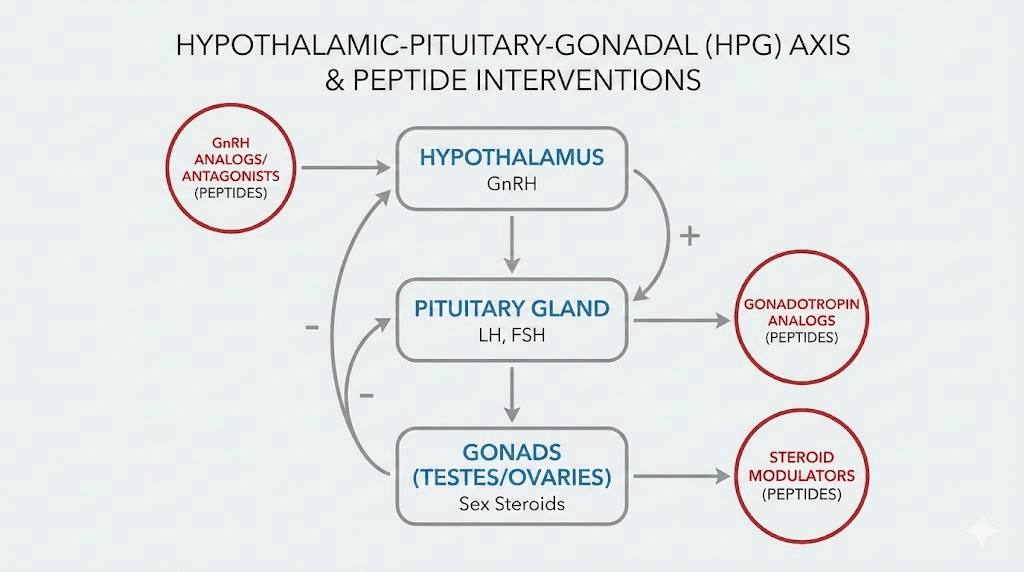
Testosterone production involves a complex cascade beginning in the hypothalamus, proceeding through the pituitary gland, and culminating in the Leydig cells of the testes. Peptides can influence this axis at multiple points, either stimulating upstream signals, enhancing cellular responsiveness, or reducing factors that inhibit natural production. The hypothalamic-pituitary-gonadal axis represents the primary regulatory system, with gonadotropin-releasing hormone triggering luteinizing hormone release, which then stimulates testosterone synthesis.
Most men experiencing testosterone decline suffer not from testicular failure but from reduced signaling efficiency throughout this cascade.
Age-related decreases in peptide signaling contribute significantly to hormonal decline, making exogenous peptide support a logical intervention targeting root causes rather than simply replacing the end hormone.
Growth hormone and testosterone share bidirectional relationships where optimizing one often enhances the other. Men with higher growth hormone levels typically maintain better testosterone production, while adequate testosterone supports growth hormone release. This interconnection explains why growth hormone secretagogue peptides often produce testosterone benefits despite not directly stimulating testicular function.
The hypothalamic-pituitary-gonadal axis
Gonadotropin-releasing hormone fundamentals: GnRH pulses from the hypothalamus occur approximately every 90 minutes in healthy men, with pulse frequency and amplitude determining downstream hormonal output. Peptides affecting GnRH release or mimicking its action can significantly influence testosterone production.
The pulsatile nature proves critical, as continuous stimulation actually suppresses the axis rather than enhancing it.
Luteinizing hormone role: LH travels from the pituitary to testicular Leydig cells, binding specific receptors that initiate steroidogenic enzyme cascades converting cholesterol to testosterone.
Peptides enhancing LH production or sensitivity amplify this final production step.
Some compounds mimic LH action directly, though this approach carries different risk-benefit profiles than upstream stimulation.
Follicle-stimulating hormone, though primarily associated with sperm production, also influences Sertoli cell function in ways that support optimal testicular environments for testosterone synthesis. Peptide protocols affecting gonadotropins typically influence both hormones, though ratios vary by compound. Understanding these distinctions helps select appropriate peptides for specific goals, whether prioritizing testosterone, fertility, or both.
Growth hormone and testosterone synergy
The relationship between growth hormone and testosterone operates through multiple mechanisms extending beyond simple hormonal cross-talk. Growth hormone enhances insulin-like growth factor production, which influences Leydig cell function and testosterone synthesis capacity. Improved body composition from growth hormone optimization reduces aromatase activity, decreasing testosterone conversion to estrogen.
Sleep quality improvements from growth hormone secretagogue peptides enhance natural testosterone production, which peaks during deep sleep phases. Men using ipamorelin and similar peptides often report better sleep alongside hormonal improvements, demonstrating this interconnected benefit. The recovery enhancement from adequate growth hormone also supports more effective training, which itself stimulates testosterone production.
Peptide stacking strategies leveraging this synergy combine growth hormone secretagogues with testosterone-supporting compounds for amplified effects. Rather than simply adding benefits, these combinations often produce multiplicative improvements exceeding what either peptide achieves alone.
Growth hormone secretagogue peptides for testosterone support
Growth hormone releasing peptides and growth hormone releasing hormone analogs represent the most established peptide category with documented testosterone benefits.
While not directly stimulating testosterone production, these compounds create hormonal environments highly favorable for natural testosterone optimization through improved sleep, enhanced recovery, better body composition, and reduced inflammatory burden.
Ipamorelin for hormonal optimization
Ipamorelin stands as one of the most selective growth hormone releasing peptides, stimulating growth hormone release without significantly affecting cortisol or prolactin. This selectivity makes ipamorelin particularly valuable for testosterone optimization, as cortisol elevation suppresses testosterone production while prolactin excess can cause testicular dysfunction.
Dosing for testosterone support: Standard ipamorelin dosing ranges from 200-300mcg per injection, typically administered 2-3 times daily. Evening dosing before sleep enhances nocturnal growth hormone release, which correlates with peak testosterone production. Many users find twice-daily dosing at 200mcg morning and evening provides optimal balance between benefits and practicality.
The testosterone benefits from ipamorelin accumulate over weeks and months rather than appearing immediately. Most users report noticeable improvements in body composition, recovery, and subjective vitality within 4-8 weeks, with hormonal blood work often showing testosterone increases after 2-3 months of consistent use. Cycling ipamorelin with periods on and off helps maintain sensitivity and prevent receptor desensitization.
CJC-1295 and testosterone enhancement
CJC-1295, a growth hormone releasing hormone analog, extends growth hormone elevation duration compared to shorter-acting compounds. The DAC (Drug Affinity Complex) version provides approximately week-long half-life, while CJC-1295 without DAC more closely mimics natural pulsatile release patterns. Both versions support testosterone through growth hormone optimization mechanisms.
Combining CJC-1295 with ipamorelin creates synergistic growth hormone release exceeding either compound alone. This combination, sometimes called the "GH peptide stack," represents one of the most popular protocols for men seeking hormonal optimization. The peptide dosage charts for this combination typically suggest matched dosing around 100mcg of each, administered together 2-3 times daily.
Check our CJC-1295 dosage calculator for personalized dosing based on body weight and goals. The calculator accounts for whether using DAC or non-DAC versions, adjusting recommendations accordingly.
Tesamorelin for body composition and hormones
Tesamorelin achieved FDA approval for reducing visceral adipose tissue in HIV patients, demonstrating powerful fat reduction capabilities relevant to testosterone optimization. Visceral fat produces aromatase enzymes converting testosterone to estrogen, making fat reduction a direct testosterone preservation strategy.
Men with significant abdominal fat often experience improved testosterone-to-estrogen ratios after tesamorelin use, even without direct testosterone supplementation. The reduction in visceral adipose tissue decreases inflammatory cytokine production, which also suppresses testosterone when chronically elevated. This indirect testosterone benefit makes tesamorelin valuable for men whose hormonal issues stem partly from body composition problems.
Standard tesamorelin dosing follows the FDA-approved 2mg daily injection, typically administered subcutaneously in the abdomen. Some protocols use lower doses of 1mg daily for longer-term optimization rather than aggressive short-term intervention. The visceral fat loss benefits typically become apparent within 8-12 weeks of consistent use.
MK-677 oral growth hormone secretagogue
MK-677, technically a non-peptide growth hormone secretagogue, offers oral administration convenience while producing similar effects to injectable growth hormone peptides. The compound stimulates ghrelin receptors, triggering growth hormone release through pathways paralleling natural hunger signaling. Its long half-life allows once-daily dosing, typically in the evening.
Testosterone benefits from MK-677 mirror those of injectable secretagogues, working through improved sleep, body composition, and recovery rather than direct testicular stimulation. Some users report better results combining MK-677 with injectable peptides, using the oral compound for sustained baseline elevation while injectable peptides provide pulsatile optimization.
Dosing typically ranges from 10-25mg daily, with many users finding 15mg provides good effects without excessive side effects. Water retention and increased appetite represent common experiences, particularly at higher doses. The peptide safety considerations for MK-677 include monitoring for insulin sensitivity changes during extended use.
Gonadotropin-related peptides
Peptides directly affecting gonadotropin production or action represent the most potent category for testosterone enhancement, working through immediate mechanisms on the hypothalamic-pituitary-gonadal axis. These compounds require careful consideration regarding fertility, testicular health, and long-term hormonal balance.
Kisspeptin and testosterone stimulation
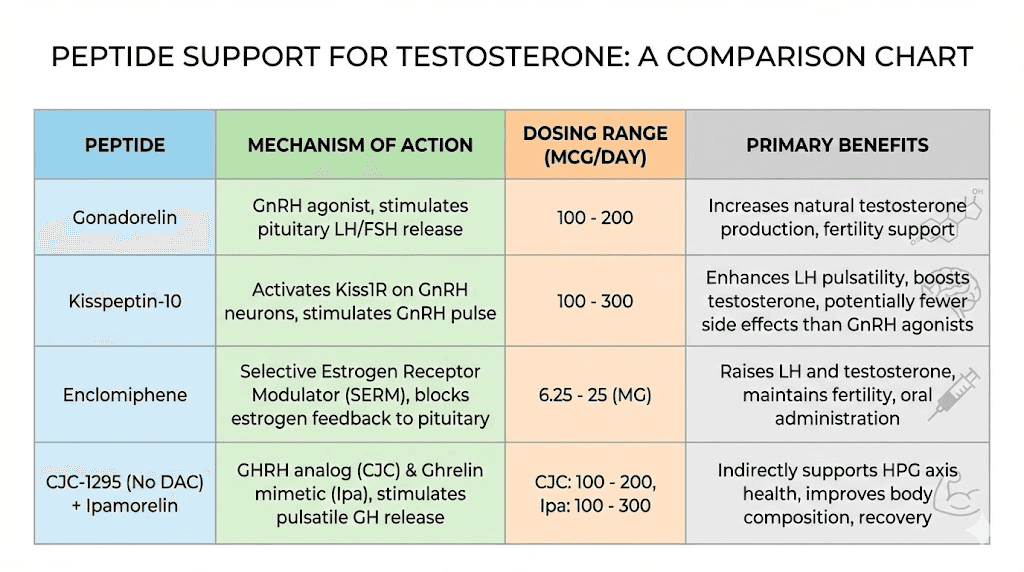
Kisspeptin peptides represent relatively recent discoveries in reproductive endocrinology, with research demonstrating their critical role in triggering puberty and regulating gonadotropin release. Kisspeptin-10, the most studied fragment, potently stimulates GnRH release, subsequently elevating LH and testosterone. This upstream mechanism preserves natural testicular function rather than suppressing it like exogenous testosterone.
Research dosing protocols: Kisspeptin-10 studies have used various doses ranging from 0.1mcg/kg to 10mcg/kg, with robust LH and testosterone responses observed across this range. Single injections produce testosterone elevation lasting several hours, while repeated dosing maintains elevated levels. The optimal dosing frequency and duration for long-term testosterone optimization remains under active investigation.
The theoretical advantage of kisspeptin over other testosterone-enhancing peptides lies in its position atop the hormonal cascade. By stimulating GnRH, kisspeptin allows normal pituitary and testicular function rather than bypassing these organs. This preservation of natural function may prove important for long-term hormonal health and fertility maintenance.
Gonadorelin for maintaining testicular function
Gonadorelin, synthetic GnRH, sees widespread use for maintaining testicular function during testosterone replacement therapy. When exogenous testosterone suppresses natural production, gonadorelin injections maintain LH release and testicular activity, preserving size and fertility potential. This application makes gonadorelin essential for men using testosterone who wish to maintain reproductive capacity.
For men not on testosterone replacement, gonadorelin can stimulate natural production through enhanced gonadotropin release. The pulsatile administration requirement complicates practical use, as continuous gonadorelin exposure paradoxically suppresses the axis. Protocols typically use 100-500mcg injections 2-3 times weekly rather than daily dosing.
Understanding the difference between testosterone boosters and peptides helps contextualize gonadorelin's role. While supplements may provide marginal benefits, peptides like gonadorelin work through direct hormonal mechanisms with measurable, significant effects on LH and testosterone levels.
HCG and peptide combinations
Human chorionic gonadotropin, though technically a protein hormone rather than a peptide, often appears in testosterone optimization discussions alongside peptides. HCG mimics LH action, directly stimulating Leydig cells to produce testosterone. This mechanism proves valuable both for men on TRT maintaining testicular function and for those seeking natural production enhancement.
Combining HCG with growth hormone secretagogue peptides creates comprehensive hormonal optimization addressing multiple pathways simultaneously. The HCG peptide protocols typically use 250-500IU HCG 2-3 times weekly alongside daily growth hormone peptide injections. This combination maintains testicular activity while optimizing growth hormone for recovery, sleep, and body composition.
Men transitioning from testosterone replacement to natural production often use HCG during the recovery period, sometimes combined with peptides accelerating axis recovery. The peptide cycle planning for post-TRT recovery represents a specialized application requiring careful timing and dosing adjustments based on individual response.
Tissue repair peptides and testosterone
Peptides primarily known for tissue repair and healing often provide testosterone benefits through reduced inflammation, improved sleep quality, and enhanced recovery capacity. These indirect mechanisms prove particularly valuable for men whose testosterone suppression stems from chronic injury, overtraining, or systemic inflammation.
BPC-157 for systemic optimization
BPC-157, the gastric pentadecapeptide, demonstrates broad systemic effects extending beyond its well-known tissue repair capabilities. Research documents BPC-157's influence on dopamine and serotonin systems, which indirectly affect gonadotropin release. The compound's anti-inflammatory properties may reduce cytokine-mediated testosterone suppression in men with chronic inflammatory conditions.
Testosterone-relevant mechanisms: BPC-157 promotes nitric oxide synthesis, supporting blood flow to various tissues including testes. Improved testicular perfusion may enhance nutrient delivery and waste removal, optimizing the cellular environment for testosterone production. The peptide's effects on growth hormone release through GHRH modulation provide additional hormonal support.
Standard BPC-157 dosing for systemic effects ranges from 250-500mcg daily, either as a single injection or split between morning and evening doses. Men using BPC-157 primarily for injury healing often notice secondary improvements in sleep quality, mood, and vitality that suggest hormonal optimization. The BPC-157 dosage calculator provides personalized recommendations based on body weight and treatment goals.
TB-500 for recovery and hormonal balance
TB-500, derived from thymosin beta-4, supports tissue repair through mechanisms distinct from BPC-157, making combination use common among those seeking comprehensive healing support. The peptide's effects on inflammation, cellular migration, and blood vessel formation contribute to recovery environments favorable for hormonal optimization.
Men recovering from significant injuries often experience testosterone suppression from chronic pain, disrupted sleep, and inflammatory burden. TB-500 benefits addressing these recovery challenges indirectly support testosterone restoration. The reduced pain allowing better training further stimulates natural testosterone production through exercise-induced hormonal response.
The BPC-157 and TB-500 stacking guide provides detailed protocols for combining these tissue repair peptides. Common approaches use loading phases of higher doses followed by maintenance dosing, with testosterone benefits typically emerging as tissue healing progresses and inflammatory burden decreases.
The wolverine stack for comprehensive support
The wolverine stack combines multiple peptides targeting different aspects of recovery and optimization. Named for its association with rapid healing, this stack typically includes BPC-157, TB-500, and often growth hormone secretagogues like ipamorelin or CJC-1295. The comprehensive approach addresses tissue repair, inflammation, sleep quality, and growth hormone optimization simultaneously.
Testosterone benefits from wolverine stack protocols often surprise users who implemented the stack primarily for injury recovery. The combination of reduced inflammation, improved sleep, enhanced growth hormone, and better recovery capacity creates optimal conditions for natural testosterone production. Men with chronically suppressed testosterone from overtraining or injury frequently report normalization after wolverine stack protocols.
The wolverine peptides guide details specific dosing combinations and timing strategies. Individual responses vary significantly, with some users achieving goals with minimal doses while others require full protocols over extended periods.
Specialized peptides for male hormone health
Beyond the major categories of growth hormone secretagogues and tissue repair peptides, several specialized compounds offer targeted benefits for testosterone optimization through unique mechanisms.
DSIP for sleep and recovery
Delta sleep-inducing peptide enhances deep sleep, the phase during which testosterone production peaks. Men with disrupted sleep patterns often experience testosterone suppression despite otherwise healthy lifestyles, making sleep optimization a powerful intervention.
DSIP works through modulation of sleep architecture rather than simple sedation, improving the quality and hormonal productivity of sleep.
Dosing and timing: DSIP protocols typically use 100-250mcg administered 30-60 minutes before sleep. Some users find every-other-day dosing maintains effectiveness while preventing tolerance development. The peptide's effects on cortisol regulation provide additional testosterone benefits, as chronic cortisol elevation suppresses gonadotropin release.
Combining DSIP with growth hormone secretagogues amplifies nocturnal hormone optimization. Evening ipamorelin or CJC-1295 with DSIP creates conditions maximizing both growth hormone and testosterone during sleep.
The peptides for sleep optimization represent an often-overlooked category for men prioritizing testosterone health.
PT-141 and testosterone considerations
PT-141, also known as bremelanotide, works through melanocortin receptors to enhance sexual function without directly affecting testosterone levels. However, the compound's effects on libido and sexual performance can indirectly support testosterone through increased sexual activity, which itself stimulates testosterone production. Men using PT-141 often report subjective improvements suggesting hormonal optimization beyond the peptide's direct mechanisms.
The peptides for libido enhancement category includes PT-141 as a primary option for men experiencing sexual dysfunction despite adequate testosterone levels. When combined with testosterone-supporting peptides, PT-141 addresses both hormonal foundations and downstream sexual function. The PT-141 nasal spray option provides convenient administration for on-demand use.
Selank and cortisol modulation
Selank, a synthetic analog of tuftsin with anxiolytic properties, indirectly supports testosterone through cortisol reduction. Chronic stress and anxiety elevate cortisol, which directly suppresses gonadotropin release and testosterone production. By modulating the stress response, selank creates hormonal environments more favorable for testosterone optimization.
The selank dosing protocols typically use 300-600mcg daily, administered as nasal spray or subcutaneous injection. Users often combine selank with other peptides in stacks addressing both stress management and direct testosterone support. The anxiety peptides guide covers selank alongside related compounds for stress-related hormonal optimization.
Testosterone peptide stacking strategies
Combining multiple peptides targeting different mechanisms creates comprehensive testosterone optimization exceeding single-compound approaches. Strategic stacking considers synergies between compounds, timing optimization, and individual response patterns.
Beginner testosterone stack
Men new to peptides should start with simple, well-established combinations before progressing to complex stacks. A beginner testosterone stack might include ipamorelin at 200mcg twice daily combined with BPC-157 at 250mcg daily. This combination provides growth hormone optimization and systemic support without overwhelming complexity.
Protocol structure:
Morning: Ipamorelin 200mcg on empty stomach
Evening: Ipamorelin 200mcg before bed, BPC-157 250mcg
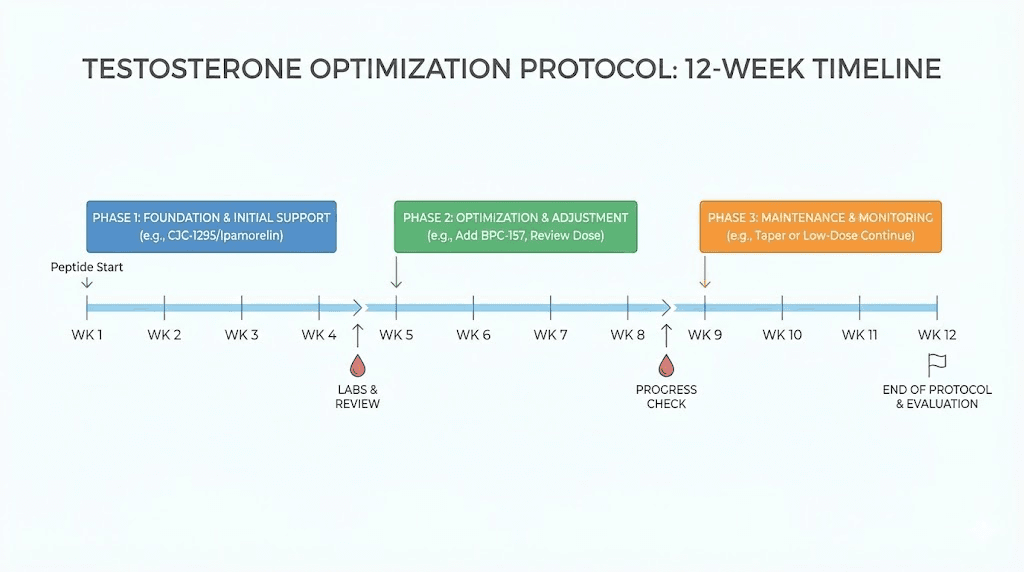
Duration: 8-12 weeks initial cycle with 4-week break before repeating. Blood work before starting, at 6 weeks, and after completion tracks testosterone response. Most beginners experience measurable improvements within the first cycle, with cumulative benefits through subsequent cycles.
The getting started with peptides guide provides comprehensive preparation information for those beginning peptide optimization. Understanding peptide reconstitution and storage requirements ensures compound stability and effectiveness throughout protocols.
Intermediate optimization stack
After establishing baseline response to simpler protocols, intermediate stacks add compounds for enhanced effects. A typical intermediate testosterone stack combines CJC-1295 with ipamorelin for amplified growth hormone release, adds BPC-157 for systemic support, and includes gonadorelin for direct gonadotropin stimulation.
Sample intermediate protocol:
Morning: CJC-1295 (no DAC) 100mcg + Ipamorelin 100mcg fasted
Afternoon: BPC-157 250mcg (optional, around workout if training)
Evening: CJC-1295 (no DAC) 100mcg + Ipamorelin 100mcg before bed
Weekly: Gonadorelin 300mcg Monday, Wednesday, Friday
This stack addresses growth hormone optimization, tissue support, and direct gonadotropin stimulation simultaneously. The combination typically produces more robust testosterone improvements than beginner stacks, though individual responses vary. The weight loss peptide stacks overlap with testosterone stacks, as improved body composition enhances hormonal profiles.
Advanced comprehensive stack
Advanced stacks maximize testosterone optimization through multiple mechanisms, requiring experience with individual compounds before combination. These protocols demand meticulous attention to timing, dosing, and monitoring.
Comprehensive testosterone optimization protocol:
Morning fasted: CJC-1295 (no DAC) 100mcg + Ipamorelin 200mcg
Pre-workout: BPC-157 250mcg
Post-workout: TB-500 500mcg (loading phase, reduce to 2-3x weekly for maintenance)
Evening before bed: CJC-1295 (no DAC) 100mcg + Ipamorelin 200mcg + DSIP 200mcg
Monday/Wednesday/Friday: Gonadorelin 300-500mcg
As needed: PT-141 1-2mg for sexual function support
This stack addresses every aspect of testosterone optimization: growth hormone through secretagogues, tissue health through repair peptides, sleep quality through DSIP, direct gonadotropin support through gonadorelin, and sexual function through PT-141. The complexity requires established routines and commitment to consistent administration.
Cycling and periodization
Continuous peptide use may reduce receptor sensitivity over time, making cycling strategies important for long-term testosterone optimization. Standard approaches cycle on periods of 8-12 weeks followed by off periods of 4-6 weeks. Some compounds tolerate longer continuous use while others require more frequent breaks.
Periodization example:
Weeks 1-10: Full testosterone stack
Weeks 11-14: Off period (may continue BPC-157 at lower doses if needed for injury)
Weeks 15-24: Resume full stack or modified version based on response
Weeks 25-28: Off period
During off periods, maintaining healthy lifestyle factors, optimizing sleep, managing stress, and supporting nutrition preserves hormonal gains. Some men find testosterone improvements persist well beyond active peptide use, while others experience gradual return toward baseline requiring resumed protocols. The peptide cycle planning resource helps structure individual approaches.
Dosing protocols and timing optimization
Precise dosing and timing significantly impact testosterone outcomes from peptide protocols. Understanding pharmacokinetics, meal timing effects, and circadian hormone patterns allows optimization beyond standard recommendations.
Fasted administration importance
Most growth hormone secretagogue peptides require fasted administration for optimal effectiveness. Food in the stomach, particularly carbohydrates and fats, blunts growth hormone release response to secretagogue peptides. Fasting for at least 90 minutes before and 30 minutes after injection maximizes growth hormone elevation.
Practical approaches include morning injection immediately upon waking, before breakfast consumption. Evening injections work best at least 2-3 hours after dinner, before bedtime. Some users find midday dosing challenging due to eating patterns, leading to twice-daily rather than three-times-daily protocols.
BPC-157 and TB-500 do not require fasted administration, providing flexibility in timing these compounds. Many users inject repair peptides around workout times for convenience, though effectiveness does not depend on meal timing. The peptide dosing fundamentals explain timing considerations for each compound category.
Circadian rhythm considerations
Natural testosterone production follows circadian patterns, peaking in early morning hours and declining throughout the day. Growth hormone similarly peaks during early sleep phases. Aligning peptide administration with these natural rhythms may enhance effectiveness.
Optimal timing structure:
Early morning (6-7am): Growth hormone secretagogues support natural morning hormonal peaks
Pre-workout (if training in afternoon): Tissue repair peptides
Evening before bed (9-10pm): Growth hormone secretagogues enhance nocturnal hormone release
Sleep peptides (DSIP): 30-60 minutes before intended sleep time
Men working night shifts or with irregular schedules may need modified approaches. The goal remains consistent timing relative to sleep patterns rather than absolute clock time. Those with severely disrupted circadian rhythms should address sleep hygiene alongside peptide protocols for optimal testosterone outcomes.
Dose calculation and adjustment
While standard doses provide starting points, individual optimization often requires adjustment based on response. Factors affecting ideal dosing include body weight, age, baseline hormone levels, lifestyle factors, and individual sensitivity. The peptide calculator provides weight-based starting recommendations.
Adjustment guidelines:
If minimal response after 4-6 weeks: Consider 25-50% dose increase
If significant side effects: Reduce dose by 25-50% or split into more frequent smaller doses
If good response but plateauing: May benefit from cycling rather than dose increase
If excellent response at low doses: Maintain minimal effective dose rather than escalating
Blood work provides objective guidance for dosing decisions. Testing testosterone, free testosterone, estradiol, LH, FSH, and IGF-1 before, during, and after protocols reveals individual response patterns. SeekPeptides helps users interpret results and adjust protocols for optimal testosterone outcomes.
Reconstitution and administration
Proper peptide handling ensures potency and safety throughout protocols. Testosterone optimization requires consistent peptide quality, making reconstitution and storage practices critical success factors.
Reconstitution basics
Peptides typically arrive as lyophilized powder requiring reconstitution with bacteriostatic water before injection. The bacteriostatic water guide explains proper water selection, while the reconstitution calculator provides precise mixing calculations.
Standard reconstitution process:
1. Allow lyophilized peptide vial to reach room temperature
2. Draw appropriate amount of bacteriostatic water into syringe
3. Insert needle through vial stopper, letting water run down the side slowly
4. Never shake, instead gently swirl or leave to dissolve naturally
5. Once fully dissolved, store in refrigerator
Common reconstitution volumes simplify dose calculations. For a 5mg peptide vial, using 2ml bacteriostatic water creates 2.5mg/ml solution where 0.1ml (10 units on insulin syringe) equals 250mcg. The peptide dosage calculation guide covers various reconstitution scenarios.
Storage and stability
Reconstituted peptides require refrigeration, with most remaining stable for 3-4 weeks when properly stored. The peptide refrigeration stability varies by compound, with some remaining potent for weeks while others degrade more rapidly.
Storage guidelines:
Unreconstituted lyophilized peptides: Room temperature acceptable short-term, refrigeration extends stability to 2+ years, freezer for longest storage
Reconstituted peptides: Always refrigerate (36-46°F), use within 3-4 weeks, protect from light
Never freeze reconstituted peptides: Ice crystal formation damages peptide structure
Avoid temperature fluctuations: Consistent cool storage maintains potency
Signs of degraded peptides include cloudiness, particulates, unusual color, or reduced effectiveness. When in doubt, replace with fresh reconstitution rather than risking compromised protocols. The peptide expiration guide helps assess peptide viability.
Injection techniques
Subcutaneous injection represents the standard administration route for most testosterone-supporting peptides. Insulin syringes with 29-31 gauge needles provide comfortable, precise delivery. Common injection sites include abdomen (1-2 inches from navel), upper thigh, and upper arm.
Subcutaneous injection process:
1. Clean injection site with alcohol swab
2. Allow to dry completely (prevents stinging)
3. Pinch skin fold at injection site
4. Insert needle at 45-90 degree angle depending on fat depth
5. Inject slowly and steadily
6. Remove needle and apply light pressure if needed
7. Rotate injection sites to prevent tissue irritation
The peptide injection guide provides detailed visual instructions for proper technique. Most users find injection becomes routine within a few administrations, with minimal discomfort when using appropriate needle sizes and rotating sites.
Monitoring and blood work
Objective monitoring through blood work ensures testosterone optimization protocols produce intended effects and allows evidence-based adjustments. Testing before, during, and after peptide cycles provides comprehensive understanding of individual response.
Essential baseline testing
Before beginning testosterone peptide protocols, comprehensive baseline testing establishes reference points for measuring improvement. Essential tests include total testosterone, free testosterone, estradiol, LH, FSH, SHBG, prolactin, and IGF-1. Thyroid panel and complete metabolic panel provide broader hormonal context.
Ideal baseline panel:
Total testosterone and free testosterone: Primary outcomes
Estradiol (sensitive assay): Testosterone-to-estrogen ratio
LH and FSH: Pituitary function assessment
SHBG: Free testosterone calculation and binding assessment
Prolactin: Rule out prolactin-related suppression
IGF-1: Growth hormone axis assessment
Thyroid panel (TSH, free T4, free T3): Metabolic optimization
Complete metabolic panel: Overall health markers
Testing should occur in the morning (before 10am) when testosterone peaks, fasted for accurate metabolic markers. Avoiding unusual stressors, alcohol, or poor sleep before testing prevents confounding factors. This baseline testing costs $200-400 through direct-access lab services.
Progress monitoring schedule
Testing during protocols tracks response and guides adjustments. Most users benefit from mid-protocol testing around 4-6 weeks, then post-protocol testing 2-4 weeks after completing a cycle. This schedule captures acute response and sustained effects.
Testing timeline:
Week 0: Comprehensive baseline before starting
Week 6: Mid-cycle check focusing on testosterone, IGF-1, and any concerning symptoms
Week 12: End of cycle (if 12-week protocol) or near end
Week 16: Post-cycle assessment (4 weeks after stopping)
Some users test more frequently, while others find this schedule sufficient. Cost considerations influence testing frequency, though insufficient monitoring risks missing important response patterns. The peptide research resources help interpret results in context of published data.
Interpreting testosterone changes
Testosterone response to peptides varies significantly between individuals. Some men experience dramatic improvements of 200-400 ng/dL or more, while others see modest 50-100 ng/dL increases. Response depends on baseline levels, underlying causes of suppression, protocol quality, and individual physiology.
Response categories:
Excellent response: 30%+ testosterone increase with symptom improvement
Good response: 15-30% increase with noticeable benefits
Modest response: 5-15% increase, may need protocol optimization
Minimal response: Less than 5% change, consider alternative approaches
Free testosterone and testosterone-to-estrogen ratios often matter more than total testosterone alone. Some men achieve better symptom resolution with moderate total testosterone improvements when free testosterone and estrogen balance improve significantly.
The peptide before and after results show typical response ranges.
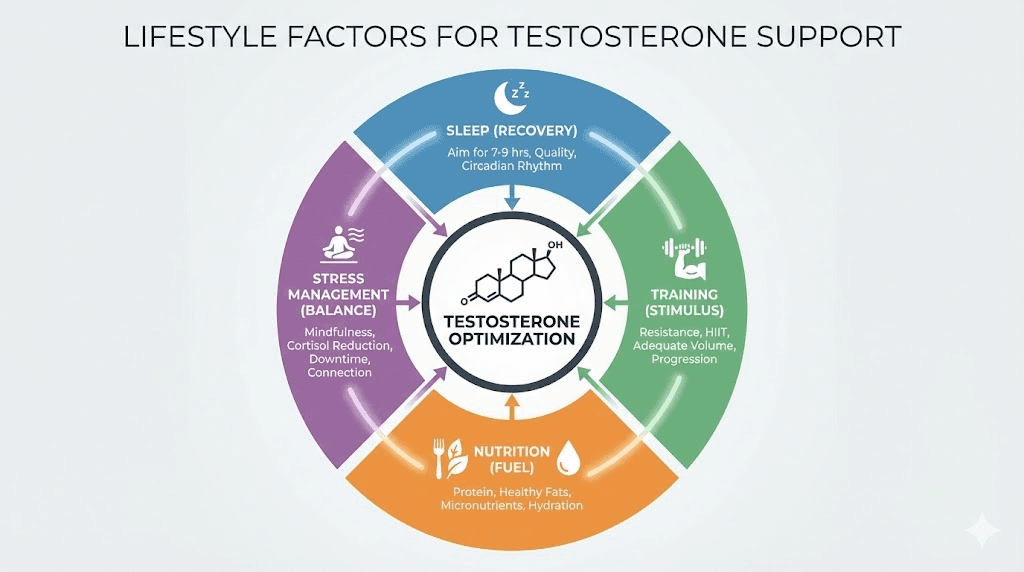
Lifestyle factors amplifying peptide effectiveness
Peptides work best within overall lifestyle frameworks supporting testosterone production. Addressing sleep, exercise, nutrition, and stress management creates foundations allowing peptides to optimize rather than compensate.
Sleep optimization
Testosterone production peaks during deep sleep, making sleep quality essential for peptide protocol success. Men averaging less than 6 hours of sleep show 10-15% lower testosterone than those sleeping 7-8 hours. Sleep quality matters equally, with fragmented sleep impairing hormonal recovery even when total duration seems adequate.
Sleep hygiene for testosterone:
Consistent schedule: Same bedtime and wake time, including weekends
Cool dark environment: 65-68°F, blackout conditions, minimal electronics
Evening routine: Wind-down period without screens or stimulation
Limit alcohol: Even moderate drinking disrupts sleep architecture and testosterone
Strategic peptide timing: DSIP and growth hormone secretagogues before bed enhance sleep
The sleep peptides complement lifestyle improvements, but peptides cannot fully compensate for poor sleep hygiene. Addressing environmental and behavioral factors creates foundations for optimal peptide response.
Training strategies
Exercise, particularly resistance training, potently stimulates testosterone production. Compound movements engaging large muscle groups produce greatest hormonal response. Protocols emphasizing squats, deadlifts, rows, presses, and pulls at challenging intensities maximize exercise-induced testosterone elevation.
Training principles for testosterone:
Compound movements: Prioritize multi-joint exercises over isolation
Challenging intensity: Working sets at 75-85% of maximum effort
Adequate volume: 10-20 sets per muscle group weekly
Rest optimization: 2-3 minutes between heavy compound sets
Overtraining avoidance: Training too much suppresses testosterone
Peptides enhance recovery from training, allowing consistent challenging workouts that themselves stimulate testosterone. The muscle growth peptides support training adaptation while the injury recovery peptides prevent training interruptions from minor injuries.
Nutritional foundations
Dietary factors influence testosterone through multiple mechanisms including cholesterol availability for hormone synthesis, micronutrient support for enzyme function, and body composition effects on aromatization. Neither extreme caloric restriction nor massive surplus optimizes testosterone.
Nutrition for testosterone optimization:
Adequate calories: Chronic deficit suppresses testosterone, aim for maintenance or slight surplus if building muscle
Sufficient fat: 20-35% of calories from fat, including saturated and monounsaturated sources
Protein adequacy: 0.8-1g per pound of body weight for active individuals
Micronutrient attention: Zinc, magnesium, vitamin D, and B vitamins particularly important
Limit processed foods: Inflammatory markers from poor diet suppress testosterone
Testing for vitamin D, zinc, and magnesium deficiencies and correcting as needed creates foundations for peptide optimization. These nutrients directly support testosterone synthesis, making deficiency correction a high-impact intervention.
Stress management
Chronic stress elevates cortisol, which directly antagonizes testosterone production at multiple points in the hormonal cascade. The hypothalamus responds to elevated cortisol by reducing GnRH output, pituitary sensitivity to GnRH decreases, and Leydig cell function diminishes. Managing stress represents essential testosterone optimization strategy.
Stress reduction approaches:
Regular physical activity: Exercise itself reduces stress hormones
Meditation or breathing practices: Even 10 minutes daily produces measurable cortisol reduction
Social connection: Healthy relationships support hormonal balance
Work-life boundaries: Chronic overwork without recovery impairs testosterone
Nature exposure: Time outdoors reduces cortisol and supports circadian rhythms
Peptides like selank and anxiety-supporting peptides complement behavioral stress management, though they work best alongside lifestyle approaches rather than replacing them.
Safety considerations and side effects
While peptides generally demonstrate excellent safety profiles compared to hormonal drugs, understanding potential issues ensures informed decision-making and appropriate response to any concerning symptoms.
Common side effects
Growth hormone secretagogues may cause water retention, particularly during initial use. This typically resolves after 2-4 weeks as the body adjusts. Hunger increase from compounds affecting ghrelin pathways can complicate calorie management for those prioritizing fat loss.
Typical side effects by category:
Growth hormone peptides: Water retention, increased hunger, tingling in extremities, occasional headaches
Tissue repair peptides: Generally very well tolerated, occasional injection site reactions
Sleep peptides: Morning grogginess if dosed too high, occasional vivid dreams
Gonadotropin peptides: May cause temporary testicular sensitivity as activity increases
Most side effects resolve with dose adjustment or continued use as tolerance develops. The peptide safety guide provides detailed information on managing common reactions.
Contraindications and cautions
Certain conditions warrant caution or contraindicate peptide use for testosterone optimization. Active cancer or history of hormone-sensitive cancers requires careful consideration of any hormonal intervention. Growth hormone optimization may theoretically promote tumor growth in those with existing malignancies.
Conditions requiring medical guidance:
Active or recent cancer, particularly prostate or hormone-sensitive types
Diabetes or pre-diabetes (growth hormone can affect insulin sensitivity)
Cardiovascular disease (some peptides affect blood pressure)
Liver or kidney disease (affects peptide metabolism)
Active infections or wounds (some peptides may affect healing differently)
Men taking prescription medications should discuss peptide use with their healthcare providers. While interactions are uncommon, comprehensive medical oversight ensures safety, particularly for those with complex health situations.
Quality and purity concerns
Peptide quality varies significantly between sources, with some products containing incorrect compounds, inadequate purity, or contamination. Prioritizing vendors providing third-party testing ensures receiving what you intend to use. The peptide vendor evaluation helps assess quality markers.
Quality verification:
Third-party testing: Certificate of analysis from independent laboratory
Purity standards: Look for 98%+ purity with minimal impurities
Proper storage: Vendor should ship with appropriate cold packing
Reputation: Established vendors with verified customer reviews
Consistent effects: Same compound from same source should produce similar results
The peptide testing interpretation guide helps evaluate certificates of analysis. Spending slightly more for verified quality protects both health and investment in testosterone optimization.
Comparing peptides to other testosterone approaches
Understanding how peptides compare to alternative testosterone optimization approaches helps determine optimal strategies for individual situations.
Peptides vs testosterone replacement
Testosterone replacement therapy directly supplies testosterone, bypassing natural production pathways. This approach provides reliable testosterone elevation but typically suppresses natural production through negative feedback. Men using TRT often experience testicular atrophy and may require lifelong treatment.
Peptides supporting testosterone work with natural production mechanisms rather than replacing them. This preserves testicular function and fertility potential while optimizing hormonal environment. However, peptide approaches may produce less dramatic testosterone elevation compared to direct replacement.
Comparison considerations:
Testosterone replacement: More reliable elevation, suppresses natural production, potential fertility issues, requires ongoing treatment
Peptide optimization: Supports natural production, maintains fertility, variable response, may cycle on and off
Combination approach: Some men use peptides alongside low-dose TRT for comprehensive optimization
The testosterone boosters vs peptides comparison explores these distinctions further. Men with primary hypogonadism (testicular failure) may benefit more from TRT, while those with secondary hypogonadism (hypothalamic/pituitary issues) often respond well to peptides.
Peptides vs natural supplements
Natural testosterone supplements include compounds like ashwagandha, tongkat ali, and fenugreek. These may provide modest testosterone support through stress reduction, enzyme modulation, or other mechanisms. However, effects are generally smaller than peptide approaches.
Peptides work through specific receptor binding and hormonal signaling rather than the indirect mechanisms of herbal supplements. This specificity produces more reliable, measurable effects. Many men use supplements alongside peptides, though peptides typically contribute the primary testosterone optimization effect.
Peptides vs clomiphene
Clomiphene citrate, a selective estrogen receptor modulator, blocks estrogen feedback at the hypothalamus and pituitary, increasing gonadotropin release and testosterone production. This prescription medication provides an alternative to TRT that preserves natural production.
Compared to peptides, clomiphene has longer clinical history and predictable response patterns. However, it only works through estrogen receptor blockade, while peptides can address multiple mechanisms. Some men respond better to clomiphene, others to peptides, and some benefit from combining approaches.
Enclomiphene, the more active isomer of clomiphene, has gained attention as a more targeted option with potentially fewer side effects. The SeekPeptides resource library covers various testosterone optimization approaches.
Age-specific considerations
Testosterone needs and peptide response vary across age groups, with different priorities and approaches for men in their 20s, 30s, 40s, and beyond.
Testosterone peptides for younger men
Men in their 20s and early 30s typically have robust natural testosterone production, making optimization rather than replacement the appropriate approach. Peptides supporting growth hormone, sleep quality, and recovery often provide noticeable benefits even when testosterone levels appear adequate on testing.
Focus areas for younger men:
Recovery optimization: Growth hormone peptides enhance training adaptation
Sleep quality: DSIP and evening secretagogues support natural hormone cycles
Injury prevention and healing: BPC-157 and TB-500 protect against training setbacks
Foundation building: Establishing peptide experience for potential future needs
Younger men should prioritize lifestyle optimization alongside any peptide use. Relying on peptides while neglecting sleep, nutrition, and training limits potential and may mask underlying issues better addressed directly.
Testosterone peptides in middle age
Men in their 40s and 50s often experience measurable testosterone decline, with natural levels 20-40% lower than their 20s peak. Peptide optimization becomes increasingly valuable for maintaining vitality, body composition, and cognitive function during this transition.
Middle age priorities:
Comprehensive optimization: Multiple peptide mechanisms address various declining pathways
Body composition support: Preventing visceral fat accumulation that accelerates hormonal decline
Recovery maintenance: Growth hormone peptides support continued training capacity
Cognitive support: Peptides affecting brain function become increasingly relevant
The peptides for hormonal transition and age-related optimization guides (though focused on women) contain principles applicable to men navigating hormonal changes.
Testosterone peptides for older men
Men in their 60s and beyond face more significant testosterone decline, often warranting more aggressive optimization approaches. However, safety considerations increase with age, particularly regarding cardiovascular and prostate health.
Considerations for older men:
Medical supervision: More important as health complexity increases with age
Conservative dosing: Starting lower and increasing gradually based on response
Comprehensive monitoring: Regular blood work tracking multiple health markers
Quality of life focus: Prioritizing functional improvements over numerical optimization
Combined approaches: May benefit from peptides alongside medical testosterone supervision
Older men using peptides should maintain regular prostate screening and cardiovascular monitoring. The safe peptide selection principles apply across genders and ages.
Frequently asked questions
Which peptide is best for testosterone?
No single peptide stands out as universally best for testosterone, as different compounds work through different mechanisms. For most men, a combination approach using growth hormone secretagogues (like ipamorelin or CJC-1295) plus tissue repair peptides (like BPC-157) provides comprehensive support. Those seeking direct gonadotropin stimulation might add gonadorelin or explore kisspeptin.
How long does it take for peptides to increase testosterone?
Most men notice subjective improvements in energy, sleep, and recovery within 2-4 weeks of starting testosterone-supporting peptides. Measurable testosterone increases typically appear on blood work after 6-12 weeks of consistent use. Maximum benefits often develop over 3-6 months of optimized protocols.
Can peptides replace testosterone therapy?
For some men, particularly those with secondary hypogonadism (hypothalamic or pituitary dysfunction), peptides can provide sufficient testosterone optimization without direct replacement. Men with primary hypogonadism (testicular failure) may still require testosterone replacement, though peptides can complement TRT protocols.
Are testosterone peptides legal?
Most testosterone-supporting peptides are legal to purchase for research purposes in many jurisdictions. Regulations vary by location, and peptides are not FDA-approved for hormone optimization. The peptide legality guide covers jurisdictional considerations.
Do testosterone peptides affect fertility?
Unlike testosterone replacement, which suppresses sperm production, peptides supporting testosterone through upstream mechanisms typically preserve or may even enhance fertility. Peptides like gonadorelin specifically maintain testicular function. Men prioritizing fertility should discuss specific protocols with healthcare providers.
What side effects do testosterone peptides cause?
Common side effects include water retention, increased hunger (with growth hormone secretagogues), injection site reactions, and occasional headaches. Most side effects are mild and resolve with dose adjustment. Serious adverse events are uncommon with quality peptides used at appropriate doses.
How SeekPeptides supports testosterone optimization
SeekPeptides provides comprehensive resources for men seeking testosterone optimization through peptide protocols. The platform offers personalized guidance tailored to individual hormonal goals and current testosterone status.
The peptide calculator provides weight-based dosing recommendations for testosterone-supporting peptides. The reconstitution calculator ensures proper preparation, while the stacking calculator helps design comprehensive protocols.
The research library covers every aspect of peptides for men, including specific compound guides, stacking strategies, and dosing protocols. The community provides ongoing support and shared experience from men pursuing similar optimization goals.
SeekPeptides helps navigate the complexity of testosterone optimization through evidence-based guidance and personalized protocol development.
Helpful resources
Related guides worth reading
Recovery and healing:
May your testosterone stay optimized, your peptide protocols stay effective, and your hormonal health stay balanced. Join SeekPeptides.