Jan 15, 2026
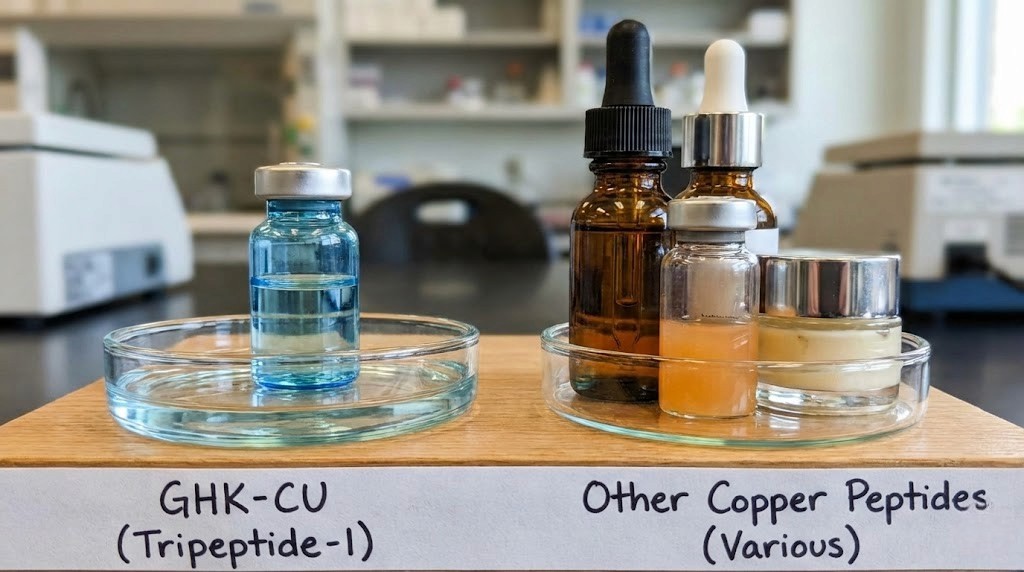
GHK-CU and AHK-CU look nearly identical on paper. Both are copper peptides. Both contain three amino acids bound to a copper ion. Both promise regenerative benefits.
Yet in practice, they produce completely different outcomes for completely different purposes, and choosing the wrong one means months of wasted effort targeting the wrong mechanism entirely.
The confusion extends beyond just these two. First-generation copper peptides, second-generation SRCP formulations, various ratios of peptide to copper, synthetic versus naturally occurring variants, each designed for specific applications that most guides fail to distinguish. This comparison breaks down every copper peptide type currently available, explains the science behind their differences, and provides clear guidance on which one matches your specific goals.
Whether you are targeting skin anti-aging, hair restoration, wound healing, or scar reduction, the right copper peptide choice accelerates results while the wrong choice wastes time and money. SeekPeptides created this guide to eliminate the guesswork and match you with the optimal copper peptide for your needs.
Understanding Copper Peptide Classifications
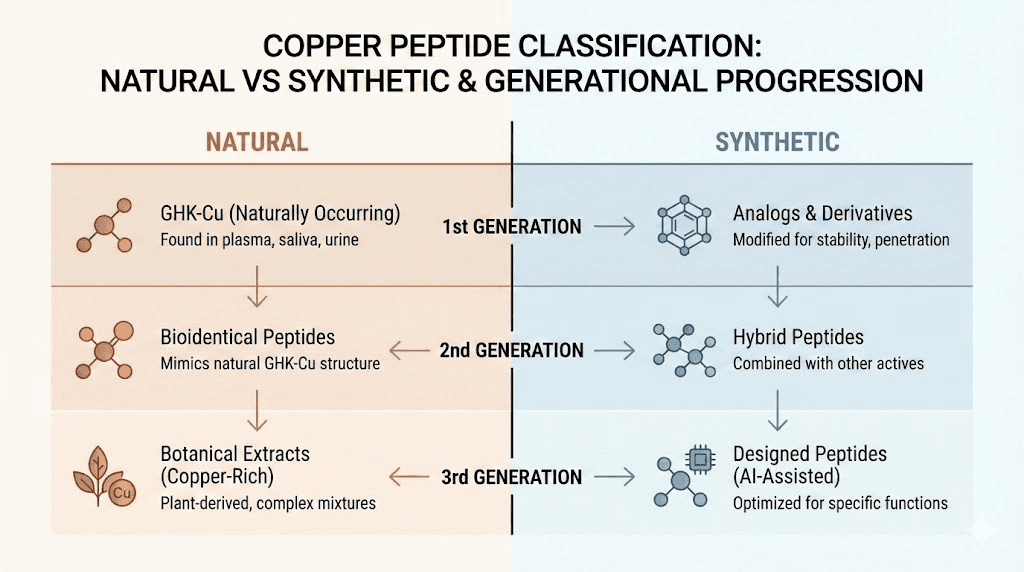
Before comparing specific peptides, understanding how copper peptides are classified helps make sense of the options. The peptide landscape can seem overwhelming, but copper peptides fall into clear categories based on structure, origin, and generation.
Classification by Origin
Category | Examples | Characteristics | Primary Uses |
|---|---|---|---|
Naturally Occurring | GHK-Cu | Found in human plasma, saliva, urine | Broad regenerative benefits |
Synthetic | AHK-Cu | Lab-designed for specific functions | Targeted applications |
Modified Natural | SRCP, (GHK)₂-Cu | Enhanced versions of natural peptides | Improved stability/potency |
Classification by Generation
Generation | Era | Key Advancement | Best For |
|---|---|---|---|
First Generation | Late 1980s | Original discovery, natural formulation | Anti-aging, sensitive skin |
Second Generation | Early 1990s | Enhanced stability, higher potency | Wound healing, scar remodeling |
Third Generation | 2000s+ | Targeted delivery, combination formulas | Specific conditions |
These classifications matter because they determine compatibility with other ingredients, stability in formulations, and optimal use cases. A first-generation copper peptide that breaks down when combined with Vitamin C requires different handling than a second-generation version designed for better stability.
GHK-CU: The Gold Standard Copper Peptide
GHK-CU, also known as Copper Tripeptide-1, represents the most researched and widely used copper peptide. Understanding its properties provides the baseline for comparing all other variants.
Molecular Structure
GHK-CU consists of three amino acids, glycine, histidine, and lysine, bound to a copper ion (Cu²⁺). This specific sequence was first isolated from human plasma in the 1970s, making it a naturally occurring compound that the body already recognizes and utilizes.
The "GHK" designation comes from the single-letter amino acid codes:
G = Glycine
H = Histidine
K = Lysine (using K because L was already assigned to Leucine)
Natural Occurrence and Age-Related Decline
In human plasma, GHK-CU levels start at approximately 200 ng/mL at age 20. By age 60, levels drop to around 80 ng/mL, a 60% reduction. This decline correlates with visible aging signs, reduced wound healing capacity, and decreased tissue regeneration, providing the rationale for supplementation.
Age | Plasma GHK-CU Level | Relative to Peak |
|---|---|---|
20 | ~200 ng/mL | 100% |
30 | ~170 ng/mL | 85% |
40 | ~140 ng/mL | 70% |
50 | ~110 ng/mL | 55% |
60 | ~80 ng/mL | 40% |
Mechanisms of Action
GHK-CU works through multiple pathways simultaneously, which explains its broad range of benefits.
Collagen and Matrix Support: Stimulates synthesis of collagen types I and III, elastin, proteoglycans, and glycosaminoglycans. These are the structural proteins that give skin its firmness and elasticity.
Gene Expression: Research shows GHK-CU affects expression of over 4,000 genes, resetting many to a more youthful expression pattern. This includes upregulating genes associated with tissue repair and downregulating genes associated with inflammation.
Anti-Inflammatory Effects: Reduces inflammatory markers and attracts immune cells to sites of damage, coordinating the healing response.
Antioxidant Activity: Provides direct antioxidant protection and supports the body's own antioxidant systems.
Copper Delivery: Acts as a carrier peptide, delivering bioavailable copper to cells where it serves as a cofactor for numerous enzymes involved in tissue maintenance.
GHK-CU Strengths and Limitations
Strengths | Limitations |
|---|---|
Extensive research backing | Fragile, breaks down easily |
Naturally occurring in body | Incompatible with many actives |
Broad range of benefits | Requires careful formulation |
Well-tolerated by most | May be less potent than newer forms |
Available in multiple forms | Susceptible to enzymatic degradation |
For detailed GHK-CU dosing information, the standard approach involves 1-2mg daily for injectable protocols or 2-4% concentration for topical applications.
AHK-CU: The Hair-Focused Alternative
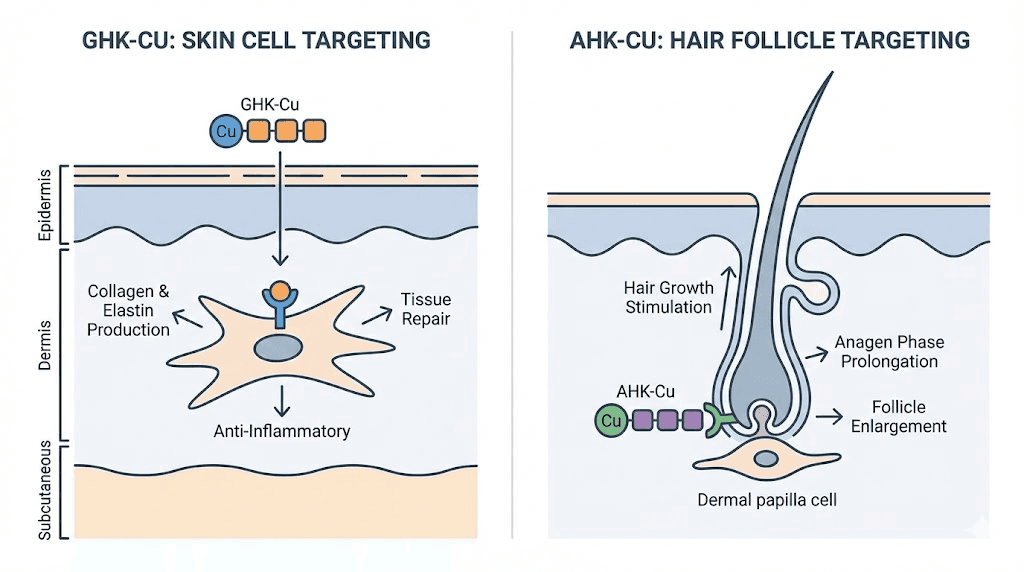
AHK-CU, also known as Copper Tripeptide-3, was specifically engineered for hair and scalp applications. While it shares structural similarities with GHK-CU, the single amino acid difference produces notably different biological effects.
Molecular Structure
AHK-CU consists of alanine, histidine, and lysine bound to copper. The substitution of alanine for glycine in the first position changes the peptide's three-dimensional structure and alters how it interacts with cellular receptors.
The "AHK" designation:
A = Alanine (replacing Glycine)
H = Histidine
K = Lysine
Hair Growth Mechanisms
AHK-CU targets hair follicles through specific pathways that GHK-CU does not activate as strongly.
Wnt Signaling Activation: Stimulates the Wnt/β-catenin pathway, which is critical for hair follicle development and cycling. This promotes transition into the anagen (growth) phase.
DHT Reduction: Research suggests AHK-CU may downregulate 5-alpha reductase, the enzyme that converts testosterone to DHT. DHT is the primary hormone responsible for pattern baldness in both men and women.
Follicular Blood Flow: Improves microcirculation around hair follicles, delivering more nutrients and oxygen to support growth.
Follicle Cell Proliferation: Directly stimulates multiplication of cells within hair follicles, potentially creating larger follicles that produce thicker, stronger hairs.
AHK-CU vs GHK-CU for Hair
Factor | AHK-CU | GHK-CU |
|---|---|---|
Hair follicle targeting | Strong, specific | Moderate, general |
Wnt pathway activation | Yes | Limited |
DHT inhibition | Some evidence | No direct effect |
Scalp repair | Good | Excellent |
Research depth | Less extensive | More extensive |
Skin benefits | Secondary | Primary |
For hair restoration specifically, AHK-CU offers more targeted action. For general scalp health and skin benefits that may indirectly support hair, GHK-CU remains valuable. Many hair loss protocols incorporate both.
SRCP: Second-Generation Copper Peptides
Skin Remodeling Copper Peptides (SRCP) represent an evolution of the original GHK-CU technology, designed to address the stability and potency limitations of first-generation formulations.
Development History
After the discovery of GHK-CU in the 1980s, researchers quickly identified limitations: the peptide was fragile, broke down when exposed to other skincare ingredients, and had limited penetration depth.
The early 1990s saw the development of SRCP formulations that addressed these issues.
Key Improvements Over GHK-CU
Property | GHK-CU (1st Gen) | SRCP (2nd Gen) |
|---|---|---|
Stability | Fragile | Breakdown resistant |
Potency | Standard | Enhanced |
Skin Adherence | Moderate | Higher |
Penetration | Limited | Improved |
Compatibility | Cannot mix with acids, retinoids, Vit C | More compatible |
Best Application | Anti-aging, sensitive skin | Wound healing, scar remodeling |
When to Choose SRCP Over GHK-CU
SRCP formulations excel in specific situations where first-generation copper peptides fall short.
Choose SRCP for:
Active wound healing where penetration matters
Scar remodeling and reduction
Routines that include other active ingredients
Oily or resilient skin types
Maximum potency requirements
Choose GHK-CU for:
General anti-aging maintenance
Sensitive or dry skin
Simple routines without other actives
Injectable protocols (GHK-CU has more research)
Those who prefer naturally occurring compounds
(GHK)₂-CU: The Stabilized Ratio Variant
A less discussed but important variant is (GHK)₂-Cu, which uses a 2:1 ratio of GHK tripeptide to copper instead of the standard 1:1.
Why the Ratio Matters
The 2:1 formulation addresses a specific problem: copper reactivity in certain formulations. When copper ions are too reactive, they can cause oxidation of other ingredients or irritate skin.
By binding two GHK molecules to each copper ion, the reactivity decreases while maintaining biological activity.
Best Applications for (GHK)₂-CU
Scenario | Standard GHK-CU (1:1) | (GHK)₂-CU (2:1) |
|---|---|---|
Acidic formulations | May destabilize | Better stability |
Combination products | Limited compatibility | Improved compatibility |
Sensitive skin | May irritate some | Gentler |
Pure copper peptide focus | Higher copper delivery | Lower copper delivery |
Cost | Standard | Higher (more peptide) |
This variant is primarily relevant for those formulating their own products or evaluating commercial products that list the specific ratio.
Complete Comparison: All Copper Peptide Types
The following comprehensive comparison covers all major copper peptide variants for direct evaluation.
Master Comparison Table
Peptide | Origin | Primary Use | Stability | Research | Cost |
|---|---|---|---|---|---|
GHK-CU | Natural | Skin anti-aging | Fragile | Extensive | $$ |
AHK-CU | Synthetic | Hair growth | Moderate | Limited | $$ |
SRCP | Modified | Wound/scar healing | Excellent | Moderate | $$$ |
(GHK)₂-CU | Modified | Sensitive formulations | Good | Limited | $$$ |
GRK-CU | Synthetic | Research applications | Variable | Minimal | $$$$ |
Comparison by Goal
Goal | Best Choice | Second Choice | Avoid |
|---|---|---|---|
Anti-aging (face) | GHK-CU | SRCP | AHK-CU |
Hair restoration | AHK-CU | GHK-CU | - |
Wound healing | SRCP | GHK-CU | - |
Scar reduction | SRCP | GHK-CU | AHK-CU |
General skin health | GHK-CU | SRCP | - |
Sensitive skin | GHK-CU or (GHK)₂-CU | - | SRCP |
Post-procedure | SRCP | GHK-CU | - |
GHK-CU vs Other Peptides (Non-Copper)
Understanding how copper peptides compare to other peptide types helps contextualize when copper specifically offers advantages.
Copper Peptides vs Signal Peptides
Signal peptides like Matrixyl (Palmitoyl Pentapeptide-4) communicate with cells to increase collagen production. GHK-CU is itself a signal peptide, but with the added benefit of copper delivery.
Factor | GHK-CU | Matrixyl |
|---|---|---|
Mechanism | Signal + copper delivery | Signal only |
Collagen stimulation | Strong | Strong |
Wound healing | Excellent | Moderate |
Anti-inflammatory | Yes | Limited |
Stability | Lower | Higher |
Compatibility | Limited | Broad |
Copper Peptides vs Neurotransmitter-Inhibiting Peptides
Peptides like Argireline work by reducing muscle contractions that cause expression lines. These have completely different mechanisms than copper peptides.
Factor | GHK-CU | Argireline |
|---|---|---|
Primary action | Tissue regeneration | Muscle relaxation |
Best for | Overall aging | Expression lines only |
Systemic benefits | Yes | No |
Can combine? | Yes | Yes |
Results timeline | 8-12 weeks | 2-4 weeks |
Copper Peptides vs Healing Peptides
Peptides like BPC-157 and TB-500 are often compared to copper peptides for healing applications.
Factor | GHK-CU | BPC-157 | TB-500 |
|---|---|---|---|
Skin healing | Excellent | Good | Excellent |
Systemic healing | Moderate | Excellent | Excellent |
Gut healing | Limited | Excellent | Limited |
Administration | Topical + injectable | Injectable + oral | Injectable |
Research base | Strong | Moderate | Moderate |
Skin-specific | Yes | No | No |
For comprehensive healing protocols, many researchers combine GHK-CU with other peptides to address different aspects of tissue repair.
Injectable vs Topical: Which Form for Which Peptide?
Different copper peptide variants work better through different administration routes.
Administration Route by Peptide Type
Peptide | Topical Effectiveness | Injectable Effectiveness | Recommended Route |
|---|---|---|---|
GHK-CU | Good | Excellent | Both viable |
AHK-CU | Excellent (scalp) | Limited data | Topical preferred |
SRCP | Excellent | Limited data | Topical preferred |
(GHK)₂-CU | Good | Limited data | Topical preferred |
When Injectable GHK-CU Makes Sense
The injectable form provides systemic benefits that topical cannot achieve:
Whole-body tissue regeneration effects
Internal organ support
Consistent blood levels
Better bioavailability
Combined with other injectable peptides
When Topical Makes Sense
Topical application excels for:
Targeted skin treatment
Hair and scalp applications
Those avoiding injections
Combination with skincare routines
Localized wound healing
For maximum benefit, some protocols use both injectable GHK-CU for systemic effects and topical copper peptides for targeted skin benefits.
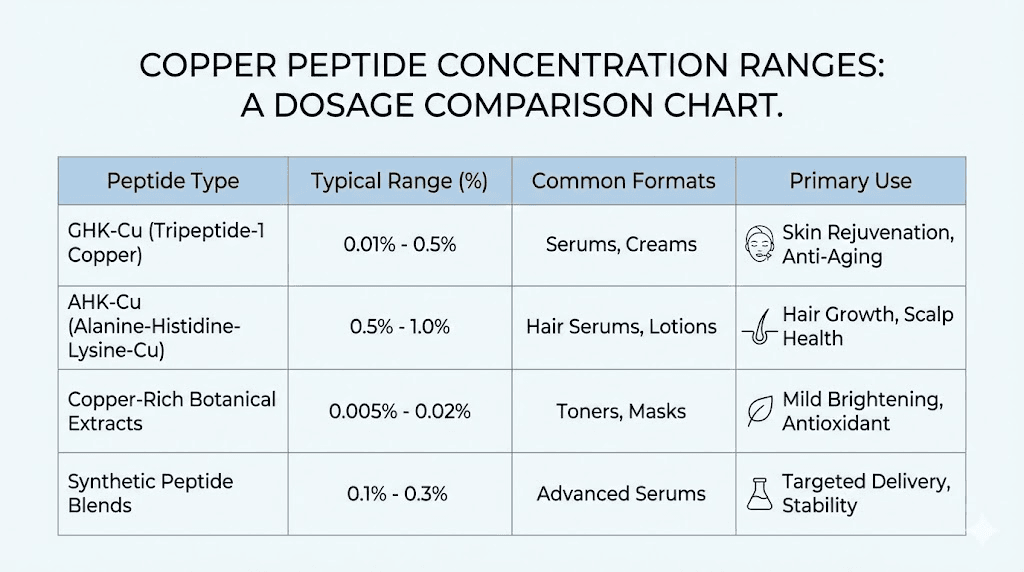
Concentration and Dosing Differences
Each copper peptide type has different effective concentration ranges.
Topical Concentration Guide
Peptide | Low Dose | Standard Dose | High Dose | Maximum |
|---|---|---|---|---|
GHK-CU | 0.5-1% | 2-3% | 4% | 7% |
AHK-CU | 0.5% | 1-2% | 3% | 5% |
SRCP | Use as directed | Varies by product | - | - |
Injectable Dosing (GHK-CU)
Protocol | Dose | Frequency | Duration |
|---|---|---|---|
Beginner | 0.5-1mg | 3-5x/week | 4-6 weeks |
Standard | 1-2mg | 5-7x/week | 8-12 weeks |
Advanced | 2-3mg | Daily | 12-16 weeks |
For complete dosing details, see the GHK-CU dosage chart.
Stability and Storage Differences
Understanding stability characteristics helps preserve potency and guides product selection.
Stability Comparison
Factor | GHK-CU | AHK-CU | SRCP |
|---|---|---|---|
Enzyme resistance | Low | Moderate | High |
pH sensitivity | High | Moderate | Low |
Light sensitivity | Moderate | Moderate | Low |
Heat stability | Low | Moderate | Moderate |
Shelf life (powder) | 2+ years | 2+ years | 2+ years |
Shelf life (reconstituted) | 30 days | 30 days | Varies |
Storage Requirements by Type
Form | GHK-CU | AHK-CU | SRCP |
|---|---|---|---|
Powder | Freezer or refrigerator | Refrigerator | Room temp OK |
Reconstituted | Refrigerator only | Refrigerator | Per product |
Topical product | Refrigerator preferred | Room temp OK | Room temp OK |
The fragility of first-generation GHK-CU explains why proper storage matters so much for this particular peptide.
Compatibility with Other Ingredients
One of the biggest practical differences between copper peptide types is what you can safely combine them with.
Ingredient Compatibility Chart
Ingredient | GHK-CU | AHK-CU | SRCP |
|---|---|---|---|
Vitamin C | NO | NO | Caution |
Retinoids | Alternate | Alternate | OK with buffer |
AHAs/BHAs | NO | Caution | OK |
Niacinamide | YES | YES | YES |
Hyaluronic Acid | YES | YES | YES |
Peptides (other) | YES | YES | YES |
Benzoyl Peroxide | NO | NO | NO |
The limited compatibility of GHK-CU with common skincare actives is its main drawback compared to second-generation formulations. Those wanting to use Vitamin C and copper peptides in the same routine must either alternate days or choose SRCP formulations.
For detailed guidance on building routines with copper peptides, see the copper peptide skincare routine guide.
Cost-Effectiveness Analysis
Different copper peptides represent different value propositions depending on your goals.
Cost Comparison by Application
Goal | Most Cost-Effective | Premium Option | Avoid |
|---|---|---|---|
Face anti-aging | GHK-CU topical | GHK-CU injectable + topical | AHK-CU |
Hair growth | AHK-CU topical | AHK-CU + GHK-CU combo | SRCP |
Wound healing | GHK-CU | SRCP | AHK-CU |
Scar treatment | SRCP | SRCP + injectable GHK-CU | - |
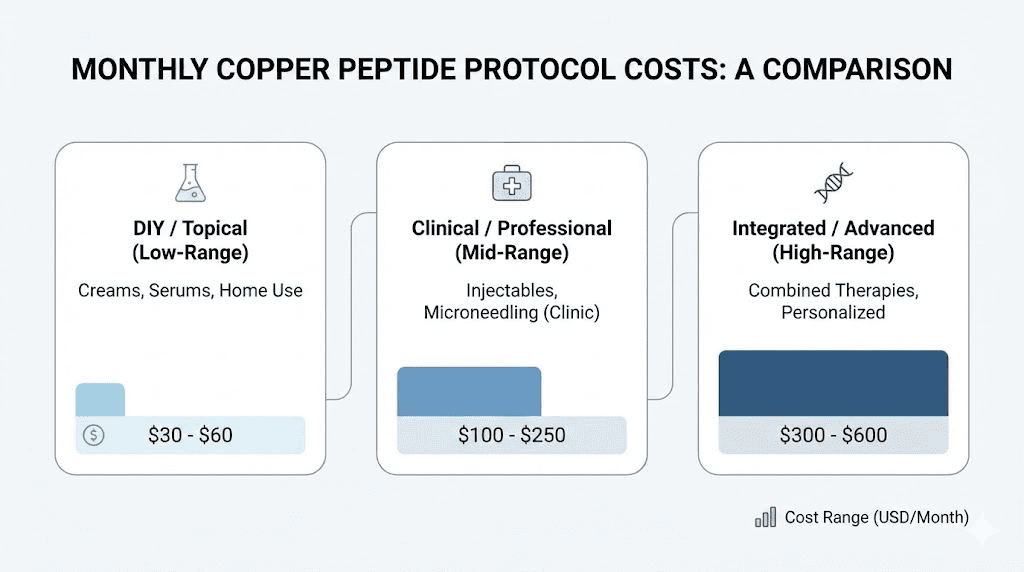
Monthly Cost Estimates
Protocol | Product Needed | Monthly Cost Range |
|---|---|---|
Basic topical GHK-CU | 2% serum | $30-60 |
Premium topical GHK-CU | 4% serum | $50-100 |
Injectable GHK-CU | 50mg vial + supplies | $40-80 |
AHK-CU for hair | Scalp treatment | $40-80 |
SRCP treatment | Specialized product | $60-120 |
For detailed cost calculations, factor in concentration, application frequency, and whether you are using topical, injectable, or both.
Research Evidence Comparison
The depth of scientific support varies significantly between copper peptide types.
Research Summary by Peptide
Peptide | Human Studies | Cell Studies | Animal Studies | Overall Evidence |
|---|---|---|---|---|
GHK-CU | Several | Extensive | Many | Strong |
AHK-CU | Limited | Some | Some | Moderate |
SRCP | Some | Moderate | Some | Moderate |
(GHK)₂-CU | Minimal | Limited | Limited | Limited |
Key Research Findings by Peptide
GHK-CU Research Highlights:
Affects expression of over 4,000 genes
36% reduction in fine lines in clinical studies
40-60% faster wound healing vs controls
Stimulates collagen I, III, and elastin production
Anti-inflammatory and antioxidant effects confirmed
AHK-CU Research Highlights:
Activates Wnt/β-catenin signaling pathway
Promotes anagen (growth) phase in hair cycle
May reduce DHT through 5-alpha reductase inhibition
Improves follicular blood flow
SRCP Research Highlights:
Enhanced penetration vs first-generation
Better stability in formulations
Strong wound healing effects
Effective scar remodeling
For those prioritizing evidence-based choices, GHK-CU has the strongest research foundation. However, absence of extensive research on newer variants does not mean they are ineffective, just less studied.
Making Your Selection: Decision Framework
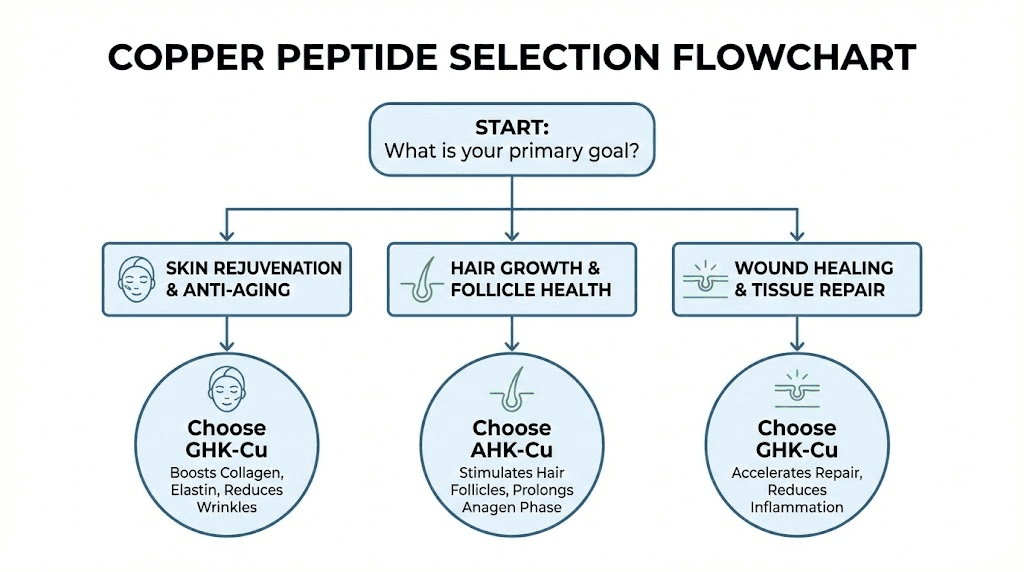
Use this systematic approach to identify the right copper peptide for your situation.
Step 1: Identify Primary Goal
If Your Primary Goal Is... | Start With... |
|---|---|
Face/body skin anti-aging | GHK-CU |
Hair growth/restoration | AHK-CU |
Wound healing | SRCP or GHK-CU |
Scar reduction | SRCP |
General wellness/longevity | GHK-CU injectable |
Step 2: Consider Your Routine
If Your Routine Includes... | Consider... |
|---|---|
Vitamin C | SRCP or alternate days with GHK-CU |
Retinoids | Any copper peptide (alternate application) |
AHAs/BHAs | SRCP or separate routines |
Only hydrating products | Any copper peptide (GHK-CU is fine) |
Step 3: Evaluate Skin Type
Skin Type | Best Copper Peptide Choice |
|---|---|
Sensitive/reactive | GHK-CU at low concentration (1-2%) |
Normal | Any, based on goals |
Oily/resilient | SRCP for enhanced penetration |
Mature/dry | GHK-CU with hydrating base |
Step 4: Finalize Administration Method
Preference | Recommendation |
|---|---|
Topical only | Select based on goals above |
Open to injections | Consider GHK-CU injectable for systemic benefits |
Want maximum results | Combine injectable + topical GHK-CU |
Hair-specific | Topical AHK-CU (injections not well-studied) |
SeekPeptides members get access to personalized protocol recommendations based on individual goals and existing routines.
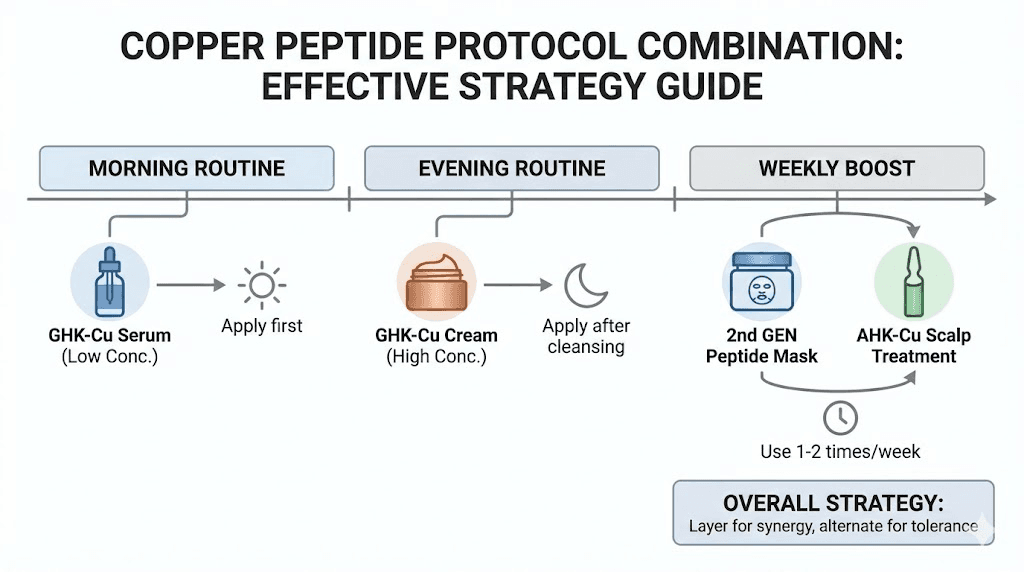
Combining Multiple Copper Peptides
In some cases, using multiple copper peptide types provides benefits that single-peptide protocols cannot achieve.
Effective Combination Protocols
Goal | Combination | Application |
|---|---|---|
Hair + Scalp Health | AHK-CU + GHK-CU | AHK-CU on scalp, GHK-CU for scalp skin |
Face + Body | GHK-CU injectable + topical | Systemic + targeted |
Anti-aging + Healing | GHK-CU + SRCP | GHK-CU maintenance, SRCP for wounds |
Maximum Skin Benefits | GHK-CU + TB-500 | See Glow Stack |
What Not to Combine
Avoid using multiple copper peptides on the same area at the same time. This provides no additional benefit and may cause irritation or copper excess locally. Instead, use different peptides for different areas or rotate between them.
Frequently Asked Questions
What is the difference between GHK-CU and Copper Tripeptide-1?
They are the same thing. GHK-CU is the scientific name (Glycyl-L-Histidyl-L-Lysine Copper), while Copper Tripeptide-1 is the INCI (International Nomenclature of Cosmetic Ingredients) name used on product labels. Both refer to the same naturally occurring copper peptide.
Can I use GHK-CU for hair loss?
GHK-CU provides some benefit for hair through general tissue support and scalp health, but AHK-CU is specifically designed for hair restoration with targeted mechanisms. For serious hair loss concerns, AHK-CU is the better primary choice, potentially combined with GHK-CU for scalp health.
Is SRCP better than GHK-CU?
Better depends on your goal. SRCP offers improved stability, higher potency, and better compatibility with other ingredients. However, GHK-CU has more research support and may be gentler for sensitive skin. For wound healing and scar treatment, SRCP often performs better. For general anti-aging, GHK-CU remains the gold standard.
Why can't I use copper peptides with Vitamin C?
Copper ions catalyze the oxidation of Vitamin C (ascorbic acid), causing it to break down rapidly and potentially creating irritating byproducts. This applies most strongly to first-generation GHK-CU. SRCP formulations have better compatibility but caution is still advised. The safest approach is using on alternate days.
Which copper peptide has the most research?
GHK-CU has by far the most extensive research, with studies spanning decades covering wound healing, gene expression, collagen synthesis, and anti-aging effects. AHK-CU and SRCP have less published research, though available studies support their claimed benefits.
Can I inject AHK-CU like GHK-CU?
AHK-CU is primarily used topically and does not have the same research base for injectable use that GHK-CU does. For injectable copper peptide protocols, GHK-CU remains the established choice.
What concentration of copper peptide should I start with?
For GHK-CU and AHK-CU, start with 1-2% concentration regardless of which type you choose. This allows assessment of tolerance before increasing. Higher concentrations (3-4%+) are for experienced users who have established tolerance. Check the dosage chart for detailed recommendations.
Are there side effects to different copper peptide types?
All copper peptides share similar potential side effects: temporary redness, irritation with high concentrations, and possible allergic reaction in those with copper sensitivity. SRCP may cause more irritation due to higher potency. GHK-CU tends to be gentlest. See the troubleshooting guide for managing reactions.
External Resources
Regenerative and Protective Actions of the GHK-Cu Peptide - NIH
GHK Peptide as a Natural Modulator in Skin Regeneration - NIH
In case I don't see you, good afternoon, good evening, and good night. May your peptide choices stay informed, your results stay visible, and your protocols stay optimized. Join SeekPeptides.