Jan 26, 2026
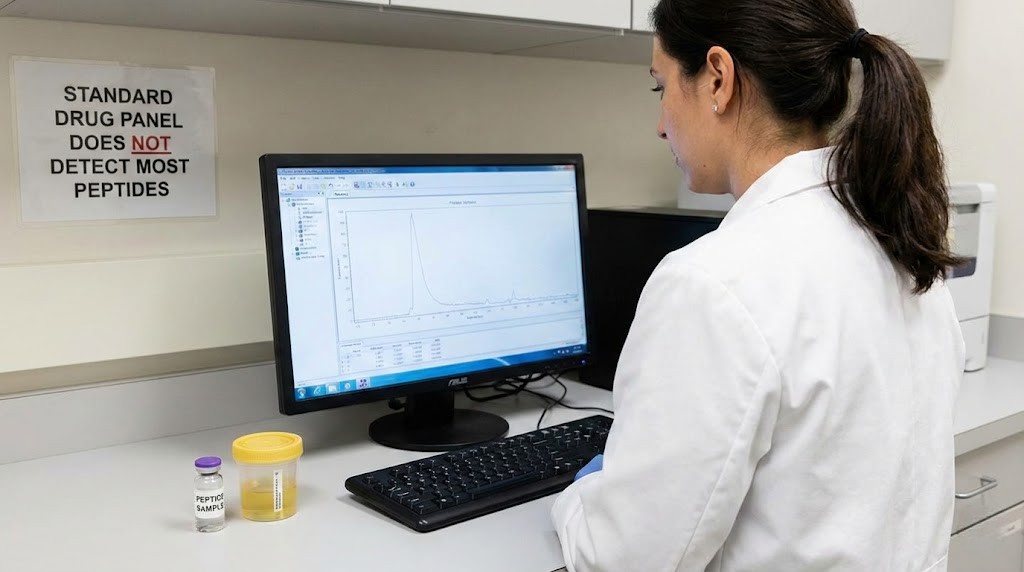
You ordered peptides. They arrived yesterday. And now you are staring at that vial wondering one thing: will this show up on my drug test next week?
It is a fair question. The answer depends entirely on what kind of test you are facing.
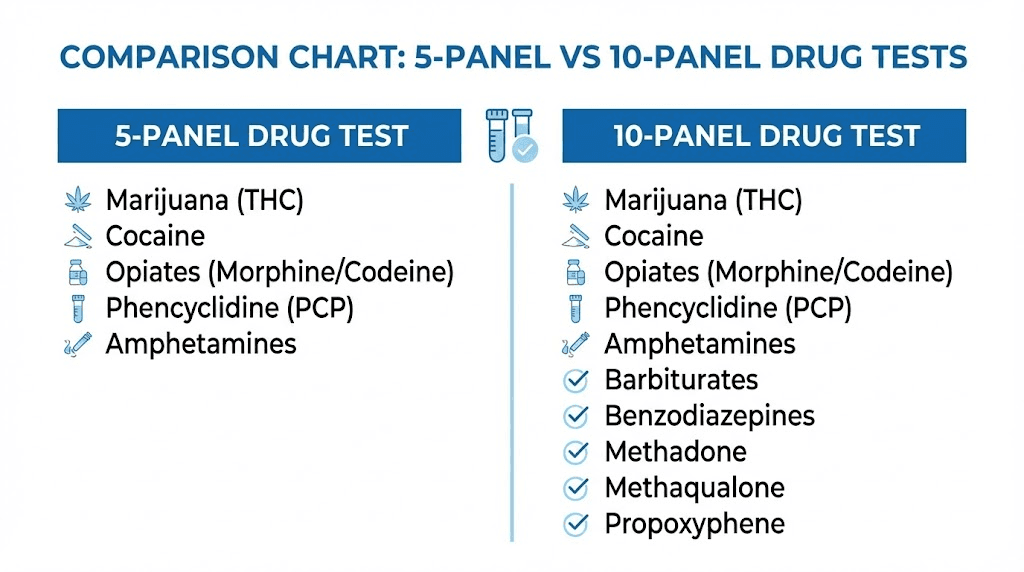
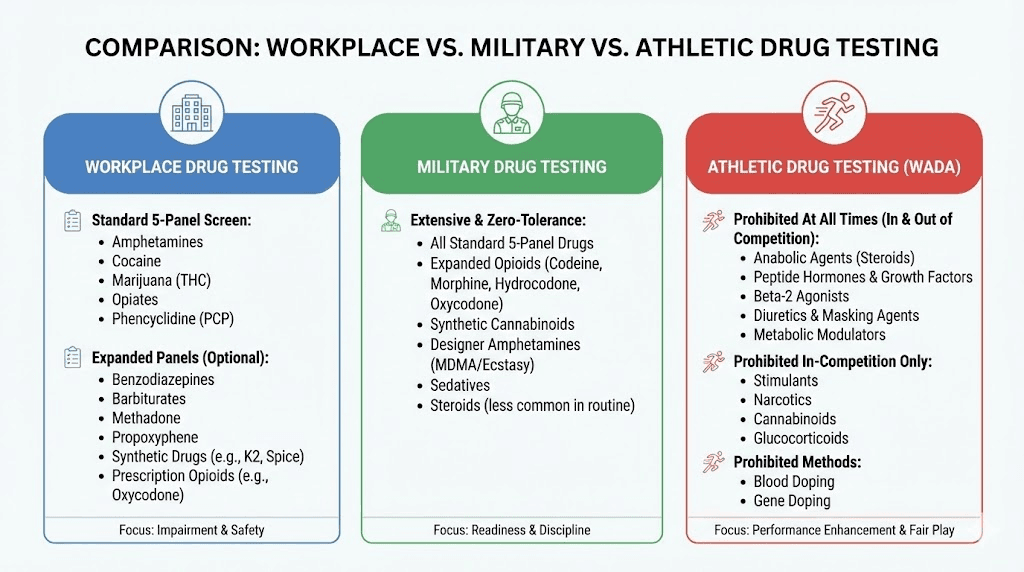
Standard workplace drug screens do not look for peptides. They never have. The 5-panel and 10-panel tests that employers use screen for marijuana, cocaine, opiates, amphetamines, and PCP. Some expanded panels add benzodiazepines, barbiturates, and methadone. But peptides? They are not on the list. These tests were designed decades ago to catch recreational drugs, not research compounds that most lab technicians have never heard of.
Athletic anti-doping tests are a completely different situation. The World Anti-Doping Agency maintains a prohibited list that includes dozens of performance peptides. WADA-accredited laboratories use high-resolution mass spectrometry to detect these compounds at concentrations measured in nanograms per milliliter. If you compete in sanctioned sports, peptides absolutely can and will be detected.
This guide breaks down every scenario. Which peptides are detectable. How long they stay in your system. What tests actually look for them. And crucially, what the legal implications are in different contexts. Because understanding detection is not just about passing a test. It is about making informed decisions with full knowledge of the risks. SeekPeptides exists precisely for this purpose, providing the research-backed information that lets you navigate peptide use safely and intelligently.
Understanding how drug tests actually work
Before diving into peptide-specific detection, you need to understand what drug tests are designed to find. Most people assume all drug tests are created equal. They are not. The differences matter enormously.
A standard workplace drug screen is looking for metabolites of common recreational drugs. The test does not actually detect the drug itself in most cases. It detects what your body produces when breaking that drug down. THC metabolites. Cocaine metabolites. Opiate metabolites. These compounds are chemically distinct from peptides in every way.
Immunoassay testing, which is what most workplace panels use, works by antibody recognition. Antibodies are designed to bind to specific molecular structures. The antibodies in a standard drug test have no affinity for peptide structures whatsoever. You could have a bloodstream full of BPC-157 and TB-500 and a standard immunoassay would show nothing unusual.
Mass spectrometry is different. This technology can identify compounds by their exact molecular weight and fragmentation pattern. Anti-doping laboratories use liquid chromatography coupled with high-resolution mass spectrometry, often called LC-HRMS. This equipment costs hundreds of thousands of dollars. It requires specialized training to operate. And it can detect peptides at remarkably low concentrations.
The distinction is critical. Workplace testing uses cheap, fast immunoassay panels that ignore peptides entirely. Anti-doping testing uses expensive, sophisticated mass spectrometry that can identify specific peptides by their molecular fingerprint.
The 5-panel drug test explained
The 5-panel drug test is the most common workplace screening in the United States. The National Institute on Drug Abuse developed this panel in the 1980s. It remains the federal standard for DOT-regulated employees and many private employers.
These five substances are tested:
Marijuana (THC) and its metabolites, including THC-COOH
Cocaine and its primary metabolite benzoylecgonine
Opiates including heroin, morphine, and codeine
Amphetamines including methamphetamine and MDMA
Phencyclidine (PCP)
Notice what is absent. No growth hormone releasing peptides. No healing peptides. No weight loss peptides. No collagen peptides. The test was never designed to detect these compounds and it does not detect them.
If your employer uses a standard 5-panel test, peptides will not appear. Period.
The 10-panel drug test explained
A 10-panel test expands the screening to include five additional substances. This panel is commonly used for law enforcement positions, safety-sensitive jobs, and certain government roles.
The additional substances tested include:
Barbiturates like phenobarbital and secobarbital
Benzodiazepines including Valium, Xanax, and Klonopin
Methadone
Methaqualone (though often replaced with oxycodone screening)
Propoxyphene
Again, no peptides. The 10-panel is simply a broader version of the 5-panel, covering more categories of prescription and recreational drugs. It still uses immunoassay technology. It still has no ability to detect peptide structures.
Some employers use 12-panel or even 14-panel tests. These add substances like tramadol, fentanyl, or synthetic cannabinoids. Still no peptides. The expanded panels continue to focus on drugs of abuse, not research compounds.
Which peptides are on the WADA prohibited list
The World Anti-Doping Agency publishes an updated prohibited list every year. This list governs competitive sports worldwide. Athletes subject to WADA regulations can be tested at any time, in or out of competition, and face severe penalties for violations.
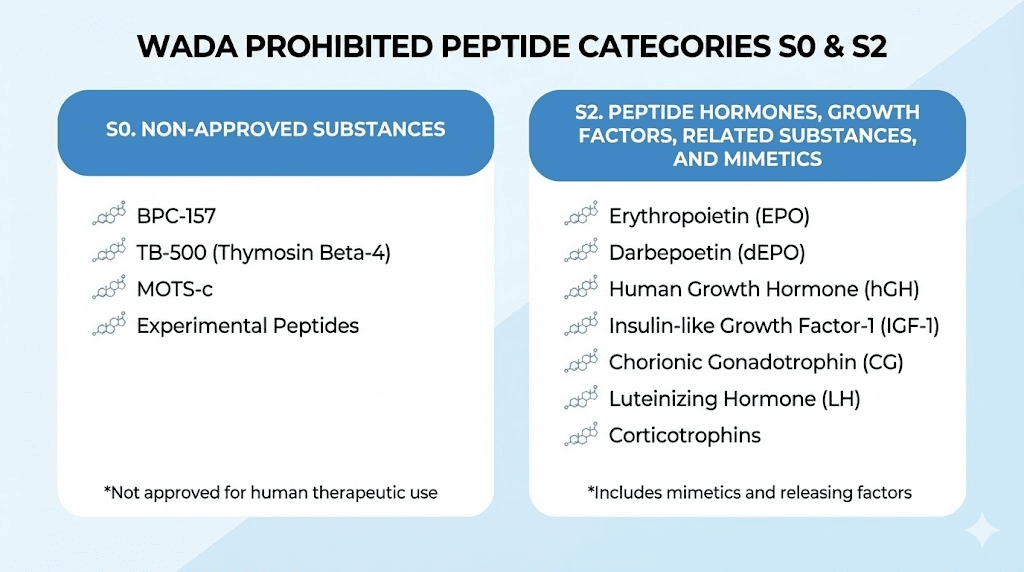
Section S2 of the prohibited list covers peptide hormones, growth factors, related substances, and mimetics. This is where most research peptides fall. The list is extensive and includes both specific compounds and catch-all categories.
Growth hormone releasing peptides (GHRPs)
The entire class of GHRPs is prohibited. These peptides stimulate growth hormone release from the pituitary gland. They are popular in research and bodybuilding communities for their anabolic and recovery properties.
Specifically banned GHRPs include:
GHRP-2 (pralmorelin)
GHRP-6
Hexarelin (examorelin)
GHRP-1, GHRP-3, GHRP-4, GHRP-5
Alexamorelin
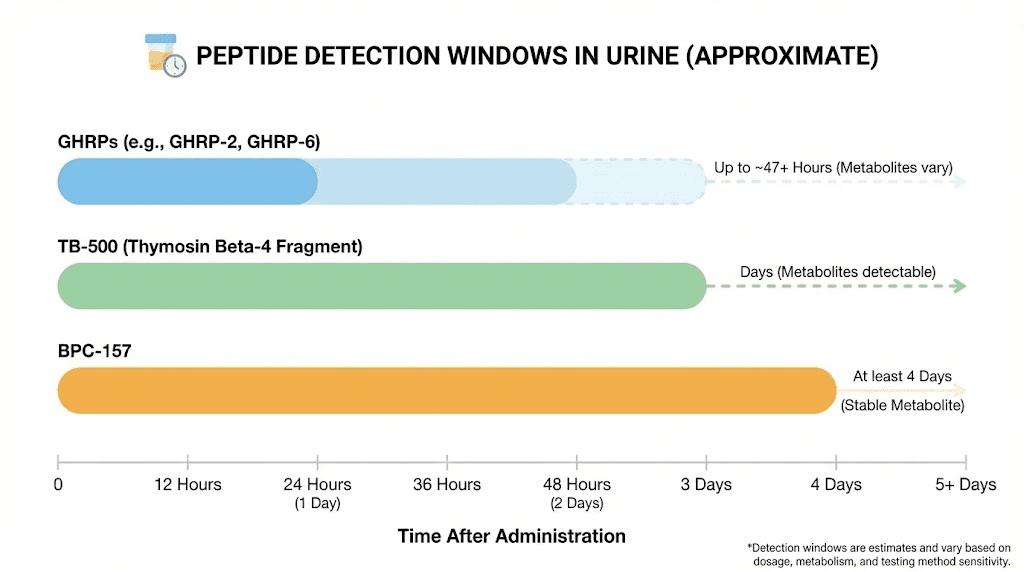
Detection methods for GHRPs have become increasingly sophisticated. Research published in Drug Testing and Analysis found that GHRP-2 and its metabolites can be detected in urine up to 47 hours after administration. GHRP-6 is detectable for approximately 23 hours. Ipamorelin and hexarelin metabolize more extensively but their metabolites remain detectable after the parent compounds have cleared.
Growth hormone releasing hormones (GHRHs)
GHRH analogues represent another prohibited category. These peptides stimulate growth hormone release through a different mechanism than GHRPs, acting on the GHRH receptor rather than the ghrelin receptor.
Banned GHRH analogues include:
Sermorelin
CJC-1295 with and without DAC
Tesamorelin
Modified GRF (1-29)
Detection of GHRH analogues presents challenges due to their larger size and rapid metabolism. However, WADA-accredited laboratories have developed methods capable of detecting these peptides and their metabolites in both urine and blood samples. Research from King College London demonstrated detection limits of 1 ng/mL or less for sermorelin, CJC-1295, and related compounds.
Growth hormone secretagogues and mimetics
This category captures non-peptide compounds that stimulate growth hormone release. The most notable is MK-677 (ibutamoren), which is technically not a peptide but is often discussed alongside GHRPs due to similar effects.
MK-677 is prohibited under S2.2.4 as a growth hormone secretagogue mimetic. Its oral bioavailability and long half-life make it detectable for extended periods compared to injectable peptides.
Healing and recovery peptides
Peptides used for tissue repair and healing fall under category S0 (Non-Approved Substances) rather than S2. This includes:
The S0 category prohibits any pharmacological substance with no current approval by any governmental regulatory health authority for human therapeutic use. This creates a broad prohibition that captures emerging peptides even before specific detection methods are developed.
BPC-157 detection has been the subject of specific research. A 2017 study published in Drug Testing and Analysis identified stable metabolites that enable detection in urine samples. The United States Anti-Doping Agency has explicitly warned athletes that BPC-157 is prohibited and detectable.
Detection windows for common peptides
Understanding detection windows requires knowing three things: the half-life of the peptide, the presence of detectable metabolites, and the sensitivity of the testing method. These factors interact to determine how long a peptide remains detectable after use.
BPC-157 detection
BPC-157 has a remarkably short half-life of less than 30 minutes. The peptide clears from plasma within 4 to 6 hours after injection. However, this does not mean it becomes undetectable that quickly.
Research published in Frontiers in Pharmacology examined BPC-157 pharmacokinetics in rats and dogs. The elimination half-life was confirmed at under 30 minutes with linear pharmacokinetic characteristics across all tested doses. Urinary excretion is the primary elimination pathway.
The critical factor for detection is metabolite stability. BPC-157 forms stable metabolites that persist longer than the parent compound. Anti-doping laboratories have developed methods to detect these metabolites, extending the detection window to approximately 4 days in urine samples.
For practical purposes:
Plasma detection: 4 to 6 hours
Urine detection (parent compound): 24 to 48 hours
Urine detection (metabolites): Up to 4 days
Standard workplace tests will not detect BPC-157 regardless of timing. Anti-doping tests using mass spectrometry can detect it within the windows described above.
TB-500 detection
TB-500, a synthetic fragment of Thymosin Beta-4, has a longer half-life than BPC-157 at approximately 2 to 3 hours. Its biological effects may persist for several weeks after administration, but detection is a different matter.
WADA has funded research specifically aimed at TB-500 detection. The active content has been identified as the N-terminal acetylated 17-23 fragment of Thymosin Beta-4 (Ac-LKKTETQ). Detection of intact TB-500 and several metabolites has been achieved in equine urine and plasma samples.
Human detection data is more limited. No comprehensive metabolism study in humans has been published. However, anti-doping laboratories continue to develop biomarkers for screening. The lack of published detection windows does not mean the peptide is undetectable. It means the exact window has not been publicly established.
Conservative estimates based on available research:
Plasma detection: 12 to 24 hours
Urine detection: Unknown but likely several days
Biological effects: May persist for weeks
GHRP detection windows
Growth hormone releasing peptides have been studied more extensively due to their longer history of use. Detection windows vary by specific compound.
GHRP-2: The parent compound and its metabolites are detectable in urine for up to 47 hours after nasal administration. The GHRP-2 (1-3) free acid metabolite provides an extended detection marker.
GHRP-6: Primarily excreted unchanged with detection possible up to 23 hours post-administration. Metabolites have shorter detection windows of approximately 12 hours.
Ipamorelin: Metabolizes extensively. The Ipamorelin (1-4) free acid metabolite remains detectable after complete clearance of the parent compound. Dried blood spot testing has achieved detection limits of 2.5 ng/mL.
Hexarelin: Similar to ipamorelin, metabolizes to multiple detectable forms. The Hexarelin (1-3) free acid serves as a detection marker.
Individual metabolism significantly affects detection. Factors include body weight, hydration status, kidney function, and administration route. Nasal administration studies provide baseline data, but injectable routes may have different detection characteristics.
CJC-1295 and sermorelin detection
Sermorelin and CJC-1295 present detection challenges due to their larger molecular size and complex metabolism. Research from accredited laboratories has identified 19 major in vitro metabolites for these GHRH analogues.
Detection limits have been established at 1 ng/mL or less, meeting WADA requirements. However, the detection window depends heavily on which metabolites are targeted. Some metabolites clear rapidly while others persist longer.
CJC-1295 with DAC (Drug Affinity Complex) has a significantly extended half-life compared to the standard version. This modification, designed to increase duration of action, also extends the detection window. Athletes using CJC-1295 DAC face longer periods of detectability.
Workplace drug testing and peptides
For most people reading this guide, workplace drug testing is the primary concern. The good news is straightforward: standard employment drug tests do not screen for peptides.
This is not a loophole or an oversight. It is a reflection of how drug testing developed. Employment screening programs were created to identify impairment from recreational drugs. Peptides do not cause impairment. They do not affect cognitive function or motor skills in ways that create workplace safety concerns. There was never a reason to include them.
The economics also matter. Adding peptide testing would require mass spectrometry equipment and trained personnel. This would increase testing costs dramatically. Employers pay somewhere between 30 and 60 dollars for a standard urine panel. Mass spectrometry testing for peptides would cost several hundred dollars per sample. No employer wants to pay that, especially when peptides are not associated with workplace impairment.
Pre-employment screening
Pre-employment drug tests are almost universally standard immunoassay panels. The 5-panel is most common, with some employers using 10-panel or extended panels. None of these include peptides.
If you are using peptides for energy, weight loss, tissue repair, or any other research purpose, a standard pre-employment screen will not detect them. You will not need to disclose peptide use to the testing laboratory. There is nothing to detect.
Random workplace testing
Companies with random drug testing programs use the same panels as pre-employment screening. The logistics of random testing require quick, inexpensive methods. Mass spectrometry is neither quick nor inexpensive.
Random tests also focus on substances that cause impairment during work hours. An employee under the influence of opiates or amphetamines poses safety risks. An employee using peptides for recovery does not. The testing rationale does not support including peptides.
Post-accident testing
After workplace accidents, employers may require drug testing to determine if impairment contributed. These tests use standard panels. The focus is on substances that could have caused or contributed to the accident.
Peptides do not cause accidents. They do not impair judgment, coordination, or reaction time. Even if an employer suspected peptide use, standard post-accident testing would not reveal it. And there would be no legal basis to order specialized testing for a non-impairing substance.
DOT-regulated positions
Department of Transportation regulations mandate drug testing for safety-sensitive positions including truck drivers, pilots, railroad workers, and public transit operators. DOT testing uses the federal 5-panel exclusively.
The DOT has not added peptides to its testing requirements. The regulatory focus remains on substances that impair the ability to safely perform job duties. Peptides fall outside this scope.
Government and security clearances
Security clearance drug testing follows federal guidelines. Standard panels are used. Peptides are not included.
However, security clearance processes involve more than drug testing. Background investigations may ask about substance use beyond what appears on a drug test. Honesty is important in these contexts. If directly asked about all substance use, peptides would arguably fall within that scope. This is a judgment call that depends on specific circumstances and how questions are phrased.
Military drug testing and peptides
Military drug testing deserves special attention due to its unique characteristics. The Department of Defense operates one of the largest drug testing programs in the world, processing millions of samples annually.
Standard military drug testing
The military uses immunoassay screening similar to civilian employment testing. Standard panels check for marijuana, cocaine, amphetamines, opiates, PCP, and other substances depending on service branch and circumstances. Peptides are not on these standard panels.
A service member using peptides for performance or joint health would not trigger a positive result on standard military drug screening. The testing technology is the same immunoassay technology used in civilian contexts.
Commander-directed testing
Military commanders can order specialized testing when there is reason to believe a service member is using specific substances. This testing can include compounds not on standard panels.
If a commander suspected peptide use and ordered specific testing, detection would be possible. This would require sending samples to laboratories equipped for mass spectrometry analysis. The situation is uncommon but not impossible.
UCMJ considerations
The Uniform Code of Military Justice prohibits certain substances beyond what appears on drug tests. Anabolic steroids are explicitly prohibited for military personnel without a prescription. Peptides exist in a grayer area.
Peptide legality is complex. Most research peptides are not scheduled substances. They are not controlled by the DEA. But the military can prohibit substances through regulations even when those substances are legal for civilians.
Service members should understand that non-detection does not equal permission. Using substances that could affect fitness for duty, even if undetectable on standard tests, may violate regulations or orders. Command policies vary by unit and situation.
Deployment and overseas considerations
Service members deploying overseas may face additional considerations. Some peptides require refrigeration. Peptide storage becomes complicated in field conditions. Customs regulations vary by country. These practical issues may matter more than detection concerns.
Athletic anti-doping testing
Athletes subject to anti-doping regulations face an entirely different situation. WADA-accredited laboratories specifically screen for peptides. Detection methods are sophisticated. Consequences are severe.
How anti-doping testing works
Anti-doping testing uses liquid chromatography coupled with high-resolution mass spectrometry. This technology can identify specific compounds by their exact molecular mass and fragmentation patterns. Modern instruments achieve resolution greater than 100,000 full width at half maximum, enabling detection of minute quantities.
Sample collection protocols are rigorous. Athletes provide samples under direct observation. Chain of custody documentation tracks samples from collection to analysis. Testing occurs at WADA-accredited laboratories that meet stringent quality standards.
Initial screening identifies suspicious samples using broad methods that can detect many prohibited substances simultaneously. Positive screens proceed to confirmation testing with even more specific methods. Only confirmed positives result in violations.
In-competition vs out-of-competition testing
Athletes can be tested at any time, not just during competitions. Out-of-competition testing targets substances that provide training advantages even when not used immediately before competition.
Peptides fall squarely into this category. Recovery peptides provide benefits during training. Peptides for testosterone enhancement affect adaptation to training stimuli. Using peptides only during off-season does not protect against detection during out-of-competition testing.
Athletes in registered testing pools must provide whereabouts information. They can be tested without advance notice at their training location, home, or anywhere they are expected to be. Missing a test counts as a violation equivalent to a positive result.
Detection capabilities continue improving
Anti-doping science advances constantly. Detection methods that did not exist five years ago are now routine. Compounds that were once undetectable are now identified reliably.
WADA invests significantly in research to improve detection capabilities. Current projects focus on peptide detection in multiple matrices including urine, blood, and dried blood spots. New biomarkers are being identified for emerging peptides. The athlete biological passport incorporates longitudinal monitoring that can identify indirect evidence of peptide use.
Athletes calculating whether they can beat the test are making a losing bet. Detection technology improves faster than evasion strategies. Samples can be stored and retested with new methods for up to ten years. Athletes who appear to beat current testing may face retrospective violations when detection improves.
Sanctions and consequences
Anti-doping violations carry significant consequences. First violations typically result in suspensions ranging from one to four years depending on the substance and circumstances. Prize money and medals may be forfeited. Results may be disqualified retroactively.
Reputational damage extends beyond formal sanctions. Sponsors terminate contracts. Professional opportunities disappear. The stigma of a doping violation follows athletes indefinitely.
For peptide violations specifically, the defense options are limited. Unlike some prohibited substances that may enter the body inadvertently, peptides require deliberate administration. Claims of contaminated supplements rarely succeed for peptides. Athletes bear strict liability for what enters their bodies.
Specific sports organization policies
Different sports organizations implement anti-doping rules differently. While WADA provides the framework, individual federations may have additional requirements or enforcement mechanisms.
Olympic and international federation testing
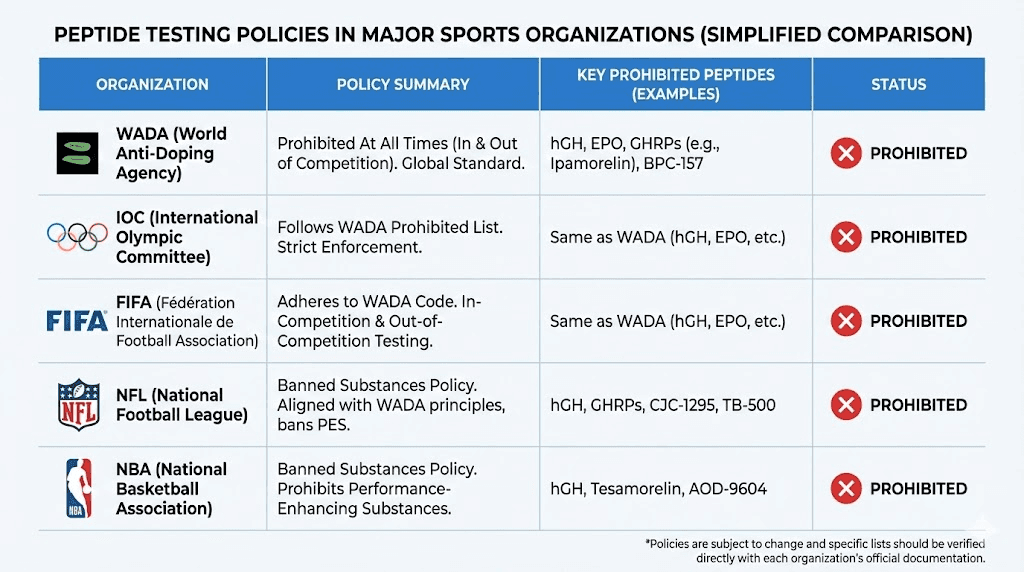
Olympic sports follow WADA regulations through their international federations. Testing programs are administered by national anti-doping organizations and international federation programs. Athletes competing at the international level are subject to the most rigorous testing.
The International Olympic Committee conducts extensive testing during Olympic Games. Samples from every medalist are stored and can be retested. This creates a long-term deterrent that extends beyond the detection capabilities available at the time of collection.
Professional leagues
Professional sports leagues in the United States negotiate drug testing policies through collective bargaining agreements. These policies may differ from WADA standards.
The NFL tests for performance-enhancing substances including peptides. Testing occurs during the offseason, training camp, and the regular season. Violations result in suspensions that increase with repeated offenses.
Major League Baseball tests for performance-enhancing substances under a jointly administered program. The prohibited substances list includes peptide hormones. Consequences include suspensions and potential lifetime bans for repeated violations.
The NBA has a PED testing program that includes peptides. Testing occurs randomly throughout the season and during the playoffs. The exact list of tested substances is not publicly disclosed in full detail.
Professional cycling operates under UCI regulations which follow WADA standards. Cycling has historically had significant doping issues, resulting in one of the most intensive testing programs in sports.
Natural bodybuilding and fitness
Natural bodybuilding organizations maintain their own prohibited lists and testing programs. These often exceed WADA requirements in some respects while using less sophisticated testing methods.
The World Natural Bodybuilding Federation specifically prohibits peptides including ipamorelin, CJC-1295 DAC, hexarelin, sermorelin, GHRP-2, GHRP-6, and MK-677. Testing typically uses urinalysis with polygraph examination in some federations.
Athletes competing in tested natural federations should verify specific prohibited lists. Requirements vary between organizations. Some federations prohibit any peptide use ever, with no time-based clearance provisions.
CrossFit and functional fitness
CrossFit Games athletes are subject to drug testing through their anti-doping program. The prohibited list includes WADA-banned substances. Testing occurs both in and out of competition for top-level athletes.
The program has grown more sophisticated over time. Early years saw limited testing. Current programs include more comprehensive testing of qualified athletes and random testing of competitors at the Games.
Legal status vs detection
A common source of confusion is the relationship between legal status and drug test detection. These are separate issues that require separate analysis.
Peptides are not controlled substances
Most research peptides are not scheduled by the DEA. Possession is not illegal in the way that possessing cocaine or methamphetamine is illegal. This creates a fundamentally different situation than traditional drug use.
BPC-157, TB-500, and most GHRPs can be purchased legally for research purposes. Manufacturers sell them to individuals without requiring prescriptions. While the intended use is technically research, enforcement against individual possession is essentially nonexistent.
This legal status means that even if a workplace somehow detected peptide use, there would be no criminal implications. The employer could potentially take employment action, but law enforcement would not be involved.
FDA status matters
The FDA has not approved most research peptides for human therapeutic use. BPC-157 was classified as a Category 2 bulk drug substance in 2023, meaning it cannot be compounded by commercial pharmacies. This regulatory status does not make possession illegal, but it affects availability and quality assurance.
Grey market peptides exist in a regulatory gray area. They are sold as research chemicals not intended for human use. Buyers assume responsibility for their decisions. This is different from buying pharmaceuticals or controlled substances.
Some peptides do have FDA approval for specific indications. Peptide therapy with prescribed compounds like tesamorelin or sermorelin (in some contexts) involves legitimate pharmaceutical products. These would still appear on anti-doping tests but have different legal implications than unapproved research peptides.
Employer policies may vary
While standard drug tests do not detect peptides, employer policies could theoretically address them through other means. Employment contracts, workplace policies, or codes of conduct could prohibit substances beyond what appears on drug tests.
In practice, this is rare. Employers have little reason to create policies about substances they cannot test for. The purpose of workplace drug policies is ensuring a safe, productive work environment. Peptides do not threaten these goals.
Certain professions may have specific considerations. Healthcare workers with access to injectable medications might face different scrutiny. Law enforcement officers might encounter policy restrictions. These situations are unusual but possible.
International variations
Legal status varies by country. Some nations regulate peptides more strictly than the United States. Travelers should research regulations in their destinations.
International peptide sourcing involves customs considerations. Importing research peptides may raise questions at borders. While rarely problematic, travelers carrying peptides should be prepared to explain their purpose.
How to minimize detection risk
For athletes or others subject to testing that includes peptides, minimizing detection risk requires understanding the science. This section provides factual information about detection pharmacokinetics. It is not advice to evade legitimate testing programs.
Half-life and clearance timing
Peptide half-life determines initial clearance rates. A compound with a 30-minute half-life will reach undetectable plasma concentrations faster than one with a 3-hour half-life. However, half-life alone does not determine detection windows.
Metabolites often persist longer than parent compounds. Detection methods that target metabolites extend windows significantly. The 4-day detection window for BPC-157 metabolites far exceeds what would be predicted from its 30-minute half-life alone.
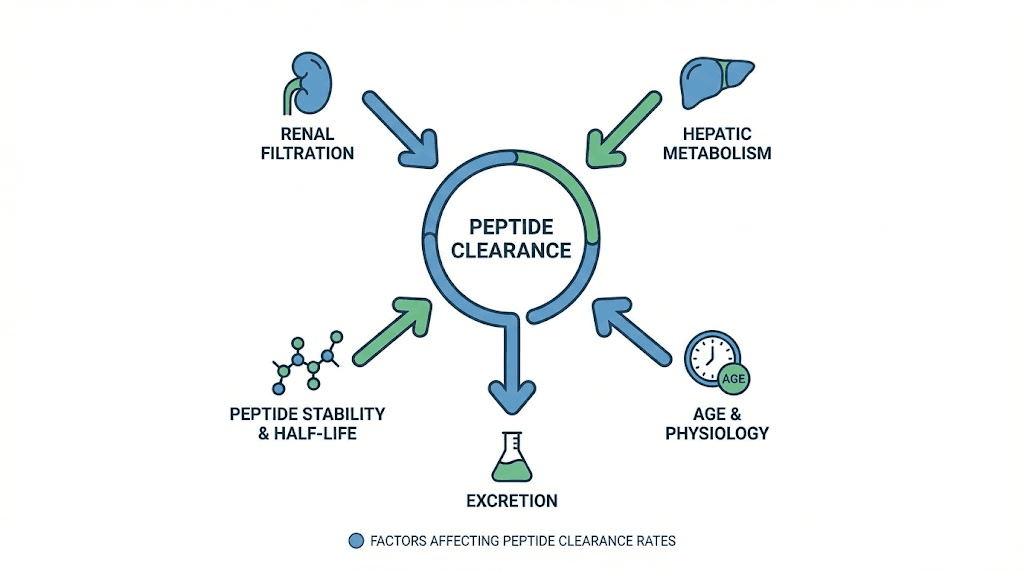
Factors affecting individual clearance
Multiple factors influence how quickly peptides clear from your system:
Body composition: Higher body fat may affect distribution and clearance of some compounds
Kidney function: Renal clearance is the primary elimination pathway for most peptides
Hydration status: Affects urine concentration and potentially detection thresholds
Dosage: Higher doses require longer clearance times
Frequency of use: Chronic use may result in accumulation
Administration route: Injectable, oral, and nasal routes have different pharmacokinetics
These factors create significant individual variation. Detection windows from studies represent averages. Some individuals will clear faster, others slower.
Cessation timing
Athletes who decide to stop peptide use before a known testing event should allow generous clearance time. Published detection windows represent minimums under study conditions. Real-world variation can extend these windows.
The safest approach is to assume detection windows longer than published estimates. If BPC-157 metabolites are detectable for 4 days in studies, allow at least a week. If GHRP-2 is detectable for 47 hours, allow several days.
Out-of-competition testing complicates this strategy. Athletes cannot know when tests will occur. Stopping use only protects against scheduled events, not surprise testing. This is why serious competitive athletes in tested sports should avoid prohibited peptides entirely.
Sample type considerations
Different biological matrices have different detection characteristics:
Urine: Most common testing matrix, metabolites accumulate
Blood/plasma: Shorter detection windows for most peptides
Dried blood spots: Emerging method with good sensitivity
Hair: Not commonly used for peptides but theoretically possible
Most anti-doping testing uses urine. Blood testing is sometimes conducted but less common. The shift toward dried blood spot testing may change future detection patterns.
Peptide categories and detection likelihood
Not all peptides carry equal detection risk. Understanding which categories are tested helps inform decisions about use in various contexts.
High detection risk (athletic testing)
These peptides are explicitly targeted by anti-doping programs:
All GHRPs: Ipamorelin, GHRP-2, GHRP-6, hexarelin
GHRH analogues: Sermorelin, CJC-1295, tesamorelin
Growth factors: IGF-1 LR3, MGF
Healing peptides: BPC-157, TB-500
GH secretagogues: MK-677 (technically not a peptide)
These compounds appear on prohibited lists and have established detection methods. Athletes using them face significant violation risk.
Moderate detection risk (athletic testing)
Some peptides are prohibited but have less developed detection methods:
Newer peptides: Emerging compounds without established detection protocols
Bioregulator peptides: Khavinson peptides and similar short peptides
Modified peptides: Chemical modifications may affect detection
The S0 category prohibits unapproved substances broadly. Even without specific detection methods, laboratories can attempt identification. Athletes should not assume lack of established methods means safety.
Zero detection risk (workplace testing)
For standard employment screening, all peptides carry effectively zero detection risk. The testing technology does not look for them:
Healing peptides: BPC-157, TB-500, KPV
Collagen peptides: All forms
GHRPs: Not on standard panels
GHRH analogues: Not on standard panels
Weight management peptides: Semaglutide, tirzepatide (though prescribed versions create documentation)
The distinction is absolute. Workplace tests do not and cannot detect peptides with current technology. This applies regardless of peptide type, dosage, or timing.
Collagen and cosmetic peptides
Collagen peptides deserve special mention because they are so widely used. Oral collagen supplements are not prohibited in any context. They are not detected on any type of drug test. They are food products.
Topical cosmetic peptides like GHK-Cu, Matrixyl, and argireline are similarly non-concerns. These are skincare ingredients with no performance-enhancing classification. Even athletic anti-doping programs do not prohibit topical cosmetic use.
What to do if you face testing
If you are subject to drug testing, here is practical guidance based on testing type.
Standard employment testing
Peptide use requires no special preparation for standard employment screening. The test will not detect peptides. You do not need to stop using peptides before testing. You do not need to disclose peptide use to the testing facility.
Continue using peptides according to your normal protocol. Attend the test as scheduled. There is no interaction between peptide use and standard drug panels.
Athletic anti-doping testing
If you compete in tested sports and have used prohibited peptides, seek guidance from a sports law attorney before testing. The legal landscape is complex. Rights and obligations vary by jurisdiction and sport.
Do not lie to testing officials. Providing false information can result in additional violations. Do not attempt to tamper with samples. Tampering violations often carry harsher penalties than underlying substance violations.
If you have not used prohibited peptides, testing should proceed normally. Ensure you avoid any contaminated supplements that might contain undeclared peptides. Use only reputable products from manufacturers who test for prohibited substances.
Military testing
For standard military drug screening, peptides are not a concern. The testing methodology is the same as civilian employment testing.
If you believe specialized testing might be ordered, consult with military legal counsel. JAG officers can provide guidance specific to your situation and service branch.
Documentation and prescriptions
If you use peptides prescribed by a physician, maintain documentation. Prescription peptide use may need to be declared in some testing contexts. Having documentation protects against accusations of illicit use.
Prescription peptide therapy through legitimate telehealth providers creates a medical record. This documentation can be important if questions arise about your peptide use.
For research peptides without prescriptions, no documentation typically exists. This is neither required nor problematic for standard employment testing. For athletic testing, lack of therapeutic use exemption documentation means the substance violation stands regardless of intent.
The science of peptide detection explained
Understanding how detection actually works helps clarify why standard tests miss peptides while specialized tests find them.
Immunoassay technology limitations
Standard drug tests use immunoassay technology. This method relies on antibodies that recognize and bind to specific molecular structures. The key word is specific. Antibodies are designed to bind to particular molecular targets.
The antibodies in standard drug panels are designed for drug metabolites like THC-COOH, benzoylecgonine, morphine, and similar compounds. These have completely different structures than peptides. The antibodies simply do not recognize peptide structures. There is no binding. There is no signal. There is no detection.
Creating immunoassay tests for peptides would require developing new antibodies for each peptide target. This is expensive and time-consuming. More importantly, there is no market demand. Employers do not want to pay for peptide testing that has no safety justification.
Mass spectrometry capabilities
Mass spectrometry works on completely different principles. Instead of antibody recognition, it identifies compounds by their mass-to-charge ratio and fragmentation patterns. Every molecule has a unique mass spectrometry fingerprint.
Liquid chromatography separates compounds in a sample before mass spectrometry analysis. This two-step process, LC-MS, can identify specific peptides with high sensitivity and specificity. Modern high-resolution instruments can distinguish peptides that differ by a single atomic mass unit.
Anti-doping laboratories have developed LC-MS methods for dozens of prohibited peptides. These methods are validated and quality-controlled. They can detect peptides at concentrations in the nanogram per milliliter range or lower.
Sample preparation matters
Detecting peptides requires proper sample preparation. Peptides in urine or blood exist alongside thousands of other compounds. Extracting peptides while removing interfering substances is essential for accurate detection.
Solid-phase extraction using weak cation exchange sorbents is commonly employed. This process concentrates peptides while removing proteins and other interfering substances. The extracted sample then undergoes LC-MS analysis.
Sample preparation protocols have been optimized for peptide detection. Research published in the Journal of Chromatography describes methods capable of simultaneously extracting over 50 different peptide-based doping agents from a single sample.
Metabolite detection strategies
Many peptides metabolize rapidly. The parent compound may be undetectable within hours. Detection strategies increasingly target metabolites that persist longer than parent compounds.
In vitro metabolism studies identify how peptides break down. Major metabolites are synthesized as reference standards. Detection methods are then developed for both parent compounds and key metabolites.
This metabolite-focused approach extends detection windows significantly. For some peptides, metabolites remain detectable days after the parent compound has completely cleared. The BPC-157 detection window of up to 4 days relies on metabolite detection.
Future of peptide testing
Detection technology continues advancing. Understanding likely future developments helps inform long-term decisions about peptide use.
Expanded detection panels
Anti-doping laboratories continually add new compounds to their screening panels. Peptides that are currently difficult to detect may have established methods within years. New peptides entering the market will eventually be added to prohibited lists with detection methods following.
The trend is toward broader, more sensitive screening. Methods that can simultaneously detect dozens of peptides are becoming standard. Individual peptide protocols are being replaced by multi-analyte approaches.
Biological passport evolution
The Athlete Biological Passport tracks biomarkers over time rather than testing for specific substances. Changes in hormone levels, blood parameters, or metabolic markers can indicate prohibited substance use even without detecting the substance directly.
Peptide use affects measurable biomarkers. Growth hormone releasing peptides elevate IGF-1 levels. These elevations can persist longer than peptide detection windows. Longitudinal monitoring can identify suspicious patterns even when specific peptide tests are negative.
Future biological passport modules may incorporate peptide-specific markers. Research is ongoing into biomarkers that specifically indicate peptide use versus natural variation.
Sample storage and retrospective testing
Anti-doping samples can be stored for up to ten years and retested with improved methods. Athletes who pass current testing may face violations years later when detection improves.
This retrospective capability creates long-term risk for athletes using prohibited peptides. Passing a test today provides no guarantee of permanent safety. Sample storage extends the statute of limitations on doping violations.
Workplace testing unlikely to change
While athletic testing continues advancing, workplace testing is unlikely to add peptides. The cost-benefit analysis does not support it. Peptides do not cause workplace impairment. Employers have no safety justification for expensive peptide testing.
Even as peptide use becomes more common, workplace panels will likely remain focused on traditional drugs of abuse. The regulatory framework for workplace testing, established by SAMHSA guidelines, does not include peptides and shows no movement toward including them.
For the typical employee concerned about workplace drug tests, peptides will remain a non-issue for the foreseeable future.
Frequently asked questions
Will BPC-157 show up on a pre-employment drug test?
No. Standard pre-employment drug tests use immunoassay panels that do not detect peptides. BPC-157 will not appear on 5-panel, 10-panel, or any standard employment screening. The technology used for these tests cannot detect peptide structures.
Can my employer test specifically for peptides if they suspect use?
Theoretically possible but extremely unlikely. Testing for peptides requires expensive mass spectrometry equipment and specialized protocols. No standard commercial laboratory offers peptide panels for employment screening. An employer would need to contract specialized testing at significant cost with no legal or safety justification.
How long should I stop using peptides before an athletic drug test?
Detection windows vary by peptide. BPC-157 metabolites may be detectable for up to 4 days. GHRPs can be detected for 24 to 48 hours or longer depending on the specific compound. However, out-of-competition testing can occur at any time. Athletes in tested sports should avoid prohibited peptides entirely rather than attempting to time cessation.
Are GLP-1 peptides like semaglutide tested for?
GLP-1 receptor agonists like semaglutide and tirzepatide are therapeutic medications, not prohibited substances. They do not appear on workplace drug tests or athletic anti-doping tests. However, prescribed medications may need to be declared in some contexts.
Do collagen peptides show up on drug tests?
Collagen peptides are food products that do not appear on any type of drug test. They are not prohibited in any context. Oral collagen supplements can be used without any concern about drug testing.
Will peptides affect a DOT drug test?
No. DOT drug testing uses the federal 5-panel which screens for marijuana, cocaine, opiates, amphetamines, and PCP. Peptides are not detected. Truck drivers, pilots, and other DOT-regulated employees can use peptides without affecting their drug test results.
Are peptides legal to possess?
Most research peptides are not scheduled substances under the Controlled Substances Act. Possession is not illegal in the same way that possessing cocaine or methamphetamine is illegal. However, peptides sold for research purposes are not approved for human use. Peptide legality exists in a regulatory gray area.
Can I use peptides in the military?
Standard military drug screening does not detect peptides. However, military regulations may prohibit substances beyond what appears on drug tests. Service members should understand that non-detection does not equal permission. Command policies and regulations vary.
For researchers who want comprehensive guidance on peptide protocols, detection considerations, and safety information, SeekPeptides provides evidence-based resources developed for informed decision-making. Understanding detection is just one part of responsible peptide research. The complete picture includes proper reconstitution, storage, administration, and quality verification.