Dec 27, 2025
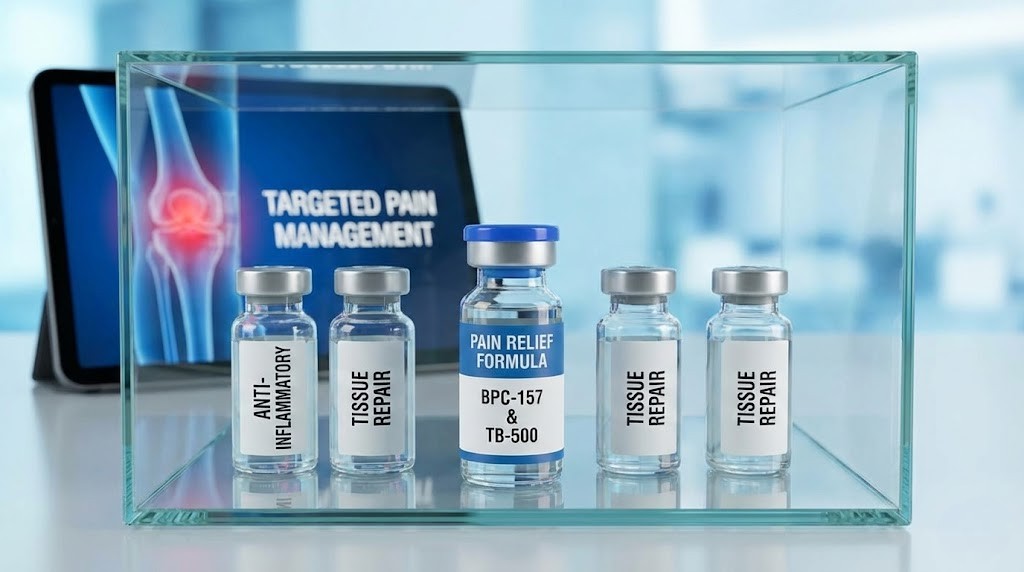
BPC-157 is the best overall peptide for most pain types, particularly joint and muscle pain, because it reduces inflammation and promotes tissue healing at the pain source. TB-500 excels for deep muscle pain and chronic inflammation. KPV specifically targets inflammatory pain and gut-related inflammation.
The best peptide for YOUR pain depends on the type (joint, muscle, nerve, inflammatory) and location (local vs systemic).
This guide breaks down the best peptide for each pain type, how peptides reduce pain differently than drugs, dosing protocols for pain management, combining peptides for complex pain, safety compared to traditional pain medications, and complete protocols for chronic pain conditions.
Let's start with understanding how peptides actually relieve pain.
How peptides reduce pain (different from pain medications)
Peptides address pain at the source, not just symptoms.
Pain medications vs peptides
Traditional pain meds (NSAIDs, opioids):
Block pain signals to brain
Reduce inflammation temporarily
Mask pain without healing
Side effects (stomach damage, addiction, kidney issues)
Stop working when you stop taking them
Peptides for pain:
Heal damaged tissue causing pain
Reduce inflammation at source
Promote tissue repair and regeneration
Minimal side effects
Results can be permanent (tissue healed)
Key difference: Medications manage symptoms. Peptides fix underlying problems.
Learn peptide fundamentals in our what are peptides guide, how peptides work, and what are peptides used for.
Mechanisms of peptide pain relief
Tissue healing:
Repairs damaged tendons, ligaments, muscles causing pain
Regenerates cartilage in joints
Heals nerve damage
Pain reduces as tissue heals
Anti-inflammatory effects:
Reduces inflammatory cytokines (IL-6, TNF-alpha)
Decreases swelling and inflammation
Calms overactive immune response
Less inflammation = less pain
Improved blood flow:
Angiogenesis (new blood vessel formation)
Better nutrient delivery to painful areas
Faster waste removal
Enhanced healing environment
Nerve modulation:
Some peptides calm overactive pain nerves
Reduce neuropathic pain signals
Protect nerve tissue from damage
See our best peptides for injury recovery and fast injury healing.
Best peptide for joint pain and arthritis
Joint pain from arthritis, wear-and-tear, or injury.
BPC-157: Best overall for joint pain
Why it's #1 for joints:
Reduces joint inflammation dramatically
Promotes cartilage healing and regeneration
Improves synovial fluid quality
Works on all joints (knees, shoulders, hips, elbows)
Proven track record for joint issues
Best for:
Osteoarthritis (wear-and-tear)
Post-injury joint pain
Chronic joint inflammation
Multiple joints affected
Any age (works for 20s to 70s+)
Dosing for joint pain:
250-500mcg twice daily injectable
Inject near painful joint for targeted relief
Or systemic (abdomen) for multiple joints
8-16 weeks minimum
Can use long-term safely
Expected timeline:
Week 2-4: Initial pain reduction
Week 4-8: Significant improvement
Week 8-16: Major pain relief, improved function
Ongoing use maintains benefits
Real results:
40-60% pain reduction typical
Improved range of motion
Less morning stiffness
Better quality of life
Use our BPC-157 dosage calculator and see our BPC-157 complete guide and how to take BPC-157.
TB-500: Best for deep joint pain and stiffness
Why it's excellent for joints:
Reduces inflammation systemically
Improves flexibility and range of motion
Decreases joint stiffness
Works on connective tissue around joints
Best for:
Severe joint stiffness
Limited range of motion
Deep aching joint pain
When BPC-157 alone isn't enough
Dosing:
Loading: 5-10mg per week for 4-6 weeks
Maintenance: 2-5mg per week
Injectable subcutaneous
8-16 week protocols
BPC-157 + TB-500 for severe joint pain:
Most powerful combination
Synergistic effects
Comprehensive joint healing
Use both together for stubborn cases
See our TB-500 guide, BPC-157 vs TB-500, and best peptides for joint pain.
Best peptide for muscle pain and soreness
Muscle pain from injuries, chronic tension, or fibromyalgia.
BPC-157: Best for muscle injury pain
Why it works for muscles:
Accelerates muscle tissue repair
Reduces muscle inflammation
Heals muscle tears and strains
Improves recovery from training
Best for:
Muscle strains and tears
Chronic muscle pain from old injuries
Post-workout soreness (DOMS)
Muscle tension and tightness
Dosing:
250-500mcg twice daily
Inject near painful muscle if localized
Or systemic for generalized muscle pain
4-8 weeks for acute, 8-16 weeks for chronic
Timeline:
Week 1-2: Reduced acute pain
Week 2-4: Improved mobility
Week 4-8: Significant healing
TB-500: Best for deep muscle pain and chronic tightness
Why TB-500 for muscles:
Penetrates deep into muscle tissue
Reduces chronic muscle inflammation
Improves muscle flexibility
Decreases muscle spasms
Best for:
Deep muscle belly pain
Chronic muscle tightness (upper back, traps, etc.)
Fibromyalgia muscle pain
Sports-related chronic muscle issues
Dosing:
5-10mg weekly loading phase
2-5mg weekly maintenance
8-16 weeks
Combination for severe muscle pain:
BPC-157 for acute healing
TB-500 for chronic inflammation and flexibility
Together = comprehensive muscle pain relief
See our TB-500 dosage calculator and TB-500 benefits.
Best peptide for tendon and ligament pain
Tendinitis, tendinosis, ligament injuries.
BPC-157: Best for tendon healing and pain
Why it's exceptional for tendons:
Specifically studied for tendon healing
Accelerates collagen synthesis in tendons
Reduces tendon inflammation
Improves blood flow to tendons (normally poor)
Best for:
Achilles tendinitis/tendinosis
Tennis elbow (lateral epicondylitis)
Golfer's elbow (medial epicondylitis)
Rotator cuff tendinitis
Patellar tendinitis (jumper's knee)
Any tendon pain
Dosing for tendons:
250-500mcg twice daily
Injectable near tendon for best results
8-16 weeks minimum (tendons heal slowly)
May need 12-24 weeks for chronic tendinosis
Expected results:
Week 4-6: Initial pain reduction
Week 8-12: Significant improvement
Week 12-24: Major healing for chronic cases
TB-500 + BPC-157: Best combo for stubborn tendon issues
Why combine:
BPC-157: Direct tendon healing
TB-500: Reduces inflammation, improves flexibility
Synergistic tendon repair
Protocol:
BPC-157: 500mcg twice daily
TB-500: 5-10mg weekly
12-16 weeks minimum
Best for chronic tendinosis
See our best peptides for tendon repair.
Best peptide for nerve pain (neuropathy)
Neuropathic pain from diabetes, injuries, or nerve damage.
BPC-157: Best for nerve regeneration and pain
Why it helps nerve pain:
Promotes nerve regeneration
Reduces nerve inflammation
Protects nerves from further damage
Improves nerve function
Best for:
Diabetic neuropathy
Post-injury nerve pain
Sciatica (nerve compression pain)
Peripheral neuropathy
Nerve damage from surgery
Dosing:
250-500mcg twice daily
Injectable systemic (abdomen or thighs)
8-16 weeks minimum
Nerve healing is slow - be patient
Timeline:
Week 2-4: Slight pain reduction
Week 6-8: Noticeable improvement
Week 12-16: Significant pain relief
May need 6+ months for severe neuropathy
KPV: Alternative for inflammatory nerve pain
Why KPV works:
Potent anti-inflammatory
Reduces inflammatory cytokines affecting nerves
Calms immune system response
Good for autoimmune-related nerve pain
Best for:
Inflammatory neuropathy
Autoimmune nerve damage
When inflammation is primary cause
Dosing:
500-1,000mcg daily injectable
Or oral for systemic inflammation
8-12 weeks
See our KPV peptide dosage guide and KPV peptide benefits.
Best peptide for inflammatory pain
Systemic inflammation causing widespread pain.
KPV: Best for inflammatory pain and conditions
Why KPV is superior for inflammation:
Extremely potent anti-inflammatory peptide
Reduces IL-6, TNF-alpha, other inflammatory markers
Modulates immune response
Works systemically
Best for:
Rheumatoid arthritis
Autoimmune-related pain
Inflammatory bowel disease with pain
Chronic systemic inflammation
Widespread pain from inflammation
Dosing:
Injectable: 500-1,000mcg daily subcutaneous
Oral: 1-2mg daily for gut-specific inflammation
8-12 weeks minimum
Can use long-term
Expected results:
Week 2-4: Reduced inflammatory markers
Week 4-8: Decreased pain levels
Week 8-12: Significant inflammation control
Comparison to NSAIDs:
KPV: Reduces inflammation without stomach damage
NSAIDs: Temporary relief, stomach/kidney risks
KPV safer long-term
BPC-157 for inflammation + tissue healing
Why BPC-157 for inflammatory pain:
Anti-inflammatory effects
Also heals tissue causing inflammation
Dual benefit
Best for:
Inflammatory pain with tissue damage
IBD/Crohn's (gut inflammation)
General inflammatory conditions
Can combine KPV + BPC-157:
KPV: Powerful inflammation reduction
BPC-157: Tissue healing
Together = comprehensive inflammatory pain relief
Best peptide for chronic widespread pain
Fibromyalgia, chronic pain syndrome, multi-site pain.
BPC-157 + TB-500: Best combination for widespread pain
Why this combo for chronic pain:
BPC-157: Systemic healing and anti-inflammatory
TB-500: Deep tissue anti-inflammatory, flexibility
Works throughout body
Addresses multiple pain sources simultaneously
Best for:
Fibromyalgia
Chronic pain syndrome
Multiple injury sites
Widespread inflammation
Post-trauma chronic pain
Protocol:
BPC-157: 250-500mcg twice daily systemic injections
TB-500: 5-10mg weekly loading, then 2-5mg maintenance
12-16 weeks minimum
Long-term use acceptable
Expected results:
Month 1-2: Initial pain reduction (20-30%)
Month 3-4: Significant improvement (40-60% reduction)
Month 4-6: Major pain relief (50-70% reduction)
Ongoing use maintains benefits
KPV for inflammatory component
Add KPV if inflammation is major factor:
Triple combo: BPC-157 + TB-500 + KPV
Maximum anti-inflammatory coverage
Addresses pain from all angles
Protocol:
BPC-157: 250mcg twice daily
TB-500: 5mg weekly
KPV: 500mcg daily
12-16 weeks
Complete pain peptide comparison table
Here's how different peptides compare for pain management across all factors:
Peptide | Best Pain Type | Pain Relief Power | Speed of Relief | Safety Profile | Side Effects | Cost/Month | Ease of Use | Best For Beginners |
|---|---|---|---|---|---|---|---|---|
BPC-157 | Joint, muscle, tendon, gut | Excellent (8/10) | Moderate (4-8 weeks) | Excellent | Very low | $150-250 | Easy | ✓ YES |
TB-500 | Deep muscle, chronic inflammation | Very Good (7/10) | Slow (6-12 weeks) | Excellent | Very low | $200-350 | Easy | ✓ YES |
KPV | Inflammatory pain, autoimmune | Excellent (8/10) for inflammation | Moderate (4-8 weeks) | Excellent | Very low | $150-250 | Easy | ✓ YES |
GHK-Cu | Tissue regeneration, skin wounds | Good (6/10) | Moderate-slow (6-12 weeks) | Excellent | Very low | $100-200 | Easy | ✓ YES |
BPC-157 + TB-500 | Severe chronic pain, multiple sites | Excellent (9/10) | Moderate (6-10 weeks) | Excellent | Very low | $350-600 | Moderate | Intermediate |
BPC + TB + KPV | Fibromyalgia, complex pain | Outstanding (9.5/10) | Moderate (8-12 weeks) | Excellent | Low | $500-800 | Moderate | Advanced |
NSAIDs (comparison) | Acute inflammation | Good (7/10) temporary | Fast (hours) | Poor long-term | High | $10-30 | Very easy | N/A |
Opioids (comparison) | Severe acute pain | Excellent (9/10) temporary | Very fast (30 min) | Very poor | Very high | Varies | Easy | N/A |
Key takeaways from table:
BPC-157 offers best balance of effectiveness, safety, and ease of use
Peptides slower than drugs but safer long-term
Stacking peptides increases effectiveness but costs more
All peptides far safer than NSAIDs or opioids for chronic use
Single peptides best for beginners, stacks for stubborn pain
Pain relief power rating (1-10):
9-10: Outstanding relief for most users
7-8: Very good relief for most users
5-6: Moderate relief, works for some
Below 5: Minimal relief
Speed of relief:
Fast: Days to 2 weeks
Moderate: 4-8 weeks
Slow: 8+ weeks
Patience required with peptides, but results last
Cost comparison notes:
NSAIDs cheapest initially but cause stomach/kidney damage long-term
Peptides more expensive upfront but safer, heal tissue permanently
Stacks cost more but provide maximum relief for severe cases
Consider long-term value, not just monthly cost
Peptide dosing protocols for pain management
Specific protocols by pain severity and type.
Mild to moderate pain
Protocol:
BPC-157: 250mcg twice daily
Duration: 4-8 weeks
Method: Injectable near pain site or systemic
Expected outcome:
40-60% pain reduction
Improved function
May be sufficient alone
Severe or chronic pain
Protocol:
BPC-157: 500mcg twice daily
TB-500: 5-10mg weekly loading for 4-6 weeks, then 2-5mg maintenance
Duration: 12-16 weeks minimum
Method: Injectable
Expected outcome:
50-70% pain reduction
Significant functional improvement
Better quality of life
Multiple pain sites or systemic pain
Protocol:
BPC-157: 250-500mcg twice daily (systemic injections - abdomen/thighs)
TB-500: 5mg weekly
Optional: KPV 500mcg daily if inflammation major factor
Duration: 12-24 weeks
Expected outcome:
40-60% overall pain reduction
Improved multiple areas
Better mobility
Maintenance protocol
After initial relief:
BPC-157: 250mcg daily OR every other day
TB-500: 2-5mg weekly OR biweekly
Duration: Ongoing as needed
Why maintenance:
Prevents pain return
Continues healing
Safe long-term
Use our peptide dosing guide, peptide dosage chart, and how to calculate peptide dosages.
Safety: Peptides vs traditional pain medications
Peptides offer safer long-term pain management.
Side effect comparison
NSAIDs (Ibuprofen, Naproxen, etc.):
Stomach ulcers and bleeding
Kidney damage (long-term)
Increased heart attack risk
Liver stress
Opioids:
Addiction and dependence
Constipation
Sedation and cognitive effects
Overdose risk
Peptides (BPC-157, TB-500, KPV):
Minimal side effects
Rare: mild headache, fatigue (temporary)
No addiction potential
No organ damage
Safe long-term use
Clear winner: Peptides far safer for chronic pain management.
Long-term use safety
Traditional pain meds:
Not safe for years of continuous use
Require breaks or rotation
Accumulating damage to organs
Peptides:
Can use for months to years safely
BPC-157 and TB-500 have decades of use data
No cumulative toxicity
Actually heal tissue rather than damage it
Combining peptides with pain medications
Can use together:
Peptides for healing
NSAIDs for acute breakthrough pain
Reduce medication dose as peptides work
Transition plan:
Start peptides while on pain meds
As pain improves, reduce medication slowly
Goal: Minimal or no pain meds long-term
See our peptide safety and risks guide.
Best peptide stacks for complex pain
Combining peptides for maximum pain relief.
Stack #1: BPC-157 + TB-500 (Most common)
For:
Chronic pain
Multiple injury sites
Severe joint/muscle pain
Stubborn pain not responding to single peptide
Protocol:
BPC-157: 250-500mcg twice daily
TB-500: 5-10mg weekly loading, 2-5mg maintenance
Duration: 12-16 weeks
Benefits:
Synergistic healing
Comprehensive pain relief
Works on all tissue types
Stack #2: BPC-157 + KPV (Inflammatory pain)
For:
Pain primarily from inflammation
Autoimmune-related pain
Gut-related pain with inflammation
Rheumatoid arthritis
Protocol:
BPC-157: 250mcg twice daily
KPV: 500-1,000mcg daily
Duration: 8-12 weeks
Benefits:
Powerful anti-inflammatory
Tissue healing
Gut and joint benefits
Stack #3: BPC-157 + TB-500 + KPV (Maximum relief)
For:
Severe chronic pain
Fibromyalgia
Multiple conditions
When nothing else works
Protocol:
BPC-157: 250mcg twice daily
TB-500: 5mg weekly
KPV: 500mcg daily
Duration: 16-24 weeks
Benefits:
Attacks pain from all angles
Healing + anti-inflammatory + nerve support
Best for complex pain
See our peptide stacks guide, can you cycle different peptides, and peptide stack calculator.
Administering peptides for pain relief
Practical guidance on taking peptides for pain.
Injection location strategies
Local injection (near pain site):
Inject within 2-3 inches of painful area
Example: Knee pain = inject into thigh or near knee
Shoulder pain = inject into shoulder/deltoid area
May provide faster local relief
Systemic injection (away from pain):
Inject into abdomen or thighs
Works throughout body
Better for multiple pain sites
Still effective, just less targeted
Which is better:
Local: Faster relief for single pain site
Systemic: Better for multiple areas
Both work - choose based on situation
Oral vs injectable for pain
Injectable (more common):
Higher bioavailability
Works for all pain types
Faster results typically
Oral (specific uses):
Good for gut-related pain (IBD, ulcers)
Easier for needle-phobic people
BPC-157 and KPV available oral
Lower absorption but still works
See our injectable vs oral peptides, how to inject peptides, and how to take BPC-157.
Timing and frequency
Twice-daily dosing:
BPC-157: Morning and evening most common
Maintains consistent levels
Better for pain relief
Once-daily dosing:
TB-500: Once or twice weekly
KPV: Once daily acceptable
Simpler but may be less effective
Optimal timing:
Doesn't matter hugely
Consistency more important than perfect timing
Many take before bed for convenience
How long until pain relief with peptides
Realistic expectations for pain reduction timeline.
Fast-responding pain (2-4 weeks)
Acute injuries:
Recent muscle strains
Acute joint inflammation
Fresh tendon injuries
Expected timeline:
Week 1-2: Initial pain reduction (20-30%)
Week 2-4: Significant improvement (40-60%)
Moderate timeline (4-8 weeks)
Subacute and mild chronic pain:
Joint pain from arthritis (early stage)
Older muscle injuries (months old)
Moderate tendinitis
Expected timeline:
Week 2-4: Initial relief
Week 4-8: Noticeable improvement (50-70%)
Slow-responding pain (8-16+ weeks)
Chronic and severe conditions:
Severe arthritis
Chronic tendinosis (years old)
Nerve pain/neuropathy
Fibromyalgia
Expected timeline:
Week 4-8: Slight improvement
Week 8-12: Moderate improvement
Week 12-16: Significant relief (40-60%)
May need 6+ months for maximum benefit
Be patient with chronic pain:
Tissue took years to damage
Healing takes time
Don't give up before 12-16 weeks
See our how long do peptides take to work guide.
How you can use SeekPeptides for pain management
SeekPeptides provides personalized pain relief protocols using peptides tailored to your specific pain type and severity. Get customized peptide recommendations based on whether you're dealing with joint pain, muscle pain, nerve pain, or inflammatory pain.
Our AI advisor helps you choose between BPC-157, TB-500, KPV, or combination stacks for maximum pain relief.
Access our complete research library covering clinical evidence for peptide pain management, user experiences, and proven protocols for chronic pain conditions.
Use our calculators - BPC-157 dosage calculator, TB-500 dosage calculator, peptide calculator - for precise pain management dosing. Learn proper administration through our guides on injection technique, storage, and reconstitution.
Track your pain levels and peptide protocols to optimize your pain management approach. Get guidance on transitioning from traditional pain medications to safer peptide-based relief.
Final thoughts
What's the best peptide for pain? For most pain types, BPC-157 is the best choice. It works for joint pain, muscle pain, tendon pain, and inflammatory pain with an excellent safety profile. For deep tissue pain and chronic stiffness, add TB-500. For inflammatory pain specifically, KPV is extremely effective.
Pain relief with peptides takes patience. Expect 4-8 weeks for moderate improvement and 8-16 weeks for significant relief from chronic pain. This is slower than popping an ibuprofen, but peptides actually heal the damaged tissue causing pain rather than just masking symptoms.
Peptides offer far better safety for long-term pain management compared to NSAIDs or opioids. No stomach damage, no addiction, no organ toxicity. You can use peptides for months or years safely while traditional pain medications cause cumulative damage.
You can start with BPC-157 for most pain conditions. Add TB-500 if you don't get sufficient relief. Include KPV if inflammation is a major component.
Most chronic pain sufferers find significant relief with the BPC-157 + TB-500 combination.
Quality sourcing matters enormously.
The best peptide from a poor vendor won't work. Use reputable suppliers with third-party testing. Proper dosing, consistent administration, and adequate duration all determine success.
Your path to pain relief starts with choosing the right peptide for your pain type, committing to consistent use for 8-16 weeks, and being patient as tissue heals. Pain relief through peptides is real, sustainable, and safer than alternatives.
Helpful resources for pain management
BPC-157 dosage calculator - Calculate BPC-157 doses
TB-500 dosage calculator - Calculate TB-500 doses
Peptide calculator - Dose any peptide
Peptide cost calculator - Budget protocols
Peptide stack calculator - Plan stacks
In case I don’t see you, good afternoon, good evening, and good night. Take care of yourself. <3. Join SeekPeptides