Jan 22, 2026
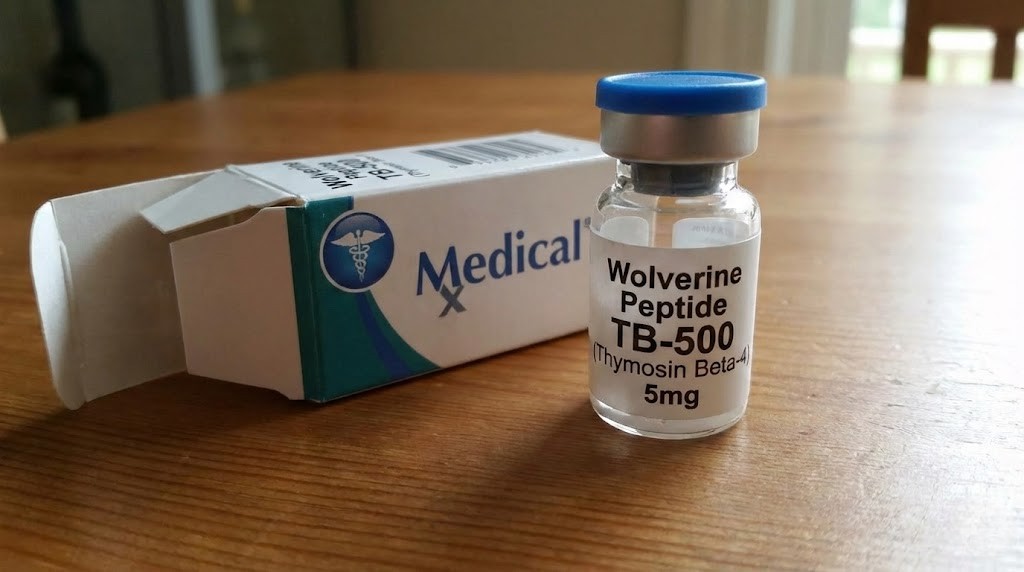
You have heard the name thrown around in biohacking circles. The Wolverine peptide. That mythical combination promising superhuman healing, faster recovery, and the kind of tissue regeneration that makes surgeons raise their eyebrows. And at the heart of this stack sits TB-500, a synthetic peptide that has captured the attention of researchers, athletes, and anyone dealing with stubborn injuries that refuse to heal.
But here is the thing most sources will not tell you. TB-500 is not magic. It is biochemistry. And understanding how it actually works, how it pairs with BPC-157 in the Wolverine stack, and what realistic timelines look like separates those who get results from those who waste money chasing promises.
This guide breaks down everything you need to know about the Wolverine peptide stack with a specific focus on TB-500. We will cover the science behind thymosin beta-4, the mechanisms that make this peptide work, dosing protocols that have emerged from both research and real-world application, and the honest truth about what you can expect. We will also address common mistakes, safety considerations, and why some people see dramatic results while others experience nothing at all.
SeekPeptides has become the trusted resource for researchers navigating these complex protocols, and for good reason. Getting peptide therapy right requires more than forum advice and guesswork. It requires understanding mechanisms, respecting the science, and following evidence-based approaches.
Understanding TB-500 and the thymosin beta-4 connection
Before diving into protocols and stacking strategies, you need to understand what TB-500 actually is. This is not just semantics. The distinction between TB-500 and thymosin beta-4 matters for understanding how this peptide works in your body.
Thymosin beta-4, often abbreviated as TB4, is a naturally occurring protein found in virtually every cell of the human body. It consists of 43 amino acids and plays crucial roles in tissue repair, cell migration, and wound healing.
Your body produces it naturally, particularly in areas of tissue damage where repair processes are underway.
TB-500 it's a synthetic peptide containing only a 17-amino acid segment of the full thymosin beta-4 protein, specifically the active region responsible for actin binding and cell migration. Think of it as the concentrated active ingredient extracted from the larger protein structure. This smaller size potentially allows for better tissue penetration and more targeted effects.
The actin connection that makes everything work
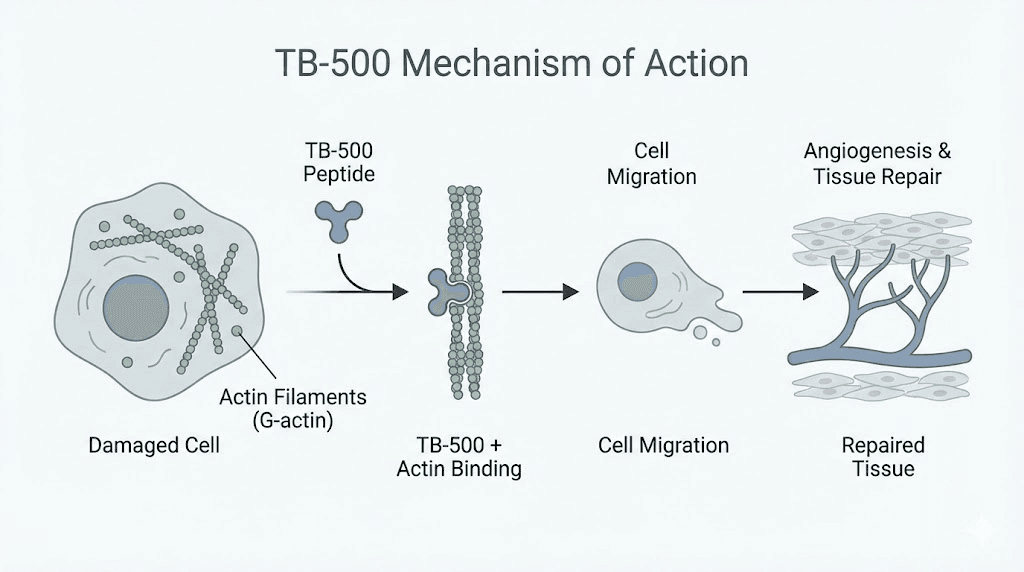
Here is where the science gets interesting. TB-500 works primarily through its interaction with actin, one of the most abundant proteins in your cells. Actin forms the structural scaffolding of cells and plays critical roles in cell movement, division, and shape maintenance.
When tissue damage occurs, your body needs to mobilize repair cells to the injury site. These cells need to migrate through tissue, divide to create new cells, and reorganize to form functional tissue rather than scar tissue. All of these processes depend on actin dynamics.
TB-500 binds to actin monomers and promotes something called actin polymerization. It also sequesters actin in ways that allow cells to become more mobile and adaptable. The result is enhanced cell migration, meaning repair cells can actually reach damaged tissue more efficiently.
Studies have demonstrated that TB-500 promotes the migration of endothelial cells, keratinocytes, and fibroblasts, the key players in wound healing and tissue regeneration. In a 1999 study published in the Journal of Investigative Dermatology, thymosin beta-4 applied topically to rat wounds increased reepithelialization by 42% at day 4 and up to 61% at day 7 compared to controls.
But cell migration is just part of the story.
Angiogenesis and why blood supply matters
Damaged tissue cannot heal without adequate blood supply. New blood vessel formation, called angiogenesis, delivers oxygen, nutrients, and immune cells to injury sites. TB-500 has demonstrated significant angiogenic properties in multiple studies.
Research shows TB-500 promotes the formation of new blood vessels by stimulating endothelial cell migration and proliferation. This is particularly important for tendon and ligament injuries, where blood supply is naturally limited and healing times are prolonged.
In cardiac research, TB-500 has shown promise for improving blood vessel formation in damaged heart tissue. While these cardiovascular applications fall outside typical research use, they demonstrate the peptide's fundamental ability to promote vascularization across different tissue types.
The Wolverine stack explained: why TB-500 needs BPC-157
The Wolverine stack, combining TB-500 with BPC-157, has earned its reputation for a reason. These peptides work through complementary mechanisms that address different bottlenecks in the healing process.
Think of injury recovery like a construction project. You need workers (cells), materials (proteins and structural components), transportation (blood vessels), and coordination (signaling pathways). TB-500 and BPC-157 contribute to different aspects of this process.
BPC-157: the local healer
BPC-157, or Body Protection Compound-157, is a 15-amino acid peptide derived from a protein found in human gastric juice. Unlike TB-500, which works systemically throughout the body, BPC-157 tends to concentrate its effects more locally around the injection site.
The mechanisms differ significantly. BPC-157 modulates nitric oxide pathways, influences growth hormone receptor expression, and has demonstrated effects on multiple growth factors including VEGF, EGF, and FGF. It also shows unique protective effects on the gastrointestinal system, which is why oral administration remains viable for gut-related applications.
Research on BPC-157 in tendon healing shows it accelerates the outgrowth of tendon fibroblasts, improves cell survival under stress, and enhances cell migration through the FAK-paxillin pathway. One study demonstrated that BPC-157 treatment resulted in significantly higher load to failure in healed tendons compared to controls.
The synergy that creates the Wolverine effect
When you combine TB-500 and BPC-157, you get complementary actions hitting multiple points in the repair process:
TB-500 provides systemic support for cell migration and establishes the cellular infrastructure for repair. It mobilizes cells from throughout the body to reach injury sites. BPC-157 provides localized support, optimizing the environment at the specific injury location, promoting blood vessel stabilization, and enhancing growth factor activity.
One handles the supply chain. The other handles the construction site. Together, they address more bottlenecks than either peptide alone.
Research suggests that BPC-157's nitric oxide modulation and vascular stabilization may complement TB-500's promotion of endothelial cell migration. The result could be more robust blood vessel networks delivering better nutrient supply to healing tissue.
This is not just theoretical. Users consistently report better outcomes with the combination than with either peptide alone, particularly for stubborn chronic injuries and post-surgical recovery.
TB-500 dosage protocols: what research and practice suggest
Because TB-500 is not FDA-approved for human use, there are no official dosing guidelines. What exists comes from veterinary research, preclinical studies, and accumulated user experience. Any protocol you follow should be developed with appropriate medical supervision.
That said, patterns have emerged that provide starting points for research applications.
The two-phase approach
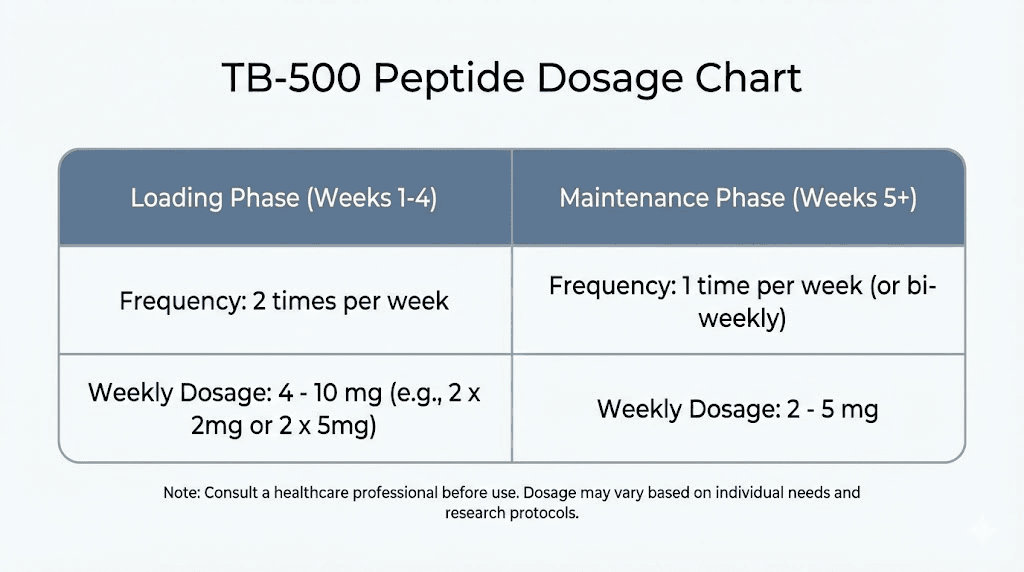
Most TB-500 protocols follow a loading phase followed by a maintenance phase. The logic is straightforward: build up tissue levels initially, then maintain them with less frequent dosing.
Loading phase (4-6 weeks):
Typical loading doses range from 2 to 2.5 mg administered twice weekly, totaling 4-5 mg per week. Some protocols suggest higher loading at 4-8 mg weekly. The more aggressive approach is sometimes used for acute injuries where faster results are desired.
Maintenance phase:
After the loading phase, dosing typically drops to 2 mg every one to two weeks. This maintains tissue saturation while reducing overall peptide use. Some researchers use maintenance dosing indefinitely for ongoing joint and tissue support, while others cycle on and off.
The half-life of TB-500 is estimated at approximately 2-4 days, which supports the less frequent dosing compared to daily peptides like BPC-157.
Alternative protocols for different goals
Not everyone follows the standard loading approach. Alternative protocols include:
Daily low-dose: 750 mcg daily for 3 months, then cycling one month off. This approach provides steady-state tissue levels without the peaks and valleys of weekly dosing.
Every-other-day moderate dose: 3 mg every other day, which works well for those who want more frequent administration without daily injections.
Injury-specific intensive: Higher doses concentrated around the injury site, combining subcutaneous administration with intramuscular injection near the affected tissue.
The peptide calculator at SeekPeptides can help determine exact amounts based on your specific vial concentrations and desired doses.
Wolverine stack dosing: combining TB-500 with BPC-157
When running the full Wolverine stack, you need to coordinate both peptides. Here is a commonly referenced approach:
BPC-157: 200-500 mcg daily, administered subcutaneously near the injury site when possible. Many users split this into two doses, morning and evening, for more stable levels.
TB-500: 2-2.5 mg twice weekly during loading, then 2 mg every 1-2 weeks for maintenance. Unlike BPC-157, TB-500 injection location matters less because it distributes systemically.
Duration: Most protocols run 4-8 weeks for acute injuries, with some extending to 12 weeks for more significant tissue damage or chronic conditions. After the active cycle, an 8-week break before restarting is often recommended.
Critical note: BPC-157 and TB-500 should NOT be mixed in the same vial. They can be injected in the same session but must remain in separate solutions to maintain stability and potency.
Administration methods: getting the most from your peptides
How you administer peptides affects their distribution and potentially their effectiveness. Understanding the options helps you choose the right approach for your specific situation.
Subcutaneous injection
Subcutaneous administration involves injecting just beneath the skin, typically into the fatty tissue of the abdomen, thigh, or upper arm. This is the most common method for both TB-500 and BPC-157.
For TB-500, subcutaneous injection anywhere on the body works because the peptide distributes systemically. You do not need to inject directly at the injury site, though some users prefer to do so.
For BPC-157, injecting near the injury site may provide higher local concentrations. When dealing with a tendon or ligament injury, injecting 1-2 inches from the affected area is commonly recommended.
Intramuscular injection
Intramuscular administration involves injecting into muscle tissue. This method is sometimes used for deep tissue injuries or when targeting specific muscle groups. It provides slower release compared to subcutaneous administration but may achieve higher local concentrations in the target area.
For muscle injuries, some protocols combine subcutaneous TB-500 for systemic distribution with intramuscular BPC-157 at the injury site.
Reconstitution and handling
Both TB-500 and BPC-157 typically come as lyophilized (freeze-dried) powders that require reconstitution with bacteriostatic water before use. Proper handling is critical:
Use bacteriostatic water rather than sterile water for longer shelf life after reconstitution. Add water slowly to the vial, letting it run down the side rather than spraying directly onto the powder. Never shake the vial, as this can damage the peptide structure. Swirl gently if needed.
Reconstituted peptides should be stored in the refrigerator and used within 3-4 weeks for optimal potency. Unreconstituted peptides can remain stable for longer periods when stored properly.
The reconstitution calculator helps ensure you achieve the correct concentration for your desired dose per injection.
What results can you realistically expect?
This is where expectations meet reality. The Wolverine peptide stack has genuine potential, but it is not a miracle cure. Understanding realistic timelines and outcomes helps you make informed decisions.
Timeline for acute injuries
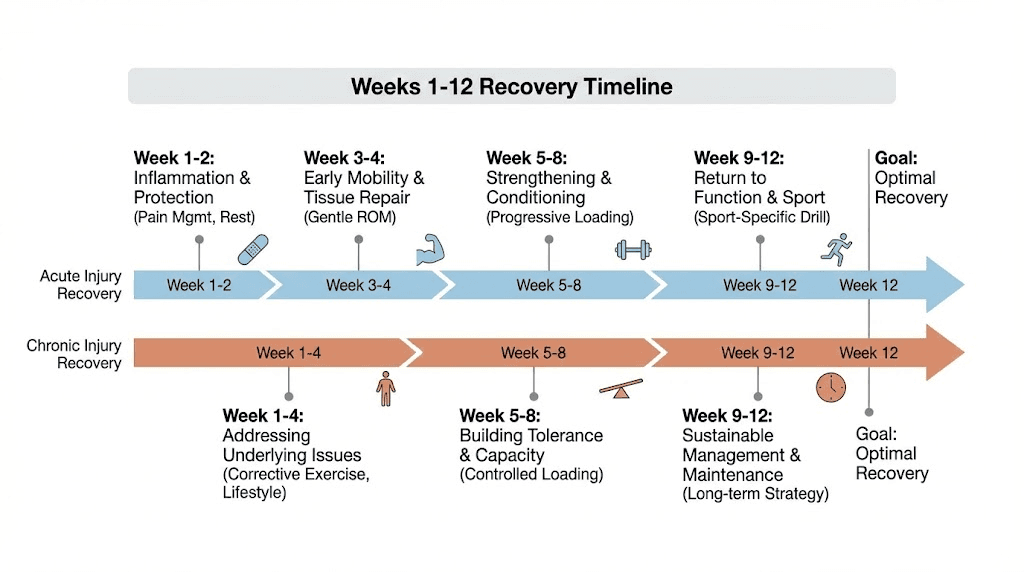
For fresh injuries like muscle strains, tendon sprains, or post-surgical recovery, users commonly report the following progression:
Week 1: Subtle changes, possibly reduced inflammation and some pain improvement. Most users describe this period as "something is happening but nothing dramatic."
Weeks 2-3: More noticeable improvements in pain, mobility, and function. This is when the combination typically starts showing clear effects. Inflammation reduction becomes more apparent.
Weeks 4-6: Significant progress for most acute injuries. Users report accelerated healing compared to previous similar injuries. Range of motion and strength improvements become measurable.
Weeks 8-12: Full protocol completion for significant injuries. Post-surgical recovery timelines are often compressed compared to standard expectations. One documented case showed a teenage athlete recovering from ACL reconstruction in 5-6 months rather than the projected 9-12 months.
Timeline for chronic conditions
Chronic injuries and degenerative conditions respond differently. These are stubborn because the underlying tissue has adapted to a damaged state, and turning that around takes more time.
Weeks 1-4: Often minimal noticeable change. This is the period where many people give up prematurely. The peptides are working, but chronic tissue takes longer to respond.
Weeks 4-8: Gradual improvements in baseline pain and function. Users describe it as a "slow turn" rather than sudden improvement.
Weeks 8-12+: More substantial changes for those who persist. Some chronic conditions require extended protocols or multiple cycles to see significant results.
The honest truth is that chronic conditions are unpredictable. Some people experience dramatic improvements, others modest benefits, and some minimal response. Age, injury severity, concurrent therapies, and individual biochemistry all influence outcomes.
Factors that influence results
Understanding what affects outcomes helps set realistic expectations and optimize your approach:
Injury type and severity: Acute injuries generally respond faster and more predictably than chronic conditions. Mild to moderate injuries show better response rates than severe structural damage.
Age: Younger individuals typically see faster results, though older users still report benefits. The natural decline in healing capacity with age means peptides may produce more modest percentage improvements in older users.
Concurrent therapy: Peptides work best as part of a comprehensive approach including physical therapy, appropriate rest, and nutrition. They enhance healing, but they do not replace the fundamentals.
Peptide quality: This is a significant variable. The peptide market includes everything from pharmaceutical-grade products to underdosed or contaminated materials. Using third-party tested peptides from reputable sources matters for consistent results.
Protocol adherence: Inconsistent dosing, improper storage, or premature discontinuation all reduce effectiveness. The peptides need to be administered correctly and consistently to work.
Safety considerations and potential side effects
No comprehensive guide would be complete without addressing safety. TB-500 and BPC-157 have relatively favorable safety profiles based on available research and user reports, but they are not risk-free.
Known and reported side effects
The most commonly reported side effects of TB-500 include:
Headaches: Particularly during the loading phase. Usually mild and temporary. Often attributed to the angiogenic effects of the peptide.
Lethargy or fatigue: Some users report tiredness, especially initially. This may relate to the body's increased resource allocation toward healing processes.
Injection site reactions: Redness, swelling, or irritation at injection sites.
Proper injection technique and site rotation minimize these issues.
Nausea: Occasional reports, typically mild and transient.
BPC-157 side effects are generally even milder, with most users reporting no adverse effects. Occasional reports include:
Dizziness: Rare but documented.
Nausea: Particularly with oral administration.
Mild headaches: Less common than with TB-500.
Theoretical concerns
The limited human research on these peptides means some potential concerns remain theoretical:
Cancer risk: Any peptide that promotes cell proliferation and blood vessel formation raises questions about potential effects on existing tumors. There is no evidence that TB-500 or BPC-157 cause cancer, but the theoretical concern exists for those with existing malignancies. Most practitioners advise against use in anyone with active cancer.
Long-term effects: The longest human safety data comes from limited clinical trials and accumulated user experience. We simply do not have decades of human safety data for these peptides.
Drug interactions: Potential interactions with medications that affect blood clotting, blood pressure, or growth factors remain understudied.
Contraindications
Based on current understanding, the following represent potential contraindications:
Active cancer or history of certain cancers. Pregnancy or breastfeeding. Serious cardiovascular conditions (consult physician). Immunocompromised states. Current use of anticoagulants (relative contraindication requiring medical supervision).
Anyone considering these peptides should consult with a healthcare provider familiar with peptide therapy. Finding a knowledgeable practitioner helps ensure safe and appropriate use.
Common mistakes that sabotage results
After years of accumulating user experiences and research, clear patterns emerge around what goes wrong. Avoiding these mistakes significantly improves your chances of success.
Mistake 1: inadequate duration
Many users expect immediate results and give up after 2-3 weeks of minimal change. Tissue healing takes time. Peptides can accelerate the process, but they cannot eliminate it entirely.
For acute injuries, commit to at least 4-6 weeks before evaluating results. For chronic conditions, expect 8-12 weeks minimum. Stopping prematurely wastes everything you have invested up to that point.
Mistake 2: poor quality peptides
The peptide market is unregulated. Products sold as TB-500 or BPC-157 may be underdosed, contaminated, or entirely fake. Using untested peptides from unknown sources is gambling with your health and your wallet.
Look for suppliers who provide independent third-party testing with certificates of analysis (COA) showing purity levels. Anything below 98% purity should raise questions. SeekPeptides members gain access to sourcing guidance and vendor evaluation resources that help navigate this challenge.
Mistake 3: improper storage and handling
Peptides are fragile molecules that degrade with improper handling. Common errors include:
Storing reconstituted peptides at room temperature. Freezing reconstituted peptides (which can cause degradation). Exposing peptides to direct sunlight. Using tap water or non-sterile water for reconstitution. Shaking vials instead of gently swirling.
Proper storage and handling maintains potency throughout your protocol.
Mistake 4: inconsistent dosing
Missing doses, varying amounts, or irregular timing all reduce effectiveness. Peptides work best when administered consistently according to protocol. Set reminders, establish routines, and track your doses.
Mistake 5: ignoring complementary therapies
Peptides enhance healing but do not replace fundamentals. Physical therapy, appropriate rest, proper nutrition, and sleep all contribute to outcomes. Using peptides as a substitute for rehabilitation rather than a complement to it produces inferior results.
Mistake 6: unrealistic expectations
The Wolverine name sets up expectations that reality cannot match. These peptides support healing. They do not grant supernatural regeneration powers. Expecting complete recovery from severe injuries in days leads to disappointment and premature protocol abandonment.
Advanced stacking options beyond the basic Wolverine protocol
Once you understand the fundamentals, more sophisticated approaches become available. These advanced stacks target specific goals or address particular healing challenges.
The Glow protocol addition
The Glow protocol adds GHK-Cu (copper peptide) to the Wolverine stack for enhanced tissue remodeling and anti-inflammatory effects. GHK-Cu has demonstrated wound healing acceleration, collagen synthesis promotion, and anti-inflammatory properties.
When combined with TB-500 and BPC-157, the three peptides address overlapping but distinct aspects of tissue repair:
TB-500: Cell mobilization and migration. BPC-157: Local environment optimization and growth factor modulation. GHK-Cu: Tissue remodeling and inflammation reduction.
This triple stack is sometimes used for complex injuries or when standard protocols produce incomplete results.
The Klow blend approach
Some practitioners use pre-formulated blends like the Klow blend that combine BPC-157, TB-500, KPV, and GHK-Cu. The addition of KPV provides enhanced anti-inflammatory effects through different pathways than the other peptides.
These combination products simplify administration but reduce flexibility in adjusting individual component doses.
Adding growth hormone secretagogues
For goals involving muscle recovery and growth alongside tissue healing, some protocols incorporate growth hormone secretagogues like ipamorelin or CJC-1295.
Growth hormone plays important roles in tissue repair, protein synthesis, and recovery. Combining healing peptides with GH secretagogues may provide synergistic benefits for athletes recovering from injuries who also want to maintain or build muscle.
The peptide stack calculator helps plan complex protocols involving multiple compounds.
Injury-specific stacking strategies
Different injuries may benefit from different approaches:
Tendon and ligament injuries: Standard Wolverine stack with emphasis on local BPC-157 injection near the injury. Consider adding collagen peptides orally for structural support.
Muscle tears: Wolverine stack plus potential GH secretagogue for enhanced protein synthesis. Physical therapy coordination is particularly important.
Joint injuries: Wolverine stack with GHK-Cu for cartilage support. Consider oral BPC-157 administration in addition to injection for systemic anti-inflammatory effects.
Post-surgical recovery: Aggressive loading protocol with careful timing around surgery. Most practitioners recommend waiting at least 24-48 hours post-surgery before starting to avoid any potential interference with initial clotting and wound closure.
The regulatory landscape: what you need to know
Understanding the legal and regulatory status of TB-500 and BPC-157 helps inform your decisions and set appropriate expectations about medical support availability.
FDA status
Neither TB-500 nor BPC-157 is FDA-approved for human therapeutic use. They are classified as research chemicals, meaning they can be sold legally for research purposes but are not approved as medicines.
In 2023, the FDA classified TB-500 as a Category 2 bulk drug substance, which has implications for compounding pharmacies and clinical access. BPC-157 remains in a similar regulatory gray area.
This status means:
No pharmaceutical-grade products exist specifically for human treatment. Quality control varies significantly between suppliers. Healthcare providers may be reluctant to discuss or supervise use. Insurance will not cover these compounds.
Sports regulations
Both TB-500 and BPC-157 are prohibited by the World Anti-Doping Agency (WADA) under the S0 category of non-approved substances. They are also banned by most professional sports organizations and the NCAA.
Athletes subject to drug testing should understand that use of these peptides constitutes a doping violation regardless of therapeutic intent. Detection windows and testing sensitivities continue to improve.
Finding medical support
Despite the regulatory challenges, an increasing number of physicians and clinics offer peptide therapy consultations. Functional medicine practitioners, sports medicine physicians, and anti-aging specialists are most likely to be knowledgeable about these compounds.
SeekPeptides maintains resources helping members connect with practitioners experienced in peptide therapy. Having medical supervision improves safety and potentially outcomes through professional monitoring and dose optimization.
Comparing TB-500 to alternatives
TB-500 is not the only option for enhanced healing. Understanding how it compares to alternatives helps determine whether it is the right choice for your situation.
TB-500 vs BPC-157 alone
While they work synergistically together, each peptide can be used independently:
Choose TB-500 if: Your injury involves multiple sites or you want systemic healing support. TB-500's ability to distribute throughout the body makes it suitable for generalized recovery or when multiple areas need attention.
Choose BPC-157 if: Your injury is localized and you want targeted effects at a specific site. BPC-157's tendency toward local action makes it ideal for isolated tendon, ligament, or muscle injuries.
Choose both if: You want comprehensive healing support addressing both systemic and local aspects. This is the Wolverine approach for a reason.
The BPC-157 vs TB-500 comparison page provides detailed analysis of their differences.
TB-500 vs growth hormone
Growth hormone also promotes tissue healing, but through different mechanisms:
GH works by stimulating IGF-1 production, which promotes cell proliferation and protein synthesis. It has broader effects on metabolism, body composition, and recovery beyond just healing.
TB-500 works specifically through actin regulation and cell migration. Its effects are more targeted to tissue repair processes.
For pure healing applications, TB-500 may be more appropriate. For overall recovery including body composition goals, GH or GH secretagogues might be considered. Some protocols combine both for comprehensive support.
TB-500 vs PRP (platelet-rich plasma)
PRP is an autologous treatment using your own blood components to promote healing. It contains growth factors that stimulate tissue repair.
Advantages of PRP: Uses your own biological material (no foreign substances). Established medical procedure with clinical track record. May be covered by some insurance plans. Single or limited treatments rather than ongoing protocols.
Advantages of TB-500: Does not require blood draws or office procedures. Can be administered at home. Generally lower cost per treatment. May provide different or complementary mechanisms.
Some practitioners combine PRP injections with peptide protocols for enhanced results.
TB-500 vs stem cell therapy
Stem cell treatments represent another regenerative option, using cellular transplantation to promote tissue repair:
Stem cells offer: Potential for true tissue regeneration rather than just enhanced repair. Established protocols for certain conditions. Cellular replacement rather than just signaling support.
TB-500 offers: Dramatically lower cost. No procedure required. Support for endogenous repair processes rather than cell transplantation. Can be combined with stem cell treatments potentially enhancing their effectiveness.
The choice between these options depends on injury severity, budget, access to qualified providers, and individual circumstances.
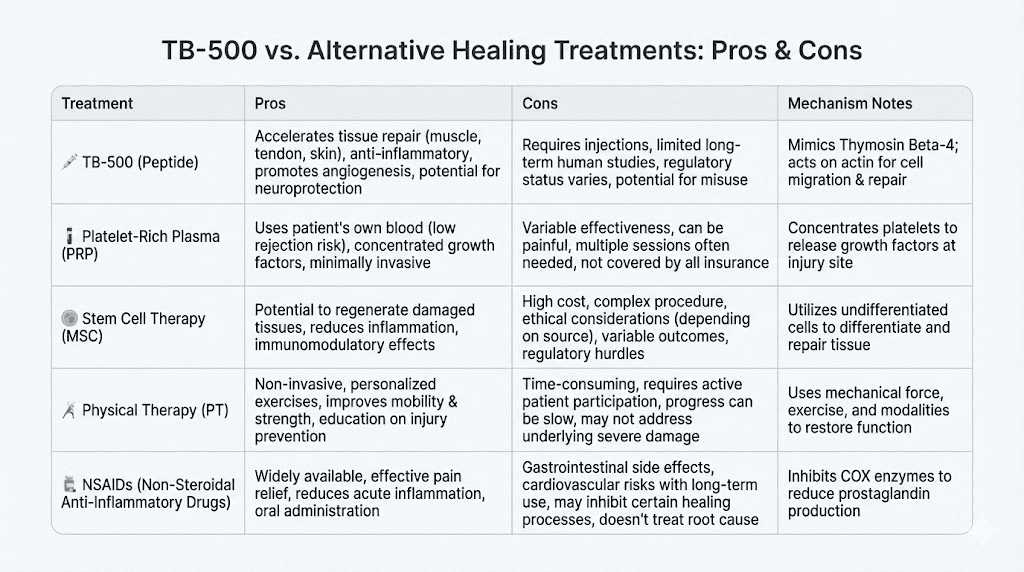
Building your complete healing protocol
Peptides work best as part of a comprehensive approach. Here is how to structure a complete protocol around the Wolverine stack.
Pre-protocol preparation
Before starting peptides, optimize the fundamentals:
Baseline assessment: Document your current pain levels, range of motion, strength, and functional limitations. This provides comparison points for evaluating progress.
Medical clearance: If possible, consult with a healthcare provider to rule out contraindications and establish monitoring protocols.
Source your peptides: Obtain properly tested peptides from reputable suppliers. Rushing this step to start sooner often leads to inferior results from low-quality products.
Gather supplies: Bacteriostatic water, insulin syringes, alcohol swabs, and proper storage containers. Having everything ready ensures consistent protocol execution.
Physical therapy assessment: If working with a physical therapist, coordinate your peptide protocol with your rehabilitation plan.
Protocol execution
Week 1-2: Begin loading phase. Document any immediate effects or side effects. Do not expect dramatic changes yet, this is establishment phase.
Week 3-4: Continue loading. Most users begin noticing improvements. Adjust physical therapy intensity as appropriate based on response.
Week 5-6: Transition to maintenance dosing if following standard protocol. Evaluate progress against baseline. Decide whether to continue, adjust, or complete the protocol.
Week 7-8+: Continue maintenance as needed. For significant injuries, extended protocols are common. Reassess every 2-4 weeks.
Complementary interventions
Physical therapy: Perhaps the most important complementary intervention. Peptides create conditions favorable for healing, but proper movement and loading patterns guide that healing toward functional tissue.
Nutrition: Adequate protein intake supports tissue repair. Consider 1.2-1.6 grams per kilogram body weight minimum during healing phases. Collagen supplementation may provide additional structural support for connective tissue injuries.
Sleep: Growth hormone release and tissue repair peak during deep sleep. Prioritizing sleep quality and duration enhances healing outcomes.
Hydration: Adequate fluid intake supports all physiological processes including tissue repair.
Anti-inflammatory management: Excessive NSAIDs use may impair some healing pathways. Discuss with your healthcare provider about appropriate anti-inflammatory strategies during peptide protocols.
Progress tracking
Systematic tracking helps evaluate protocol effectiveness:
Weekly pain scores using consistent rating scale. Range of motion measurements where applicable. Functional tests relevant to your injury. Photo or video documentation of movement quality. Training volume and intensity tolerance. Sleep quality and recovery metrics.
SeekPeptides members access tracking tools and protocol optimization guidance that help maximize results from healing peptide protocols.
Frequently asked questions
How long does it take for the Wolverine stack to work?
Most users report noticeable improvements within 2-3 weeks for acute injuries. Subtle changes may occur within the first week, including reduced inflammation and minor pain improvements. Chronic conditions typically require 4-8 weeks minimum before significant changes become apparent.
Full protocol benefits usually develop over 8-12 weeks of consistent use.
Can I inject TB-500 and BPC-157 at the same time?
Yes, you can administer both peptides in the same session, but they should NOT be mixed in the same vial or syringe. Mixing can compromise stability and reduce effectiveness. Inject them separately, one after the other, using separate syringes.
Does injection location matter for TB-500?
TB-500 distributes systemically throughout the body regardless of injection location. You can inject subcutaneously anywhere convenient. Unlike BPC-157, which may benefit from injection near the injury site, TB-500 works the same whether injected in your abdomen or anywhere else.
What happens if I miss a dose?
Missing occasional doses is not catastrophic given TB-500's longer half-life. Simply continue with your next scheduled dose, do not double up to compensate. Consistent administration produces better results than inconsistent dosing, so establish routines to minimize missed doses.
Can the Wolverine stack help with old injuries?
Yes, chronic and old injuries can respond to the Wolverine stack, though typically more slowly than acute injuries. Chronic tissue has adapted to a damaged state, and reversing this takes time. Expect 8-12+ weeks for meaningful improvement with chronic conditions, and results may be more modest compared to acute injuries.
Are there any food or supplement interactions?
No significant food interactions are documented. The peptides can be taken with or without food. Some users prefer administration on an empty stomach for potentially improved absorption, but this is not required. Regarding supplements, no problematic interactions are well-established, though users taking blood thinners or medications affecting clotting should consult healthcare providers.
How do I know if my peptides are working?
Track objective and subjective markers from baseline. Pain reduction, improved range of motion, better functional capacity, and faster recovery from activity all indicate response. The changes are often gradual, making baseline documentation essential for recognizing progress that might otherwise go unnoticed.
Can I use the Wolverine stack indefinitely?
Some users maintain low-dose protocols long-term for ongoing joint and tissue support. However, most protocols involve active treatment phases followed by breaks. A common approach is 8-12 weeks active, 8 weeks off, then reassess whether another cycle is needed. Long-term continuous use lacks safety data, so periodic breaks are generally recommended.
For researchers serious about optimizing their peptide protocols, SeekPeptides offers the most comprehensive resource available, with evidence-based guides, proven protocols, and a community of thousands who have navigated these exact questions.