Dec 23, 2025
Your skin tells a story, lines around your eyes, dullness where there used to be radiance.
Maybe some discoloration you can't quite cover up anymore.
You've tried retinol, vitamin C serums, hyaluronic acid.
They help, sure, but you're looking for something more, something that works at a deeper level, something that actually tells your skin cells to behave younger.
That's where glow peptides come in.
These aren't your typical skincare ingredients.
Peptides are signaling molecules that communicate directly with your cells, triggering specific responses like collagen production, wound healing, and cellular regeneration. When we talk about "glow peptides," we're talking about specific peptide compounds that target skin appearance, texture, and overall radiance.
This isn't magic. It's biology.
What are glow peptides?
Glow peptides are short chains of amino acids that signal your skin cells to perform specific functions. Think of them as messengers. They tell your fibroblasts to make more collagen. They instruct your skin to repair damage faster. They communicate anti-inflammatory signals that calm redness and irritation.
Your body makes peptides naturally. But as you age, production drops.
That's when you notice the changes - less elasticity, more wrinkles, dull complexion. Supplementing with specific peptides can help restore some of what you've lost.
The term "glow peptides" typically refers to peptides that improve skin appearance through multiple mechanisms: boosting collagen synthesis, increasing skin thickness, improving hydration, reducing inflammation, and promoting cellular turnover. The result? Skin that looks brighter, firmer, and more youthful.
Not all peptides work the same way. Some are better for anti-aging. Others excel at healing. And some specifically target that radiant, healthy glow everyone's chasing.
The science behind how peptides create that glow
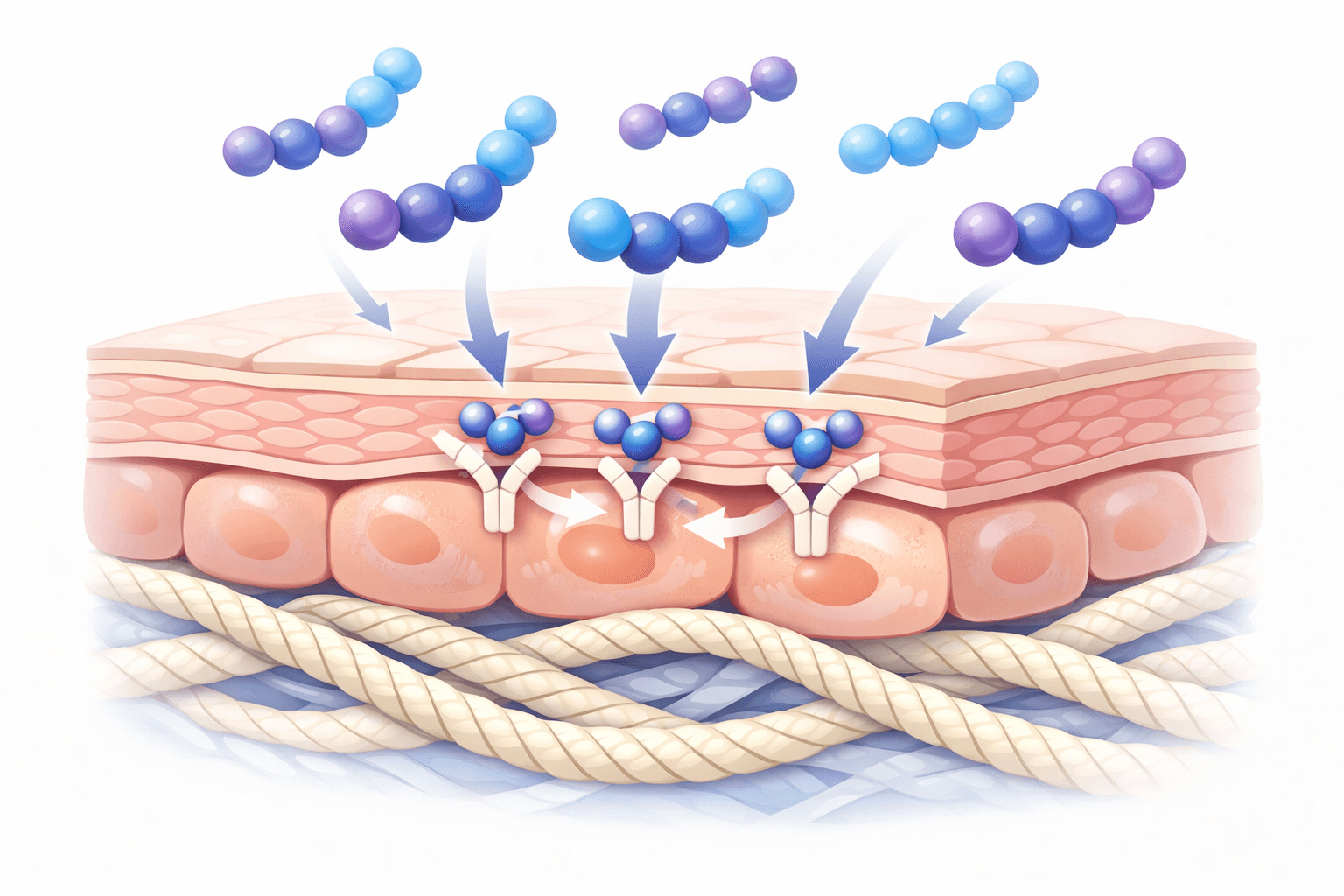
Peptides work by mimicking natural signaling molecules in your body.
When applied topically or injected, they bind to specific receptors on skin cells and trigger biological responses.
Here's what happens at the cellular level:
When copper peptides like GHK-Cu contact your skin, they bind to receptors on fibroblasts.
This binding activates gene expression related to collagen and elastin production.
Your fibroblasts essentially get a signal that says "start building." And they do.
Matrixyl peptides (palmitoyl pentapeptide-4) work differently. They stimulate your cells to produce more of the extracellular matrix components - the structural proteins that keep skin firm and supple. Studies show Matrixyl can reduce wrinkle depth by up to 45% with consistent use.
Anti-inflammatory peptides like KPV reduce cytokine production, calming skin inflammation at its source. This matters because chronic low-grade inflammation accelerates aging and creates that dull, uneven skin tone nobody wants.
Growth factor-mimicking peptides signal increased cellular turnover. Your skin sheds dead cells faster and generates new ones more efficiently. That's the glow - fresh, new skin cells constantly surfacing.
The key is consistency. Peptides aren't instant. They're working at a cellular level, changing how your skin behaves over weeks and months. You're not covering up problems. You're fixing them.
Most effective peptides for glowing skin
Not all peptides are created equal when it comes to achieving that radiant complexion. Here are the heavy hitters:
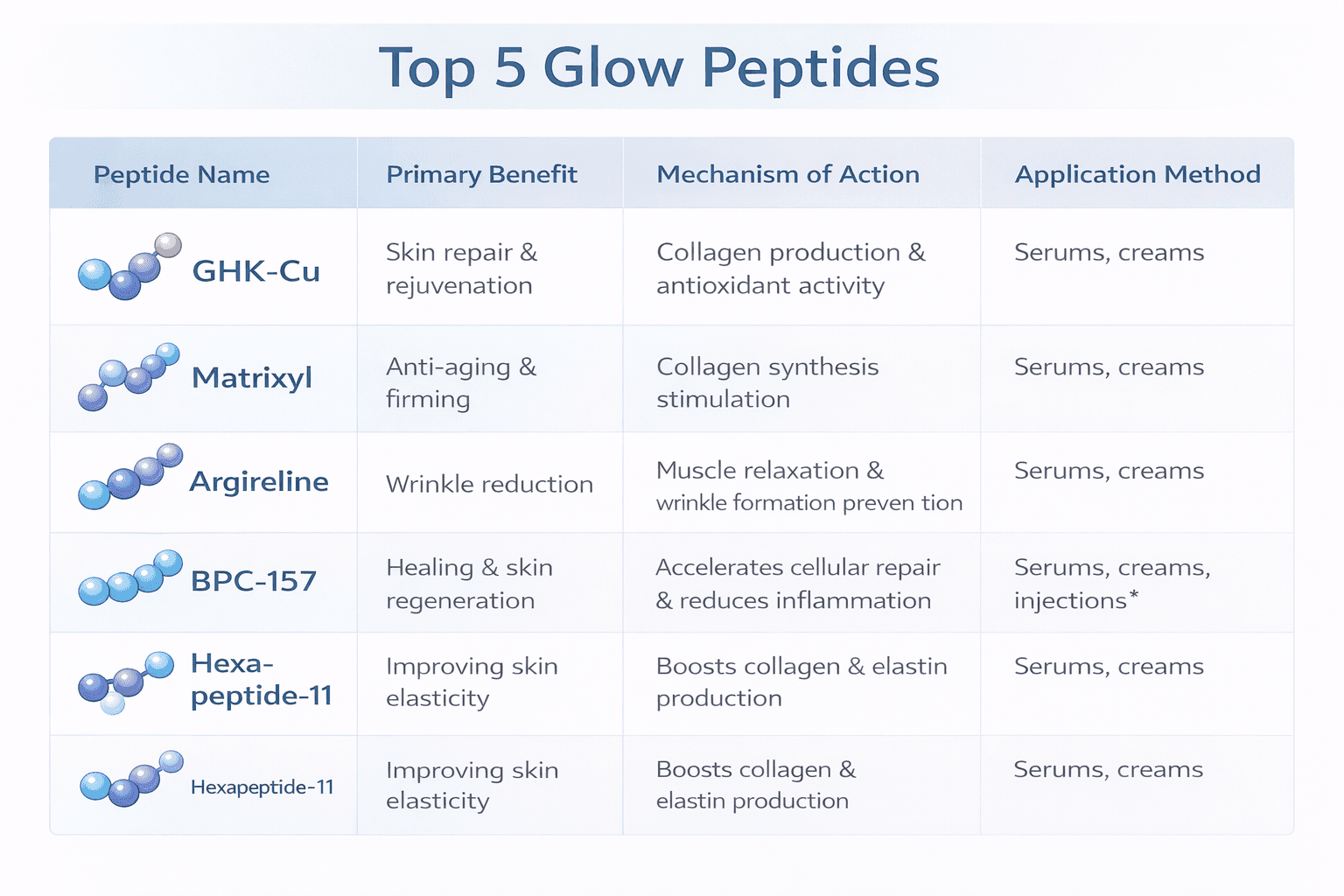
GHK-Cu (copper peptides)
The gold standard for skin regeneration. GHK-Cu does everything, stimulates collagen, increases skin thickness, improves elasticity, acts as an antioxidant, and promotes wound healing. It's one of the most researched peptides for anti-aging.
Copper peptides naturally occur in your body but decline with age. Supplementing with GHK-Cu can restore some of that youthful regenerative capacity. You'll see improvements in skin texture, reduced fine lines, and that overall healthy glow.
Typical dosing: Topical creams contain 0.05-0.1% GHK-Cu. Injectable forms use 1-2mg per application, 2-3 times per week. For detailed dosing information, check out our GHK-Cu copper peptides guide.
Matrixyl (palmitoyl peptides)
This family of peptides specifically targets collagen production. Matrixyl 3000 combines two peptides - palmitoyl oligopeptide and palmitoyl tetrapeptide-7 - to maximize collagen synthesis while reducing inflammation.
Clinical studies show significant improvements in wrinkle depth after 2-4 months of consistent use. It's particularly effective for crow's feet, forehead lines, and that tired, crepey appearance around the eyes.
Typical concentration: Topical products use 3-8% Matrixyl. Apply twice daily for best results.
Argireline (acetyl hexapeptide-8)
Often called "topical Botox" because it works on similar mechanisms.
Argireline reduces the intensity of muscle contractions in your face, which means fewer expression lines and wrinkles. It's not as powerful as actual Botox, but it's non-invasive and carries zero risk.
You'll see the most dramatic effects on forehead lines and around the eyes - anywhere expression creates wrinkles.
Typical concentration: Look for 5-10% in topical formulas. Use morning and night on clean skin.
BPC-157
While BPC-157 is famous for healing injuries, it also has remarkable effects on skin. It accelerates wound healing, reduces inflammation, and promotes angiogenesis (new blood vessel formation). This means better nutrient delivery to your skin and faster cell turnover.
Some users report improved skin texture and reduced scarring from acne or injuries. It's not a traditional "glow peptide" but the regenerative effects translate to better-looking skin.
Typical dosing: Injectable BPC-157 is used at 250-500mcg daily, injected subcutaneously near the area of concern. Learn more about proper administration in our BPC-157 complete guide.
Hexapeptide-11
A newer player specifically designed for improving skin radiance.
Hexapeptide-11 stimulates hyaluronic acid production in your skin, which means better hydration, plumpness, and that dewy glow. It also has some collagen-stimulating properties.
This one's great if your main concern is dullness and dehydration rather than wrinkles.
Typical concentration: 2-5% in topical formulations.
Topical vs injectable peptides: which is better for skin?
This is the big question. And the answer depends on what you're trying to achieve.
Topical peptides are convenient, safe, and accessible. You apply them like any other serum or cream. The challenge is penetration - getting the peptide through your skin barrier and into the deeper layers where it can work.
Many peptides are too large to penetrate skin effectively.
That's why formulation matters. Look for products with penetration enhancers like hyaluronic acid, niacinamide, or delivery systems like liposomes.
Even then, topical peptides work more slowly than injectable forms.
Best for: GHK-Cu, Matrixyl, Argireline, and other small peptides designed for topical use. These have been specifically formulated to penetrate skin and have clinical evidence backing their efficacy.
Injectable peptides deliver the compound directly where it needs to go. You bypass the skin barrier entirely. This means faster, more dramatic results. The downside is needles - not everyone is comfortable with injection, and there's a higher risk of side effects if done incorrectly.
Subcutaneous injection near the treatment area provides the best results for skin peptides. The peptide disperses through local tissue and gets to work immediately.
Best for: BPC-157, TB-500 (for skin healing), and any peptide where you want systemic effects or are treating specific problem areas like acne scarring or localized inflammation.
The hybrid approach works well - use injectable peptides for targeted healing or anti-aging, and layer topical peptides for overall maintenance and improvement. Many users find this combination delivers the best of both worlds.
For more guidance on administration methods, see our peptide dosing guide.
How to use peptides for maximum skin benefits
Using peptides isn't complicated, but doing it right makes a massive difference in results.
For topical peptides:
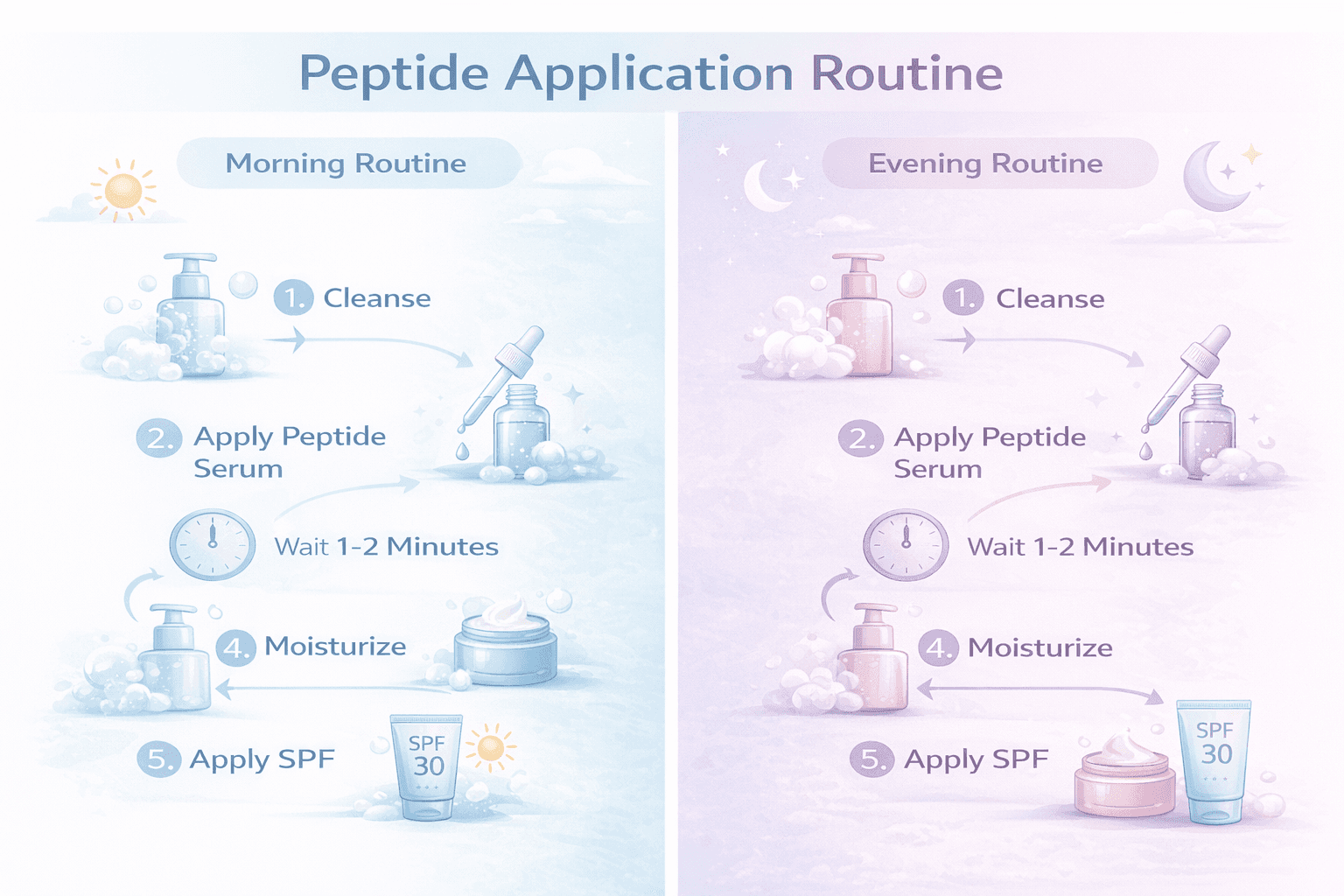
Start with clean skin. Peptides need direct contact with your skin to work. Cleanse thoroughly but gently - you don't want to strip your skin barrier.
Apply to damp skin. This increases penetration. Pat your face with a damp towel after cleansing, then immediately apply your peptide serum.
Layer correctly. Peptides go on before oils and heavier creams. The general rule: thinnest to thickest. So your order would be: toner, peptide serum, other treatments, moisturizer, sunscreen (morning only).
Give them time to absorb. Wait 1-2 minutes between applying your peptide and your next product. This lets them fully penetrate before you seal everything in.
Use consistently. Peptides work cumulatively. Using them sporadically won't give you results. Morning and night, every day, for at least 8-12 weeks before judging effectiveness.
Don't mix with harsh actives. Vitamin C and peptides can interfere with each other in some formulations. Use vitamin C in the morning, peptides at night, or choose a formula designed to combine them. Retinol and peptides can work together, just introduce slowly to avoid irritation.
For injectable peptides:
Reconstitute properly. Most peptides come as lyophilized powder.
You'll need bacteriostatic water to reconstitute.
Our peptide reconstitution calculator makes this easy, plug in your vial size and desired dose, and it tells you exactly how much water to add.
Inject subcutaneously. For skin benefits, inject near the treatment area. For face, many users inject in the abdomen and let systemic circulation deliver the peptide. For specific scarring or problem areas, inject as close as possible while staying safe.
Rotate injection sites. Don't hit the same spot repeatedly. This reduces scar tissue buildup and keeps absorption consistent.
Store correctly. Reconstituted peptides stay potent in the refrigerator for 2-4 weeks typically. Follow specific storage guidelines for your peptide.
Track your protocol.
Use our free peptide cycle planning guide to map out your usage, track results, and plan breaks if needed.
Expected results and timeline
Managing expectations is crucial with peptides.
This isn't Botox. You won't wake up with different skin tomorrow.
Weeks 1-2: Probably nothing visible yet. Your cells are responding, but surface changes take time. Some users report improved hydration and a subtle glow, but this could be placebo.
Weeks 3-4: This is when most people start noticing something. Skin texture often improves first - smoother, more even. You might see reduced redness if you're using anti-inflammatory peptides.
Weeks 6-8: The good stuff starts showing up. Fine lines may appear softer. Skin looks plumper, more hydrated. That healthy glow becomes more consistent, not just "good lighting days."
Weeks 10-12: This is your first real checkpoint. By three months, you should see measurable improvement in whatever you were targeting - whether that's wrinkles, texture, tone, or overall radiance. Take photos every 2 weeks so you can actually see the change. Day-to-day, it's subtle. Over weeks, it's dramatic.
6+ months: With consistent use, peptides continue improving your skin. Collagen production compounds. Cellular turnover stays elevated. Many users report their best results around 6-9 months of consistent peptide use.
The key word is consistent, peptides aren't a quick fix, they're a long-term investment in your skin's health and appearance.
Results vary based on several factors:
Age: Younger skin responds faster. If you're starting peptides in your 20s or 30s, you'll see maintenance benefits. Start in your 40s or 50s, and you'll see more dramatic improvements but it takes longer.
Baseline skin condition: Worse starting point = more dramatic improvements, but potentially longer to see them. Severely damaged skin needs more repair time.
Peptide quality: This matters enormously. Cheap, poorly formulated peptides won't work. Research-grade peptides from reputable sources cost more but deliver actual results.
Application method: Injectable peptides work faster than topical. Proper reconstitution and administration matter. Sloppy technique = poor results.
Supporting factors: Sleep, hydration, nutrition, sun protection - all these affect how well peptides work. You can't peptide your way out of terrible lifestyle habits.
Common mistakes that sabotage results
You can do everything right and still not see results if you're making these errors:
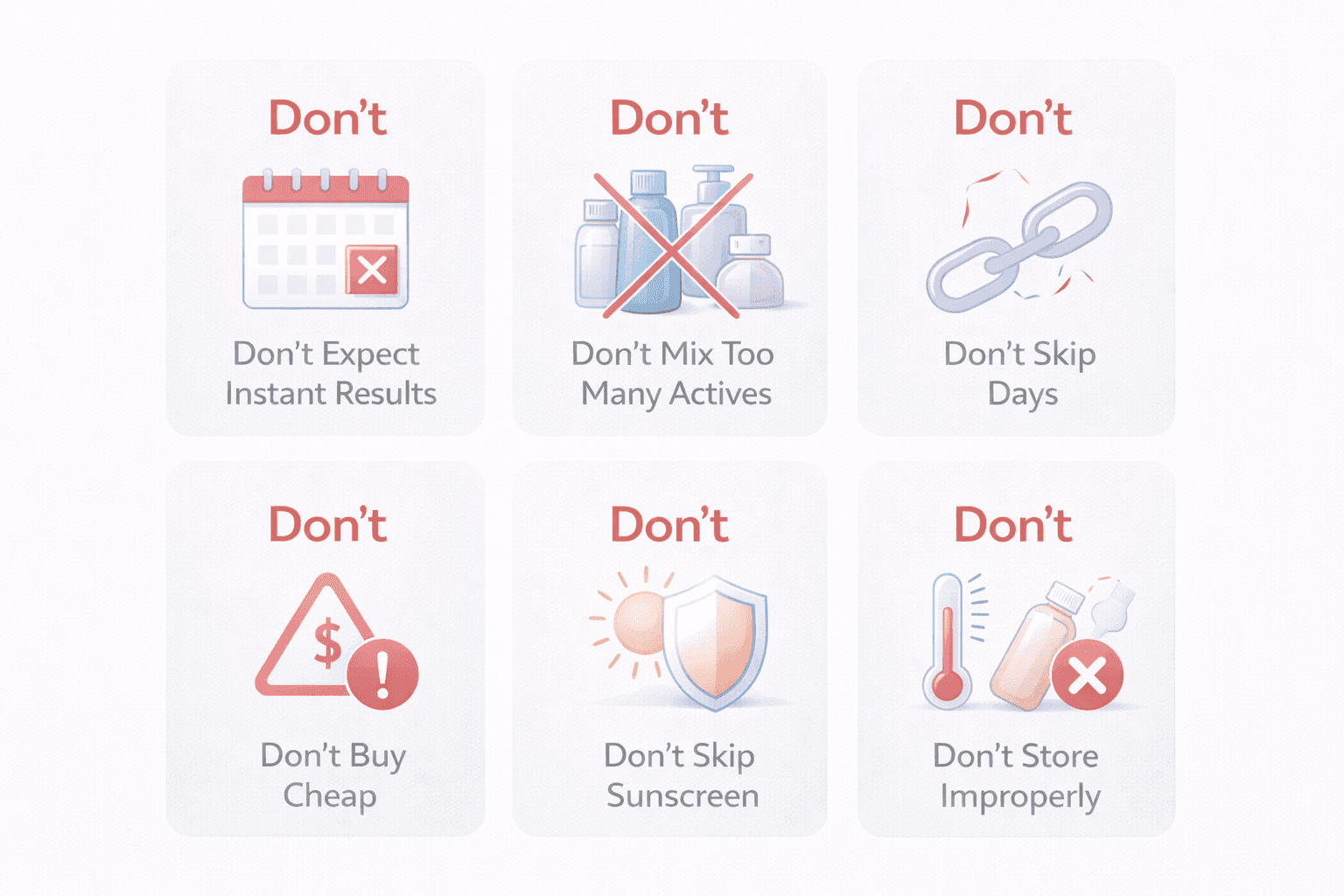
Expecting instant results
Peptides take time. If you quit after two weeks because you don't see changes, you're quitting right before things start working. Stick with it for at least 12 weeks.
Using too many actives at once
Adding peptides while also using retinol, vitamin C, AHAs, BHAs, and seven other actives creates a chaotic chemical soup on your face. Your skin can only process so much. Start with peptides alone or with gentle basics (cleanser, moisturizer, SPF), then slowly add other actives back if needed.
Inconsistent application
Using peptides sporadically doesn't work. You're not building up enough signaling to change cellular behavior. Morning and night, every single day. Set reminders if you have to.
Buying cheap products
This is where most people fail. Peptides are expensive to produce properly. If a peptide serum costs $15, it probably contains almost no actual active peptide.
You get what you pay for. Research-grade suppliers for injectable peptides, reputable skincare brands for topical.
Not using sunscreen
Peptides increase cellular turnover and collagen production. New skin is more vulnerable to UV damage. If you're using peptides without religious SPF application, you're taking one step forward and two steps back. UV damage destroys the very collagen you're trying to build.
Improper storage
Peptides degrade when exposed to heat, light, and air. Store topical products in cool, dark places (refrigerator is ideal). Keep injectable peptides refrigerated after reconstitution. Follow expiration dates.
Mixing peptides with incompatible ingredients
Some combinations just don't work. Direct acids (low pH) can denature certain peptides. Vitamin C in certain forms interferes with copper peptides. Check compatibility before mixing products in your routine.
Side effects and safety considerations
Peptides are generally well-tolerated, especially compared to more aggressive anti-aging treatments. But side effects can occur.
Common side effects with topical peptides:
Mild irritation or redness: Usually happens when you first start using peptides or if you're using too high a concentration. It typically resolves within a few days as your skin adjusts. If it persists beyond a week, reduce frequency or concentration.
Purging: Peptides that increase cellular turnover can cause temporary breakouts as your skin pushes out trapped debris. This is actually a sign it's working, but it's annoying. Usually resolves within 3-4 weeks.
Tingling sensation: Some peptides, particularly copper peptides, can cause mild tingling. This is normal unless it becomes painful.
Potential side effects with injectable peptides:
Injection site reactions: Redness, swelling, minor pain at injection site. Usually minimal with proper technique and clean needles. Rotates sites to minimize this.
Allergic reactions: Rare but possible. Start with a small test dose if you're trying a new peptide. Watch for unusual swelling, rash, or breathing difficulty.
Systemic effects: Injectable peptides enter your bloodstream and can affect your whole body, not just your skin. BPC-157, for example, can cause temporary digestive changes or mild fatigue in some users.
Infection risk: Any injection carries infection risk. Use sterile technique, clean the injection site with alcohol, and never reuse needles.
Who should avoid peptides:
Pregnant or breastfeeding women: Not enough research on safety during pregnancy. Better to wait.
Active skin infections: Don't apply peptides to infected, open, or severely inflamed skin. Heal first, then start peptides.
Cancer history: Some peptides stimulate cell growth and regeneration. If you have a history of cancer, especially skin cancer, consult your doctor before using growth-promoting peptides.
Allergies to ingredients: Check the full ingredient list. If you have known sensitivities to any components, skip that product.
Most people can use peptides without issues. Start slow, pay attention to your skin's response, and adjust accordingly. If you experience severe or persistent side effects, stop use and consult a healthcare provider.
For more information on peptide safety across different compounds, see our peptide safety and risks guide.
Combining peptides with other skincare ingredients
Peptides play well with most skincare ingredients, but some combinations are better than others.
Works great with peptides:
Hyaluronic acid: This combination is gold. HA provides hydration and helps peptides penetrate better. Many peptide serums include HA for this reason. Use them together without worry.
Niacinamide: Vitamin B3 pairs beautifully with peptides. It reduces inflammation, improves barrier function, and doesn't interfere with peptide activity. Great for sensitive skin.
Ceramides: Another winning combination. Ceramides strengthen your skin barrier while peptides work on deeper structural improvements. Use a peptide serum followed by a ceramide-rich moisturizer.
SPF: Non-negotiable. Peptides do their job, sunscreen protects that work. Use every single morning.
Use carefully with peptides:
Retinol/Retinoids: These can work together but introduce slowly. Retinol and peptides both increase cellular turnover and collagen production. Combined, they're powerful, but they can also irritate. Start by using retinol 2-3 nights per week, peptides on off nights, then gradually combine if your skin tolerates it.
Vitamin C: Depends on the form and pH. L-ascorbic acid (the most common and effective form of vitamin C) has a very low pH that can denature some peptides. Best practice: use vitamin C in the morning, peptides at night. Or find a formula specifically designed to combine them at compatible pH levels.
AHAs/BHAs: Chemical exfoliants can interfere with peptide efficacy if used at the same time. Use acids in the morning or on alternate nights from your peptide treatment. Give at least 30 minutes between application if you must use them in the same routine.
Avoid combining:
Copper peptides + vitamin C: This is the big one. Vitamin C (especially L-ascorbic acid) completely destabilizes copper peptides. They neutralize each other. Use them at different times of day or choose one.
Peptides + benzoyl peroxide: BP can oxidize and deactivate peptides. If you're treating acne with benzoyl peroxide, use it in the morning, peptides at night.
The safest approach: keep your peptide routine simple. Cleanser, peptide serum, moisturizer, SPF (morning). You don't need ten actives to get results. In fact, you'll probably get better results with fewer products that can actually work together.
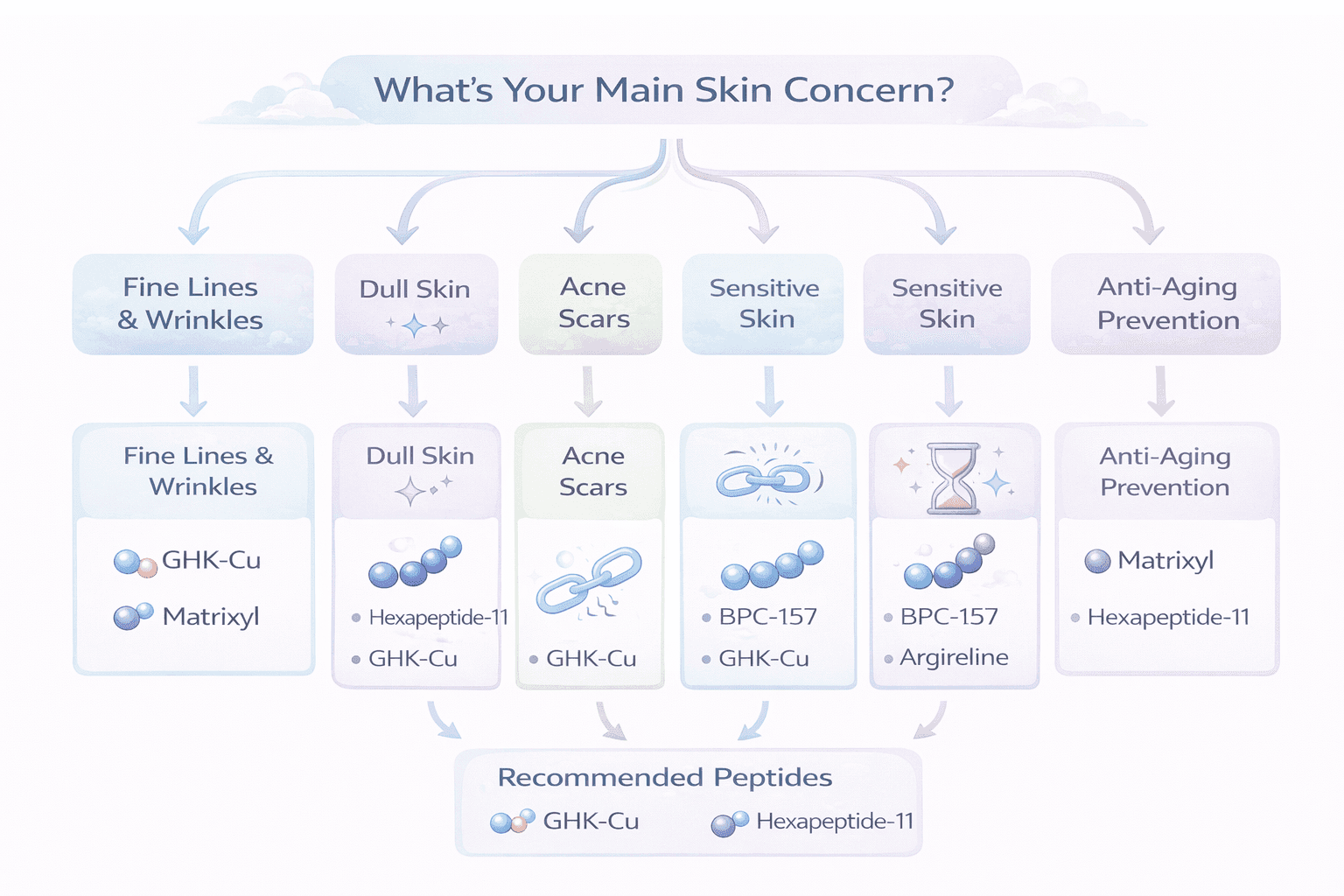
Choosing the right peptides for your skin concerns
Not every peptide addresses every concern.
Here's how to choose based on what you're trying to fix:
For fine lines and wrinkles:
Go with Matrixyl peptides and GHK-Cu. These specifically target collagen production and skin thickness - exactly what you need to fill in lines. Argireline adds a bonus by reducing muscle contractions that create expression lines.
Protocol: Morning: Matrixyl serum, moisturizer, SPF. Evening: GHK-Cu serum, followed by a retinol (if tolerated), then moisturizer.
For dull, tired-looking skin:
Hexapeptide-11 and GHK-Cu deliver here. You need hydration, improved circulation, and faster cell turnover. These peptides stimulate hyaluronic acid production and promote healthy cellular regeneration.
Protocol: Use a peptide serum with both hexapeptide-11 and copper peptides morning and night. Layer with hyaluronic acid for extra hydration. Make sure you're drinking enough water - dehydrated skin will look dull regardless of what you put on it.
For acne scarring and texture issues:
BPC-157 (injectable) and GHK-Cu (topical). These promote wound healing and tissue remodeling. BPC-157 is particularly effective for stubborn scarring when injected near the problem areas.
Protocol: Injectable BPC-157 at 250-500mcg daily for 4-6 weeks, followed by a maintenance phase. Topical GHK-Cu morning and night. Consider adding a gentle exfoliant (lactic acid or mandelic acid) 2-3x per week to enhance turnover. See our BPC-157 dosage calculator for precise dosing.
For sensitive, reactive skin:
KPV peptide is your friend here. It's specifically anti-inflammatory and helps calm reactive skin. Pair it with barrier-supporting ingredients like ceramides and niacinamide.
Protocol: KPV peptide serum morning and night on clean skin. Follow with a gentle, ceramide-rich moisturizer. Avoid all harsh actives until your skin barrier is restored. Learn more in our KPV peptide benefits guide.
For overall anti-aging and prevention:
If you're starting in your 30s or early 40s and want to maintain what you have while slowly improving, GHK-Cu is your all-rounder. It does a bit of everything - collagen production, antioxidant activity, wound healing, anti-inflammatory effects.
Protocol: Simple is better here. Morning: vitamin C, moisturizer, SPF. Evening: GHK-Cu serum, retinol (2-3x per week), moisturizer. This routine hits all the major aging pathways without overcomplicating things.
The role of SeekPeptides in your glow journey
Understanding peptides is one thing. Using them effectively is another. That's where SeekPeptides comes in.
Our platform helps you navigate the complex world of peptide therapy with confidence. Whether you're trying topical peptides for the first time or planning an injectable protocol, we provide the tools you need:
Precise dosing calculators for injectable peptides like BPC-157, TB-500, and more - ensuring you get the dose right every time.
Reconstitution guidance so you never waste expensive peptides on incorrect mixing ratios.
Cycle planning tools to help you map out your protocol, track results, and know when to take breaks.
AI-powered assistance that answers your specific questions about combining peptides, timing doses, managing side effects, and optimizing your routine.
Evidence-based protocols backed by research and real-world results from thousands of users.
You don't have to figure this out alone. SeekPeptides gives you the knowledge and tools to use peptides safely and effectively - whether you're chasing that radiant glow or addressing deeper skin concerns.
Start with our peptide calculator to plan your first protocol, or explore our complete peptide list to discover which peptides align with your goals.
Final thoughts
Peptides aren't magic. But they're the closest thing skincare has to a biological hack - working with your body's natural processes to improve skin from the inside out.
The glow you're chasing isn't just surface-level brightness. It's healthy skin. Strong collagen. Active cellular turnover. Good circulation. Reduced inflammation. That's what peptides deliver when used correctly.
Start simple. Choose one or two peptides that target your main concern. Use them consistently for at least 12 weeks. Track your progress with photos. Adjust based on results.
And remember - peptides work best as part of a complete approach. Sleep matters. Hydration matters. Sun protection matters. Stress management matters. Peptides amplify good habits; they don't replace them.
Your skin can look better. Feel better. Function better. Peptides can help get you there. Now you know how to use them right.
Related resources
Take care of yourself. <3