Feb 3, 2026
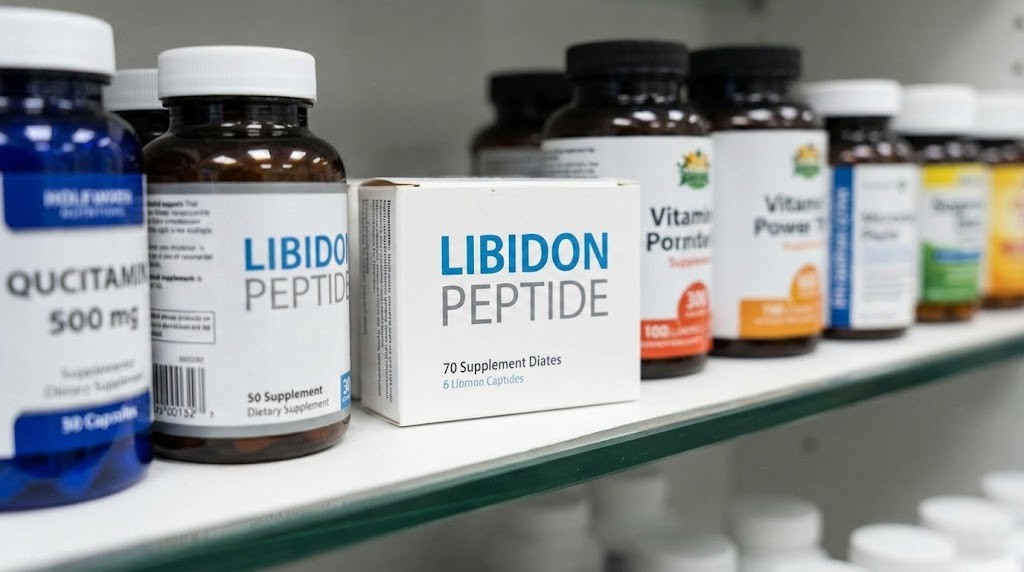
Of the dozens of Khavinson bioregulator peptides developed over three decades of Russian research, one stands out for men struggling with prostate problems. Libidon. A short-chain peptide complex extracted from the prostate tissue of young animals, designed to do something no pharmaceutical prostate drug attempts. It does not merely suppress symptoms. It restores cellular function in prostate tissue from the inside out, working at the level of gene expression to normalize what aging, inflammation, and chronic stress have disrupted.
That distinction matters more than most men realize. Standard prostate medications, alpha blockers and 5-alpha reductase inhibitors, manage urinary symptoms and slow growth. But they do not repair damaged cells. They do not restore the metabolic processes that kept prostate tissue healthy at age 30. And they come with side effects that many men find difficult to accept. Libidon takes a fundamentally different approach, one rooted in the bioregulation principles that Professor Vladimir Khavinson pioneered at the St. Petersburg Institute of Bioregulation and Gerontology.
This guide covers everything researchers need to know about Libidon. The science behind how it works at the cellular and DNA level. The clinical trial data showing specific improvements in pain, urination, sexual function, and sperm quality. Dosage protocols for both initial treatment and long-term maintenance. How to stack Libidon with other bioregulator peptides for comprehensive male reproductive health. And the safety profile that separates bioregulators from conventional pharmaceuticals. Whether you are dealing with benign prostatic hyperplasia, chronic prostatitis, declining sexual function, or simply want to protect prostate health as you age, the research behind Libidon deserves a serious look. SeekPeptides has compiled the most thorough analysis available to help you make an informed decision about this unique peptide.
What is Libidon and where does it come from
Libidon is a peptide bioregulator containing a complex of low-molecular-weight peptides with molecular weights up to 5,000 Daltons. These peptides are isolated from the prostate glands of sexually mature male calves using a patented extraction process developed at the St. Petersburg Institute of Bioregulation and Gerontology. The product designation is A-16, placing it within the larger family of Khavinson Khavinson peptides that target specific organs and tissues throughout the body.
Each capsule contains 10 mg of the active peptide complex, classified as a Cytomax. Cytomaxes represent the most concentrated form of peptide bioregulators, containing the full spectrum of tissue-specific peptide fractions rather than synthetic replicas of individual sequences. The amino acid composition includes alanine, leucine, glutamic acid, aspartic acid, valine, and isoleucine, amino acids that the prostate gland uses as building blocks for cellular repair and metabolic regulation.
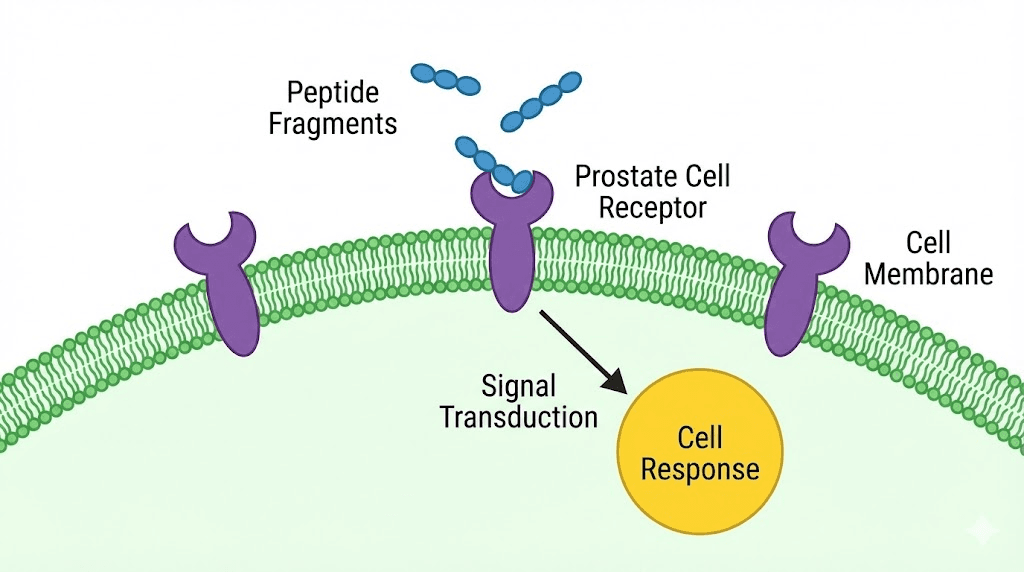
The concept behind Libidon is tissue specificity. Experimental research has demonstrated that peptides isolated from a particular organ have a selective affinity for cells of that same organ type. Prostate-derived peptides home to prostate cells. They do not scatter randomly through the body affecting every tissue equally. This targeted behavior is what makes bioregulators fundamentally different from broad-spectrum anti-inflammatory drugs or hormone modulators that affect multiple systems simultaneously.
Professor Khavinson began this research in the 1980s while serving as a Colonel in the Soviet military medical corps. His team was tasked with finding ways to protect troops from extreme environmental conditions, and their classified research uncovered a remarkable relationship between short-chain peptides and DNA.
That discovery laid the groundwork for an entirely new field of medicine, one that has now produced over 100 published studies and more than 15 specific organ-targeted bioregulators, including Testagen for testes, Cardiogen for the heart, and Ventfort for blood vessels.
How Libidon works at the cellular level
Understanding how Libidon works requires understanding bioregulation itself. Unlike conventional drugs that block receptors, inhibit enzymes, or flood the body with exogenous hormones, peptide bioregulators work by restoring the cellular communication pathways that aging disrupts. Think of them as molecular keys that fit specific locks on cell DNA, turning on repair genes that have gone silent over time.
DNA interaction and gene expression
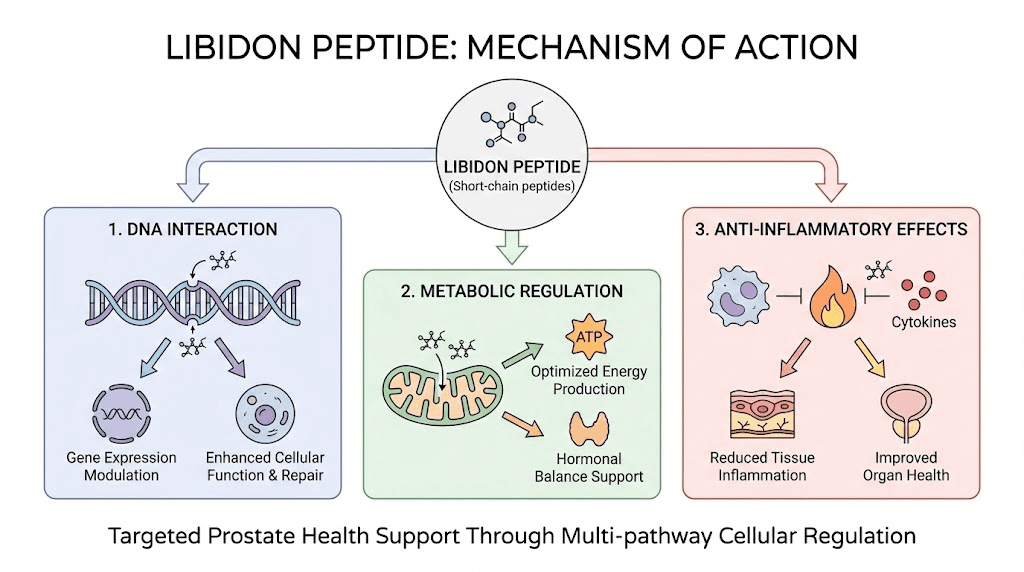
The most significant finding from Khavinson research is that short-chain peptides interact directly with specific strands of DNA. This is not a vague, theoretical mechanism. The Russian research group has demonstrated through multiple studies that each concentrated peptide bioregulator binds to particular DNA segments, effectively reactivating repair and regenerative processes that have become dormant. This interaction shortcuts the normal protein synthesis pathway, meaning that prostate cells can build and repair tissues more efficiently when Libidon peptides are active.
In practical terms, this means Libidon does not just treat symptoms. It addresses the root cause of prostate dysfunction, the gradual decline in cellular self-repair capacity that comes with aging. Young prostate cells maintain themselves efficiently. Old prostate cells lose that ability. Libidon provides the peptide signals that help restore it.
Metabolic regulation in prostate cells
At the metabolic level, Libidon regulates several critical processes within prostate tissue. It normalizes metabolism in prostate cells, which becomes increasingly dysregulated as men age. It improves cellular safety margins, meaning cells can better withstand stress, toxins, and inflammatory assault without suffering permanent damage. And it has demonstrated antioxidant properties, specifically regulating lipid peroxidation processes in prostate tissues.
Lipid peroxidation is a chain reaction where free radicals attack cell membranes, degrading their structural integrity. This process accelerates in inflamed prostate tissue and contributes directly to the cellular damage that drives both benign prostatic hyperplasia and chronic prostatitis. By regulating peroxidation, Libidon helps preserve the membrane integrity that prostate cells need to function properly. Researchers studying peptides for autoimmune conditions have observed similar membrane-protective effects with other bioregulatory compounds.
Anti-inflammatory mechanisms
A study published in the International Journal of Molecular Sciences examined the anti-inflammatory actions of Khavinson peptides, including those found in Libidon. The findings were specific and measurable. These peptides lower levels of tumor necrosis factor (TNF) and interleukin-6 (IL-6), two of the most significant inflammatory cytokines involved in prostate disease. They also reduce monocyte adhesion to inflamed blood vessel cells, which is a critical step in the inflammatory cascade that damages prostate tissue.
This triple mechanism, reducing TNF, lowering IL-6, and inhibiting monocyte adhesion, addresses prostate inflammation at multiple points simultaneously. It is the kind of multi-target approach that single-mechanism pharmaceutical drugs cannot replicate. The inflammation peptides guide covers additional compounds that share some of these anti-inflammatory pathways, but Libidon remains unique in its prostate tissue specificity.
Anti-aging and anti-tumor properties
Laboratory research with rodent models produced two additional findings worth noting. First, exposure to Libidon reduced key markers of cellular aging in prostate tissue. Second, and perhaps more remarkably, Libidon appeared to prevent tumor development from both chemical and radiation exposure. These are preclinical findings, not clinical proof of cancer prevention, but they suggest that Libidon may offer protective effects beyond simple symptom management.
The combination of anti-aging and anti-tumor properties in a single compound is rare. Most prostate health interventions focus on one or the other.
The fact that Libidon addresses both through cellular-level bioregulation reflects the broader philosophy behind Khavinson peptides, that restoring normal cell function is more effective than trying to suppress disease processes one at a time. This aligns with what researchers have found studying longevity peptides and their role in age-related tissue degeneration.
Clinical trial evidence: the 2011 Saint Petersburg study
The most comprehensive clinical evidence for Libidon comes from a study conducted at the Medical Center of the Saint Petersburg Institute of Bioregulation and Gerontology between March and November 2011. This was not a small observational report. It included 48 patients in the treatment group and 22 in the control group, with participants aged 38 to 65 years diagnosed with either chronic prostatitis or benign prostatic hyperplasia (BPH).
Study design and patient groups
Patients were divided into two diagnostic categories. The chronic prostatitis group included 28 patients aged 38 to 49 years. The BPH group included 20 patients aged 51 to 65 years. All patients in the treatment group received Libidon at 1 capsule twice daily at mealtimes in addition to their standard therapy. The control group received standard therapy alone. This design allowed researchers to measure the specific contribution of Libidon beyond what conventional treatment provides.
The study measured multiple objective outcomes including urodynamic parameters (urination speed, retention time, frequency), pain levels, sexual function, libido, and semen analysis.
This multi-parameter approach provides a much more complete picture than studies that only track one or two outcomes. Researchers looking into peptides for hormone balance often note that the most informative studies measure multiple interconnected endpoints like this one did.
Pain relief results
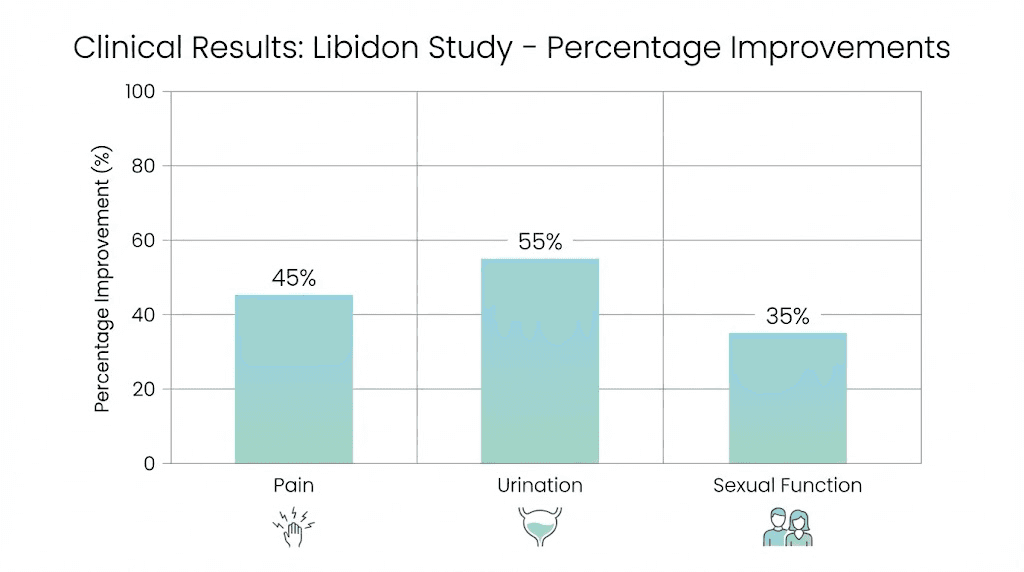
The pain reduction findings were striking. Among chronic prostatitis patients who presented with pain, 64.0% experienced complete elimination of pain by the end of the 30-day treatment period. Another 32.7% reported considerable relief. Only 3.3% showed no improvement. That means 96.7% of patients with prostatitis-related pain experienced meaningful benefit from adding Libidon to their treatment protocol.
These are not marginal improvements. Complete pain elimination in nearly two thirds of patients within 30 days represents a clinically significant outcome, particularly for chronic prostatitis, a condition notorious for being difficult to treat and resistant to conventional therapy. Many men with chronic prostatitis cycle through multiple antibiotics, anti-inflammatories, and alpha blockers without achieving this level of relief.
Urinary function improvements
The urinary outcomes were equally compelling. Pollakiuria, the medical term for abnormally frequent urination, was completely eliminated in 87.5% of patients. Stranguria, difficult or painful urination, was eliminated in 80.7% of patients, with an additional 15.9% reporting considerable improvement.
The urodynamic measurements told the same story with objective numbers. For chronic prostatitis patients, average urination speed increased from 17.3 ml/sec before treatment to 23.5 ml/sec in the Libidon group, compared to only 19.8 ml/sec in the control group. The time to reach maximum urination speed dropped from 3.6 seconds to 1.5 seconds in the Libidon group, a statistically significant improvement (p less than 0.05).
For BPH patients, the results followed a similar pattern. Average urination speed improved from 11.3 ml/sec to 17.5 ml/sec in the Libidon group, versus 14.2 ml/sec in the control group. Daytime urination frequency decreased from 8.4 to 6.3 times per day. Urinary retention time dropped from 4.6 seconds to 2.5 seconds. These improvements may seem like small numbers in isolation, but for men who wake up three times a night to urinate or who cannot empty their bladders properly, they represent a substantial quality of life improvement.
Men dealing with related urinary symptoms may also benefit from understanding how Vesilute, the bladder bioregulator, complements prostate-targeted approaches.
Sexual function restoration
Among patients who reported impaired sexual function at baseline, 44.4% achieved complete restoration and 41.8% noticed improvement. That is 86.2% of patients experiencing meaningful sexual function recovery. Specific improvements included better erection quality, improved orgasm, increased duration of sexual intercourse, and restoration of libido in 37.1% of patients. These outcomes reflect Libidon working on the interconnected relationship between prostate health and sexual function, a connection that peptides for libido research has consistently confirmed.
Semen quality improvements
The semen analysis revealed an 11.8% increase in mobile spermatozoids in the ejaculate. While this may seem modest, sperm motility is one of the most difficult fertility parameters to improve with any intervention.
The study also noted decreased leucocytes and desquamated epithelium cells in the ejaculate, both markers of reduced inflammation in the reproductive tract. For men dealing with fertility concerns alongside prostate issues, these findings suggest Libidon addresses both problems through the same mechanism of cellular repair and metabolic normalization.
Safety profile from the clinical trial
The clinical study reported zero side effects, zero complications, and zero instances of drug dependence across all 48 patients in the treatment group over the entire study period. This clean safety profile is consistent with the broader body of evidence on Khavinson peptide bioregulators, which have been tested on thousands of individuals over decades without reports of serious adverse effects.
The only listed contraindication is individual intolerance to the components. Because Libidon is derived from natural prostate tissue, it is biologically compatible and does not trigger immune system rejection in the vast majority of users. This stands in stark contrast to pharmaceutical prostate medications, which commonly cause side effects including sexual dysfunction (the very problem many men are trying to solve), dizziness, fatigue, and hormonal disruption. Understanding peptide safety profiles helps researchers make informed comparisons between bioregulators and conventional treatments.
Dosage protocols for Libidon
Libidon dosing follows a structured approach with distinct phases for initial treatment and long-term maintenance. The capsule-based delivery makes it one of the simplest peptide protocols to implement, requiring no injections, reconstitution, or complex timing schedules. This accessibility is one reason bioregulator peptides have gained popularity among researchers who prefer oral administration over the injectable peptide protocols that most other peptides require.
Initial intensive protocol
The standard intensive protocol calls for 2 capsules per day for 30 days. Most practitioners recommend taking 1 capsule twice daily at mealtimes, morning and evening. This provides a daily dose of 20 mg of the A-16 peptide complex. Taking Libidon with food improves absorption and minimizes the already-rare occurrence of digestive discomfort.
This 30-day intensive phase is designed to saturate prostate cells with the bioregulatory peptide signals they need to begin restoring normal function. The clinical trial that produced the impressive results detailed above used this exact protocol, 1 capsule twice daily for 30 days. Researchers who stick to this dosing approach can expect their experience to most closely match the published clinical outcomes.
Maintenance protocol
After the initial 30-day course, the maintenance protocol calls for 2 capsules per day for 10 days, repeated every 3 to 6 months. Some practitioners use 4-month intervals, while others extend to 6 months depending on symptom severity and individual response. The maintenance phase keeps the bioregulatory signals active, preventing prostate cells from reverting to their pre-treatment metabolic patterns.
For men with more severe prostate conditions, the repeat regime can be increased to 20 capsules (10 days) every 2 months, or even monthly in acute situations. However, most researchers find the standard 3-6 month maintenance interval sufficient for sustained benefit. This cyclical approach mirrors the dosing philosophy behind other bioregulator peptides, as explained in the peptide cycle planning guide.
Sublingual administration option
Libidon is available in both capsule and lingual (sublingual) forms. The sublingual version, Libidon Lingual, dissolves under the tongue for faster absorption directly into the bloodstream, bypassing first-pass liver metabolism. Some researchers prefer this route for quicker onset of effects, while others stick with the standard capsule for convenience and consistent dosing. The choice between sublingual and oral administration does not change the fundamental mechanism of action, only the absorption kinetics. For more on sublingual peptide delivery, see the peptide capsules guide which covers various oral delivery methods.
Protocol comparison table
Protocol | Daily dose | Duration | Frequency | Best for |
|---|---|---|---|---|
Intensive | 2 capsules (20 mg) | 30 days | Once (initial) | First-time users, acute conditions |
Standard maintenance | 2 capsules (20 mg) | 10 days | Every 4-6 months | Ongoing prostate support |
Aggressive maintenance | 2 capsules (20 mg) | 10 days | Every 2-3 months | Severe BPH, chronic prostatitis |
Anti-aging protocol | 2 capsules (20 mg) | 10 days | Every 6 months | Preventive prostate health |
This table reflects the most commonly recommended protocols from both clinical literature and practitioner experience. Adjustments should be based on individual response and symptom severity, ideally under the guidance of a healthcare professional familiar with peptide bioregulators.
Conditions Libidon addresses
Libidon targets the prostate gland specifically, but its effects extend across the interconnected landscape of male reproductive and urological health. The conditions it addresses share a common root, dysfunctional prostate cell metabolism, which makes a single bioregulatory approach effective across multiple diagnoses.
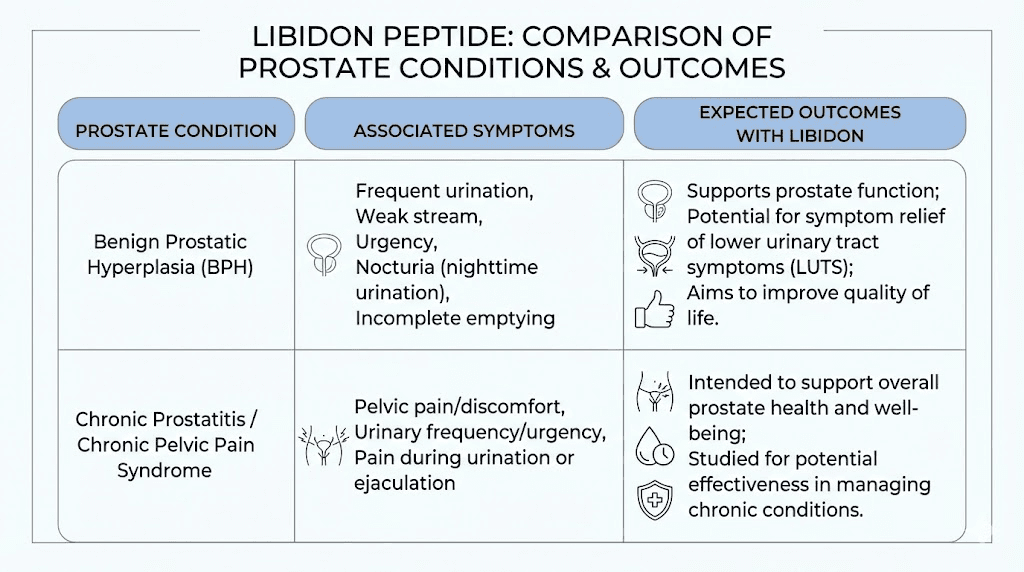
Benign prostatic hyperplasia (BPH)
BPH affects over 50% of men entering their fifth decade of life, with prevalence increasing steadily with age. The prostate gland enlarges, compressing the urethra and causing lower urinary tract symptoms (LUTS) including frequent urination, weak stream, incomplete emptying, and nighttime bathroom trips. Conventional treatments include alpha blockers like tamsulosin and 5-alpha reductase inhibitors like finasteride, but both come with side effect profiles that many men find unacceptable.
Libidon addresses BPH through cellular normalization rather than symptom suppression. By restoring metabolic function in prostate cells, it helps regulate the growth signals that drive enlargement. The clinical study showed significant improvements in all measured urinary parameters for BPH patients, including a 55% improvement in average urination speed and a 46% reduction in urinary retention time. These improvements occurred through tissue repair, not chemical blockade.
For a broader view of how prostate health intersects with male hormone optimization, the testosterone peptide guide explains the complex relationship between prostate tissue, DHT, and androgenic signaling.
Chronic prostatitis
Chronic prostatitis is notoriously difficult to treat. Many men cycle through antibiotics, NSAIDs, and alpha blockers without achieving lasting relief. The condition involves persistent inflammation of the prostate gland, causing pelvic pain, urinary symptoms, and often sexual dysfunction. What makes it particularly frustrating is that many cases are non-bacterial, meaning antibiotics address the wrong target entirely.
Libidon attacks chronic prostatitis at its source, the inflammatory cascade within prostate tissue. By reducing TNF and IL-6 levels while inhibiting monocyte adhesion, it addresses the inflammatory mechanisms that keep the condition active. The clinical trial showed 96.7% of patients with prostatitis-related pain experienced meaningful improvement, a remarkable success rate for a condition with notoriously poor treatment outcomes. Researchers exploring KPV peptide for inflammation have noted similar anti-inflammatory mechanisms, though KPV lacks Libidon tissue specificity for the prostate.
Erectile dysfunction
The connection between prostate health and erectile function is well established but often overlooked in treatment planning. Prostate inflammation reduces blood flow to surrounding tissues, disrupts nerve signaling, and creates hormonal imbalances that directly impair erection quality. Libidon addresses erectile dysfunction indirectly but effectively by resolving the prostate inflammation that contributes to it.
The clinical study reported that 86.2% of patients with impaired sexual function experienced either complete restoration (44.4%) or meaningful improvement (41.8%). These numbers are particularly impressive because the study did not use Libidon specifically as an ED treatment, the sexual function improvements emerged as a secondary benefit of prostate health restoration. For men seeking additional support, the best peptides for erectile dysfunction guide covers compounds that can complement Libidon in this area.
Male infertility
Prostate gland health directly influences semen quality. The prostate produces a significant portion of seminal fluid and contributes enzymes, zinc, and other substances essential for sperm viability and motility. When prostate tissue is inflamed or metabolically dysfunctional, semen quality suffers. The 11.8% increase in mobile spermatozoids and reduced inflammatory markers in ejaculate observed in the Libidon study suggest that restoring prostate cell function has a meaningful impact on fertility parameters.
Libidon optimizes microcirculation and cellular metabolism in reproductive tissues. This improved blood flow and nutrient delivery creates optimal conditions for sperm production and maturation. For men dealing with fertility concerns, combining Libidon with HCG peptides may provide complementary benefits through different mechanisms.
Age-related prostate decline
Even men without diagnosed prostate conditions experience gradual prostate deterioration with age. The gland enlarges. Inflammation increases. Cellular repair mechanisms slow. By age 60, most men have measurable prostate changes whether or not they produce symptoms. Libidon used preventively during the anti-aging protocol (10 days every 6 months) may help maintain prostate cell function and delay or prevent the onset of symptomatic conditions.
This preventive approach aligns with the broader Khavinson bioregulation philosophy of maintaining organ function before disease develops, rather than waiting for problems to accumulate. The anti-aging peptides guide explains this preventive framework in detail and covers additional bioregulators that complement Libidon in a comprehensive aging protocol.
Stacking Libidon with other bioregulators
One of the most powerful aspects of the Khavinson bioregulator system is that individual organ-targeted peptides can be combined for synergistic effects. Libidon works best as part of a broader male reproductive health protocol rather than in isolation. The stacking principle is straightforward: each bioregulator targets a specific organ, so combining them addresses the entire system.
The male reproductive health stack
The most commonly recommended stack for male reproductive health includes three bioregulators. Libidon (A-16) for the prostate, Testoluten (A-13) for the testes, and Glandokort (A-17) for the adrenal glands. Each targets a different component of the male hormonal and reproductive system.
A clinical study tested this combination in 105 men aged 38-45 with erectile dysfunction following long-term stress. All patients received various combinations of Libidon (prostate), Testoluten (testes), Glandokort (adrenal glands), and Suprefort (pancreas) for 6 weeks. The study found that this combination normalized hormonal status in men with distress syndrome, demonstrating that multi-organ bioregulation produces superior outcomes compared to targeting a single organ alone.
For researchers interested in testosterone optimization, the Testoluten component of this stack has produced notable results on its own. One documented case showed testosterone levels increasing from 586 ng/dL to 769 ng/dL, a rise of 183 ng/dL, after just 10 days of Testoluten use. Another study noted a 26% increase in blood testosterone concentration during treatment (Khavinson et al., 2006). Understanding peptides for testosterone enhancement provides additional context for how these compounds interact.
The comprehensive anti-aging stack
For men pursuing long-term health optimization, Libidon fits into a larger anti-aging bioregulator protocol. The recommended comprehensive stack includes Endoluten (pineal gland), Vladonix (thymus), Cerluten (brain), Ventfort (blood vessels), Sigumir (cartilage and bone), Svetinorm (liver), Chelohart (heart), plus Libidon and Testoluten specifically for men.
This extensive protocol, taken biannually, addresses the major organ systems that decline with age. The approach reflects Khavinson research showing that multi-organ bioregulation produces more comprehensive anti-aging effects than targeting any single system. For the full context on longevity-focused peptide protocols, the longevity peptides guide covers the scientific rationale behind this systems approach.
Complementary stacking with Chitomur
Libidon is also frequently combined with Chitomur, the bladder bioregulator. Men with prostate conditions often experience secondary bladder dysfunction due to the anatomical proximity and functional interconnection between these organs. An enlarged or inflamed prostate directly affects bladder function, and vice versa. Stacking Libidon with bladder-targeted bioregulators addresses both organs simultaneously, often producing better urinary outcomes than targeting the prostate alone.
Stacking protocol recommendations
Stack | Components | Target | Duration |
|---|---|---|---|
Male reproductive | Libidon + Testoluten + Glandokort | Prostate + testes + adrenals | 30 days initial, 10 days every 4-6 months |
Prostate + bladder | Libidon + Chitomur | Prostate + bladder | 30 days initial, 10 days every 4-6 months |
Full anti-aging (men) | 8+ bioregulators including Libidon | Multiple organ systems | 10 days biannually |
Fertility focus | Libidon + Testoluten | Prostate + testes | 30 days initial, reassess |
When stacking multiple bioregulators, the standard approach is to take them concurrently at the same dosing schedule. There is no need to stagger or cycle between them, as each targets different cell types. For guidance on combining peptides safely, the how many peptides can you take at once guide provides important principles, and the peptide stacking guide covers broader stacking strategies.
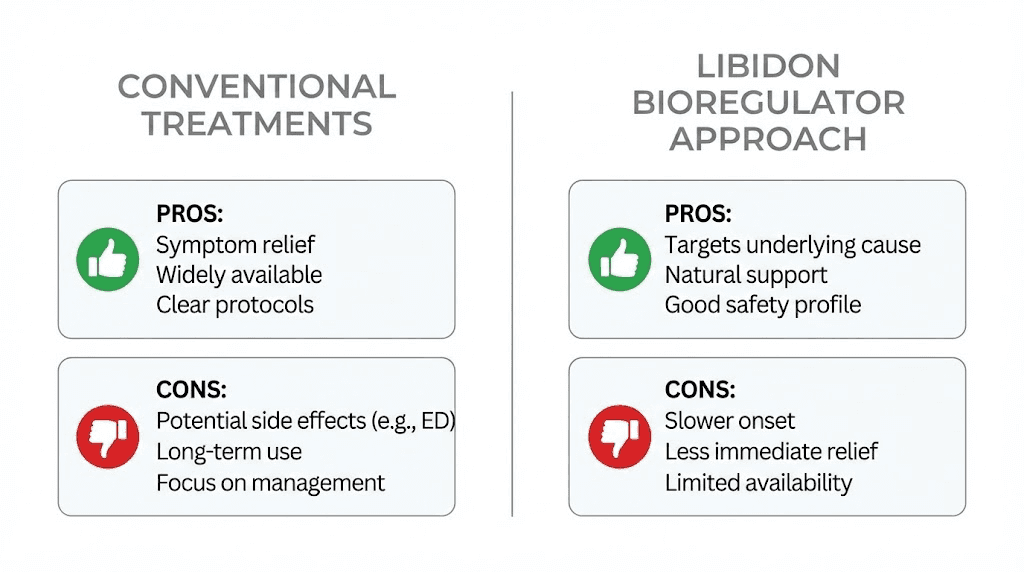
How Libidon compares to conventional prostate treatments
Understanding where Libidon fits in the prostate health landscape requires honest comparison with established treatments. This is not about declaring one approach superior, but about understanding what each offers and what it costs in terms of side effects and limitations.
Alpha blockers (tamsulosin, alfuzosin)
Alpha blockers relax the smooth muscle in the prostate and bladder neck, improving urine flow within days to weeks. They are effective at symptom relief but do not address the underlying cause of prostate enlargement. Common side effects include dizziness, retrograde ejaculation, low blood pressure, and fatigue. Stopping alpha blockers causes symptoms to return because nothing has changed at the cellular level.
Libidon works more slowly, with meaningful improvements typically emerging over a 30-day treatment period. But it targets the root cause rather than the symptom. And the effects persist after discontinuation because the cellular repairs it initiates are structural, not temporary. There is a legitimate argument for using both approaches simultaneously, alpha blockers for immediate symptom relief while Libidon addresses the underlying dysfunction.
5-alpha reductase inhibitors (finasteride, dutasteride)
These drugs block the conversion of testosterone to dihydrotestosterone (DHT), reducing prostate size over 6-12 months. They are effective for larger prostates but come with side effects that many men find unacceptable: decreased libido, erectile dysfunction, reduced ejaculate volume, and in rare cases, persistent sexual side effects even after discontinuation (post-finasteride syndrome).
The irony is significant. A drug prescribed to improve prostate-related quality of life causes the very sexual dysfunction that prostate problems themselves create. Libidon improves sexual function as a secondary benefit of prostate health restoration, the exact opposite trajectory. For researchers evaluating hormonal approaches to prostate health, the peptides vs TRT comparison provides additional context on how peptide-based approaches differ from direct hormonal manipulation.
Anti-inflammatory medications
NSAIDs and corticosteroids reduce prostate inflammation but carry risks with long-term use, including gastrointestinal damage, cardiovascular complications, and immune suppression. They treat the inflammatory symptom without repairing the tissue damage that generates inflammation in the first place.
Libidon anti-inflammatory mechanism works through a fundamentally different pathway, reducing specific inflammatory cytokines (TNF and IL-6) at the tissue level rather than suppressing the entire inflammatory response systemically. This targeted approach means anti-inflammatory benefits without the systemic side effects that limit long-term NSAID use.
Comparison summary table
Factor | Alpha blockers | 5-ARI drugs | Libidon |
|---|---|---|---|
Onset | Days to weeks | 3-6 months | 2-4 weeks |
Mechanism | Muscle relaxation | DHT reduction | Cellular bioregulation |
Root cause | No | Partially | Yes |
Sexual side effects | Possible | Common | None reported (improves function) |
Long-term use | Continuous required | Continuous required | Cyclical (10 days every 3-6 months) |
After stopping | Symptoms return | Symptoms return | Benefits persist |
Safety profile and potential side effects
The safety profile of Libidon is one of its strongest differentiators from pharmaceutical alternatives. Khavinson peptide bioregulators have been extensively tested over decades, and the consistent finding is a near-absence of adverse effects. This does not mean zero risk, no substance has zero risk, but the profile is remarkably clean compared to any pharmaceutical option for prostate conditions.
Clinical trial safety data
The 2011 clinical study reported no side effects, no complications, and no drug dependence in any of the 48 treatment group patients. This zero adverse event rate across an entire clinical trial is unusual in pharmaceutical research and reflects the fundamental compatibility of tissue-derived peptides with human physiology. Because Libidon contains peptides that mirror the ones naturally present in prostate tissue, the body recognizes them as native signals rather than foreign substances.
Reported user experiences
Beyond the clinical trial, user reports have been predominantly positive with only rare mentions of mild side effects. Some users have reported temporary digestive discomfort, including bloating, gas, or mild upset stomach, particularly during the first few days of use. A small percentage have noted mild headaches when starting the supplement. These effects typically resolve within a few days as the body adjusts.
Allergic reactions are theoretically possible for anyone sensitive to animal-derived peptides, potentially manifesting as skin rashes, itching, or swelling, but such reactions are uncommon. One user documented taking a full month of Libidon and noted "zero side effects" despite describing themselves as "very sensitive" to supplements. Their doctor also observed improvement in the prostate gland without being informed about the supplement use, providing an unbiased clinical assessment.
Contraindications and precautions
The only listed contraindication is individual intolerance to the components. There are no known drug interactions, no hormonal disruption risks, and no concerns about long-term accumulation. However, as with any supplement, consulting a healthcare professional before starting is advisable, particularly for men who are currently taking pharmaceutical prostate medications, undergoing treatment for prostate cancer, or managing other significant health conditions.
For comprehensive information on peptide safety across different compounds, the peptide safety and risks guide provides a thorough overview of what researchers should consider before starting any peptide protocol. Understanding common peptide mistakes can also help new users avoid unnecessary complications.
Understanding prostate health: why it matters
Before diving deeper into implementation details, it is worth understanding why prostate health deserves the attention that Libidon gives it. The prostate is a small gland, roughly the size of a walnut in healthy young men, but its location and function give it outsized influence on male quality of life.
The prostate aging problem
The prostate never stops growing. Unlike most organs that reach a stable size in adulthood, the prostate continues to enlarge throughout a man life. By age 50, approximately half of all men have measurable prostate enlargement. By 80, that number exceeds 90%. This growth is driven by hormonal changes, particularly the accumulation of dihydrotestosterone (DHT) in prostate tissue, combined with age-related inflammation and declining cellular repair capacity.
The consequences cascade. An enlarged prostate compresses the urethra, causing weak urinary stream, frequent bathroom trips, and incomplete emptying. These symptoms disrupt sleep (nocturia), limit activity, and erode quality of life in ways that are easy to underestimate until you experience them. The psychological impact of prostate problems, including anxiety about cancer, frustration with urinary symptoms, and embarrassment about sexual dysfunction, adds another layer of burden that clinical measurements do not capture. Understanding peptides for men in the broader context of male health optimization helps frame why prostate-targeted interventions like Libidon deserve serious consideration.
The inflammation connection
Chronic low-grade inflammation is now recognized as a central driver of prostate disease. Inflammatory cytokines damage prostate cells, stimulate abnormal growth, and create a self-perpetuating cycle where tissue damage generates more inflammation, which causes more damage. This chronic inflammatory state contributes to both BPH and prostatitis, and some research suggests it plays a role in prostate cancer development as well.
Traditional anti-inflammatory approaches using NSAIDs or corticosteroids suppress the inflammatory response systemically, which helps with symptoms but does not address the tissue-level damage that generates inflammation in the first place. Libidon approach of reducing specific inflammatory cytokines (TNF and IL-6) while simultaneously repairing cellular damage is mechanistically more complete. It breaks the inflammation-damage cycle at both ends rather than temporarily suppressing one side of it. For researchers interested in broader anti-inflammatory peptide strategies, the inflammation peptides guide covers additional compounds with complementary mechanisms.
The sexual function link
Prostate health and sexual function are inseparable. The prostate gland produces fluids essential for semen, it surrounds the urethra through which both urine and semen pass, and its nerve supply overlaps extensively with the nerves responsible for erection and ejaculation. When the prostate is inflamed, enlarged, or metabolically dysfunctional, sexual function suffers. This relationship is bidirectional, sexual inactivity can worsen prostate congestion, creating another vicious cycle.
This is why Libidon clinical improvements in sexual function are so significant. By restoring prostate cell health, it simultaneously supports the physiological infrastructure that sexual function depends on. The PT-141 peptide guide covers a different approach to sexual dysfunction that works through central nervous system pathways rather than tissue repair, offering a potential complement to Libidon for men with multiple contributing factors.
Practical implementation guide
Moving from research to practice requires attention to details that clinical studies often do not address. This section covers the practical aspects of implementing a Libidon protocol that most sources overlook.
Sourcing and quality considerations
Libidon quality depends entirely on the manufacturing process. Authentic Libidon is produced using Professor Khavinson patented extraction technology, which preserves the full spectrum of prostate-specific peptide fractions. Products that do not use this process may contain different peptide profiles with unpredictable activity. Stick with established suppliers who source directly from the St. Petersburg Institute of Bioregulation and Gerontology or its authorized manufacturing partners.
Look for products that clearly state the A-16 peptide complex designation, the 10 mg per capsule active ingredient amount, and proper cold chain shipping requirements. Generic "prostate peptide" products without these specifications may not contain the same peptide fractions used in the clinical research. The peptide testing labs guide covers how to verify peptide quality through independent testing, and the grey market peptides guide explains the sourcing landscape for specialty peptide products.
Storage requirements
Libidon should be stored at 2-25 degrees Celsius with a shelf life of 3 years when properly stored. This temperature range is more forgiving than many injectable peptides, which require strict refrigeration. However, avoid prolonged exposure to heat or direct sunlight, as this can degrade the peptide bonds and reduce efficacy. Standard room temperature storage is acceptable for the duration of a 30-day course, but long-term storage of unopened supplies benefits from cooler conditions.
For general guidance on maintaining peptide integrity, the peptide storage guide covers best practices, and how long peptides last at room temperature provides specific stability data.
Timing and food interactions
Take Libidon with meals. The clinical protocol specified administration "at mealtime," and this serves two purposes. First, food buffers the digestive tract and minimizes the already-rare occurrence of gastric discomfort. Second, the presence of food may enhance absorption of the peptide complex by slowing gastric emptying time and allowing more complete intestinal uptake.
Morning and evening dosing (1 capsule each) is the standard approach. There is no evidence that specific meal composition matters, so there is no need to engineer your meals around Libidon timing. Simply take it with whatever you are eating.
Tracking your progress
Meaningful assessment of Libidon effects requires tracking the right parameters. Symptom journals are helpful but subjective. For objective tracking, consider monitoring these key indicators.
Urinary frequency per day and night. Record how many times you urinate during daytime hours and how many times you wake at night. This is the simplest objective measure and often shows improvement within the first 2 weeks.
Urinary stream quality. Subjective rating from 1-10, but consistent self-assessment can reveal trends. Some researchers use a simple timing test, measuring how long it takes to void a full bladder, as a rough proxy for urination speed.
Pain levels. For prostatitis patients, daily pain ratings using a 1-10 scale provide trackable data. Note location, intensity, and duration.
Sexual function. Track erection quality, libido, and sexual satisfaction on weekly basis. These parameters change more gradually than urinary symptoms.
PSA levels. If available through your healthcare provider, PSA measurements before starting and after completing the initial 30-day course provide objective clinical data. However, PSA is not a perfect marker and should be interpreted in clinical context.
What to expect timeline
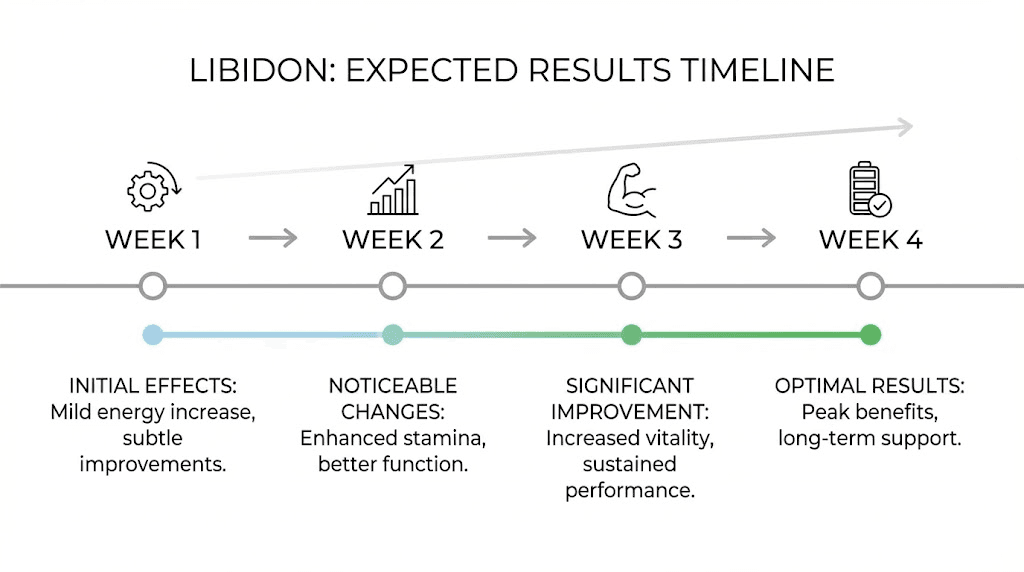
Libidon works through cellular repair, not chemical intervention. This means results build gradually rather than appearing overnight. Based on the clinical data and user reports, here is a realistic timeline.
Week 1 to 2. Most users report subtle improvements in urinary comfort. Frequency may decrease slightly. Pain reduction begins for prostatitis patients. Some notice nothing yet, which is normal.
Week 2 to 3. More noticeable urinary improvements. Stream strength often improves. Night bathroom trips decrease. Some users report initial improvements in sexual function.
Week 3 to 4. Peak improvements from the initial 30-day course typically emerge during this period. Pain reduction reaches its maximum. Urinary parameters show their strongest gains. Sexual function improvements become more apparent.
After 30 days. Benefits continue to develop even after stopping the initial course, as the cellular repairs Libidon initiated continue progressing. Many users report that their best results occur 2-4 weeks after completing the course.
For context on how peptide timelines compare across different compounds, the how long do peptides take to work guide covers general expectations.
The science of prostate peptide bioregulation
For researchers who want to understand the deeper science, this section explores the molecular mechanisms behind prostate peptide bioregulation in greater detail.
Peptide-DNA interaction specifics
Khavinson research has identified that short-chain peptides (2-4 amino acids) can directly interact with complementary DNA sequences through what appears to be a lock-and-key mechanism. These peptides bind to specific regions of the DNA double helix, potentially within the major or minor groove, and this binding event triggers conformational changes that expose previously silenced gene promoter regions.
In the context of prostate tissue, this means Libidon peptides may reactivate genes responsible for cellular repair, antioxidant production, anti-inflammatory signaling, and metabolic regulation that have been gradually silenced by aging, oxidative damage, and epigenetic modifications. The specificity is remarkable. Prostate-derived peptides activate prostate-relevant genes, not random genes throughout the genome. This tissue-specific gene activation is what makes bioregulators fundamentally different from broad-spectrum interventions.
The role of specific amino acids
Libidon peptide complex contains alanine, leucine, glutamic acid, aspartic acid, valine, and isoleucine. Each of these amino acids plays specific roles in prostate cell biology.
Glutamic acid is the most abundant excitatory amino acid in the human body and plays critical roles in cellular metabolism and neurotransmission. In prostate tissue, it participates in the citric acid cycle, the central metabolic pathway that generates cellular energy. Aspartic acid similarly contributes to energy metabolism and also plays a role in the urea cycle, helping cells manage nitrogen waste. Together, these two amino acids support the metabolic machinery that keeps prostate cells functioning efficiently.
Leucine, valine, and isoleucine are branched-chain amino acids (BCAAs) that serve dual roles. As individual amino acids, they provide building blocks for protein synthesis. As components of the peptide complex, they contribute to the three-dimensional structure that determines how the peptide interacts with DNA and cell receptors.
The specific arrangement of these amino acids in Libidon peptide sequences is what gives them their prostate-specific targeting ability.
Epigenetic mechanisms
The most intriguing aspect of Khavinson peptide research involves epigenetics, the study of how gene expression changes without alterations to the DNA sequence itself. Aging causes progressive epigenetic silencing of repair genes through mechanisms like DNA methylation and histone modification. Cells still contain the genetic instructions for maintaining themselves, but those instructions become increasingly inaccessible.
Peptide bioregulators appear to reverse some of this epigenetic silencing. By interacting with specific DNA regions, they may help remove or modify the epigenetic markers that prevent repair genes from being expressed. This is a fundamentally different therapeutic approach from anything in conventional medicine. Rather than adding external signals to compensate for lost function, bioregulators restore the cell ability to generate its own repair signals.
This epigenetic dimension helps explain why Libidon benefits persist after the treatment course ends. The epigenetic changes it induces are more stable than the transient effects of receptor-blocking drugs. Once a repair gene is reactivated, it may continue functioning for months before epigenetic silencing recurs, which is why the 3-6 month maintenance cycle is sufficient to maintain benefits.
Libidon in the context of broader prostate research
Libidon exists within a larger landscape of peptide-based approaches to prostate health. Understanding this context helps researchers appreciate both what Libidon offers and what other approaches might complement it.
GH-RH antagonists for BPH
Recent research from Nature journals has highlighted growth hormone-releasing hormone (GH-RH) antagonists as promising agents for BPH. These peptide analogs work by inhibiting the growth-promoting and inflammatory effects of locally produced GH-RH in prostate tissue. Preclinical studies show reduced prostate volume, improved lower urinary tract symptoms, and modulation of the NF-kB inflammatory pathway and IGF-1 signaling.
GH-RH antagonists and Libidon address BPH through different mechanisms. GH-RH antagonists block specific growth signals. Libidon restores overall cellular function. These approaches are theoretically complementary, though no studies have examined their combined use.
GnRH peptide antagonists
GnRH (gonadotropin-releasing hormone) peptide antagonists like Teverelix and Degarelix provide fast, reversible suppression of gonadotropins. They are primarily used in prostate cancer treatment but have shown efficacy in BPH as well. Unlike Libidon, these are potent pharmaceutical agents with significant hormonal effects, including testosterone suppression, which limits their use for BPH to severe cases.
BPC-157 and TB-500 for prostate inflammation
Emerging research suggests that BPC-157 and TB-500 may offer benefits for prostate health through their well-documented anti-inflammatory and tissue repair properties. BPC-157 enhances angiogenesis and promotes tissue repair through VEGF pathways, while TB-500 promotes wound healing and reduces fibrosis. Both have shown anti-inflammatory effects that could benefit prostate tissue, though neither has the tissue-specific targeting that Libidon provides. The BPC-157 and TB-500 stacking guide covers how these two peptides work together for tissue repair applications.
GV1001 peptide research
GV1001, originally developed as a cancer vaccine, has shown unexpected benefits for BPH in recent research. It interacts with androgen receptors, suppresses prostatic cell proliferation, and inhibits epithelial-mesenchymal transition (EMT), a process involved in BPH progression. While GV1001 is still in research stages for this application, its mechanism of action through androgen receptor binding represents yet another peptide-based approach to prostate health that differs from Libidon bioregulatory mechanism.
Who should consider Libidon
Not everyone needs Libidon. Like any intervention, its value depends on individual circumstances, risk tolerance, and health goals. Here is an honest assessment of who benefits most and who might look elsewhere.
Ideal candidates
Men aged 40 and above with early-stage BPH symptoms represent the strongest candidate group. At this stage, prostate changes are progressing but have not yet reached the point where surgical intervention becomes the primary discussion. Libidon offers these men an opportunity to address the underlying cellular dysfunction while symptoms are still manageable.
Men with chronic prostatitis, particularly non-bacterial chronic prostatitis/chronic pelvic pain syndrome (CP/CPPS), represent another strong candidate group. This condition responds poorly to conventional treatment because antibiotics target bacteria that are not present. Libidon anti-inflammatory and cellular repair mechanisms address the actual pathology.
Men experiencing prostate-related sexual dysfunction who want to avoid the sexual side effects of pharmaceutical prostate medications are natural candidates. The paradox of finasteride and similar drugs causing the very problems they are supposed to improve makes Libidon approach of actually improving sexual function as a secondary benefit particularly attractive.
Men pursuing preventive health optimization, particularly those already using other bioregulator peptides for anti-aging, can add Libidon to their protocols as prostate-specific support. Prevention is always more effective than treatment, and Libidon minimal side effect profile makes preventive use a reasonable strategy.
Who should look elsewhere
Men with diagnosed prostate cancer should not use Libidon as a substitute for oncological treatment. While the preclinical anti-tumor data is interesting, it does not constitute evidence of cancer treatment efficacy in humans. Cancer requires evidence-based medical management.
Men with severe BPH (Stage III or beyond) who require urgent symptom relief may need pharmaceutical intervention or surgical options as first-line treatment. Libidon works through gradual cellular repair, which may be too slow for situations requiring immediate urinary obstruction relief. It can, however, complement these interventions as an adjunctive therapy.
Men under 35 without prostate symptoms generally do not need prostate-specific supplementation. At this age, prostate tissue maintains itself efficiently without external peptide support. Exceptions exist for men with diagnosed prostatitis or fertility concerns at younger ages.
Combining Libidon with lifestyle approaches
Peptide bioregulation works best as part of a comprehensive prostate health strategy. Libidon addresses cellular dysfunction, but lifestyle factors determine the rate at which that dysfunction accumulates. Optimizing both creates compounding benefits.
Diet and prostate health
Certain dietary patterns support prostate health and may enhance Libidon effectiveness. Lycopene from cooked tomatoes, selenium from Brazil nuts, zinc from pumpkin seeds and oysters, and omega-3 fatty acids from cold-water fish all have evidence supporting prostate health benefits. Green tea catechins and cruciferous vegetables (broccoli, cauliflower, Brussels sprouts) contain compounds that may help regulate prostate cell growth.
Reducing inflammatory dietary triggers can complement Libidon anti-inflammatory mechanism. Processed meats, refined sugars, excessive alcohol, and trans fats all promote chronic inflammation that works against prostate health. Eliminating or reducing these while using Libidon creates a synergistic anti-inflammatory environment.
Exercise and prostate function
Regular physical activity reduces BPH risk and improves prostate health through multiple mechanisms. Exercise reduces systemic inflammation, improves blood flow to pelvic tissues, helps regulate hormones, and reduces body fat (which converts testosterone to estrogen, promoting prostate growth). Even moderate exercise, 30 minutes of brisk walking 5 days per week, produces measurable prostate health benefits.
Pelvic floor exercises (Kegels) specifically target the muscles surrounding the prostate and can improve urinary control and sexual function. Combined with Libidon cellular repair mechanisms, pelvic floor strengthening addresses both the tissue-level and muscular-level contributors to urinary and sexual symptoms. For researchers interested in how physical performance intersects with peptide use, the peptides for athletic performance guide covers relevant compounds.
Stress management
Chronic psychological stress directly impacts prostate health through sustained cortisol elevation, which promotes inflammation and suppresses immune function. The clinical study on Libidon stacking protocols specifically targeted men with erectile dysfunction following long-term stress, demonstrating the recognized connection between stress and reproductive health.
Stress reduction techniques including meditation, adequate sleep, and workload management create conditions where Libidon bioregulatory signals can work more effectively. A stressed body diverts resources from repair processes to stress responses. Reducing that stress frees up cellular resources for the repair work Libidon initiates.
For researchers exploring stress-related health optimization, understanding how peptides for anxiety and stress-related conditions work provides additional tools for comprehensive protocols. The connection between peptides for energy and adrenal health also becomes relevant when chronic stress has depleted adrenal reserves.
Troubleshooting common issues
Even with a well-designed protocol, questions and concerns arise. This section addresses the most common issues researchers encounter with Libidon.
No noticeable results after 30 days
Some men do not notice dramatic improvements during the first 30-day course. This does not necessarily mean Libidon is not working. Cellular repair processes are often invisible until they reach a threshold that produces subjective improvement. Several factors can delay perceived benefits.
Severity of the underlying condition matters. Men with mild symptoms may notice less dramatic improvement because the baseline is already relatively good. Men with severe, long-standing conditions may need more than one 30-day course to accumulate sufficient cellular repair for noticeable change.
Concurrent inflammatory triggers can counteract Libidon effects. Poor diet, chronic stress, lack of exercise, or ongoing infection can generate inflammation faster than Libidon can resolve it. Addressing these factors alongside Libidon use often unmasks benefits that lifestyle factors were obscuring.
Consider adding complementary bioregulators. If Libidon alone produces insufficient results, stacking with Testoluten (testes) and Glandokort (adrenals) may address contributing factors in other parts of the reproductive system that Libidon prostate-specific action does not reach.
Digestive discomfort
The rare occurrence of gastric upset usually resolves by ensuring Libidon is taken with a substantial meal rather than a light snack. If discomfort persists, try taking both capsules at the same meal rather than splitting them between morning and evening. Some users find the sublingual version eliminates digestive issues entirely by bypassing the GI tract.
Determining when to repeat the course
The standard recommendation of repeating every 3-6 months is a guideline, not a rigid rule. Track your symptoms during the months following your initial course. When you notice the first subtle return of symptoms, whether urinary frequency increasing, mild discomfort returning, or sexual function slightly declining, that is your signal to begin a maintenance course. Over time, you will identify your personal optimal maintenance interval, which may be shorter or longer than the standard recommendation.
The broader context of male health optimization
Prostate health does not exist in isolation. It connects to testosterone levels, cardiovascular function, inflammation status, stress response, sexual health, and psychological wellbeing. Men who approach prostate health as part of a broader optimization strategy typically achieve better outcomes than those who focus on the prostate alone.
SeekPeptides members access comprehensive protocols that integrate prostate health with broader male wellness strategies. From peptide dosing guides to dosage calculators, the platform provides the tools and knowledge that researchers need to design personalized protocols. Whether you are building a focused prostate protocol around Libidon or designing a comprehensive anti-aging stack that includes prostate support, having access to evidence-based guidance makes the difference between guessing and knowing.
The relationship between prostate health and testosterone is particularly important to understand. Testosterone does not cause prostate problems, despite decades of misinformation suggesting otherwise. It is the conversion of testosterone to DHT by the enzyme 5-alpha reductase, combined with age-related inflammation and declining cellular repair capacity, that drives prostate dysfunction. Approaches that maintain healthy testosterone levels while supporting prostate cellular health represent the optimal strategy. The TRT and peptide guide explores this balance in detail, and peptides for hormone balance covers the broader hormonal optimization landscape.
For men over 50 specifically, the intersection of prostate health, hormonal changes, and general aging creates a complex web of interconnected challenges. The complete guide to peptides for men addresses this complexity head-on, providing frameworks for prioritizing interventions based on individual symptoms and goals.
Emerging research and future directions
The peptide bioregulation field continues to evolve. Several lines of research may expand our understanding of Libidon and prostate peptide therapy in the coming years.
Precision bioregulation
As genomic analysis becomes more accessible, future protocols may match specific bioregulator peptide sequences to individual genetic profiles. A man epigenetic status, gene expression patterns, and metabolic profile could inform which peptide sequences would be most effective for his specific prostate condition. This precision approach could significantly enhance the already-targeted nature of bioregulator therapy.
Combination peptide therapies
Research combining bioregulator peptides with newer peptide compounds like BPC-157, KPV, and thymosin peptides may reveal synergistic effects that neither class produces alone. Bioregulators provide the tissue-specific gene activation, while therapeutic peptides like BPC-157 provide systemic anti-inflammatory and healing support. No published studies exist on these combinations yet, but the mechanistic logic is sound.
Sublingual and transdermal delivery advances
New delivery technologies may improve bioregulator peptide absorption and tissue targeting. Sublingual formulations already exist for Libidon, but advances in nanoparticle delivery, transdermal patches, and targeted release systems could enhance the already-impressive bioavailability of these compounds. The peptide capsules guide and information on nasal spray peptide delivery cover current alternative delivery methods that researchers are exploring.
Larger clinical trials
The most significant gap in Libidon evidence base is the absence of large-scale, multicenter clinical trials with Western research methodology. The 2011 Saint Petersburg study was well-designed for its scope, but 48 treatment patients is a relatively small sample. Larger trials with longer follow-up periods, blinded methodology, and diverse patient populations would significantly strengthen the evidence base and potentially lead to regulatory recognition in Western markets.
Frequently asked questions
Is Libidon the same as other prostate supplements?
No. Libidon is a peptide bioregulator, not a traditional herbal or nutritional supplement. Unlike saw palmetto, beta-sitosterol, or other common prostate supplements that provide nutrients or plant compounds, Libidon contains tissue-specific peptides that interact directly with prostate cell DNA to restore gene expression and cellular function. The mechanism is fundamentally different from nutritional supplementation. For comparisons with other bioregulator peptides, the comprehensive guide covers the full Khavinson product line.
Can I take Libidon with prescription prostate medications?
There are no known drug interactions with Libidon. Many practitioners recommend it alongside conventional treatments, particularly during the transition away from pharmaceutical medications. Libidon cellular repair mechanism works through pathways that do not interfere with alpha blocker or 5-ARI drug mechanisms. However, always inform your healthcare provider about all supplements you are taking. For general guidance on combining peptides with other treatments, the peptide safety guide provides important principles.
How long before I notice results?
Most users report initial improvements in urinary symptoms within 2-3 weeks, with more significant benefits emerging by the end of the 30-day course. Pain reduction for prostatitis patients often begins earlier, sometimes within the first week. Sexual function improvements typically develop later, during weeks 3-4 or even after the course ends. The how long do peptides take to work guide provides broader context on peptide response timelines.
Do I need to take Libidon forever?
No. Unlike pharmaceutical prostate medications that require continuous use, Libidon works in cycles. After the initial 30-day intensive course, maintenance involves only 10 days of use every 3-6 months. The cellular repairs initiated during each course persist for months, reducing over time as aging processes gradually reverse some of the gains. The maintenance cycles refresh these repairs before significant regression occurs.
Can women take Libidon?
Libidon is specifically formulated for male prostate health. Women do not have prostate glands and would not benefit from prostate-targeted peptides. Women seeking peptide bioregulator support should look at organ-specific options appropriate for their needs. Peptides for women covers appropriate options.
Is Libidon legal?
Libidon is sold as a dietary supplement and is legal to purchase and use in most countries. It is not classified as a pharmaceutical drug and does not require a prescription. However, regulatory status varies by jurisdiction. For general information on peptide legality, the are peptides legal guide covers the current landscape in detail.
What is the difference between Libidon capsules and Libidon Lingual?
Both contain the same A-16 peptide complex. The capsule form is swallowed and absorbed through the digestive tract. The lingual (sublingual) form dissolves under the tongue and absorbs directly into the bloodstream, bypassing first-pass liver metabolism. The sublingual form may produce slightly faster onset of effects, while the capsule form offers convenience and consistent dosing. Efficacy is considered comparable between both forms.
Can Libidon help with prostate cancer?
Libidon has shown anti-tumor properties in preclinical (laboratory) studies with rodent models, including prevention of tumor development from chemical and radiation exposure. However, these are not clinical proof of cancer treatment efficacy in humans. Libidon should never be used as a substitute for evidence-based oncological treatment. Men with prostate cancer should follow their oncologist recommendations. Libidon may have a role as a complementary support alongside conventional treatment, but this should only be considered under medical supervision.
For researchers serious about optimizing their prostate health protocols, SeekPeptides offers the most comprehensive resource available, with evidence-based guides, proven protocols, and a community of thousands who have navigated these exact questions. SeekPeptides members get access to detailed bioregulator protocols, dosage calculators, and expert guidance for optimizing research safely and effectively.