Mar 16, 2026
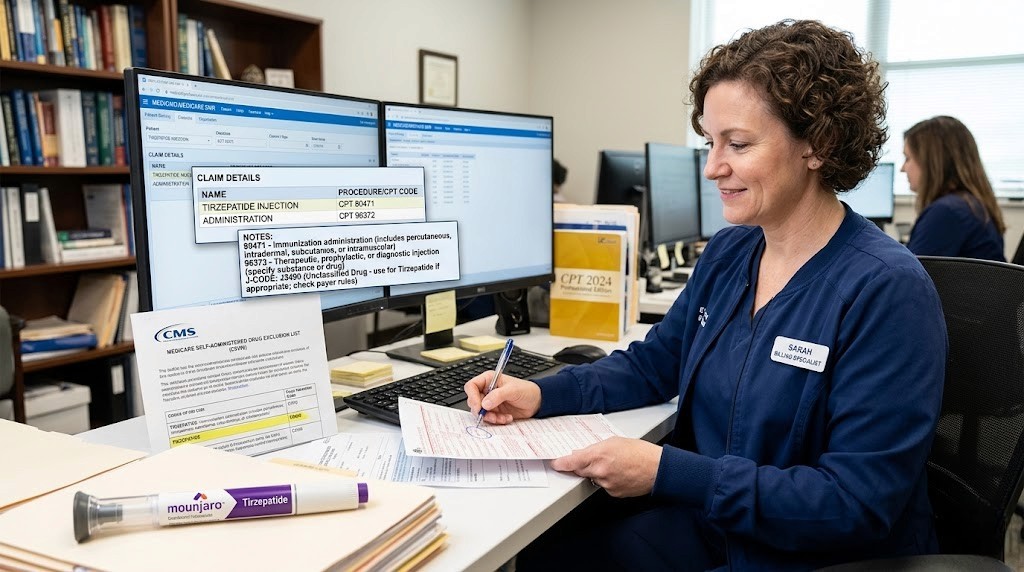
You are staring at a claim form. The tirzepatide vial sits on the counter. The patient is waiting. And somewhere between the injection and the insurance payment, a single wrong code can turn a covered service into a denied claim worth hundreds of dollars. This happens more often than anyone wants to admit.
Medical billing for tirzepatide is not straightforward. Two brand names. Two different FDA indications. Multiple HCPCS codes depending on the setting. Different ICD-10 requirements depending on whether the prescription targets diabetes or obesity. And compounded versions add yet another layer of complexity that most billing guides completely ignore.
The coding landscape for tirzepatide has shifted considerably since the FDA approved Zepbound for chronic weight management alongside Mounjaro for type 2 diabetes. Providers now face a dual-indication challenge that affects every line on the claim, from the diagnosis code to the drug code to the administration code. Get any piece wrong and the entire claim bounces back.
This guide breaks down every CPT code, HCPCS code, and ICD-10 code you need for tirzepatide billing. Whether you are coding for a diabetes patient on Mounjaro, a weight management patient on Zepbound, or navigating the increasingly complicated world of compounded formulations, the codes and strategies are here. No guesswork. No denied claims. Just the exact billing information you need to get paid correctly the first time.
Understanding tirzepatide and why billing is complicated
Tirzepatide is a dual GIP/GLP-1 receptor agonist. That matters for billing because it falls into a unique pharmacological category that does not always map cleanly to existing code structures. It is a 39-amino acid synthetic peptide that targets both the glucose-dependent insulinotropic polypeptide (GIP) receptor and the glucagon-like peptide-1 (GLP-1) receptor simultaneously. This dual mechanism is what makes it different from semaglutide and other single-receptor GLP-1 medications.
Two brand names exist for the same molecule. Mounjaro carries the FDA indication for type 2 diabetes management. Zepbound carries the FDA indication for chronic weight management in adults with obesity or overweight with at least one weight-related comorbidity. Same drug. Same doses. Completely different billing pathways.
This dual-branding creates the core billing challenge. A provider prescribing tirzepatide for a patient with type 2 diabetes uses Mounjaro and codes to diabetes diagnosis codes. A provider prescribing it for weight loss uses Zepbound and codes to obesity diagnosis codes. The wrong pairing triggers automatic denials at most payers, and the appeals process can take weeks.
For researchers studying tirzepatide dosing protocols, understanding the billing side helps explain why access varies so dramatically between patients. Insurance architecture, not clinical evidence, often determines who gets coverage.
The FDA indication split and what it means for claims
When the FDA approved Mounjaro in May 2022 for type 2 diabetes, the billing pathway was relatively simple. Diabetes medications have well-established coverage frameworks across commercial and government payers. Most formularies already had a slot for injectable GLP-1 receptor agonists.
Then Zepbound arrived in November 2023 for weight management. Obesity medications face an entirely different coverage landscape. Many commercial plans exclude weight loss drugs entirely. Medicare Part D explicitly prohibits coverage for drugs used for weight loss under federal law, though legislative efforts continue to push for change.
The practical result is that the same molecule, the same injection, and the same administration procedure require different coding depending entirely on the documented indication. Providers must be meticulous about which brand name appears on the prescription, which diagnosis codes support the claim, and which benefit category the payer assigns to the drug.
Understanding tirzepatide treatment outcomes can help build the medical necessity documentation that supports either indication. Clinical results matter for coding because they provide the evidence trail that payers review during prior authorization and claims adjudication.
CPT code 96372: the injection administration code
CPT 96372 is the primary administration code for tirzepatide when a healthcare provider performs the injection in a clinical setting. The full descriptor reads: "Therapeutic, prophylactic, or diagnostic injection (specify substance or drug); subcutaneous or intramuscular."
This code covers the actual act of administering the injection. It does not cover the drug itself. Think of it as the labor code for the nurse or medical assistant who draws up the medication, prepares the injection site, administers the subcutaneous injection, and monitors the patient briefly afterward.
One unit of 96372 is reported per injection encounter. If a patient receives a single tirzepatide injection during an office visit, you report one unit of 96372. The code does not vary by the dose of tirzepatide administered, whether the patient receives 2.5mg or 15mg, the administration code remains the same.
When to use CPT 96372
Report CPT 96372 only when the injection is administered by a qualified healthcare professional in a clinical setting. This includes physician offices, outpatient clinics, and hospital outpatient departments.
Do not report 96372 for self-administered injections. Most tirzepatide patients self-inject at home using the KwikPen autoinjector (for brand-name products) or a standard insulin syringe (for compounded formulations). Home self-injection does not generate an administration code. The only billable component for home-use patients is the drug itself, billed through the pharmacy benefit rather than the medical benefit.
This distinction matters enormously for practices that dispense tirzepatide directly. If the patient injects tirzepatide at home, the practice bills the drug through buy-and-bill or the pharmacy processes it. If the clinical staff administers it on-site, the practice can also bill the 96372 administration fee.
Reimbursement for CPT 96372
For 2026, CPT 96372 carries a work RVU (Relative Value Unit) that has been reduced by approximately 2.5% compared to the previous year. The exact reimbursement varies by payer and geographic location, but Medicare national average payment for 96372 typically falls in the range of $25 to $35 for the administration alone.
Commercial payers generally reimburse at higher rates, often 120% to 200% of the Medicare fee schedule depending on the contract. The administration fee alone rarely covers the full cost of clinical time, which is why most practices rely on the drug margin (the difference between acquisition cost and reimbursement) for profitability in buy-and-bill arrangements.
Modifier usage with 96372
Several modifiers may apply to 96372 depending on the clinical scenario.
Modifier 59 (Distinct Procedural Service) or Modifier XS (Separate Structure) applies when multiple injections of different substances are administered on the same date. If a patient receives tirzepatide plus a B12 injection in the same visit, the second 96372 unit would carry modifier 59 or XS to indicate it is a separate and distinct injection.
Modifier 25 does not go on 96372. Instead, modifier 25 goes on the E/M code when a significant, separately identifiable evaluation and management service is performed on the same date as the injection. For example, if a provider conducts a weight management counseling visit (billed as an E/M service) and also administers a tirzepatide dose, modifier 25 goes on the E/M code, not on 96372.
Understanding proper modifier usage prevents one of the most common denial reasons for injection claims. Incorrect modifier placement accounts for a significant percentage of first-pass denials on administration codes.

HCPCS codes for tirzepatide: J3490 and related codes
The drug itself requires a separate HCPCS (Healthcare Common Procedure Coding System) code on the claim. For tirzepatide products, the primary codes are J3490 and C9399.
J3490 (Unclassified drugs) is the most commonly used HCPCS code for tirzepatide when billed through the medical benefit. This catch-all code applies when a more specific J-code does not exist for the drug. As of early 2026, tirzepatide does not have its own dedicated J-code, which means both Mounjaro and Zepbound are reported under J3490.
C9399 (Unclassified drugs or biologicals) is used in hospital outpatient settings under the Outpatient Prospective Payment System (OPPS). If the tirzepatide injection occurs in a hospital outpatient department rather than a physician office, C9399 may be the appropriate code instead of J3490.
J3590 (Unclassified biologics) is occasionally referenced for tirzepatide, though J3490 is more standard. Some payers accept either code, while others have specific preferences documented in their billing guidelines.
How to bill J3490 for tirzepatide
When using J3490, you must include additional identifying information because J3490 is a generic catch-all code that does not specify the drug. Most payers require the NDC (National Drug Code) number, the drug name, the dosage, and the route of administration.
For Mounjaro (tirzepatide for diabetes), the NDC numbers correspond to the specific dose strength prescribed. Each KwikPen dose has its own NDC. For example, the Mounjaro 2.5mg/0.5mL single-dose pen has a different NDC than the 5mg/0.5mL pen.
For Zepbound (tirzepatide for weight management), the NDC numbers are similarly dose-specific. Though the active ingredient is identical to Mounjaro, the NDC numbers are different because they are separate FDA-approved products.
Claims submitted with J3490 but without proper NDC identification are almost guaranteed to deny. This is one of the most frequent billing errors for tirzepatide, especially in practices that are new to buy-and-bill for injectable medications.
Units of service for tirzepatide HCPCS billing
This is where billing gets tricky. HCPCS J-codes typically define a specific unit of measurement (such as per 1mg or per 0.1mg). Since J3490 is an unclassified code, the unit definition is not standardized.
Most payers expect J3490 to be billed as one unit per injection for self-contained single-dose products like the KwikPen. However, for compounded tirzepatide drawn from multi-dose vials, the unit calculation may differ. Always verify with the specific payer how they want units reported for J3490 when tirzepatide is the drug.
Incorrect unit reporting is another common denial trigger. One payer might expect 1 unit for the entire injection. Another might expect units based on milligrams. Without a dedicated J-code, there is no universal standard, making payer-specific verification essential.
ICD-10 diagnosis codes for tirzepatide claims
The diagnosis code is arguably the most important element of a tirzepatide claim because it establishes medical necessity and determines which benefit category the payer uses. The wrong diagnosis code does not just cause a denial. It can trigger fraud investigations if the pattern suggests systematic upcoding or indication mismatches.
ICD-10 codes for tirzepatide prescribed for type 2 diabetes (Mounjaro)
When tirzepatide is prescribed as Mounjaro for type 2 diabetes, the primary diagnosis code comes from the E11 category.
E11.65 (Type 2 diabetes mellitus with hyperglycemia) is the most commonly used primary code. It indicates that the patient has type 2 diabetes with suboptimal glycemic control, which provides strong medical necessity for adding or adjusting medication.
E11.9 (Type 2 diabetes mellitus without complications) is used when the patient has stable type 2 diabetes without documented complications. This code is acceptable but provides weaker medical necessity justification than E11.65.
Additional E11 codes may be appropriate depending on the patient clinical picture:
E11.21 - Type 2 diabetes mellitus with diabetic nephropathy
E11.36 - Type 2 diabetes mellitus with diabetic cataract
E11.40 - Type 2 diabetes mellitus with diabetic neuropathy, unspecified
E11.51 - Type 2 diabetes mellitus with diabetic peripheral angiopathy without gangrene
Listing all applicable diabetes complication codes strengthens the medical necessity case and helps justify tirzepatide over less expensive alternatives. The relationship between GLP-1 medications and diabetes management is well established in clinical literature, which supports coverage determinations.
ICD-10 codes for tirzepatide prescribed for weight management (Zepbound)
When tirzepatide is prescribed as Zepbound for chronic weight management, the primary diagnosis code comes from the E66 category.
E66.01 (Morbid (severe) obesity due to excess calories) is the strongest diagnosis code for weight management claims. It indicates a BMI of 40 or greater, or a BMI of 35 or greater with comorbidities. Most payers require this level of severity for Zepbound coverage.
E66.09 (Other obesity due to excess calories) covers patients with a BMI of 30 to 39.9 who do not meet the morbid obesity threshold but have documented weight-related comorbidities.
E66.3 (Overweight) applies to patients with a BMI of 25 to 29.9. Few payers cover Zepbound at this BMI level unless significant comorbidities are documented.
Critical supporting codes that should accompany the E66 primary diagnosis include:
Z68.30 through Z68.45 - BMI codes specifying the exact range (Z68.35 = BMI 35.0-35.9, Z68.41 = BMI 41.0-44.9, etc.)
I10 - Essential hypertension (a qualifying comorbidity)
E78.5 - Hyperlipidemia, unspecified (another qualifying comorbidity)
G47.33 - Obstructive sleep apnea (a qualifying comorbidity)
E11.9 - Type 2 diabetes (if present as comorbidity)
Loading the claim with all applicable comorbidity codes significantly improves the chances of first-pass approval. Payers use these secondary codes to assess whether the patient meets the clinical criteria outlined in their coverage policy. Researchers tracking tirzepatide weight loss timelines often reference these same comorbidity thresholds because they align with the clinical trial inclusion criteria.
The BMI code requirement
Most payers now require a BMI code on every obesity-related claim. This is not optional.
BMI codes (Z68.1 through Z68.45) do not stand alone as primary diagnoses. They are supplemental codes that provide additional specificity to the E66 obesity code. But their absence from the claim frequently triggers automatic denials.
The BMI must be documented in the medical record from the same encounter. A BMI from a previous visit does not support the current claim. This means weight and height must be measured and recorded at the visit where tirzepatide is prescribed or administered.
For patients transitioning from semaglutide to tirzepatide, the BMI documentation is especially important because the patient weight may have already decreased from their initial obesity diagnosis. If the BMI has dropped below the payer threshold during treatment, continued coverage may require additional documentation showing that discontinuation would likely result in weight regain.
Mounjaro versus Zepbound: the billing difference explained
Same molecule. Same manufacturer. Same doses. Completely different billing worlds.
Mounjaro is billed through the pharmacy benefit for self-administered prescriptions and through the medical benefit when administered in-office. Most commercial plans cover Mounjaro for type 2 diabetes with a prior authorization. The copay varies by formulary tier but typically ranges from $25 to $150 per month with commercial insurance. Eli Lilly also offers a savings card that can reduce out-of-pocket costs for eligible commercially insured patients.
Zepbound faces dramatically different coverage. Many commercial plans explicitly exclude weight management medications from their formulary. Others cover Zepbound but place it on the highest specialty tier with copays exceeding $200 to $500 per month. Some plans require step therapy, meaning the patient must first try and fail other weight management approaches before Zepbound is approved.
Medicare does not cover Zepbound for weight loss. Period. Federal law (Social Security Act Section 1862(a)(1)(A)) excludes drugs used for weight loss from Medicare Part D coverage. Legislative proposals to change this exclusion have been introduced but have not passed as of early 2026.
However, Medicare does cover Mounjaro for type 2 diabetes. This creates a situation where a Medicare patient with both type 2 diabetes and obesity might receive tirzepatide covered as Mounjaro for diabetes, with weight loss as a secondary benefit. The coding must reflect the diabetes indication as primary.
For those researching how tirzepatide compares to semaglutide, the billing differences between the two molecules follow similar patterns. Semaglutide also has dual branding (Ozempic for diabetes, Wegovy for weight loss) with the same coverage disparities.
Dual-indication patients
Many patients qualify for both indications. They have type 2 diabetes AND obesity. How do you code these patients?
Best practice is to lead with the indication that has the strongest coverage pathway. For most patients, this means listing the diabetes diagnosis (E11.XX) as the primary code and the obesity diagnosis (E66.XX) as a secondary code. This routes the claim through the diabetes coverage pathway, which has higher approval rates.
However, the prescription must match the primary indication. If diabetes is the primary diagnosis, the prescription should be written for Mounjaro, not Zepbound. Mismatches between the brand name, the diagnosis code, and the documented clinical rationale are red flags for payer audits.
Document both conditions thoroughly. A provider note that says "Starting Mounjaro 2.5mg for type 2 diabetes management; patient also has comorbid obesity with BMI of 38.2 which is expected to improve with GLP-1 therapy" covers both indications while keeping diabetes as the primary treatment rationale.
Patients who are following tirzepatide dosing protocols should understand that their billing pathway may affect which doses their insurance approves. Some diabetes-indication coverage policies have different dose escalation timelines than weight management policies.
Compounded tirzepatide billing codes
Compounded tirzepatide introduces additional coding complexity. The regulatory landscape has shifted significantly, with the FDA removing tirzepatide from the drug shortage list and restricting compounding under certain conditions.
Current compounding status
As of March 2025, the FDA determined that the tirzepatide shortage is resolved, which impacts compounding eligibility. Section 503A pharmacies (traditional compounding pharmacies) can still compound tirzepatide under limited circumstances when a prescriber documents that a patient requires a clinically significant modification, such as an alternative formulation due to allergy or intolerance to an inactive ingredient in the commercial product.
Section 503B outsourcing facilities face stricter limitations. They generally cannot compound drugs that are "essentially copies" of commercially available products unless the drug is on the FDA shortage list. With tirzepatide removed from the shortage list, 503B compounding of standard tirzepatide formulations has been significantly curtailed.
This regulatory shift directly impacts billing because compounded tirzepatide and commercial tirzepatide follow different coding pathways. Understanding 503B compounding pharmacy regulations is essential for providers who dispense compounded formulations.
HCPCS codes for compounded tirzepatide
Compounded tirzepatide is also billed under J3490 (Unclassified drugs) when administered through the medical benefit. However, the NDC number will differ from the commercial product NDC because the compounding pharmacy assigns its own NDC to compounded preparations.
Some payers reject compounded drug claims outright, regardless of the code used. Others require additional documentation demonstrating why the commercial product cannot be used. This documentation must come from the prescribing provider and typically needs to specify the clinical reason for compounding, such as:
Allergy to an inactive ingredient in the commercial product
Need for a dose not available in commercial presentations
Documented intolerance to the commercial delivery device
Billing compounded tirzepatide through the pharmacy benefit uses standard pharmacy claim formats (NCPDP) with the compounding pharmacy NDC. Many pharmacy benefit managers (PBMs) have implemented edits that flag or deny compounded GLP-1 claims automatically, requiring manual overrides or appeals.
For patients using reconstituted tirzepatide from vials, the billing considerations overlap with compounded product billing because the claim must reflect the actual product dispensed rather than the commercial KwikPen product.
Buy-and-bill versus pharmacy dispensing for compounded products
Practices that compound or purchase compounded tirzepatide and administer it on-site use the buy-and-bill model. The practice purchases the drug at wholesale cost, administers it to the patient, and bills the payer for both the drug (J3490) and the administration (96372). The practice profit comes from the spread between acquisition cost and payer reimbursement.
This model works well when payer reimbursement exceeds acquisition cost. For compounded tirzepatide, which typically costs significantly less than commercial Mounjaro or Zepbound, the margins can be favorable. However, payers are increasingly scrutinizing compounded drug claims and may reimburse at the compounded drug rate rather than the brand-name rate.
Alternatively, practices can write prescriptions for compounded tirzepatide to be filled at a compounding pharmacy. In this model, the pharmacy bills the patient or their insurance directly. The practice does not handle drug billing but also does not capture the drug margin.
Understanding these different billing models helps explain the cost variations patients encounter. Our guide on affordable tirzepatide options covers how these billing pathways affect out-of-pocket costs.
Prior authorization codes and requirements
Prior authorization (PA) is required by virtually every payer for both Mounjaro and Zepbound. The PA process involves submitting clinical documentation that demonstrates the patient meets the payer specific coverage criteria before the drug is dispensed or administered.
What payers require for Mounjaro prior authorization
For Mounjaro (diabetes indication), most payers require:
Confirmed type 2 diabetes diagnosis with recent HbA1c level (typically above 7.0%)
Documentation of current diabetes medications and their inadequacy (most plans require failure of metformin unless contraindicated)
Step therapy documentation showing the patient has tried first-line agents before progressing to tirzepatide
Prescriber specialty (some plans restrict initial prescribing to endocrinologists or require specialist consultation)
The PA request uses the tirzepatide dosing schedule as part of the clinical rationale. Payers want to see that the prescriber is following the FDA-approved escalation protocol: starting at 2.5mg weekly for 4 weeks, then increasing to 5mg weekly, with subsequent increases as clinically indicated.
What payers require for Zepbound prior authorization
Zepbound PA requirements are typically more stringent:
Documented BMI of 30 or greater, or 27 or greater with at least one weight-related comorbidity
Evidence of lifestyle intervention including documented participation in diet, exercise, and behavioral modification programs (usually for at least 3 to 6 months)
Prior medication trials (some plans require documented failure of other weight management medications before approving tirzepatide)
Specialist involvement (some plans require referral to or management by a bariatric medicine specialist, endocrinologist, or obesity medicine physician)
Ongoing weight monitoring documentation with specific weight loss targets (typically 5% of baseline weight within 3 to 6 months of starting therapy)
Patients researching BMI requirements for GLP-1 medications should understand that these thresholds directly correspond to the prior authorization criteria their provider must document. Meeting the clinical criteria is the first step. Getting the documentation right is the second and equally important step.
PA denial and appeals process
When a PA is denied, the next step is an appeal. Successful appeals require:
A Letter of Medical Necessity from the prescribing provider that specifically addresses why tirzepatide is medically necessary for this patient, why alternative treatments are inadequate, and how the patient meets the payer clinical criteria. Generic template letters have lower success rates than individualized letters that reference the patient specific clinical history.
Supporting clinical documentation including lab results (HbA1c for diabetes, lipid panels, liver function tests), anthropometric measurements (weight, height, BMI, waist circumference), comorbidity documentation, and records of previous treatment attempts.
Peer-reviewed literature supporting the use of tirzepatide for the patient condition. Referencing specific clinical trials (SURPASS trials for diabetes, SURMOUNT trials for obesity) strengthens the appeal.
The appeal process and timeline varies by payer but typically allows 30 to 60 days for a standard appeal and 24 to 72 hours for an expedited or urgent appeal. Understanding the specific coverage policies of major insurers helps providers tailor their PA submissions and appeals to each payer requirements.
E/M coding for tirzepatide-related office visits
When a patient visits specifically for tirzepatide management, proper E/M (Evaluation and Management) coding captures the provider cognitive work separate from the injection administration.
New patient visits for tirzepatide initiation
A new patient evaluation for tirzepatide initiation is coded using standard new patient E/M codes based on medical decision-making complexity or total time.
99203 - Low complexity new patient visit (may be appropriate for straightforward diabetes or obesity cases without significant comorbidities)
99204 - Moderate complexity new patient visit (appropriate when multiple comorbidities need evaluation, medication reconciliation is complex, or significant counseling is required)
99205 - High complexity new patient visit (appropriate when the patient presents with multiple interacting conditions that complicate tirzepatide prescribing decisions)
Established patient follow-up visits
Ongoing tirzepatide management visits use established patient E/M codes:
99213 - Low complexity established patient visit (routine dose adjustment, no new concerns)
99214 - Moderate complexity established patient visit (dose escalation decisions, managing side effects like tirzepatide constipation, evaluating treatment response, adjusting concurrent medications)
99215 - High complexity established patient visit (complex management involving multiple interacting conditions, significant medication changes, or management of serious adverse effects)
The key to proper E/M coding is documentation. The provider note must support the level of medical decision-making billed. For a 99214, the documentation should reflect at least moderate complexity in the number and complexity of problems addressed, the amount and complexity of data reviewed, and the risk of complications or management decisions.
Billing E/M and injection on the same day
When a provider performs a significant, separately identifiable E/M service AND administers a tirzepatide injection on the same date, both can be billed. The E/M code carries modifier 25 to indicate that the evaluation and management service was separate from the injection procedure.
The E/M service must be genuinely separate from the injection. Simply writing "Patient here for injection, vitals taken, injection given" does not support a separate E/M code. The note must document a distinct clinical decision-making process, such as evaluating treatment response, adjusting the tirzepatide dose, managing side effects, or addressing concurrent medical issues.
Audit risk increases when modifier 25 is used on a high percentage of injection visits. Payers monitor modifier 25 usage patterns and may request documentation review if the rate exceeds their benchmarks. Best practice is to use modifier 25 only when the documentation clearly supports a separate E/M service.
Obesity counseling and behavioral intervention codes
Beyond the injection and E/M codes, several CPT codes capture the counseling and behavioral intervention components that often accompany tirzepatide prescribing for weight management.
Preventive medicine counseling codes
99401 through 99404 cover preventive medicine counseling based on time spent. These codes apply when the counseling focuses on risk factor reduction and health behavior change rather than management of a specific illness.
99401 - approximately 15 minutes of counseling
99402 - approximately 30 minutes
99403 - approximately 45 minutes
99404 - approximately 60 minutes
These codes can capture the dietary counseling, exercise planning, and behavioral modification discussions that are integral to comprehensive weight management alongside tirzepatide treatment protocols.
Medical nutrition therapy codes
97802 covers the initial medical nutrition therapy (MNT) assessment, typically 15 minutes. 97803 covers reassessment and intervention sessions. These codes are particularly relevant for patients on tirzepatide because nutritional guidance is a key component of maximizing treatment outcomes.
Medicare covers MNT for diabetes (when referred by a physician) and for renal disease. Commercial payers vary in their MNT coverage. For patients following tirzepatide dietary guidelines, MNT sessions provide both clinical benefit and an additional billable service.
Intensive behavioral therapy for obesity
Medicare covers intensive behavioral therapy (IBT) for obesity under specific screening codes. G0447 covers face-to-face behavioral counseling for obesity, 15 minutes. Medicare allows up to 22 visits in the first year for patients with a BMI of 30 or greater.
This code works alongside tirzepatide prescribing to create a comprehensive, multi-component weight management program. The combination of pharmacotherapy (tirzepatide) plus behavioral therapy is the approach that clinical trials have shown produces the best outcomes, and having dedicated billing codes for each component helps practices sustain these programs financially.
Special billing scenarios
Tirzepatide with vitamin B12 combination billing
Many compounding pharmacies offer tirzepatide combined with vitamin B12 (cyanocobalamin or methylcobalamin). Some formulations also include other additives like glycine, niacinamide, or levocarnitine.
When a combination product is administered as a single injection, it is typically billed as one unit of the compounded preparation under J3490. The individual components are not separately broken out. The documentation should note all active ingredients in the compound.
If tirzepatide and B12 are administered as separate injections (two distinct shots), each injection can be billed separately. The tirzepatide injection uses J3490 plus 96372. The B12 injection uses J3420 (Injection, vitamin B-12 cyanocobalamin, up to 1000 mcg) plus a second 96372 with modifier 59.
Patients using tirzepatide with B12 combinations should understand that the billing approach affects their out-of-pocket costs. A single combination injection generates one administration fee. Two separate injections generate two.
Telehealth prescribing codes
Tirzepatide can be prescribed via telehealth. The E/M codes are the same, but telehealth modifier 95 (or the appropriate place of service code, POS 02 for telehealth) must be appended. Telehealth visits cannot generate a 96372 administration code because the injection is not being administered at the point of care.
Telehealth weight management visits have expanded significantly since the pandemic-era regulatory changes, and many payers continue to cover telehealth prescribing visits for GLP-1 medications. For patients in areas without convenient access to obesity medicine specialists, telehealth removes the geographic barrier to qualifying for GLP-1 medications.
Self-pay and cash-pay patients
For patients without insurance coverage or who choose to pay out of pocket, the billing complexity drops dramatically. No CPT codes are submitted to payers. The practice charges a flat fee for the visit, the drug, and the administration (if applicable). Or the patient obtains the prescription from a pharmacy at the retail or discounted cash price.
Compounded tirzepatide through cash-pay channels typically costs significantly less than commercial Mounjaro or Zepbound at retail price. Many practices have built entire weight management programs around cash-pay compounded tirzepatide. Patients exploring affordable compounded tirzepatide options often find that cash-pay pricing is more predictable and sometimes less expensive than insurance copays for the brand-name products.
Common billing mistakes and how to avoid them
Tirzepatide billing errors are remarkably consistent across practices. Here are the most frequent mistakes and their solutions.
Mistake 1: brand name and diagnosis code mismatch
Writing a prescription for Zepbound but coding the claim with E11 diabetes codes. Or prescribing Mounjaro but using E66 obesity codes as the primary diagnosis.
Fix: Always verify that the brand name on the prescription matches the primary diagnosis code. Mounjaro pairs with E11 codes. Zepbound pairs with E66 codes. For dual-indication patients, the primary diagnosis should match the brand prescribed.
Mistake 2: missing NDC on J3490 claims
Submitting J3490 without the National Drug Code. Since J3490 is an unclassified drug code, the payer has no way to identify the actual drug without the NDC.
Fix: Always include the 11-digit NDC number, drug name, strength, dosage, and route on every J3490 claim. Most practice management systems have a field for NDC information on HCPCS claims.
Mistake 3: billing 96372 for self-administered injections
Coding 96372 when the patient self-injects at home rather than receiving the injection from clinical staff.
Fix: Only report 96372 when a qualified healthcare professional administers the injection in a clinical setting. Home self-injection is not billable as an administration service. The drug is billed through the pharmacy benefit instead.
Mistake 4: incorrect modifier 25 usage
Appending modifier 25 to the E/M code on every injection visit without documenting a separate, significant E/M service.
Fix: Only bill a separate E/M service when the documentation supports distinct medical decision-making beyond "patient here for injection." Dose adjustments, side effect management, and review of treatment progress all support a separate E/M service, but they must be documented.
Mistake 5: missing BMI code on obesity claims
Submitting an E66 obesity diagnosis without the supporting Z68 BMI code.
Fix: Include the specific Z68 BMI code on every obesity-related claim. Measure and document the BMI at each encounter. This is a simple addition that prevents a common automatic denial.
Mistake 6: not verifying payer-specific requirements
Assuming all payers accept the same codes and documentation. In reality, each payer has specific preferences for HCPCS codes, unit calculations, modifier requirements, and documentation standards.
Fix: Verify coding requirements with each major payer before submitting the first tirzepatide claim. Many payers publish medical policy bulletins that specify exactly how they want GLP-1 medications coded and documented. Building a payer-specific reference sheet saves hours of rework on denied claims.
Complete tirzepatide billing code reference table
Here is every code you may need for tirzepatide billing in one place.
Administration Codes:
CPT 96372 - Therapeutic/prophylactic/diagnostic injection, subcutaneous or intramuscular (in-office administration)
Modifier 59/XS - For additional separate injections on same date
Modifier 25 - On E/M code when separate E/M service performed same day as injection
Drug Codes (HCPCS):
J3490 - Unclassified drugs (primary code for tirzepatide in physician office)
C9399 - Unclassified drugs or biologicals (hospital outpatient setting)
J3590 - Unclassified biologics (alternative, less commonly used)
J3420 - Injection, vitamin B-12 cyanocobalamin, up to 1000 mcg (when B12 billed separately)
Diabetes Diagnosis Codes (Mounjaro):
E11.65 - Type 2 diabetes with hyperglycemia (strongest for medical necessity)
E11.9 - Type 2 diabetes without complications
E11.21 - Type 2 diabetes with diabetic nephropathy
E11.40 - Type 2 diabetes with diabetic neuropathy
Z79.85 - Long-term (current) use of injectable non-insulin antidiabetic drugs
Obesity Diagnosis Codes (Zepbound):
E66.01 - Morbid (severe) obesity due to excess calories
E66.09 - Other obesity due to excess calories
E66.3 - Overweight
Z68.30-Z68.45 - BMI codes (required supplemental codes)
Common Comorbidity Codes:
I10 - Essential hypertension
E78.5 - Hyperlipidemia, unspecified
G47.33 - Obstructive sleep apnea
K76.0 - Fatty liver, not elsewhere classified (NAFLD)
M19.90 - Unspecified osteoarthritis
E/M Codes:
99203-99205 - New patient office visits
99213-99215 - Established patient office visits
G0447 - Face-to-face behavioral counseling for obesity, 15 min (Medicare)
Counseling and Therapy Codes:
99401-99404 - Preventive medicine counseling
97802 - Medical nutrition therapy, initial assessment
97803 - Medical nutrition therapy, reassessment
This reference table covers the vast majority of coding scenarios for tirzepatide. Practices that manage significant GLP-1 patient volumes should consider creating an internal quick-reference card based on these codes along with their payer-specific requirements.
SeekPeptides members access comprehensive protocol guides, dosing calculators, and educational resources that complement the clinical and billing knowledge needed to manage tirzepatide patients effectively. Understanding both the clinical protocols and the billing codes ensures that patients receive appropriate care while providers maintain financial sustainability.
Insurance coverage landscape by payer type
Coverage for tirzepatide varies enormously depending on the type of insurance. Understanding these patterns helps practices set realistic expectations for patients and prioritize PA efforts where they are most likely to succeed.
Commercial insurance
Most major commercial payers cover Mounjaro for type 2 diabetes with prior authorization. Coverage rates for Zepbound are lower and vary significantly by plan. Self-insured employer plans (which cover approximately 65% of commercially insured Americans) make independent formulary decisions, so coverage can vary even within the same insurance company depending on the employer benefit design.
Key commercial payer trends for tirzepatide:
United Healthcare covers Mounjaro for diabetes on most plans. Zepbound coverage varies by plan.
Cigna covers Mounjaro with PA. Zepbound coverage depends on whether the plan includes weight management drug benefits.
Aetna covers Mounjaro with PA and step therapy requirements. Zepbound coverage is plan-specific.
Blue Cross Blue Shield plans vary by state affiliate. Some cover both indications, others cover only diabetes.
Medicare
Medicare Part D covers Mounjaro for type 2 diabetes. The Part D formulary tier placement and patient cost-sharing vary by plan. Medicare Advantage plans may offer additional coverage beyond standard Part D.
Medicare does not cover Zepbound or any drug prescribed primarily for weight loss. This exclusion is statutory, not just a formulary decision, meaning it cannot be overridden by an appeal or exception request.
The Treat and Reduce Obesity Act, which would allow Medicare to cover FDA-approved anti-obesity medications, has been reintroduced in multiple congressional sessions. If passed, it would fundamentally change the tirzepatide billing landscape for Medicare patients.
Medicaid
Medicaid coverage for tirzepatide varies by state. States have broad discretion in designing their Medicaid formularies. Some state Medicaid programs cover both diabetes and weight management indications. Others cover only the diabetes indication. A few have explicit exclusions for all weight management medications.
Medicaid managed care organizations (MCOs) within each state may have different formulary decisions than the fee-for-service Medicaid program. Providers must verify coverage with the specific Medicaid MCO assigned to each patient.
Tricare and VA
Tricare covers Mounjaro for type 2 diabetes with PA. The VA formulary includes tirzepatide (as Zepbound) for weight management under specific clinical criteria. VA coverage for Zepbound requires documented BMI criteria, comorbidities, and participation in the MOVE! Weight Management Program or equivalent behavioral intervention.
For researchers exploring how to qualify for GLP-1 medications, understanding the payer-specific coverage criteria is essential because the qualification process is ultimately a billing and documentation exercise as much as a clinical one.
Frequently asked questions
What is the CPT code for tirzepatide injection?
The CPT code for administering a tirzepatide injection in a clinical setting is 96372 (therapeutic, prophylactic, or diagnostic injection, subcutaneous or intramuscular). This covers the administration only. The drug itself is coded separately using HCPCS code J3490 (unclassified drugs) with the appropriate NDC number for the specific tirzepatide product (Mounjaro or Zepbound). Learn more about proper tirzepatide injection technique in our detailed guide.
Is there a specific J-code for tirzepatide?
No. As of early 2026, tirzepatide does not have a dedicated J-code. Both Mounjaro and Zepbound are billed under J3490 (unclassified drugs) in the physician office setting or C9399 (unclassified drugs or biologicals) in the hospital outpatient setting. The NDC number must be included on the claim to identify the specific product.
What is the difference between Mounjaro and Zepbound billing?
Mounjaro (tirzepatide for type 2 diabetes) is billed with ICD-10 codes from the E11 category (type 2 diabetes). Zepbound (tirzepatide for weight management) is billed with ICD-10 codes from the E66 category (obesity). The HCPCS drug code (J3490) and CPT administration code (96372) are the same for both. The critical difference is the diagnosis code, the brand name on the prescription, and the insurance coverage pathway. See our tirzepatide versus semaglutide comparison for more on how these medications differ.
Does Medicare cover tirzepatide?
Medicare Part D covers Mounjaro for type 2 diabetes with prior authorization and appropriate documentation. Medicare does NOT cover Zepbound for weight loss because federal law prohibits Medicare from covering drugs used primarily for weight management. This statutory exclusion cannot be overridden by appeals or exception requests.
What ICD-10 code do I use for tirzepatide?
For diabetes (Mounjaro), use E11.65 (type 2 diabetes with hyperglycemia) as the strongest primary code. For obesity (Zepbound), use E66.01 (morbid obesity due to excess calories) with a supporting Z68 BMI code. Always include all applicable comorbidity codes to strengthen medical necessity. Our guide on tirzepatide dosing covers the clinical protocols that pair with these billing codes.
Can I bill an E/M visit and a tirzepatide injection on the same day?
Yes, if the E/M service is significant and separately identifiable from the injection. Append modifier 25 to the E/M code (not to CPT 96372). The provider note must document distinct medical decision-making beyond simply administering the injection. Routine injection-only visits without separate clinical evaluation do not support a concurrent E/M code.
How do I bill for compounded tirzepatide?
Compounded tirzepatide is billed under J3490 with the compounding pharmacy NDC number. Administration in-office uses the same 96372 code. Additional documentation may be required showing why the commercial product cannot be used. Many payers have specific policies for compounded GLP-1 medications that may limit coverage. Read our guide on 503B compounding pharmacies and tirzepatide for regulatory details.
What documentation do I need for tirzepatide prior authorization?
For Mounjaro: confirmed type 2 diabetes diagnosis, recent HbA1c, current medication list, documentation of metformin trial (unless contraindicated), and the planned dosing schedule. For Zepbound: documented BMI with Z68 code, weight-related comorbidities, evidence of lifestyle intervention participation, and any prior weight management medication trials. Our BMI requirements for GLP-1 guide details the specific thresholds.
External resources
American Medical Association - CPT Code 96372 Official Definition
Centers for Medicare and Medicaid Services - Self-Administered Drug Exclusion List
For researchers serious about optimizing their peptide protocols and understanding the full landscape of tirzepatide dosing, insurance navigation, and treatment planning, SeekPeptides offers the most comprehensive resource available, with evidence-based guides, proven protocols, and a community of thousands who have navigated these exact questions.
In case I do not see you, good afternoon, good evening, and good night. May your claims stay clean, your codes stay accurate, and your reimbursements stay timely.