Jan 29, 2026
Your moisturizer is not working. You have tried the expensive creams. The overnight masks. The endless layering of products that promise transformative results but deliver nothing but an empty wallet and the same tired skin staring back at you. The wrinkles remain. The sagging continues. The dullness persists.
Something has to change.
That something might be a peptide.
Collagen peptides serums have emerged as one of the most promising categories in skincare, backed by actual research rather than marketing fiction. These products work differently than traditional moisturizers because they communicate with your skin cells at a molecular level, telling your body to produce more of what it has been losing since your mid-twenties. Understanding how peptides work reveals why they represent such a significant advancement in skincare science.
But not all collagen peptides serums are equal.
Some contain effective concentrations of proven peptides like Matrixyl and GHK-Cu. Others use trace amounts that look good on a label but do nothing for your skin. Some formulations enhance peptide absorption through complementary ingredients. Others sabotage their own active ingredients through poor formulation choices. The difference between a serum that works and one that wastes your money often comes down to details that most consumers never learn to evaluate. SeekPeptides provides comprehensive education on these distinctions, helping you navigate the overwhelming world of skincare with clarity.
This guide covers everything you need to know about collagen peptides serums. We will explore the science behind how they work, which peptides actually have research backing their claims, how to incorporate them into your routine for maximum results, and how to identify products worth your investment from those destined for the back of your cabinet.
What are collagen peptides and why do they matter for your skin
Collagen is the most abundant protein in your body. It provides structure to your skin, keeping it firm, plump, and resilient against the forces of gravity and time. Think of collagen as the scaffolding that holds everything together. When that scaffolding weakens, everything starts to sag.
Here is the problem.
Your body produces less collagen every year after age 25. The decline starts slowly, almost imperceptibly. Maybe you notice a fine line that was not there before. A slight loss of bounce when you press your cheek. By age 40, your collagen production has dropped by approximately 25 percent. By age 60, that number approaches 50 percent. The visible results of this decline are what we call aging, the wrinkles, the sagging, the crepey texture that no amount of moisturizer seems to address.
Traditional skincare approaches this problem backward.
Moisturizers hydrate the surface. They make skin look temporarily plumper by drawing water into the upper layers. But they do nothing to rebuild the structural proteins your skin has lost. When the moisturizer wears off, you are right back where you started. Understanding peptide formulas and how they differ from basic hydrators is essential for making informed skincare decisions.
Collagen peptides take a fundamentally different approach. These short chains of amino acids act as messengers. They signal your skin cells to produce more collagen naturally. Rather than temporarily masking the symptoms of collagen loss, they address the underlying cause. The science behind this signaling mechanism explains why peptide serums can produce lasting improvements that basic moisturizers cannot match.
The molecular science of peptide signaling
Peptides are fragments of proteins. Collagen itself is too large to penetrate the skin barrier. Its molecules simply cannot pass through the stratum corneum, that protective outer layer that keeps the outside world out and your internal environment in. For decades, this posed a significant problem for skincare scientists trying to boost collagen levels topically.
The breakthrough came with hydrolyzed collagen and synthetic peptide sequences.
By breaking collagen down into smaller peptide fragments, researchers discovered that these fragments could penetrate the skin. More importantly, they discovered something unexpected. These peptide fragments did not just sit in the skin doing nothing. They triggered a biological response. Your fibroblasts, the cells responsible for producing collagen, interpreted these peptide fragments as signals that existing collagen had been broken down. In response, they ramped up production of new collagen to replace what they perceived as lost structural protein.
This discovery transformed skincare.
Instead of trying to replace collagen from the outside, which proved impossible, scientists could now stimulate your body to produce more collagen from the inside. The peptide research supporting this mechanism has grown substantially over the past two decades, with clinical trials demonstrating measurable improvements in skin firmness, wrinkle depth, and overall texture.
Types of peptides in skincare formulations
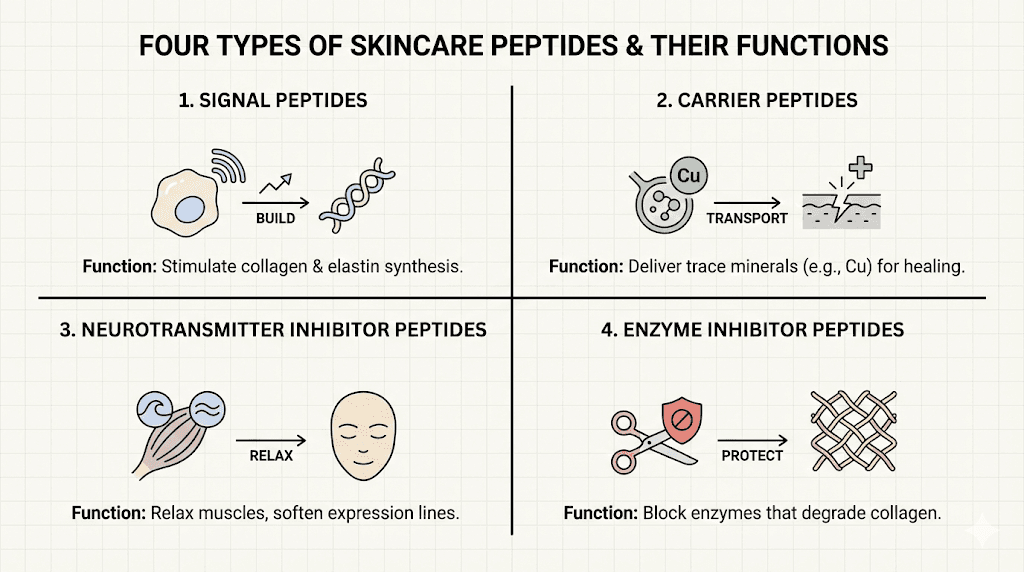
Not all peptides function the same way. Understanding the different categories helps you evaluate which serums might work for your specific concerns. The complete peptide list available today includes hundreds of variations, but they generally fall into four main categories.
Signal peptides are the most common type in anti-aging serums. They communicate directly with fibroblasts, instructing them to produce more collagen, elastin, and other structural proteins. Matrixyl, one of the most studied signal peptides, has been shown to increase collagen synthesis by up to 117 percent in laboratory studies. Palmitoyl pentapeptide-4, another widely used signal peptide, demonstrated significant wrinkle reduction in clinical trials spanning 12 weeks.
Carrier peptides serve a different function.
These peptides deliver trace minerals to the skin, particularly copper, which plays a crucial role in collagen synthesis and wound healing. GHK-Cu is the most famous carrier peptide, combining the tripeptide glycyl-histidyl-lysine with copper ions. Research has shown that GHK-Cu increases collagen production, improves skin elasticity, and accelerates wound healing. Studies comparing GHK-Cu to Matrixyl found that the copper peptide produced a 31.6 percent greater reduction in wrinkle volume.
Neurotransmitter-inhibiting peptides work through an entirely different mechanism.
These peptides block the signals that cause muscle contraction, functioning similarly to botulinum toxin but without the injections. SNAP-8 and Syn-Ake are two examples that have gained popularity in anti-wrinkle formulations. By relaxing facial muscles, these peptides can reduce the depth of expression lines, particularly around the eyes and forehead. The effects are more subtle than injectable treatments but accumulate with consistent use over time.
Enzyme-inhibiting peptides protect existing collagen rather than stimulating new production.
Your body contains enzymes called matrix metalloproteinases that break down collagen as part of normal tissue maintenance. Certain peptides can inhibit these enzymes, slowing collagen degradation and preserving the structural proteins you already have. This protective action complements the stimulating effects of signal peptides, creating a two-pronged approach to maintaining skin firmness.
The science behind collagen peptide serums
Understanding why collagen peptide serums work requires diving deeper into the biology of your skin. This knowledge separates informed consumers from those easily swayed by marketing claims that sound scientific but lack substance. The science of peptide safety and efficacy has evolved considerably since early formulations hit the market.
How your skin produces collagen naturally
Fibroblasts are the factories of your dermis. These specialized cells sit within the middle layer of your skin, constantly producing collagen, elastin, and the gel-like ground substance that fills the spaces between structural proteins. When fibroblasts work efficiently, your skin stays firm and resilient. When they slow down, the scaffolding weakens.
Multiple factors influence fibroblast activity.
Age is the most significant factor, but it is not the only one. UV exposure damages fibroblasts and accelerates collagen breakdown. Chronic inflammation diverts cellular resources away from collagen production. Poor nutrition deprives fibroblasts of the raw materials they need to build proteins. Smoking introduces toxins that directly impair collagen synthesis while increasing the enzymes that break it down.
Young fibroblasts respond vigorously to signals telling them to produce more collagen. As fibroblasts age, their responsiveness decreases. This is why peptides for skin tightening become increasingly important as we get older. The peptides provide stronger, more persistent signals that can overcome the declining sensitivity of aged fibroblasts.
Peptide penetration and delivery systems
The biggest challenge in peptide skincare is getting the active ingredients where they need to go. Your skin evolved specifically to keep foreign substances out. This barrier function protects you from environmental threats, but it also prevents many beneficial ingredients from reaching the deeper layers where they could do the most good.
Molecular size determines penetration ability.
Smaller peptides, those with fewer amino acids, generally penetrate more easily than larger ones. This is why many effective skincare peptides are relatively short sequences, typically between three and six amino acids. Larger peptides require specialized delivery systems to cross the skin barrier effectively.
Lipid conjugation is one solution to the penetration problem.
By attaching a fatty acid chain to a peptide, chemists can make it more compatible with the lipid-rich skin barrier. Palmitoyl pentapeptide-4, better known as Matrixyl, uses this approach. The palmitoyl portion, derived from palmitic acid, helps the peptide integrate into cell membranes and pass through the stratum corneum more efficiently.
Other delivery technologies have emerged in recent years. Liposomal encapsulation wraps peptides in tiny fat bubbles that fuse with cell membranes. Nanoparticle carriers can ferry peptides through the skin barrier and release them at specific depths. Some formulations use chemical penetration enhancers that temporarily disrupt the skin barrier just enough to allow larger molecules through.
The peptide capsule technology represents another advancement in delivery systems, protecting sensitive peptides from degradation while improving absorption. Understanding these delivery mechanisms helps explain why two serums with the same peptide concentration might produce very different results.
Research supporting collagen peptide efficacy
The evidence base for collagen peptides continues to grow. Unlike many skincare ingredients that rely primarily on in-vitro studies or anecdotal reports, several key peptides have undergone rigorous clinical testing in humans.
Matrixyl has the longest research history.
A 12-week double-blind, placebo-controlled study involving 93 women found that topical application of palmitoyl pentapeptide-4 produced significant reductions in wrinkle depth compared to a placebo moisturizer. Technical measurements confirmed what participants could see in the mirror. Another study showed that just 28 days of twice-daily application reduced fold depth by 18 percent and fold thickness by 37 percent in the periocular area.
GHK-Cu has demonstrated impressive results in multiple trials.
Researchers found that the copper peptide increased skin thickness in both the epidermis and dermis while improving hydration and reducing the appearance of fine lines. A comparative study found that GHK-Cu outperformed Matrixyl 3000 in reducing wrinkle volume, achieving more than 30 percent greater improvement over eight weeks. The copper peptides before and after documentation from clinical studies shows visible improvements in skin texture, firmness, and overall radiance.
The research extends beyond individual peptides to whole formulations.
Studies examining commercial peptide serums have shown that participants using these products experience measurable improvements in skin elasticity, with some trials reporting that 100 percent of participants showed improvement in this parameter. Skin texture, smoothness, and hydration all improved with consistent use over four to twelve weeks.
These results align with what many peptides before and after accounts describe. The changes are real, measurable, and reproducible across different populations. But they require consistent use over time. Peptides are not instant fixes. They work by gradually stimulating your skin to rebuild its structural foundation.
Choosing the right collagen peptides serum
The market overflow with peptide products makes selection challenging. Department store counters display dozens of options, each claiming revolutionary results. Online retailers offer hundreds more. Without understanding what to look for, you might as well be choosing based on which bottle looks prettiest. The getting started with peptides resource helps newcomers navigate this overwhelming landscape.
Key ingredients that actually work
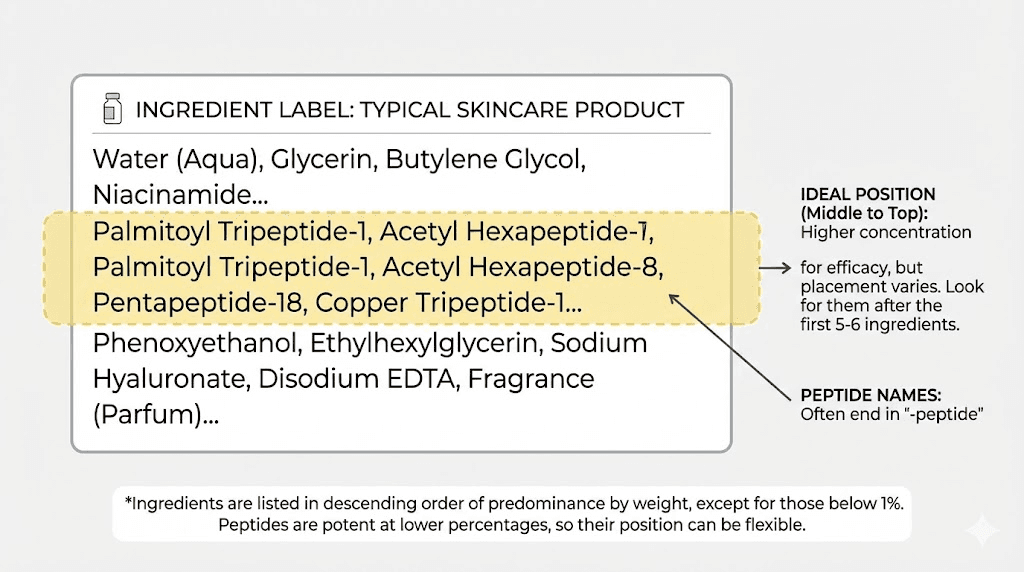
Start by looking at the actual peptides in the formula. Names to watch for include palmitoyl pentapeptide-4, palmitoyl tripeptide-1, palmitoyl tetrapeptide-7, and copper peptide (GHK-Cu). These peptides have the strongest research backing their efficacy claims.
Matrixyl Synthe 6 is a newer variant worth considering.
This peptide complex derives from sequences found naturally in collagen and laminins. Research suggests it strengthens skin while reducing the appearance of fine lines and wrinkles through multiple mechanisms. The synthe 6 portion refers to its ability to stimulate synthesis of six key components of the skin matrix.
Argireline, also known as acetyl hexapeptide-3, targets expression lines specifically. By inhibiting neurotransmitter release, it relaxes the tiny facial muscles that create crow is feet and forehead lines. The effect resembles a very mild, topical version of botulinum toxin, though without the complete muscle paralysis that injections produce.
Beyond peptides, look for supportive ingredients that enhance their effectiveness.
Hyaluronic acid works synergistically with peptides by drawing moisture into the skin. This hydration creates an optimal environment for peptide activity while providing immediate plumping effects that complement the long-term structural improvements peptides deliver. The hyaluronic acid and peptide combination has become a standard approach in well-formulated serums.
Ceramides support the skin barrier, ensuring that peptides can penetrate effectively and that the skin retains moisture properly. Niacinamide offers anti-inflammatory benefits while improving skin texture and reducing pore appearance. Antioxidants like vitamin E protect peptides from oxidation and shield skin from environmental damage that accelerates collagen breakdown.
Ingredients to avoid in combination
Some ingredient combinations work against each other. Understanding these conflicts helps you build an effective routine that maximizes results rather than wasting money on products that cancel each other out.
Copper peptides and pure ascorbic acid should not be used together.
Vitamin C in its L-ascorbic acid form can interfere with copper peptide function, potentially reducing the effectiveness of both ingredients. This does not mean you cannot use both in your routine. It means you should separate them, using vitamin C in the morning and copper peptides in the evening. The vitamin C and peptides guide explains how to incorporate both without conflict.
Strong acids can destabilize peptides.
Alpha hydroxy acids and beta hydroxy acids at high concentrations may break down peptide bonds before they can reach your skin cells. If you use exfoliating acids, apply them at a different time of day than your peptide serum, or wait at least 30 minutes between products to allow each to absorb fully.
Retinoids present a more complex situation.
Some experts recommend separating retinol and peptides into morning and evening applications. Others suggest that the combination is fine as long as neither product causes irritation. The concern is less about direct interaction and more about not overloading the skin with too many active ingredients simultaneously. Following the peptides and retinol guidelines helps you use both effectively.
Understanding concentration and formulation quality
Ingredient lists tell you what is in a product but not how much. This matters enormously for peptide serums because efficacy depends on having sufficient concentrations of active ingredients.
Most research on peptides uses specific concentrations.
Studies on palmitoyl pentapeptide-4 typically use concentrations around 0.005 percent, which may sound tiny but represents the amount shown to produce measurable effects. Lower concentrations might not achieve the same results. Higher concentrations do not necessarily work better and may increase the risk of irritation without proportional benefit.
Position on the ingredient list offers clues about concentration.
Ingredients appear in descending order by weight. If a peptide appears near the end of a long ingredient list, behind multiple fragrance compounds and preservatives, it is likely present in only trace amounts. Meaningful peptide concentrations should place the ingredient somewhere in the middle of the list or higher.
Quality formulation extends beyond just concentration.
pH matters because peptides can degrade outside their optimal pH range. Packaging matters because peptides can break down when exposed to air and light. Look for serums in airless pumps or opaque dropper bottles rather than open jars that expose the product to contamination with each use. The peptide storage principles apply equally to your products at home.
How to use collagen peptides serum effectively
Having the right serum is only half the equation. How you use it determines whether you see results or waste your investment. The common peptide mistakes that beginners make often relate to application technique and routine structure rather than product selection.
Building your skincare routine around peptides
Order of application matters in skincare. The general rule is to apply products from thinnest to thickest consistency, allowing each layer to absorb before adding the next. This principle guides where your peptide serum fits in your routine.
Morning routine should begin with cleansing.
Use a gentle cleanser that removes overnight buildup without stripping your skin. Harsh cleansers can compromise the skin barrier, which reduces peptide penetration and overall skin health. After patting your face dry, apply any water-based treatments first, such as toners or hydrating essences.
Your peptide serum comes next.
Apply it to slightly damp skin, which enhances absorption. Use enough product to cover your entire face and neck, typically three to five drops from a dropper or one to two pumps from an airless dispenser. Gently press the serum into your skin rather than rubbing, which can create friction and waste product.
Allow the serum to absorb for a minute or two before proceeding.
Follow with a moisturizer to seal in the peptides and provide additional hydration. If you are using peptides in the morning, finish with a broad-spectrum sunscreen of SPF 30 or higher. Peptides do not make your skin sun-sensitive like retinoids do, but protecting your skin from UV damage prevents the collagen breakdown that peptides are working to counteract.
Evening routines follow a similar structure with some modifications.
Double cleansing, using an oil-based cleanser followed by a water-based one, ensures complete removal of sunscreen, makeup, and the day is environmental debris. Your peptide serum follows any treatments like toners, then you finish with a richer night cream. Some people prefer to save their peptide serum exclusively for evening use since the skin is repair processes are most active during sleep.
The copper peptides skincare routine offers specific guidance for those using GHK-Cu products, which have some unique considerations regarding combination with other actives.
Frequency and duration for results
Consistency determines outcomes with peptide serums. Unlike some treatments that work after a single application, peptides require sustained use to produce visible changes. Think of it like exercise for your skin. You would not expect to develop muscles from one gym session. Similarly, you cannot expect firmer skin from sporadic peptide use.
Most people should apply their peptide serum twice daily.
Morning and evening applications provide continuous signaling to fibroblasts throughout the day and night. Some formulations are designed for once-daily use, particularly those with higher concentrations of active ingredients. Follow the instructions on your specific product, but understand that more frequent application generally produces faster results.
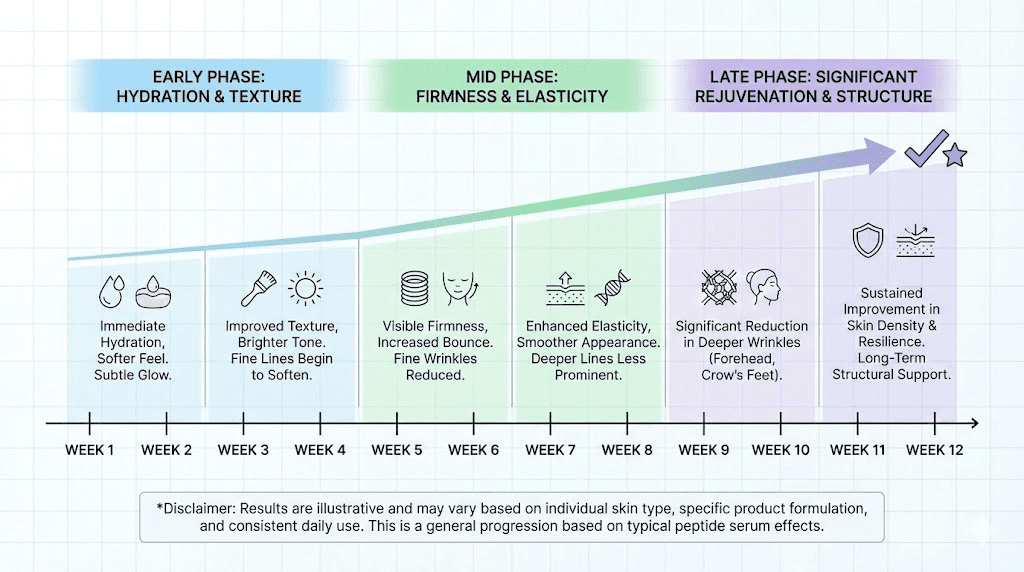
Visible improvements typically begin around week four.
Clinical studies show statistically significant changes in skin texture, smoothness, and wrinkle depth after just four weeks of consistent use. However, more dramatic improvements, particularly in skin firmness and elasticity, require eight to twelve weeks. Understanding how long peptides take to work helps set realistic expectations.
Long-term use produces cumulative benefits.
Peptides do not stop working once you see initial results. Continued use maintains and enhances improvements over time. Some studies following participants for six months showed continued improvement throughout the study period. This is not a product you use for a few weeks and then abandon once you like what you see in the mirror.
Adjusting for different skin types
Peptide serums are generally well-tolerated across skin types, but some modifications optimize results for specific concerns.
Oily and acne-prone skin benefits from lightweight, water-based peptide formulations.
Avoid serums with heavy oils or comedogenic ingredients that might clog pores. Look for formulas labeled non-comedogenic or oil-free. The peptides themselves should not cause breakouts, but carrier ingredients might. If you notice increased congestion after starting a peptide serum, switch to a different formulation rather than abandoning peptides altogether. The collagen peptides and acne article addresses concerns about whether these ingredients might worsen breakouts.
Dry skin may need additional hydration support.
Layer a hyaluronic acid serum under or mix it with your peptide serum for enhanced moisture. Choose peptide formulas that include ceramides or fatty acids to support barrier function. Follow with a richer moisturizer than you might otherwise use, and consider incorporating facial oils at night for additional nourishment.
Sensitive skin requires careful introduction.
Start by using your peptide serum every other day rather than twice daily. Watch for any signs of irritation such as redness, itching, or stinging. Most well-formulated peptide serums should not cause problems, but fragrance-free versions minimize the risk of reactions. If irritation occurs, try a different product with a simpler formulation before concluding that your skin cannot tolerate peptides.
Mature skin often benefits from higher concentrations or multi-peptide formulations.
As skin ages, fibroblasts become less responsive to signaling, requiring stronger or more persistent stimulation. Look for serums that combine multiple peptide types, addressing collagen production, elastin synthesis, and protection of existing structural proteins simultaneously. The peptides for women over 40 guide addresses the specific needs of more mature skin.
Popular collagen peptides serum brands and products
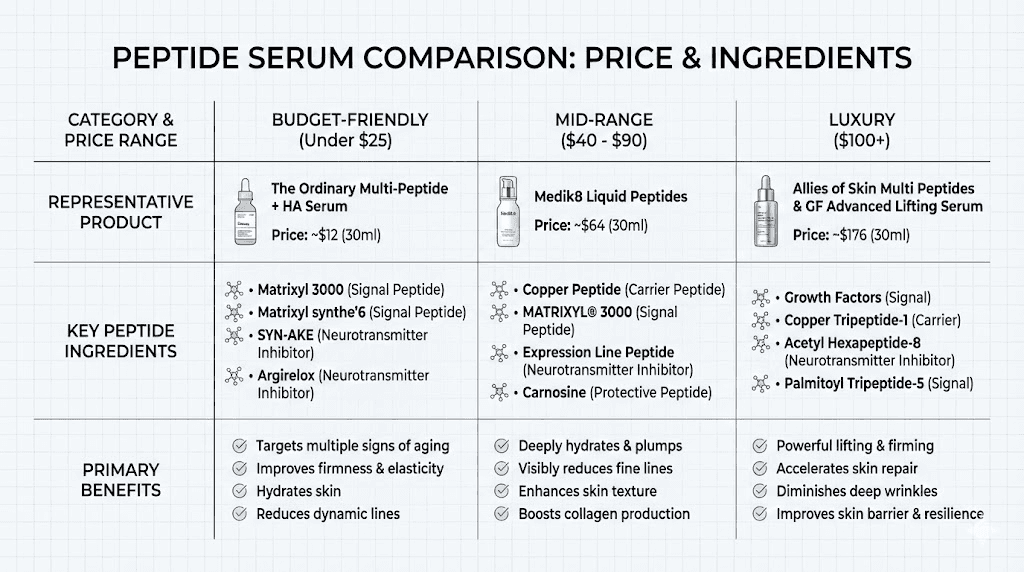
The market offers options at every price point, from drugstore finds to luxury department store exclusives. Price does not always correlate with effectiveness. Some affordable serums contain the same researched peptides as products costing ten times more. SeekPeptides helps members evaluate products based on formulation quality rather than marketing claims or brand prestige.
High-end options and their key features
Luxury peptide serums often combine multiple peptide technologies with advanced delivery systems and premium supporting ingredients. The higher price typically reflects manufacturing costs, research investment, and elegant formulations rather than necessarily superior results.
NIOD Copper Amino Isolate Serum represents one of the more science-forward luxury options. This serum features GHK-Cu at a one percent concentration, significantly higher than most competitors. The formulation uses a specialized delivery system designed to enhance copper peptide stability and penetration. Users report visible improvements in skin firmness and texture within the first few weeks. The GHK-Cu dosage in this product exceeds what many other brands offer.
NassifMD Pro Peptide Collagen Serum combines multiple peptide technologies with hyaluronic acid for comprehensive anti-aging support. The formulation includes palmitoyl tetrapeptide-7 and palmitoyl tripeptide-1, both researched signal peptides that work together synergistically. Clinical testing by the brand showed improvements in skin elasticity and hydration.
Le Mieux Collagen Peptide Serum focuses on marine-derived collagen peptides along with botanical extracts that support skin health. The formula includes Japanese knotweed, a source of resveratrol that provides antioxidant protection. This approach combines the stimulating effects of peptides with protective ingredients that prevent ongoing collagen degradation.
Mid-range options with proven ingredients
The mid-range segment often offers the best value, providing effective concentrations of researched peptides without the markup associated with luxury branding.
Maelove Peptide Squad contains copper peptides along with a blend of other collagen-boosting ingredients. The formulation emphasizes multi-peptide technology to address multiple signs of aging simultaneously. Users appreciate the lightweight texture and fast absorption.
DERMA E Advanced Peptides and Collagen Serum combines palmitoyl tripeptide-5 with plant-derived ceramides and vitamin B5. This formulation works on both stimulating collagen production and supporting barrier function. The price point makes twice-daily application affordable for most budgets.
The Inkey List Collagen Booster uses Matrixyl 3000, a combination of palmitoyl tripeptide-1 and palmitoyl tetrapeptide-7 known for synergistic effects. At an extremely affordable price point, this serum provides research-backed peptides without requiring a significant investment. The Inkey List serum guide provides detailed information about this popular option.
Drugstore and budget-friendly alternatives
Budget options have improved dramatically in recent years. Some now contain the same peptides as luxury products at a fraction of the cost.
The Ordinary Buffet combines multiple peptide technologies including Matrixyl variants, plus amino acid complexes and hyaluronic acid. At under fifteen dollars, it represents remarkable value. The formulation lacks some of the elegant textures and additional ingredients of luxury options but delivers on the core promise of peptide signaling. The peptide costs comparison shows how budget options can deliver similar active ingredients at dramatically lower prices.
CeraVe Skin Renewing Retinol Serum technically focuses on retinol but includes ceramide-peptide technology that supports barrier function. For those looking to combine retinoid and peptide benefits in a single affordable product, this represents a practical option. Just be aware that the peptide concentration is secondary to the retinol in this formulation.
Olay Regenerist Micro-Sculpting Serum contains a niacinamide and peptide complex that targets multiple signs of aging. The brand is extensive research backing gives confidence in the formulation, even at drugstore prices. Many dermatologists recommend this as an entry point for those new to peptide skincare.
When evaluating budget options, apply the same criteria as for expensive products. Check the ingredient list for researched peptide names. Look at where peptides appear in the ingredient order. Consider packaging that protects the formula from degradation. A cheap serum with well-formulated, properly protected peptides will outperform an expensive one with trace amounts in poor packaging.
Collagen peptides serum versus oral collagen supplements
Many people wonder whether they should use topical peptides, take oral collagen supplements, or do both. Each approach works through different mechanisms, and understanding these differences helps you create an optimal strategy for your skin health goals. The question of collagen peptides as protein supplementation adds another dimension to this consideration.
How topical peptides work differently
Topical peptide serums deliver active ingredients directly to the skin where you want to see results. The peptides penetrate into the epidermis and upper dermis, where they signal fibroblasts to increase collagen production. This targeted delivery means that the peptides concentrate in the skin rather than being distributed throughout the entire body.
The action is local and specific.
When you apply a peptide serum to your face, the peptides work primarily on your facial skin. They do not significantly impact collagen production elsewhere in your body. This specificity is actually an advantage for cosmetic purposes since you direct the benefits exactly where you want them.
Results from topical peptides tend to become visible relatively quickly.
Studies show measurable improvements in as little as four weeks. The direct delivery to target cells means that signaling begins immediately upon absorption. There is no need to wait for digestion, bloodstream transport, or preferential distribution to the skin.
However, topical peptides face the limitation of skin penetration.
No matter how advanced the delivery system, only a portion of applied peptides actually reach the fibroblasts in the dermis. The stratum corneum, that protective outer layer, prevents some percentage of any topically applied substance from penetrating deeper. This is a trade-off of the topical approach.
How oral collagen supplements work
Oral collagen supplements take the opposite approach. You ingest hydrolyzed collagen peptides, which your digestive system breaks down into amino acids. These amino acids enter your bloodstream and distribute throughout your body. Your cells then use these amino acids as building blocks for producing new collagen.
The effects are systemic rather than localized.
Oral collagen can potentially benefit skin throughout your body, not just your face. It may also support collagen production in joints, bones, hair, and nails. Some people take oral collagen primarily for joint health and consider skin benefits a secondary effect. The bone broth versus collagen peptides debate touches on different ways to obtain these building blocks orally.
Research on oral collagen has grown substantially.
A meta-analysis of 19 studies found that participants taking oral collagen supplements showed improvements in skin firmness, suppleness, and moisture levels with reduced wrinkles. Effects typically require longer to become apparent than topical products, with most studies running for twelve weeks or longer.
The challenge with oral supplements is ensuring the amino acids actually reach your skin.
Your body distributes ingested nutrients based on prioritization. If other tissues have more urgent needs, they may receive the amino acids before your skin does. Athletes with significant joint stress, for example, might find that collagen supplementation benefits their joints more noticeably than their skin.
Combining topical and oral approaches
Many experts now recommend using both topical peptides and oral collagen for maximum results. The approaches work through complementary mechanisms that reinforce each other.
Topical peptides stimulate your skin is collagen production directly.
They send signals that tell fibroblasts to ramp up their activity. This works regardless of whether you have abundant raw materials available or not. The peptides themselves are messengers, not building blocks.
Oral collagen provides the raw materials those fibroblasts need.
Even with strong signaling from topical peptides, fibroblasts cannot produce collagen without sufficient amino acids. Oral supplementation ensures that the building blocks are available when the production machinery is activated.
The combination creates a synergistic effect.
You tell your skin to make more collagen through topical signals while simultaneously ensuring it has everything it needs to fulfill that request through oral nutrition. Neither approach alone maximizes results as effectively as both together.
For those taking oral collagen, common recommendations suggest 2.5 to 15 grams daily, depending on the specific product and your goals. Hydrolyzed collagen peptides absorb more readily than intact collagen. Taking the supplement on an empty stomach may enhance absorption. Vitamin C supports collagen synthesis, so ensuring adequate vitamin C intake optimizes the benefits of supplementation.
The collagen peptides for cellulite article discusses how combining approaches can address structural skin concerns beyond just facial aging.
Side effects and safety considerations
Peptide serums are generally among the safest categories of anti-aging skincare. They work by enhancing natural biological processes rather than introducing foreign substances or forcing abnormal cellular behavior. However, like any active skincare ingredient, they can occasionally cause unwanted effects. Understanding potential issues helps you use peptides safely and respond appropriately if problems arise. The peptide safety and risks resource provides comprehensive information on this topic.
Common reactions and how to handle them
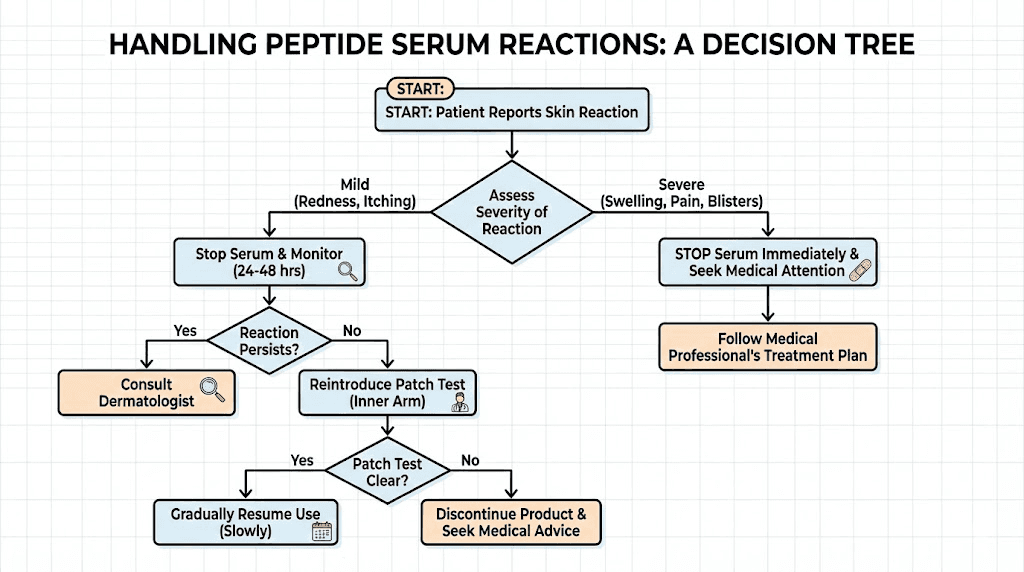
Mild irritation affects a small percentage of peptide serum users. Symptoms may include temporary redness, slight itching, or a tingling sensation during or after application. These reactions usually indicate sensitivity to a formulation component rather than a problem with the peptides themselves.
Fragrance is often the culprit.
Many peptide serums include fragrance to improve the user experience. Even natural fragrance ingredients can irritate sensitive skin. If you experience mild irritation, try switching to a fragrance-free formulation. You may find that peptides work perfectly fine for your skin when presented in a simpler formula.
Concentration matters for tolerance.
Higher concentrations of active ingredients increase both potential benefits and potential irritation risk. If you react to a high-concentration peptide serum, try a formula with lower peptide levels. You can always increase concentration later as your skin adapts.
Temporary breakouts occasionally occur when starting peptides.
This purging phenomenon is more common with ingredients like retinoids, but some people experience it with peptides as well. The breakouts typically resolve within two to four weeks as your skin adjusts. If breakouts persist beyond this period, the formulation may not be compatible with your skin. The copper peptides purging article addresses this specific concern for GHK-Cu users.
True allergic reactions are rare but possible.
If you experience hives, significant swelling, difficulty breathing, or other severe symptoms after applying a peptide serum, discontinue use immediately and seek medical attention. These reactions indicate an immune response that requires professional evaluation.
Ingredients that increase sensitivity
Some peptide formulations include additional active ingredients that increase the likelihood of reactions. Being aware of these ingredients helps you choose appropriate products for your skin tolerance level.
Alpha and beta hydroxy acids exfoliate the skin.
When combined with peptides, these acids can enhance penetration but also increase irritation risk. If you have sensitive skin or are new to active skincare, choose peptide serums without exfoliating acids. Add chemical exfoliation as a separate step, applied at a different time, once you establish your skin tolerates peptides well.
Retinoids significantly increase sensitivity.
Many advanced anti-aging formulas combine peptides with retinol or other vitamin A derivatives. While this combination can produce impressive results, it also carries higher irritation risk. Start with a peptide-only formula before graduating to combination products. Follow the peptides and retinol together guidelines when combining these powerful ingredients.
Essential oils and botanical extracts can trigger reactions.
Many natural-focused peptide serums include plant extracts for additional benefits or aesthetic appeal. However, natural does not mean non-irritating. Some botanical ingredients are among the most common causes of skincare reactions. If you have sensitive skin, choose minimalist formulations with fewer plant-derived ingredients.
When to consult a dermatologist
Most peptide serum users never need professional guidance. However, certain situations warrant a dermatologist consultation.
Persistent irritation that does not resolve after switching products suggests underlying skin conditions that require diagnosis. Conditions like rosacea, eczema, or contact dermatitis can mimic peptide reactions but require specific treatment approaches.
Unexpected skin changes should prompt professional evaluation.
If you notice unusual pigmentation, texture changes, or skin lesions that do not appear related to normal aging or your skincare routine, have a dermatologist examine them. While peptides are not known to cause such issues, any unexplained skin changes deserve professional attention.
Pre-existing skin conditions may require specialized guidance.
If you have active acne, rosacea, psoriasis, eczema, or other dermatological conditions, consult with your dermatologist before adding peptide serums to your routine. They can recommend specific products and usage patterns that work with rather than against your treatment plan. The copper peptides for acne scars article addresses one specific condition where peptides may actually help.
Prescription skincare interactions deserve professional oversight.
If you use prescription retinoids, hydroquinone, or other medicated topicals, ask your dermatologist about combining them with over-the-counter peptide serums. Most combinations are fine, but your dermatologist can advise on timing and layering to maximize benefits while minimizing irritation.
Advanced peptide combinations and stacking
Once you understand basic peptide use, you may want to explore more sophisticated approaches. Combining multiple peptide types or layering different products can enhance results, but requires some knowledge to do effectively. The concept parallels peptide stacking used in research peptide protocols.
Multi-peptide formulations versus single peptides
Single-peptide products focus all their firepower on one mechanism. A Matrixyl-only serum concentrates on stimulating collagen production through that specific peptide pathway. This approach makes sense when you have a very specific concern and want maximum concentration of the most relevant peptide.
Multi-peptide formulations hedge their bets.
By including several different peptides, these products target multiple pathways simultaneously. You get some collagen stimulation, some elastin support, some neurotransmitter inhibition, and some protective action all in one bottle. For general anti-aging, this comprehensive approach often produces more balanced results.
The trade-off involves concentration.
A formula budget has limits. A serum that includes five different peptides likely contains lower concentrations of each than a serum focused on just one. Whether the synergistic benefits of multiple peptides outweigh the higher concentration of a single peptide depends on your specific skin needs and goals.
Some research suggests synergistic effects between certain peptide combinations.
Matrixyl 3000, for example, combines palmitoyl tripeptide-1 and palmitoyl tetrapeptide-7 because studies showed they work better together than either works alone. The tripeptide-1 stimulates collagen synthesis while the tetrapeptide-7 reduces inflammation that can impair collagen production. Together, they create conditions that optimize new collagen formation.
Layering multiple peptide products
Rather than relying on a single multi-peptide serum, some enthusiasts layer several different peptide products to create their own customized regimen. This approach allows maximum control over which peptides you use and at what concentrations.
Order of application matters when layering.
Apply thinner, water-based serums before thicker, oil-based ones. If you are layering two water-based peptide serums, apply them in order of increasing viscosity. Allow each layer to absorb for about a minute before applying the next.
Consider separating conflicting ingredients.
If one peptide serum contains vitamin C and another contains copper peptides, use them at different times of day rather than layering them. Morning and evening routines can each feature different peptide technologies without conflict.
Watch for diminishing returns.
Your skin can only absorb so much at once. Layering five different serums might not produce five times the benefit of one well-chosen serum. At some point, you are just wasting product that sits on the surface rather than penetrating. Most people find that two to three targeted products in each routine produces optimal results. Understanding the limits of multiple peptide use helps avoid waste.
Combining peptides with other anti-aging actives
Peptides work well alongside most other anti-aging ingredients when combined thoughtfully. Building a comprehensive routine that addresses multiple aspects of skin aging produces better results than focusing on peptides alone.
Vitamin C provides antioxidant protection and supports collagen synthesis.
Using a vitamin C serum in the morning and peptides in the evening gives you both benefits without the potential interaction issues between ascorbic acid and copper peptides. Some people apply vitamin C first thing in the morning, giving it time to absorb before adding peptide products. The vitamin C and peptides pairing is particularly effective when done correctly.
Retinoids remain the gold standard for cell turnover and collagen stimulation.
Combining retinoids with peptides addresses skin aging from multiple angles. Apply retinoid products at night, when UV exposure is not a concern. Many people use peptide serums in the morning and retinoids in the evening, though some routines layer peptides before retinoids at night.
Niacinamide pairs exceptionally well with peptides.
This form of vitamin B3 improves skin barrier function, reduces inflammation, regulates oil production, and minimizes pore appearance. It does not interact negatively with peptides and can be layered in the same routine without separation. Many comprehensive anti-aging serums include both niacinamide and peptides.
Sunscreen is non-negotiable regardless of other products in your routine.
UV exposure destroys collagen faster than peptides can stimulate its production. All the peptide serums in the world cannot overcome the damage from unprotected sun exposure. Use a broad-spectrum SPF 30 or higher every morning as the final step in your routine. Combining copper peptides with protective ingredients maximizes the benefits of both approaches.
Realistic expectations and long-term results
Marketing often promises more than products can deliver. Setting realistic expectations helps you evaluate results fairly and stick with effective products long enough to see genuine improvement. The peptide transformation stories that circulate online often represent best-case scenarios rather than typical outcomes.
What peptides can and cannot do
Peptide serums can improve skin texture and smoothness. The increased collagen production creates a more even surface with smaller pores and reduced rough patches. Most users notice their skin feels softer and looks more refined within the first month of use.
They can reduce the appearance of fine lines and wrinkles.
Research consistently shows decreases in wrinkle depth and volume with peptide use. Expression lines around the eyes and mouth often respond particularly well. However, deep-set wrinkles formed over decades of muscle movement and collagen loss will not disappear completely. Expect improvement, not erasure.
Peptides can improve skin firmness and elasticity.
Clinical studies demonstrate measurable improvements in these parameters. You may notice that your skin bounces back more readily when pressed, or that areas of mild sagging appear less pronounced. Again, severe laxity requires more aggressive interventions like surgical lifting.
They can enhance skin hydration and radiance.
Many peptide formulations include hydrating ingredients that work alongside the peptides. Even beyond these additions, improved collagen structure helps skin retain moisture better. Users often report that their skin looks dewier and more luminous.
What peptides cannot do is turn back the clock entirely.
They cannot produce results comparable to injectable treatments like botulinum toxin or dermal fillers. They cannot replicate the effects of laser resurfacing or surgical procedures. They are skincare products, not medical interventions. For significant aging changes, peptides work best as part of a comprehensive approach that may include professional treatments.
Timeline for visible improvements
Understanding the timeline helps you evaluate whether a product is working rather than abandoning it prematurely.
Weeks one through two often show little visible change.
Peptides are beginning their work at the cellular level, but the results have not yet manifested on the surface. Your skin may feel slightly softer or more hydrated due to the serum is base ingredients, but significant structural changes are not yet apparent.
Weeks three through four bring the first noticeable improvements.
Clinical studies consistently identify this timeframe as when measurable changes in skin texture and fine lines become apparent. You may notice that your skin looks smoother or that certain lines appear less pronounced. These early improvements indicate the product is working.
Weeks six through eight show more substantial changes.
Improvements in skin firmness typically become noticeable during this period. The collagen your fibroblasts have been producing since you started using the serum has had time to mature and integrate into your skin is structure. Friends or family may start commenting on your skin is appearance.
Twelve weeks marks full assessment time.
Most clinical trials run for at least this duration because it takes this long to see the full potential of peptide products. By twelve weeks, you should have a clear picture of what the serum can do for your skin. Continue using products that have produced visible improvements.
Beyond twelve weeks, maintenance becomes the goal.
Once you have achieved noticeable improvement, continued use maintains those gains and may produce further gradual enhancement. Stopping peptide use will eventually allow skin to return toward its previous condition as the collagen you stimulated gradually breaks down through normal processes.
Maximizing and maintaining results
Peptide serums work best as part of a comprehensive skin health strategy. Other factors significantly influence how much benefit you derive from your products.
Sleep quality affects skin repair and collagen production.
Your body does its most intensive repair work during sleep, including collagen synthesis. Poor sleep quality or insufficient sleep duration impairs these processes. Aim for seven to nine hours of quality sleep nightly to optimize the effects of your peptide routine.
Nutrition provides the raw materials for collagen.
Even with topical peptide stimulation, your body needs amino acids, vitamin C, zinc, and other nutrients to actually build collagen proteins. A diet rich in protein, colorful vegetables, and minimal processed foods supports your skin is synthetic machinery. The natural peptides for skin article discusses food sources that support skin health.
Hydration matters at the cellular level.
Dehydrated skin is compromised skin that cannot function optimally. Drink adequate water throughout the day and use hydrating skincare products alongside your peptides. Hyaluronic acid serums make excellent companions to peptide products.
UV protection cannot be overemphasized.
Sun exposure remains the primary cause of premature skin aging. It directly damages collagen and accelerates the enzymes that break it down. No peptide serum can overcome the effects of unprotected sun exposure. Daily broad-spectrum sunscreen is essential for anyone serious about anti-aging skincare.
Stress management impacts skin health through cortisol.
Chronic stress elevates cortisol levels, which impairs collagen production and accelerates breakdown. Finding effective stress management techniques supports your skin is health alongside your peptide routine. This might include exercise, meditation, adequate leisure time, or professional support as needed.
Frequently asked questions
Can I use collagen peptide serum with retinol?
Yes, peptides and retinol can be used together effectively. Many people apply peptides with retinol in the same routine. If layering both at night, apply the peptide serum first, allow it to absorb, then follow with your retinol product. Alternatively, use peptides in the morning and retinol at night to avoid any potential interaction while still getting benefits from both.
How long do collagen peptide serums last before expiring?
Most peptide serums remain effective for six to twelve months after opening, depending on formulation and packaging. Products in airless pumps generally stay fresher longer than those in open dropper bottles. Check for changes in color, smell, or texture that might indicate degradation. Understanding peptide expiration helps you get the most from your products.
Should I refrigerate my collagen peptide serum?
Most peptide serums do not require refrigeration but may benefit from it, especially during hot weather or if your bathroom gets warm. Copper peptide products in particular may stay more stable when kept cool. The peptide storage guide provides detailed recommendations. At minimum, store your serum away from direct sunlight and heat sources.
Are collagen peptide serums safe during pregnancy?
Most peptide serums are considered safe during pregnancy since they work topically and do not penetrate to systemic levels. However, always consult with your healthcare provider before using any new skincare products during pregnancy. Some formulations contain additional ingredients that may require evaluation. The collagen peptides during pregnancy article addresses this topic in detail.
Can collagen peptide serums help with acne scars?
Peptides that stimulate collagen production may help improve the appearance of atrophic acne scars over time. Copper peptides in particular have shown promise for scar improvement due to their wound-healing properties. Results for scarring take longer than general anti-aging benefits, often requiring six months or more of consistent use. The copper peptides for acne scars guide discusses specific protocols.
What is the difference between collagen peptides serum and collagen cream?
Serums typically have higher concentrations of active ingredients in a lightweight, fast-absorbing base designed for maximum penetration. Creams have lower concentrations of actives in a thicker base that provides more occlusive hydration but may not deliver peptides as effectively to deeper skin layers. For peptide delivery specifically, serums generally outperform creams. The creams with copper peptides article compares different product formats.
Do collagen peptide serums work on all skin types?
Peptides are generally well-tolerated across all skin types, including sensitive, oily, dry, and combination skin. However, formulation matters. Oily skin types should look for lightweight, water-based serums without heavy oils. Dry skin types may prefer richer formulations with added moisturizing ingredients. The peptides for skin guide addresses considerations for different skin types.
External resources
National Institutes of Health - Collagen Supplements for Aging and Wrinkles
Harvard School of Public Health - Collagen
For those serious about understanding peptide skincare at the deepest level, SeekPeptides provides comprehensive guides, ingredient analysis tools, and expert protocols that help members cut through marketing hype and build routines based on real science. Understanding what peptides are actually used for across various applications gives you the foundation to make informed decisions about your skincare.
In case I do not see you, good afternoon, good evening, and good night. May your peptides stay potent, your collagen stay abundant, and your skin stay radiant.