Jan 22, 2026
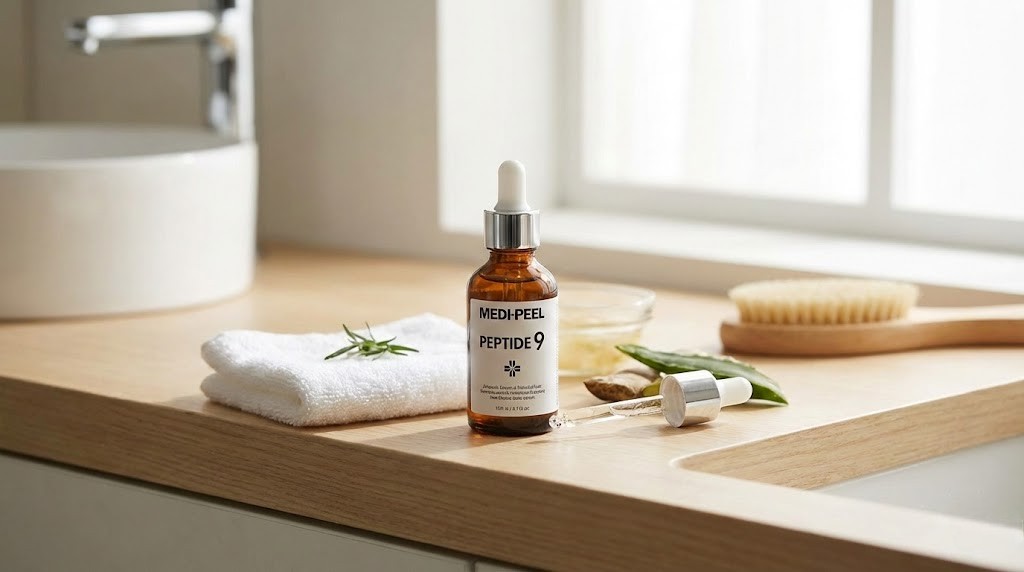
Nine peptides in one bottle. That is the promise behind Medi-Peel Peptide 9, one of the most talked-about Korean skincare lines in the peptide space. But here is the question nobody seems to answer clearly: do these nine peptides actually work together, or is this just marketing dressed up as science?
The answer requires understanding what each peptide does, how they interact, and whether the formulation delivers them effectively to your skin. Most reviews focus on texture and immediate feel. They miss the mechanism entirely. That is a problem because peptides are not moisturizers. They are signaling molecules. Their value depends entirely on concentration, stability, and penetration.
This guide breaks down everything about Medi-Peel Peptide 9. You will learn which peptides are included and what research supports them. You will understand the different products in the line. You will discover how to incorporate them into a peptide skincare routine. And you will walk away knowing whether this Korean skincare line deserves a place in your regimen, or whether better alternatives exist for your specific goals.
SeekPeptides has analyzed thousands of peptide formulations across topical skincare and research applications. The patterns we see in effective products versus marketing-heavy disappointments are remarkably consistent. Medi-Peel Peptide 9 has some genuine strengths, but also limitations that most reviews gloss over entirely.
What is Medi-Peel and why does the brand matter
Medi-Peel is a Korean skincare brand that combines clinical treatment inspiration with accessible consumer products. The name itself, a blend of medical and peel, signals their positioning: professional-grade ingredients in at-home formulations. This matters because Korean beauty brands often lead in peptide innovation, developing multi-peptide complexes years before Western brands adopt similar approaches.
The brand focuses heavily on alpha peptides and collagen-stimulating ingredients. Their product development team includes researchers who previously worked in aesthetic medicine. That background shows in their formulation choices. They do not simply add peptides for label appeal. They select specific peptides with complementary mechanisms.
Korean skincare philosophy differs fundamentally from Western approaches. Where American brands often load single products with maximum concentrations of star ingredients, Korean formulations take a layering approach. Multiple products work synergistically. Each step serves a specific purpose. This philosophy shapes the Peptide 9 line, which includes essences, ampoules, creams, and serums designed to work together.
The K-beauty market demands results. Competition is fierce. Consumers are educated and vocal. Products that do not perform get called out quickly on forums and social media. This pressure creates a quality floor that benefits consumers. Brands cannot survive on marketing alone.
Medi-Peel has built a reputation for delivering on peptide promises. Their Bor-Tox line gained cult status for visible firming effects. The Peptide 9 collection extends that legacy into comprehensive anti-aging territory. But reputation alone does not validate every product. Each formulation deserves scrutiny.
The nine peptides explained: what each one does
The Peptide 9 name is not marketing exaggeration. The line actually contains nine distinct peptide compounds. Understanding each one reveals whether this is a thoughtfully designed formulation or a peptide salad thrown together for label appeal.
Acetyl hexapeptide-8 (Argireline)
This is the star of the lineup. Acetyl hexapeptide-8, commercially known as Argireline, works by inhibiting the release of neurotransmitters that cause muscle contraction. Think of it as topical Botox, though that comparison oversimplifies the mechanism. Where botulinum toxin completely paralyzes muscles, Argireline modestly reduces their movement.
Clinical studies show wrinkle depth reduction of 17 to 30 percent after consistent use. One randomized, placebo-controlled study in Chinese subjects demonstrated significant anti-wrinkle effects. The peptide works best on expression lines, the crow's feet around your eyes, the forehead creases that deepen when you concentrate, the lines between your brows from squinting at screens.
The limitation is penetration. Studies show less than 0.2 percent of applied peptide reaches below the stratum corneum after 24 hours. This is why concentration matters tremendously. Products need enough Argireline that even the small percentage reaching target tissue creates measurable effects. The 10 percent solutions used in research far exceed what most consumer products contain.
Medi-Peel does not disclose exact concentrations. No Korean beauty brand does. But the positioning of Argireline in their ingredient lists suggests meaningful amounts rather than token inclusion.
Copper tripeptide-1 (GHK-Cu)
This is perhaps the most researched peptide in skincare. GHK-Cu is a naturally occurring copper complex that your body produces. Blood levels peak around age 20 at 200 nanograms per milliliter, then decline to 80 nanograms by age 60. This decline correlates with reduced regenerative capacity.
The research on copper peptides for wrinkles is extensive. Placebo-controlled studies demonstrate tightening of loose skin, improved elasticity, reduced fine lines and deep wrinkles, improved skin clarity, and reduced photodamage. One study found GHK-Cu improved collagen production in 70 percent of treated women, outperforming both vitamin C and retinoic acid.
What makes GHK-Cu special is its gene modulation. It upregulates over 30 genes involved in wound repair. It stimulates synthesis of collagen, elastin, proteoglycans, and glycosaminoglycans. It has antioxidant effects through superoxide dismutase stimulation. It even shows promise for hair growth by supporting follicle health.
The safety profile is excellent. No adverse effects have appeared in decades of cosmetic use and human wound healing studies. This makes it ideal for sensitive skin applications where copper peptide side effects must be minimized.
Palmitoyl pentapeptide-4 (Matrixyl)
Matrixyl is the peptide that launched the modern cosmeceutical peptide category. Studies show it stimulates production of collagen types I, III, and IV, along with elastin, fibronectin, and glucosaminoglycans. A double-blind study found 18 percent reduction in fold depth, 37 percent reduction in fold thickness, and 21 percent improvement in skin firmness after just 28 days.
The mechanism involves matrikine signaling. When collagen breaks down, fragments called matrikines signal fibroblasts to produce more. Palmitoyl pentapeptide-4 mimics these fragments, tricking your skin into ramping up production without requiring actual collagen breakdown. It is comparable to retinoic acid in effectiveness but without the irritation that limits retinoid use for many people.
A 12-week clinical study with 93 female subjects showed significant wrinkle and fine line improvement versus placebo. The results were quantifiable through both technical analysis and expert grading. Subject self-assessments matched objective findings.
Palmitoyl tripeptide-1 and palmitoyl tetrapeptide-7
These two peptides work synergistically, which is why you often see them combined in formulations. Palmitoyl tripeptide-1 stimulates collagen synthesis through growth factor activation. Palmitoyl tetrapeptide-7 reduces inflammation that accelerates aging. Together, they address both production and preservation of skin structure.
The combination is marketed under various trade names. Research supports their synergistic benefits for skin density and thickness. They complement the more dramatic effects of Argireline and GHK-Cu by maintaining the collagen matrix those peptides help build.
Tripeptide-1
This is the base peptide from which GHK-Cu derives. Without the copper, it still supports wound healing and tissue repair. Some research suggests it helps maintain elasticity independent of its copper-bound form. Its inclusion provides redundancy in the formulation, ensuring collagen support even if copper delivery varies.
Nonapeptide-1
This peptide targets hyperpigmentation. It inhibits alpha-MSH, a hormone that triggers melanin production. By reducing melanin synthesis, it helps fade dark spots and prevent new ones from forming. This makes the Peptide 9 line suitable for those addressing both aging and uneven skin tone simultaneously.
The brightening effect complements anti-aging. Age spots often make skin look older than wrinkles do. Addressing both concerns in one product line reduces routine complexity.
Hexapeptide-9
Less research exists on this peptide than the others. It appears to support skin barrier function and moisture retention. Its inclusion rounds out the formulation by addressing hydration, which potentiates the effects of the other peptides. Dehydrated skin cannot properly utilize signaling peptides.
Acetyl octapeptide-3
This extended version of Argireline contains eight amino acids instead of six. Some research suggests it may penetrate more effectively or provide more sustained neurotransmitter inhibition. Its inclusion alongside acetyl hexapeptide-8 creates redundancy in the muscle-relaxing mechanism.
How the peptides work together
The genius of multi-peptide formulations lies in addressing aging from multiple angles simultaneously. Aging is not one process but many. Collagen degradation happens differently than muscle-driven wrinkle formation. Pigmentation issues stem from separate pathways than moisture loss. Single-peptide products address single problems.
The Peptide 9 formulation creates three overlapping mechanisms. First, neurotransmitter inhibition from acetyl hexapeptide-8 and acetyl octapeptide-3 reduces expression line formation. Second, collagen and elastin stimulation from GHK-Cu, palmitoyl pentapeptide-4, and the palmitoyl tripeptide complex rebuilds dermal structure. Third, nonapeptide-1 addresses pigmentation while hexapeptide-9 supports hydration.
This multi-mechanism approach mirrors what peptide stacking achieves in research applications. Rather than maximizing one pathway, you optimize several. The combined effect often exceeds what any single peptide could achieve at maximum concentration.
Consider the relationship between GHK-Cu and palmitoyl pentapeptide-4. Both stimulate collagen, but through different pathways. GHK-Cu works through gene expression changes. Palmitoyl pentapeptide-4 works through matrikine signaling. Using both creates redundancy and amplification. If one pathway is limited by individual biology, the other compensates.
The performance peptides in this formulation also complement each other temporally. Some work immediately on visible texture. Others require weeks to months as collagen rebuilds. This creates both short-term satisfaction and long-term results.
The Medi-Peel Peptide 9 product lineup
Understanding the individual products helps you choose correctly and layer effectively. Each serves a distinct purpose despite sharing the core peptide complex.
Peptide 9 Volume All-in-One Essence
This is the flagship product and the entry point for most users. The essence has a unique bubbling formula that creates oxygen on contact with skin. This is not gimmick. Oxygenation improves circulation and may enhance ingredient absorption. The bubbling action also provides light physical stimulation that some studies associate with improved blood flow to treated areas.
Application is straightforward. After cleansing and toning, pump three to four times onto your hand. Apply to face and wait for bubbles to appear. Massage gently as they form, then pat until absorbed. The texture is lightweight enough for daytime use under makeup or sunscreen.
The essence contains all nine peptides plus hyaluronic acid and niacinamide. Niacinamide at effective concentrations provides additional anti-aging benefits: wrinkle smoothing, brown spot fading, ceramide synthesis for barrier support. The combination with collagen peptides creates comprehensive anti-aging coverage.
This product suits all skin types. The formula is free of harsh alcohols, common allergens, parabens, and sulfates. Those with sensitive skin appreciate this clean formulation. Those with oily skin find the lightweight texture non-congesting.
Peptide 9 Volume Bio Tox Ampoule
The ampoule is a concentrated treatment step. Korean skincare distinguishes between essences (hydrating, prep-stage products) and ampoules (concentrated treatment boosters). The Bio Tox Ampoule delivers higher peptide concentrations in a formula designed for targeted application.
Volufiline is the distinguishing ingredient here. This compound, derived from Anemarrhena asphodeloides root, stimulates adipocyte differentiation. In plain language, it helps plump areas that have lost volume with age. The combination with peptides addresses both skin quality and facial volume.
The texture absorbs quickly without greasiness. Use after essence but before cream. Apply to areas of concern: nasolabial folds, under-eye hollows, cheeks that have flattened with age. The copper peptide serum properties complement this volumizing action.
Peptide 9 Volume Tox Cream
The cream serves as the final step, sealing in previous layers while delivering its own peptide payload. The texture is rich but not heavy. It contains additional hydrolyzed collagen and elastin to complement the peptide-driven synthesis of these proteins.
Think of the relationship between ingredients here. The peptides signal your fibroblasts to produce more collagen. The hydrolyzed collagen provides building blocks. The result is faster, more complete structural improvement than either approach alone.
The cream also includes adenosine, a compound clinically shown to improve deep wrinkles in dynamic facial areas. This adds another anti-aging mechanism to the already comprehensive formulation. Use morning and evening as the final step before sunscreen.
Peptide 9 Volume Essence White Cica
This variant combines the peptide complex with centella asiatica, the soothing powerhouse that has revolutionized sensitive skincare. Cica calms inflammation, supports barrier repair, and accelerates healing. The combination addresses aging while actively calming reactive skin.
Those with rosacea tendencies or easily irritated skin benefit most from this formulation. The peptides provide anti-aging benefits while the cica prevents the redness and sensitivity that sometimes accompanies active skincare ingredients.
The white in the name refers to brightening properties. This version emphasizes the nonapeptide-1 and adds additional brightening agents for those whose primary concern is uneven tone alongside aging.
Peptide 9 Volume And Tension Tox Cream Pro
The Pro version upgrades the cream formula with additional tension-improving ingredients. The result is more pronounced firming and lifting. This suits mature skin that has lost significant elasticity and needs more aggressive intervention.
The five types of hyaluronic acid in this formula provide multi-depth hydration. Different molecular weights penetrate to different levels of the skin. Surface hydration improves immediately. Deeper penetration provides sustained moisture that supports peptide activity over time.
How to use Medi-Peel Peptide 9 effectively
Peptides require consistent use to show results. Visible improvements typically appear after four to twelve weeks, depending on skin condition, age, and product selection. Patience is essential. These are not instant fixes but genuine structural improvements that take time to manifest.
Basic routine with the essence
If starting with just one product, the essence makes the most sense. Here is how to incorporate it:
Cleanse thoroughly. Proper application starts with clean skin. Peptides cannot penetrate through makeup residue, sunscreen, or accumulated sebum. Double cleansing, using an oil cleanser followed by a water-based cleanser, ensures nothing blocks absorption.
Apply toner to damp skin. This preps the skin to receive the essence. Korean toners differ from Western astringents. They hydrate rather than strip. Choose one with ingredients that complement peptides, avoiding harsh acids that could destabilize the peptide formula.
Pump the essence onto your palm. Three to four pumps covers the full face and neck. The airless pump system may require ten to thirty pumps initially to prime. This is normal for this packaging type.
Apply to face and wait for bubbles. The oxygenating formula takes a moment to activate. Once bubbles appear, massage gently in circular motions. The physical stimulation enhances circulation without requiring additional tools or techniques.
Pat until absorbed. Do not rinse. The essence needs to remain on skin to work. Follow with any additional serums, ampoule, and cream. Finish with sunscreen for morning routines.
Complete routine with multiple products
Using the full line maximizes peptide delivery. Here is the optimal order:
After cleansing and toning, apply the Volume All-in-One Essence. Wait for absorption, about one to two minutes. Next, apply the Bio Tox Ampoule to areas needing volume restoration. Then apply any other treatment serums, such as vitamin C in the morning or retinol at night. Finish with the Volume Tox Cream to seal everything in.
This layering approach follows the Korean skincare principle of thinnest to thickest. Each layer builds on the previous one. The cream at the end creates an occlusive seal that enhances penetration of water-soluble peptides from earlier steps.
Combining with other actives
Peptides play well with most other skincare ingredients. Peptides and retinol work synergistically. The peptides support collagen production while retinol accelerates cell turnover. Together, they address both structural aging and surface texture.
Niacinamide, already present in the Peptide 9 formulations, enhances peptide effects. Additional niacinamide serums are unnecessary but will not interfere if you prefer a separate step. Hyaluronic acid similarly complements peptides by maintaining the hydration necessary for optimal peptide function.
Copper peptides and vitamin C require caution. Some forms of vitamin C can oxidize copper peptides, reducing their effectiveness. If using both, apply vitamin C in the morning and copper-containing products at night. The Peptide 9 line works well in evening routines where this conflict is avoided.
Strong acids like glycolic and salicylic can destabilize peptides. If using chemical exfoliants, apply them on alternate nights from your peptide treatments. This prevents degradation while still benefiting from exfoliation.
Timeline for results
Week one through two: Improved hydration and skin texture. The niacinamide and hyaluronic acid show effects quickly. Skin feels softer, looks more luminous.
Week three through four: Expression lines may appear softer. The Argireline begins reducing muscle-driven wrinkles. Frown lines between brows and crow's feet show earliest improvement.
Week six through eight: Collagen stimulation becomes visible. Fine lines decrease. Skin appears firmer. The before and after differences become noticeable in photographs.
Week ten through twelve: Full effects manifest. Deep wrinkles show improvement. Skin density increases. Pigmentation issues fade. The comprehensive peptide complex has addressed multiple aging pathways.
Maintenance continues indefinitely. Peptides are not one-time fixes. Like exercise for muscles, they require ongoing application to maintain results. Stopping returns skin to its previous trajectory, though improvements may persist for weeks or months after discontinuation.
Comparing Medi-Peel Peptide 9 to alternatives
Knowing how this line stacks up against other options helps you decide whether it deserves a place in your routine.
Versus pure GHK-Cu serums
Pure copper peptide products focus on maximizing GHK-Cu concentration. They lack the multi-peptide approach but deliver higher amounts of this single proven ingredient. For those whose primary concern is collagen building and wound healing, pure GHK-Cu may outperform multi-peptide formulations.
However, pure products miss the expression line benefits of Argireline and the brightening effects of nonapeptide-1. The choice depends on priorities. Comprehensive anti-aging favors Medi-Peel. Targeted collagen rebuilding favors pure GHK-Cu.
Versus The Ordinary peptide products
The Ordinary offers affordable peptide options with transparent concentrations. Their Buffet serum contains multiple peptides at disclosed amounts. Price per application is significantly lower than Medi-Peel.
The trade-off is formulation elegance. Medi-Peel's textures feel more luxurious. The bubbling essence provides a sensory experience absent from basic serums. Those who value skincare as self-care may prefer Medi-Peel despite the premium.
Effectiveness comparisons are difficult without equivalent clinical testing. Both brands include proven peptides. Neither discloses complete concentration information. User reviews suggest comparable results at very different price points.
Versus prescription options
Botox and prescription retinoids remain the gold standard for aggressive anti-aging. No topical peptide matches the wrinkle-erasing power of botulinum toxin. No over-the-counter product equals prescription tretinoin for cell turnover.
Peptides serve those who cannot or choose not to use prescriptions. They provide meaningful benefits without side effects or medical visits. They complement prescription treatments for those using both. They offer maintenance between professional procedures.
The cost of peptide therapy through medical channels far exceeds topical skincare. For those on budgets, effective over-the-counter options like Medi-Peel provide accessible anti-aging.
Versus other Korean peptide brands
The Korean market offers numerous peptide lines. Medi-Peel competes with COSRX, Some By Mi, and beauty of Joseon among others. Each has strengths.
Medi-Peel distinguishes itself through sheer peptide variety. Nine peptides exceeds most competitors. The clinical positioning also appeals to those who want science-backed formulations rather than trendy ingredients.
The world of peptides in K-beauty continues expanding. New formulations appear monthly. Medi-Peel maintains relevance through continuous reformulation and line extensions that incorporate emerging research.
Who should use Medi-Peel Peptide 9
Not every skincare line suits every person. Understanding ideal candidates helps you determine fit.
Best candidates
Those in their late thirties through sixties see the most dramatic results. Skin at this age has lost enough collagen that stimulation makes visible differences. Younger skin may not show changes because baseline collagen remains high.
Those who cannot tolerate retinoids benefit significantly. Peptides for skin tightening provide an alternative pathway to similar goals. No irritation, no photosensitivity, no adjustment period.
Those seeking preventive anti-aging also benefit. Starting peptides before visible aging maintains collagen longer. Prevention costs less and works better than reversal.
Those with expression lines respond particularly well. The Argireline specifically targets muscle-driven wrinkles. If your main concern is crow's feet or forehead lines, this line addresses the mechanism directly.
Less ideal candidates
Those under thirty with no visible aging may not see dramatic changes. Peptides work by restoring what has been lost. When little has been lost, there is little to restore.
Those with acne-prone skin should proceed carefully. While the formulation is non-comedogenic, the rich cream textures may not suit all oily skin types. The essence is safer for acne-prone individuals.
Those seeking maximum anti-aging results should not rely solely on topical peptides. Injectable treatments and prescription retinoids outperform over-the-counter options.
Peptides work best as part of comprehensive approaches, not standalone solutions.
Skin type considerations
Dry skin loves this line. The hyaluronic acid and humectant-rich formulas provide hydration alongside peptide benefits. The cream textures offer comfort that dry skin craves.
Oily skin should focus on the essence and avoid heavy creams. The lightweight bubble formula works without congesting pores. Skip the cream entirely or use it only at night.
Combination skin can customize by zone. Apply cream to dry areas only. Use essence everywhere. This targeted approach prevents breakouts while ensuring adequate hydration.
Sensitive skin benefits from the cica variant. The centella asiatica calms reactivity while peptides work. Those with copper peptide sensitivity should patch test first, though reactions are rare.
The science of peptide skincare absorption
Understanding delivery challenges helps set realistic expectations. Peptides face significant hurdles reaching target tissues.
The stratum corneum barrier
Your skin is designed to keep things out. The stratum corneum, the outermost layer, excels at this job. Peptides are hydrophilic molecules with relatively high molecular weights. Both characteristics work against penetration.
Studies show that less than one percent of applied peptide typically reaches the dermis where fibroblasts reside. This is why concentration matters so much. Products need enough peptide that even the small penetrating fraction creates measurable effects.
The Medi-Peel formulation includes ingredients that may enhance penetration. The palmitoyl modifications on several peptides add lipophilic tails that interact with the lipid matrix of the stratum corneum. This modification is standard in advanced peptide cosmeceuticals.
How formulation helps
The essence's bubbling mechanism may improve absorption through several pathways. Physical agitation increases blood flow to treated areas.
Oxygenation may temporarily alter barrier function. The massage during application enhances ingredient distribution.
The layering approach also helps. Applying essence followed by ampoule followed by cream creates concentration gradients that drive peptide into skin. The occlusive cream layer prevents evaporation and maintains hydration that supports peptide stability.
Compared to microneedle peptide patches, topical application delivers less. But patches are impractical for daily full-face use. Topical products trade maximum efficacy for convenience and comprehensive coverage.
Maximizing what you apply
Several techniques enhance peptide absorption. Apply to damp skin immediately after toning. Water in the stratum corneum improves peptide solubility and movement. Never apply to completely dry skin.
Consider gentle exfoliation before peptide application. Removing dead cell buildup thins the barrier peptides must cross. Do not over-exfoliate, which damages skin and triggers inflammation that impairs repair.
Use products with penetration enhancers. Niacinamide, present in Medi-Peel formulations, may improve delivery of other ingredients. Hyaluronic acid helps maintain the hydration that supports absorption.
Consistency matters more than single-application optimization. Daily peptide use over months outperforms sporadic intensive applications. Build the habit rather than perfecting individual treatments.
Addressing common concerns and questions
Users frequently ask specific questions about this line. Let us address the most common.
Is the bubbling effect necessary
The bubbling is more than gimmick but not strictly necessary. The oxygenating formula provides genuine benefits: improved circulation, potential enhanced absorption, sensory appeal that encourages consistent use. But you can achieve peptide benefits from non-bubbling products too.
Think of the bubbles as a bonus feature rather than essential mechanism. They do not change the fundamental peptide activity. They may enhance it modestly while making application more enjoyable.
Can you use this while pregnant
Peptide skincare is generally considered safe during pregnancy. The peptides do not systemically absorb in meaningful amounts. They lack the teratogenic concerns of retinoids.
However, consult your healthcare provider for personalized guidance. Some practitioners prefer minimal active skincare during pregnancy as a precaution. Others approve most topical peptides without concern.
Do the products need refrigeration
No refrigeration is required for the standard Peptide 9 line. The formulations are stable at room temperature. Store away from direct sunlight and excessive heat. The airless pump packaging protects contents from oxidation.
For information on peptide stability at room temperature for other products, formulation matters significantly. Medi-Peel has engineered their products for ambient storage.
How long does one bottle last
The 100ml essence lasts approximately two to three months with daily use. Ampoules last longer since less product is needed per application. Creams vary based on how much you apply and whether you use morning and evening.
Cost per month is reasonable compared to professional treatments. Even using the full line, monthly expense remains below a single Botox session. The value proposition is solid for those committed to consistent use.
Can men use these products
Absolutely. Peptides work identically regardless of gender. Male skin tends to be thicker and oilier, which may favor the essence over heavier creams. But the fundamental anti-aging mechanisms apply to everyone.
Many men find the unscented or lightly scented formulations acceptable. The clinical positioning appeals to those uncomfortable with feminine-coded beauty products. Skincare is increasingly gender-neutral, and peptides lead this trend.
Troubleshooting common issues
Even well-formulated products can cause problems. Here is how to address common issues.
No visible results after twelve weeks
First, verify consistent use. Skipping days significantly reduces peptide effectiveness. The signaling pathways require continuous stimulation.
Second, assess expectations. Peptides provide improvement, not transformation. If expecting Botox-level results from topicals, disappointment is inevitable. Compare photos from week one to week twelve. Often, gradual change goes unnoticed without documentation.
Third, consider supporting factors. Sun damage accelerates aging faster than peptides can repair. Use SPF 30 or higher daily. Sleep deprivation impairs repair mechanisms. Diet and hydration affect skin quality.
Finally, evaluate product selection. The essence alone may not suffice for significant aging. Adding the ampoule and cream intensifies the peptide load. Some skin requires the full line to show meaningful changes.
Breakouts after starting use
New products can trigger purging or breakouts. Purging occurs when increased cell turnover brings existing clogs to the surface faster. True breakouts indicate ingredients your skin does not tolerate.
Distinguish between them by location. Purging occurs where you normally break out. New breakouts in unusual areas suggest ingredient sensitivity.
If breakouts persist beyond four weeks, simplify your routine. Use only the essence, avoiding heavier products. If problems continue, the formulation may not suit your skin. This is normal. Not every product works for everyone.
Irritation or redness
Irritation is uncommon with peptide products but possible. The Peptide 9 line avoids common irritants, but individual sensitivities vary.
Try the cica variant, which includes soothing ingredients specifically for reactive skin. Reduce application frequency to every other day. Avoid combining with other actives until skin adjusts.
If redness persists, discontinue use and consult a dermatologist. Allergic reactions to peptides are rare but require professional evaluation.
Product pilling when layering
Pilling occurs when products ball up instead of absorbing. This typically indicates too much product or insufficient absorption time between layers.
Use less product per step. Wait one to two minutes between layers. Ensure each layer fully absorbs before applying the next. Consider whether all products are necessary. Sometimes simplifying the routine solves pilling issues.
Integrating peptides into comprehensive anti-aging
Peptides work best as part of holistic approaches rather than standalone solutions.
The foundation: sun protection
No anti-aging ingredient can outpace sun damage. UV radiation breaks down collagen faster than any peptide can rebuild it. Daily SPF 30 or higher is non-negotiable. Peptide products without sun protection are money wasted.
Apply sunscreen as the final step of morning routines. Reapply every two hours during sun exposure. Choose formulations that layer well over the Peptide 9 products.
Complementary actives
Vitamin C in the morning provides antioxidant protection that preserves the collagen peptides help build. Look for stable forms like ascorbic acid or ascorbyl tetraisopalmitate.
Retinoids at night accelerate cell turnover and boost collagen through different pathways than peptides. Start with low concentrations and build tolerance. The peptide and retinol combination is particularly powerful.
Exfoliating acids improve penetration of subsequent products. Weekly use of AHAs or BHAs removes dead cell buildup. Do not overdo it. Barrier damage impairs all other treatments.
Professional treatments
Peptide skincare maintains results between professional procedures. Those getting regular facials, peels, or laser treatments benefit from continued peptide use at home. The combination approach produces better outcomes than either alone.
Consult with your aesthetician or dermatologist about timing. Some treatments require brief interruption of active skincare. Others work synergistically with continued peptide use.
Lifestyle factors
Sleep allows skin to repair. Growth hormone release during deep sleep supports the processes peptides trigger. Chronic sleep deprivation undermines even the best skincare routine.
Nutrition provides building blocks for collagen synthesis. Protein intake matters. Vitamin C from diet supports the same pathways topical vitamin C targets. Hydration affects skin plumpness directly.
Stress accelerates aging through cortisol effects on collagen and barrier function. Stress management supports skincare effectiveness. The relationship is bidirectional. Enjoyable skincare routines can reduce stress, which improves skin, which encourages routine maintenance.
The broader context of peptide skincare
Medi-Peel Peptide 9 exists within an expanding universe of peptide products. Understanding this context informs purchasing decisions.
Where the research stands
Peptide skincare has progressed from speculative to evidence-based over the past twenty years. Early products contained unproven peptide fragments. Current formulations use compounds with clinical trial support.
The nine peptides in Medi-Peel all have published research behind them. Some studies are more robust than others. GHK-Cu and palmitoyl pentapeptide-4 have the strongest evidence bases. Others have smaller or lower-quality studies.
This research continues expanding. New peptides enter the market regularly. Delivery technologies improve. What works well today will likely be surpassed by tomorrow's formulations. But waiting for perfect products means never starting. Current options provide real benefits.
Regulatory considerations
Cosmetic peptides face different regulation than injectable peptides used in medical contexts. Topical products do not require FDA approval before sale. They cannot make drug claims. This is why marketing focuses on appearance rather than treatment.
The peptide regulation landscape continues evolving. Some jurisdictions are tightening oversight of cosmeceuticals. Others maintain minimal intervention. Consumers benefit from understanding this context when evaluating product claims.
Medi-Peel makes appropriate claims within regulatory bounds. They describe visible improvements rather than structural changes. They reference peptide inclusion without therapeutic promises. This responsible marketing aligns with what evidence supports.
Cost-benefit analysis
Premium Korean skincare like Medi-Peel costs more than budget alternatives. Is the premium justified?
The value proposition includes formulation elegance, sensory experience, and brand reputation. The actual peptide content may not differ dramatically from cheaper options. But user compliance matters. Products people enjoy using get used consistently. Consistency drives results.
For those motivated by science alone, budget peptide serums may suffice. For those who value the skincare ritual, premium products enhance adherence. Know yourself when choosing.
Compare with alternatives based on your specific concerns. Peptides for menopause address different priorities than general anti-aging. Peptides for women may emphasize hormonal considerations. Match products to needs rather than buying prestigious brands reflexively.
Final thoughts on Medi-Peel Peptide 9
Medi-Peel Peptide 9 represents genuine innovation in multi-peptide skincare. The nine-peptide formulation addresses aging through complementary mechanisms. The product range allows customization for different skin types and concerns. The Korean beauty heritage brings formulation expertise developed over decades of intense market competition.
But peptides are not magic. Realistic expectations matter. You will not look twenty years younger from any topical product. You can look notably better, with softer lines, improved texture, and enhanced radiance. These improvements compound over time with consistent use.
The decision to try this line depends on your priorities. Those seeking comprehensive anti-aging from a single brand find value in the coordinated product range. Those preferring mix-and-match approaches may prefer individual peptide serums from various sources. Both approaches work when applied consistently.
For those serious about longevity and peptide optimization, SeekPeptides provides comprehensive resources on peptide mechanisms, formulation comparisons, and protocol development. Understanding the science behind your skincare empowers better choices and realistic expectations.
Frequently asked questions
Is Medi-Peel Peptide 9 suitable for sensitive skin?
Yes, especially the Cica variant which includes centella asiatica for soothing reactive skin. The formulations avoid common irritants like harsh alcohols, parabens, and sulfates. However, individual sensitivities vary, so patch testing is recommended before full-face application. Those with extremely reactive skin should introduce products gradually, starting with the essence every other day before increasing frequency.
Can I use Medi-Peel Peptide 9 with my prescription retinoid?
Yes, peptides and retinoids work synergistically. Apply your retinoid in the evening as directed by your dermatologist. Use the Peptide 9 products in the morning, or use them at night on alternating days with your retinoid. Both ingredients stimulate collagen through different pathways, creating complementary effects.
How long until I see results from Medi-Peel Peptide 9?
Initial hydration improvements appear within days. Expression line softening typically shows after three to four weeks. Significant collagen-related improvements require eight to twelve weeks of consistent use. Document progress with photos to notice gradual changes that might otherwise go undetected.
What is the bubbling effect in the essence?
The bubbling is an oxygenating formula that creates oxygen upon contact with skin. This improves circulation, potentially enhances ingredient absorption, and provides a sensory experience that makes application enjoyable. The bubbles themselves are not essential to peptide function but may provide modest additional benefits.
Can I use Medi-Peel Peptide 9 during pregnancy?
Topical peptides are generally considered safe during pregnancy as they do not absorb systemically in meaningful amounts. However, always consult your healthcare provider for personalized guidance during pregnancy and breastfeeding.
Should I use the entire Peptide 9 line or just one product?
Starting with the essence alone is reasonable. Add other products based on your response and budget. The cream adds substantial benefits for dry skin. The ampoule specifically targets volume loss. Using the full line provides maximum peptide delivery but is not strictly necessary for results.
How does Medi-Peel Peptide 9 compare to injectable peptides?
Injectable peptides work through systemic mechanisms rather than topical delivery. They achieve effects impossible through skin application. Topical products like Medi-Peel work through different, more localized pathways. Both have roles in comprehensive anti-aging but are not directly comparable in mechanism or results.
In case I do not see you, good afternoon, good evening, and good night. May your peptides stay stable, your skin stay youthful, and your routine stay consistent.