Jan 31, 2026
Two amino acids. That is all it takes. Vilon, a dipeptide composed of lysine and glutamic acid, is the shortest bioactive peptide ever documented with significant biological activity. And yet this tiny molecule, barely large enough to qualify as a peptide at all, has produced some of the most striking results in bioregulator peptide research over the past four decades.
What makes Vilon remarkable is not its complexity. It is its simplicity. While most peptides require dozens or hundreds of amino acids to produce measurable effects, Vilon accomplishes immune modulation, chromatin remodeling, and potential lifespan extension with just two. Professor Vladimir Khavinson and his team at the St. Petersburg Institute of Bioregulation and Gerontology first isolated this sequence from thymus tissue extracts, and the research that followed has challenged assumptions about what a peptide this small can do.
The problem most researchers face with Vilon is not finding information. It is finding reliable information. The peptide sits at the intersection of Russian bioregulator science and Western peptide research, two worlds that do not always communicate well. Studies exist but they are scattered across journals in multiple languages. Dosage protocols vary wildly depending on the source. And the mechanisms, while increasingly understood, require careful interpretation that most summaries skip entirely. This guide changes that. Here you will find everything the current research tells us about Vilon, from its molecular mechanisms to practical protocols, from its immune benefits to its surprising effects on longevity and gene expression. Whether you are new to bioregulator peptides or looking to deepen your understanding of this specific compound, the answers are here.
What is vilon and why does it matter
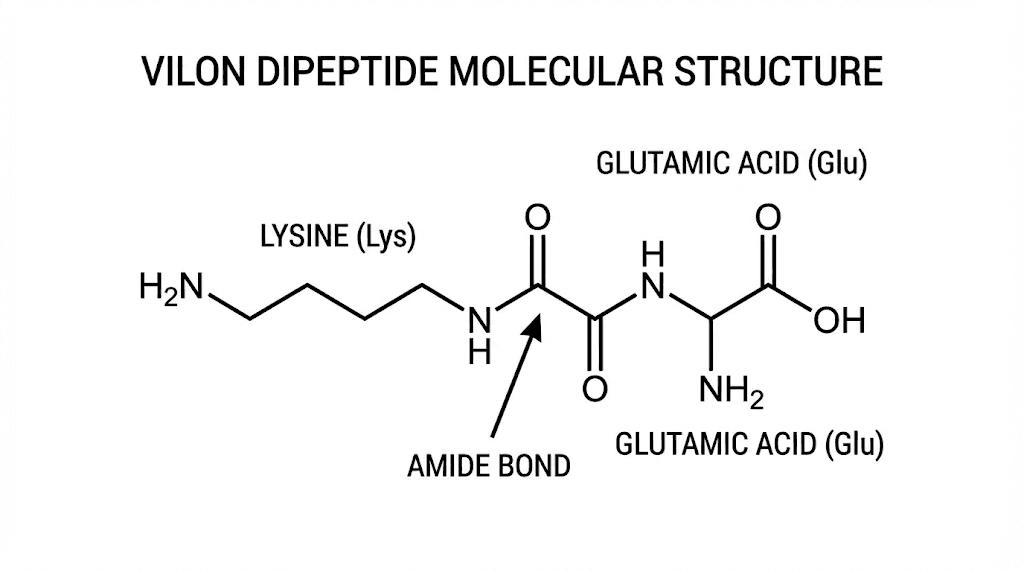
Vilon is a synthetic dipeptide with the molecular formula C11H21N3O5. Its sequence is L-Lys-L-Glu, meaning it consists of one lysine residue bonded to one glutamic acid residue. That is it. No modifications, no complex folding, no tertiary structure. Just two amino acids connected by a single peptide bond.
This simplicity is precisely what caught researchers' attention.
The peptide was originally derived from the amino acid analysis of Thymalin, a natural thymus extract that had already demonstrated immune-modulating properties in clinical settings. Khavinson's team identified the Lys-Glu sequence as one of the active components responsible for Thymalin's effects on immune cell proliferation and differentiation. By synthesizing this minimal sequence, they created a compound that could be produced consistently, studied precisely, and administered with exact dosing control.
Vilon belongs to the class of compounds known as peptide bioregulators, short peptides that interact with DNA and chromatin structures to influence gene expression. Unlike hormones that bind to cell surface receptors, or enzymes that catalyze specific reactions, bioregulators work at the nuclear level. They enter the cell, reach the nucleus, and interact with chromatin, the complex of DNA and histone proteins that determines which genes are accessible for transcription.
Think of it this way. Your DNA contains the instructions for every protein your body can make. But not all instructions are accessible at all times. As you age, more sections of your genetic code get packed tightly into condensed chromatin, effectively silencing those genes. Vilon appears to reverse some of that silencing, specifically in immune-related genes. The implications of that mechanism extend far beyond simple immune support.
The research on Vilon spans over 40 years of investigation, primarily conducted in Russia but increasingly validated by international researchers. Six peptide-based pharmaceuticals developed from Khavinson's bioregulator research have been introduced into clinical practice, and Vilon remains one of the most studied compounds in this family. Its effects touch immune function, cellular aging, tissue regeneration, tumor biology, and metabolic health, making it one of the most versatile bioregulators documented to date.
How vilon works at the molecular level
Understanding Vilon requires understanding chromatin. And understanding chromatin requires a brief detour into how your cells manage genetic information.
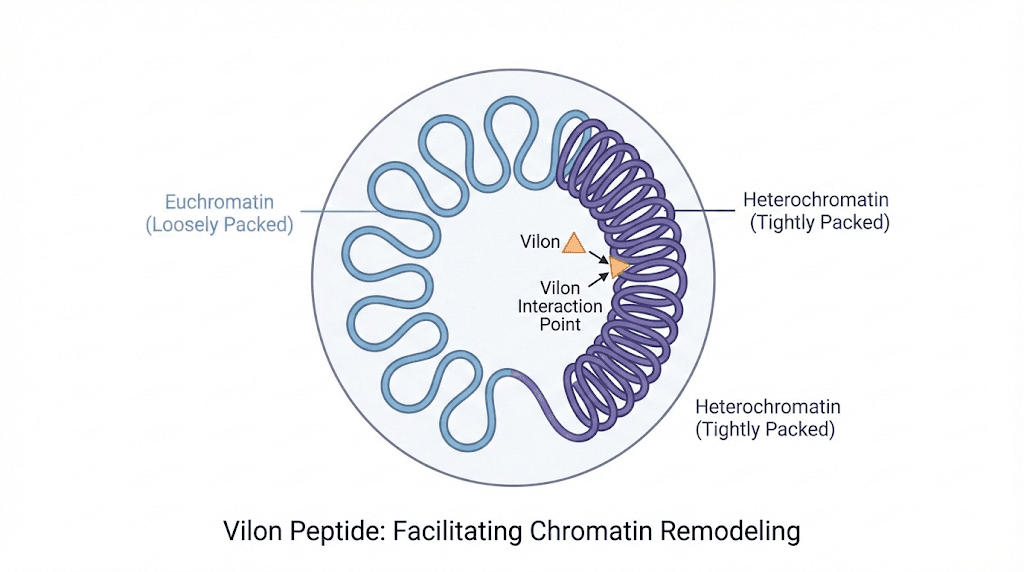
Every cell in your body contains roughly 6 feet of DNA. To fit this inside a microscopic nucleus, the DNA wraps around histone proteins like thread around spools. These spools cluster together to form chromatin. When chromatin is loosely packed, called euchromatin, the genes in that region are accessible and can be read by the cell's transcription machinery. When chromatin is tightly packed, called heterochromatin, those genes are effectively silent.
There are two types of heterochromatin. Constitutive heterochromatin stays permanently condensed. It contains repetitive sequences and structural elements that should never be expressed. Facultative heterochromatin, however, is different. These are genes that should be expressed under certain conditions but have been silenced, often inappropriately as part of the aging process.
Here is where Vilon enters the picture.
Research published in Biogerontology demonstrates that Vilon causes progressive activation of facultative heterochromatin through a process called deheterochromatinization. The peptide does not randomly unpack all condensed DNA. It selectively targets facultative heterochromatin, loosening the chromatin structure to restore gene accessibility without disturbing the structural heterochromatin that needs to stay condensed. This selectivity is critical. It means Vilon is not a blunt instrument but rather a precise modulator of gene expression.
Studies in lymphocytes from elderly donors show that Vilon induces chromatin decondensation, reactivates ribosomal genes, and increases nucleolar organizer activity. These are not minor changes. Nucleolar organizer regions drive ribosomal RNA synthesis, which is essential for protein production. By reactivating these regions, Vilon essentially restores some of the cell's capacity to produce the proteins it needs to function properly, a capacity that diminishes significantly with age.
The peptide also appears to interact with the CHUK gene, which encodes a component of the NF-kB signaling pathway. NF-kB is one of the master regulators of inflammation and immune response. By modulating this pathway, Vilon influences cytokine production, immune cell activation, and inflammatory responses at a fundamental level. This single mechanism could explain many of Vilon's observed effects, from anti-inflammatory properties to immune enhancement to tissue repair.
There is also emerging evidence that Vilon normalizes telomere length in stimulated lymphocyte cultures across different age groups. Telomeres, the protective caps on chromosome ends, shorten with each cell division and are considered a key biomarker of cellular aging. If Vilon can stabilize or normalize telomere dynamics, it adds another dimension to its anti-aging mechanism beyond chromatin remodeling alone.
Immune system benefits of vilon
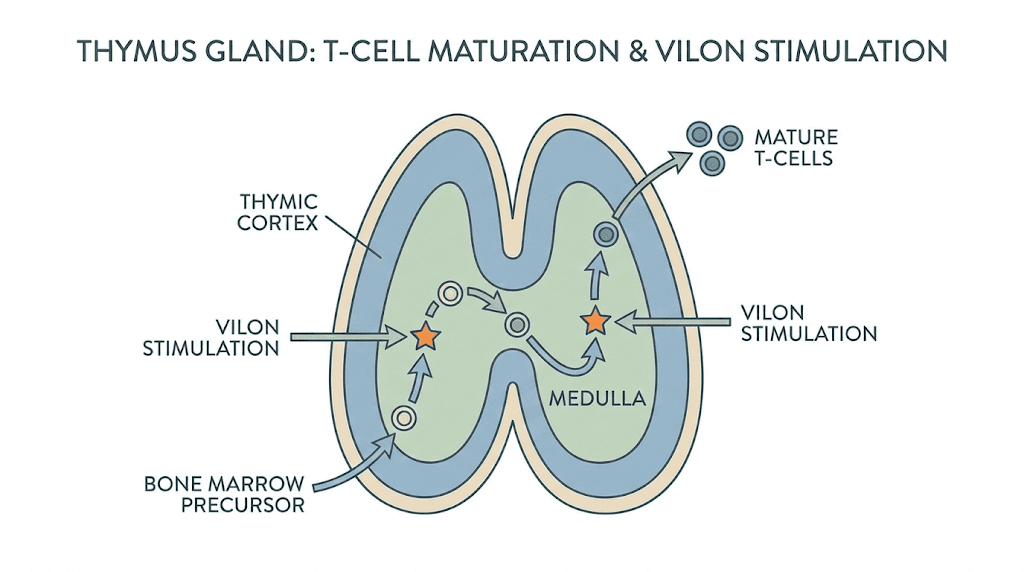
The thymus gland is where T-cells mature. It is arguably the most important organ in adaptive immunity. And it begins shrinking after puberty.
By age 50, most people have lost the majority of their functional thymic tissue. The organ that once produced armies of mature T-cells capable of recognizing and destroying pathogens has been largely replaced by fatty tissue. This process, called thymic involution, is one of the primary reasons immune function declines with age. It is why older adults are more susceptible to infections, respond less effectively to vaccines, and have higher rates of cancer.
Vilon was derived from thymus tissue specifically because researchers were looking for factors that could counteract this decline. And the evidence suggests they found one.
T-cell proliferation and maturation
Research by Khavinson and colleagues demonstrates that Vilon stimulates the proliferative activity of thymocytes, the precursor cells within the thymus that eventually become mature T-cells. In animal models exposed to gamma radiation, which damages the immune system severely, Vilon administration led to measurable thymic recovery.
Histological analyses revealed enlargement of thymic lobules, primarily due to widening of the cortical layer where T-cell maturation occurs. The proliferative index, a measure of how actively cells are dividing, jumped from 26% to 37% with Vilon exposure. That is a 42% increase in cellular proliferation within the thymus.
More importantly, Vilon does not just increase cell numbers. It increases the right kind of cells. Studies show the peptide enhances expression of the CD5 differentiation marker on thymic cells. CD5 is found on mature T-helper cells and cytotoxic T-cells, the two populations most critical for adaptive immunity. Increased CD5 expression indicates that more precursor cells are successfully completing the maturation process, not just dividing aimlessly.
CD4 expression and helper T-cell development
The CD4 molecule marks T-helper cells, the coordinators of immune response. Without adequate CD4+ T-cells, the immune system cannot mount effective responses to new threats, cannot coordinate antibody production, and cannot properly regulate inflammation. Vilon has been observed to increase CD4 molecule expression in thymic cell cultures, indicating enhanced maturation of lymphocyte precursors into functional helper T-cells.
This matters enormously for aging populations. The decline in naive CD4+ T-cells with age is one of the key factors behind immunosenescence, the general deterioration of immune function. By promoting CD4+ T-cell development, Vilon addresses one of the root causes of age-related immune decline rather than merely treating symptoms.
Cytokine modulation and IL-2 signaling
Vilon activates interleukin-2 gene expression in splenic lymphocytes. IL-2 is sometimes called the T-cell growth factor because it drives T-cell proliferation, differentiation, and survival. It is the signal that tells activated T-cells to multiply and form the army needed to fight a specific pathogen.
At the same time, studies demonstrate up to a 6-fold reduction in inflammatory cytokine synthesis in stimulated cell preparations treated with Vilon. This dual action, boosting productive immune signaling while dampening excessive inflammation, is exactly what an ideal immunomodulator would do. It supports the immune system's ability to respond to threats while preventing the chronic, low-grade inflammation that drives aging and degenerative disease.
This cytokine-balancing effect connects directly to Vilon's interaction with the NF-kB pathway mentioned earlier. By modulating CHUK gene expression, Vilon fine-tunes the inflammatory cascade at its source rather than blocking it downstream. The result is not immunosuppression but immunoregulation, a distinction that matters enormously for long-term health.
For researchers interested in thymus-supporting peptides, Vilon represents one of the most targeted options available. While Thymalin is a complex extract containing multiple active fractions, Vilon isolates one specific mechanism of action. This makes it easier to dose precisely, combine with other compounds, and study in controlled settings. The peptide dosage calculator at SeekPeptides can help researchers determine appropriate amounts based on their specific parameters.
Anti-aging and longevity research
The longevity data on Vilon is striking. And controversial.
In a study published in Mechanisms of Ageing and Development, Khavinson and Anisimov reported that chronic Vilon administration in female CBA mice produced lifespan extensions of 20-40%. The mice received the peptide starting from the 6th month of life, and researchers tracked them through their natural lifespan. The treated mice not only lived longer but showed increased physical activity and endurance compared to controls.
One finding stands out above the rest. The earlier Vilon was administered, the greater the longevity benefit. Mice that began receiving Vilon at younger ages showed more significant lifespan extension than those who started later. This suggests the peptide's effects on chromatin and immune function compound over time, and that the aging-related changes it counteracts are easier to prevent than reverse.
The safety profile in these long-term studies was remarkably clean. The researchers specifically noted that chronic Vilon administration did not affect estrous function, did not alter free radical processes, and did not cause any unfavorable effects on animal development. For a compound administered over essentially the entire adult lifespan of these animals, that level of safety is notable.
The chromatin connection to aging
Why would reversing chromatin condensation extend lifespan? The answer lies in what happens when genes get silenced inappropriately.
As organisms age, increasing amounts of facultative heterochromatin accumulate. Genes that should be active get packed away. This includes genes for DNA repair, antioxidant enzymes, immune function, and cellular maintenance processes. The cell gradually loses access to the instructions it needs to maintain itself, leading to the progressive functional decline we recognize as aging.
Vilon's ability to reverse this process, to reactivate silenced genes by loosening facultative heterochromatin, directly addresses one of the proposed mechanisms of aging itself. It does not mask symptoms or compensate for deficiencies. It goes after the underlying epigenetic changes that drive cellular aging at the genetic level.
Research in human lymphocyte cultures from donors of various ages confirms this mechanism operates in human cells, not just mouse models. Vilon increased the proportion of transcriptionally active euchromatin and reactivated nucleolar organizer regions in lymphocytes from elderly donors. These cells showed renewed capacity for protein synthesis and improved functional markers after Vilon exposure.
Comparison with other longevity peptides
Vilon is not the only peptide bioregulator studied for longevity. Epitalon, derived from the pineal gland, works through telomerase activation. Thymalin, the parent compound from which Vilon was derived, uses multiple mechanisms simultaneously. And newer compounds like SS-31 target mitochondrial function specifically.
What distinguishes Vilon is its mechanism. Chromatin remodeling affects everything downstream. While Epitalon works on telomere length and Thymalin uses a broad spectrum of immune modulation, Vilon targets the fundamental accessibility of genetic information. In theory, this makes it complementary to other longevity interventions rather than redundant.
Peptide | Primary mechanism | Target organ | Complexity | Research depth |
|---|---|---|---|---|
Vilon | Chromatin remodeling | Thymus/immune | Dipeptide (2 AA) | 40+ years |
Epitalon | Telomerase activation | Pineal gland | Tetrapeptide (4 AA) | 35+ years |
Thymalin | Broad immunomodulation | Thymus | Complex extract | 45+ years |
Cartalax | Cartilage bioregulation | Joints/cartilage | Tripeptide (3 AA) | 20+ years |
Vesugen | Vascular regulation | Blood vessels | Tripeptide (3 AA) | 20+ years |
Many researchers combine Vilon with Epitalon in stacking protocols, reasoning that addressing both chromatin accessibility and telomere maintenance provides more comprehensive anti-aging coverage than either compound alone. The peptide stack calculator at SeekPeptides can help researchers explore these combinations systematically.
Tumor biology and cancer research
The relationship between Vilon and cancer is complicated. Promising in some models. Concerning in others. Any honest discussion of this peptide must address both sides.
Tumor inhibition findings
The landmark study by Khavinson and Anisimov reported that Vilon inhibited the growth of spontaneous tumors in CBA mice while simultaneously extending their lifespan. The treated mice showed lower spontaneous tumor incidence and delayed tumor development compared to untreated controls. In bladder cancer models, Vilon reduced the incidence of both preneoplastic and early neoplastic changes in urinary bladder mucosa.
Several mechanisms may explain this anti-tumor activity. Restored immune surveillance through enhanced T-cell function means the body can better identify and destroy aberrant cells before they establish tumors. The chromatin remodeling effects may reactivate tumor suppressor genes that had been silenced. The normalization of inflammatory pathways reduces the chronic inflammation that promotes tumor development. And improved apoptosis signaling helps the body eliminate damaged cells before they become cancerous.
The HER-2/neu caveat
However, research published in the International Journal of Cancer found that in HER-2/neu transgenic mice, a breast cancer model, Vilon actually increased the incidence of mammary cancer and shortened tumor development time. This is not a minor finding to dismiss.
The HER-2/neu model is genetically predisposed to mammary tumors. The enhancement of immune function and cell proliferation that Vilon promotes may, in certain genetic contexts, accelerate rather than inhibit tumor development. This highlights a fundamental challenge with immunomodulatory compounds. Enhancing immune surveillance helps when the immune system can recognize tumor cells. But if the tumor has mechanisms to evade or exploit immune activation, enhanced immune function can paradoxically support tumor growth.
This mixed picture means Vilon's relationship with cancer cannot be summarized as simply beneficial or harmful. Context matters enormously. The type of cancer, the genetic background, the stage of development, and the specific immune environment all influence whether immune enhancement helps or hinders. Researchers should approach this area with appropriate caution and avoid making sweeping claims in either direction.
Tissue repair and regeneration
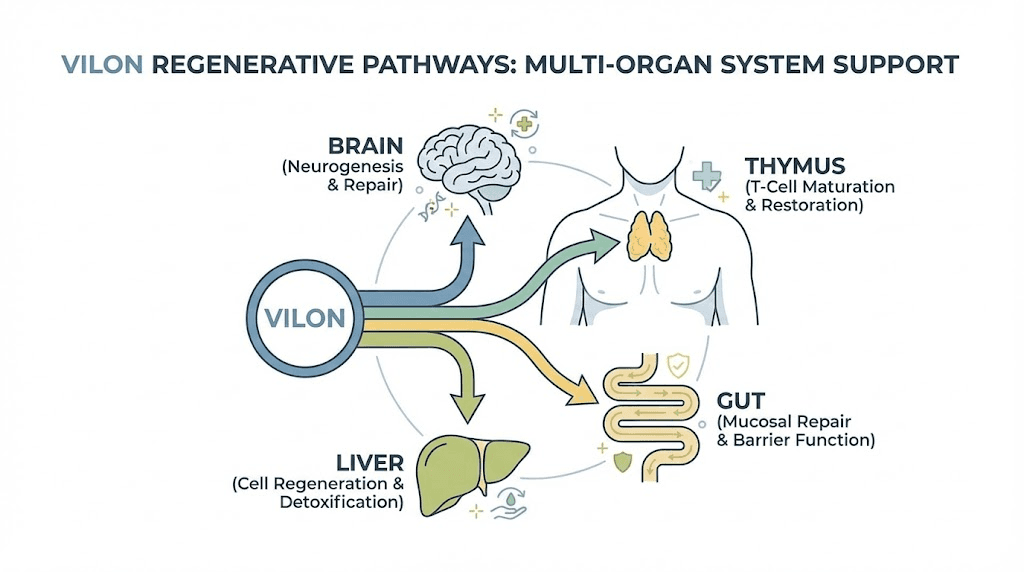
Beyond immune function and aging, Vilon demonstrates significant regenerative properties across multiple tissue types. The peptide's effects on gene expression and cell proliferation translate into practical repair and recovery benefits that extend well beyond the thymus.
Multi-organ regenerative effects
Research links Vilon's biological activity to tissue regeneration in the liver, thymus, spleen, and intestinal lining. The mechanism is consistent with its chromatin remodeling function. By reactivating genes involved in tissue maintenance and repair, Vilon supports the body's innate regenerative capacity rather than introducing external growth signals.
For the tissue repair applications, Vilon enhances cell regeneration through improved gene accessibility, potentially speeding up recovery times and reducing the risk of long-term damage from injuries or chronic conditions. This is particularly relevant for older individuals whose regenerative capacity has declined due to the very chromatin condensation that Vilon counteracts.
Gastrointestinal benefits
The peptide shows particular promise for gut health. Research indicates Vilon improves intestinal barrier function in older animal models, reducing the incidence of increased intestinal permeability. The peptide also enhances glucose and glycine absorption in the small intestine of older rats, suggesting it helps maintain the nutrient extraction capacity that typically declines with age.
These gastrointestinal effects align with Vilon's broader mechanism. The intestinal lining has one of the highest cell turnover rates in the body, requiring constant regeneration. If the genes governing this regeneration become less accessible due to age-related chromatin condensation, gut function suffers. By restoring gene accessibility, Vilon supports the continuous renewal process that keeps the gut barrier intact and functional.
For researchers exploring gut-focused peptides, Vilon offers a complementary approach. While peptides like KPV target intestinal inflammation directly through alpha-MSH pathways, Vilon works upstream at the genetic level. Combining approaches that address both immediate inflammation and underlying gene expression could provide more comprehensive gut support than either alone.
Retinal and neuronal regeneration
Emerging research implicates Vilon in the regeneration of eye retinal cells and brain neurons. While this work is still early-stage, it is consistent with the peptide's mechanism. Retinal cells and neurons are notoriously difficult to regenerate in adults, partly because many of the genes needed for neural repair become silenced over time. If Vilon can restore accessibility to these genes, it could open therapeutic possibilities that currently do not exist.
This neural dimension connects Vilon to the broader field of peptides for brain function, though its mechanism differs significantly from nootropic peptides like Semax or PE-22-28 that work through neurotransmitter modulation.
Cardiovascular and metabolic effects
The cardiovascular research on Vilon provides some of the most clinically relevant findings, particularly for aging populations dealing with metabolic conditions.
Hemostatic balance and anticoagulant effects
Research involving cardiovascular and renal models indicates that Vilon plays a role in regulating vascular permeability and maintaining balance in hemostatic processes. Specifically, the peptide has been shown to increase levels of natural anticoagulants, including antithrombin III and protein C. It also stimulates fibrinolysis, the process by which blood clots are broken down.
For older adults, who face increased risk of thrombotic events, this hemostatic regulation could be significant. The balance between clot formation and clot dissolution becomes increasingly dysregulated with age, contributing to conditions like deep vein thrombosis, pulmonary embolism, and stroke. Vilon's ability to nudge this balance toward appropriate anticoagulation without completely suppressing clot formation represents a nuanced modulatory effect rather than a blunt pharmaceutical action.
Diabetes research and insulin dynamics
Perhaps the most clinically compelling finding comes from a study involving 150 patients with type 1 diabetes mellitus, including 30 patients over age 50. Published by Kuznik et al. in Advances in Gerontology, this study found that a significant proportion of patients who received Vilon were able to decrease their insulin dose by an average of 9 units.
Nine units is not trivial. For context, many type 1 diabetics use 30-60 total units per day. A reduction of 9 units represents a 15-30% decrease in insulin requirements, suggesting that Vilon may improve endogenous insulin sensitivity or support residual beta-cell function.
The mechanism appears to involve immune modulation. Vilon normalized active T-lymphocytes, B-lymphocytes, and IgA levels while reducing T-helper content, T-dependent, and non-T-dependent NK cells. Since type 1 diabetes is an autoimmune condition where the immune system attacks insulin-producing beta cells, calming the autoimmune component could preserve remaining beta-cell function and reduce the external insulin needed to maintain glucose control.
This connects to a broader principle in peptide research. Many age-related conditions have immune dysfunction at their root. By correcting immune imbalances rather than treating symptoms, immunomodulatory peptides like Vilon address multiple conditions simultaneously. The same immune normalization that supports anti-aging also benefits autoimmune conditions, chronic inflammation, and metabolic dysfunction.
Metabolic homeostasis
There is growing interest in how short peptides like Vilon impact metabolic homeostasis more broadly. Research suggests the peptide may influence glucose metabolism, lipid regulation, and mitochondrial efficiency. While these findings are preliminary, they align with the chromatin remodeling mechanism. Genes involved in metabolic regulation that become silenced with age could be reactivated by Vilon's epigenetic effects, restoring metabolic flexibility that naturally declines over time.
For researchers interested in metabolic peptides, Vilon represents a fundamentally different approach than GLP-1 agonists like semaglutide or retatrutide. Where those compounds directly modulate appetite and insulin signaling through receptor activation, Vilon works at the epigenetic level to support the body's own regulatory mechanisms. The two approaches are complementary rather than competitive.
Skin aging and fibroblast research
Recent research has turned attention to Vilon's effects on skin aging at the cellular level. Studies investigating the influence of the KE (Lys-Glu) dipeptide on aging markers in human skin fibroblasts provide another angle on the peptide's anti-aging potential.
Fibroblasts are the cells responsible for producing collagen, elastin, and other structural proteins that keep skin firm and resilient. As fibroblasts age, they produce less collagen, divide less frequently, and accumulate damage that contributes to wrinkles, sagging, and loss of elasticity. The same chromatin condensation that affects immune cells occurs in fibroblasts, silencing genes needed for optimal function.
Vilon's chromatin remodeling mechanism applies here as well. By restoring gene accessibility in aging fibroblasts, the peptide may support renewed production of structural proteins and improved cellular maintenance. While this research is still in the in vitro stage, it suggests that Vilon's benefits extend to skin health through the same fundamental mechanism that drives its immune and longevity effects.
This positions Vilon differently from topical copper peptide serums or skin-tightening peptides that work through growth factor signaling or collagen stimulation at the surface level. Vilon addresses skin aging from the inside out, at the epigenetic level, potentially supporting systemic improvements that topical treatments cannot reach.
Vilon dosage protocols and practical guidelines
Dosing Vilon correctly requires understanding both the research literature and the practical realities of working with a dipeptide. The protocols below reflect what has been documented in published studies and commonly referenced in research communities.
Reconstitution
Vilon typically comes as a lyophilized powder in 20mg vials. The standard reconstitution protocol adds 3.0 mL of bacteriostatic water to achieve a concentration of approximately 6.67 mg/mL. At this concentration, using a U-100 insulin syringe, 1 unit (0.01 mL) delivers approximately 66.7 mcg of Vilon.
The reconstitution process follows standard peptide reconstitution practices. Add the bacteriostatic water slowly along the wall of the vial. Do not shake. Allow the peptide to dissolve naturally or with gentle swirling. Use the reconstitution calculator to verify your specific concentration based on the exact volume of water used.
Dosage ranges
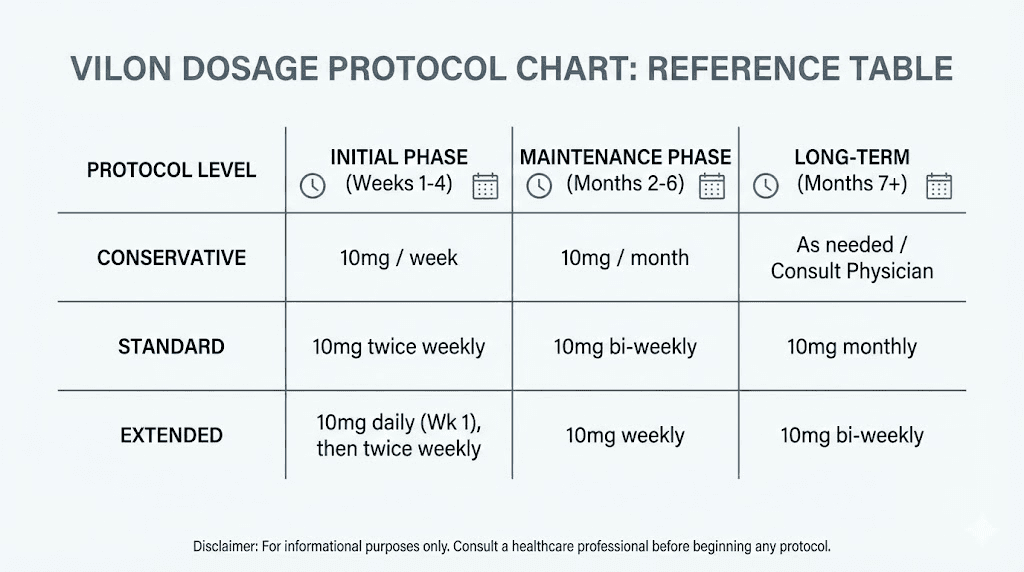
The published literature shows a range of dosing approaches.
Conservative protocol: 67-200 mcg subcutaneously once daily for 5 consecutive days. This is the typical bioregulator pulsing approach, similar to protocols used with other Khavinson peptides. The 5-day cycle is repeated monthly or every 3-6 months depending on the research goals.
Standard protocol: 200-500 mcg subcutaneously once daily for 5-10 days. This mid-range dosing appears most frequently in the research literature and provides a balance between efficacy and peptide conservation.
Extended protocol: 500-670 mcg subcutaneously once daily for 10-12 days. Higher-dose protocols are sometimes used for more intensive immune support or when combined with other peptide stacks.
Clinical research protocol: 5-10 mg subcutaneously for 5-12 days, repeated every 3-6 months. This higher-dose approach was used in some of the clinical studies, including the diabetes research. It represents the upper end of documented human use.
Protocol | Daily dose | Duration | Frequency | Best for |
|---|---|---|---|---|
Conservative | 67-200 mcg | 5 days | Monthly | Maintenance/prevention |
Standard | 200-500 mcg | 5-10 days | Every 3-6 months | General immune support |
Extended | 500-670 mcg | 10-12 days | Every 3-6 months | Intensive support |
Clinical | 5-10 mg | 5-12 days | Every 3-6 months | Research applicationsAdministration |
Vilon is administered subcutaneously. Rotate injection sites between the abdomen, thighs, and upper arms to minimize local irritation. The injections are typically given once daily, preferably in the morning. Some protocols specify morning administration on an empty stomach, though this timing requirement is not universally emphasized in the literature.
For those new to peptide injections, the subcutaneous technique is straightforward. Use a 29-31 gauge insulin syringe, pinch a fold of skin at the injection site, insert the needle at a 45-degree angle, and inject slowly. The small volumes involved with Vilon dosing (typically 0.03-0.1 mL) make the injections virtually painless.
Storage
Proper peptide storage is critical for maintaining Vilon's activity. In lyophilized form, store at -20C for short-term or -80C for long-term storage. Keep the vial in dry, dark conditions. Once reconstituted, refrigerate at 2-8C and use within approximately one week. For longer storage of reconstituted peptide, prepare single-use aliquots and freeze them to extend stability.
Given Vilon's small size as a dipeptide, it may be more susceptible to degradation than larger peptides with more stable tertiary structures. Careful attention to storage conditions is essential. If you notice any changes in clarity, color, or particulate matter in the reconstituted solution, discard it and prepare a fresh vial.
Stacking vilon with other peptides
Vilon's unique mechanism of action makes it a natural stacking partner for peptides that work through different pathways. Because it operates at the epigenetic level rather than through receptor binding or enzyme modulation, Vilon is unlikely to compete with or interfere with most other peptides.
Vilon and epitalon stack
The most commonly discussed combination pairs Vilon with Epitalon. The rationale is straightforward. Vilon addresses chromatin accessibility, reactivating silenced genes. Epitalon activates telomerase, protecting chromosome ends from the shortening that limits cell division capacity. Together, they address two distinct mechanisms of cellular aging simultaneously.
The typical stacking protocol runs both peptides during the same 5-10 day cycle, administered at separate injection sites. Some researchers alternate cycles, running Vilon one month and Epitalon the next. Both approaches have theoretical merit, though head-to-head comparisons do not exist in the published literature.
Vilon and thymalin
Since Vilon was derived from Thymalin, combining the two might seem redundant. But there is a case for it. Thymalin contains multiple active fractions that affect immune function through various pathways. Vilon isolates one specific mechanism, the chromatin remodeling component. Running both provides the broad immunomodulatory effects of Thymalin with an extra emphasis on the epigenetic mechanism that Vilon specifically enhances.
Vilon and immune support peptides
For comprehensive immune protocols, Vilon pairs well with peptides that target different aspects of immune function. KPV targets mucosal immunity and gut inflammation. SS-31 supports mitochondrial function in immune cells. Testagen offers additional bioregulator support. Each works through a different pathway, reducing the risk of interference while providing complementary benefits.
The key principle for stacking with Vilon is complementarity. Choose peptides that address different mechanisms rather than doubling up on the same pathway. Vilon handles the epigenetic and chromatin level. Stack partners should handle receptor-level, mitochondrial, or pathway-specific functions. The stacking calculator at SeekPeptides helps researchers plan these combinations systematically.
Bioregulator rotation protocols
Some researchers follow rotation protocols that cycle through multiple bioregulator peptides over several months. A typical rotation might look like this.
Month 1: Vilon (thymus/immune, 5-day cycle)
Month 2: Epitalon (pineal/telomeres, 10-day cycle)
Month 3: Vesugen (vascular, 5-day cycle)
Month 4: Cartalax (cartilage/joints, 5-day cycle)
Month 5: Cortagen (brain/nervous system, 5-day cycle)
Month 6: Repeat from Vilon
This approach provides systematic support across multiple organ systems while allowing each bioregulator to work without competition. The pulsing nature of bioregulator protocols, short intensive cycles followed by rest periods, aligns with how these peptides appear to work. They trigger gene expression changes that persist well beyond the administration period, similar to how a peptide cycling approach works for other compound classes.
Safety profile and side effects
The safety data on Vilon is reassuring, though limited by the scope of existing studies.
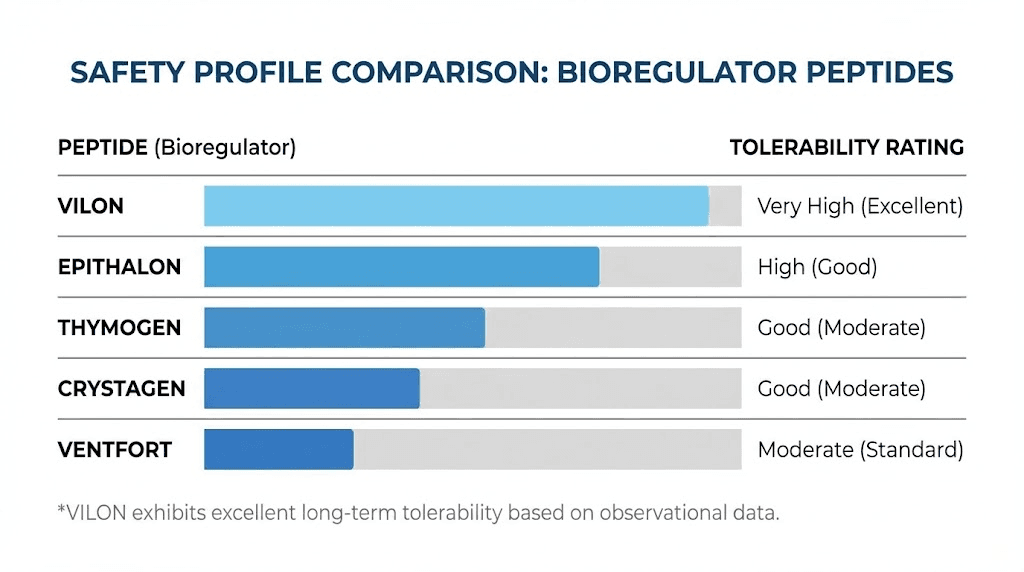
Across published research, no lethal dose has been established in animal studies. This is notable because researchers typically conduct dose-escalation studies specifically to find toxic thresholds, and with Vilon they could not identify one within the ranges tested. Clinical trials involving surgical patients and periodontal disease patients reported good tolerance with no significant adverse effects.
The long-term safety data from the lifespan studies in CBA mice is particularly relevant. These animals received Vilon chronically over their entire adult lives, providing a natural long-term safety observation that would be extremely expensive and time-consuming to replicate in formal safety studies. No unfavorable developmental effects, hormonal disruptions, or organ toxicities were observed.
Reported side effects
The side effect profile is minimal.
Mild injection-site reactions, including temporary redness and itching, are the most commonly reported adverse effects with subcutaneous administration. These are not specific to Vilon and occur with virtually any injected peptide. They typically resolve within 30-60 minutes and do not require treatment.
No systemic side effects have been consistently reported in the published literature. No headaches, nausea, fatigue, or hormonal changes have been attributed to Vilon in controlled studies. This clean safety profile is consistent with its nature as a very short, naturally-derived peptide sequence. The body already contains both lysine and glutamic acid in abundance, and the dipeptide itself is rapidly metabolized.
Important safety considerations
Despite the favorable safety profile, several considerations warrant attention.
The HER-2/neu cancer findings mentioned earlier represent a genuine concern. Any individual with a known cancer diagnosis or strong genetic predisposition to specific cancer types should exercise extreme caution with any immunomodulatory compound, including Vilon. Enhanced immune activation is not universally beneficial, particularly in contexts where tumor cells have evolved mechanisms to exploit immune signaling.
The majority of safety data comes from studies conducted in Russia, with limited independent replication in Western research institutions. While this does not invalidate the findings, it does mean the data has not been subjected to the full range of regulatory scrutiny that a compound undergoing FDA approval would receive.
Vilon has not undergone large-scale Phase III clinical trials in major pharmaceutical markets. The clinical evidence that exists is promising but preliminary. Researchers should approach it as an investigational compound with a strong safety signal rather than a thoroughly validated therapeutic agent.
For anyone managing peptide safety in their research protocols, Vilon presents relatively low risk compared to more pharmacologically active compounds. It does not suppress hormonal axes, does not require post-cycle therapy, and does not accumulate in tissues. But prudent practice still demands proper medical oversight, especially for individuals with autoimmune conditions, active infections, or cancer history.
Vilon compared to other bioregulator peptides
Understanding where Vilon fits in the bioregulator peptide landscape helps researchers choose the right compounds for their specific goals. Each bioregulator targets different organ systems and mechanisms, making the comparison less about which is better and more about which is most appropriate for a given application.
Vilon vs thymalin
Thymalin is the complex thymus extract from which Vilon was derived. It contains multiple active peptide fractions, each contributing to its immunomodulatory effects. Vilon is essentially a refined, targeted version of one component of Thymalin's activity.
Choose Thymalin when you want broad-spectrum immune support without needing to identify specific mechanisms. Choose Vilon when you want targeted chromatin remodeling and epigenetic modulation with precise dosing control. Thymalin's complexity makes it more of a shotgun approach. Vilon is the rifle.
Vilon vs epitalon
Epitalon (Ala-Glu-Asp-Gly) is derived from the pineal gland and works primarily through telomerase activation. While both peptides have anti-aging properties, they work through fundamentally different mechanisms. Epitalon protects chromosome length. Vilon restores gene accessibility. They are complementary rather than competitive, which is why the Vilon-Epitalon stack is popular among longevity researchers.
Vilon vs vesugen
Vesugen (Lys-Glu-Asp) is a tripeptide derived from blood vessel tissue. It shares the Lys-Glu portion of Vilon's sequence with an additional aspartic acid residue. Vesugen targets vascular function specifically, improving endothelial health and blood vessel elasticity. For cardiovascular focus, Vesugen may be more appropriate than Vilon, though Vilon's own hemostatic effects provide some vascular benefit.
Vilon vs other immune peptides
In the broader peptide landscape, Vilon competes for attention with peptides like Thymosin Alpha-1, which is an FDA-approved immune modulator in some countries, and KPV, which targets mucosal immunity specifically. Vilon's advantage lies in its simplicity, its epigenetic mechanism, and its exceptionally clean safety profile. Its limitation is the relative lack of Western clinical validation compared to better-known immune peptides.
For researchers comparing options, the complete peptide reference at SeekPeptides provides detailed profiles of each compound to support informed decision-making.
Practical considerations for researchers
Sourcing and purity
Vilon's simplicity as a dipeptide makes it relatively easy to synthesize, but this also means quality can vary significantly between sources. A proper Vilon preparation should be at least 98% pure by HPLC analysis, with mass spectrometry confirmation of the correct molecular weight (C11H21N3O5, MW 275.30).
Request a certificate of analysis from any vendor and verify that it includes both purity testing and identity confirmation. The peptide testing labs guide provides information on independent testing services that can verify peptide quality. Given that Vilon is just two amino acids, contamination with free amino acids or incomplete coupling products is a real concern that proper quality control should address.
Understanding the research context
Most Vilon research originates from Russian institutions, particularly the St. Petersburg Institute of Bioregulation and Gerontology. This is not inherently a limitation, but it does mean the research culture, publication standards, and regulatory framework differ from what Western researchers may be accustomed to. Some studies are published in Russian-language journals with limited English abstracts.
The key researchers to follow for Vilon-specific work include Vladimir Khavinson, who pioneered the bioregulator peptide field, Tamara Lezhava, who published extensively on Vilon's chromatin effects, and T. Jokhadze, who explored its role in lymphocyte regeneration. Their publication records on PubMed and ResearchGate provide the most direct access to primary source material.
Realistic expectations
Vilon is not a miracle compound. The 20-40% lifespan extension seen in mice does not directly translate to human outcomes. The insulin reduction in diabetic patients, while meaningful, came from a single study with limited sample size. The chromatin remodeling effects, while well-documented in cell cultures, have not been confirmed to produce the same magnitude of effect in living human systems.
What the evidence does support is that Vilon is a genuine bioactive compound with measurable effects on immune function, gene expression, and cellular aging through a well-characterized mechanism. It occupies a legitimate place in the bioregulator peptide toolkit, particularly for researchers interested in epigenetic approaches to aging and immune decline. Setting expectations at that level, genuinely promising rather than miraculous, leads to more productive research and more honest evaluation of results.
Vilon in the context of aging research
The broader significance of Vilon extends beyond its specific effects. It represents proof of concept for an entire class of minimal bioactive peptides that influence gene expression through chromatin interaction.
Traditional pharmacology operates on the lock-and-key model. A drug binds to a receptor, triggers a signal, and produces an effect. Bioregulator peptides like Vilon work differently. They enter the nucleus and interact with chromatin structures to modulate which genes are expressed. This is not receptor-mediated signaling. It is epigenetic regulation by an exogenous molecule.
The fact that a two-amino-acid sequence can accomplish this is scientifically remarkable. It suggests that the body's own regulatory peptides include very short sequences with specific chromatin-interaction properties, and that supplementing these sequences can partially compensate for age-related declines in their endogenous production. If this principle holds broadly, it opens the door to a new paradigm in anti-aging medicine, one based on restoring the body's own regulatory signals rather than overriding them with pharmaceutical agents.
This is why Khavinson's work has generated interest beyond the peptide community. The concept of tissue-specific short peptides that regulate gene expression has implications for regenerative medicine, gerontology, and our understanding of aging itself. Vilon is the simplest proof that this concept works. Whether it becomes a widely used therapeutic or remains a research tool, its contribution to our understanding of peptide-gene interactions is already significant.
SeekPeptides members access detailed bioregulator protocols, comprehensive stacking guides, and a community of researchers navigating these exact questions. For those serious about incorporating bioregulator peptides into their research, having access to curated, evidence-based information saves significant time and reduces the risk of protocol errors that waste both peptides and research opportunities.
Frequently asked questions
What is vilon peptide made of?
Vilon is a synthetic dipeptide composed of two amino acids, L-lysine and L-glutamic acid (L-Lys-L-Glu). Its molecular formula is C11H21N3O5 with a molecular weight of 275.30. It is the shortest bioactive peptide known to produce significant biological effects. Learn more about what peptides are and how they work in our complete guide.
How does vilon compare to thymalin?
Vilon was derived from Thymalin, a complex thymus extract. While Thymalin contains multiple active peptide fractions for broad immune support, Vilon isolates the chromatin-remodeling component specifically. Vilon offers more precise dosing control and a more targeted mechanism, while Thymalin provides wider-spectrum immunomodulation.
What is the recommended vilon dosage?
Published protocols range from 67-670 mcg daily for 5-10 day cycles, administered subcutaneously. Conservative protocols use 67-200 mcg for 5 days monthly. Standard protocols use 200-500 mcg for 5-10 days every 3-6 months. Use the peptide calculator to determine specific amounts based on your reconstitution parameters.
Can vilon be combined with other peptides?
Yes. Vilon's epigenetic mechanism makes it complementary to peptides that work through different pathways. Common combinations include Vilon with Epitalon for comprehensive anti-aging support, or with KPV for combined immune and gut support. See our peptide stacking guide for detailed combination protocols.
Is vilon safe for long-term use?
Long-term animal studies show no adverse developmental effects, hormonal disruptions, or organ toxicities from chronic Vilon administration. No lethal dose has been established. However, most safety data comes from preclinical studies, and large-scale human clinical trials have not been conducted. Read our peptide safety guide for comprehensive safety information.
Does vilon need to be refrigerated?
In lyophilized (powder) form, Vilon should be stored at -20C or colder. Once reconstituted with bacteriostatic water, refrigerate at 2-8C and use within one week. For extended storage of reconstituted peptide, prepare single-use aliquots and freeze. See our complete peptide storage guide for detailed instructions.
How long does it take for vilon to work?
Vilon's effects on chromatin remodeling and gene expression begin at the cellular level during administration, but noticeable systemic changes typically require multiple cycles over several months. The animal studies showing lifespan extension used chronic administration over extended periods. For a realistic timeline of peptide effects, see our guide on how long peptides take to work.
Can vilon help with autoimmune conditions?
The diabetes research showing reduced insulin requirements suggests Vilon may modulate autoimmune processes. The peptide normalizes immune cell populations rather than suppressing them, which could benefit autoimmune conditions where immune dysregulation drives tissue damage. However, this application requires careful medical supervision and has not been validated in large clinical trials.
External resources
PubMed: Bioregulator Vilon-induced reactivation of chromatin in cultured lymphocytes from old people
PMC: Peptides Regulating Proliferative Activity and Inflammatory Pathways in THP-1 Cell Line
ResearchGate: Vilon inhibits spontaneous tumors and increases lifespan in mice
For researchers serious about optimizing their bioregulator protocols, SeekPeptides offers the most comprehensive resource available, with evidence-based guides, proven protocols, and a community of thousands who have navigated these exact questions.
In case I do not see you, good afternoon, good evening, and good night. May your immune cells stay vigilant, your chromatin stay accessible, and your protocols stay precise.