Jan 22, 2026
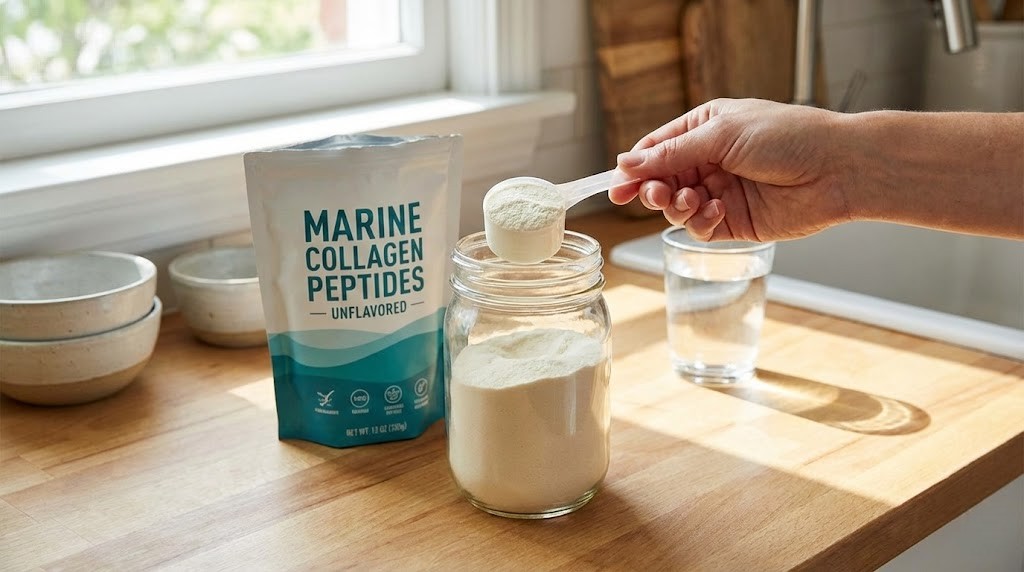
Your collagen supplement is not working. You have been taking it for weeks, maybe months, and the promise of firmer skin, stronger nails, and healthier joints remains unfulfilled. The problem might not be collagen itself. The problem might be the source.
Marine collagen peptides powder represents a fundamentally different approach to peptide supplementation. Derived from fish scales and skin rather than bovine sources, this particular form of collagen peptides offers absorption rates up to 1.5 times higher than land-based alternatives. That difference matters. It matters because collagen you cannot absorb is collagen you have wasted. It matters because the molecular weight of your supplement determines whether those amino acids actually reach your skin, your joints, your connective tissues.
But here is what most guides will not tell you. Not all marine collagen products deliver equal results. The sourcing, the hydrolysis process, the molecular weight, the purity standards, the presence of heavy metal contaminants, the combination with supporting nutrients, all of these factors determine whether your daily scoop of white powder actually transforms your body or simply passes through unnoticed. SeekPeptides has analyzed the research, tested the claims, and compiled the most comprehensive resource available for anyone serious about understanding marine collagen peptides powder.
This guide covers everything. From the basic science of how peptides work at the cellular level to specific dosing protocols based on clinical studies. From the timeline of realistic results to the potential side effects nobody mentions. From comparing marine versus bovine sources to identifying quality markers that separate premium products from overpriced fish waste.
What makes marine collagen different from other collagen sources
Collagen is not collagen is not collagen. This statement might sound strange, but understanding it explains why marine sources have gained such traction in the peptide research community. The differences begin at the molecular level and extend through absorption, distribution, and ultimately, results.
Marine collagen comes primarily from fish skin and scales. These tissues contain predominantly Type I collagen, the same type that constitutes approximately 80 percent of human skin collagen. This structural similarity creates what researchers call high homology, a fancy way of saying the fish collagen closely resembles human collagen in both structure and amino acid composition.
The fish used matter enormously. Wild-caught cod, salmon, and snapper from clean waters produce collagen with minimal contamination risk. Farm-raised fish from polluted regions can accumulate heavy metals, mercury, arsenic, and lead that persist through the manufacturing process. This is not fearmongering. This is chemistry. The geographical origin of your marine collagen directly impacts its safety profile.
The hydrolysis advantage
Raw collagen molecules are massive. They are too large for your intestinal lining to absorb efficiently. Hydrolysis breaks these huge protein structures into smaller fragments called peptides. The degree of hydrolysis, measured by molecular weight in daltons, determines absorption potential.
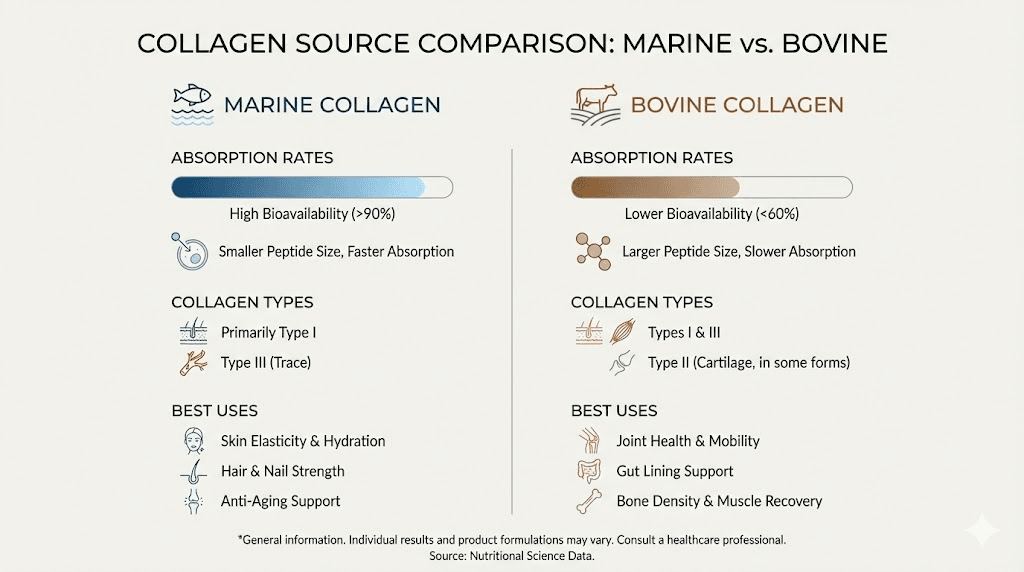
Marine collagen naturally hydrolyzes to smaller peptide sizes than bovine collagen. Most high-quality marine collagen products achieve molecular weights below 3000 daltons, with premium options reaching below 1000 daltons. Bovine collagen typically ranges from 3000 to 5000 daltons after processing. Smaller molecules mean faster transit through the intestinal wall and greater bioavailability in target tissues.
Studies demonstrate that marine collagen absorbs approximately 1.5 times more efficiently than bovine alternatives. This enhanced absorption translates directly to efficacy. The peptide dosage you take matters less than the amount actually reaching your cells.
Type I collagen dominance
Your body contains multiple collagen types. Type I makes up approximately 90 percent of all collagen in the human body. It provides structural support for skin, bones, tendons, ligaments, and connective tissue. Type III collagen supports skin elasticity and blood vessel walls. Type II collagen concentrates in cartilage.
Marine collagen delivers almost exclusively Type I collagen. For anyone focused on skin tightening, wrinkle reduction, or general anti-aging benefits, this Type I concentration offers targeted supplementation. Bovine collagen provides a mix of Type I and Type III, which some argue offers more comprehensive coverage but with less targeted delivery.
The choice depends on goals. Joint health and cartilage support might benefit from multi-type collagen sources. Skin, hair, and nail improvements favor the Type I dominance of marine collagen. Understanding these distinctions helps align supplement choice with desired outcomes.
The science of absorption and bioavailability
Swallowing a supplement means nothing if your body cannot use it. This basic truth drives the entire conversation around collagen bioavailability. Marine collagen peptides powder has gained popularity largely because of superior absorption characteristics, but understanding why requires examining the journey from mouth to cell.
When you consume collagen peptides, your digestive system begins breaking them down immediately. Stomach acid and enzymes further reduce peptide chains into smaller fragments. These smaller pieces, ranging from individual amino acids to dipeptides and tripeptides, pass through the intestinal wall into your bloodstream.
Here is where molecular weight becomes critical. Larger peptides cannot penetrate the intestinal lining efficiently.
They pass through your digestive tract unabsorbed and exit as waste. Smaller peptides slip through more easily, entering circulation and eventually reaching target tissues. Marine collagen naturally smaller peptide size gives it an inherent advantage in this absorption race.
Peptide fragments reach specific tissues
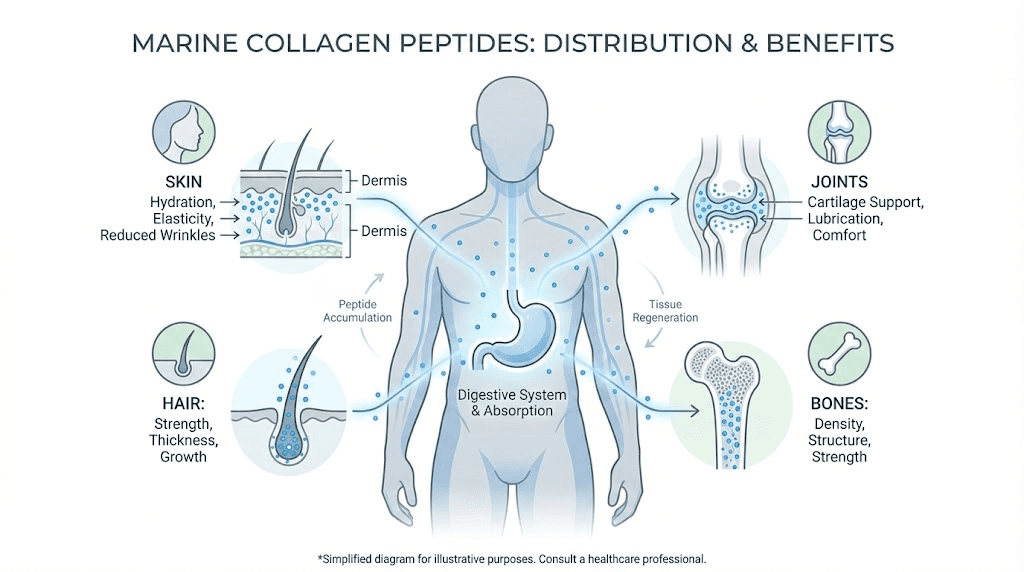
Research has tracked what happens after collagen peptides enter the bloodstream. Radioactive labeling studies show that specific peptide fragments accumulate in specific tissues. Hydroxyproline-containing peptides, a signature amino acid sequence in collagen, concentrate in skin, cartilage, and bone tissue.
This targeted distribution explains why collagen supplementation affects these tissues specifically. The peptides do not just float around randomly. They travel to areas where collagen synthesis occurs most actively. Once there, they stimulate fibroblast cells to produce new collagen while simultaneously protecting existing collagen from degradation.
The implications for anti-aging applications are significant. Rather than trying to topically deliver collagen through the skin, which faces its own absorption barriers, oral supplementation provides the building blocks from within.
Those building blocks then concentrate exactly where aging most visibly affects collagen structures.
Factors affecting absorption
Not everyone absorbs collagen equally. Age reduces digestive efficiency, potentially limiting how much collagen reaches circulation in older adults, precisely the population most interested in collagen benefits. Stomach acid levels, enzyme production, and intestinal health all influence absorption rates.
Taking collagen on an empty stomach enhances absorption for most people. Without competing proteins from food, the collagen peptides face less competition for intestinal transporters. Some studies suggest vitamin C co-supplementation improves collagen synthesis, though this affects what your body does with absorbed collagen rather than absorption itself.
The storage and handling of your collagen powder also matters. Exposure to heat, humidity, and light can degrade peptide bonds, reducing bioavailability before you even consume the product. Proper storage in cool, dry, dark conditions preserves peptide integrity and absorption potential.
Dosage protocols based on clinical research
How much marine collagen should you take? The answer depends on your goals, your age, your current collagen status, and honestly, the quality of your specific product. But clinical research provides useful guidance for establishing effective dosing protocols.
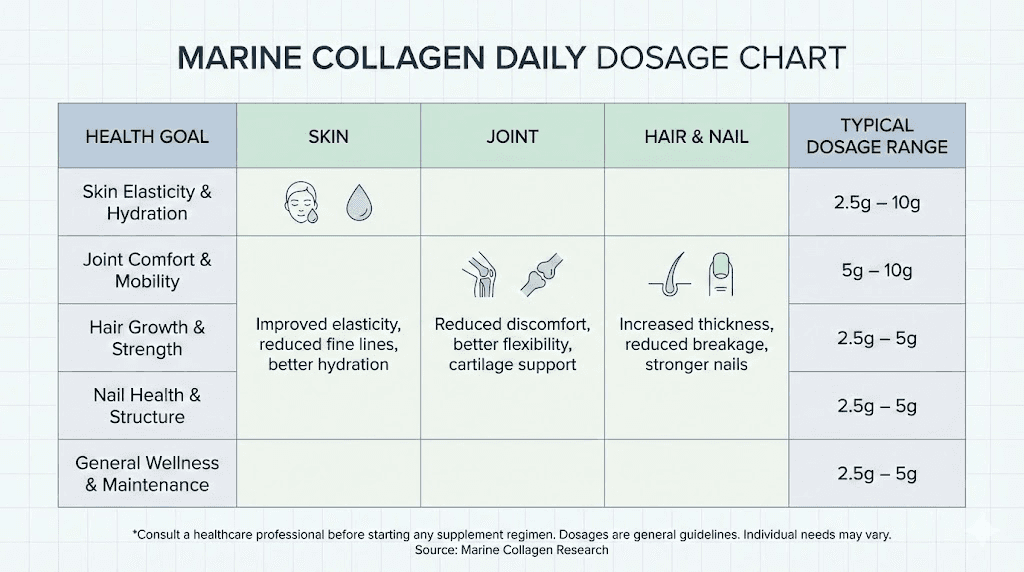
Most studies showing significant benefits use doses between 2.5 and 10 grams daily. This range has become the standard recommendation, but understanding the nuances within this range helps optimize results.
Skin health protocols
Clinical trials focused on skin improvements typically use 2.5 to 5 grams daily for initial effects, with 10 grams showing enhanced results in some studies. One study found that 2.5 grams daily improved skin elasticity within four weeks. Another demonstrated that 10 grams produced more pronounced results, particularly after nine weeks of consistent supplementation.
A randomized, triple-blind, placebo-controlled trial found that participants taking hydrolyzed marine collagen showed a 35 percent reduction in wrinkle scores after 12 weeks. That same study noted 24 percent greater wrinkle reduction compared to placebo. These results came from consistent daily supplementation at moderate doses.
For skin-focused goals, starting at 5 grams daily represents a reasonable middle ground. This dose provides enough collagen to support visible improvements while remaining economically sustainable for long-term use. Those wanting accelerated results might increase to 10 grams, understanding that research shows diminishing returns beyond this amount.
Joint health protocols
Joint support requires patience and higher doses. Studies examining joint pain relief and cartilage health typically use 8 to 12 grams daily, with some research exploring doses up to 40 grams for severe conditions.
Results for joint health take longer to manifest. While skin improvements often appear within four to eight weeks, joint benefits typically require three to six months of consistent supplementation. One study found positive impacts on knee health after approximately 13 weeks, but participants reported enhanced overall joint function only after six months.
Combining collagen supplementation with appropriate exercise enhances joint results. Research shows that collagen plus targeted exercise improves tendon function and performance within 12 weeks, faster than collagen alone. For anyone dealing with tendon repair or joint issues, this combination approach offers the best outcomes.
Hair and nail protocols
Hair and nail improvements follow their own timeline. Nails typically respond first, showing increased strength and reduced breakage within three to four weeks at standard doses. Hair benefits emerge more slowly, with texture improvements appearing around two weeks and thickness increases requiring up to 16 weeks.
One study found that 2.5 grams of collagen daily increased hair thickness measurably after 16 weeks. Participants reported sleeker, smoother hair texture within four weeks, with many discontinuing hair conditioner use by week eight. These results suggest that even relatively low doses can impact hair health when maintained consistently.
For hair growth goals, combining marine collagen with other hair-supporting peptides may accelerate results. The GHK-Cu peptide and marine collagen together provide both structural building blocks and growth factor stimulation.
Timeline of realistic results
Collagen supplementation is not a quick fix. Understanding this prevents disappointment and premature abandonment of effective protocols. The body rebuilds connective tissue slowly. Results emerge over weeks and months, not days.
Week-by-week expectations
Weeks one through two: Most people notice nothing dramatic. Internal changes are occurring, peptides are being absorbed and distributed, but visible improvements have not yet manifested. Some report improved digestion or increased energy, though these effects vary considerably between individuals.
Weeks two through four: Hair texture often improves first. Skin hydration begins increasing. Nails may feel stronger, with less brittleness. These early changes are subtle but measurable if you pay attention.
Weeks four through eight: Skin elasticity improvements become noticeable. Fine lines may appear softer. Hair continues improving in texture and manageability. Joint stiffness in mild cases may start decreasing. This phase is where many people first believe their supplement is working.
Weeks eight through twelve: Clinical trial endpoints often measure results at this stage. Significant wrinkle reduction becomes visible. Skin firmness and hydration reach noticeable levels. Hair thickness may begin increasing.
Joint benefits for moderate conditions start emerging.
Months three through six: Full joint health benefits manifest for those with more significant needs. Long-term skin improvements continue accumulating. Hair and nail health reach optimal levels. This timeframe represents the full maturation of collagen supplementation benefits.
Factors influencing timeline
Age significantly impacts how quickly results appear. Younger individuals with more robust peptide metabolism often see faster improvements. Older adults may require longer timeframes, though they often experience more dramatic relative improvements since they start from a more depleted collagen baseline.
Overall health status matters too. Nutritional deficiencies, chronic inflammation, poor sleep, and high stress all impair collagen synthesis. Addressing these factors while supplementing accelerates results. Taking collagen while maintaining unhealthy lifestyle habits reduces potential benefits.
Dose consistency proves more important than dose size. Taking 5 grams daily without fail produces better results than taking 10 grams sporadically. Collagen supplementation works cumulatively. Gaps in consumption interrupt the building process and delay results.
Comparing marine collagen to bovine and plant sources
The collagen market offers multiple source options, each with distinct characteristics. Understanding these differences enables informed supplement selection based on individual priorities and circumstances.
Marine versus bovine collagen
Bovine collagen comes from cow hides and connective tissue. It provides both Type I and Type III collagen, offering broader coverage than marine sources. Cost typically runs lower for bovine products, making it more accessible for budget-conscious consumers.
However, bovine collagen faces several disadvantages. Molecular weight tends higher, reducing absorption efficiency. Religious and dietary restrictions eliminate it for many potential users. Concerns about bovine spongiform encephalopathy, though largely historical, persist in some markets. Environmental impact of cattle farming raises sustainability questions.
Marine collagen costs more but absorbs better. The 1.5 times absorption advantage means you need less marine collagen to achieve equivalent tissue concentrations. When calculating actual cost-per-result rather than cost-per-gram, the premium may not be as significant as sticker prices suggest.
Pescatarians and those avoiding mammalian products can use marine collagen without ethical concerns. The sustainability profile improves when collagen is derived from fish processing byproducts that would otherwise become waste. Some manufacturers specifically source from wild-caught fish in clean waters, adding environmental benefits.
The plant-based alternative question
Vegan collagen does not technically exist. Collagen is by definition an animal protein.
Plant-based alternatives typically contain collagen-boosting ingredients rather than actual collagen, amino acids, vitamin C, zinc, and other nutrients that support the body natural collagen production.
These vegan products have merit for supporting collagen synthesis. But they do not provide the same direct benefit as consuming actual collagen peptides. The research demonstrating skin, joint, and hair improvements comes from studies using animal-derived collagen, not plant-based boosters.
For those committed to plant-based eating, these alternatives represent the best available option. For those open to fish-derived products, marine collagen provides more direct and better-studied benefits. The choice involves balancing dietary preferences against desired outcomes.
Quality markers and what to look for in products
Not all marine collagen powders deliver equal value. Quality differences affect safety, efficacy, and ultimate results. Learning to identify quality markers protects both your health and your investment.
Source and sustainability
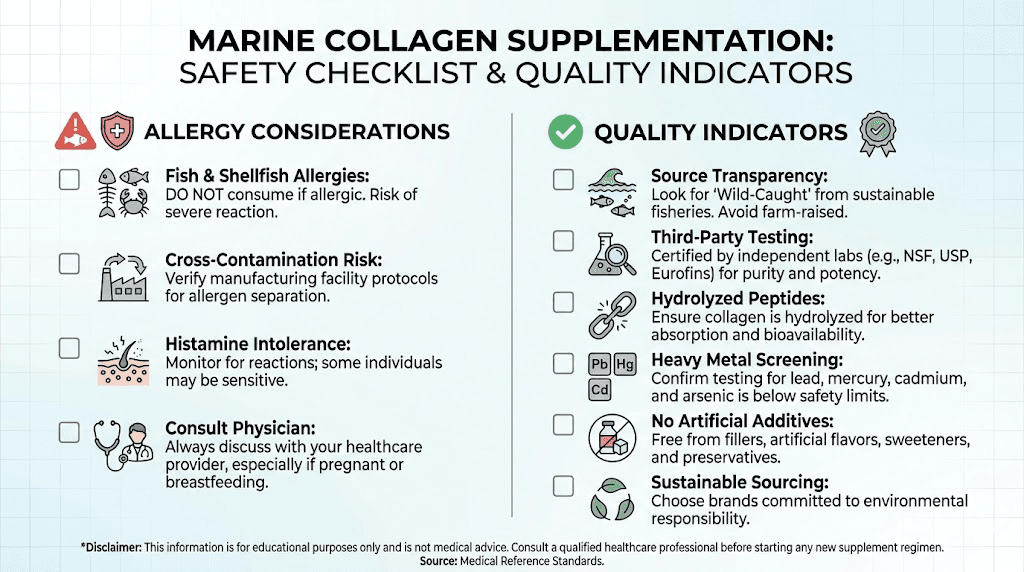
Premium marine collagen comes from wild-caught fish in clean, cold waters. Species like cod, salmon, and snapper from Norway, Alaska, or New Zealand carry lower contamination risks than fish from polluted coastal regions. The manufacturer should clearly state the fish species and geographical source.
Sustainable sourcing practices increasingly matter to environmentally conscious consumers. Look for certifications from Marine Stewardship Council or equivalent organizations. Collagen derived from fish processing byproducts represents a more sustainable option than collagen requiring dedicated fishing operations.
Third-party testing for heavy metals should be standard for any quality product. Mercury, arsenic, lead, and cadmium accumulate in marine life. Responsible manufacturers test batches and publish results or certifications demonstrating contamination levels below safety thresholds.
Processing and molecular weight
Hydrolysis quality directly impacts absorption. Look for products specifying molecular weight, ideally below 3000 daltons and preferably below 1000 daltons for maximum bioavailability.
Terms like nano-hydrolyzed or low-molecular-weight indicate advanced processing.
The hydrolysis process should use enzymatic methods rather than harsh chemical treatments. Enzymatic hydrolysis preserves the integrity of beneficial peptide sequences while achieving small molecular weights. Chemical hydrolysis can damage amino acid structures and reduce efficacy.
Powder solubility offers a practical quality indicator. High-quality, well-hydrolyzed marine collagen dissolves completely in cold water without clumping or residue. Poor solubility suggests inadequate processing or larger peptide fragments that may also absorb poorly in your digestive system.
Additional ingredients
Some marine collagen products include supporting nutrients like vitamin C, hyaluronic acid, or copper peptides. These additions can enhance benefits when properly formulated. Vitamin C is essential for collagen synthesis, so co-supplementation makes biological sense.
However, additional ingredients also mean potential allergens, fillers, and unnecessary additives. Read labels carefully. Avoid products with excessive sweeteners, artificial flavors, or unnecessary preservatives. The best marine collagen powders contain few ingredients beyond the collagen itself.
Flavor additions represent a trade-off. Unflavored collagen offers maximum flexibility in use but some people find the subtle fishiness unpleasant. Flavored versions improve palatability but add ingredients. Neither choice is inherently better, it depends on personal preference and sensitivity to taste.
Potential side effects and safety considerations
Marine collagen enjoys an excellent safety profile overall. Most people tolerate it well with minimal adverse effects. But understanding potential issues enables appropriate caution and informed decision-making.
Common minor effects
Digestive disturbances represent the most frequently reported side effects. Some users experience bloating, mild nausea, or altered bowel habits when starting collagen supplementation. These effects typically resolve within one to two weeks as the body adjusts. Starting with a lower dose and gradually increasing can minimize digestive complaints.
Taste and aftertaste issues affect some products more than others. Lower-quality marine collagen often carries a fishier taste that persists even when mixed into beverages or food. This is not a health concern but can affect compliance if the taste proves objectionable.
The safety profile of peptides generally remains favorable when products are properly manufactured and dosed appropriately. Marine collagen follows this pattern, with adverse events rare in clinical studies and post-market surveillance.
Allergic reactions
Fish and shellfish allergies represent the primary safety concern with marine collagen. Anyone allergic to seafood should avoid marine collagen entirely. Allergic reactions can range from mild skin irritation to severe anaphylaxis in sensitive individuals.
Cross-reactivity between different fish species means that even if you tolerate certain fish in your diet, you might react to collagen derived from a species you have not consumed before. Those with any history of seafood sensitivity should consult healthcare providers before trying marine collagen.
Symptoms of allergic reaction include hives, itching, swelling, difficulty breathing, and digestive upset beyond normal adjustment effects. Any of these symptoms require discontinuing use and seeking medical attention if severe.
Contamination risks
As mentioned earlier, marine collagen can contain heavy metal contaminants if sourced from polluted waters or inadequately tested.
Long-term exposure to mercury, lead, arsenic, or cadmium creates cumulative toxicity affecting the nervous system, kidneys, and liver.
Choosing products with third-party testing certificates mitigates this risk substantially. Reputable manufacturers voluntarily test for contaminants and either publish results or make them available upon request. Avoid products without clear sourcing information or quality testing documentation.
The risk from contamination is real but manageable with informed product selection. Do not let contamination concerns eliminate marine collagen from consideration entirely, but do let them guide you toward higher-quality options from transparent manufacturers.
Interactions and special populations
Marine collagen has no known significant drug interactions. However, its high protein content could theoretically affect certain medications that interact with protein intake. Those on protein-restricted diets for kidney conditions should consult healthcare providers before adding any collagen supplement.
Pregnant and breastfeeding women face uncertain safety data. No studies specifically examine marine collagen in these populations. The conservative approach recommends avoiding supplementation during pregnancy and lactation unless specifically approved by a healthcare provider.
Those with calcium metabolism disorders should note that some marine collagen products contain added calcium or are derived from fish bones with residual calcium content. Excessive calcium intake can cause hypercalcemia, a condition with symptoms including nausea, muscle weakness, and confusion.
Marine collagen for specific health goals
Different health objectives require different approaches to marine collagen supplementation. Understanding these goal-specific strategies helps maximize results for your particular needs.
Anti-aging and skin health
The most popular application for marine collagen focuses on anti-aging benefits. Type I collagen dominance makes marine sources particularly suited for skin applications. The high bioavailability ensures adequate peptide delivery to dermal tissues where aging most visibly manifests.
Combining marine collagen with other skin-supporting peptides can enhance results. GHK-Cu dosing alongside marine collagen provides both structural building blocks and copper-mediated enzyme activation for collagen synthesis.
Copper peptide skincare applied topically while taking oral marine collagen addresses skin health from multiple angles simultaneously.
For optimal skin results, pair marine collagen supplementation with good skincare practices. Sun protection prevents UV-mediated collagen degradation. Adequate hydration supports skin moisture. Avoiding smoking and excessive alcohol protects existing collagen from accelerated breakdown.
Athletic performance and recovery
Athletes and active individuals increasingly use marine collagen for performance benefits. Connective tissue health directly impacts injury risk and recovery capacity. Strong tendons and ligaments enable harder training with reduced injury likelihood.
Research demonstrates that collagen supplementation combined with exercise produces superior results compared to either intervention alone. The mechanical stress of exercise signals tissues to use available collagen peptides for repair and strengthening. Timing collagen intake around exercise sessions may optimize this synergy.
For injury recovery, marine collagen provides essential building blocks for tissue repair. Combined with proven healing peptides like BPC-157 or TB-500, marine collagen supports comprehensive recovery protocols.
The collagen provides raw materials while the therapeutic peptides accelerate healing processes.
Joint and bone health
While marine collagen primarily provides Type I collagen, this still benefits joint and bone health significantly.
Type I collagen forms the structural framework of bones and contributes to cartilage integrity. Supplementation supports bone mineral density and may help prevent osteoporosis in at-risk populations.
Studies show marine collagen peptides enhance calcium and mineral absorption essential for bone strength. They also increase osteoblast cell proliferation, the cells responsible for building new bone tissue. For anyone concerned about bone health, marine collagen offers meaningful support.
Joint benefits require patience and consistent supplementation. The peptides for joint support work gradually, rebuilding cartilage and reducing inflammation over months rather than weeks. Those seeking faster joint relief might combine marine collagen with other joint-supporting compounds while maintaining collagen for long-term structural benefits.
Gut health applications
Emerging research suggests marine collagen may support gut health through multiple mechanisms. The amino acid glutamine, present in collagen, helps maintain intestinal lining integrity. Glycine supports digestive function and has anti-inflammatory properties.
For those with digestive sensitivities, marine collagen generally proves more tolerable than bovine sources. The smaller peptide size means less digestive work required for breakdown and absorption. Some users with inflammatory bowel conditions report improved tolerance and reduced symptoms, though controlled studies remain limited.
Gut healing protocols often combine marine collagen with other supportive compounds. KPV peptide for inflammation addresses the inflammatory component while collagen provides structural repair materials.
This combination approach targets gut issues from multiple therapeutic angles.
Optimizing your marine collagen protocol
Taking marine collagen powder without strategy wastes potential. Optimizing when, how, and what you combine with your collagen maximizes results from every scoop.
Timing considerations
Most research does not specify optimal timing, suggesting that consistency matters more than clock position. However, certain timing strategies may offer advantages for specific goals.
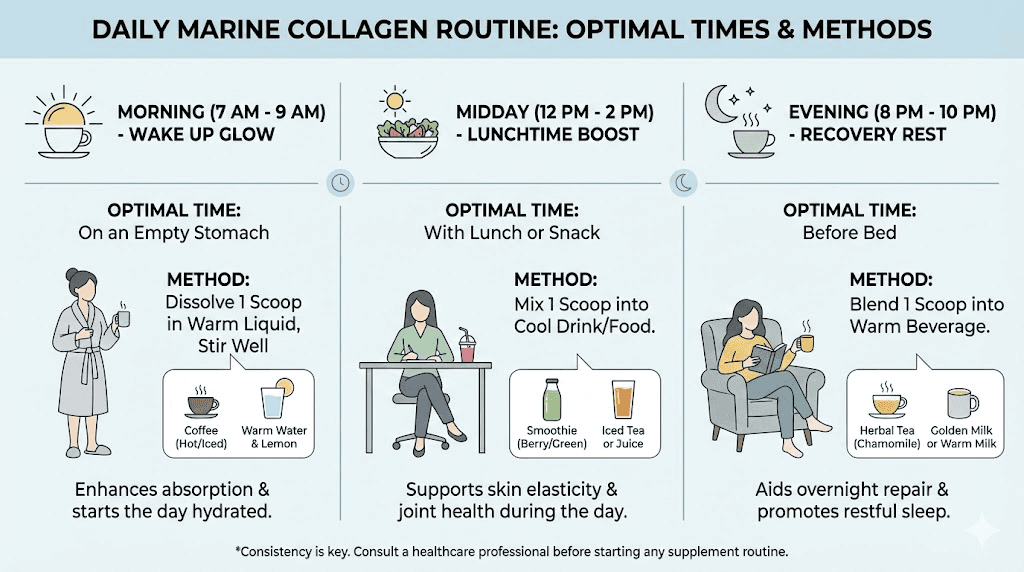
Taking collagen on an empty stomach, typically first thing in the morning, may enhance absorption by reducing competition with other proteins. Those using collagen for skin benefits often prefer morning dosing to support daytime skin hydration.
Athletes may benefit from timing collagen intake around training sessions. Some research suggests consuming collagen 30 to 60 minutes before exercise enhances uptake by tissues being mechanically stressed. This timing capitalizes on increased blood flow and tissue activity during exercise.
Evening supplementation works well for those focused on joint recovery or sleep quality. Glycine in collagen has calming properties that may support sleep onset and quality. Taking collagen before bed allows overnight repair processes to utilize available peptides.
Stacking with other supplements
Vitamin C is the most evidence-backed companion for collagen supplementation. Your body requires vitamin C to synthesize new collagen from available amino acids. Without adequate vitamin C, consumed collagen peptides cannot be fully utilized. Many quality marine collagen products include vitamin C for this reason.
Hyaluronic acid complements collagen for skin hydration. While collagen provides structural support, hyaluronic acid attracts and retains moisture. Together, they address both firmness and hydration aspects of youthful skin appearance.
For those using marine collagen as part of broader peptide stacks, compatibility is generally excellent. Marine collagen works alongside most therapeutic peptides without interaction concerns. The structural support from collagen complements the signaling functions of peptides like Epitalon or Sermorelin.
Lifestyle factors
Supplementation cannot compensate for destructive lifestyle habits. Smoking accelerates collagen breakdown through oxidative stress. Excessive sun exposure degrades skin collagen through UV damage. Chronic high stress increases cortisol, which inhibits collagen synthesis. Addressing these factors amplifies collagen supplementation benefits.
Sleep quality directly impacts tissue repair processes. Your body performs most regenerative work during deep sleep phases. Poor sleep limits the window for collagen synthesis even when peptides are available. Prioritizing sleep hygiene optimizes returns on collagen investment.
Hydration supports collagen function throughout the body. Dehydrated tissues cannot utilize collagen peptides effectively. Adequate water intake ensures proper peptide distribution and supports the hydrophilic properties of healthy collagen structures.
How to use marine collagen peptides powder
Practical application matters as much as theoretical knowledge. Here is how to actually incorporate marine collagen into your daily routine effectively.
Mixing and consumption methods
High-quality marine collagen dissolves easily in both cold and hot liquids. Most people add it to their morning coffee, tea, smoothies, or plain water. The neutral or slightly fishy taste of unflavored varieties disappears in most beverages. Flavored versions work well in water or compatible drinks.
Avoid adding collagen to extremely hot liquids immediately after boiling. While collagen peptides are relatively heat-stable, excessive temperatures can damage some amino acids. Letting hot beverages cool slightly before adding collagen preserves maximum benefit.
Collagen can also be incorporated into food. Adding it to oatmeal, yogurt, soups, or even baked goods provides another consumption avenue. Heat from cooking does not significantly degrade properly hydrolyzed collagen peptides. This versatility makes consistent daily intake easier to maintain.
Measuring and consistency
Most marine collagen products include a scoop providing 5 to 10 grams per serving. Use the provided scoop rather than eyeballing amounts for consistent dosing. Under-dosing reduces benefits while over-dosing wastes product without additional returns.
Set a specific time for collagen consumption to build habit. Attaching collagen intake to an existing routine, like morning coffee preparation, increases compliance. The peptide cycle planning principles apply here as well, consistency over time produces better results than perfect dosing occasionally.
Track your supplementation to ensure compliance. Simple methods like marking a calendar or using a pill organizer work well. Missing occasional doses will not derail progress, but frequent gaps will. Aim for at least 90 percent compliance for optimal results.
Storage and shelf life
Proper peptide storage preserves product integrity and extends usable life. Keep marine collagen in a cool, dry place away from direct sunlight.
Bathroom storage is not ideal due to humidity fluctuations from showers.
Most marine collagen powders have shelf lives of one to two years when properly stored. Once opened, using the product within three to six months ensures maximum freshness and efficacy. Collagen does not suddenly become dangerous after expiration but may gradually lose potency.
Signs of degradation include color changes, unusual odors, clumping that does not resolve with stirring, or changes in dissolvability.
Any of these suggest compromised product that may offer reduced benefits. When in doubt, replace with fresh product rather than consuming questionable collagen.
The role of marine collagen in comprehensive wellness protocols
SeekPeptides members often ask how marine collagen fits into broader health optimization strategies. The answer involves understanding collagen as a foundational supplement that supports and enhances other interventions.
Integration with peptide therapy
For those exploring therapeutic peptides, marine collagen provides an excellent foundation. Structural integrity from collagen supplementation creates better conditions for peptide therapies to work effectively. Strong connective tissue, healthy skin, and robust gut lining all support peptide absorption and distribution.
Marine collagen requires no injection, no reconstitution, and no complex administration protocols. This simplicity makes it an ideal entry point for those new to peptide supplementation. Starting with marine collagen builds familiarity with peptide benefits before advancing to more involved protocols.
The amino acid profile of marine collagen complements rather than competes with therapeutic peptides. Unlike taking multiple peptides targeting the same pathways, collagen provides raw materials while therapeutic peptides provide signaling.
This complementary relationship allows stacking without redundancy or interference.
Supporting long-term health
Collagen depletion accelerates with age. Natural production declines approximately one percent per year after age twenty.
By age sixty, collagen levels have dropped significantly, contributing to wrinkled skin, stiff joints, weakened bones, and fragile connective tissue.
Marine collagen supplementation addresses this decline directly. Rather than accepting collagen loss as inevitable aging, supplementation maintains higher collagen levels throughout life. This proactive approach supports healthier aging across multiple body systems simultaneously.
The investment in consistent collagen supplementation pays compound returns over time. Benefits accumulate gradually but persistently. Those who maintain supplementation for years rather than weeks experience the most dramatic differences compared to non-supplementing peers.
Realistic expectations and commitment
Marine collagen is not magic. It will not erase decades of aging overnight or compensate for neglected health in other areas. What it will do, with consistent use, is provide meaningful, research-backed support for skin, hair, nail, joint, and bone health.
Success with marine collagen requires commitment measured in months, not days. Those who try it for two weeks and quit will never experience real benefits. Those who integrate it into daily routine for six months and beyond will likely become lifelong users based on observable results.
Managing expectations prevents disappointment. Early benefits are subtle. Dramatic transformations take time. Comparing current results to baseline rather than idealized goals maintains perspective. Progress tracking through photos and measurements helps recognize improvements that might otherwise go unnoticed.
Frequently asked questions
Can I take marine collagen if I have a fish allergy?
No. Marine collagen derives from fish and contains fish proteins that can trigger allergic reactions. Those with any fish or seafood allergy should avoid marine collagen entirely. Bovine collagen provides an alternative for those allergic to fish but not to beef products.
How long until I see results from marine collagen?
Most people notice initial improvements in skin hydration and nail strength within four to six weeks. Significant skin elasticity improvements typically appear at eight to twelve weeks. Joint benefits require three to six months of consistent supplementation. Hair thickness improvements may take up to 16 weeks to become measurable.
Is marine collagen better than bovine collagen?
Marine collagen offers higher absorption rates, approximately 1.5 times better than bovine sources, due to smaller peptide sizes. It provides predominantly Type I collagen, ideal for skin benefits. Bovine collagen offers both Type I and Type III, potentially better for joint and gut applications. The best choice depends on specific health goals and dietary preferences.
Can I take marine collagen while pregnant or breastfeeding?
Safety data for marine collagen during pregnancy and lactation remains limited. No studies specifically examine these populations. The conservative recommendation is to avoid supplementation during pregnancy and breastfeeding unless specifically approved by your healthcare provider.
Does marine collagen interact with medications?
Marine collagen has no known significant drug interactions. However, its protein content could theoretically affect medications that interact with protein intake. Those on protein-restricted diets or taking medications with food interactions should consult healthcare providers before starting any peptide supplementation.
How much marine collagen should I take daily?
Clinical research supports doses between 2.5 and 10 grams daily for most applications. Skin benefits appear at the lower end of this range. Joint support may require 8 to 12 grams daily. Starting at 5 grams and adjusting based on response and goals represents a reasonable approach for most users.
Can I take marine collagen with other peptides?
Yes. Marine collagen works well alongside most therapeutic peptides. It provides structural support while other peptides provide signaling functions. Peptide stacking with marine collagen as a foundation is common among experienced users.
Does heat destroy marine collagen?
Properly hydrolyzed marine collagen peptides are relatively heat-stable and can be added to hot beverages or cooked foods without significant degradation. Avoid adding collagen to boiling liquids immediately after removing from heat, but normal hot coffee or tea temperatures are fine.
External resources
For researchers seeking personalized guidance on incorporating marine collagen into comprehensive wellness protocols, SeekPeptides provides detailed protocol resources, dosing calculators, and access to a community of experienced peptide researchers who have navigated these exact questions.