Jan 24, 2026
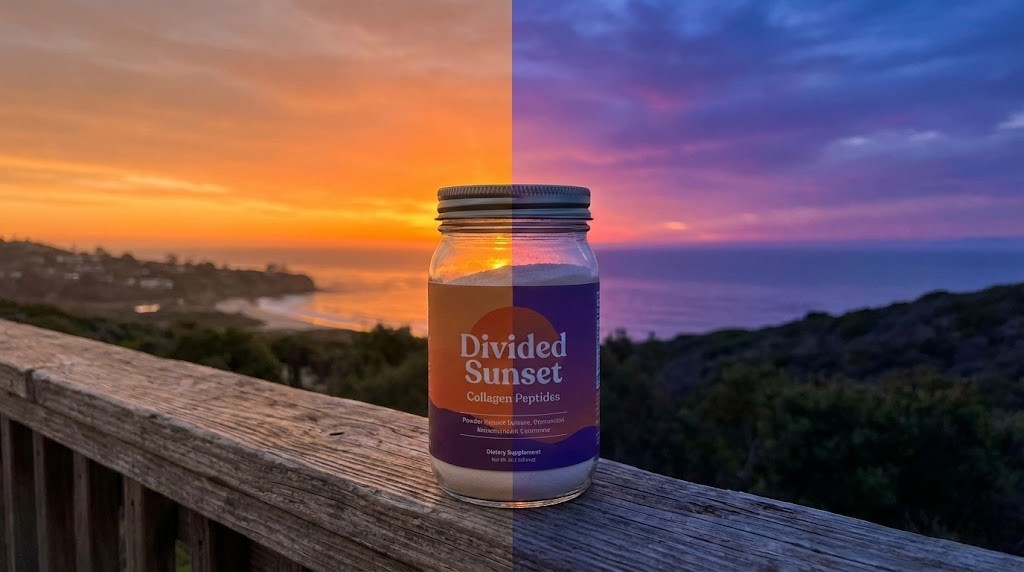
You have tried collagen before. Maybe it was a cheap powder from the grocery store. Perhaps it was an expensive marine formula that promised everything but delivered nothing. The results were underwhelming. Your skin still looked tired. Your joints still ached. Your nails still broke at the slightest pressure.
The problem was not collagen itself. The problem was the collagen you were using.
Divided Sunset Collagen Peptides represents a different approach to collagen supplementation. This grass-fed bovine formula delivers Type I and Type III collagen in a form your body can actually absorb and use. No fillers. No artificial additives. No hormones or antibiotics contaminating your daily wellness routine. Just pure, responsibly sourced collagen peptides that dissolve completely into your morning coffee or evening smoothie without changing the taste or texture of anything you consume.
This guide covers everything you need to know about Divided Sunset collagen peptides. We will explore how grass-fed bovine collagen differs from other sources, what the research says about collagen peptide benefits, how to use this specific product for maximum results, and how it compares to other options on the market. By the time you finish reading, you will understand exactly whether Divided Sunset is the right collagen choice for your goals, whether those goals involve younger-looking skin, stronger joints, faster recovery, or simply maintaining the structural integrity your body needs to function at its best.
What is Divided Sunset collagen peptides
Divided Sunset is a wellness brand focused on making nutritious choices accessible and easy. Their flagship collagen peptides product is an ultra-pure protein powder specifically formulated to integrate effortlessly into everyday meals and beverages. The company positions this as premium collagen, responsibly sourced from grass-fed, pasture-raised bovine that are free from antibiotics, hormones, and artificial additives.
The formula combines Type I and Type III collagen. These are the two most abundant collagen types in the human body, accounting for approximately 90 percent of all the collagen you naturally produce. Type I collagen provides structure to your skin, bones, tendons, and ligaments. Type III collagen supports your muscles, arteries, and internal organs. Together, they form the foundation of your body's connective tissue network.
Each serving of Divided Sunset Collagen Peptides contains 14 grams of collagen peptides, delivering 13 grams of protein and approximately 50 calories. The powder is unflavored and unbleached. It dissolves quickly in both hot and cold liquids. Most users report that it adds no perceptible taste to their beverages, making it one of the more versatile collagen delivery methods available.
Product specifications at a glance
Understanding the technical details helps you compare Divided Sunset to other collagen options. The formula checks several important boxes for quality-conscious consumers looking for clean bio peptide supplementation.
Collagen source: Grass-fed, pasture-raised bovine
Collagen types: Type I and Type III
Serving size: 14 grams
Protein per serving: 13 grams
Calories per serving: 50
Servings per container: Approximately 16 (8 oz container)
Certifications and claims:
Non-GMO
Gluten-free
Sugar-free
Dairy-free
Soy-free
Egg-free
Hormone-free
Antibiotic-free
Keto-friendly
Paleo-friendly
Low FODMAP at 1 serving
The product is available through major retailers including Amazon, Walmart, and the Divided Sunset website. Pricing typically ranges from $14 to $18 for an 8-ounce container, making it competitively priced compared to similar grass-fed bovine collagen products. Some users have noted that prices have increased slightly over time, which is common across the supplement industry.
Understanding collagen types and why they matter
Scientists have identified 28 different types of collagen in the human body. That sounds overwhelming. It is not. Only a handful of these types appear in meaningful quantities, and understanding what each one does helps you choose the right peptide formula for your specific goals.
Type I collagen is the most abundant protein in your body. It makes up about 90 percent of your total collagen. You find it in your skin, bones, teeth, tendons, and ligaments. When people talk about collagen for skin health or anti-aging, they are primarily talking about Type I. This is the collagen that provides structural support and tensile strength to tissues that need to resist stretching and pulling forces.
Type III collagen is the second most abundant type. It appears in your skin's middle layer, your muscles, your blood vessels, and your internal organs. Type III often works alongside Type I, particularly in tissues that need both structural support and elasticity. Your gut lining, for example, contains significant amounts of Type III collagen. So does your cardiovascular system.
Type II collagen is different. It makes up approximately 90 percent of the collagen in your cartilage. People seeking joint support often look specifically for Type II collagen, though Types I and III also contribute to joint health through their effects on tendons and ligaments.
Divided Sunset Collagen Peptides provides Types I and III without Type II. This makes it an excellent choice for skin, hair, nail, gut, and general structural support. It may not be the optimal choice if your primary goal is cartilage regeneration, though many users report joint benefits from Type I and III supplementation as well. The difference between collagen types matters more for some applications than others.
How grass-fed bovine collagen differs from other sources
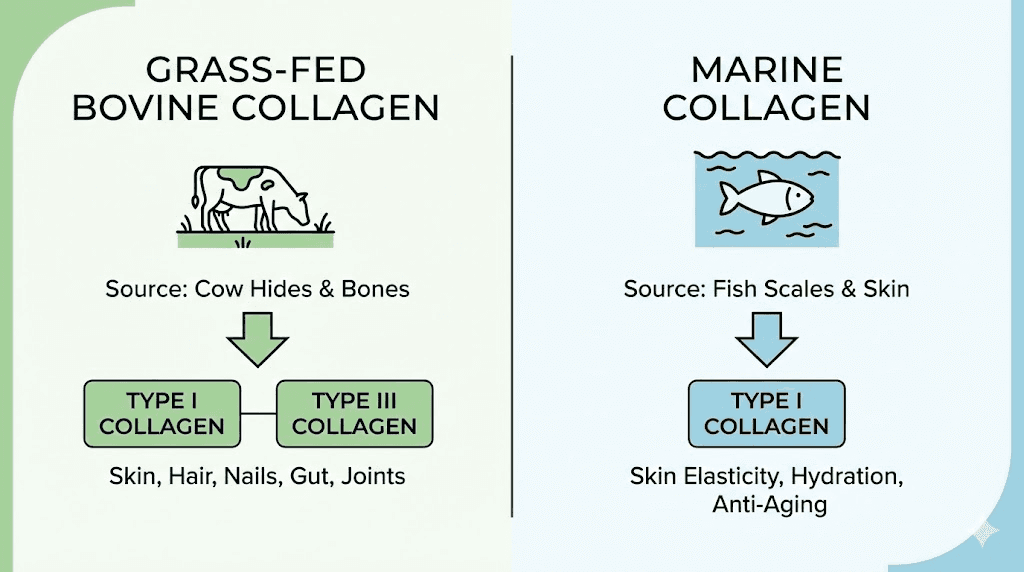
Collagen supplements come from various animal sources. Bovine collagen comes from cows. Marine collagen comes from fish. Porcine collagen comes from pigs. Chicken collagen comes from, well, chickens. Each source has distinct characteristics that affect both the collagen types provided and the overall quality of the end product.
Grass-fed bovine collagen offers several advantages. The cattle graze on natural vegetation rather than grain-based feeds. This typically results in a healthier fatty acid profile in the animals and, theoretically, higher quality collagen. Grass-fed operations also tend to avoid routine antibiotic and hormone use, which means fewer potential contaminants in the final product.
The distinction between grass-fed and conventional bovine collagen matters. Pasture-raised cattle living in natural conditions produce different nutritional profiles than feedlot cattle consuming processed grain. While the collagen molecule itself is similar regardless of how the animal was raised, the absence of hormones, antibiotics, and other additives in grass-fed sources appeals to consumers seeking cleaner bioactive peptides.
Marine collagen provides primarily Type I collagen with higher bioavailability due to smaller peptide sizes. Studies suggest marine collagen may absorb up to 1.5 times more efficiently than bovine collagen. However, bovine collagen still achieves approximately 90 percent absorption within a few hours of consumption, and it provides both Type I and Type III rather than just Type I alone.
Alt: Grass-fed bovine collagen vs marine collagen comparison diagram
Cost also differs between sources. Bovine collagen typically costs less than marine collagen. For consumers seeking Type I and III collagen on a budget, grass-fed bovine options like Divided Sunset offer excellent value. Marine collagen makes sense for pescatarians, those following certain religious dietary laws, or individuals specifically prioritizing maximum absorption rates over cost efficiency.
The science behind collagen peptide benefits
Collagen supplementation has generated substantial research interest over the past decade. Multiple clinical trials and meta-analyses have examined whether consuming collagen peptides actually delivers measurable benefits. The evidence is stronger for some applications than others, and understanding what the research shows helps you set realistic expectations for any peptide therapy protocol.
Skin health and anti-aging effects
The research on collagen and skin health is encouraging. A 2019 review and meta-analysis examined 19 studies involving more than 1,000 participants. The findings showed that collagen supplements taken for three months significantly improved skin hydration, elasticity, and density. Another randomized controlled trial from 2018 compared 1,000 mg of daily collagen peptides against placebo. After 12 weeks, the collagen group showed more elastic and hydrated skin with fewer wrinkles.
The mechanism involves more than just replacing lost collagen. When you consume collagen peptides, your digestive system breaks them down into amino acids. These amino acids then stimulate your fibroblasts, the cells responsible for producing new collagen in your skin. The result is not just collagen replacement but increased collagen production from within.
Hydrolyzed collagen peptides can increase skin hydration by up to 28 percent after 8 weeks of daily use according to some studies. Visible improvements in skin firmness and wrinkle reduction typically require 8 to 12 weeks of consistent supplementation. Patience matters. Collagen benefits accumulate over time. A 2023 systematic review and meta-analysis on collagen and skin aging found that at least 12 weeks of consistent intake was needed to see meaningful results.
Your skin contains abundant Type I and Type III collagen. As you age, collagen production naturally declines, approximately 1 percent per year after age 20. Environmental factors like sun exposure, smoking, and pollution accelerate this decline. Supplementing with collagen peptides may help offset some of this natural loss, though it cannot completely stop the aging process. Peptides for anti-aging work best as part of a comprehensive approach that includes sun protection, adequate sleep, and proper nutrition.
Hair and nail benefits
The evidence for collagen's effects on hair and nails is growing. One study published in the Journal of Investigative Dermatology found that collagen is strongly deposited in hair follicles, and collagen deficiency delays hair cycling and growth. Women with thinning hair have shown significant increases in hair quantity, scalp coverage, and thickness while taking daily collagen supplements.
Nail improvements appear even faster than skin or hair changes. Research by Hexsel and colleagues found that oral supplementation with specific bioactive collagen peptides improved nail growth and reduced symptoms of brittle nails. One study showed faster nail growth and fewer broken or chipped nails after only 4 weeks of daily collagen supplementation. This makes nails one of the first places many users notice benefits from products like Divided Sunset.
The amino acid profile of collagen peptides supports keratin production. Keratin is the protein that forms the structural foundation of both hair and nails. Proline and glycine, two amino acids abundant in collagen, serve as building blocks for keratin synthesis. By providing these raw materials, collagen supplementation may support stronger, healthier hair and nails even in individuals not experiencing obvious deficiencies.
Timeline expectations matter here. Hair and nail enhancements typically require 2 to 3 months of consistent supplementation. Some users report visible nail improvements sooner, but hair changes take longer due to the hair growth cycle. If you start taking Divided Sunset collagen today, expect to wait at least 8 weeks before evaluating results for hair specifically.
Joint and bone support
Collagen plays a crucial role in joint and bone health, though the research picture is more complex than for skin. Types I and III collagen support tendons, ligaments, and bone matrix. Type II collagen is more specific to cartilage. Divided Sunset provides Types I and III, which means its joint benefits come primarily through supporting the connective tissues around joints rather than rebuilding cartilage itself.
A year-long randomized controlled trial of more than 100 postmenopausal women with low bone mineral density found that 5 grams of collagen peptides daily significantly increased bone mineral density in the spine and upper thigh compared to placebo. This suggests collagen supplementation may support bone health, particularly in populations at risk for osteoporosis.
For joint comfort, collagen stimulates cartilage production which can cushion joints and reduce pain. One small observational study found that a hydrolyzed collagen preparation significantly reduced pain and stiffness in people with knee osteoarthritis. However, tissue repair takes time and results vary considerably between individuals.
The injury healing potential of collagen supplementation interests athletes and active individuals. The amino acids in collagen, particularly glycine and proline, support tissue repair processes throughout the body. Some research suggests collagen supplementation may accelerate recovery from exercise-induced damage, though more studies are needed to establish optimal protocols for athletic applications.
Gut health connections
The relationship between collagen and gut health deserves attention. Your intestinal lining contains significant amounts of Type III collagen. When this lining becomes damaged, a condition sometimes called increased intestinal permeability or leaky gut, it may contribute to inflammation and other health issues.
Collagen supplementation may help repair microscopic holes in the gut lining. The amino acid glycine, abundant in collagen peptides, has anti-inflammatory properties that may soothe the digestive tract. Glutamine, another amino acid present in collagen, serves as fuel for intestinal cells and supports their regeneration.
Anecdotal reports from Divided Sunset users include improvements in digestive comfort. One reviewer mentioned that a rash around their fingers, possibly related to gut health or inflammation, almost cleared up within one week of adding the collagen to their morning coffee. While such individual reports cannot establish causation, they align with the theoretical mechanisms by which collagen might support gut healing.
The connection between gut health and overall wellness extends beyond digestion. Your gut produces neurotransmitters, houses most of your immune system, and influences inflammation throughout your body. Supporting gut integrity through collagen supplementation may have downstream effects that contribute to general wellbeing even in people without obvious digestive symptoms.
How to use Divided Sunset collagen peptides
Getting the most from any collagen supplement requires understanding proper usage. The good news is that Divided Sunset makes this easy. The unflavored, quick-dissolving formula works with almost any food or beverage, giving you flexibility in how you incorporate it into your daily routine.
Dosage recommendations
Clinical research on collagen peptides has used doses ranging from 2.5 to 15 grams daily. Most studies showing significant benefits used doses of 5 to 10 grams per day. Divided Sunset provides 14 grams per serving, which falls at the higher end of this range and should be sufficient for most goals.
You can take the full serving at once or split it across multiple doses. Some people prefer adding a scoop to their morning coffee and another to an evening smoothie. Others take the entire serving in one go. Research has not identified a clear advantage to either approach, so personal preference and convenience should guide your decision.
Starting with a lower dose makes sense for some individuals. If you have a sensitive digestive system, beginning with half a serving and gradually increasing may help you avoid any potential discomfort like gas or bloating. Most people tolerate collagen peptides well, but introducing any new protein source slowly is a reasonable precaution.
The peptide calculator can help you determine appropriate doses based on your body weight and goals, though for standard collagen supplementation, the manufacturer's recommended serving size typically provides adequate amounts. More is not necessarily better with collagen. Your body can only utilize a certain amount of amino acids at once, and excess simply gets metabolized for energy or other purposes.
Best timing for collagen intake
Experts disagree on the optimal time to take collagen. Some recommend morning consumption on an empty stomach. Others suggest evening dosing to align with your body's natural repair processes during sleep. The truth is that consistency matters more than timing. Taking collagen at whatever time you will remember to take it consistently will yield better results than taking it at the theoretically optimal time but missing doses regularly.
Morning advocates point out that your stomach's acidic environment creates ideal conditions for breaking down collagen peptides. When you take collagen on an empty stomach, there is minimal competition from other nutrients, potentially allowing for maximum absorption. For best results with this approach, consume collagen 30 minutes before breakfast with water or herbal tea.
Evening advocates note that your body's natural repair processes peak during sleep. Growth hormone release occurs primarily during deep sleep phases, and having amino acids available during this time can support natural collagen synthesis. The optimal window for evening intake is typically 1 to 2 hours before bedtime, allowing for proper digestion while avoiding sleep disruption from late-night eating.
The practical reality is that collagen powders are broken down similarly regardless of when you take them, as long as you take a sufficient dose. Choose a time that fits naturally into your existing routine. If you already make morning coffee, add collagen to that. If you already make evening smoothies, add collagen there. The best time is the time you will actually do it.
Mixing and preparation methods
Divided Sunset dissolves easily in both hot and cold liquids. This versatility opens up numerous preparation options. The most popular method is simply adding it to coffee or tea, where it disappears completely without changing the flavor. Hot liquids may actually improve dissolution speed, though both temperatures work well.
Collagen peptides are heat stable up to 300 degrees Celsius, far higher than normal cooking and baking temperatures. Water boils at 100 degrees Celsius, so adding collagen to hot beverages, soups, or stews will not damage its benefits. You can even add it to baked goods, though the texture may be affected in some recipes.
Popular mixing options include:
Coffee or tea, hot or iced
Smoothies and protein shakes
Oatmeal or overnight oats
Soups, stews, and broths
Yogurt or cottage cheese
Pancake or waffle batter
Homemade energy balls or bars
Plain water if you prefer simplicity
One reviewer mentioned mixing Divided Sunset collagen with morning coffee and MCT oil, reporting that the combination provided extra energy throughout the day. This aligns with the ketogenic diet approach that many collagen users follow. The peptide protocol for weight loss often includes collagen as a satiating protein source that supports metabolism without adding significant carbohydrates.

Enhancing absorption
Vitamin C plays an important role in collagen synthesis. Your body needs vitamin C to produce its own collagen, and taking vitamin C alongside collagen supplements may enhance the overall benefit. Consider consuming collagen with vitamin C-rich foods or beverages, such as orange juice, berries, or a vitamin C supplement.
Certain substances may interfere with collagen absorption. Calcium and iron supplements compete for absorption when taken simultaneously with collagen. If you take these supplements, space them at least 2 hours apart from your collagen dose to maximize the benefit from each.
Avoiding excessive sugar and refined carbohydrates around the time you take collagen may also help. High blood sugar can promote glycation, a process that damages existing collagen in your body. While this does not directly affect the absorption of supplemental collagen, it can undermine the benefits you are trying to achieve.
Hydration matters for any peptide protocol. Adequate water intake supports digestion, absorption, and the transport of nutrients throughout your body. Aim for at least eight glasses of water daily, more if you are physically active or live in a hot climate.
What to expect from Divided Sunset collagen
Setting realistic expectations helps you evaluate whether collagen supplementation is working. Benefits do not appear overnight. Collagen is not a magic powder that transforms your skin or joints in a week. It is a nutritional supplement that supports your body's natural processes over time.
Timeline for visible results
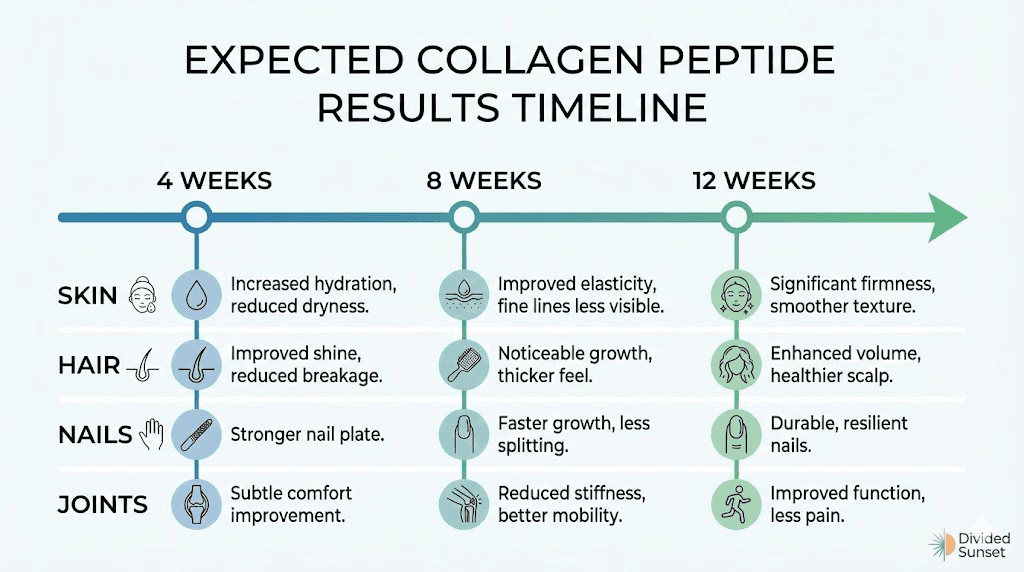
Different benefits appear on different timelines based on clinical research. Nail improvements often appear first, sometimes within 4 weeks. Many users notice their nails becoming stronger, breaking less frequently, and growing faster within the first month of consistent supplementation.
Skin improvements typically require 8 to 12 weeks. Increased hydration may be noticeable sooner, but meaningful changes in elasticity, firmness, and wrinkle depth take longer to manifest. Some individuals report subtle changes around week 4 to 6, but most need the full 12-week period to see significant skin transformation.
Hair changes take the longest due to the hair growth cycle. Expect to wait 2 to 3 months minimum before evaluating hair benefits. New hair growth, reduced shedding, or improved hair quality typically become noticeable after consistent supplementation over this timeframe.
Joint comfort improvements vary considerably. Some research suggests joint benefits can appear within 3 to 5 weeks, while other studies show optimal results after longer periods. Individual factors like age, activity level, and the specific nature of any joint issues all influence the timeline. Understanding how long peptides take to work helps manage expectations for any supplementation protocol.
What real users report
Customer reviews for Divided Sunset Collagen Peptides provide insight into real-world results. The product maintains a 4.7 star rating from over 300 reviews on Walmart, suggesting generally positive user experiences.
Common positive reports include:
Substantial differences in hair, nails, and skin after a few months of use
Noticeable face and nail changes within one week for some users
Skin improvements including clearing of minor rashes or irritation
Increased energy when combined with morning coffee and MCT oil
No taste change in beverages when mixed properly
Good dissolution with easy mixing
Common concerns include:
Price increases over time, though the product remains competitively priced
Not organic, despite being grass-fed and hormone-free
Some users needed to experiment with mixing techniques for optimal dissolution
Long-term users who have taken the product in smoothies for over a year report seeing and feeling great differences in skin appearance. This aligns with research suggesting that collagen benefits continue to accumulate with sustained use. Before and after results become more dramatic over extended supplementation periods.
Potential side effects and considerations
Collagen peptides have an excellent safety profile. The United States Food and Drug Administration has classified gelatin, from which collagen peptides are prepared, as a safe substance. Both the World Health Organization and the European Commission for Health and Consumer Protection have stated that hydrolyzed collagen is safe for human consumption.
Minor side effects can occur in some individuals. These typically include nausea, flatulence, or dyspepsia. Such symptoms are usually mild and temporary, often resolving as your digestive system adjusts to the new protein source. Starting with a lower dose and gradually increasing can minimize these issues.
Bovine collagen is not suitable for people with beef allergies or sensitivities. If you have a known allergy to beef or other bovine products, Divided Sunset Collagen Peptides is not appropriate for you. Marine collagen from fish sources would be a better alternative, assuming you do not also have fish allergies.
Pregnant and breastfeeding women should consult their healthcare provider before starting any new supplement, including collagen. While collagen is generally considered safe, individual circumstances vary and professional guidance is appropriate during these life stages.
Collagen supplements are always derived from animals. Vegetarians and vegans cannot use collagen peptides regardless of the source. Plant-based products marketed as collagen alternatives contain nutrients that support collagen production, such as vitamin C and zinc, but they do not contain actual collagen.
How Divided Sunset compares to other collagen products
The collagen supplement market has exploded in recent years. Dozens of brands compete for your attention, each claiming superiority. Understanding how Divided Sunset positions within this landscape helps you make an informed choice.
Divided Sunset vs marine collagen options
Marine collagen and bovine collagen serve different needs. Marine collagen provides primarily Type I collagen with potentially higher bioavailability due to smaller peptide sizes. Divided Sunset provides Types I and III from bovine sources with slightly lower but still excellent absorption rates.
Choose Divided Sunset if you want both Type I and Type III collagen, prefer bovine sources for dietary or religious reasons, prioritize cost-effectiveness, or have fish allergies. Choose marine collagen if you specifically want maximum absorption rates, follow a pescatarian diet, have beef sensitivities, or prefer ocean-sourced products.
The complete guide to marine collagen provides detailed comparison information for those considering fish-based options. Both sources deliver meaningful benefits when used consistently. The choice often comes down to personal preference, dietary restrictions, and specific goals rather than objective superiority.
Divided Sunset vs premium collagen brands
Premium collagen brands like Vital Proteins command higher prices while offering similar core ingredients. The primary differences typically involve branding, additional ingredients, third-party testing, and packaging rather than fundamental differences in the collagen itself.
Divided Sunset positions as a quality product at a mid-range price point. It lacks some features of premium brands, such as added vitamin C or hyaluronic acid, but it also lacks the premium price tag. For consumers who simply want clean, grass-fed bovine collagen without extras, this represents excellent value.
Third-party testing is one area where premium brands sometimes differentiate. While Divided Sunset makes claims about being hormone-free and antibiotic-free, independent verification of these claims is not prominently featured. Consumers who prioritize third-party testing may prefer brands that more visibly display independent verification of their sourcing claims.
Multi-collagen formulas vs single-source options
Some products combine multiple collagen sources to provide Types I, II, III, V, and X in a single formula. Divided Sunset focuses on Types I and III from a single bovine source. Each approach has merits.
Multi-collagen formulas appeal to users seeking comprehensive coverage of all major collagen types. They may include bovine, marine, chicken, and egg sources in one product. The trade-off is potential quality inconsistency across sources and typically higher prices.
Single-source products like Divided Sunset offer simplicity and consistency. You know exactly what you are getting and where it came from. For users focused on skin, hair, nail, and gut benefits, Types I and III provide the most relevant support. Type II collagen for cartilage can be added separately through a dedicated joint supplement if needed.
Optimizing your collagen protocol
Taking collagen is straightforward. Getting maximum benefit requires a bit more thought. Lifestyle factors, complementary supplements, and consistent habits all influence how much you get from your Divided Sunset investment.
Lifestyle factors that support collagen benefits
Sun protection matters enormously for collagen preservation. UV radiation from sunlight degrades existing collagen in your skin faster than almost any other factor. Wearing sunscreen, seeking shade during peak hours, and wearing protective clothing all help preserve the collagen you are working to build.
Sleep quality directly affects collagen production. Your body does most of its repair and regeneration work during deep sleep. Chronic sleep deprivation undermines collagen synthesis regardless of how much collagen you consume. Prioritizing 7 to 9 hours of quality sleep nightly supports your supplementation efforts.
Smoking and excessive alcohol consumption both damage collagen. If you are investing in collagen supplementation, reducing or eliminating these habits dramatically improves your return on investment. The longevity peptide benefits you seek are undermined by lifestyle factors that accelerate collagen breakdown.
Exercise supports collagen production in several ways. Physical activity stimulates fibroblasts, improves circulation to deliver nutrients where needed, and triggers repair processes that utilize collagen. Both strength training and cardiovascular exercise provide benefits, though excessive endurance exercise without adequate recovery may temporarily increase collagen breakdown.
Complementary supplements
Vitamin C is the most important companion to collagen supplementation. Your body requires vitamin C to synthesize new collagen fibers. Without adequate vitamin C, even abundant amino acid availability from collagen supplements cannot translate into actual collagen production. Most adults should aim for at least 75 to 90 mg of vitamin C daily, with many collagen users targeting higher amounts.
Zinc supports collagen synthesis and wound healing. Adequate zinc intake helps your body utilize the amino acids from collagen peptides effectively. Good dietary sources include meat, shellfish, nuts, and seeds. Supplementation may benefit those with documented deficiencies.
Hyaluronic acid works synergistically with collagen for skin health. While collagen provides structural support, hyaluronic acid provides hydration, holding up to 1,000 times its weight in water. Many premium collagen formulas include hyaluronic acid, though it can also be taken separately.
Copper plays a role in collagen cross-linking, the process that gives collagen fibers their strength. Copper peptides like GHK-Cu are popular in skincare precisely because of this relationship between copper and collagen structure. Dietary copper from foods like shellfish, nuts, and chocolate typically provides adequate amounts.
Building sustainable habits
The biggest factor determining collagen supplement success is consistency. Taking collagen sporadically yields sporadic results. Taking it daily for months and years yields cumulative benefits that compound over time. Building sustainable habits ensures you actually take the product rather than letting it sit unused in your cabinet.
Habit stacking works well for collagen supplementation. Attach your collagen routine to an existing habit. If you already make coffee every morning, add collagen to that process. If you already make a smoothie after workouts, add collagen there. The existing habit serves as a trigger for the new behavior.
Keeping the collagen visible and accessible increases compliance. Store it next to your coffee maker or in your smoothie ingredient area. Remove friction from the process. The easier you make it to take collagen, the more consistently you will do so.
Tracking your results can reinforce the habit. Take photos monthly, note changes in nail strength, pay attention to how your skin feels. When you observe positive changes, motivation to continue increases. When you do not observe changes, you have data to evaluate whether adjustments are needed or whether more time is required.
Common questions about Divided Sunset collagen
People considering collagen supplementation often have specific questions. Addressing these directly helps you make an informed decision about whether Divided Sunset is right for your needs.
Does Divided Sunset collagen have a taste
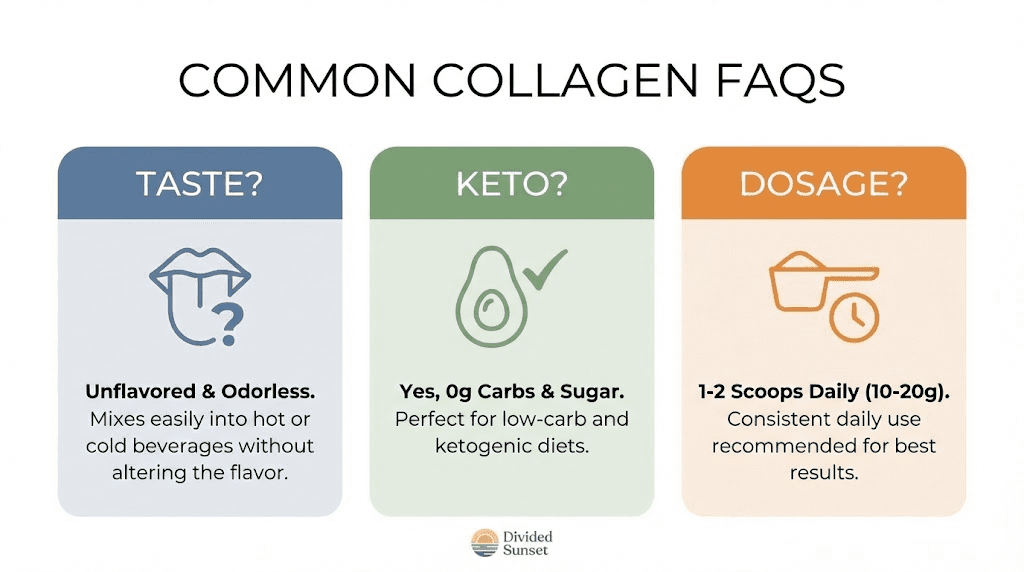
No. Divided Sunset Collagen Peptides is unflavored and does not change the taste of beverages when mixed properly. Users consistently report that it dissolves completely in coffee, smoothies, and other liquids without adding any perceptible flavor. This differs from some cheaper collagen products that can leave a noticeable aftertaste.
Is Divided Sunset collagen keto friendly
Yes. The product contains no sugar, minimal carbohydrates, and fits well within ketogenic macronutrient ratios. The 13 grams of protein per serving comes with approximately 50 calories and negligible carbohydrates, making it compatible with strict keto protocols. Many keto followers use collagen as a primary protein source because of its unique amino acid profile and minimal impact on ketosis.
Can you take Divided Sunset collagen while pregnant
Consult your healthcare provider before taking any supplement during pregnancy or breastfeeding. While collagen peptides are generally considered safe, individual circumstances vary. Your doctor can advise whether collagen supplementation is appropriate for your specific situation and recommend appropriate dosing if approved.
Is Divided Sunset collagen organic
No. While Divided Sunset sources from grass-fed, pasture-raised, hormone-free, and antibiotic-free bovine, the product is not certified organic. This is a common criticism noted in some reviews. Users seeking certified organic collagen should consider other brands, though grass-fed sourcing provides many of the benefits associated with organic products.
How long does a container of Divided Sunset collagen last
At the recommended serving size of 14 grams, an 8-ounce container provides approximately 16 servings. If you take one serving daily, a container lasts about two weeks. This means you would need roughly two containers per month for consistent daily supplementation.
Does collagen peptides count as protein
Yes. Collagen peptides are a form of protein. The 13 grams of protein per serving of Divided Sunset contributes to your daily protein intake. However, collagen has a different amino acid profile than complete proteins like whey or eggs. It is high in glycine, proline, and hydroxyproline but lacks meaningful amounts of certain essential amino acids like tryptophan. For this reason, collagen should not be your sole protein source but can certainly contribute to overall protein intake.
Where to buy Divided Sunset collagen peptides
Divided Sunset products are available through multiple retail channels. Knowing your options helps you find the best price and most convenient purchasing method for your needs.
Major retailers
Walmart carries Divided Sunset Collagen Peptides both in stores and online. Pricing at Walmart is typically around $14.22 for the 8-ounce container, translating to $1.78 per ounce. Walmart also carries the Multi Collagen Peptides variant at a slightly higher price point.
Amazon stocks Divided Sunset products with Prime shipping available in many areas. Amazon prices fluctuate more than brick-and-mortar retailers, so checking both options before purchasing can help you find the best deal. Customer reviews on Amazon provide additional user feedback beyond what is available on other platforms.
The Divided Sunset website sells directly to consumers. Purchasing directly sometimes offers bulk discounts or subscription options not available through third-party retailers. The website also provides the most comprehensive product information and can answer customer service questions directly.
Price considerations
At roughly $14 to $18 for a two-week supply, Divided Sunset collagen represents a mid-range investment. Monthly costs for daily supplementation range from approximately $28 to $36 depending on where you purchase and whether you find sales or discounts.
Compared to premium collagen brands that can cost $40 or more for similar quantities, Divided Sunset offers good value for grass-fed bovine collagen. Compared to budget brands that may cost less than $10 for comparable quantities, you pay a premium for the grass-fed sourcing and clean ingredient profile.
The peptide cost calculator can help you compare costs across different products and determine the per-serving cost of various collagen options. When evaluating cost, consider not just the price per container but the cost per gram of collagen and the value of the sourcing and quality standards that differentiate products.
Integrating collagen into your broader wellness routine
Collagen supplementation works best as part of a comprehensive approach to health. The benefits compound when combined with other evidence-based practices for skin, joint, and overall wellness.
Collagen and skincare
Internal collagen supplementation complements topical skincare. While you nourish collagen production from within using Divided Sunset, external products can protect and support existing collagen in your skin. Retinoids stimulate collagen production topically. Vitamin C serums provide antioxidant protection. Sunscreen prevents UV-induced collagen degradation.
The question of whether peptides and retinol can be used together arises frequently. The answer is generally yes, though proper sequencing and product selection matter. Collagen supplementation supports the skin from inside while retinol and other actives work from outside, creating a comprehensive approach to skin health.
Hydration supports both internal and external collagen benefits. Well-hydrated skin appears more plump and healthy. Combining adequate water intake with collagen supplementation and appropriate topical moisturizers creates optimal conditions for visible skin improvements.
Collagen for active lifestyles
Athletes and active individuals often turn to collagen for joint support and recovery. The amino acids in collagen, particularly glycine and proline, support tissue repair after exercise. Some research suggests collagen supplementation may help maintain joint health during intensive training periods.
Timing collagen around workouts may enhance benefits. Some practitioners recommend taking collagen 30 to 60 minutes before exercise to provide amino acids during the repair process. Others prefer post-workout supplementation. Evidence for specific timing is limited, but consistent daily intake clearly matters more than precise workout timing.
Collagen can complement other sports nutrition practices. It does not replace adequate total protein intake from complete protein sources, but it adds amino acids that support connective tissue specifically. For athletes dealing with tendon issues, joint discomfort, or recovery challenges, collagen supplementation may provide meaningful support alongside physical therapy and appropriate training modifications.
The connection between peptides and muscle growth extends beyond collagen, but collagen's role in supporting the connective tissue infrastructure that enables muscle function should not be overlooked. Strong tendons and ligaments allow muscles to perform effectively and resist injury.
Collagen for women
Women face unique considerations around collagen. Hormonal changes during perimenopause and menopause accelerate collagen loss in skin. Estrogen supports collagen production, and declining estrogen levels contribute to faster skin aging during the menopausal transition.
Collagen supplementation may help offset some of this hormonally-driven loss. Research showing improved bone mineral density with collagen supplementation is particularly relevant for postmenopausal women at increased osteoporosis risk. The best peptides for women often include collagen as a foundational supplement.
Hair thinning affects many women with age and hormonal changes. Collagen's role in supporting hair follicle structure and function makes it relevant for women experiencing hair changes. Combined with appropriate medical evaluation for underlying causes, collagen supplementation may support hair health during transitions.
Peptides for menopause and perimenopause support extend beyond collagen, but collagen forms a reasonable foundation for women navigating these life stages. Its excellent safety profile makes it appropriate for long-term use during periods when hormonal changes are affecting collagen production.
The broader context of peptide supplementation
Collagen peptides are one of the most popular and accessible forms of peptide supplementation. Understanding how they fit into the broader peptide landscape helps contextualize their role and potential.
What makes collagen peptides different
Collagen peptides differ from other peptides in several important ways. They are derived from a natural protein through enzymatic breakdown, making them relatively simple compounds compared to synthetic bioactive peptides. They are widely available, affordable, and have a long safety record. They work by providing amino acid building blocks rather than through receptor-mediated signaling like many therapeutic peptides.
The simplicity of collagen peptides is both a strength and a limitation. They are easy to use, have few side effects, and require no special handling or preparation. However, they also lack the targeted effects of more specialized peptides designed for specific physiological functions.
For many people, collagen peptides represent an entry point into peptide awareness. Understanding collagen can lead to interest in other peptide options for more specific goals. SeekPeptides provides comprehensive information on the full spectrum of peptide options beyond basic collagen supplementation.
When collagen is enough
For general wellness support, improved skin quality, stronger nails, better hair, and mild joint support, collagen peptides like Divided Sunset may be entirely sufficient. These are common, broadly applicable goals that do not require specialized interventions.
Collagen is enough when your goals are modest, your timeline is flexible, and you prefer the simplest possible approach. It is an excellent foundation for anyone interested in supporting their body's connective tissue health without the complexity of more targeted peptide protocols.
When to consider other options
More specific goals may benefit from more specific interventions. Significant injury healing needs might warrant investigation of peptides like BPC-157. Pronounced aging concerns might lead to interest in growth hormone-related peptides. Performance optimization might involve peptides beyond basic collagen.
SeekPeptides helps users understand the full range of options and develop personalized protocols based on individual goals. Members gain access to comprehensive guides, protocol templates, and community support for navigating peptide decisions beyond basic collagen supplementation.
For researchers serious about optimizing their wellness protocols, SeekPeptides offers the most comprehensive resource available, with evidence-based guides, proven protocols, and a community of thousands who have navigated these exact questions.
Frequently asked questions
Does divided sunset collagen help with weight loss?
Collagen peptides provide protein without significant carbohydrates, which can support satiety and help maintain muscle mass during calorie restriction. However, collagen itself is not a direct fat-burning agent. It may support weight management as part of a comprehensive approach but should not be relied upon as a primary weight loss intervention.
Can you take divided sunset collagen with other supplements?
Yes. Collagen peptides can be taken alongside most supplements. For optimal absorption, space collagen at least 2 hours from calcium and iron supplements. Taking collagen with vitamin C may enhance benefits. Most users successfully combine collagen with multivitamins, omega-3s, and other common supplements without issues.
How do you store divided sunset collagen peptides?
Store the powder in a cool, dry place away from direct sunlight. The container should be kept sealed when not in use. Proper storage helps maintain potency and freshness. The peptide storage guide provides detailed information on keeping supplements effective over time.
Is divided sunset collagen tested for heavy metals?
Divided Sunset claims their product is sourced from grass-fed, antibiotic-free, hormone-free bovine, but third-party heavy metal testing is not prominently advertised. Consumers concerned about heavy metals may want to contact the company directly for testing documentation or consider brands that specifically feature independent testing results.
Can men use divided sunset collagen?
Absolutely. While some collagen marketing targets women, the benefits of collagen supplementation apply equally to men. Joint support, skin health, and connective tissue maintenance are relevant regardless of gender. Men often particularly appreciate collagen's potential support for athletic recovery and joint function.
Does divided sunset collagen interact with medications?
Collagen peptides have a good safety profile with few known drug interactions. However, if you take prescription medications, consult your healthcare provider before starting any new supplement. This is particularly important for blood thinners, medications for autoimmune conditions, or any prescription where protein intake is medically managed.
External resources
In case I do not see you, good afternoon, good evening, and good night. May your collagen stay pure, your skin stay supple, and your joints stay comfortable. Join us.