Jan 27, 2026

Your mitochondria are failing you. Every rep, every set, every grueling workout demands cellular energy your aging powerhouses struggle to deliver. And here is the frustrating truth that most bodybuilders never learn: no amount of pre-workout stimulants, no perfect training split, no optimized nutrition protocol can compensate for mitochondria that cannot keep up with your ambitions.
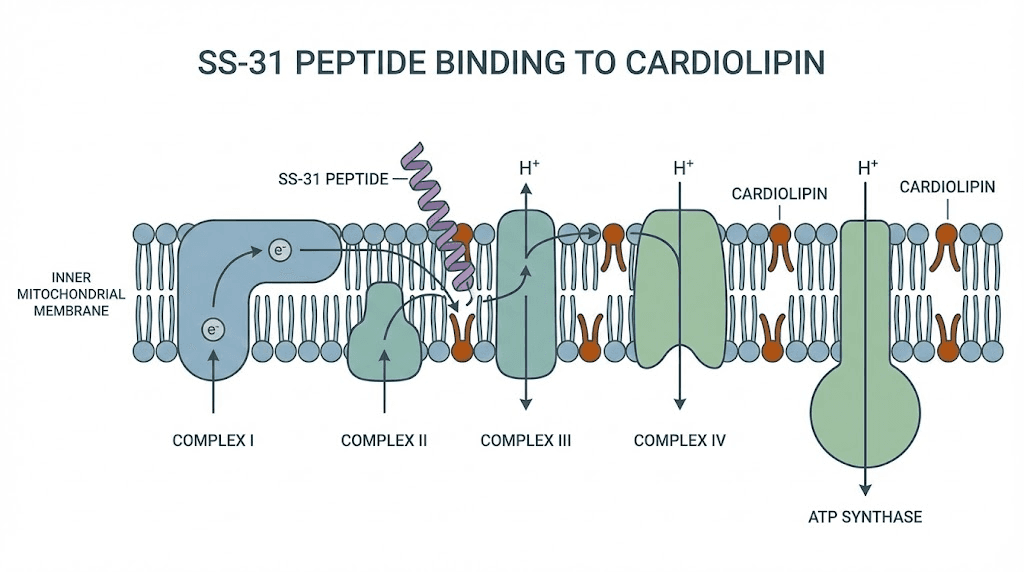
SS-31, also known as elamipretide, represents a fundamentally different approach to performance optimization. Rather than masking fatigue with stimulants or forcing adaptation through sheer volume, this tetrapeptide works at the deepest level of cellular function. It binds directly to cardiolipin, a specialized phospholipid in your inner mitochondrial membrane, and restores the electron transport chain efficiency that declines with age and accumulated training stress.
The research on SS-31 reveals something remarkable. In aged mice, a single treatment restored mitochondrial ATP production to levels seen in young animals within just one hour. Eight weeks of treatment increased treadmill endurance, improved fatigue resistance, and even increased muscle mass compared to untreated controls. For bodybuilders seeking every legitimate advantage, these findings demand attention.
This guide explores everything researchers and bodybuilders need to know about SS-31. We will examine the mechanism of action, analyze the relevant studies, discuss practical dosing protocols, explore stacking strategies with other mitochondrial peptides, and address safety considerations. Whether you are investigating SS-31 for athletic performance, recovery optimization, or longevity benefits, you will find comprehensive information here. SeekPeptides provides evidence-based guidance on peptide research, and SS-31 stands as one of the most interesting compounds in the mitochondrial optimization space.
Understanding SS-31: the mitochondrial peptide
SS-31 belongs to a class of compounds called mitochondria-targeted peptides. Unlike most peptides that work through receptor binding at the cell surface, SS-31 penetrates directly into cells and accumulates in the inner mitochondrial membrane. This unique mechanism gives it access to cellular processes that other compounds simply cannot reach.
The peptide itself consists of just four amino acids: D-arginine, dimethyltyrosine, lysine, and phenylalanine. This specific sequence creates an aromatic-cationic structure that the mitochondria readily absorb. Once inside, SS-31 binds to cardiolipin, a phospholipid found exclusively in mitochondrial membranes.
Cardiolipin matters enormously for energy production. It organizes the electron transport chain complexes into efficient supercomplexes. It maintains the structural integrity of cristae, those folded inner membrane structures where ATP synthesis occurs. When cardiolipin becomes damaged or depleted, which happens with aging and oxidative stress, mitochondrial efficiency plummets.
Think of cardiolipin as the organizational framework of your cellular power plants. Without proper cardiolipin function, your mitochondria become disorganized, leaky, and inefficient. They produce less ATP and more reactive oxygen species. This creates a vicious cycle where oxidative damage further impairs cardiolipin, leading to even worse mitochondrial function.
SS-31 breaks this cycle. By binding to and stabilizing cardiolipin, it restores proper electron transport chain organization. Studies show this improves ATP production efficiency while reducing reactive oxygen species generation. The result is more energy with less cellular damage.
How SS-31 differs from other mitochondrial compounds
The longevity peptide landscape includes several compounds targeting mitochondrial function. Understanding how SS-31 compares helps clarify its unique value proposition for bodybuilders.
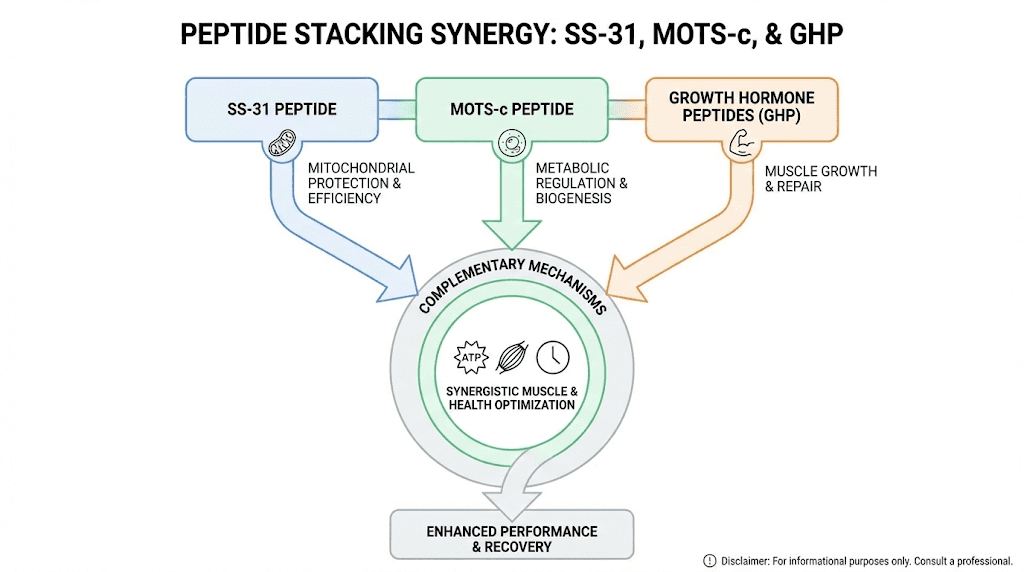
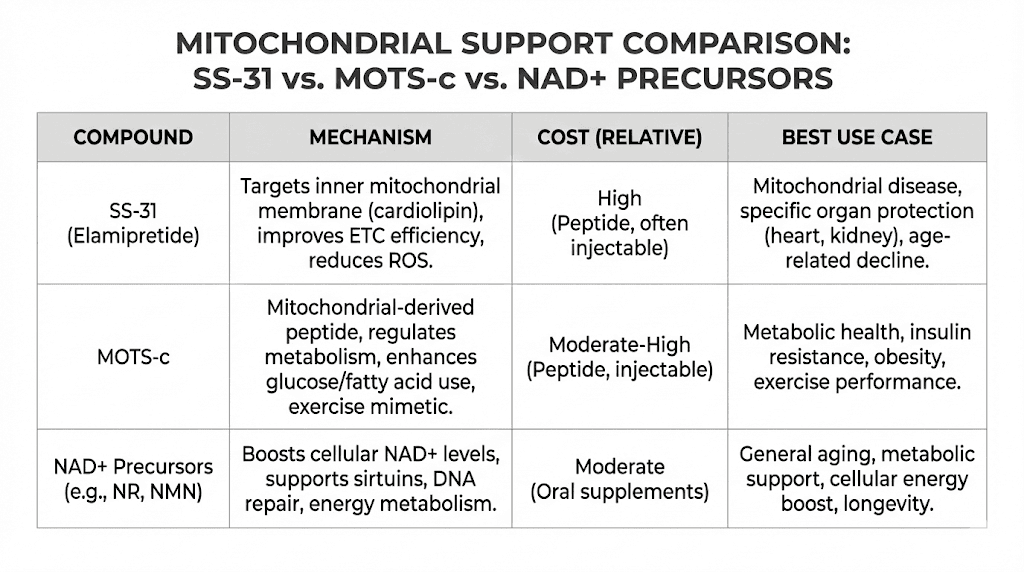
MOTS-c is a mitochondria-derived peptide that activates AMPK, the master metabolic regulator. It improves insulin sensitivity and glucose uptake, making it excellent for metabolic conditioning and fat loss. However, MOTS-c works through signaling pathways rather than directly repairing mitochondrial membranes. The two peptides complement each other: SS-31 fixes the hardware while MOTS-c optimizes the software.
NAD+ precursors like NMN and NR boost levels of a coenzyme essential for mitochondrial function. They support the sirtuins and other enzymes involved in cellular repair. But they do not directly address cardiolipin damage or electron transport chain organization.
CoQ10 serves as an electron carrier in the mitochondrial membrane. Supplementation can help, especially in those with depleted levels. Yet CoQ10 cannot repair structural damage to the membrane itself.
SS-31 targets a fundamental issue that other compounds miss. It directly stabilizes the mitochondrial membrane architecture. This makes it particularly valuable for situations involving accumulated mitochondrial damage, whether from aging, intense training, or other stressors.
The science behind SS-31 and exercise performance
Research on SS-31 and exercise comes primarily from animal studies, with human trials focused on disease conditions rather than performance enhancement. Nevertheless, the findings illuminate how this peptide might benefit bodybuilders and athletes.
The landmark study from Campbell and colleagues in 2019 examined SS-31 in aged mice. Researchers treated 26-month-old mice, roughly equivalent to 70-year-old humans, with 3 mg/kg of SS-31 daily for eight weeks. The results were striking.
Treadmill endurance increased significantly in treated mice compared to untreated controls. Even more impressively, the gastrocnemius muscle showed greater mass and fatigue resistance in the SS-31 group. The peptide reversed age-related decline in maximum ATP production and restored proper oxidative phosphorylation coupling.
Here is the critical detail that bodybuilders should note: young mice showed no performance improvements from SS-31 treatment. The peptide appears to work by restoring compromised mitochondrial function rather than enhancing already healthy mitochondria. This suggests SS-31 offers the greatest benefit to those with existing mitochondrial dysfunction, whether from aging, overtraining, or accumulated damage.
Acute effects on mitochondrial function
One of the most remarkable findings involves how quickly SS-31 works. A single 3 mg/kg dose in aged mice restored mitochondrial ATP production to youthful levels within one hour. This rapid action suggests the peptide stabilizes existing cardiolipin rather than requiring new synthesis.
Peak tissue concentrations occur within 30 minutes of subcutaneous administration. The peptide distributes to kidneys, heart, liver, lungs, and skeletal muscle. Elimination half-life runs approximately two hours in animal studies, meaning effects are relatively short-lived without continued dosing.
For bodybuilders, this pharmacokinetic profile has practical implications. Unlike compounds that build up over weeks, SS-31 effects appear quickly but also dissipate relatively fast. This supports daily dosing protocols for sustained benefit.
Effects on muscle recovery and fatigue
Beyond endurance improvements, SS-31 shows promise for tissue repair and recovery. In a hindlimb ischemia model, SS-31 treatment accelerated recovery of muscle strength and function. Grip strength was significantly better in treated animals, and exhaustive exercise duration increased compared to controls.
These findings suggest SS-31 might help bodybuilders recover from intense training sessions more effectively. By improving mitochondrial function, the peptide could support the cellular repair processes that occur between workouts. Better recovery means more productive training and faster progress over time.
The antioxidant effects also contribute to recovery benefits. SS-31 reduces reactive oxygen species production at the source rather than simply scavenging free radicals after they form. This proactive approach to oxidative stress management could help protect muscle tissue from training-induced damage.
SS-31 dosing protocols for bodybuilders
Establishing appropriate dosing protocols for SS-31 requires careful consideration of the available research. Clinical trials have used varying doses depending on the condition studied, while anecdotal reports from the research community provide additional data points.
Human clinical trials have tested doses ranging from 4 mg to 40 mg daily via subcutaneous injection. The Phase 3 MMPOWER-3 trial for primary mitochondrial myopathy used 40 mg daily for 24 weeks. Heart failure trials tested both 4 mg and 40 mg once daily.
Research community protocols typically fall in the 5-20 mg daily range for performance applications. Conservative approaches start at 5 mg daily, while more aggressive protocols may reach 15-20 mg under careful observation.
Standard bodybuilding protocol
Based on available evidence, a reasonable starting protocol for bodybuilding research purposes might look like this:
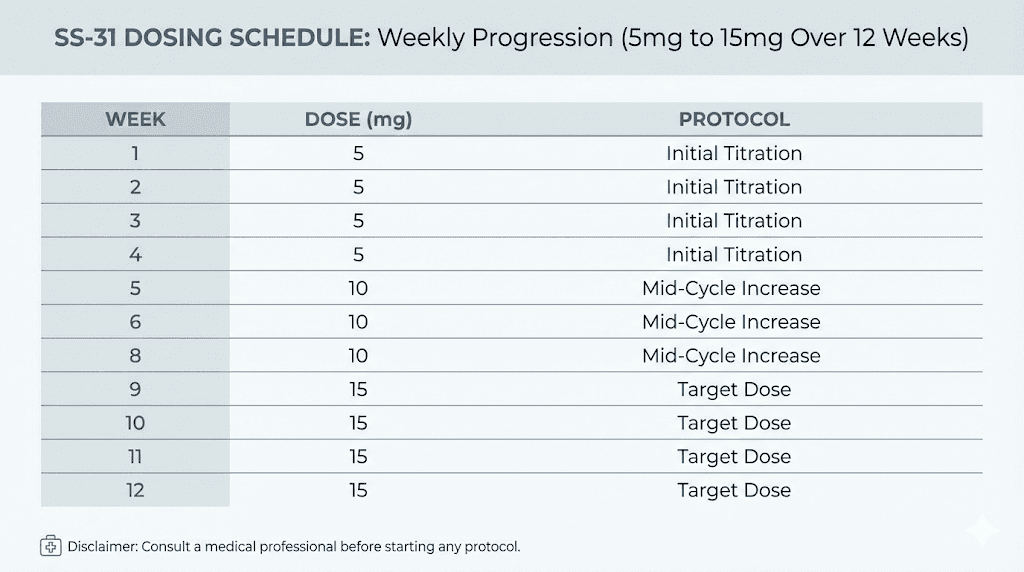
Week 1-2: 5 mg once daily via subcutaneous injection, morning administration
Week 3-4: 10 mg once daily if well tolerated
Week 5-12: 10-15 mg once daily, maintaining consistent timing
Some researchers prefer splitting the daily dose into morning and evening administrations to maintain more stable levels given the relatively short half-life. A split protocol might involve 5 mg in the morning and 5 mg in the evening.
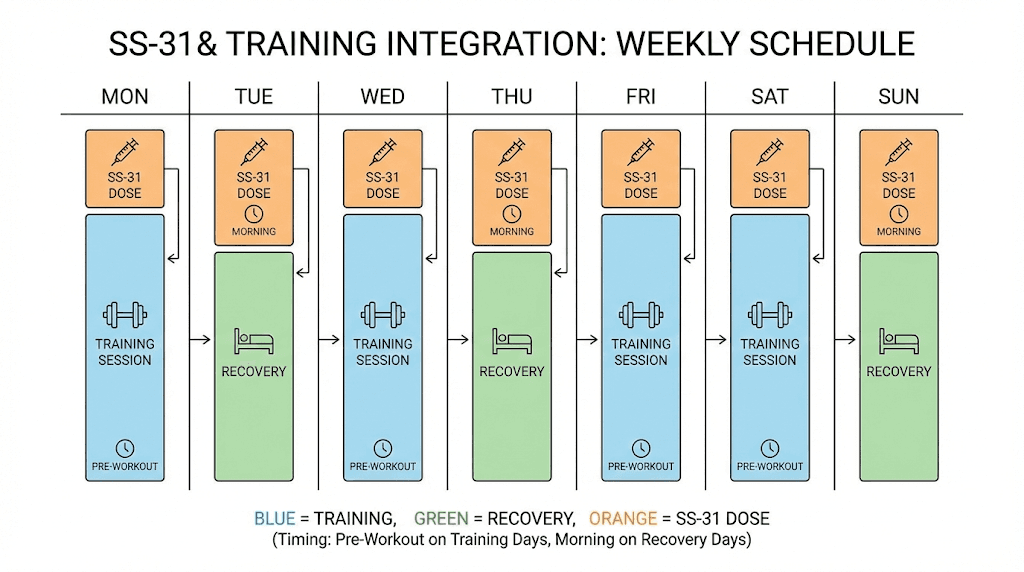
Timing around workouts remains a matter of speculation rather than established science. Some researchers administer SS-31 one hour before training to maximize acute mitochondrial effects during the session. Others prefer morning dosing regardless of training schedule for consistency.
Cycling considerations
Long-term data on SS-31 use beyond several months remains limited. Most clinical trials have run 12-24 weeks. A common cycling approach involves three months on followed by one month off, allowing for three cycles per year.
Unlike some peptides that require cycling due to receptor desensitization, SS-31 works through direct membrane interaction rather than receptor binding. Theoretical concerns about long-term continuous use center more on unknown unknowns than established tolerance development.
The conservative approach favors cycling until more long-term data becomes available. Bodybuilders might consider timing SS-31 cycles with particularly demanding training phases, such as pre-competition preparation or intensive muscle building blocks.
Reconstitution and administration
SS-31 typically comes as a lyophilized powder requiring reconstitution before use. Proper handling ensures peptide stability and accurate dosing.
The peptide dissolves readily in bacteriostatic water. Standard reconstitution ratios depend on vial size. For a 10 mg vial, adding 1 mL of bacteriostatic water creates a 10 mg/mL concentration. Each 0.1 mL (10 units on an insulin syringe) then delivers 1 mg.
For a 30 mg vial, common reconstitution uses 2 mL of bacteriostatic water, creating a 15 mg/mL concentration. Each 0.1 mL delivers 1.5 mg, or alternatively each 0.067 mL (approximately 7 units) delivers 1 mg.
Step-by-step reconstitution
First, gather your supplies: SS-31 vial, bacteriostatic water, alcohol swabs, and insulin syringes. Work in a clean environment with minimal air movement.
Clean the tops of both vials with alcohol swabs. Allow them to dry completely.
Draw the appropriate amount of bacteriostatic water into your syringe. For a 10 mg vial, draw 1 mL.
Insert the needle into the SS-31 vial at an angle, aiming the stream of water at the vial wall rather than directly at the powder. Inject slowly, letting the water run down the side.
Do not shake. Gently swirl the vial until the powder dissolves completely. SS-31 should dissolve readily without aggressive agitation.
Store the reconstituted solution in the refrigerator. Use within 4-6 weeks for optimal stability. Some researchers suggest proper storage at 2-8 degrees Celsius extends usable life, though degradation eventually occurs with any reconstituted peptide.
Injection technique
Subcutaneous injection remains the standard administration route for SS-31. Common injection sites include the abdomen, outer thigh, and back of the upper arm. Rotate sites to prevent irritation at any single location.
Clean the injection site with an alcohol swab. Pinch the skin to create a fold. Insert the needle at a 45-degree angle into the subcutaneous fat layer. Inject slowly, then withdraw the needle and apply light pressure.
Injection site reactions represent the most common side effect reported in clinical trials. These typically involve mild redness, itching, or irritation that resolves within hours. Proper rotation and technique minimize these issues.
Nasal spray formulations of SS-31 have also been developed, offering needle-free administration. However, bioavailability data for intranasal delivery remains limited compared to the well-characterized subcutaneous route. Researchers prioritizing precise dosing typically prefer injection.
Stacking SS-31 with other peptides
The concept of peptide stacking involves combining compounds with complementary mechanisms to achieve synergistic benefits. SS-31 pairs logically with several other peptides commonly used in bodybuilding contexts.
SS-31 and MOTS-c stack
Combining SS-31 with MOTS-c creates what some call a mitochondrial optimization stack. SS-31 repairs and stabilizes the mitochondrial membrane while MOTS-c activates AMPK and improves metabolic signaling. The compounds work through entirely different mechanisms, minimizing redundancy.
A typical protocol might include SS-31 at 10 mg daily alongside MOTS-c at 10 mg three times weekly. Morning administration for both peptides supports metabolic activation when it matters most. This stack targets both the structural and functional aspects of mitochondrial health.
The combination may prove particularly valuable during cutting phases when metabolic efficiency matters most. Better mitochondrial function supports fat oxidation while preserving muscle mass, and MOTS-c further enhances insulin sensitivity and glucose utilization.
SS-31 and growth hormone secretagogues
Pairing SS-31 with growth hormone releasing peptides creates an interesting combination. CJC-1295 and ipamorelin stimulate natural growth hormone release, supporting recovery, muscle growth, and fat metabolism. SS-31 enhances the cellular energy production needed to capitalize on elevated growth hormone.
Growth hormone increases protein synthesis and fatty acid oxidation. Both processes require substantial ATP. By optimizing mitochondrial function, SS-31 ensures cells have the energy to respond fully to growth hormone stimulation.
A comprehensive performance stack might include CJC-1295 (without DAC) at 100 mcg and ipamorelin at 200 mcg twice daily, combined with SS-31 at 10 mg daily. The growth hormone secretagogues are typically administered at night to align with natural secretion patterns, while SS-31 can be taken in the morning.
SS-31 and healing peptides
For bodybuilders dealing with injuries or seeking enhanced recovery, combining SS-31 with healing peptides makes theoretical sense. BPC-157 and TB-500 promote tissue repair through growth factor modulation and angiogenesis. SS-31 ensures the healing tissues have adequate energy supply.
Mitochondrial function matters enormously for tissue repair. Regenerating tissue has high metabolic demands. Stem cells and satellite cells require abundant ATP to proliferate and differentiate. By supporting mitochondrial efficiency, SS-31 may enhance the effectiveness of healing peptides.
The BPC-157 and TB-500 combination already represents a popular healing stack. Adding SS-31 addresses the energetic demands of tissue regeneration, potentially accelerating recovery from injuries or intense training.
Who benefits most from SS-31
Not every bodybuilder will experience dramatic benefits from SS-31. The research suggests the peptide works primarily by restoring compromised mitochondrial function rather than enhancing already healthy mitochondria. Understanding who benefits most helps set appropriate expectations.
Age-related mitochondrial decline
Bodybuilders over 40 may find SS-31 particularly valuable. Mitochondrial function declines with age, and this decline accelerates after middle age. Cardiolipin content decreases, electron transport chain efficiency drops, and reactive oxygen species production increases.
The aged mice studies showed clear benefits from SS-31, while young mice showed no performance improvements. This pattern suggests older athletes have more room for mitochondrial improvement and thus more potential benefit from the peptide.
Research on peptides for those over 40 increasingly focuses on mitochondrial function as a key target for maintaining performance and health. SS-31 fits squarely within this approach.
High-volume training phases
Extended periods of intense training stress mitochondrial function. Overtraining syndrome involves mitochondrial dysfunction as one component. Bodybuilders in aggressive gaining phases or pre-contest preparation subject their cells to enormous demands.
SS-31 might help maintain mitochondrial health during these demanding periods. By protecting cardiolipin and supporting electron transport efficiency, the peptide could help prevent the mitochondrial damage that contributes to overtraining and burnout.
Recovery from layoffs or illness
Periods of inactivity lead to rapid mitochondrial decline. Detraining causes both reduced mitochondrial content and decreased function per mitochondrion. Illness, especially anything affecting metabolic function, can similarly impair mitochondrial health.
Bodybuilders returning from layoffs might find SS-31 helpful for accelerating the restoration of mitochondrial capacity. While the peptide cannot replace training adaptations, it might help restore baseline function more quickly.
Those with chronic fatigue symptoms
Some bodybuilders experience persistent fatigue that training adjustments and nutrition optimization do not resolve. Underlying mitochondrial dysfunction could contribute to these symptoms. SS-31 offers a direct approach to addressing potential mitochondrial issues.
However, expectations should remain realistic. Limited user reports from research communities suggest SS-31 effects for chronic fatigue are subtle rather than dramatic. Some individuals report no noticeable improvement. The peptide is not a miracle energy booster but rather a targeted mitochondrial support compound.
What to expect from SS-31
Setting realistic expectations helps bodybuilders evaluate whether SS-31 delivers value for their specific situation. Based on research and limited user reports, here is what researchers might reasonably anticipate.
Timeline of effects
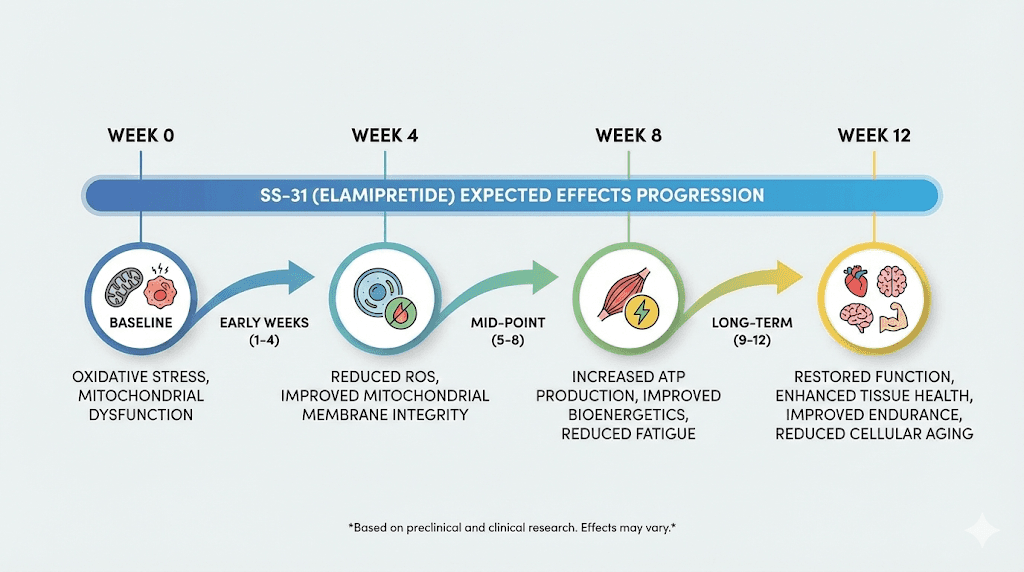
Week 1-2: Many users report no noticeable changes initially. The peptide works at the cellular level without producing obvious acute effects. Some report subtle improvements in workout recovery, though this could involve placebo effects.
Week 2-4: Energizing effects may begin to emerge. Users sometimes describe slightly better endurance during longer training sessions, improved recovery between sets, or reduced post-workout fatigue. These effects remain subtle.
Week 4-8: Cognitive benefits sometimes appear alongside physical improvements. Mitochondrial function matters for brain tissue, and some users report improved mental clarity and focus. Physical endurance benefits may become more apparent.
Week 8-12: The full spectrum of potential benefits should be evident by this point. Those who will respond to SS-31 typically notice cumulative improvements in endurance, recovery, and overall energy levels. Non-responders will have determined the peptide does not work for their situation.
What SS-31 does not do
SS-31 is not a stimulant. It will not provide the immediate energy boost of caffeine or other stimulants. If you are looking for acute pre-workout effects, SS-31 will disappoint.
The peptide does not directly build muscle or burn fat. It supports the cellular energy production that underlies these processes but does not stimulate them directly like growth hormone or thyroid hormone would.
SS-31 cannot compensate for poor training, inadequate nutrition, or insufficient recovery. It optimizes mitochondrial function within the context of otherwise good practices. Treating it as a magic solution rather than one component of a comprehensive approach leads to disappointment.
Measuring results
Evaluating SS-31 effectiveness requires paying attention to subtle indicators rather than dramatic changes. Consider tracking:
Endurance performance: Can you maintain intensity longer during training sessions? Do you recover faster between sets?
Recovery quality: Are you less fatigued in the days following hard training? Can you handle higher training frequency?
Energy levels: Do you experience more stable energy throughout the day? Less afternoon crashes?
Cognitive function: Is mental clarity improved? Can you focus better during long workouts?
These subjective assessments help evaluate whether SS-31 provides meaningful benefit. Some researchers also use objective measures like heart rate variability, which can reflect mitochondrial and autonomic function.
Safety and side effects
Clinical trials have established a favorable safety profile for SS-31 at the doses tested. Understanding both the documented side effects and the limitations of available safety data helps researchers make informed decisions.
Common side effects
Injection site reactions represent the most frequently reported adverse effect. Clinical trials documented erythema (redness) in 57% of subjects, pruritus (itching) in 47%, pain at 20%, urticaria at 20%, and irritation at 10%. Most reactions were mild and resolved without intervention.
Proper injection technique and site rotation minimize these issues. Some researchers find that warming the solution slightly before injection reduces discomfort. Using smaller injection volumes by preparing more concentrated solutions can also help.
Headache and dizziness have been reported in some subjects, though less commonly than injection site reactions. These symptoms typically resolve quickly and do not require discontinuation.
Some users report transient fatigue, which seems paradoxical for a mitochondrial support compound. This may represent an adjustment period as cells adapt to improved mitochondrial function, or it could reflect the natural variability of individual responses.
Cardiovascular safety
Clinical trials specifically assessed cardiovascular parameters. No significant increases in blood pressure, heart rate, or electrocardiogram intervals were observed with SS-31 treatment. This provides reassurance for bodybuilders who may already stress their cardiovascular systems with intense training and other supplements.
Contraindications
Pregnancy and breastfeeding represent clear contraindications. No safety data exists for SS-31 use during pregnancy, and the potential effects on fetal development are unknown.
Individuals with a history of cancer should exercise caution. Mitochondrial function influences cell proliferation, and the theoretical possibility exists that enhancing mitochondrial efficiency could support cancer cell growth. No evidence suggests SS-31 promotes cancer, but prudence suggests avoiding use in those with active malignancies or recent cancer history.
Those with kidney disease should consult healthcare providers before using SS-31. The peptide is eliminated through the kidneys, and impaired renal function could alter pharmacokinetics.
Long-term safety unknowns
Clinical trials have tested SS-31 for up to 24 weeks. The safety of longer-term continuous use remains uncharacterized. This represents the most significant gap in the safety data for bodybuilders considering extended protocols.
Conservative approaches favor cycling and periodic breaks rather than continuous indefinite use. This allows the body periods without exogenous mitochondrial support and limits exposure to potential unknown long-term effects.
Drug interactions
Limited data exists on SS-31 interactions with other substances. The peptide does not appear to interact with cytochrome P450 enzymes, which mediate many drug interactions. However, formal interaction studies are limited.
Theoretical considerations suggest caution combining SS-31 with other compounds affecting mitochondrial function. Excessive mitochondrial stimulation could potentially cause problems, though no specific interactions have been documented.
Bodybuilders using other peptides or supplements should start SS-31 conservatively and monitor for unexpected effects. Adding one compound at a time allows attribution of any issues to the correct substance.
Legal and regulatory status
Understanding the legal landscape around SS-31 helps researchers make informed decisions about acquisition and use.
FDA status
SS-31 (elamipretide) received FDA approval in 2025 specifically for Barth syndrome under the brand name Forzinity. This rare genetic condition involves cardiolipin abnormalities, making SS-31 a targeted therapy. However, the approval is narrow and does not extend to performance enhancement or other uses.
For all other applications, SS-31 remains an investigational compound. It is not approved for treatment of heart failure, primary mitochondrial myopathy, or any condition beyond Barth syndrome. Certainly, it is not approved for athletic performance enhancement.
Research chemical status
SS-31 is available from research chemical suppliers for laboratory research purposes. These products are not intended for human use and are sold with that explicit disclaimer. Researchers who choose to experiment with these compounds do so at their own risk.
Quality varies significantly among suppliers. Third-party testing for purity and identity provides some assurance, but the unregulated nature of the research chemical market means buyer beware applies. Peptide testing through independent laboratories offers one way to verify product quality.
Anti-doping considerations
Competitive athletes must consider anti-doping implications. SS-31 is not specifically listed on the World Anti-Doping Agency prohibited list as of current guidelines. However, WADA prohibits substances with similar biological effects to those on the list, which creates gray areas.
The safest approach for competitive athletes involves consulting with anti-doping authorities directly before using any novel compound. Regulations change, and interpretation of existing rules can vary. Athletes who test positive bear responsibility regardless of whether they believed a substance was permitted.
For recreational bodybuilders not subject to drug testing, legal issues center primarily on the research chemical classification. Purchasing SS-31 for personal research purposes exists in a legal gray area in most jurisdictions.
Comparing SS-31 to alternatives
Several compounds target mitochondrial function for performance benefits. Understanding how SS-31 compares helps determine whether it fits specific needs better than alternatives.
SS-31 versus MOTS-c
Both peptides target mitochondria but through fundamentally different mechanisms. SS-31 physically stabilizes mitochondrial membranes by binding cardiolipin. MOTS-c activates metabolic signaling pathways, particularly AMPK.
MOTS-c has stronger evidence for metabolic benefits including improved insulin sensitivity and glucose metabolism. It may be superior for fat loss and metabolic conditioning phases. SS-31 has stronger evidence for direct effects on ATP production and exercise tolerance.
Cost differs significantly. MOTS-c tends to be more affordable and more widely available from research suppliers. SS-31 is generally more expensive, which factors into practical decisions about long-term use.
The compounds work well together, addressing different aspects of mitochondrial health. Choosing between them depends on primary goals: metabolic optimization favors MOTS-c, while direct mitochondrial repair favors SS-31.
SS-31 versus NAD+ precursors
NMN and NR boost NAD+ levels, supporting sirtuin activity and mitochondrial enzyme function. They are readily available as supplements without the legal ambiguity of research peptides.
NAD+ precursors work through a different mechanism than SS-31. They support general mitochondrial function by increasing a crucial coenzyme but do not directly address cardiolipin damage or membrane structure. For those with significant mitochondrial membrane dysfunction, SS-31 may provide benefits that NAD+ precursors cannot.
Combining approaches makes sense for comprehensive mitochondrial support. NAD+ precursors can be taken orally with minimal hassle, while SS-31 requires injection. A practical approach might use NAD+ precursors as a baseline with SS-31 added during particularly demanding training phases.
SS-31 versus CoQ10
Coenzyme Q10 serves as an electron carrier in the mitochondrial membrane. Supplementation can improve mitochondrial function in those with depleted levels, particularly older individuals or those taking statin medications.
CoQ10 is far more studied and has established safety over decades of use. It is also much cheaper and easier to take. For basic mitochondrial support, CoQ10 represents a sensible first-line approach.
SS-31 addresses issues that CoQ10 cannot, namely structural damage to the mitochondrial membrane. The peptide and CoQ10 complement each other rather than competing. Using CoQ10 to support electron transport while SS-31 stabilizes the membrane makes theoretical sense.
Decision framework
Consider SS-31 when:
You have reason to suspect mitochondrial damage (aging, overtraining, illness recovery)
Other mitochondrial support has not provided desired results
You are willing to accept the complexity and cost of injectable peptides
You can source quality product from reputable suppliers
Consider alternatives when:
You are young and healthy with no specific mitochondrial concerns
Cost is a significant factor
You prefer oral supplements over injections
You compete in tested events
Practical implementation for bodybuilders
Moving from theory to practice requires considering how SS-31 fits into real-world bodybuilding contexts. These implementation strategies reflect common approaches among research community members.
Gaining phase protocol
During dedicated muscle building phases, mitochondrial demands increase substantially. More muscle tissue means more mitochondria required to power that tissue. Intense training stresses existing mitochondrial capacity.
A gaining phase protocol might include SS-31 at 10-15 mg daily to support increased energy demands. Combining with growth hormone secretagogues leverages improved mitochondrial function for better response to anabolic signaling. Morning SS-31 dosing supports daytime training energy.
The focus during gaining phases is not fat loss but rather supporting the enormous energy demands of muscle growth. Adequate caloric intake remains essential, and SS-31 helps ensure those calories convert efficiently to ATP for training and recovery.
Cutting phase protocol
Caloric restriction challenges mitochondrial function. Reduced substrate availability can impair electron transport efficiency. At the same time, maintaining training intensity during cutting requires robust mitochondrial capacity.
A cutting phase might combine SS-31 with MOTS-c for complementary benefits. SS-31 maintains mitochondrial efficiency despite reduced calories, while MOTS-c improves fat oxidation and insulin sensitivity. This combination supports maintaining training performance while optimizing fat loss.
Some researchers add 5-amino-1MQ to cutting stacks for additional metabolic benefits. This compound inhibits NNMT, an enzyme that contributes to fat accumulation and metabolic dysfunction. Combined with mitochondrial support from SS-31, this creates a comprehensive approach to cutting.
Recovery and deload periods
Strategic deload phases allow accumulated fatigue to dissipate and tissues to repair. SS-31 might be particularly valuable during these periods when the goal is restoration rather than further stress.
Some researchers maintain SS-31 during deloads while reducing or eliminating more stimulatory compounds. The peptide supports cellular repair without driving additional stress. This allows the body to catch up on recovery while maintaining mitochondrial health.
Alternatively, some use deload periods as breaks from all peptides, including SS-31. This approach favors periodic complete rest from exogenous compounds. Either strategy can work depending on individual philosophy and response.
Competition preparation
The final weeks before a bodybuilding competition involve extreme measures: severe caloric restriction, dehydration protocols, and exhausting training. Mitochondrial stress during this period reaches its peak.
SS-31 during competition prep might help maintain training quality despite the severe deficit. By supporting mitochondrial efficiency, it could help preserve muscle fullness and performance when every calorie counts.
Timing water manipulation around SS-31 injection requires consideration. The peptide is water-soluble and eliminated through the kidneys. Severe dehydration could theoretically alter pharmacokinetics, though no specific data addresses this scenario.
Sourcing and quality considerations
The quality of research peptides varies enormously. With SS-31 costing more than many peptides, ensuring you receive authentic, properly synthesized product matters both financially and from a results perspective.
Vendor evaluation
Reputable vendors provide certificates of analysis from third-party testing. These documents should verify identity (confirming the product is actually SS-31), purity (usually expressed as a percentage), and absence of contaminants such as heavy metals or bacterial endotoxins.
Look for vendors with established track records in the research community. Online forums and review sites provide insight into community experiences with various suppliers. Be wary of unusually low prices, which often indicate compromised quality.
Peptide vendor evaluation requires considering multiple factors beyond price. Shipping practices, customer service responsiveness, and consistency across batches all matter for researchers planning extended protocols.
Testing your product
Independent testing provides the highest confidence in product quality. Peptide testing laboratories can verify identity and purity using techniques like mass spectrometry and HPLC analysis.
This adds cost but may be worthwhile for expensive peptides like SS-31 where counterfeit or degraded product represents significant financial loss. Testing the first batch from a new vendor establishes whether their claims match reality.
Storage requirements
Unreconstituted SS-31 should be stored frozen for long-term stability. A standard freezer at -20 degrees Celsius works well. Properly stored lyophilized peptide remains stable for extended periods.
Once reconstituted, store in the refrigerator at 2-8 degrees Celsius. Use within 4-6 weeks for best results. Do not freeze reconstituted peptide solution as this can damage the peptide structure.
Protect from light by storing in the original vial or wrapping with foil. Light exposure can degrade peptides over time. Temperature fluctuations during shipping or storage can also compromise quality.
Integrating SS-31 with training
Peptide support means nothing without appropriate training stimulus. Understanding how SS-31 might interact with training variables helps optimize both elements.
Training volume considerations
If SS-31 improves mitochondrial function and recovery capacity, it might allow handling higher training volumes productively. This does not mean immediately doubling your workload but rather gradually exploring increased capacity.
Pay attention to recovery markers: sleep quality, appetite, mood, and performance trends. If these remain positive as volume increases, SS-31 may be contributing to enhanced recovery capacity. If they deteriorate, volume has exceeded what even optimized mitochondria can support.
Endurance integration
The research most strongly supports SS-31 benefits for endurance activities. Bodybuilders who include cardio, whether for health or contest preparation, might notice the most obvious benefits there.
Consider incorporating moderate-duration cardio sessions where you can assess endurance capacity. If SS-31 is working, you might notice ability to maintain intensity longer or recover faster between intervals. These sessions provide more objective feedback than subjective feelings during weight training.
Training timing
Given the short half-life of SS-31, some researchers time their dose to optimize acute effects during training. Administering 1-2 hours before training ensures peak tissue concentrations during the session.
Others prefer consistent morning dosing regardless of training schedule. This simplifies the protocol and ensures regular administration. Both approaches are reasonable given the limited data on optimal timing.
Experimenting with both approaches over separate training cycles allows individual determination of what works best. Some may find acute benefits from pre-workout dosing while others notice no difference in timing.
Nutritional considerations with SS-31
Nutrition provides the raw materials for mitochondrial function. SS-31 optimizes the machinery, but that machinery still requires appropriate fuel and building blocks.
Supporting mitochondrial biogenesis
Beyond optimizing existing mitochondria, bodybuilders benefit from promoting new mitochondrial development. Several nutritional factors support this process.
B vitamins, particularly B1, B2, B3, and B5, serve as cofactors for mitochondrial enzymes. Deficiency impairs energy production regardless of membrane health. A quality B-complex or comprehensive multivitamin covers this base.
Magnesium participates in hundreds of enzymatic reactions including ATP synthesis. Athletic populations often run low in magnesium due to losses through sweat. Supplementation at 200-400 mg daily supports optimal mitochondrial function.
Iron enables oxygen transport and serves as a component of electron transport chain complexes. However, iron status should be tested before supplementing, as excess iron causes oxidative damage. Those with documented deficiency benefit from targeted supplementation.
Substrate availability
Mitochondria burn both carbohydrates and fats for fuel. Extreme restriction of either substrate can impair function. Even during low-carb dieting phases, ensuring adequate fat intake maintains fatty acid availability for mitochondrial oxidation.
Carbohydrate availability around training supports high-intensity work that depends on glycolytic pathways. Periworkout nutrition providing adequate glucose ensures the muscles have immediate fuel while mitochondria handle longer-term energy demands.
Antioxidant considerations
SS-31 reduces reactive oxygen species production at the source. This complements but does not replace dietary antioxidant intake. Vegetables, fruits, and targeted antioxidant supplements support overall redox balance.
However, excessive antioxidant supplementation can blunt training adaptations. Reactive oxygen species play signaling roles in muscle adaptation. Finding the balance between protection and allowing necessary signaling remains an area of ongoing research.
A food-first approach to antioxidants, with targeted supplementation only when specific needs exist, represents a reasonable middle ground. SS-31 handles mitochondrial ROS while dietary antioxidants address other sources.
Monitoring and assessment
Objective measures help determine whether SS-31 provides benefit beyond placebo effects. Consider implementing some form of tracking to evaluate your response.
Performance tracking
Detailed training logs allow identification of trends over time. Track not just weights and reps but also perceived effort, rest times, and how you feel during and after sessions.
Endurance metrics provide particularly relevant data given the research focus. If you include cardio, track duration, intensity, and recovery between sessions. Improvement in these areas might reflect enhanced mitochondrial function.
Recovery markers
Heart rate variability (HRV) offers an objective window into autonomic function and recovery status. Apps and devices can track HRV over time, revealing trends that correlate with readiness to train.
Sleep quality metrics from wearable devices or sleep tracking apps provide another objective measure. Improved mitochondrial function might manifest as better sleep quality or more efficient rest.
Subjective recovery ratings, while less objective, still provide useful information. Daily scores for energy, soreness, and motivation create trackable trends over weeks and months.
Blood work
Periodic blood work provides insight into metabolic health and can identify issues before they become problems. While no specific blood markers directly reflect SS-31 effects, general health markers matter.
Inflammatory markers like CRP might improve with better mitochondrial function and reduced oxidative stress. Lipid panels reflect metabolic efficiency. Blood glucose regulation indicates cellular energy handling.
Baseline blood work before starting SS-31 provides comparison for later testing. Changes, positive or negative, can then be attributed with more confidence to the intervention.
Frequently asked questions
How quickly does SS-31 start working?
Research shows acute effects on mitochondrial function within one hour of administration. However, noticeable performance benefits typically require 2-4 weeks of consistent use. Full effects may take 8-12 weeks to manifest. Patience and consistent dosing produce better results than expecting immediate transformation.
Can I take SS-31 orally instead of injecting?
While oral formulations have been tested in research, bioavailability is substantially lower than subcutaneous injection. The peptide structure limits absorption through the digestive tract. For reliable effects, subcutaneous injection remains the preferred administration route.
Is SS-31 safe for long-term use?
Clinical trials have tested SS-31 for up to 24 weeks with favorable safety profiles. Longer-term use remains less characterized. Conservative protocols favor cycling with periodic breaks rather than indefinite continuous use. Consulting healthcare providers for individual guidance is advisable.
Will SS-31 help if I am young and healthy?
Research suggests SS-31 primarily benefits those with compromised mitochondrial function. Young mice in studies showed no performance improvements. Young, healthy individuals with well-functioning mitochondria may see minimal benefit. The peptide appears to restore function rather than enhance already optimal systems.
Can I combine SS-31 with pre-workout stimulants?
No specific contraindications exist for combining SS-31 with caffeine or other common pre-workout ingredients. The compounds work through different mechanisms. However, starting conservatively when adding any new compound allows identification of any unexpected interactions.
How should I store SS-31?
Unreconstituted powder should be stored frozen at -20 degrees Celsius for maximum stability. Once reconstituted with bacteriostatic water, store in the refrigerator at 2-8 degrees Celsius and use within 4-6 weeks. Protect from light and avoid temperature fluctuations. For detailed guidance, review the peptide storage guide.
Does SS-31 show up on drug tests?
SS-31 is not specifically tested for in standard drug panels. However, specialized anti-doping tests could potentially detect peptides. Competitive athletes should verify current regulations with their governing body. The compound is not FDA-approved for performance enhancement, creating regulatory uncertainty for tested competition.
What happens when I stop taking SS-31?
Effects appear to diminish once dosing stops, given the peptide does not cause permanent changes to mitochondria. The short half-life means the compound clears quickly. Mitochondrial function would gradually return to baseline over time, though the timeline for this reversal is not well characterized.
External resources
For bodybuilders serious about optimizing every aspect of performance, SeekPeptides provides comprehensive resources on peptide research. Members access detailed protocols, stacking guides, and a community of experienced researchers navigating these exact questions. Understanding mitochondrial function represents the frontier of performance optimization, and SS-31 offers a targeted approach to this fundamental aspect of cellular health.
In case I do not see you, good afternoon, good evening, and good night. May your mitochondria stay energized, your recovery stay swift, and your gains stay consistent.