Jan 9, 2026

Paradigm Peptides represents one established research peptide vendor among dozens competing for customer trust through quality claims, third-party testing documentation, and competitive pricing structures. The vendor operates within the research peptide marketplace serving individuals exploring compounds like retatrutide, the novel triple agonist targeting GLP-1, GIP, and glucagon receptors simultaneously for metabolic research applications. Understanding vendor quality verification, testing standards, certificate interpretation, and sourcing considerations helps researchers make informed purchasing decisions rather than relying solely on marketing claims or price comparisons that miss critical quality dimensions.
Retatrutide itself generates significant research interest as potentially the most potent weight loss peptide developed to date, with clinical trials demonstrating unprecedented body weight reductions exceeding what semaglutide or tirzepatide achieve alone. The triple agonist mechanism activates three separate receptor pathways creating synergistic metabolic effects that single or dual agonists cannot replicate. This guide examines Paradigm Peptides specifically as a retatrutide source, evaluating their testing protocols, certificate of analysis interpretation, pricing structures, ordering processes, quality indicators, and how they compare to alternative vendors serving the research peptide community.
SeekPeptides provides comprehensive vendor evaluation resources helping researchers navigate sourcing decisions through evidence-based assessment rather than marketing influence. The peptide marketplace contains vendors ranging from excellent to fraudulent, making systematic evaluation essential before committing research budgets to specific sources. This analysis covers everything researchers need to assess Paradigm Peptides' retatrutide offerings objectively.
Understanding retatrutide as a research compound
Before evaluating any vendor, understanding the compound itself provides essential context for quality assessment and research planning.
Triple agonist mechanism explained
Three receptor targets:
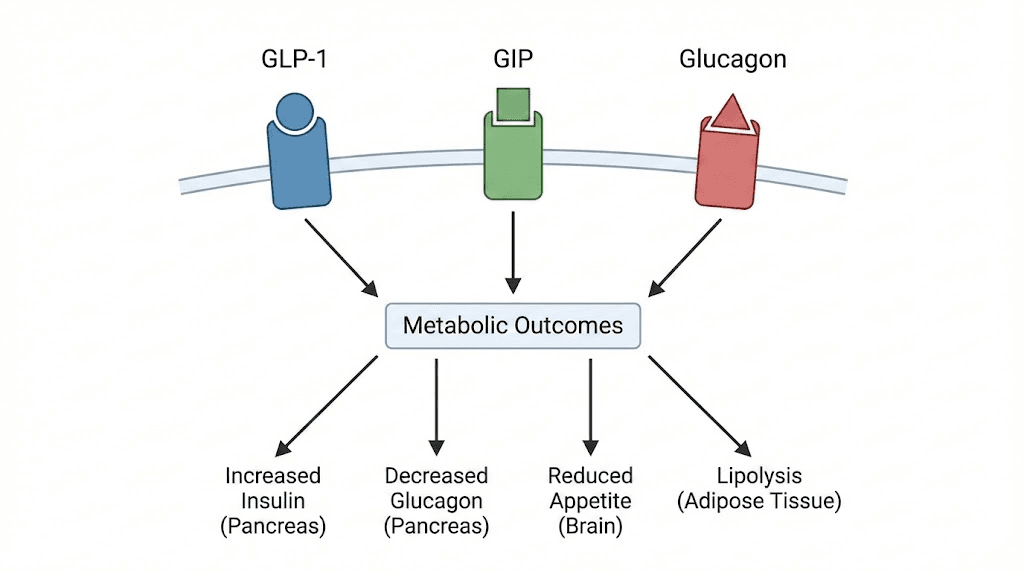
Retatrutide activates GLP-1 receptors responsible for appetite suppression, insulin secretion enhancement, and gastric emptying delay, similar to semaglutide and other GLP-1 agonists. GIP receptor activation enhances nutrient-dependent insulin release and may improve beta cell function beyond what GLP-1 alone achieves. Glucagon receptor agonism represents the truly novel addition, increasing energy expenditure, hepatic glucose output modulation, and lipid metabolism enhancement that neither GLP-1 nor GIP target directly.
Synergistic metabolic effects:
The triple mechanism creates compounding benefits where each pathway amplifies others. GLP-1 reduces appetite while glucagon increases energy expenditure, creating both reduced intake and increased output simultaneously. GIP enhances the metabolic flexibility allowing tissues to utilize both glucose and fatty acids efficiently. This combination produced weight loss exceeding 24% of body weight in clinical trials, substantially outperforming dual agonists like tirzepatide.
Research applications:
Metabolic syndrome research benefits from retatrutide's comprehensive receptor coverage. Fat loss research explores the enhanced thermogenic effects from glucagon receptor activation. Hepatic steatosis studies examine whether triple agonism improves liver fat reduction beyond dual agonists. Cardiovascular metabolic research investigates lipid profile improvements and potential cardioprotective effects from the combined mechanism.
Retatrutide versus other weight loss peptides
Compared to semaglutide:
Semaglutide targets only GLP-1 receptors, achieving approximately 15-17% weight loss in clinical trials. Retatrutide's additional GIP and glucagon activation pushes weight loss substantially higher while potentially reducing the gastrointestinal side effects that limit semaglutide tolerability for some users. The semaglutide versus tirzepatide comparison already demonstrated dual agonism's superiority, making triple agonism the logical next advancement.
Compared to tirzepatide:
Tirzepatide activates GLP-1 and GIP receptors, achieving roughly 20-22% weight loss. Retatrutide adds glucagon receptor activation on top of this dual mechanism, explaining the additional efficacy observed in trials. The glucagon component specifically targets energy expenditure and hepatic metabolism that dual agonists leave unaddressed. Researchers interested in comparing mechanisms should review the retatrutide dosage chart alongside tirzepatide protocols.
Unique positioning:
No other available peptide combines all three receptor targets. This makes retatrutide uniquely positioned for metabolic research where comprehensive pathway activation matters. The compound remains in clinical development rather than FDA approved, positioning it within research peptide markets rather than pharmaceutical distribution channels. Understanding this regulatory status helps contextualize vendor sourcing considerations.
Clinical trial results overview
Phase 2 trial outcomes:
Eli Lilly's phase 2 trials demonstrated dose-dependent weight loss reaching 24.2% at the highest doses over 48 weeks. This substantially exceeded both semaglutide (approximately 15%) and tirzepatide (approximately 21%) results from comparable trial durations. The magnitude of effect generated significant research interest in understanding the triple agonist mechanism more completely.
Safety profile observations:
Gastrointestinal adverse events remained the primary side effect category, consistent with other incretin-based therapies. Nausea, vomiting, and diarrhea occurred commonly during dose escalation phases. Interestingly, some reports suggest retatrutide's balanced receptor activation may produce fewer GI issues than equivalent weight loss from single agonists, though this requires further investigation. Researchers should review peptide safety and risks thoroughly before beginning any research protocols.
Ongoing development:
Phase 3 trials continue evaluating retatrutide for obesity treatment with anticipated FDA submission in coming years. Current research peptide availability allows researchers to explore the compound while pharmaceutical development progresses. This creates the market dynamic where vendors like Paradigm Peptides serve research demand before potential pharmaceutical approval.
Paradigm Peptides vendor overview
Evaluating the vendor specifically requires examining their business practices, quality systems, and market positioning.
Company background and history
Establishment and growth:
Paradigm Peptides operates as a US-based research peptide supplier established to serve the growing demand for quality research compounds. The company positions itself within the premium tier of research peptide vendors, emphasizing quality testing over lowest-price competition. Their product catalog spans multiple peptide categories including metabolic research compounds, healing peptides like BPC-157, and growth hormone secretagogues.
Market positioning:
The vendor targets researchers prioritizing quality verification over cost minimization. This positioning places them above bargain vendors but below pharmaceutical-grade suppliers. Understanding this market position helps set appropriate expectations for product quality, testing depth, and pricing structures. Researchers seeking the absolute lowest prices may find alternatives, while those prioritizing verified quality may appreciate Paradigm's approach.
Business model:
Direct-to-consumer sales through their website constitute the primary distribution channel. The company maintains domestic US inventory allowing faster shipping compared to international vendors. Payment processing, shipping logistics, and customer service operate from US facilities, simplifying transactions for domestic researchers while international shipping remains available.
Product range and specialization
Metabolic peptides offered:
Beyond retatrutide, Paradigm Peptides stocks semaglutide, tirzepatide, and other weight loss peptides for comparative research. This range allows researchers to source multiple compounds from a single vendor, simplifying logistics while enabling direct quality comparisons. The metabolic category represents one of their stronger product lines with consistent availability.
Healing and recovery peptides:
The catalog includes BPC-157, TB-500, and related compounds for injury healing research. These popular peptides maintain steady demand within the research community. Availability and quality consistency for these established compounds provides insight into overall vendor reliability applicable to newer offerings like retatrutide.
Growth hormone category:
CJC-1295, ipamorelin, and other growth hormone releasing peptides round out the product selection. The ipamorelin versus CJC-1295 comparison represents common research protocols these compounds support. Researchers exploring muscle growth or anti-aging applications find relevant options within this category.
Quality claims and certifications
Stated purity standards:
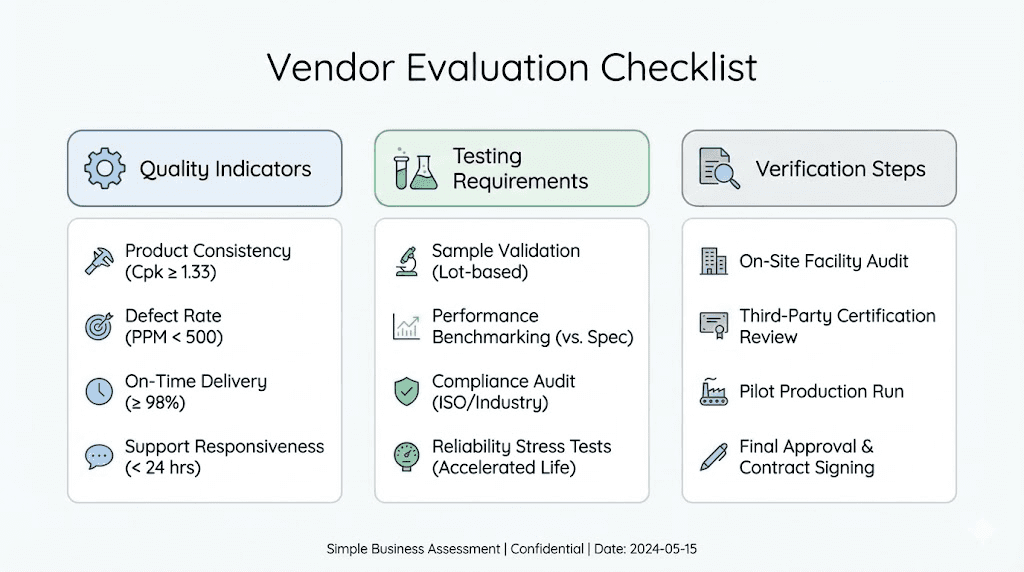
Paradigm Peptides claims minimum 98% purity for most peptide products, with many exceeding 99% according to their testing documentation. These purity levels align with research-grade expectations, though verification through independent testing provides stronger confidence than vendor claims alone. The peptide elution time and intensity heatmap guide helps researchers interpret testing documentation.
Third-party testing:
The vendor provides certificates of analysis (COA) from third-party laboratories for their products. This represents better practice than vendors providing only in-house testing or no documentation whatsoever. However, evaluating COA authenticity and laboratory reputation requires understanding testing methodology beyond simply noting a certificate exists.
Manufacturing standards:
Claims of GMP-adjacent manufacturing practices appear in vendor documentation, though research peptide vendors rarely achieve full pharmaceutical GMP certification. Understanding these distinctions helps researchers calibrate expectations appropriately. The research versus pharmaceutical peptides comparison explains these quality tier differences comprehensively.
Evaluating retatrutide quality from Paradigm Peptides
Specific quality assessment for retatrutide requires examining multiple verification dimensions.
Certificate of analysis interpretation
Key COA elements:
Purity percentage represents the primary quality metric, with research-grade retatrutide typically requiring 98%+ purity. Mass spectrometry confirmation verifies the molecular identity matches retatrutide's expected mass. Amino acid analysis confirms the peptide sequence accuracy. Endotoxin testing ensures bacterial contamination stays below acceptable limits for research applications.
What to verify:
Laboratory name and accreditation status indicate testing credibility. Batch numbers should match product labels exactly. Testing dates should be recent relative to product manufacture. Multiple test types (HPLC, MS, amino acid analysis) provide more confidence than single-method verification. The peptide research and studies guide covers quality documentation evaluation in detail.
Red flags to watch:
Generic certificates without specific batch information suggest template documents rather than actual testing. Extremely old test dates may indicate aging inventory or recycled documentation. Missing contact information for the testing laboratory prevents verification. Purity claims exceeding 99.9% without corresponding precision in methodology may indicate fabricated results.
HPLC analysis specifics
High-performance liquid chromatography:
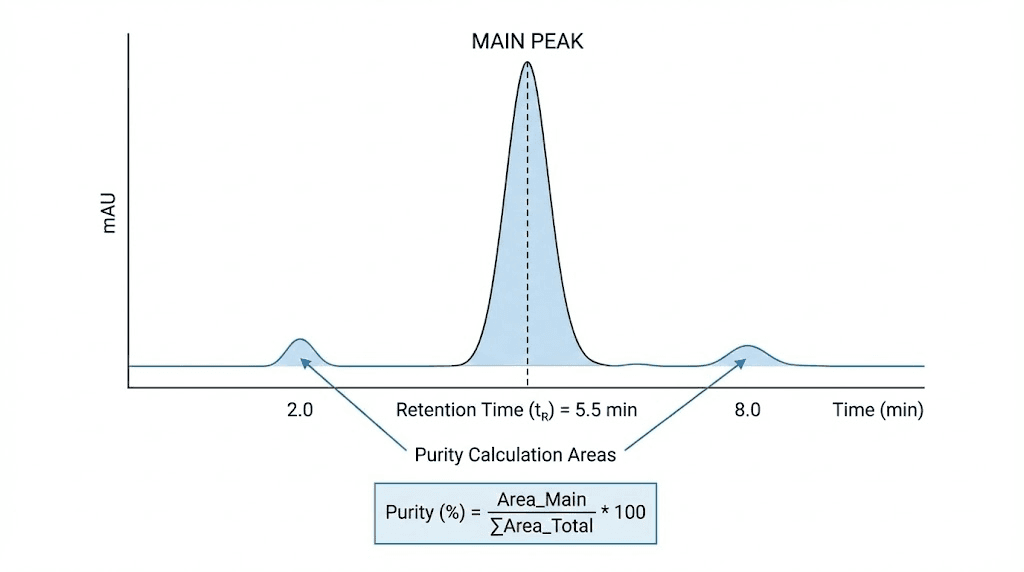
HPLC represents the standard purity assessment method for peptides. The technique separates compounds by retention time, producing peaks corresponding to different molecular species. The main peak area relative to total peak area yields purity percentage. Understanding chromatogram interpretation helps researchers evaluate COA validity beyond accepting stated percentages.
Retention time expectations:
Retatrutide should produce consistent retention times across batches when analyzed under standardized conditions. Significant retention time variation suggests different compounds or degradation products. Comparing COAs across batches reveals consistency patterns indicating reliable production versus variable quality.
Peak shape and symmetry:
Sharp, symmetrical peaks indicate clean separation and pure compound. Broad, tailing, or shouldered peaks suggest contamination or degradation. Multiple peaks beyond the main compound peak indicate impurities requiring quantification. Researchers familiar with chromatography can assess these visual elements from provided COA documentation.
Mass spectrometry verification
Molecular weight confirmation:
Mass spectrometry provides molecular weight measurement confirming compound identity. Retatrutide has a specific expected mass that should appear in MS results. Significant deviation from expected mass indicates wrong compound, degradation, or modification. This test complements HPLC purity assessment with identity verification.
Fragmentation patterns:
MS/MS analysis can confirm peptide sequence through characteristic fragmentation. This deeper analysis provides stronger identity confirmation than molecular weight alone. Not all vendor COAs include fragmentation data, but its presence indicates more thorough testing protocols.
Isotope patterns:
Natural isotope distribution creates characteristic patterns in mass spectra. Matching expected patterns confirms genuine peptide rather than synthetic mimics or contaminants. Researchers with mass spectrometry expertise can evaluate these patterns from provided documentation.
Paradigm Peptides retatrutide dosing considerations
Understanding dosing helps researchers plan protocols appropriately regardless of vendor selection.
Available concentrations and formats
Lyophilized powder:
Research peptides typically ship as lyophilized (freeze-dried) powder requiring reconstitution before use. This format maximizes stability during shipping and storage. The peptide reconstitution calculator helps researchers determine appropriate dilution volumes for target concentrations. Understanding how to reconstitute peptides properly ensures accurate dosing.
Vial sizes offered:
Paradigm Peptides typically offers retatrutide in multiple vial sizes allowing researchers to match purchase quantity to protocol requirements. Smaller vials suit initial exploration while larger quantities support extended research timelines. Comparing cost per milligram across vial sizes reveals volume discount structures.
Storage requirements:
Unreconstituted retatrutide requires refrigeration for optimal stability. Once reconstituted, refrigerated storage extends usable duration. The peptide storage guide covers best practices for maintaining compound integrity. Understanding how long peptides last in the fridge helps plan research timelines appropriately.
Dosing protocol frameworks
Dose escalation approach:
Clinical trials employed gradual dose escalation to manage gastrointestinal tolerability. Starting doses typically begin low with weekly increases toward target doses. This approach allows adaptation to the compound while minimizing adverse effects during adjustment periods. The retatrutide dosage chart provides specific protocol frameworks.
Maintenance dosing:
After reaching target doses through escalation, maintenance protocols continue at stable levels. Research duration varies by study objectives, with metabolic research often requiring extended timelines to observe meaningful outcomes. Understanding how long peptides take to work sets realistic timeline expectations.
Injection frequency:
Retatrutide's extended half-life supports once-weekly dosing in clinical protocols. This distinguishes it from peptides requiring daily administration, simplifying research logistics. The peptide injections guide covers proper administration technique for subcutaneous delivery.
Calculating research quantities
Protocol duration planning:
Estimating total peptide requirements involves multiplying weekly doses by protocol duration in weeks. Adding buffer for potential losses during reconstitution or administration ensures adequate supply. The peptide calculator assists with these calculations.
Cost projection:
Total research cost combines peptide expense with ancillary supplies (bacteriostatic water, syringes, alcohol swabs). The peptide cost calculator helps budget research protocols accurately. Understanding bacteriostatic water for peptides requirements factors into total cost assessment.
Bulk versus individual purchasing:
Longer protocols may benefit from bulk purchasing if vendor pricing includes volume discounts. However, stability considerations favor purchasing quantities usable within reasonable timeframes rather than stockpiling beyond storage stability windows. Balancing cost savings against quality maintenance requires thoughtful planning.
Pricing analysis and value assessment
Cost represents one factor among many in vendor evaluation, but matters for research budget planning.
Paradigm Peptides pricing structure
Base pricing:
Retatrutide pricing at Paradigm Peptides positions within the mid-to-premium range compared to market alternatives. The premium reflects their quality testing claims and domestic inventory advantages. Researchers must determine whether these value propositions justify cost premiums over cheaper alternatives.
Volume discounts:
Larger purchases typically receive percentage discounts reducing per-milligram cost. Loyalty programs or repeat customer benefits may provide additional savings. Understanding the full discount structure requires reviewing current promotions and membership options.
Promotional offers:
Periodic sales, holiday promotions, and clearance pricing create purchasing opportunities below standard rates. Timing purchases around promotional periods can reduce costs significantly. Subscribing to vendor communications provides advance notice of discount opportunities.
Comparative market pricing
Premium vendor comparison:
Other quality-focused vendors offer retatrutide at similar price points. Direct comparison requires matching vial sizes, purity claims, and testing documentation depth. Price alone proves insufficient for comparison without equivalent quality verification. Reviewing best peptide vendors provides broader market context.
Budget vendor alternatives:
Lower-priced vendors exist, often with less comprehensive testing documentation or international shipping complexity. Cost savings must be weighed against quality uncertainty and shipping risks. The adage about getting what you pay for applies within peptide sourcing, though exceptions exist in both directions.
Value equation:
True value considers cost per milligram of verified pure compound rather than nominal product pricing. A cheaper product with lower actual purity may deliver less active compound per dollar than pricier verified alternatives. This calculation requires honest purity assessment rather than accepting label claims uncritically.
Total cost of research consideration
Beyond peptide cost:
Complete research protocols require supplies beyond the peptide itself. Reconstitution water, injection supplies, sharps disposal, and potentially blood testing for monitoring add costs. Factoring these ancillary expenses provides realistic budget expectations.
Time investment:
Extended protocols require sustained commitment beyond initial purchase. Researchers should ensure they can maintain protocols through completion rather than abandoning research mid-protocol. Incomplete protocols waste resources regardless of initial peptide quality or pricing.
Opportunity cost:
Funds allocated to peptide research could serve alternative purposes. Ensuring research objectives justify investment helps prioritize spending. Researchers should clarify their goals and expected outcomes before committing substantial budgets.
Ordering process and logistics
Practical purchasing considerations affect research timeline and convenience.
Website and ordering experience
Navigation and product finding:
Paradigm Peptides' website organization allows relatively straightforward product location. Search functionality and category organization help researchers find specific compounds. Product pages include relevant specifications, pricing, and availability information.
Account creation:
Creating an account enables order tracking, purchase history access, and potentially loyalty program participation. Guest checkout remains available for those preferring minimal data sharing. Account holders may receive promotional notifications and exclusive offers.
Payment options:
Credit card processing, cryptocurrency options, and potentially other payment methods accommodate different preferences. Payment processing security and privacy protections merit attention given the sensitive nature of research compound purchasing.
Shipping and delivery
Domestic shipping:
US-based inventory enables faster domestic delivery compared to international vendors. Standard and expedited shipping options accommodate different timeline requirements. Tracking information provides visibility into shipment progress.
Packaging quality:
Appropriate packaging protects temperature-sensitive peptides during transit. Insulated packaging with cold packs maintains stability for lyophilized products. Arrival condition reflects shipping practice quality beyond just delivery speed.
International shipping:
Researchers outside the US face additional considerations including customs clearance, import regulations, and extended transit times. International shipping involves inherent risks that domestic shipping avoids. Understanding destination country regulations prevents customs complications.
Customer service and support
Pre-purchase inquiries:
Responsive customer service for product questions, COA requests, and protocol guidance indicates vendor commitment to customer success. Testing customer service responsiveness before purchasing reveals support quality.
Order issues resolution:
Shipping problems, quality concerns, or incorrect orders require resolution processes. Understanding return policies, replacement procedures, and dispute resolution before purchasing sets appropriate expectations. Vendors with strong resolution track records warrant greater confidence.
Technical support:
Some vendors provide research guidance while others limit support to order processing. Understanding support scope helps researchers determine whether they need self-sufficiency or can rely on vendor assistance for protocol questions.
Quality verification beyond vendor claims
Researchers can implement additional verification steps beyond accepting vendor documentation.
Independent testing options
Third-party laboratory testing:
Submitting samples to independent laboratories provides verification beyond vendor COAs. Several analytical laboratories accept peptide samples for purity and identity testing. The cost of independent testing adds to research expenses but provides certainty valuable for critical applications.
Testing considerations:
Laboratory selection affects result reliability. Accredited laboratories with peptide analysis experience provide more trustworthy results. Testing methodology should match vendor COA methods for direct comparison. Turnaround time impacts research timeline planning.
Cost-benefit analysis:
Independent testing makes sense for large purchases or critical research applications. Testing every small purchase proves cost-prohibitive for most researchers. Strategic testing of initial orders from new vendors or periodic verification of ongoing suppliers balances cost against verification value.
Community verification resources
Research community forums:
Online communities share vendor experiences, including both positive reports and quality concerns. These crowdsourced assessments provide insight beyond vendor marketing. However, forum reports require critical evaluation as both genuine experiences and vendor manipulation occur.
Reported issues tracking:
Patterns of complaints about specific vendors or products signal potential problems. Isolated negative reports among many positive ones may reflect individual circumstances. Consistent quality concerns across multiple reporters warrant attention.
Community testing initiatives:
Some communities organize group testing where samples undergo independent analysis with results shared publicly. These initiatives provide valuable data unavailable through vendor sources alone. Participating in or benefiting from community testing enhances purchasing decisions.
Practical quality indicators
Physical appearance:
Quality lyophilized peptides appear as fine, uniform powder. Discoloration, clumping, or crystalline appearance may indicate degradation or contamination. While appearance alone cannot confirm quality, obvious abnormalities warrant concern.
Reconstitution behavior:
Pure peptides dissolve readily in appropriate solvents without residue. Difficulty dissolving, cloudiness, or particulates suggest quality issues. Normal reconstitution behavior provides baseline confidence even without analytical testing.
Research outcomes:
Ultimately, research results provide the most relevant quality indicator. Consistent, expected outcomes suggest adequate quality. Unexpected results, lack of expected effects, or unusual adverse reactions warrant quality investigation. The peptides before and after results guide helps establish outcome expectations.
Comparing Paradigm Peptides to alternatives
Contextualizing one vendor requires understanding the broader market landscape.
Premium vendor alternatives
Comparable quality-focused vendors:
Several vendors compete in the quality-verified research peptide segment. These vendors similarly emphasize third-party testing, purity verification, and customer service. Direct comparison across multiple quality dimensions reveals relative strengths and weaknesses. The Prime Peptides review comparison examines one alternative vendor's positioning.
Differentiating factors:
Product availability, specific compound specialization, pricing structures, shipping options, and customer service quality differentiate similarly-positioned vendors. Researchers may prefer different vendors for different compounds based on these factors. Building relationships with multiple quality vendors provides sourcing flexibility.
Quality consistency:
Long-term vendor relationships reveal quality consistency over time. Some vendors maintain excellent quality initially but decline over time. Others improve quality as they establish market presence. Ongoing monitoring of vendor quality protects against degradation in previously reliable sources.
Budget vendor considerations
Price-quality tradeoffs:
Lower-priced vendors may sacrifice testing depth, customer service, or product quality to achieve cost advantages. Some budget vendors deliver adequate quality despite lower prices, while others provide substandard products. Risk tolerance and verification capability affect appropriate vendor selection.
Verification challenges:
Budget vendors less frequently provide comprehensive testing documentation. This increases reliance on independent verification or community reports. Researchers unable or unwilling to verify independently face greater quality uncertainty with budget sources.
When budget sourcing makes sense:
Non-critical applications, preliminary exploration, or highly price-sensitive research may justify budget vendor selection. Researchers should acknowledge quality uncertainty rather than assuming low-price vendors match premium quality standards.
International vendor options
Chinese manufacturer sourcing:
Direct purchasing from manufacturing sources offers significant cost advantages. However, quality verification becomes more challenging, shipping complexity increases, and regulatory risks expand. The retatrutide buy guide covers international sourcing considerations.
European alternatives:
European vendors may offer different product availability or regulatory positioning. Shipping to US researchers involves international logistics with associated complications. Quality standards may differ from US vendor expectations.
Domestic preference rationale:
Many researchers prefer domestic vendors despite potential cost premiums. Faster shipping, easier communication, clearer return processes, and reduced customs complications justify domestic sourcing preferences. Paradigm Peptides' US base provides these domestic advantages.
Safety considerations for retatrutide research
Responsible research requires thorough safety understanding regardless of vendor selection.
Known adverse effect profile
Gastrointestinal effects:
Nausea represents the most common adverse effect, particularly during dose escalation. Vomiting and diarrhea occur with meaningful frequency. These GI effects typically improve with continued use and slower dose titration. The peptide safety guide covers adverse effect management strategies.
Appetite suppression intensity:
Retatrutide produces profound appetite reduction that some find challenging. Maintaining adequate nutrition despite reduced hunger requires intentional eating strategies. Excessive caloric restriction risks nutritional deficiencies and metabolic adaptation that undermine research objectives.
Injection site reactions:
Subcutaneous injection may produce local reactions including redness, swelling, or itching. Proper injection technique and site rotation minimize these effects. The injection guide covers technique optimization.
Contraindications and precautions
Medical contraindications:
Personal or family history of medullary thyroid carcinoma or multiple endocrine neoplasia syndrome type 2 contraindicate GLP-1 receptor agonist use. Pancreatitis history requires careful consideration. Severe gastrointestinal disease may worsen with incretin therapy. Medical supervision ensures appropriate researcher selection.
Drug interactions:
Retatrutide affects gastric emptying and glucose metabolism, potentially interacting with other medications. Insulin and sulfonylureas require dose adjustment to prevent hypoglycemia. Orally administered medications may experience altered absorption with delayed gastric emptying.
Special populations:
Pregnancy and breastfeeding represent absolute contraindications for retatrutide research. Elderly researchers may require dose adjustments and closer monitoring. Renal or hepatic impairment affects compound metabolism and elimination. Understanding peptides for women covers gender-specific considerations.
Monitoring recommendations
Baseline assessments:
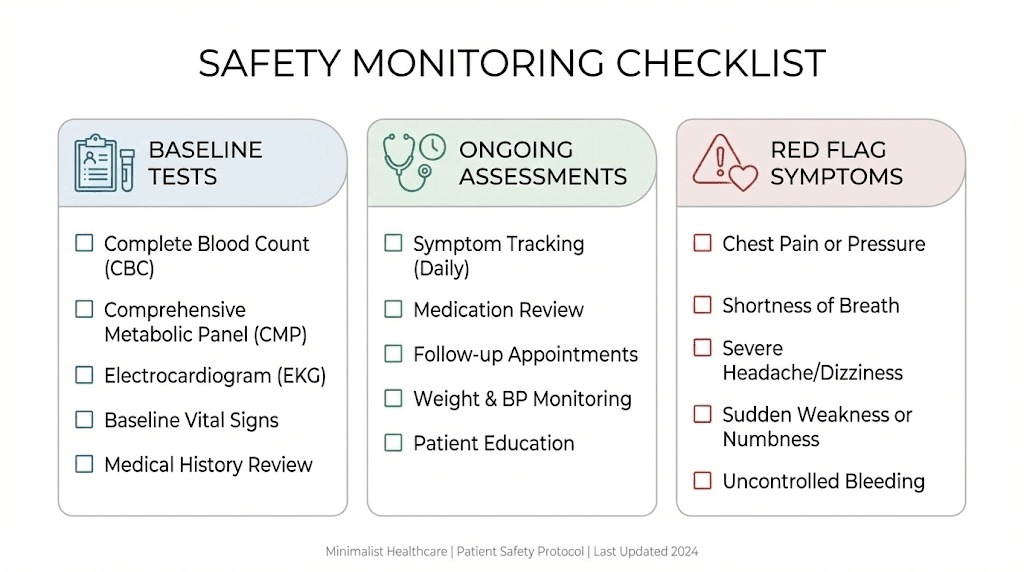
Pre-research evaluation should include metabolic panel, lipid profile, thyroid function, and other relevant markers. Body composition measurements establish baseline for outcome assessment. Medical history review identifies potential contraindications.
Ongoing monitoring:
Periodic reassessment during extended protocols tracks both benefits and potential concerns. Weight, glucose parameters, and adverse effect assessment inform protocol adjustments. The benefits and risks of peptides guide covers monitoring approaches.
Discontinuation considerations:
Understanding when to discontinue research protects researcher safety. Severe adverse effects, goal achievement, or changed circumstances may warrant protocol termination. Gradual discontinuation may reduce rebound effects compared to abrupt cessation.
Stacking and combination protocols
Some researchers explore retatrutide alongside other compounds.
Potential combination approaches
Muscle preservation stacking:
Significant weight loss risks muscle mass reduction alongside fat loss. Some researchers combine retatrutide with muscle-preserving compounds. Muscle growth peptides may help maintain lean mass during aggressive caloric deficit. The peptide stack calculator helps plan combination protocols.
Recovery support:
Intense exercise during caloric restriction may benefit from recovery peptides. BPC-157 supports tissue healing while TB-500 aids systemic recovery. The BPC-157 versus TB-500 comparison helps select appropriate recovery support.
Energy and focus support:
Caloric restriction can impair energy and cognitive function. Some researchers explore nootropic peptides for focus maintenance. Nootropic peptides may support cognitive function during demanding protocols. Understanding best peptides for energy and focus identifies relevant options.
Stacking considerations
Interaction potential:
Combining multiple peptides introduces interaction possibilities. Understanding each compound's mechanism helps assess compatibility. Some combinations may produce synergistic benefits while others create conflicts or increased adverse effect risk.
Protocol complexity:
Multiple compounds increase protocol complexity, cost, and monitoring requirements. Researchers should ensure they can manage increased complexity before adding compounds. Simpler protocols often outperform complex ones due to better adherence and clearer outcome attribution.
Cost implications:
Stacking multiplies peptide costs significantly. Ensuring budget supports complete protocols prevents forced discontinuation mid-research. The cost calculator helps project total stacking expenses.
Practical stacking frameworks
Sequential versus concurrent:
Some researchers prefer sequential protocols where one compound follows another. Others run concurrent protocols with multiple compounds simultaneously. Sequential approaches simplify outcome attribution while concurrent approaches may accelerate results. The peptide stacks guide covers combination strategies.
Timing considerations:
Different peptides have different half-lives and optimal administration timing. Coordinating multiple injections requires practical planning. Understanding how many peptides you can take at once helps structure protocols.
Documentation importance:
Complex protocols require careful documentation for outcome assessment and protocol refinement. Tracking doses, timing, subjective effects, and objective measures enables informed protocol adjustment. The peptide cycle planning guide covers documentation approaches.
Long-term research considerations
Extended protocols require additional planning beyond initial purchases.
Sustainability planning
Ongoing cost management:
Multi-month or multi-year protocols accumulate substantial costs. Building peptide expenses into long-term budgets ensures sustainable research. Periodic cost reassessment identifies optimization opportunities.
Vendor relationship maintenance:
Long-term research benefits from stable vendor relationships. Consistent quality from familiar sources reduces verification burden over time. However, monitoring for quality changes remains important even with established vendors.
Supply continuity:
Ensuring uninterrupted supply prevents forced protocol discontinuation. Maintaining modest inventory buffers protects against shipping delays or temporary stock-outs. However, excessive stockpiling risks stability degradation before use.
Protocol optimization over time
Dose refinement:
Initial protocols may benefit from adjustment based on individual response. Fine-tuning doses to balance efficacy against adverse effects optimizes long-term outcomes. The peptide dosing guide covers optimization strategies.
Cycling approaches:
Some researchers implement cycles with on and off periods. Cycling may preserve efficacy, reduce adverse effect burden, or accommodate practical constraints. Understanding cycling different peptides informs protocol structure.
Outcome monitoring:
Tracking results over extended timelines reveals long-term patterns invisible in shorter protocols. Weight trajectories, metabolic markers, and subjective wellbeing measurements provide optimization guidance.
Exit strategy planning
Goal achievement:
Clear research objectives enable recognition when goals are met. Continuing indefinitely without purpose wastes resources and introduces unnecessary risk. Defining success criteria before starting facilitates appropriate protocol conclusion.
Transition protocols:
Maintaining results after compound discontinuation often proves challenging. Planning transition strategies before ending protocols improves outcome sustainability. Lifestyle modifications established during research provide maintenance foundation.
Long-term considerations:
Understanding potential long-term effects, both positive and negative, informs research decisions. Currently limited long-term data for retatrutide requires acknowledging uncertainty. Conservative approaches prioritize safety when evidence remains incomplete.
How SeekPeptides supports retatrutide research
SeekPeptides provides comprehensive resources for peptide research across all stages from initial exploration through advanced protocols.
The peptide calculator helps researchers determine appropriate dosing based on concentration and desired amounts. For reconstitution planning, the reconstitution calculator ensures accurate dilution calculations. Budget planning benefits from the cost calculator projecting total protocol expenses.
Educational resources covering what peptides are, how they work, and getting started provide foundational knowledge for newer researchers. More advanced guides address stacking strategies, cycle planning, and safety considerations.
SeekPeptides serves as a trusted resource for evidence-based peptide information helping researchers make informed decisions about compounds, vendors, and protocols. The platform continues expanding resources to serve the growing peptide research community.
In case I don't see you, good afternoon, good evening, and good night. May your vendors stay reliable, your peptides stay pure, and your research outcomes stay successful. Join SeekPeptides.