Jan 8, 2026
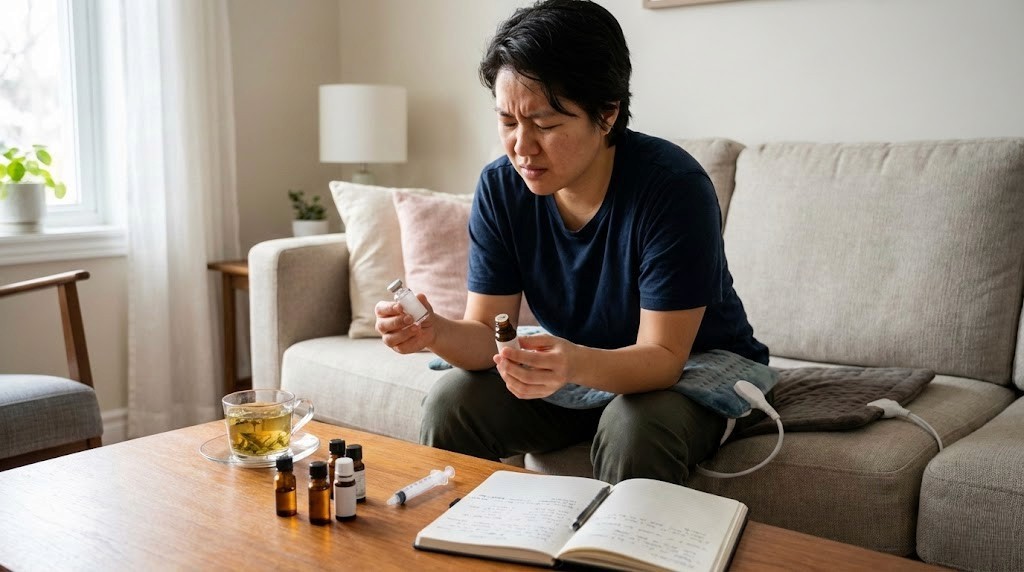
Fibromyalgia represents a central sensitization disorder where the nervous system amplifies pain signals, creating widespread discomfort from stimuli that would not normally register as painful. The condition involves dysregulation of neurotransmitters, inflammatory mediators, and stress response systems, producing a constellation of symptoms extending far beyond pain to include crushing fatigue, unrefreshing sleep, cognitive dysfunction known as fibro fog, and heightened sensitivity to temperature, sound, and light. Understanding fibromyalgia as fundamentally a nervous system disorder rather than a tissue damage condition helps explain why conventional pain medications often disappoint and why peptides targeting neurological and inflammatory pathways show promise.
Standard treatments for fibromyalgia focus on symptom management through antidepressants, anticonvulsants, and pain medications, approaches that help some patients moderately but leave many struggling with inadequate relief and significant side effects.
The multi-system nature of fibromyalgia, affecting sleep architecture, pain processing, immune function, and cognitive performance simultaneously, demands interventions capable of addressing multiple pathways rather than single targets. Peptides offer this multi-modal potential, with different compounds addressing inflammation, neural function, sleep quality, and tissue health through distinct mechanisms that can combine synergistically.
We cover BPC-157 for its broad healing and anti-inflammatory properties, Selank for anxiety and pain perception modulation, KPV for potent anti-inflammatory effects, and growth hormone peptides for sleep and recovery support. SeekPeptides provides personalized guidance for navigating these complex therapeutic decisions with evidence-based protocols.
Understanding fibromyalgia and why peptides may help
Fibromyalgia involves dysfunction across multiple body systems. Understanding these mechanisms reveals why peptides targeting various pathways may provide benefits that single-target medications cannot match.
Central sensitization explained
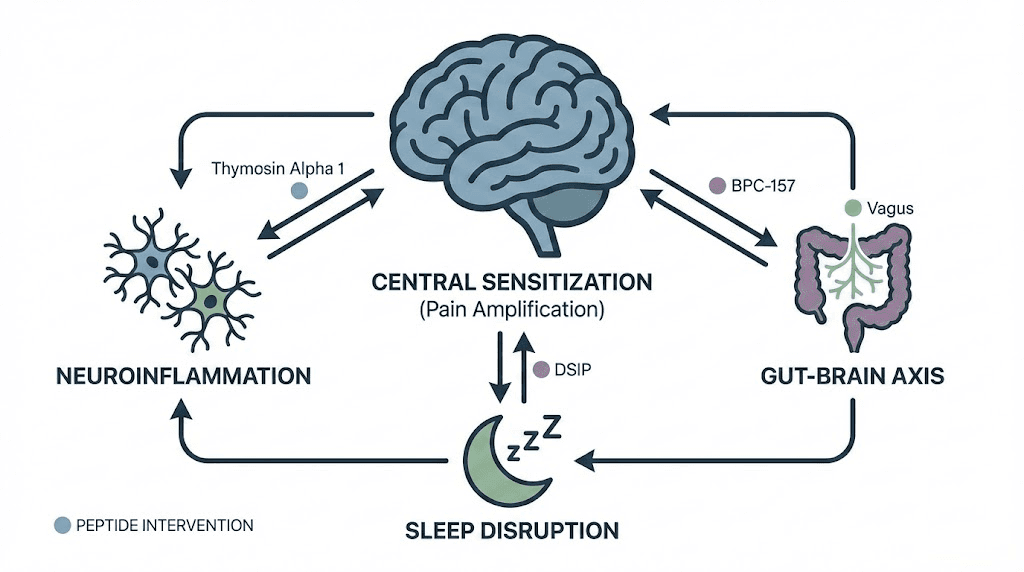
Central sensitization refers to amplification of pain signals within the central nervous system. In fibromyalgia, neurons in the spinal cord and brain become hyperexcitable, responding to normal sensory input as if it were painful. Touch that should feel neutral registers as discomfort. Pressure that would be mildly uncomfortable becomes agonizing. This amplification explains why fibromyalgia patients hurt all over without identifiable tissue damage.
The mechanisms driving central sensitization include elevated substance P, reduced descending pain inhibition, altered glutamate signaling, and microglial activation in the central nervous system. These changes persist and potentially worsen over time, creating a self-reinforcing cycle of pain sensitization. Addressing these neurological changes requires interventions capable of modulating neural function, not just blocking peripheral pain signals.
Peptides like Selank and Semax demonstrate effects on central neurotransmitter systems relevant to pain processing. Their ability to modulate GABA, serotonin, and other signaling molecules positions them as potentially valuable tools for addressing the central component of fibromyalgia pain.
Neuroinflammation and immune dysregulation
Research increasingly implicates neuroinflammation in fibromyalgia pathophysiology. Activated microglia, the immune cells of the brain, release inflammatory mediators that sensitize pain pathways. Elevated pro-inflammatory cytokines appear in cerebrospinal fluid and blood of fibromyalgia patients. This immune activation likely contributes to both pain and the fatigue and cognitive symptoms characteristic of the condition.
Anti-inflammatory peptides may help calm this neuroinflammatory state. KPV demonstrates potent anti-inflammatory effects through cytokine modulation. BPC-157 shows anti-inflammatory properties alongside its healing effects. These peptides could theoretically address the inflammatory component driving symptom persistence.
Learn about how peptides work for foundational understanding of peptide mechanisms.
Sleep architecture disruption
Fibromyalgia consistently associates with disturbed sleep, particularly loss of restorative slow-wave sleep. Patients wake unrefreshed regardless of hours spent in bed. This sleep dysfunction likely both results from and contributes to other symptoms, creating a vicious cycle where poor sleep worsens pain sensitivity, which further disrupts sleep.
Growth hormone release occurs primarily during deep sleep. Disrupted sleep architecture in fibromyalgia may contribute to reduced GH levels observed in some patients. Growth hormone peptides like the CJC-1295 and Ipamorelin combination often improve sleep quality as a primary effect, potentially addressing this fundamental fibromyalgia issue while supporting tissue repair and recovery.
The gut-brain axis connection
Fibromyalgia frequently co-occurs with irritable bowel syndrome and other gastrointestinal issues. The gut-brain axis, the bidirectional communication between intestinal and central nervous systems, may contribute to symptom generation. Intestinal inflammation can trigger systemic and central inflammatory responses. Dysbiosis may affect neurotransmitter production since gut bacteria synthesize significant amounts of serotonin and other signaling molecules.
BPC-157 originates from gastric secretions and demonstrates remarkable effects on gut health and healing. Its ability to address intestinal inflammation while simultaneously showing systemic anti-inflammatory and potentially neuroprotective effects makes it particularly relevant for conditions with gut-brain components like fibromyalgia.
Explore peptides for gut health for detailed information on intestinal applications.
Best peptides for fibromyalgia ranked by relevance
Based on mechanism of action and relevance to fibromyalgia pathophysiology, these peptides show the most promise for symptom management.
BPC-157: versatile healing peptide
BPC-157 offers the broadest range of effects relevant to fibromyalgia. This gastric pentadecapeptide demonstrates anti-inflammatory properties, cytoprotective effects, and influences on multiple neurotransmitter systems.
Mechanisms relevant to fibromyalgia:
BPC-157 modulates the dopamine and serotonin systems, neurotransmitters dysregulated in fibromyalgia. It demonstrates anti-inflammatory effects without the tissue-healing inhibition of NSAIDs. The peptide shows cytoprotective properties in various tissues including gut and nervous system. Animal research suggests potential effects on pain pathways and stress responses. Its gut-healing properties may address the GI component common in fibromyalgia.
Potential benefits for fibromyalgia:
Reduced widespread inflammation contributing to pain sensitization. Improved gut function addressing GI symptoms and gut-brain axis dysfunction. Possible modulation of pain perception through neurotransmitter effects. Support for tissue healing in comorbid injuries or conditions. General cytoprotection supporting cellular health.
Dosing for fibromyalgia:
Standard protocols involve 250-500mcg twice daily via subcutaneous injection. Some researchers use higher doses for more severe symptoms. Duration typically extends eight to twelve weeks or longer for chronic conditions. The BPC-157 dosage calculator helps determine appropriate protocols.
Practical considerations:
BPC-157 represents a reasonable starting point for fibromyalgia patients new to peptides due to its favorable safety profile and broad effects. It can combine with other peptides for enhanced protocols. Oral administration may offer convenience though injectable remains standard.
Read the comprehensive guide on how to take BPC-157 and learn about BPC-157 alternatives.
Selank: anxiolytic and pain perception modulator
Selank directly addresses the neurological and psychological components of fibromyalgia through effects on anxiety, mood, and potentially pain perception.
Mechanisms relevant to fibromyalgia:
Selank modulates GABA receptors, enhancing inhibitory signaling that may calm overactive pain pathways. It influences serotonin metabolism, relevant to both mood and pain processing. The peptide demonstrates anxiolytic effects without sedation or dependence risk of benzodiazepines. Research suggests potential immunomodulatory properties. It may help break the anxiety-pain-sleep disruption cycle common in fibromyalgia.
Potential benefits for fibromyalgia:
Reduced anxiety that often amplifies fibromyalgia symptoms. Potential modulation of central pain processing through GABAergic effects. Improved stress resilience addressing the stress-symptom connection. Better cognitive function through reduced anxiety fog. Enhanced ability to engage in therapeutic activities like exercise.
Dosing for fibromyalgia:
Typical protocols involve 200-400mcg daily via intranasal or subcutaneous administration. Intranasal offers convenience and potentially faster central effects. Effects often noticed within days to weeks. Extended use appears well-tolerated based on available research.
Combining with other peptides:
Selank combines well with BPC-157 for addressing both neurological and inflammatory components. The combination addresses fibromyalgia from complementary angles without receptor competition. Adding Selank to a tissue-healing protocol adds neurological support often lacking in purely physical approaches.
KPV: potent anti-inflammatory
KPV offers powerful anti-inflammatory effects that may address the inflammatory component increasingly recognized in fibromyalgia.
Mechanisms relevant to fibromyalgia:
KPV derives from alpha-melanocyte stimulating hormone and demonstrates potent cytokine modulation. It reduces TNF-alpha, interleukins, and other inflammatory mediators. The peptide penetrates cells to exert direct anti-inflammatory effects. It may help calm neuroinflammation implicated in central sensitization. Effects extend beyond simple inflammation reduction to immune modulation.
Potential benefits for fibromyalgia:
Reduced systemic inflammation contributing to symptom burden. Potential calming of neuroinflammatory processes driving pain sensitization. Improved gut inflammation often comorbid with fibromyalgia. Possible support for immune dysregulation aspects of the condition. General anti-inflammatory benefits affecting multiple symptom domains.
Dosing for fibromyalgia:
Protocols typically involve 200-400mcg daily via subcutaneous injection. Some researchers use oral or intranasal administration. The KPV dosage guide covers administration options. Consider timing recommendations for optimal effects.
Considerations:
KPV particularly suits fibromyalgia patients with significant inflammatory markers or comorbid inflammatory conditions. It addresses a pathophysiological layer that tissue-healing peptides alone may not fully reach. The peptide's safety profile supports extended use for chronic conditions.
Semax: cognitive support for fibro fog
Semax addresses the cognitive dysfunction that significantly impacts quality of life for many fibromyalgia patients.
Mechanisms relevant to fibromyalgia:
Semax demonstrates nootropic effects enhancing cognitive function, memory, and focus. It modulates BDNF and other neurotrophic factors supporting neural health. The peptide shows potential neuroprotective properties. It may help counter the cognitive blunting from chronic pain and poor sleep. Effects on dopamine and serotonin systems address neurotransmitter dysregulation.
Potential benefits for fibromyalgia:
Improved cognitive clarity reducing fibro fog. Enhanced memory and concentration for daily functioning. Better mental energy to complement physical interventions. Potential mood improvement through neurotransmitter modulation. Support for neural health in a condition with central nervous system involvement.
Dosing for fibromyalgia:
Intranasal administration at 200-600mcg daily represents standard protocols. Effects often noticed relatively quickly for cognitive benefits. Extended use for ongoing cognitive support appears reasonable. Morning dosing typically preferred to avoid sleep interference.
Synergy with other peptides:
Semax pairs naturally with Selank, addressing cognitive and anxiolytic needs respectively. Both work through central mechanisms relevant to fibromyalgia. Adding Semax to a pain-focused protocol addresses the often-neglected cognitive component of the condition.
TB-500: systemic healing support
TB-500 provides systemic anti-inflammatory and healing support that complements more targeted interventions.
Mechanisms relevant to fibromyalgia:
TB-500 promotes cell migration and tissue repair throughout the body. It demonstrates systemic anti-inflammatory effects. The peptide supports tissue remodeling and recovery. It may help address myofascial components sometimes present in fibromyalgia. General healing support benefits overall tissue health.
Potential benefits for fibromyalgia:
Systemic inflammation reduction. Support for any comorbid injuries or tissue damage. Improved recovery from activity and exercise. General tissue health optimization. Complementary effects to more targeted peptides.
Dosing for fibromyalgia:
Loading protocols involve 2-2.5mg twice weekly for four to six weeks. Maintenance drops to 2mg weekly or less frequently. The TB-500 dosage calculator provides guidance. The BPC-157 vs TB-500 comparison helps understand complementary use.
Learn about TB-500 benefits and TB-500 alternatives.
CJC-1295 and Ipamorelin: sleep and recovery
Growth hormone releasing peptides address the sleep disruption and recovery deficits central to fibromyalgia dysfunction.
Mechanisms relevant to fibromyalgia:
The CJC-1295 and Ipamorelin combination stimulates natural growth hormone release. GH peptides often improve deep sleep quality as a primary effect. Enhanced GH supports tissue repair and recovery. Improved sleep may reduce pain sensitivity and fatigue. Better recovery capacity supports exercise tolerance important for fibromyalgia management.
Potential benefits for fibromyalgia:
Improved sleep quality and architecture. Better tissue repair and recovery. Reduced fatigue through enhanced restorative sleep. Potential improvement in body composition supporting physical function. Enhanced capacity for therapeutic exercise.
Dosing for fibromyalgia:
Standard protocols involve 100mcg each of CJC-1295 (no DAC) and Ipamorelin administered before bed. Fasted administration optimizes GH release. The CJC-1295 dosage calculator helps determine protocols. Ipamorelin benefits include favorable side effect profile.
Sleep-focused rationale:
Addressing sleep disruption may provide foundational improvement enabling other interventions to work better. Poor sleep worsens pain sensitivity, cognitive function, and fatigue. Improving sleep architecture through GH peptides creates conditions for overall improvement. This makes GH peptides valuable additions to fibromyalgia protocols despite not directly targeting pain.
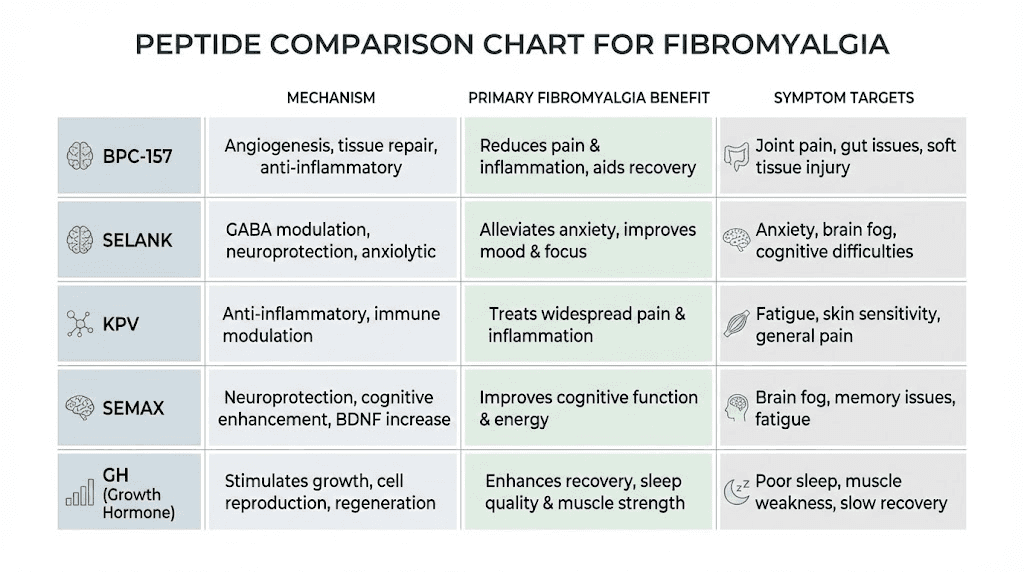
Peptide comparison table for fibromyalgia
This table compares key peptides for fibromyalgia across important factors:
Peptide | Primary Mechanism | Main Symptom Target | Dose Range | Best For |
|---|---|---|---|---|
BPC-157 | Anti-inflammatory, healing | Pain, gut symptoms | 250-500mcg 2x daily | Broad symptom coverage |
Selank | GABAergic, anxiolytic | Anxiety, pain perception | 200-400mcg daily | Anxiety-dominant presentation |
KPV | Cytokine modulation | Inflammation, immune | 200-400mcg daily | Inflammatory component |
Semax | Nootropic, neurotrophic | Cognitive dysfunction | 200-600mcg daily | Fibro fog prominent |
TB-500 | Systemic healing | General inflammation | 2-2.5mg 2x weekly | Tissue healing support |
CJC/Ipamorelin | GH release | Sleep, recovery | 100mcg each nightly | Sleep-dominant issues |
Protocol selection depends on predominant symptoms. Pain-dominant presentations may prioritize BPC-157 and KPV. Anxiety and cognitive issues suggest Selank and Semax. Sleep dysfunction points toward GH peptides. Most fibromyalgia patients benefit from combination approaches addressing multiple symptom domains.
Use the peptide calculator for dosing guidance and the peptide stack calculator for combination protocols.
Protocols for different fibromyalgia presentations
Fibromyalgia manifests differently across patients. Tailored protocols address individual symptom patterns.
Protocol 1: pain-dominant fibromyalgia (beginner)
Goal: Address widespread pain and inflammation as primary symptoms
Peptides:
BPC-157: 500mcg twice daily subcutaneous
Duration: 8-12 weeks initial protocol
Why this works: BPC-157 provides broad anti-inflammatory and healing effects with an excellent safety profile. Single-peptide approach keeps things simple for beginners. Addresses inflammatory component without complexity of multi-peptide stacks. Can assess individual response before adding compounds.
Expected timeline:
Week 1-2: Peptide accumulating, effects beginning. Some notice subtle changes early.
Week 2-4: Anti-inflammatory effects becoming more apparent. Pain may begin decreasing.
Week 4-8: Progressive improvement for responders. Assessment point for protocol continuation.
Week 8-12: Consolidated benefits. Decision about ongoing use or protocol modification.
Complementary approaches: Gentle movement and pacing strategies. Anti-inflammatory nutrition. Stress management techniques. Adequate sleep prioritization.
Cost estimate: $80-150 per month
Learn about getting started with peptides and common peptide mistakes.
Protocol 2: anxiety and pain presentation (intermediate)
Goal: Address both pain and significant anxiety component
Peptides:
BPC-157: 500mcg twice daily
Selank: 300mcg daily intranasal or subcutaneous
Duration: 8-12 weeks
Why this works: BPC-157 addresses inflammatory and tissue components. Selank modulates anxiety and potentially pain perception through GABAergic effects. The combination addresses both physical and neuropsychological aspects. Complementary mechanisms without receptor competition.
Expected timeline:
Week 1-2: Selank anxiolytic effects often noticed relatively quickly. BPC-157 beginning to accumulate.
Week 2-4: Reduced anxiety improving overall symptom experience. Pain modulation developing.
Week 4-8: Combined effects producing broader symptom improvement. Better stress resilience.
Week 8-12: Full protocol effects. Assessment for continuation or modification.
What patients often report:
Feeling calmer and less overwhelmed by symptoms. Pain feeling less distressing even before intensity fully decreases. Better ability to engage in beneficial activities like gentle exercise. Improved sleep through reduced nighttime anxiety.
Cost estimate: $150-250 per month
Explore the peptide stacks guide for combination protocols.
Protocol 3: fatigue and cognitive dysfunction focus (intermediate)
Goal: Address crushing fatigue and fibro fog as primary concerns
Peptides:
CJC-1295 + Ipamorelin: 100mcg each before bed
Semax: 400mcg intranasal morning
BPC-157: 250mcg twice daily for baseline support
Duration: 12 weeks
Why this works: GH peptides address sleep architecture underlying fatigue. Semax provides direct cognitive enhancement. BPC-157 offers foundational anti-inflammatory support. Addresses fatigue through sleep improvement rather than stimulation. Supports cognitive function through multiple mechanisms.
Expected timeline:
Week 1-2: Semax cognitive effects often noticed early. GH peptides beginning sleep improvement.
Week 2-4: Sleep quality improving. Less morning fatigue. Cognitive clarity increasing.
Week 4-8: Cumulative GH benefits becoming apparent. Better daytime energy. Improved mental function.
Week 8-12: Full effects on energy and cognition. Assessment of body composition and recovery benefits.
Important notes:
GH peptides require fasted administration for optimal effect. Evening dosing for GH peptides, morning for Semax. Patience required as GH benefits accumulate over weeks.
Cost estimate: $250-400 per month
Protocol 4: comprehensive multi-symptom approach (advanced)
Goal: Address pain, inflammation, anxiety, cognition, and sleep comprehensively
Peptides:
BPC-157: 500mcg twice daily
KPV: 300mcg daily for inflammation
Selank: 300mcg daily for anxiety
CJC-1295 + Ipamorelin: 100mcg each before bed
Duration: 12-16 weeks
Why this works: Addresses multiple fibromyalgia mechanisms simultaneously. BPC-157 provides broad healing support. KPV targets inflammatory pathways aggressively. Selank modulates anxiety and pain perception. GH peptides improve sleep architecture. Comprehensive approach for complex presentation.
Expected timeline:
Week 1-4: Multiple peptides beginning effects across different symptom domains. Anxiety and cognitive effects often noticed first.
Week 4-8: Progressive improvement across multiple symptoms. Sleep quality improving. Pain and inflammation decreasing.
Week 8-12: Significant overall improvement for responders. Assessment of which components providing most benefit.
Week 12-16: Optimization phase. Consider which peptides to continue long-term.
Important considerations:
Complex protocols require organization and commitment. Multiple daily administrations needed. Higher cost requires budget planning. Starting all peptides simultaneously makes it harder to identify what helps most. Consider sequential introduction to understand individual responses.
Cost estimate: $400-600 per month
Review peptide dosing guide and peptide cycle planning for protocol organization.
Addressing specific fibromyalgia symptoms with peptides
Different peptides target different symptom clusters. Understanding these matches helps optimize protocol design.
Widespread pain
The hallmark fibromyalgia symptom responds to multiple peptide approaches.
Primary peptides for pain:
BPC-157 addresses inflammation contributing to pain sensitization. Its effects on neurotransmitter systems may modulate pain perception. Systemic administration affects widespread pain rather than localized issues. The best peptide for pain guide covers general approaches.
Selank may reduce pain perception through GABAergic effects and anxiety reduction. Pain often feels more intense when anxiety is high. Calming the nervous system can reduce subjective pain experience.
KPV targets inflammatory mediators driving pain sensitization. For patients with elevated inflammatory markers, addressing this pathway may reduce pain generation at its source.
Supporting strategies:
Gentle movement despite pain, avoiding complete inactivity. Pacing strategies to avoid boom-bust cycles. Heat or cold therapy as individually helpful. Mind-body practices addressing central sensitization.
Explore best peptide for back pain and best peptides for joint pain for localized pain components.
Crushing fatigue
Fatigue in fibromyalgia relates to sleep dysfunction, mitochondrial issues, and central mechanisms.
Primary peptides for fatigue:
CJC-1295 and Ipamorelin address sleep architecture problems underlying fatigue. Improved deep sleep enhances recovery and reduces next-day exhaustion. GH effects support cellular energy production.
Semax provides cognitive energy even when physical fatigue persists. It may help patients function better despite underlying fatigue. Not a stimulant but supports mental clarity.
Supporting strategies:
Strict sleep hygiene optimizing whatever sleep occurs. Pacing and energy conservation techniques. Strategic rest rather than pushing through exhaustion. Gradual activity increase as tolerated.
Learn about best peptide for energy and focus and best peptide for energy.
Fibro fog (cognitive dysfunction)
Cognitive symptoms significantly impact quality of life and functioning.
Primary peptides for cognition:
Semax directly enhances cognitive function through nootropic mechanisms. It supports memory, focus, and mental clarity. BDNF effects may support neural health long-term.
Selank reduces anxiety fog that compounds cognitive issues. Clearer thinking often emerges when anxiety decreases. The peptide may have direct cognitive benefits beyond anxiolysis.
GH peptides improve cognition indirectly through better sleep. Sleep deprivation significantly impairs cognitive function. Restoring sleep quality supports cognitive recovery.
Supporting strategies:
Cognitive pacing matching mental energy. External memory aids and systems. Reduced multitasking. Optimal timing of demanding tasks.
Sleep dysfunction
Unrefreshing sleep perpetuates the entire fibromyalgia symptom complex.
Primary peptides for sleep:
CJC-1295 and Ipamorelin often improve sleep quality as a primary effect. Enhanced deep sleep occurs with GH optimization. Many users report more restorative sleep within weeks.
Selank may improve sleep through anxiety reduction. Racing thoughts and nighttime anxiety disrupt sleep. Calming effects support sleep initiation and maintenance.
Supporting strategies:
Rigorous sleep hygiene despite frustration with results. Consistent sleep-wake times. Comfortable sleep environment. Limiting daytime sleep despite fatigue.
Tender points and myofascial pain
Localized tender areas and myofascial components sometimes accompany fibromyalgia.
Primary peptides for tender points:
BPC-157 can be injected near specific painful areas for local effects. Systemic administration also provides general anti-inflammatory support. The peptide supports muscle and connective tissue health.
TB-500 provides systemic healing support. Its effects on tissue remodeling may help myofascial components. Cell migration enhancement supports tissue repair.
Supporting strategies:
Myofascial release techniques. Trigger point therapy. Gentle stretching. Heat therapy for muscle relaxation.
Read about fast injury healing and peptides for bone and cartilage repair.
Safety considerations for fibromyalgia patients
Fibromyalgia patients may have unique considerations for peptide use due to their complex condition and often multiple medications.
Medication interactions
Many fibromyalgia patients take multiple medications. Understanding potential interactions matters.
General considerations:
Most peptides discussed have minimal known drug interactions. BPC-157's effects on neurotransmitter systems theoretically could interact with psychiatric medications. Selank's GABAergic activity might have additive effects with benzodiazepines or sleep medications. GH peptides could theoretically affect blood sugar in diabetic patients.
Practical approach:
Start peptides one at a time to identify any individual reactions. Maintain communication with prescribing providers when possible. Monitor for unexpected effects when combining peptides with medications. Do not adjust medications based on peptide response without medical guidance.
Starting slow with sensitive patients
Fibromyalgia patients often show heightened sensitivity to medications and supplements. This sensitivity may extend to peptides.
Recommendations:
Start with lower doses than standard protocols suggest. Increase gradually based on tolerance. Single peptide initially rather than combinations. Extended assessment periods before adding compounds. Attention to subtle changes that might indicate sensitivity.
Flare management
Fibromyalgia typically involves symptom flares. Understanding how peptides fit into flare management helps.
During flares:
Continuing peptides during flares is generally reasonable. Do not expect peptides to abort acute flares immediately. Focus on other flare management strategies alongside peptides. Some patients find BPC-157 helpful during flares for inflammation. Selank may help manage flare-related anxiety.
Preventing flares:
Consistent peptide use may help reduce flare frequency over time. Addressing underlying inflammation and sleep may prevent some triggers. Stress management supported by Selank may reduce stress-triggered flares.
Quality considerations
Peptide quality matters especially for patients with complex conditions.
Sourcing quality peptides:
Third-party testing documentation essential. HPLC purity greater than 98% expected. Reliable vendors with transparent practices. The best peptide vendors guide helps identify sources. The peptide testing interpretation guide evaluates quality claims.
Review peptide safety and risks and peptide legality for comprehensive context.
Timeline expectations for fibromyalgia improvement
Chronic conditions like fibromyalgia require patience. Understanding realistic timelines prevents discouragement.
Short-term effects (weeks 1-4)
What to expect:
Anxiolytic peptides like Selank often show effects within days to weeks. Cognitive benefits from Semax may appear relatively quickly. Sleep improvements from GH peptides can begin within first weeks. Anti-inflammatory effects of BPC-157 and KPV developing. Overall symptom improvement typically modest initially.
What not to expect:
Complete symptom resolution. Dramatic pain reduction immediately. Reversal of central sensitization. Cure of underlying condition.
Medium-term effects (weeks 4-12)
What to expect:
Progressive improvement for responders. Cumulative benefits becoming more apparent. Sleep architecture improvements consolidating. Pain and fatigue showing meaningful reduction in good responders. Better ability to engage in therapeutic activities.
Assessment points:
Week 4: Initial assessment of response. Determine if any benefit occurring. Week 8: Meaningful improvement should be apparent for responders. Consider protocol modifications for non-responders. Week 12: Full protocol effects evaluable. Decisions about continuation or changes.
Long-term considerations (months 3-12+)
Ongoing use:
Fibromyalgia is chronic, and ongoing peptide use may be needed to maintain benefits. Some patients cycle peptides with breaks. Others use continuously at maintenance doses. Protocol optimization continues based on response patterns.
Realistic expectations:
Peptides may significantly improve quality of life without curing fibromyalgia. Symptom reduction rather than elimination is realistic for most. Combination with other therapies produces best outcomes. Individual response varies considerably.
Read about how long peptides take to work and peptides before and after results.
Combining peptides with other fibromyalgia treatments
Peptides work best as part of comprehensive fibromyalgia management rather than standalone treatments.
Exercise and movement
Exercise remains one of the most evidence-supported fibromyalgia interventions despite its challenges.
How peptides may help:
Reduced pain may allow more activity tolerance. Better sleep supports recovery from exercise. Anti-inflammatory effects may reduce post-exercise flares. Selank may reduce exercise-related anxiety. Overall improved capacity makes exercise more feasible.
Practical integration:
Start or increase exercise as peptide benefits develop. Use improved capacity strategically rather than overexerting. Gradual progression respecting body signals. Peptides support but do not replace the work of building exercise tolerance.
Learn about peptides for muscle growth and peptides for athletic performance.
Nutrition and anti-inflammatory diet
Dietary approaches can complement peptide anti-inflammatory effects.
Synergy:
Anti-inflammatory diet reduces inflammatory burden peptides work against. Adequate protein supports tissue healing peptides promote. Gut-friendly nutrition supports BPC-157 gut effects. Nutritional optimization creates conditions for peptide effectiveness.
Considerations:
Elimination diets may identify food sensitivities common in fibromyalgia. Reducing processed foods and sugar decreases inflammatory load. Omega-3 fatty acids support anti-inflammatory effects.
Stress management and mind-body practices
Stress worsens fibromyalgia significantly. Addressing stress amplifies peptide benefits.
How peptides help:
Selank provides anxiolytic support reducing stress reactivity. Better sleep from GH peptides improves stress resilience. Reduced pain decreases stress from symptom burden. Overall improvement creates positive cycle with stress reduction.
Complementary practices:
Meditation and mindfulness for pain and stress. Gentle yoga combining movement and stress reduction. Pacing strategies preventing stress from overexertion. Therapy addressing psychological aspects of chronic illness.
Conventional medications
Peptides generally complement rather than replace necessary medications.
Integration approach:
Continue prescribed medications when starting peptides. Do not adjust medications based on peptide response without medical guidance. Some patients eventually reduce medications under medical supervision as peptides help. Others need both approaches long-term.
Specific considerations:
Antidepressants for pain: May continue alongside peptides with monitoring. Anticonvulsants: Continue as prescribed; peptides work through different mechanisms. Sleep medications: GH peptide improvement may eventually allow reduction under medical supervision. Pain medications: Continue as needed; peptides address underlying issues rather than providing acute relief.
How SeekPeptides supports fibromyalgia research
SeekPeptides provides comprehensive resources for individuals exploring peptide approaches to complex conditions like fibromyalgia.
The peptide dosage calculator helps determine appropriate starting doses for individual peptides. The peptide stack calculator assists with designing multi-peptide protocols for complex conditions.
Educational resources cover everything from getting started with peptides to advanced protocol optimization. The peptide dosing guide and stacks guide provide detailed protocol information.
The peptide cost calculator helps budget for potentially extended protocols that chronic conditions require. Quality vendor recommendations ensure sourcing reliable products.
SeekPeptides remains committed to providing evidence-based guidance for peptide research across applications including chronic pain conditions, injury healing, anti-aging, and gut health.
Join SeekPeptides for personalized protocol guidance and comprehensive peptide education.