Jan 20, 2026
You've seen QSC mentioned in every peptide forum.
Every discussion about sourcing eventually leads back to this name. Qingdao Sigma Chemical has become one of the most discussed peptide suppliers in the research community, generating passionate opinions on both sides. Some researchers swear by them. Others warn against them.
The truth, as usual, sits somewhere in the middle.
QSC represents a specific type of peptide source: direct-from-China manufacturing with competitive pricing and minimal overhead. This model delivers significant cost savings compared to domestic vendors. It also introduces complexities around shipping, communication, and quality verification that researchers need to understand before placing orders.
This guide covers everything you need to know about QSC peptides. The company background. The ordering process. Quality verification methods. Shipping realities. Payment options. And honest assessment of both the benefits and risks based on aggregated user experiences. Whether you're considering your first QSC order or evaluating whether to continue using them, the information here will help you make informed decisions about your peptide sourcing strategy.
What is QSC and who is behind it?
QSC stands for Qingdao Sigma Chemical Co., Ltd., a chemical trading company based in Qingdao City, Shandong Province, China. The company operates from NO 40 Shandong Road in the Shibei District and has established itself as one of the more prominent peptide suppliers serving the international research community.
The company positions itself as a specialized biotechnological firm focused on research, development, and production of peptides for scientific and medical applications. Their product catalog spans a wide range of compounds including semaglutide, tirzepatide, retatrutide, and traditional research peptides like BPC-157, TB-500, and various growth hormone secretagogues.
Understanding the business model helps set appropriate expectations. QSC operates as a trading company rather than a pure manufacturer. This means they source from manufacturing facilities and handle distribution, quality control, and customer service. The model allows for competitive pricing but creates a layer of separation between the end user and actual production.
Contact with QSC typically happens through representatives using names like Tracy or Irene.
These representatives handle order processing, payment coordination, and shipping arrangements.
Communication occurs primarily through email and WhatsApp, with email being the recommended channel for maintaining documentation of transactions.
Company history and reputation
QSC has operated in the peptide supply space for several years, building both loyal customers and vocal critics along the way. The company gained significant attention when mentioned in a Wall Street Journal article identifying them as a major source in the gray market peptide supply chain.
This media attention highlighted both the scale of QSC's operations and the legal ambiguity surrounding research peptide sales. The company markets products strictly for research purposes with explicit "not for human consumption" disclaimers, a standard practice in the industry that creates a legal framework for sales while acknowledging the regulatory reality.
The company's reputation has fluctuated over time. Earlier periods saw complaints about communication issues and shipping delays. More recent feedback suggests improvements in quality assurance processes, though concerns about customer service responsiveness persist. This evolution reflects the broader maturation of Chinese peptide suppliers responding to market demands.
SeekPeptides members frequently discuss vendor experiences, and QSC generates more conversation than most. The volume of discussion itself indicates their market significance, though it also reflects the polarizing nature of experiences with direct-from-China sourcing.
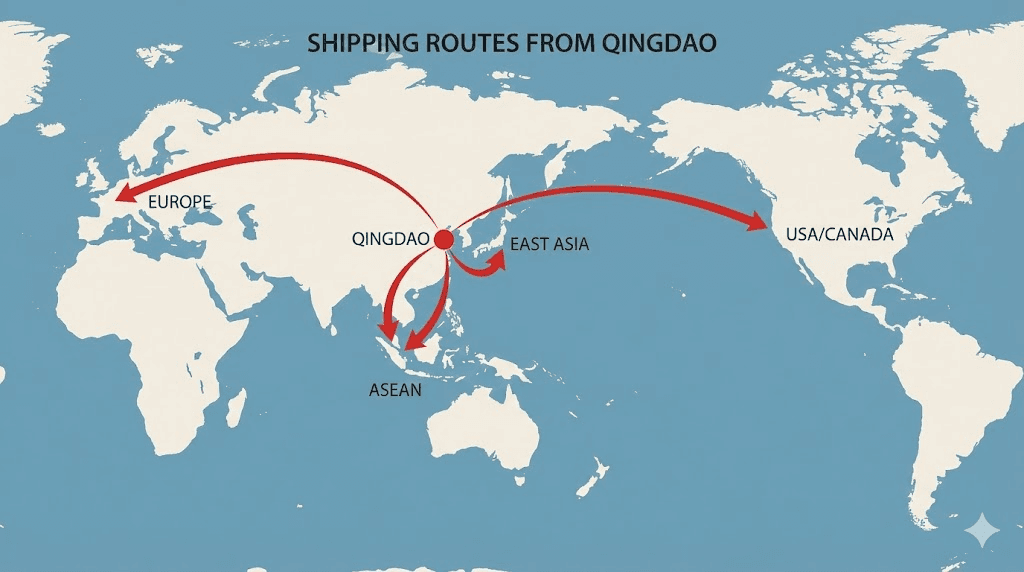
Products offered by QSC
QSC maintains a comprehensive catalog covering most popular research peptides. Their offerings span multiple categories relevant to different research applications.
GLP-1 agonists
The GLP-1 category represents QSC's highest-volume product line. This includes:
Semaglutide in various concentrations and vial sizes. This GLP-1 receptor agonist drives significant demand given its research applications in metabolic studies. QSC offers pharmaceutical-grade claims with 99% purity specifications.
Tirzepatide has become increasingly popular as a dual GIP/GLP-1 agonist. QSC's 40mg tirzepatide batches have received positive feedback from researchers conducting comparative studies.
Retatrutide represents the newer triple agonist category. QSC was among the early suppliers offering this compound as research interest expanded following clinical trial publications.
Traditional research peptides
Beyond the GLP-1 category, QSC supplies established research peptides:
BPC-157 for tissue repair research. This body protection compound remains one of the most researched peptides for healing applications.
TB-500 (Thymosin Beta-4) for flexibility and recovery studies. The combination with BPC-157 represents a popular research protocol.
Growth hormone secretagogues including CJC-1295, ipamorelin, and related compounds. These support research into GH pathway modulation.
MOTS-c for metabolic research. This mitochondrial peptide has generated interest for energy metabolism studies.
Melanotan II and related melanocortin peptides for tanning and sexual function research.
Nootropic peptides including Semax and Selank for cognitive enhancement research.
Additional compounds
QSC also supplies:
NAD+ for longevity and cellular energy research. This coenzyme has attracted attention for anti-aging applications.
AOD-9604 for fat metabolism research. This growth hormone fragment targets adipose tissue specifically.
Tesamorelin for GH research with specific applications in body composition studies.
PT-141 for sexual function research. This melanocortin peptide works through CNS pathways.
The breadth of offerings means researchers can consolidate orders across multiple compounds, potentially simplifying logistics and reducing per-order shipping costs.
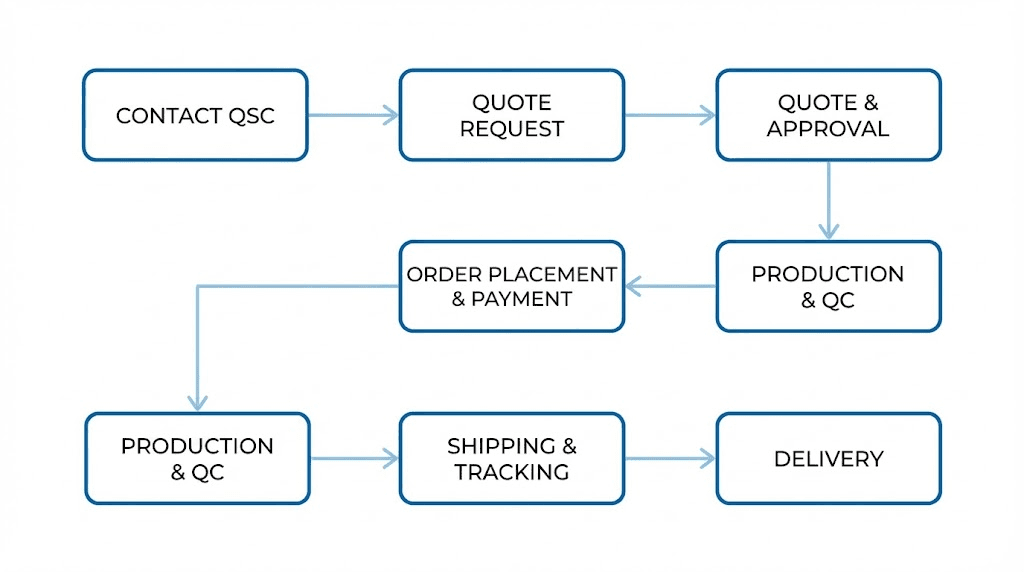
How to order from QSC
The ordering process differs significantly from domestic vendor experiences. Understanding the steps helps avoid common frustrations and ensures smoother transactions.
Initial contact
Orders begin with contacting QSC through their preferred channels. Email provides the best documentation trail for transactions. WhatsApp offers faster responses but creates records that can be edited or deleted, making it less ideal for dispute resolution.
Contact addresses change periodically, so verifying current information through community forums before reaching out saves time.
The GLP-1 Forum and MESO-Rx typically maintain updated contact details.
Order submission
A complete order requires specific information:
Product list with quantities and concentrations. Be specific about vial sizes and amounts to avoid confusion.
Full shipping address including apartment or unit numbers. International shipping requires complete addressing for customs processing.
Contact phone number for delivery coordination.
Preferred payment method. Having this ready speeds processing.
Email address for correspondence and tracking updates.
The ideal transaction involves minimal back-and-forth. Researchers who prepare complete information upfront report smoother experiences than those who require multiple clarification exchanges.
Payment processing
QSC accepts several payment methods with varying convenience levels:
Cryptocurrency is the preferred option. Bitcoin and other major cryptocurrencies offer fast processing, privacy, and easier refund handling if issues arise. Researchers unfamiliar with crypto may need to set up a wallet and purchase coins before ordering.
Bank wire transfers are available but introduce additional complexity. International wires incur fees, take longer to process, and create more documentation. Some users report bank account issues on QSC's end periodically.
Other payment methods may be available depending on order size and current policies. Confirming options before submitting orders prevents delays.
Payment confirmation should be documented with screenshots or transaction IDs. This documentation proves essential if disputes arise later.
Order confirmation and tracking
After payment confirmation, QSC processes orders for shipping. This processing stage represents one of the common complaint areas, with some users reporting delays before packages enter the postal system.
Tracking information becomes available once packages ship. China Post tracking often shows limited updates until packages reach destination countries. Patience is required during the transit period, with updates typically appearing only after customs clearance in the receiving country.
Researchers report varying experiences with communication during the waiting period. Some receive prompt tracking updates. Others report difficulties getting responses. Setting expectations appropriately based on community feedback helps manage frustration.
Quality and purity verification
Quality represents the central concern for any peptide sourcing decision. QSC makes specific claims about purity levels that researchers can verify through testing.
Claimed specifications
QSC markets peptides with ≥98% purity for most compounds, with some products claiming 99% pharmaceutical-grade purity.
These claims align with expectations for research-grade peptides but require verification given the gray market context.
The company provides Certificates of Analysis (COA) for products, though the value of in-house COAs remains limited. Self-reported testing creates obvious conflict-of-interest concerns that third-party verification addresses.
Third-party testing
Independent testing through services like Janoshik Analytical provides objective verification of peptide identity and purity. Janoshik has become the de facto standard for community testing, with their HPLC and mass spectrometry results widely shared and discussed.
QSC products frequently appear in Janoshik testing threads. Results generally support the company's purity claims, with most samples testing at or near stated specifications. This consistency across multiple independent tests provides reasonable confidence in product quality.
The testing process involves sending samples to the analytical lab, paying testing fees, and waiting for results. Researchers serious about verification factor these costs and timelines into their sourcing decisions. The total cost of peptide research includes verification, not just product price.
What testing reveals
Janoshik testing provides several data points:
HPLC purity shows the percentage of the sample that is the intended compound. Results above 98% indicate high-quality material. Results below 95% warrant concern.
Mass spectrometry confirms molecular identity. This verifies that the compound matches what's claimed on the label, essential for ensuring research validity.
Impurity profiles identify what comprises the non-target percentage. Synthesis byproducts, degradation products, and residual solvents all appear in comprehensive testing.
Community-shared test results create an aggregated picture of vendor quality over time. QSC's track record shows generally consistent results, though individual batches can vary.
Quality assurance improvements
User feedback suggests QSC has improved quality assurance processes over time. Earlier complaints about inconsistency have decreased as the company apparently responded to market pressure for better QC.
This evolution reflects broader trends in Chinese peptide supply. Competition drives quality improvements as researchers share experiences and gravitate toward reliable sources. Vendors who maintain quality build sustainable businesses. Those who cut corners eventually lose market share.
Shipping and logistics
Shipping from China introduces complexities that domestic orders avoid. Understanding realistic timelines and potential issues helps set appropriate expectations.
Shipping options
QSC offers multiple shipping tiers:
Express shipping (2-7 days) uses courier services for faster delivery. This option costs more but reduces transit time significantly. It also provides better tracking visibility throughout the journey.
Standard shipping (3-4 weeks average) uses China Post or similar services. This economical option works for non-urgent orders but requires patience. Tracking updates appear sporadically until packages clear destination customs.
Domestic shipping (3-4 days) is available from US, Canada, EU, and Australian warehouses when stock permits. This option combines domestic convenience with international pricing but depends on product availability in local warehouses.
Customs considerations
International peptide shipments face customs scrutiny. Packages must be properly documented as research chemicals not intended for human consumption. Mislabeling or incomplete documentation increases seizure risk.
QSC's packaging and labeling practices generally align with customs requirements, though individual experiences vary. Some shipments clear quickly. Others face delays or additional inspection. The unpredictability reflects normal international shipping variance rather than vendor-specific issues.
Researchers in countries with strict import regulations should understand local rules before ordering. Some jurisdictions require permits or restrict certain compounds. Peptide legality varies significantly by location.
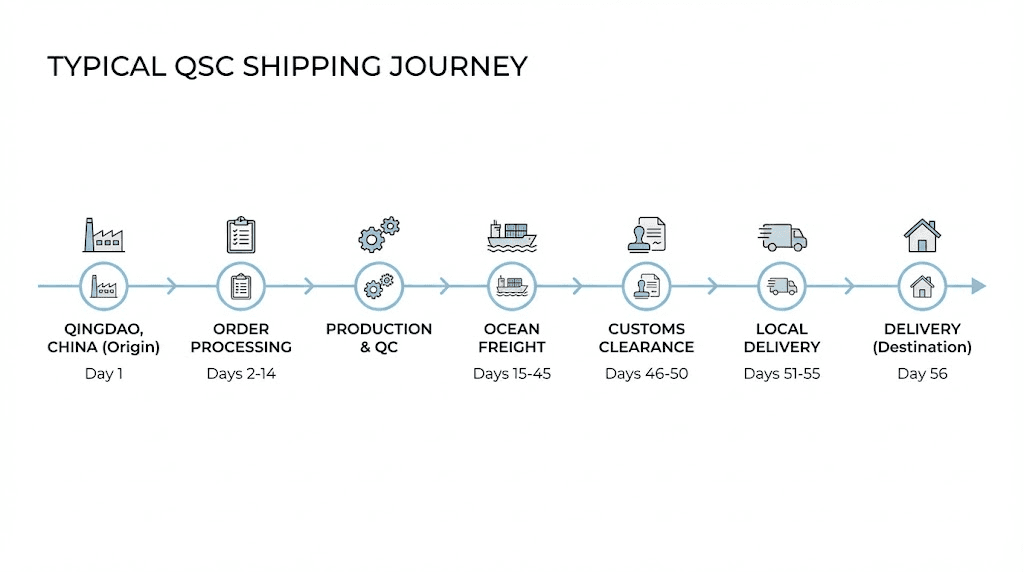
Realistic timeline expectations
Based on aggregated user reports, realistic timelines look like:
Order to shipment: 2-7 days depending on stock availability and payment processing. Some users report faster turnaround. Others experience delays at this stage.
China to destination country: 7-21 days for standard shipping. Express options cut this significantly.
Customs clearance: 1-5 days typically, though delays can extend this unpredictably.
Final delivery: 2-5 days after customs clearance via local postal service.
Total time from order to receipt ranges from under 2 weeks with express shipping to 4-6 weeks with standard shipping and customs delays. Planning orders with buffer time prevents research interruptions.
Shipping issues and resolution
Common shipping issues include:
Tracking not updating: China Post tracking often shows no movement for extended periods. This usually resolves once packages enter destination postal systems. Patience is required.
Customs holds: Random inspection can delay packages without indicating problems. Most holds resolve within a week. Repeated issues may indicate documentation problems worth addressing.
Lost packages: QSC typically offers reship policies for confirmed losses, though proving loss versus slow transit can be challenging. Documentation of all communications helps in these situations.
Communication during shipping issues varies in quality. Some researchers report responsive service. Others describe difficulty getting updates. Having realistic expectations and documented communication helps navigate problems when they arise.
Pricing and value analysis
QSC's primary appeal is pricing. Understanding the value proposition helps researchers evaluate whether the savings justify the additional complexity.
Price comparisons
QSC pricing typically runs 30-50% below domestic US vendors for comparable products. This spread varies by compound and order size but consistently favors QSC on raw cost per milligram.
For example, semaglutide that might cost $150-200 per 5mg vial from domestic sources often runs $60-100 from QSC. Multiply across multiple compounds and larger orders, and savings become substantial.
The peptide cost calculator helps researchers compare total research costs across different sourcing options. Factoring in shipping, potential testing, and time costs provides a more complete picture than unit pricing alone.
Hidden costs
Several factors reduce the apparent savings:
Shipping costs add to order totals, particularly for smaller orders where shipping represents a larger percentage of total spend.
Testing costs for researchers who verify quality add $50-100+ per compound depending on analysis depth.
Payment processing fees for cryptocurrency purchases or international wires reduce effective savings.
Time costs for managing international ordering, tracking, and potential issues have value even if not directly monetary.
Risk costs from potential shipping issues, quality problems, or customs seizures represent probabilistic costs that should factor into decisions.
When QSC makes sense
QSC sourcing offers clear advantages for:
Larger orders where shipping costs distribute across multiple items and savings compound significantly.
Experienced researchers who understand the process, have tested products before, and know what to expect.
Price-sensitive research where budget constraints make domestic pricing prohibitive.
Patient researchers who can wait for shipping and don't need urgent delivery.
When domestic vendors make sense
Domestic alternatives work better for:
First-time researchers who benefit from easier ordering, faster shipping, and more accessible customer service while learning.
Urgent needs where research timelines don't accommodate international shipping.
Smaller orders where shipping costs eliminate price advantages.
Researchers valuing simplicity who prioritize convenience over cost optimization.
The decision isn't always either/or. Many researchers use both sources strategically, ordering from QSC for planned bulk needs while using domestic vendors for urgent or small requirements.
User experiences and community feedback
Aggregating community feedback provides insight beyond any single review. QSC generates extensive discussion that reveals patterns in experiences.
Positive experiences
Researchers reporting positive experiences commonly mention:
Product quality: "Products tested as claimed" and "consistent results across multiple orders" appear frequently in positive reviews.
Value: "Significant savings compared to domestic" and "best price I've found for [compound]" reflect the core value proposition.
Reliability: "Always received my orders" and "never had a total loss" indicate delivery consistency even when slow.
Improvement over time: "Much better than before" and "QSC has gotten more professional" suggest positive trajectory.
Negative experiences
Common complaints include:
Communication: "Hard to get responses" and "slow to answer questions" reflect ongoing customer service challenges.
Shipping speed: "Took forever to ship" and "package sat for weeks before moving" highlight logistics frustrations.
Inconsistency: "Great one order, problems the next" suggests variable experiences that frustrate researchers seeking reliability.
Resolution difficulties: "Struggled to get help with issues" and "had to push hard for reship" indicate support challenges when problems occur.
Balanced assessment
The pattern of feedback suggests QSC delivers acceptable quality at competitive prices but with customer service and logistics that lag behind domestic vendor standards. This tradeoff defines the direct-from-China sourcing model generally.
Researchers who enter with appropriate expectations, documented processes, and patience typically report satisfactory experiences. Those expecting domestic-level service often end up frustrated regardless of product quality.
The peptide forum community provides ongoing feedback that helps researchers stay current on vendor performance. Checking recent discussions before ordering captures any emerging issues or improvements.
Safety and legal considerations
Sourcing peptides internationally introduces considerations beyond domestic purchasing. Understanding the regulatory landscape helps researchers make informed decisions.
Regulatory status
Peptides sold as research chemicals occupy a legal gray area in most jurisdictions. They're not approved for human use, which means they can't be legally marketed for consumption. However, their sale for research purposes generally falls outside drug regulations.
QSC operates within this framework, explicitly marketing products for research with human consumption disclaimers. This positioning reflects standard industry practice but doesn't eliminate legal ambiguity.
The regulatory landscape continues evolving. Changes in classification, enforcement priorities, or import rules can affect availability and risk. Staying informed about developments helps researchers adapt their sourcing strategies.
Import considerations
Importing peptides internationally may trigger regulatory attention depending on:
Compound classification: Some peptides face stricter controls than others. Understanding how specific compounds are classified in your jurisdiction matters.
Quantity: Large orders may attract more scrutiny than personal research amounts.
Documentation: Proper labeling as research chemicals with clear "not for human consumption" markings reduces issues.
Declared value: Accurate declarations prevent customs complications from undervaluation.
Researchers should understand their local import regulations before ordering. What's straightforward in one country may be problematic in another.
Quality safety
Beyond legal considerations, quality safety matters for research validity. Contaminated, degraded, or mislabeled products can:
Invalidate research results by introducing confounding variables.
Create unexpected effects if used in biological systems.
Waste resources on products that don't perform as expected.
Third-party testing addresses these concerns but adds cost and complexity. The decision to test depends on research applications and risk tolerance.
Proper peptide handling and storage also affects safety. Even high-quality products degrade with improper handling. Following correct storage protocols protects investment and ensures research validity.
Alternatives to QSC
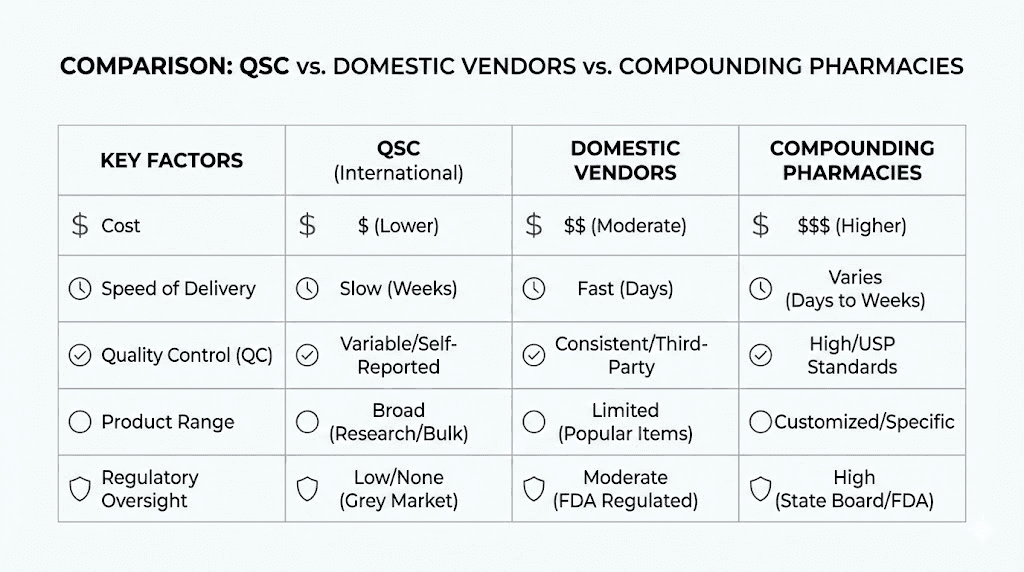
QSC represents one option among many for peptide sourcing.
Understanding alternatives helps researchers make informed comparisons.
Other Chinese vendors
QSC isn't the only Chinese peptide supplier. Alternatives include:
SRY Peptides: Another frequently discussed Chinese source with competitive pricing. Some researchers report comparable quality with different customer service experiences.
Various Alibaba/Made-in-China suppliers: Direct manufacturer access with varying quality and reliability. More due diligence required but potentially lower prices.
Other trading companies: Similar to QSC's model with different representative quality and product focus.
Each alternative has its own reputation profile in community discussions. Research before switching helps avoid trading known issues for unknown ones.
Domestic vendors
US-based vendors offer different tradeoffs:
Higher prices reflecting domestic operating costs and smaller scale.
Faster shipping with domestic logistics.
Better customer service typically with English-speaking support.
Easier returns/refunds when issues arise.
Simpler payment with standard credit card or PayPal options.
Vendors like Paradigm Peptides and others serve researchers prioritizing convenience over cost optimization.
Compounding pharmacies
For researchers working with medical supervision, compounding pharmacies offer another pathway:
Prescription required but with legitimate medical framework.
FDA-registered facilities with quality oversight.
Insurance coverage potential for some compounds.
Medical support for protocol questions and monitoring.
This option doesn't suit all research applications but represents the most regulated pathway for those who can access it.
Best practices for ordering from QSC
Researchers who've navigated QSC successfully share common practices that improve experiences.
Before ordering
Research current status: Check recent forum discussions for any emerging issues with QSC operations, banking, or shipping.
Verify contact information: Confirm current email/WhatsApp details through community resources.
Plan payment method: Set up cryptocurrency wallet if needed before initiating contact.
Calculate total costs: Factor shipping, potential testing, and payment fees into comparison with alternatives.
Build timeline buffer: Order well ahead of research needs to accommodate shipping variables.
During ordering
Prepare complete information: Have product list, quantities, full address, phone, and payment preference ready before first contact.
Use email primarily: Maintain documentation trail for all communications.
Confirm everything: Verify product details, pricing, and payment instructions before sending money.
Document payment: Screenshot transaction confirmations and save all records.
Keep expectations realistic: Understand that response times and processing may be slower than domestic experiences.
After ordering
Request tracking: Ask for shipping information 5-7 days after payment confirmation.
Monitor patiently: Understand that tracking gaps are normal for international shipping.
Document delivery: Photograph received packages and contents for records.
Test if concerned: Send samples for third-party verification if quality matters for your application.
Store properly: Follow correct storage protocols immediately upon receipt.
If issues arise
Communicate clearly: Describe problems specifically with documentation.
Be patient but persistent: Allow reasonable response time but follow up if ignored.
Escalate appropriately: Reference policies and document all attempts at resolution.
Share experiences: Help community by reporting outcomes in relevant forums.
Frequently asked questions
Is QSC a legitimate peptide supplier?
QSC (Qingdao Sigma Chemical) is a legitimate Chinese trading company that has supplied peptides to researchers for several years. Independent third-party testing through services like Janoshik generally confirms their purity claims. However, "legitimate" doesn't mean regulated or approved for human use. They operate in the research chemical space with all associated legal ambiguity.
How long does shipping from QSC take?
Express shipping typically takes 2-7 days. Standard shipping averages 3-4 weeks but can extend to 6 weeks with customs delays. Domestic shipping from regional warehouses takes 3-4 days when available. Build buffer time into research planning to accommodate variability.
What payment methods does QSC accept?
Cryptocurrency (Bitcoin and others) is preferred and processes fastest. Bank wire transfers are available but slower and more complicated. Payment method availability can change, so confirm options when ordering. Crypto wallets require setup before ordering if you don't already have one.
How does QSC quality compare to domestic vendors?
Third-party testing suggests QSC quality is comparable to reputable domestic vendors, with most products testing at stated purity levels (≥98%). The difference lies in service, speed, and convenience rather than product quality for most compounds.
Is it legal to order peptides from QSC?
Peptides sold as research chemicals occupy legal gray area. They're generally legal to purchase for research but not approved for human consumption. Import regulations vary by country. Understanding local rules before ordering helps avoid complications. The legality of peptides depends on jurisdiction and intended use.
What happens if my QSC order is seized by customs?
QSC typically offers reship policies for customs seizures, though processes vary. Documentation of the seizure helps resolve issues. Some researchers report smooth resolutions while others describe difficulties. Having written policies and documented communication improves outcomes.
Should I get QSC peptides tested?
Testing provides objective verification that some researchers consider essential and others skip. The decision depends on research application, risk tolerance, and budget. For critical research or first orders, testing offers valuable assurance. For repeat orders of verified products, some researchers skip testing.
How does QSC compare to other Chinese peptide vendors?
QSC represents one of the more established Chinese sources with extensive community feedback. Alternatives like SRY offer similar models with different service experiences. QSC's volume of discussion reflects market position but doesn't necessarily indicate superiority. Comparing current community feedback helps evaluate options.
External resources
PubMed - Research database for peptide studies and applications
FDA Drug Information - US regulatory guidance on peptide classification
US Customs and Border Protection - Import regulations and requirements
In case I don't see you, good afternoon, good evening, and good night. Join us.