Jan 22, 2026

You started taking collagen peptides to improve your skin, strengthen your joints, or support your gut. A few weeks in, you notice something unexpected. The scale has moved. Your clothes fit differently. That familiar bloat has crept back in. Naturally, you wonder if the collagen is to blame.
This question haunts thousands of people every month. They search for answers, worried that the supplement meant to help them is secretly working against their goals. The confusion makes sense. Weight management involves complex biochemistry, and adding any new supplement creates variables. But here is what the research actually reveals: collagen peptides do not cause fat gain. In fact, multiple studies suggest the opposite effect entirely.
The puffiness you might experience has explanations rooted in physiology, not fat accumulation. Water retention, digestive adjustment, and measurement timing all play roles in those concerning scale fluctuations. Understanding the difference between temporary changes and actual body composition shifts matters enormously for anyone committed to their health journey. This guide examines every angle of the collagen and weight relationship, from peer-reviewed clinical trials to the practical realities of collagen peptide supplementation.
What follows draws from dozens of studies, including randomized controlled trials, meta-analyses, and mechanistic research. We will explore why collagen might actually support fat loss goals, how it influences muscle preservation, and what those first few weeks of supplementation really mean for your body. SeekPeptides members often ask about this topic because clarity matters when optimizing any protocol.
What exactly are collagen peptides
Before diving into weight effects, understanding what collagen peptides actually are provides essential context. Collagen represents the most abundant protein in the human body. It forms the structural framework for skin, bones, tendons, ligaments, and connective tissues throughout your system. Think of it as the scaffolding that holds everything together.
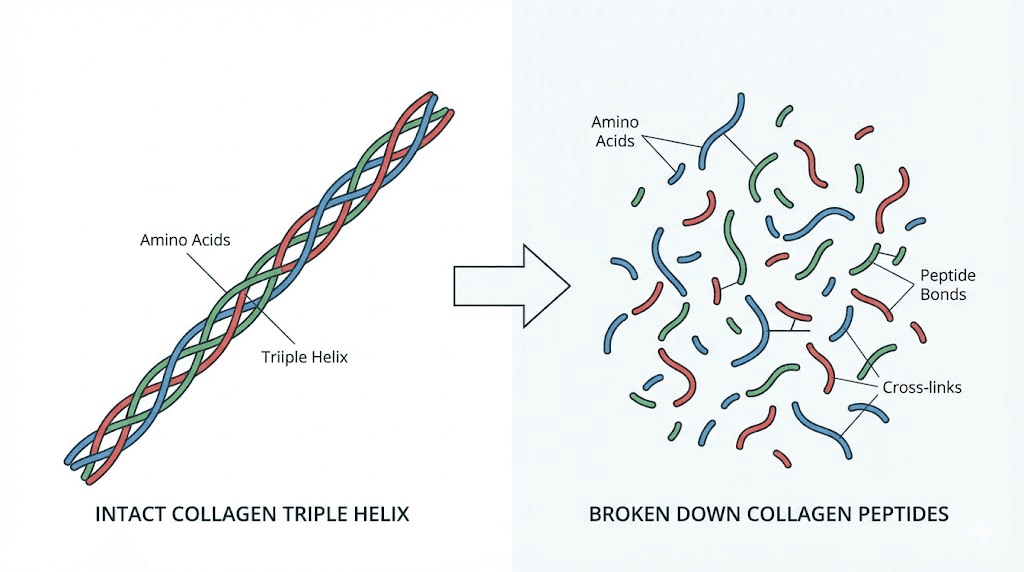
Collagen peptides, also called hydrolyzed collagen, are collagen proteins broken down into smaller chains of amino acids. This hydrolysis process makes them far easier to digest and absorb compared to intact collagen molecules. When you consume peptides, they break down further into individual amino acids and small peptide fragments that your body can readily use.
The amino acid profile of collagen differs significantly from other proteins. Glycine, proline, and hydroxyproline dominate the composition. These amino acids play specific roles in tissue synthesis, gut health, and metabolic processes. However, collagen lacks tryptophan entirely and contains minimal amounts of other essential amino acids. This makes it an incomplete protein source when considered alone, though its functional benefits extend far beyond simple protein contribution.
Three main types of collagen appear in supplements. Type I collagen comprises roughly 90% of body collagen and supports skin, bones, tendons, and organs. Type II collagen concentrates in cartilage and joint tissues. Type III collagen works alongside Type I in skin, muscles, and blood vessels. Most peptide supplements on the market contain Type I and Type III from bovine or marine sources.
The molecular weight matters too. Hydrolyzed collagen peptides typically weigh between 2,000 and 5,000 daltons. This small size allows rapid absorption through the intestinal wall. Studies using isotope-labeled collagen have tracked these peptides appearing in blood plasma within one hour of ingestion. Some peptide fragments even reach target tissues like skin and cartilage intact, suggesting they may have direct bioactive effects beyond simple amino acid provision.
The caloric reality of collagen supplements
Numbers tell an important part of this story. A standard serving of collagen peptides, typically 10 to 20 grams, contains approximately 35 to 70 calories. These calories come almost entirely from protein, with zero fat and zero carbohydrates in unflavored varieties.
To put this in perspective, a single medium banana contains about 105 calories. A tablespoon of olive oil delivers 120 calories. That morning latte with whole milk adds 150 to 300 calories depending on size. The caloric contribution from collagen supplementation registers as minimal within any reasonable dietary framework.
The mathematics of weight gain require a caloric surplus. You must consistently consume more energy than your body expends to accumulate body fat. Adding 70 calories from collagen to a diet already at maintenance creates such a small surplus that meaningful fat accumulation would take months or years to manifest, assuming everything else remained constant. In reality, that tiny caloric addition often gets offset by the satiety effects collagen provides.
Consider the protein thermic effect as well. Your body expends energy digesting and processing nutrients. Protein has the highest thermic effect of any macronutrient, burning approximately 20 to 30 percent of its calories during metabolism. Those 70 calories from collagen effectively become 50 to 56 net calories after accounting for digestive energy expenditure.
The fear of collagen causing weight gain from calories alone defies basic nutritional math. You would need to consume massive quantities, far beyond any recommended supplementation protocol, to create a meaningful caloric surplus from collagen alone. This reality should provide immediate reassurance to anyone concerned about the caloric aspect of their peptide regimen.
What the clinical research actually shows
Science offers clear direction here. Multiple randomized controlled trials have examined collagen peptide effects on body composition. The findings consistently point in one direction, and it is not toward weight gain.
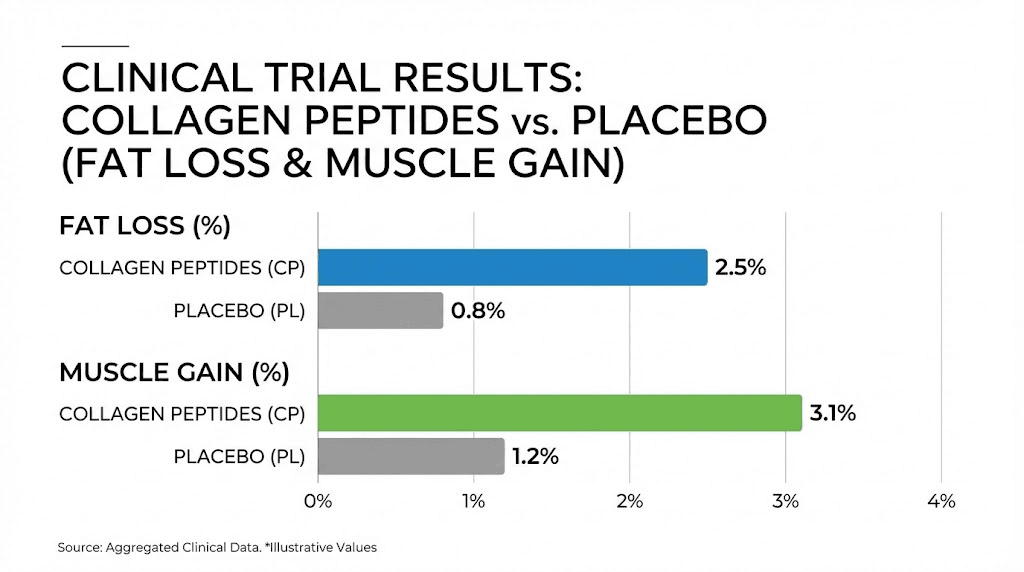
A landmark study published in the British Journal of Nutrition followed elderly sarcopenic men through 12 weeks of resistance training combined with either 15 grams daily of collagen peptides or placebo. The collagen group experienced a 4.2 kilogram increase in fat-free mass compared to 2.9 kilograms in the placebo group. More striking, the collagen group lost 5.4 kilograms of fat mass versus 3.5 kilograms for placebo. The supplement associated with increased muscle and decreased fat.
Research on middle-aged untrained men showed similar patterns. After 12 weeks of resistance training with 15 grams of daily collagen peptides, participants demonstrated significantly higher increases in fat-free mass and greater decreases in fat mass compared to placebo. The collagen group also showed comparable results to whey protein supplementation, a standard comparison in body composition research.
Animal studies provide mechanistic insights. Mice fed high-fat diets plus collagen peptides gained less weight than those on high-fat diets alone. The collagen intervention reduced abdominal fat accumulation, lowered blood glucose levels, and decreased multiple obesity markers. Researchers observed these anti-obesity effects without any difference in food intake between groups, suggesting collagen influences metabolism rather than simply reducing appetite.
A randomized, double-blind, placebo-controlled trial examined overweight adults taking 2 grams of skate-derived collagen peptides daily for 12 weeks. Body fat decreased significantly in the collagen group. Body weight, BMI, and waist circumference remained statistically unchanged, but the shift in composition favored the supplement group. Fat went down while everything else stayed stable.
The 2025 research landscape continues this trend. A recent study on probiotics containing collagen peptides demonstrated more pronounced anti-obesity effects compared to clinical weight loss medications in mouse models. The collagen-containing intervention improved gut microbiota diversity and reduced weight gain from high-fat feeding.
Not a single high-quality study shows collagen peptides causing fat gain. The evidence consistently points toward favorable body composition changes when collagen supplements are combined with appropriate exercise protocols.
Understanding why you might feel heavier
If the science supports collagen for body composition, why do some people feel like they have gained weight after starting supplementation? Several physiological mechanisms explain this common experience.
Water retention and hydration changes
Collagen is hydrophilic. This means it attracts and holds water molecules. This property makes collagen essential for skin hydration and joint lubrication. When you begin supplementing, your tissues may temporarily retain more water as they incorporate these hydrophilic proteins.
The scale cannot distinguish between water weight and fat weight. A gain of two to three pounds in the first week or two of collagen supplementation likely reflects increased tissue hydration, not fat accumulation. This water serves beneficial purposes, plumping skin and cushioning joints, but it registers on the scale nonetheless.
Studies on collagen and skin hydration confirm this mechanism. Participants taking collagen peptides showed improved skin moisture content without increases in body fat percentage. The water went into tissues where it belongs, improving function and appearance while temporarily affecting weight measurements.
Digestive system adjustment
Any new supplement creates an adjustment period for your digestive system. Collagen peptides introduce concentrated amounts of specific amino acids that may differ from your usual dietary pattern. Your gut microbiome and digestive enzymes need time to adapt.
During this transition, some people experience temporary bloating. The sensation of fullness or puffiness gets interpreted as weight gain even when actual body mass remains stable. Research indicates this digestive adaptation typically resolves within one to two weeks for most individuals.
Interestingly, longer-term studies show the opposite effect. After the adjustment period, 93% of participants in one trial reported reduced digestive symptoms including less bloating compared to baseline. The initial discomfort gives way to improved gut function for most users.
Measurement timing and variables
Body weight fluctuates naturally by several pounds throughout any given day. Hydration status, recent meals, bowel movements, and hormonal cycles all influence the number on the scale. Starting collagen supplementation often coincides with increased attention to body weight, leading people to notice fluctuations they previously ignored.
The confirmation bias compounds this effect. Once you suspect collagen might cause weight gain, you notice every upward scale movement and attribute it to the supplement. Meanwhile, the normal downward fluctuations get dismissed or forgotten. This psychological pattern creates a skewed perception of reality that the data does not support.
Muscle mass increases
This explanation represents good news disguised as concerning numbers.
If you combine collagen peptides with resistance training, as the research protocols typically do, you may gain actual weight in the form of muscle tissue.
Muscle weighs more than fat by volume.
The studies showing improved fat-free mass with collagen supplementation demonstrate this clearly. Participants gained muscle while losing fat. The scale might show the same number or even a slight increase while body composition improves dramatically. This is why body fat percentage and measurements matter more than weight alone when evaluating supplement results.
The satiety factor and appetite regulation
One of the most compelling arguments against collagen causing weight gain involves its effects on appetite. Research suggests collagen peptides may actually help control hunger and reduce overall caloric intake.
A study comparing different protein sources found that gelatin, the cooked form of collagen, was 40% more satiating than other breakfast proteins. Participants felt fuller for longer after consuming gelatin-containing meals, even when calorie counts matched exactly. This enhanced satiety effect could lead to reduced snacking and smaller portions at subsequent meals.
The hormonal mechanisms behind this satiety are becoming clearer. Collagen peptide consumption appears to increase GLP-1, a hormone that promotes feelings of fullness and slows gastric emptying. GLP-1 also stimulates insulin secretion in a glucose-dependent manner, which helps regulate blood sugar and energy metabolism. The same hormone that modern weight loss medications target gets naturally elevated by collagen supplementation.
Ghrelin, the hunger hormone, shows inverse effects. Animal studies found significantly decreased ghrelin levels five hours after collagen consumption compared to other protein sources. Lower ghrelin means reduced hunger signals and easier adherence to caloric goals.
A three-month clinical trial documented these real-world effects. Participants in the collagen group reported feeling fuller after meals and experiencing fewer hunger sensations throughout the day. By study end, their weight, BMI, and waist circumference had all decreased significantly. The appetite control translated directly into measurable body composition improvements.
For anyone managing their weight, these satiety effects represent a meaningful benefit. Collagen does not just avoid causing weight gain. It may actively support weight management efforts by making dietary adherence easier through natural appetite regulation.
How collagen influences metabolism and fat storage
The anti-obesity effects of collagen peptides extend beyond simple satiety. Research has uncovered several metabolic mechanisms that explain why collagen might help prevent fat accumulation rather than promote it.
Gut microbiome modulation
Your gut bacteria influence weight regulation more than scientists previously understood. The ratio of Firmicutes to Bacteroidetes bacterial species correlates with obesity risk. Higher Firmicutes ratios associate with increased fat storage and metabolic dysfunction.
Fish collagen peptides significantly reduce the Firmicutes/Bacteroidetes ratio in research models. This shift in gut microbiome composition activates metabolic pathways that inhibit obesity, including improved polysaccharide degradation and enhanced amino acid synthesis. The collagen essentially creates a gut environment less favorable to fat accumulation.
The microbiome effects extend to inflammation reduction. Chronic low-grade inflammation contributes to metabolic syndrome and obesity. By promoting beneficial bacterial species and reducing inflammatory markers, collagen peptides address root causes of weight management difficulties rather than just symptoms.
Adipogenesis inhibition
Fat cells form through a process called adipogenesis. Certain compounds can either promote or inhibit this process. Collagen peptides appear to fall in the inhibition category.
Research demonstrates that collagen peptides suppress the expression of adipogenic transcription factors during fat cell differentiation. This means fewer fat cells form when collagen is present in the system. Existing fat cells also accumulate less lipid, the stored fat within cells, when exposed to collagen-derived peptides.
These effects occur without reducing food intake in animal models. The anti-obesity action comes from metabolic modulation rather than caloric restriction. Mice eating the same amount of food gained less fat when their diet included collagen peptides compared to control groups.
Hepatic lipid metabolism
The liver plays a central role in fat processing and storage. Collagen peptides influence hepatic lipid metabolism through several pathways, improving the body ability to process dietary fats rather than store them.
Studies show collagen supplementation activates AMPK, an enzyme crucial for energy metabolism and fat oxidation. AMPK activation promotes fatty acid burning while inhibiting fat synthesis. This metabolic shift favors utilizing stored fat for energy rather than accumulating new fat deposits.
Cholesterol and triglyceride levels often improve with collagen supplementation as well. Research participants show decreases in blood lipids that indicate healthier fat metabolism. These improvements in dyslipidemia markers suggest collagen supports overall metabolic health beyond just body composition.
Collagen and muscle preservation during weight loss
Anyone who has lost weight knows the challenge of maintaining muscle mass during a caloric deficit. The body naturally breaks down some muscle tissue when energy intake falls below expenditure. This muscle loss slows metabolism, reduces strength, and often leads to the "skinny fat" appearance that frustrates many dieters.
Collagen peptides offer significant support for muscle preservation. The amino acid glycine, abundant in collagen, plays roles in muscle protein synthesis and creatine production. Proline and hydroxyproline contribute to connective tissue integrity that supports muscle function and injury prevention during training.
Clinical evidence strongly supports collagen for muscle outcomes. The study on sarcopenic elderly men showed a 4.2 kilogram increase in fat-free mass with collagen supplementation versus 2.9 kilograms with placebo. Both groups followed the same resistance training program. The only variable was the collagen supplement, and it produced 45% greater muscle gains.
Strength improvements accompany the mass gains. Isokinetic quadriceps strength increased by 16.5 Nm in the collagen group compared to 7.3 Nm in placebo. This represents more than double the strength improvement from the same training stimulus. The collagen appeared to enhance training adaptations across multiple measures.
For middle-aged men, the pattern held. Fat-free mass increased significantly more with collagen peptides than placebo over 12 weeks of resistance training. Skeletal muscle mass specifically improved, suggesting the gains reflected actual muscle tissue rather than other lean body components.
Young adults benefit too. Men in their twenties completing a hypertrophy training program showed more pronounced gains in body mass and fat-free mass when supplementing with collagen compared to training alone. The benefits appear across age groups and training backgrounds.
A recent meta-analysis confirmed these findings across the literature. Collagen peptide supplementation combined with physical training produces significant, though moderate, improvements in fat-free mass, muscle mass, and maximal strength. The evidence supports collagen as a legitimate ergogenic aid for athletic performance and body composition.
Optimal dosing for body composition benefits
Dosing matters for any supplement, and collagen is no exception. Research provides clear guidance on effective amounts for various health goals.
For skin health and general wellness, studies show benefits at lower doses. Daily intake of 2.5 to 5 grams of collagen peptides improves skin hydration, elasticity, and wrinkle appearance over 8 to 12 weeks. These doses represent the minimum effective range for dermatological benefits.
Joint health research typically uses moderate doses. Studies examining collagen effects on joint pain and cartilage health often employ 5 to 10 grams daily. Some trials with undenatured Type II collagen show benefits at just 40 milligrams for knee osteoarthritis specifically.
Body composition and muscle benefits require higher doses. The clinical trials demonstrating increased fat-free mass and decreased fat mass consistently used 15 grams of collagen peptides daily. This dose appears optimal for enhancing the results of resistance training and supporting favorable body composition changes.
Digestive health research has explored even higher amounts. One trial found that 20 grams daily, split into two doses, significantly reduced bloating and digestive symptoms over 8 weeks. This higher dose may benefit those with gut health concerns, though it exceeds typical supplementation protocols.
The general range of 2.5 to 15 grams daily is considered safe and effective based on current evidence. Starting at the lower end and gradually increasing allows your digestive system to adapt. Most people find their optimal dose somewhere between 10 and 15 grams for comprehensive benefits including body composition support.
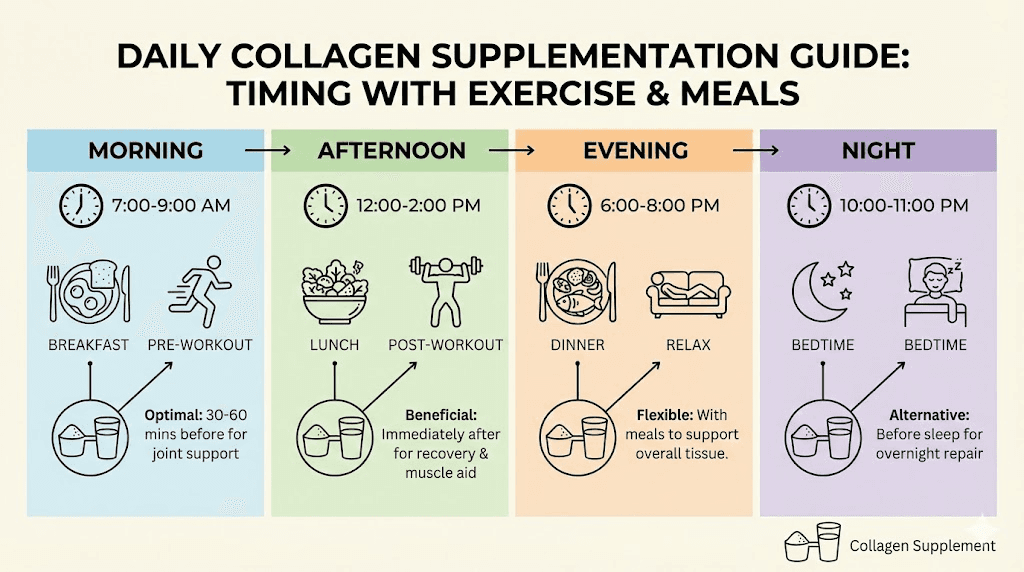
Timing appears less critical than consistency. Some research suggests taking collagen with vitamin C enhances absorption, as vitamin C is a cofactor for collagen synthesis. Taking collagen around exercise may optimize muscle-related benefits, though the evidence for specific timing remains less robust than the evidence for appropriate dosing.
Comparing collagen to other protein supplements for weight management
How does collagen stack up against other protein supplements when it comes to body composition? The comparisons offer useful context for anyone choosing their supplementation strategy.
Collagen versus whey protein
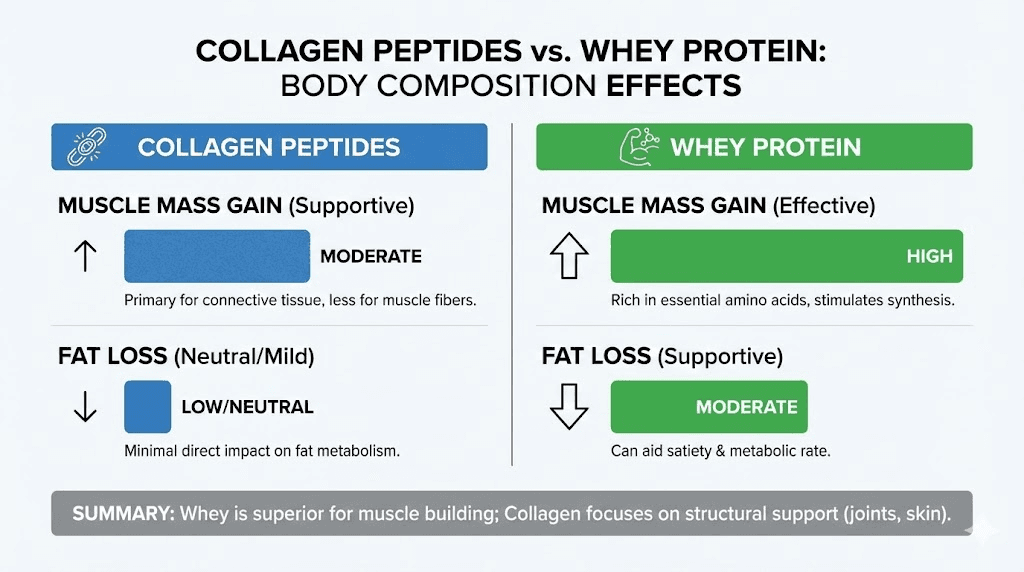
Whey protein has long been the gold standard for muscle building and body composition. It contains all essential amino acids, including high leucine content that triggers muscle protein synthesis. Collagen lacks this complete amino acid profile.
Yet direct comparisons yield surprising results. In the study on middle-aged men, collagen peptides produced fat-free mass increases comparable to whey protein supplementation. While whey remains superior for pure muscle protein synthesis, collagen supports overall body composition through different mechanisms.
Collagen may offer advantages for satiety. The 40% greater satiety from gelatin compared to other proteins suggests collagen could support dietary adherence better than whey for some individuals. If hunger management is your primary challenge, collagen might prove more practical.
The two supplements can work synergistically. Using whey around workouts for muscle protein synthesis while taking collagen for connective tissue support, satiety, and gut health represents an optimal strategy for many fitness enthusiasts. They target different aspects of body composition and health.
Collagen versus casein
Casein, the slow-digesting milk protein, often gets recommended for overnight muscle preservation. Its sustained amino acid release supports muscle protein synthesis during the fasting period of sleep.
Collagen showed different effects on appetite hormones compared to casein in research. Ghrelin, the hunger hormone, dropped more significantly after collagen consumption than after casein. For appetite control purposes, collagen demonstrated advantages over this traditional protein source.
The sustained-release benefit of casein may still favor it for overnight use, while collagen could excel for daytime satiety support. Understanding these nuanced differences allows for strategic supplementation based on individual goals and timing.
Collagen versus plant proteins
Plant-based protein supplements like pea, rice, or soy offer complete protein options for those avoiding animal products. They support muscle protein synthesis when consumed in adequate amounts and often come with fiber and micronutrient benefits.
Collagen stands apart due to its unique amino acid composition and specific tissue benefits. The glycine, proline, and hydroxyproline in collagen support functions that other proteins cannot directly address. Combining plant proteins with collagen covers both general protein needs and collagen-specific benefits.
For vegans, collagen supplementation presents a challenge since all collagen supplements derive from animal sources. Emerging research on plant-based collagen boosters offers alternatives, though their efficacy does not yet match animal-derived collagen peptides.
The special case of collagen and women
Women searching about collagen and weight gain often have specific concerns related to hormonal cycles, water retention patterns, and body composition goals that differ from male-focused research. The evidence addresses these considerations.
Hormonal fluctuations throughout the menstrual cycle affect water retention significantly. Women may notice more pronounced scale changes when starting collagen supplementation if it coincides with luteal phase water retention. This overlap can create the false impression that collagen caused the water weight that would have occurred regardless.
Research specifically on female populations provides reassurance. Studies on peptides for women show favorable body composition effects similar to male populations. Fat-free mass increases and fat mass decreases appear consistently when collagen combines with appropriate exercise.
Pre-menopausal women in clinical trials showed decreased fat mass while increasing lean mass and grip strength with collagen supplementation and resistance training. These results directly counter the weight gain concern while demonstrating functional strength benefits particularly relevant for bone health and injury prevention in female athletes.
Menopause and perimenopause create additional considerations. The decline in estrogen affects collagen production naturally, accelerating skin aging and joint deterioration. Supplementing collagen during this transition may provide particular benefits for menopausal women while supporting rather than hindering healthy body composition.
One study did find that women taking collagen supplements gained more weight over 8 weeks than those taking whey protein. This outlier result requires context. The study measured total weight without distinguishing water, muscle, or fat. Given collagen's hydrophilic properties and muscle-supporting effects, the weight gain may have reflected beneficial tissue changes rather than fat accumulation. This single study stands against a larger body of evidence showing favorable composition effects.
Addressing specific concerns and scenarios
Real-world questions go beyond general research findings. Here are common scenarios and what the evidence suggests for each.
I gained five pounds in my first week on collagen
This almost certainly represents water retention, not fat gain. Creating five pounds of fat requires a surplus of approximately 17,500 calories above your maintenance needs. Collagen supplementation adds perhaps 70 calories daily. The math makes fat gain in one week virtually impossible.
What likely happened: your tissues absorbed water alongside the collagen peptides, your digestive system created temporary bloating during adjustment, or your weighing coincided with normal daily fluctuation at its high point. Wait two to four weeks while staying consistent, and the number will likely stabilize or decrease as your body adapts.
I feel bloated and puffy after taking collagen
Initial bloating affects some people during the digestive adjustment period. The concentrated amino acids require enzyme adaptation. This typically resolves within one to two weeks of consistent use.
Strategies to minimize bloating include starting with a lower dose of 5 grams and gradually increasing, taking collagen with food rather than on an empty stomach, increasing water intake to support the hydrophilic collagen, and choosing high-quality hydrolyzed peptides that digest more easily. If bloating persists beyond two weeks, the supplement source or additional ingredients may not agree with your system, warranting a switch to a different product.
My clothes fit tighter but the scale has not changed
This scenario could indicate positive body composition changes. If you are exercising alongside collagen supplementation, you may be gaining muscle while losing fat. Muscle is denser than fat, taking up less space per pound. The scale stays stable while your body gets smaller.
Alternatively, water retention in skin and connective tissues could create a temporary firmer, fuller feeling that affects how clothes fit. This should stabilize within a few weeks as your body reaches a new hydration equilibrium.
Use multiple metrics beyond the scale. Waist measurements, body fat percentage testing, progress photos, and how you feel in your body all provide valuable data that the scale alone cannot capture.
I have been taking collagen for months and slowly gaining weight
Long-term gradual weight gain likely relates to factors beyond collagen supplementation. Caloric intake, activity level, hormonal changes, sleep quality, and stress all influence weight over time. The minimal calories from collagen cannot account for sustained weight gain.
Consider whether anything else changed when you started collagen. Did you also modify your diet, exercise routine, or lifestyle? Sometimes we make multiple changes simultaneously and attribute all effects to the most recent addition. A comprehensive review of your overall patterns will likely reveal the actual cause.
If you are combining collagen with resistance training and gaining weight while getting stronger, you may simply be building muscle. This is the intended outcome of the clinical research protocols and represents a positive change in body composition.
How to maximize collagen benefits while managing weight
Strategic supplementation optimizes results. These evidence-based practices help you get the most from collagen while supporting your body composition goals.
Combine with resistance training
The clinical trials showing the best body composition outcomes all paired collagen supplementation with structured resistance exercise. The combination produces synergistic effects that neither intervention achieves alone. Collagen appears to enhance training adaptations, making your workouts more effective for building muscle and losing fat.
Aim for at least two to three resistance training sessions weekly. Focus on compound movements that target major muscle groups. The muscle-building protocols proven effective with collagen supplementation used similar training frequencies and exercise selections.
Support protein intake adequately
Collagen should supplement, not replace, your overall protein intake. Its incomplete amino acid profile means you still need other protein sources for optimal muscle protein synthesis and overall nutrition. Use collagen for its specific benefits while meeting total protein needs through complete sources.
Most research suggests protein intake of 1.6 to 2.2 grams per kilogram of body weight for active individuals optimizes body composition. Collagen can contribute to this total while providing unique benefits other proteins cannot offer.
Stay adequately hydrated
Collagen's hydrophilic nature means it works best when you are well hydrated. Insufficient water intake could contribute to constipation or digestive discomfort while limiting collagen's tissue-hydrating benefits. Aim for an additional glass of water per scoop of collagen beyond your normal intake.
Proper hydration also supports metabolic function and can aid weight management independently. The combination of adequate water and collagen supplementation creates conditions favorable for both tissue health and body composition.
Consider timing strategically
While timing matters less than consistency, some strategies may optimize specific benefits. Taking collagen with vitamin C enhances absorption through its role as a cofactor in collagen synthesis. A splash of citrus juice or a vitamin C supplement alongside collagen makes sense from a biochemical standpoint.
For satiety benefits, taking collagen before meals may help control portion sizes. The protein content and specific satiety effects could reduce overall caloric intake at the subsequent meal. Experiment to find what works best for your schedule and goals.
Track the right metrics
Abandoning scale weight as your primary metric removes the main source of collagen-related weight anxiety. Instead, track waist circumference, hip measurements, progress photos, strength improvements, energy levels, and how your clothes fit. These metrics better reflect actual body composition changes.
If you do use a scale, weigh under consistent conditions, same time of day, same state of dress, after using the bathroom. Weekly averages provide more useful data than daily fluctuations. The trend over months matters more than any single reading.
Different types of collagen and their weight-related effects
Not all collagen supplements are identical. Understanding the differences helps you choose the right product for your goals.
Hydrolyzed collagen peptides
This is the most common and well-researched form.
The hydrolysis process breaks collagen into small peptides of 2,000 to 5,000 daltons that absorb readily.
Most body composition studies use this form, making it the evidence-based choice for weight management support.
Hydrolyzed collagen dissolves easily in liquids and digests without difficulty for most people. The smaller peptide size reduces bloating potential compared to intact collagen sources. Quality products specify "hydrolyzed" or "peptides" on their labels.
Gelatin
Gelatin is partially hydrolyzed collagen that gels when cooled. It provides similar amino acids but in larger molecular form. The satiety research showing 40% greater fullness used gelatin, suggesting this form particularly benefits appetite control.
Gelatin requires heating to dissolve and sets into a gel at room temperature. This makes it less versatile for supplementation but excellent for cooking applications. Making homemade gummies or adding to soups incorporates gelatin naturally into your diet.
Undenatured Type II collagen
This specialized form targets joint health specifically. Unlike hydrolyzed collagen, undenatured Type II collagen remains intact and works through immune modulation rather than direct tissue incorporation. Research uses much smaller doses, typically 40 milligrams daily.
The weight effects of undenatured Type II collagen have received less study than hydrolyzed peptides. If body composition represents your primary goal, hydrolyzed collagen peptides remain the better-researched choice. Undenatured Type II serves specific joint health purposes.
Marine versus bovine collagen
Source affects collagen type composition. Marine collagen from fish consists primarily of Type I collagen, excellent for skin benefits. Bovine collagen from cows contains both Type I and Type III, providing broader connective tissue support.
The anti-obesity research includes both marine and bovine sources with positive results. Marine collagen peptides showed particularly strong effects on gut microbiome composition in some studies. Bovine collagen dominates the muscle and body composition research.
Quality matters more than source for most purposes. Choose products that specify peptide size, source verification, and third-party testing regardless of whether they derive from fish or cattle. Reputable vendors provide this transparency.
Potential side effects beyond weight concerns
Understanding all possible effects helps you make informed decisions about collagen supplementation. While generally well-tolerated, some people experience reactions worth noting.
Digestive effects
The most common side effects involve digestion. Some people report constipation, particularly if they do not increase water intake alongside collagen. Others experience the opposite effect with loose stools during the adjustment period. These typically resolve within two weeks of consistent use.
Feelings of fullness or heaviness in the stomach occur due to the dense protein nature of collagen supplements. Taking collagen with food rather than on an empty stomach often mitigates this sensation. Starting with lower doses and gradually increasing also helps.
Skin reactions
Rarely, some users report skin changes including mild rash, hives, or acne after starting collagen. These could indicate sensitivity to the collagen source or other ingredients in the supplement. Switching to a different product or source often resolves these issues.
Paradoxically, some people experience skin improvements followed by a temporary worsening before ultimate improvement. This "purging" effect may relate to increased skin cell turnover as collagen supports tissue regeneration. The timeline typically shows improvement within four to six weeks if this represents normal adaptation rather than true sensitivity.
Cardiovascular considerations
Some individuals report slight blood pressure increases with collagen supplementation. Those with existing hypertension should monitor their readings and consult healthcare providers before starting any new supplement including collagen.
However, other research shows improved cardiovascular markers with collagen, including better lipid profiles and reduced arterial stiffness. The cardiovascular effects may depend on individual factors and overall health status.
Medication interactions
Collagen supplements have few documented medication interactions. However, anyone taking medications for blood pressure, blood sugar, or other chronic conditions should discuss supplementation with their healthcare provider. The metabolic effects of collagen could theoretically interact with certain drug mechanisms.
What SeekPeptides members should know
For researchers already exploring peptide protocols, collagen supplementation fits naturally into comprehensive optimization strategies. The body composition benefits complement other peptide applications while the satiety effects support dietary adherence.
SeekPeptides provides detailed protocol guidance for those wanting to maximize their peptide results. Understanding how collagen interacts with other compounds, timing considerations for various protocols, and dosing strategies tailored to individual goals all factor into successful supplementation.
The community includes many members who have navigated the same weight concerns discussed throughout this guide. Their experiences confirm the research findings: initial scale fluctuations give way to improved body composition over time. Patience and consistency produce results that temporary water retention cannot obscure.
For anyone serious about optimizing their peptide protocols, SeekPeptides offers the most comprehensive resource available. Evidence-based guides, proven protocols, and a community of thousands who have navigated these exact questions provide support beyond what any single article can offer.
Frequently asked questions
Can collagen peptides make you gain belly fat specifically?
No research supports collagen causing belly fat accumulation. In fact, studies show the opposite: collagen supplementation combined with exercise reduces visceral abdominal fat. The anti-visceral fat effects relate to metabolic improvements and appetite regulation rather than fat promotion.
How long does collagen bloating last?
Most people find digestive adjustment occurs within one to two weeks of consistent supplementation. Starting with lower doses and gradually increasing helps minimize this transition period. If bloating persists beyond two weeks, consider trying a different collagen source or brand.
Should I stop taking collagen if I notice weight gain?
Give it at least four to six weeks before drawing conclusions. Initial scale increases almost always reflect water retention rather than fat gain. Track multiple metrics including measurements and photos to assess actual body composition changes. The research strongly supports continued use for favorable long-term outcomes.
Does the time of day I take collagen affect weight?
No evidence suggests timing significantly impacts weight outcomes. Consistency matters more than specific timing. Some people prefer taking collagen before meals for satiety benefits, while others find it easier to take with their morning coffee. Choose whatever schedule supports daily adherence.
Can I take collagen while trying to lose weight?
Absolutely. The research supports collagen supplementation during weight loss efforts. The satiety effects may help control appetite, the muscle-preserving properties protect metabolically active tissue, and the favorable effects on fat metabolism support overall composition goals. Collagen complements rather than contradicts weight loss efforts.
How much collagen should I take for weight management?
Studies showing body composition benefits typically use 15 grams daily combined with resistance training. This dose optimizes muscle-preserving and fat-reducing effects based on current evidence. Starting with 10 grams and increasing allows your system to adapt while still providing meaningful benefits.
Is marine or bovine collagen better for avoiding weight gain?
Both sources show favorable body composition effects in research. Marine collagen demonstrates strong gut microbiome benefits that support weight management. Bovine collagen dominates the muscle-preservation research. Either source provides benefits; quality and consistency matter more than the specific animal origin.
Will collagen break my fast and affect weight loss from intermittent fasting?
Collagen contains calories and protein that technically break a fast from a metabolic standpoint. However, some practitioners argue the minimal insulin response from collagen allows continued fat burning. For strict fasting protocols, take collagen during eating windows. For flexible approaches, the modest caloric impact is unlikely to significantly impair fasting benefits.
External resources
PubMed: Collagen peptide supplementation and body composition in elderly men
PMC: Effect of collagen peptides on body fat in overweight adults
MDPI Nutrients: Collagen peptide anti-obesity effect through gut microbiome
In case I do not see you, good afternoon, good evening, and good night.