Jan 4, 2026

Pancragen represents a specialized category within peptide therapy that most people haven't encountered. Unlike popular muscle-building peptides or weight loss compounds, this tetrapeptide targets a single organ with precision: the pancreas. Clinical research from Russia spanning decades suggests Pancragen improves insulin production, normalizes blood sugar regulation, and supports digestive enzyme function. But Western availability remains limited and research quality varies.
The pancreas produces both digestive enzymes breaking down food and hormones (insulin, glucagon) regulating blood sugar. Pancreatic dysfunction manifests as chronic pancreatitis, type 2 diabetes, digestive disorders, and metabolic syndrome.
Traditional treatments manage symptoms without addressing underlying cellular health. Pancragen takes a different approach.
Here's what matters for Pancragen peptide: it's a four-amino-acid sequence (Lys-Glu-Asp-Trp) derived from bovine pancreatic tissue, works by influencing gene expression in pancreatic cells promoting regeneration, shows clinical benefits at 10-20mg daily for 10-20 day cycles in Russian studies, and demonstrates effects lasting weeks after treatment ends. Research suggests improvements in glucose utilization, insulin sensitivity, digestive enzyme production, and pancreatic cell protection.
This guide covers Pancragen's mechanism and pancreatic targeting, clinical research and evidence quality, practical dosing protocols and cycles, combining with other peptides for metabolic health, realistic expectations and timelines, and where Pancragen fits in comprehensive health optimization.
Let's start with understanding what Pancragen is and how it works.
What is Pancragen peptide
Pancragen is a synthetic tetrapeptide bioregulator with the amino acid sequence Lys-Glu-Asp-Trp (KEDW). Molecular weight 576.25 g/mol makes it small enough to penetrate cell membranes and potentially influence nuclear DNA. It belongs to the Khavinson peptide family—organ-specific bioregulators developed by Russian scientist Vladimir Khavinson over 40+ years of research.
The peptide was originally isolated from bovine pancreatic tissue. Researchers observed that short peptide sequences from specific organs could selectively target and support those same organs in other organisms. Pancragen specifically targets pancreatic cells (both endocrine islet cells producing insulin and exocrine acinar cells producing digestive enzymes).
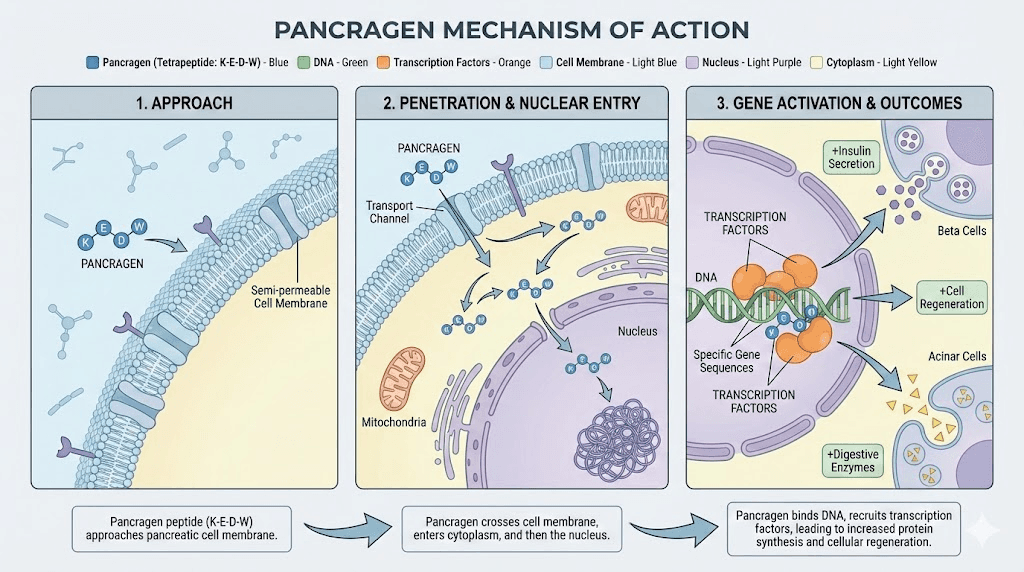
Unlike BPC-157 or TB-500 which work through systemic healing mechanisms, Pancragen operates through gene regulation. Research suggests it penetrates pancreatic cells, enters the nucleus, and binds to specific DNA sequences associated with pancreatic function. This binding potentially activates transcription factors controlling cell differentiation, enzyme production, and metabolic regulation.
The pancreas serves dual functions: endocrine function producing hormones (insulin lowering blood sugar, glucagon raising blood sugar, somatostatin regulating both), and exocrine function producing digestive enzymes (amylase for carbohydrates, lipase for fats, proteases for proteins). Pancragen theoretically supports both systems.
Understanding how peptides work at genetic levels helps contextualize Pancragen's unique mechanism compared to more common therapeutic peptides.
Clinical research and evidence
Pancragen research concentrates primarily in Russia and former Soviet states where Khavinson peptides gained clinical acceptance. Western peer-reviewed research remains limited, requiring careful evaluation of available evidence.
Russian clinical studies
Type 2 diabetes study (2003): Research published in Bulletin of Experimental Biology and Medicine examined Pancragen effects in aging animal models with impaired glucose metabolism. Results showed reduced glucose utilization rates normalized after 10 days of Pancragen administration (10mg daily). Plasma insulin and C-peptide responses to glucose challenge improved significantly. Effects persisted 3 weeks post-treatment.
Chronic pancreatitis research: Clinical protocols in Russian medical institutions report using Pancragen for chronic pancreatitis patients. Studies document improvements in protein metabolism, digestive enzyme levels, and symptom reduction (abdominal pain, bloating, digestive discomfort). Treatment typically 10-20mg daily for 10-20 days, repeated 2-3 times yearly.
Endothelial function study (metabolic dysregulation): Research examining Pancragen effects on endothelial function under chronic hyperglycemia conditions showed restoration of endothelial adhesive properties. Proper endothelial function proves critical for blood flow regulation and preventing atherosclerosis complications in metabolic disorders. Researchers noted "homeostatic and endothelioprotective impacts during early period of diabetes mellitus."
Gene expression analysis: Preclinical research demonstrates Pancragen influences methylation patterns of genes PDX1, PAX6, and NGN3—all associated with pancreatic cell differentiation and function. The peptide appears to reduce expression of proapoptotic protein p53 while increasing antiapoptotic protein Mcl1, suggesting protective effects against cell death.
Mechanism research
Laboratory studies show Pancragen may:
Reduce activities of caspase-3 and cathepsin B (cellular aging biomarkers)
Modulate TNF-α and IGF-I levels (metabolic regulation and antiapoptotic actions)
Stimulate pancreatic cell differentiation and regeneration
Enhance synthesis of digestive enzymes by acinar cells
Support insulin production by beta cells in pancreatic islets
Cellular penetration: Research confirms Pancragen crosses cell membranes and accumulates in nuclei where it potentially interacts with chromatin and influences gene transcription. This mechanism differs fundamentally from peptides acting through cell surface receptors.
Evidence limitations
Evaluating Pancragen research requires acknowledging limitations:
Geographic concentration: Most published research originates from Russian institutions associated with Khavinson's research institute. Independent Western replication remains minimal. This geographic concentration doesn't invalidate findings but limits confirmation through independent research groups.
Study design: Many studies use animal models or small human cohorts without placebo controls meeting modern randomized controlled trial standards. Findings suggest promising effects but require rigorous confirmation through larger, well-controlled trials.
Publication bias: Russian bioregulator research has commercial interests through peptide product sales. While this doesn't prove bias, it necessitates cautious interpretation of manufacturer-affiliated research.
Translation challenges: Some research published in Russian medical journals with English abstracts may lose nuance in translation. Full methodology details aren't always accessible to non-Russian readers.
Despite limitations, cumulative research spanning 40+ years suggests Pancragen influences pancreatic function through mechanisms worthy of attention. The peptide demonstrates remarkably consistent effects across multiple studies, with benefits persisting weeks after short treatment cycles.
Compare evidence quality to more established peptides in our peptide research guide.
Benefits and applications
Pancragen applications center on pancreatic health, metabolic function, and digestive support. Understanding realistic benefits versus marketing claims helps appropriate use.
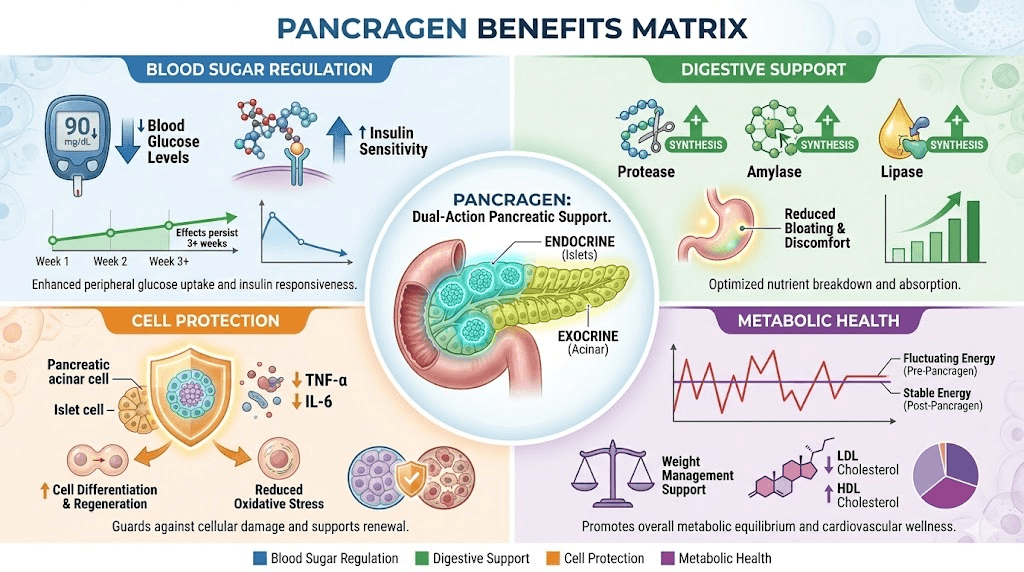
Blood sugar regulation
Pancragen's most studied application involves glucose metabolism and insulin function. Research demonstrates:
Improved glucose utilization: Studies show enhanced glucose uptake and utilization in cells after Pancragen treatment. This manifests as better post-meal blood sugar control and reduced fasting glucose levels in animal models with metabolic dysfunction.
Insulin sensitivity: By supporting pancreatic beta cell function and potentially reducing insulin resistance, Pancragen may improve how effectively cells respond to insulin. This proves particularly relevant for prediabetes and early type 2 diabetes.
Reduced insulin fluctuations: Research indicates Pancragen normalizes insulin and C-peptide response patterns to glucose challenges. Rather than exaggerated spikes followed by crashes, insulin release becomes more appropriate to blood sugar levels.
Long-term effects: Benefits persist 3+ weeks after 10-day treatment cycles in animal studies, suggesting Pancragen promotes lasting improvements in pancreatic cell function rather than temporary metabolic effects.
Pancragen doesn't replace diabetes management medications but may complement them. Studies report patients reduced medication dosages while maintaining blood sugar control when using Pancragen alongside conventional treatment.
Digestive enzyme support
Pancreatic exocrine function produces enzymes critical for nutrient digestion. Pancragen reportedly enhances this process:
Increased enzyme synthesis: Research shows Pancragen stimulates digestive enzyme production by pancreatic acinar cells. This includes amylase (carbohydrate digestion), lipase (fat digestion), and proteases (protein digestion).
Improved nutrient absorption: Better enzyme production translates to more complete food breakdown and nutrient absorption. Clinical reports describe reduced bloating, abdominal heaviness, and digestive discomfort in patients with pancreatic insufficiency.
Chronic pancreatitis support: Patients with chronic pancreatitis experience progressive loss of exocrine function leading to malabsorption, weight loss, and nutritional deficiencies. Pancragen protocols in Russian medicine target maintaining enzyme production and slowing functional decline.
Pancreatic cell protection
Beyond immediate functional improvements, Pancragen may protect pancreatic cells from damage and support regeneration:
Anti-inflammatory effects: Research suggests Pancragen reduces inflammatory markers in pancreatic tissue. Chronic inflammation drives progressive pancreatic damage in both pancreatitis and diabetes.
Reduced apoptosis: By modulating proteins controlling programmed cell death (reducing p53, increasing Mcl1), Pancragen may protect pancreatic cells from stress-induced death. This proves important during toxic exposures (alcohol, certain medications) or metabolic stress.
Cellular regeneration: Gene expression changes suggest Pancragen promotes pancreatic cell differentiation and renewal. Once pancreatic cells are destroyed, they typically don't recover easily. Supporting regenerative capacity represents significant value.
Age-related decline prevention: As pancreas function naturally declines with age (70% of people over 50 show abnormalities in glucose metabolism), Pancragen may slow this deterioration through cellular support mechanisms.
Metabolic optimization
Beyond direct pancreatic effects, improved pancreatic function influences broader metabolism:
Energy regulation: Better glucose utilization and insulin function support stable energy levels rather than blood sugar-driven energy crashes.
Weight management: Improved metabolic function and insulin sensitivity can support healthy weight maintenance, though Pancragen isn't primarily a weight loss peptide.
Cholesterol regulation: Some reports suggest Pancragen may help maintain healthy cholesterol levels, potentially through improved metabolic function and insulin signaling.
Recovery from pancreatic stress
Pancragen protocols in Russian medicine include recovery from various pancreatic stressors:
Alcohol-related damage: Heavy alcohol consumption damages pancreatic tissue. Pancragen may support recovery during and after reduction of alcohol intake.
Medication-induced stress: Certain medications (corticosteroids, some chemotherapy agents) stress pancreatic function. Pancragen protocols may help during these treatments.
Post-acute pancreatitis: After acute pancreatitis episodes, supporting pancreatic recovery and preventing chronic progression represents important goal.
Dosing protocols and cycles
Pancragen dosing differs from continuous peptide protocols. Russian clinical research emphasizes short cycles with rest periods allowing cellular integration of changes.
Standard dosing protocols
Basic protocol (maintenance/prevention):
Dose: 10mg daily
Route: Subcutaneous or intramuscular injection
Duration: 10 days
Frequency: 2-3 cycles per year (every 4-6 months)
Rest period: Minimum 2-3 months between cycles
Intensive protocol (active conditions):
Dose: 20mg daily
Route: Subcutaneous or intramuscular injection
Duration: 10-20 days
Frequency: 2-4 cycles per year
Rest period: 6-12 weeks between cycles
Conservative protocol (first-time use):
Dose: 10mg daily
Route: Subcutaneous injection
Duration: 10 days
Frequency: Assess response before additional cycles
Rest period: 3-4 months minimum
Administration methods
Subcutaneous injection (most common): Inject into fatty tissue (abdomen, thighs, buttocks). Use insulin syringes for precise dosing. Rotate injection sites preventing tissue damage.
Intramuscular injection (alternative): Deeper muscle injection (deltoid, vastus lateralis, gluteus). May provide faster absorption but requires longer needles.
Oral forms (less effective): Some manufacturers offer oral Pancragen capsules, though peptides face degradation in digestive system. Injectable forms considered superior for bioavailability.
Learn proper peptide injection technique and reconstitution methods if using lyophilized powder forms.
Cycle rationale
Short cycles with extended rest periods distinguish Pancragen from peptides requiring continuous use:
Cellular integration time: Pancragen influences gene expression and cellular differentiation—processes requiring weeks to manifest fully. The peptide initiates changes, then rest periods allow cells to complete differentiation and functional improvements.
Persistent effects: Research shows benefits lasting 3+ weeks after 10-day cycles. Continuous use may not provide additional benefit and could theoretically lead to downregulation of cellular responses.
Cost efficiency: Short cycles reduce peptide costs substantially compared to daily year-round protocols. 10-20 day cycles 2-3 times yearly require only 60-120mg total annually.
Safety margin: Limiting exposure to defined periods provides safety margin for organ-specific peptides. Long-term continuous use hasn't been extensively studied.
Timing considerations
Best time of day: Morning injection often preferred for metabolic peptides supporting daytime energy and glucose regulation. Evening dosing may support overnight recovery processes.
Relationship to meals: No specific meal timing requirements documented in research. Some practitioners suggest taking before breakfast for consistency.
Seasonal timing: No seasonal variations required. Cycle timing based on personal schedule and health goals rather than time of year.
Monitoring and adjustments
Track relevant markers during and after Pancragen cycles:
Blood glucose: Fasting glucose and post-meal measurements if addressing blood sugar regulation. HbA1c every 3 months for long-term glucose control assessment.
Digestive symptoms: Subjective tracking of bloating, discomfort, bowel regularity, and energy after meals.
Lab work: Comprehensive metabolic panel, lipid panel, and insulin levels (if available) before starting and 4-8 weeks after cycle completion showing sustained changes.
Dose adjustments: If 10mg daily shows minimal response, increasing to 20mg for subsequent cycles may provide better results. Decreasing to 10mg if strong response achieved at 20mg.
Calculate precise dosing with our peptide calculator and cost calculator.
Combining Pancragen with other peptides
Pancragen's organ-specific mechanism allows strategic combinations with complementary peptides addressing related metabolic or health goals.
Metabolic optimization stacks
Pancragen + GLP-1 agonists (semaglutide, tirzepatide): Pancragen supports pancreatic cell health while GLP-1 agonists directly influence appetite and glucose metabolism. This combination addresses blood sugar from multiple angles: pancreatic cellular function, insulin sensitivity, and appetite regulation. Protocol: Pancragen 10-20mg daily for 10-20 days while maintaining ongoing GLP-1 agonist therapy. Review our semaglutide guide and tirzepatide comparison.
Pancragen + growth hormone peptides (CJC-1295, Ipamorelin): Growth hormone influences metabolism, body composition, and cellular regeneration. Combining with Pancragen may support comprehensive metabolic improvement. Protocol: Run Pancragen cycles independent of continuous GH peptide protocols. Learn about CJC-1295 and Ipamorelin.
Digestive health combinations
Pancragen + BPC-157: BPC-157 provides broad gastrointestinal healing while Pancragen specifically supports pancreatic enzyme production. This combination addresses digestive issues from multiple mechanisms. Protocol: Can run simultaneously—BPC-157 250-500mcg daily continuously, Pancragen 10mg daily for 10-20 day cycles. Review BPC-157 protocols and dosing.
Pancragen + gut health peptides: Combining with peptides supporting intestinal barrier function and microbiome health creates comprehensive digestive support. Protocol: Pancragen cycles focused on enzyme production, other gut peptides for ongoing barrier support.
Anti-aging and longevity stacks
Pancragen + Epitalon: Epitalon targets telomeres and pineal function while Pancragen supports pancreatic health. Together they address multiple aspects of aging. Protocol: Can cycle together—both use short cycles with rest periods. Epitalon typically 10mg daily for 10-20 days, matching Pancragen timing.
Pancragen + Thymalin: Thymalin supports thymus and immune function. Combining organ-specific peptides from the Khavinson family creates comprehensive anti-aging approach. Protocol: Alternate cycles or run simultaneously depending on priorities.
Pancragen + NAD+ boosters: NAD+ supports cellular energy and metabolic function complementing Pancragen's pancreatic effects. Protocol: NAD+ precursors (NMN, NR) taken continuously, Pancragen in periodic cycles.
Liver and metabolic organ support
Pancragen + Livagen: Livagen targets liver function while Pancragen supports pancreas. These organs work closely in metabolism, making combined support logical. Protocol: Can run simultaneously—both 10mg daily for 10-20 days, 2-3 cycles yearly.
Pancragen + metabolic peptides: Combining with other metabolic peptides like MOTS-c (mitochondrial function) or AOD-9604 (fat metabolism) creates multi-targeted metabolic optimization.
Explore comprehensive peptide stacking strategies and cycle planning.
Stack timing strategies
Simultaneous cycling: Run compatible peptides together during same 10-20 day period, then rest all. Simplifies protocol but increases daily injection volume.
Alternating cycles: Rotate between different organ-specific peptides every 1-2 months. Provides ongoing support while allowing rest periods for each peptide.
Foundation + cycles: Maintain baseline peptides year-round (like BPC-157, GH peptides) while adding Pancragen cycles periodically for pancreatic support.
Combination | Mechanism Synergy | Protocol Suggestion | Best For |
|---|---|---|---|
Pancragen + Semaglutide | Pancreatic health + GLP-1 | Pancragen cycles during semaglutide use | Metabolic syndrome, diabetes |
Pancragen + BPC-157 | Pancreatic enzymes + GI healing | Run simultaneously | Digestive disorders, pancreatitis |
Pancragen + CJC-1295 | Pancreatic function + GH | Independent cycles | Body composition, aging |
Pancragen + Livagen | Pancreas + liver support | Simultaneous cycles | Comprehensive metabolic health |
Pancragen + Epitalon | Pancreas + telomeres | Simultaneous cycles | Longevity, anti-aging |
Use our peptide stack calculator for planning multi-peptide protocols.
Realistic expectations and timelines
Understanding Pancragen timelines prevents premature protocol abandonment and manages expectations appropriately.
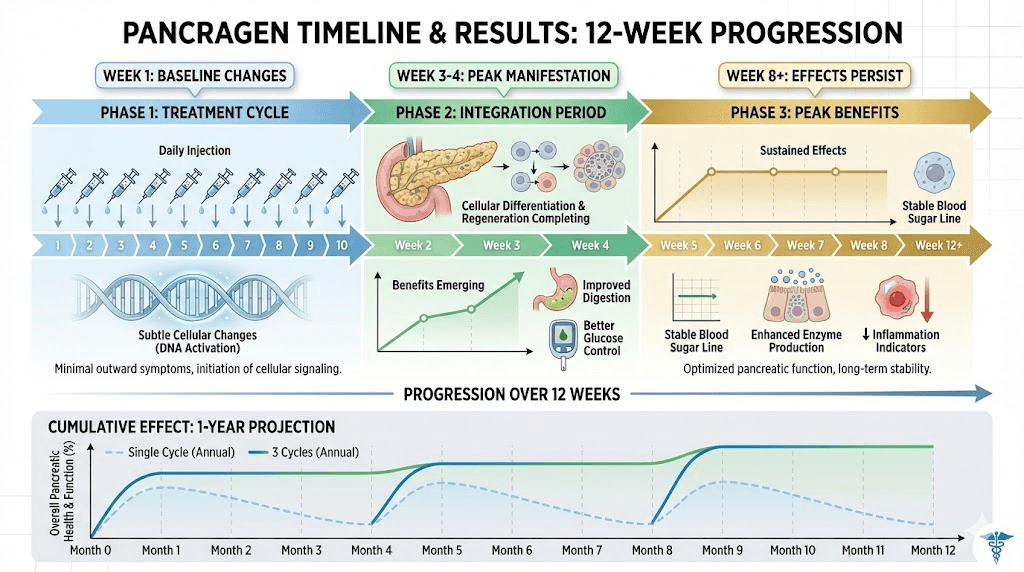
During treatment (Days 1-10/20)
Week 1: Initial cellular changes begin but outward symptoms may not shift noticeably. Some users report subtle improvements in digestion or post-meal energy, though this could involve placebo effects. Blood sugar measurements might show small improvements.
Week 2: For those on 20-day protocols, digestive improvements often become more apparent. Less bloating, better tolerance of meals, more stable energy throughout day. Blood glucose measurements may show consistent improvements.
Completion of cycle: Most don't experience dramatic transformations during the treatment period. Pancragen works at cellular/genetic levels requiring time for full manifestation.
Post-treatment timeline
Weeks 1-2 post-cycle: Benefits begin manifesting more clearly as cellular changes complete. Research suggests this is when pancreatic cell differentiation and functional improvements reach fuller expression.
Weeks 3-4 post-cycle: Peak benefits often appear during this window. Digestive function improvements stabilize, blood sugar regulation shows consistent enhancement, energy levels feel more stable and sustained.
Weeks 4-8+ post-cycle: Effects persist according to research. Some report benefits lasting 2-3 months after single 10-day cycle. This extended effect period justifies infrequent cycling rather than continuous use.
Cumulative effects
After 2-3 cycles: Many report cumulative improvements with repeated cycles. First cycle provides foundation, subsequent cycles build on initial cellular improvements.
Long-term (1-2 years): Regular cycling (2-3 times yearly) may provide sustained pancreatic support and metabolic stability. Anecdotal reports suggest progressive improvements in pancreatic function markers over extended periods.
Individual variation
Response to Pancragen varies based on:
Baseline pancreatic function: Those with significant dysfunction (chronic pancreatitis, advanced diabetes) may see more noticeable improvements than those with minor issues.
Age: Older individuals with age-related pancreatic decline might benefit more dramatically than younger users with healthy pancreatic function.
Overall health status: Comprehensive approach including diet, exercise, stress management, and sleep amplifies Pancragen effects. Peptide alone without lifestyle support shows diminished results.
Genetic factors: Individual genetic variations in peptide metabolism and cellular receptivity influence response magnitude.
What Pancragen doesn't do
Managing expectations requires clarity on limitations:
Not insulin replacement: Pancragen doesn't replace insulin for type 1 diabetes or advanced type 2 diabetes requiring insulin. It supports pancreatic function but doesn't provide exogenous hormones.
Not cure for pancreatic disease: While supporting pancreatic health, Pancragen doesn't cure chronic pancreatitis, pancreatic cancer, or advanced pancreatic failure. It's a supportive tool, not curative treatment.
Not weight loss peptide: While improved metabolism may support weight management, Pancragen isn't designed for fat loss. Weight loss peptides like semaglutide or tirzepatide work through different mechanisms.
Not immediate fix: Expecting dramatic changes during 10-day cycle leads to disappointment. Benefits manifest gradually over weeks following treatment.
Review peptide timelines and realistic expectations for comprehensive understanding.
Sourcing and quality considerations
Pancragen availability outside Russia/Eastern Europe remains limited, requiring careful source evaluation.
Current availability
Russian manufacturers: Original Khavinson Institute products and licensed manufacturers in Russia produce pharmaceutical-grade Pancragen. These products have established quality standards but face importation challenges for Western consumers.
Research peptide suppliers: Some US and European research peptide vendors offer Pancragen labeled "for research purposes only." Quality varies dramatically between suppliers. Third-party testing proves essential.
International pharmacies: Certain international online pharmacies ship Khavinson peptides globally, though legality and customs clearance vary by destination country.
Compounding pharmacies: Some specialized compounding pharmacies may synthesize Pancragen on prescription, though availability depends on local regulations and pharmacy capabilities.
Quality indicators
When evaluating Pancragen sources, assess:
Purity testing: Certificate of analysis (CoA) from independent lab showing >98% purity. HPLC testing confirms amino acid sequence accuracy and absence of contaminants.
Molecular weight verification: Mass spectrometry confirming 576.25 g/mol molecular weight matching Pancragen's theoretical weight.
Sterility testing: For injectable peptides, microbiological testing confirming absence of bacterial/fungal contamination essential for safety.
Proper storage: Lyophilized powder stored at -20°C or colder. Reconstituted peptide refrigerated at 2-8°C. Suppliers unable to specify storage conditions suggest quality concerns.
Clear labeling: Amino acid sequence (Lys-Glu-Asp-Trp), concentration, volume, reconstitution instructions, and storage requirements clearly stated.
Review our peptide vendor guide for quality assessment strategies.
Red flags
Avoid suppliers showing:
No CoA or testing documentation
Prices far below market (suggesting diluted or counterfeit product)
Poor packaging or unclear labeling
No storage specifications
Inability to answer technical questions
No customer reviews or established reputation
Cost expectations
Pancragen pricing varies by source and quality:
Pharmaceutical-grade (Russian): $80-$200 for 100mg (enough for 5-10 cycles at 10-20mg daily dosing). Higher cost but assured quality.
Research grade (Western suppliers): $40-$120 for 100mg. Quality variable; third-party testing essential. Some suppliers offer bulk discounts.
Compounding pharmacy: $100-$300+ for custom synthesis. Costs reflect individual compounding but ensure pharmaceutical quality.
Calculate protocol costs with our peptide cost calculator factoring cycles per year and dosing.
Storage and handling
Lyophilized powder: Store at -20°C or colder in original sealed vials. Stable 2-3 years when properly stored. Bring to room temperature before reconstitution.
Reconstituted solution: Store refrigerated at 2-8°C. Use within 30 days of reconstitution for maximum potency. Use bacteriostatic water for reconstitution extending stability.
Handling: Minimize freeze-thaw cycles damaging peptide structure. Protect from light. Use sterile technique for reconstitution and withdrawal.
Comprehensive storage guidelines ensure peptide integrity throughout protocol.
How SeekPeptides helps with peptide research
SeekPeptides provides comprehensive educational resources for anyone exploring Pancragen or other therapeutic peptides. Our platform helps informed decision-making about protocols, sourcing, and realistic expectations.
SeekPeptides offers evidence-based information about every major therapeutic peptide, helping you understand mechanisms, expected results, and proper usage. Our guides cover both popular peptides and specialized bioregulators like Pancragen often overlooked in mainstream peptide discussions.
Understanding peptide fundamentals and biological mechanisms helps you evaluate whether organ-specific bioregulators fit your health goals.
Our calculators help protocol planning and dosing verification. Use our peptide calculator, cost calculator, reconstitution calculator, and stack calculator for comprehensive planning.
SeekPeptides doesn't replace medical consultation, but it empowers you as informed patient who can discuss peptides knowledgeably with healthcare providers and recognize quality versus marketing claims.
Final thoughts
Pancragen represents fascinating approach to pancreatic health through organ-specific bioregulation. Research spanning 40+ years suggests the tetrapeptide influences pancreatic cell gene expression, supporting insulin production, digestive enzyme synthesis, and cellular protection. Clinical studies predominantly from Russia show improvements in glucose metabolism, insulin sensitivity, and digestive function with short 10-20 day cycles repeated 2-3 times yearly.
The peptide's unique characteristics—short cycles with persistent effects, organ-specific targeting, and genetic-level mechanism, distinguish it from more common therapeutic peptides. It's not a replacement for diabetes medication or treatment for severe pancreatic disease, but potentially valuable tool for supporting pancreatic function, metabolic health, and age-related decline prevention.
Success with Pancragen requires sourcing quality pharmaceutical-grade or well-tested research-grade peptide, following appropriate cycle protocols (not continuous daily use), maintaining realistic expectations about gradual benefits, combining with proper nutrition and metabolic health practices, and monitoring relevant biomarkers (blood glucose, digestive function).
Limited Western research and geographic concentration of studies necessitate cautious optimism rather than uncritical acceptance. The consistent findings across multiple Russian studies suggest legitimate effects, but independent replication through rigorous Western trials would strengthen confidence substantially.
For those managing blood sugar issues, digestive enzyme insufficiency, chronic pancreatitis recovery, or general metabolic optimization, Pancragen offers theoretically sound and clinically tested approach worthy of consideration. Work with knowledgeable healthcare providers, source quality peptides, and commit to proper protocols for best results.
Helpful resources
Peptide calculator - Calculate exact dosing protocols
Peptide cost calculator - Estimate yearly costs
Peptide reconstitution calculator - Precise reconstitution ratios
Peptide stack calculator - Plan multi-peptide protocols
In case I don't see you, good afternoon, good evening, and good night. Take care of your pancreas, take care of yourself, explore SeekPeptides when you're ready to optimize your life.