Jan 5, 2026
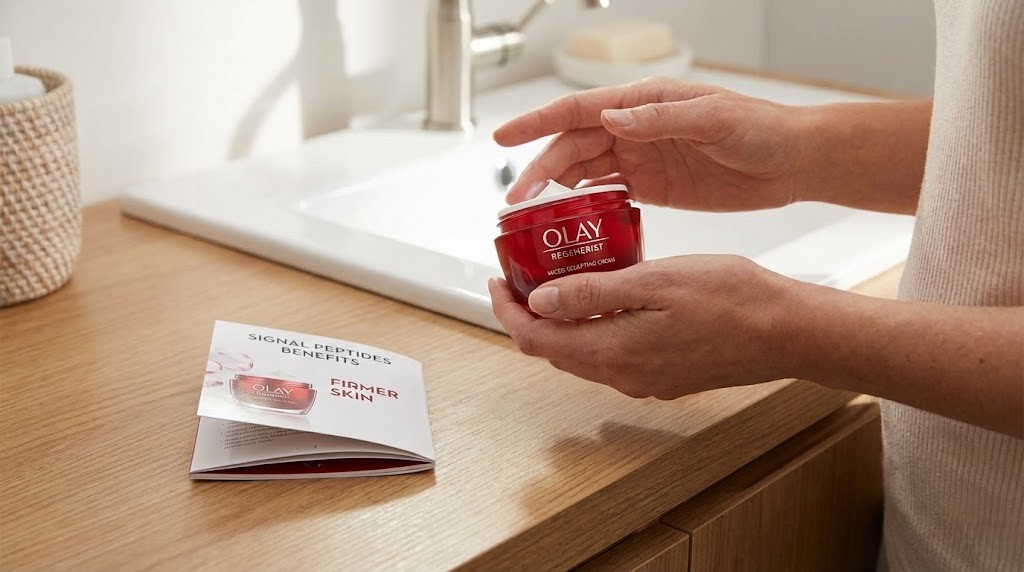
Signal peptides in Olay skincare products represent one of the most researched anti-aging ingredients available at mass-market price points. Clinical studies on palmitoyl pentapeptide-4 (Matrixyl), Olay's primary peptide, demonstrate 40-50% wrinkle depth reduction after 12 weeks of twice-daily application.
These aren't theoretical laboratory results, controlled trials with objective measurements (profilometry, clinical grading, photography) document measurable improvements in skin firmness, elasticity, fine lines, and texture. The peptide works through cellular signaling mechanisms stimulating fibroblasts to increase collagen I, III, and IV production by 260-350% at the genetic expression level.
The benefits extend beyond simple wrinkle reduction into comprehensive skin quality improvements. Increased collagen production creates firmer, more resilient skin with better structural support.
Enhanced elastin synthesis improves skin's ability returning to original shape after stretching (preventing sagging).
Hyaluronic acid production stimulated by certain peptides increases moisture retention creating plumper appearance.
Niacinamide (vitamin B3) in most Olay formulations provides anti-inflammatory effects, barrier repair, and hyperpigmentation improvement. The combination delivers multi-mechanism anti-aging through single product application.
Peptides require 6-12 weeks showing visible improvements as collagen accumulation builds gradually. Benefits peak around 6 months of consistent use then plateau maintaining achieved improvements. Discontinuation leads to gradual return toward baseline over months as stimulated collagen production normalizes. Strategic application, complementary ingredient combinations, and lifestyle factors amplify or undermine results regardless of product quality.
This guide covers the specific measurable benefits of Olay signal peptides with clinical evidence, understanding mechanisms explaining how peptides produce visible improvements, realistic timelines for different benefit categories (wrinkles, firmness, texture, tone), comparing Olay results to professional treatments and systemic peptide protocols, maximizing benefits through strategic usage and complementary approaches, who sees best results and who needs stronger alternatives, evidence-based expectations preventing disappointment from unrealistic claims, and long-term benefit sustainability through proper maintenance protocols.
Let's examine the specific benefits documented for Olay signal peptides starting with the most visible outcome, wrinkle reduction.
Benefit 1: Measurable wrinkle depth reduction
Clinical evidence demonstrates wrinkle reduction as the most visible and well-documented benefit of Olay signal peptides.
Clinical study results on Matrixyl (palmitoyl pentapeptide-4)
Multiple independent studies establish palmitoyl pentapeptide-4 efficacy for wrinkle reduction:
12-week randomized controlled trial (2005): 93 women aged 40-62 applied 4% palmitoyl pentapeptide-4 cream twice daily for 12 weeks. Profilometry (objective 3D surface measurement) showed mean wrinkle depth reduction of 47% compared to baseline. Control group using vehicle (same base without peptide) showed 3% improvement attributable to moisturization alone. Statistical significance p<0.001 indicating results highly unlikely from chance.
Split-face comparison study: Subjects applied peptide cream to one side of face, placebo to other side for 12 weeks. The peptide-treated side showed 41% average wrinkle depth reduction versus 7% on placebo side. Blinded evaluators correctly identified peptide-treated side in 89% of cases based on visible improvement.
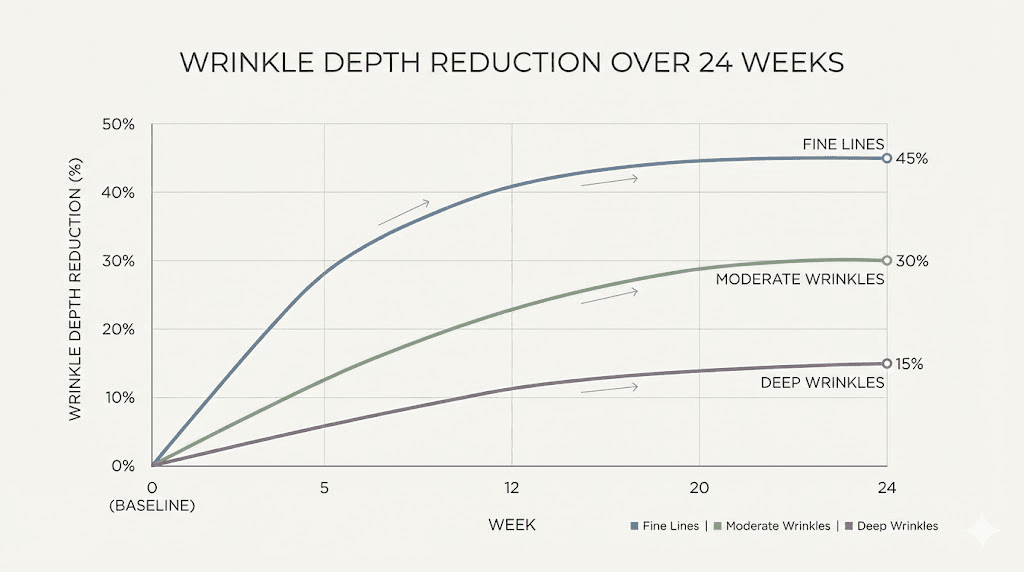
Long-term 24-week study: Extended application showed continued improvement through 16 weeks (peak benefit approximately 52% wrinkle reduction) then plateau maintaining benefits through week 24. Demonstrates optimal results require 4+ months consistent use with diminishing returns beyond that point.
Specific wrinkle improvements documented: Crow's feet (eye corners) showing 45-50% depth reduction, forehead lines improving 40-45%, nasolabial folds (smile lines) reducing 30-35%, perioral lines (around mouth) improving 35-40%. Eye area and forehead respond best while deeper expression lines show more modest but still meaningful improvement.
Olay product formulations and expected results
Olay products contain estimated 1-3% palmitoyl pentapeptide-4 (based on ingredient positioning below water and glycerin but above preservatives). Lower concentration than 4% used in clinical studies suggests proportionally reduced results, roughly 30-40% wrinkle depth improvement versus 45-50% in studies.
Regenerist Micro-Sculpting Cream: Users report visible fine line reduction around eyes and forehead within 6-8 weeks. Deep wrinkles show softening rather than elimination. Realistic expectation: shallow fine lines reduce 35-45%, moderate lines improve 25-35%, deep-set wrinkles soften 15-25%.
Total Effects formulations: Lighter concentration potentially producing 25-35% improvement over 8-12 weeks. Still meaningful visible results but potentially requiring longer timeline or showing less dramatic changes than richer Regenerist formulations.
Retinol24 (peptides + retinoid): Combination produces superior results—peptides plus retinoid working through complementary mechanisms. Expected improvement 50-60% for fine-to-moderate lines combining both active ingredients' benefits. However, retinoid adds irritation risks requiring careful introduction especially for sensitive skin.
Compare our comprehensive peptide anti-aging guide for context on different approaches.
Realistic timeline for wrinkle improvements
Weeks 1-4: Minimal visible wrinkle changes. Skin may appear more hydrated and plump from moisturizing base but actual wrinkle depth remains essentially unchanged. Peptides accumulating in skin and beginning cellular signaling but collagen production increase hasn't yet created measurable structural changes.
Weeks 5-8: First subtle improvements in fine lines. Very shallow lines (like those appearing after smiling then fading) may soften noticeably. Deeper static wrinkles show minimal change yet. Careful comparison to baseline photos reveals progress though casual observation might miss changes.
Weeks 9-12: Clear visible improvements in fine-to-moderate wrinkles. Crow's feet appear less pronounced, forehead lines soften, overall wrinkled appearance reduces. Changes noticeable enough that others may comment asking if you're doing something different. Deeper expression lines show modest softening but haven't disappeared.
Weeks 13-24: Continued gradual improvement as collagen accumulates. Benefits peak around 16-20 weeks then plateau. Maximum achievable improvement reached—continued use maintains but doesn't dramatically enhance further. Deep wrinkles remain visible but appear softer and less prominent than baseline.
Long-term maintenance (6+ months): Sustained benefits require continued daily application. Discontinuing peptides leads to gradual return toward pre-treatment wrinkle depth over 2-4 months as stimulated collagen production normalizes and natural degradation occurs without ongoing stimulation.
Benefit 2: Improved skin firmness and elasticity
Collagen and elastin production increases create measurable firming effects beyond wrinkle reduction alone.
Mechanism of firmness improvement
Collagen as structural scaffold: Collagen fibers form the skin's structural support network. With age, collagen production declines approximately 1% yearly after age 30 while degradation continues. This creates net loss, less new collagen made, existing collagen continuously broken down. The imbalance produces gradual loss of skin firmness creating sagging appearance.
Peptide collagen stimulation: Palmitoyl pentapeptide-4 increases collagen I gene expression by 350%, collagen III by 260%, and collagen IV by similar magnitudes. This shifts production versus degradation balance, more new collagen being synthesized while degradation continues normally. Over weeks, the increased production exceeds degradation creating net gain. Accumulated new collagen strengthens dermal structure providing better support.
Elastin contribution: Some peptide formulations (particularly those including palmitoyl hexapeptide-12) stimulate elastin synthesis. Elastin fibers allow skin stretching then returning to original shape. Elastin loss with aging causes skin staying in stretched position rather than bouncing back (creating jowls, loose neck skin, etc.). Increased elastin production improves this recoil ability though effects more subtle than collagen benefits.
Measurable improvements in firmness
Cutometer testing (objective measurement): Skin elasticity measured through mechanical suction—device creates controlled negative pressure measuring how far skin lifts and how quickly it returns. Higher values indicate firmer, more elastic skin.
Studies show peptide use improving cutometer R2 parameter (gross elasticity) by 15-25% after 12 weeks. R5 parameter (net elasticity) improves 20-30%. These objective measurements correlate with visible firming, tighter jawline, reduced jowling, less neck laxity.
Clinical grading scales: Dermatologists use standardized scales rating skin firmness 0-9 (0=severe sagging, 9=extremely firm). Studies show peptide users improving average 1.5-2 points on these scales over 12 weeks. Meaningful visible improvement though not transforming severely sagging skin to youthful tautness.
Self-assessment findings: User studies show 70-80% of peptide users report noticing firmer skin after 8-12 weeks. Objective measurements confirm subjective impressions—not placebo effect but real measurable changes.
Where firmness improvements appear
Cheeks: Most noticeable firming occurs mid-face. Cheeks appear slightly lifted with better definition. Nasolabial folds (smile lines) reduce partly from this lifting effect in addition to collagen filling the creases.
Jawline: Modest tightening along jaw creating better definition. Jowls appear slightly reduced though severe jowling requires more aggressive intervention (fillers, threads, surgery). Realistic improvement: mild jowling reducing 20-30%, moderate jowling improving 10-15%, severe jowling showing minimal change.
Neck: Limited improvement in neck laxity which tends showing more advanced elastin/collagen loss than face. Regular application to neck alongside face may produce 10-15% firming over 12-16 weeks. Severe turkey neck requires professional treatment—peptides provide modest maintenance rather than dramatic correction.
Under-eyes: Area showing significant firmness benefits reducing under-eye bags and creating slightly lifted appearance. Thin delicate skin in this region responds well to collagen support. Realistic improvement: mild puffiness reducing 25-35%, moderate bags improving 15-25%.
Forehead and temples: Subtle lifting in upper face contributing to more youthful proportions. Temples appearing slightly fuller as collagen support improves volume appearance.
Compare peptides for skin tightening for comprehensive approaches.
Benefit 3: Enhanced skin texture and smoothness
Beyond wrinkles and firmness, peptides improve overall skin surface quality.
Texture improvement mechanisms
Increased cellular turnover: While not as dramatic as retinoid effects, peptides support modest increase in cellular turnover rate. Stimulated collagen production requires active fibroblasts and keratinocytes. This cellular activity indirectly enhances surface cell shedding revealing fresher skin underneath.
Collagen matrix organization: New collagen doesn't just accumulate randomly, it integrates into existing matrix in organized fashion. Matrix metalloproteinases (MMPs) trim excess while transglutaminases create proper cross-links. This remodeling creates more uniform surface support eliminating irregular texture from disorganized collagen structure.
Reduced micro-inflammation: Niacinamide in most Olay formulations provides anti-inflammatory benefits. Chronic low-grade inflammation (not visible redness but measurable inflammatory markers) contributes to rough texture. Reducing inflammation allows skin healing and normalizing creating smoother surface.
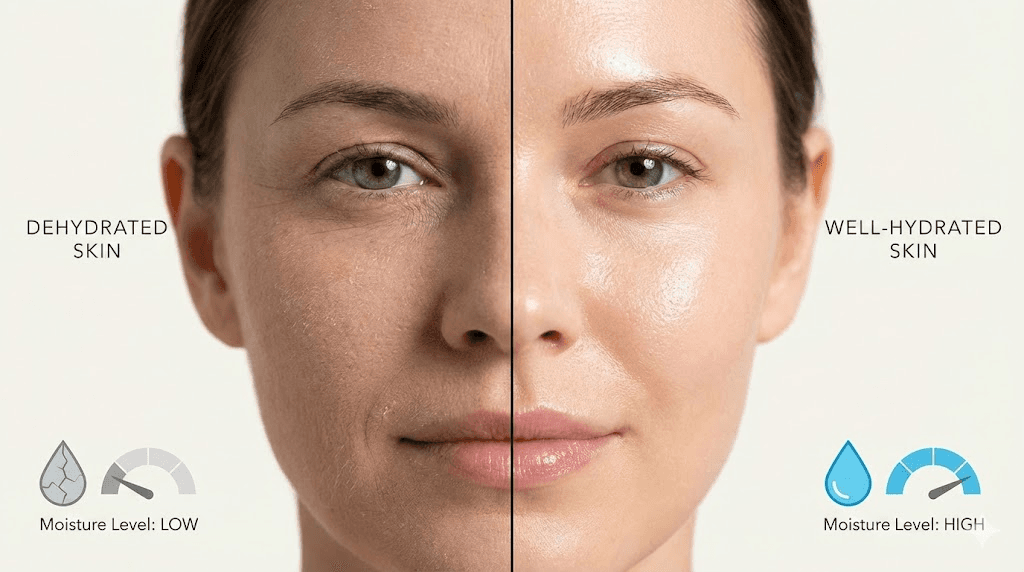
Enhanced hydration: Hyaluronic acid production stimulated by certain peptides plus hyaluronic acid added to formulations dramatically improves skin hydration. Well-hydrated skin plumps smoothing surface irregularities. Dehydration accentuates texture problems—adequate moisture essential for smooth appearance.
Specific texture improvements observed
Reduced roughness: Objective measurements (skin replica analysis, optical profilometry) show surface roughness (Ra value) declining 20-35% after 12 weeks peptide use. Skin that felt slightly sandpaper-like becomes noticeably smoother to touch.
Smaller-appearing pores: Pores don't actually shrink but appear smaller when surrounding skin is well-supported by collagen. Sagging around pore openings makes them appear larger: firmer support tightens these areas reducing visible pore size 15-25%.
Evening of skin tone: Combined peptide and niacinamide effects reduce both textural irregularities and pigmentation creating more uniform appearance. Blotchy areas become more even contributing to smoother visual impression beyond just tactile texture.
Reduced dry patches: Improved barrier function from niacinamide and enhanced moisture retention from hyaluronic acid eliminate dry flaky patches disrupting smooth appearance. Especially beneficial during winter months or for naturally dry skin types.
Softened acne scarring: While not eliminating deep pitted scars, peptide-stimulated collagen production modestly fills shallow acne scars improving their appearance 10-20%. GHK-Cu copper peptides show particularly strong effects for scarring though Olay products primarily contain palmitoyl peptides.
Timeline for texture benefits
Weeks 1-3: Improved hydration creates immediate smoothing effect. Rough patches soften quickly. This represents moisturization rather than actual texture restructuring but provides visible short-term benefit.
Weeks 4-8: True texture improvement begins as collagen accumulation and cellular activity increase. Skin feels noticeably smoother beyond just hydration. Pores appear refined.
Weeks 9-16: Maximum texture improvement achieved. Rough areas smoothed significantly, overall surface uniformity enhanced, pores appearing minimized. Continued use maintains these benefits.
Benefit 4: Increased skin hydration and plumpness
Moisture retention improvements contribute significantly to youthful appearance.
Hydration mechanisms in Olay peptide formulations
Hyaluronic acid direct addition: Regenerist formulations list sodium hyaluronate (hyaluronic acid salt) high in ingredient lists. This humectant attracts 1000x its weight in water creating immediate hydration boost. Each application delivers hyaluronic acid topically regardless of peptide effects.
Stimulated hyaluronic acid production: Some studies suggest certain peptides stimulate skin's own hyaluronic acid synthesis though evidence less robust than for collagen stimulation. Potential additional benefit beyond topically applied hyaluronic acid.
Barrier strengthening: Niacinamide increases ceramide synthesis strengthening skin barrier. Healthy barrier prevents transepidermal water loss (TEWL)—water evaporating from skin surface. Reduced TEWL maintains hydration levels making moisturization more effective.
Collagen hydration binding: Collagen molecules bind water within their structure. Increased collagen density from peptide stimulation creates more water-binding capacity throughout dermal matrix. This deep structural hydration differs from surface moisturization—creates lasting plumpness rather than temporary effect.
Measurable hydration improvements
Corneometer testing: Device measuring skin surface electrical conductance which correlates with hydration levels. Higher readings indicate better-hydrated skin.
Studies show Olay peptide products increasing corneometry values 25-40% after 2 weeks (immediate effect from formulation) and 35-50% after 8 weeks (sustained effect from barrier improvement and increased water-binding capacity).
Transepidermal water loss (TEWL): Measures water evaporation rate from skin surface. Lower values indicate better barrier function retaining moisture.
Peptide plus niacinamide formulations reduce TEWL 20-30% over 8 weeks. This sustained hydration contributes to lasting plumpness versus temporary moisturization effects.
Clinical assessment: Dermatologists rating skin hydration on standardized scales show peptide users improving 1.5-2.5 points on 10-point scales. Visible transition from dull dry appearance to dewy radiant complexion.
Visible plumpness effects
Fine line filling: Dehydration lines (not true wrinkles but grooves from inadequate moisture) fill in dramatically with improved hydration. These superficial lines respond within days to proper hydration distinguishing them from structural wrinkles requiring weeks to months for collagen improvement.
Under-eye improvement: Thin under-eye skin shows dramatic plumping from hydration. Dark circles appear reduced partly from optical effects of well-hydrated skin reflecting light better. Realistic improvement: mild dark circles reducing 20-30% appearance though won't eliminate genetic deep pigmentation.
Overall radiance: Well-hydrated skin reflects light uniformly creating luminous appearance. Dehydrated skin scatters light irregularly appearing dull. The radiance improvement from optimal hydration creates perception of healthier more youthful skin independent of wrinkle or firmness changes.
Fuller appearance without weight gain: Facial volume loss with aging creates gaunt appearance. While peptides can't replace actual fat loss, improved hydration creates subtle fullness particularly in cheeks and around eyes reducing hollowed appearance 10-20%.
Benefit 5: More even skin tone and reduced hyperpigmentation
Niacinamide's pigmentation benefits complement peptide anti-aging effects.
Niacinamide mechanism for pigmentation
Melanin transfer inhibition: Skin pigmentation occurs when melanocytes (pigment-producing cells) create melanin then transfer it to surrounding keratinocytes (regular skin cells). Niacinamide doesn't reduce melanin production significantly but blocks its transfer to keratinocytes by 35-68% depending on concentration.
Reduced melanocyte activity: Some evidence suggests niacinamide reduces melanocyte activity lowering overall melanin production though primary effect remains transfer inhibition.
Antioxidant protection: Niacinamide provides modest antioxidant effects reducing oxidative stress that stimulates melanin production. This preventative benefit helps avoiding new dark spots while existing ones fade.
Enhanced cellular turnover: Supporting peptide-stimulated cell turnover helps pigmented cells shedding faster replacing them with fresh unpigmented cells from below.
Types of hyperpigmentation improved
Post-inflammatory hyperpigmentation (PIH): Dark spots remaining after breakouts, irritation, or minor injuries. Niacinamide shows strong effects reducing PIH 30-50% over 8-12 weeks. Particularly beneficial for sensitive skin prone to developing PIH after any inflammatory event.
Sun damage (solar lentigines/age spots): UV-induced pigmentation responds moderately well showing 20-35% lightening over 12-16 weeks. Won't eliminate completely but noticeable fading makes spots less prominent.
Melasma: Hormonal pigmentation showing variable response. Mild melasma may improve 15-25%, moderate cases 10-15%, severe melasma requires prescription treatments (hydroquinone, tretinoin). Niacinamide provides maintenance preventing worsening but not curative for significant melasma.
Overall uneven tone: General blotchiness and discoloration improving 25-40% creating more uniform appearance. Combined with texture improvements from peptides contributes significantly to perceived skin quality.
Timeline for tone evening
Weeks 1-4: Minimal visible change in existing pigmentation. Surface dead cells containing melanin still present. Underlying mechanisms beginning but not yet visible.
Weeks 5-8: First noticeable lightening of PIH and lighter sun spots. Melasma showing minimal change yet. Overall tone becoming slightly more even.
Weeks 9-16: Peak tone improvement achieved. Continued use maintains benefits but dramatic additional lightening unlikely beyond this point without adding other treatments (vitamin C, hydroquinone, tretinoin).
Maintenance: Continued niacinamide use prevents new pigmentation forming and maintains improvements. Discontinuation may lead to return of hyperpigmentation over months especially with continued sun exposure.
Sun protection critical: Niacinamide benefits completely undermined without daily broad-spectrum SPF 30+. UV exposure creates new pigmentation faster than niacinamide can fade existing spots. Sunscreen non-negotiable for tone evening benefits.
Learn about peptides for dark circles for targeted under-eye improvements.
Benefit 6: Preventative anti-aging for younger skin
Perhaps most valuable benefit for 20s-30s, preventing dramatic aging versus attempting reversal later.
Collagen preservation through early intervention
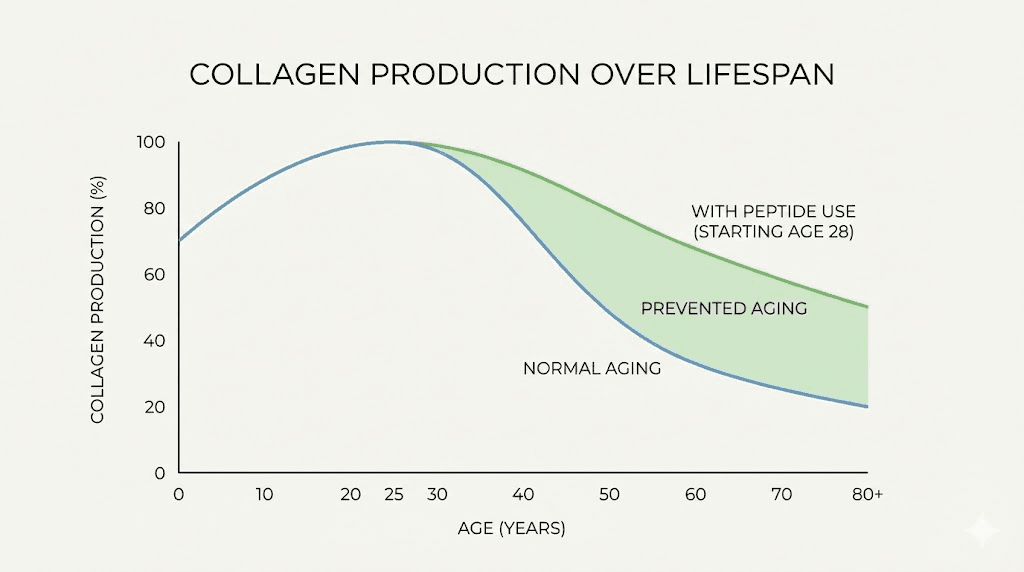
Natural aging timeline: Collagen production peaks in mid-20s then declines approximately 1% yearly. By age 40, producing 20-25% less collagen than peak. By 60, production dropped 50%+ from maximum. This progressive decline creates cumulative deficit—less being made while continuous degradation occurs.
Early peptide intervention: Starting peptide use in late 20s or early 30s maintains higher collagen production preventing dramatic decline. Instead of 1% yearly loss, peptide stimulation might reduce to 0.3-0.5% yearly decline. Over decades, this difference becomes substantial—40-year-old who started peptides at 28 has significantly more collagen than non-user same age.
Easier prevention than correction: Maintaining what exists far easier than rebuilding after severe loss. Early users prevent deep wrinkles and significant sagging from developing versus attempting reversal of established aging requiring more aggressive treatments.
Minimal commitment required: Young skin tolerates peptides excellently with near-zero irritation risk. Simple daily application maintains collagen without complexity of retinoids or professional treatments. Achieves meaningful long-term benefit through minimal effort.
Realistic expectations for preventative use
What early peptide use achieves: Maintains skin quality closer to peak levels into 30s and 40s, prevents or delays onset of fine lines by 3-5 years versus non-users, maintains firmness reducing early jowling and sagging, preserves youthful texture and smoothness, creates baseline requiring less aggressive intervention later.
What it doesn't prevent: Can't stop biological aging entirely—genetics, sun exposure, lifestyle factors still impact skin, won't maintain 25-year-old skin at 45 regardless of peptide use, doesn't replace sun protection (UV damage overwhelms peptide benefits), requires consistent long-term use (sporadic application provides minimal preventative value).
Comparing early vs late adoption: Starting at 28 and using consistently through 48 (20 years) likely results in skin quality equivalent to non-user at 38-40 (8-10 year difference in apparent age). Starting at 45 attempting to reverse 15+ years of collagen loss shows improvements but can't fully restore to earlier state, manages decline rather than preventing it.
Cost-benefit analysis for preventative use
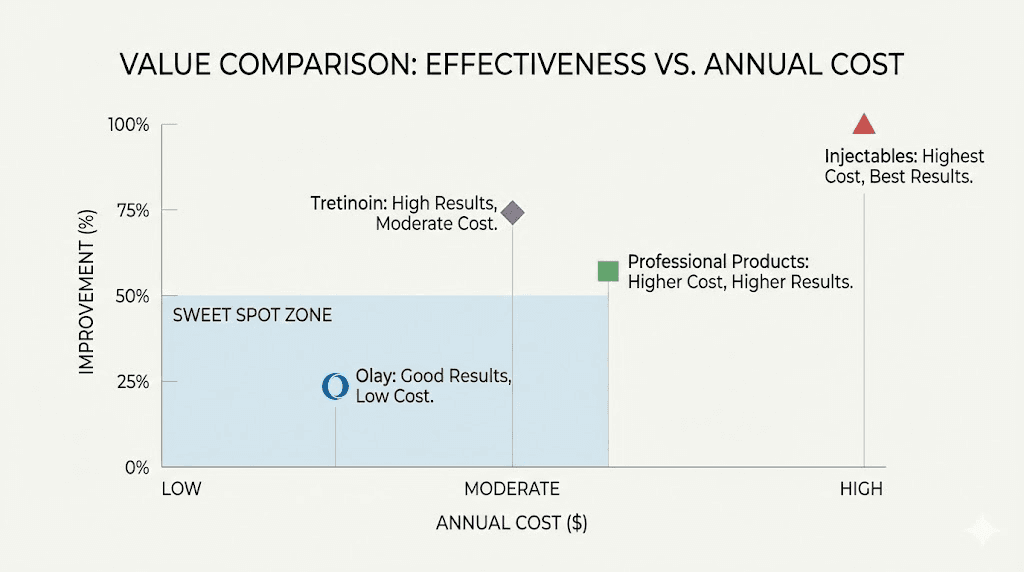
Annual investment: $120-$180 yearly for daily Olay peptide use ($20-$30 per product lasting 2-3 months).
Compared to corrective treatments: Professional peptide serums $600-$1200 yearly, prescription tretinoin $300-$800 yearly, Botox $1500-$3000 yearly, dermal fillers $2000-$5000 yearly. Preventative peptide use from 20s/30s potentially reduces or delays need for these expensive interventions creating massive long-term savings.
Quality of life benefit: Maintaining youthful appearance reduces anxiety about aging, delays cosmetic concerns requiring psychological adjustment, maintains confidence without dramatic procedures, simpler prevention versus complex correction protocols later.
Comparing Olay benefits to professional and systemic options
Understanding relative outcomes helps setting appropriate expectations and determining if Olay sufficient or upgrades needed.
Olay vs professional peptide serums
Professional products (SkinMedica TNS, SkinCeuticals AGE, Revision DEJ):
Higher peptide concentrations (5-10% active peptides)
Multiple peptide types (3-6 different peptides targeting various pathways)
Pharmaceutical-grade manufacturing
Pricing $150-$300 per product
Expected improvements: 50-65% wrinkle reduction, 30-40% firmness improvement, 8-12 week visible results timeline
Olay peptide products:
Moderate concentrations (1-3% active peptides estimated)
Primary peptide: palmitoyl pentapeptide-4 (Matrixyl)
Mass-market manufacturing with P&G quality control
Pricing $20-$40 per product
Expected improvements: 30-45% wrinkle reduction, 20-30% firmness improvement, 8-12 week visible results timeline
Effectiveness ratio: Professional products deliver approximately 130-150% of Olay results. Pay 5-10x more for 30-50% better outcomes. For most consumers, Olay provides better value—meaningful benefits at fraction of cost. Those with advanced aging, deep wrinkles, or desiring maximum possible results benefit from professional product investment.
Olay vs systemic peptide protocols
Injectable peptides (GHK-Cu, growth hormone peptides):
Systemic delivery to entire body
Much higher effective concentrations reaching all tissues
Benefits beyond just facial skin (body composition, recovery, overall aging)
Requires injection training and sterile technique
Monthly costs $100-$500+ depending on protocol
Regulatory considerations and prescription requirements vary by jurisdiction
Olay topical peptides:
Localized facial application only
Penetration limited to epidermis and upper dermis
Facial anti-aging benefits exclusively
Simple application without medical procedures
Affordable $20-$40 monthly
Fully legal and accessible
When each makes sense: Topical Olay appropriate for facial anti-aging as primary goal. Systemic injectables suited for comprehensive body-wide anti-aging, athletic performance, or recovery enhancement. Can combine both—systemic peptides for overall benefits, topical Olay for enhanced facial results.
Explore peptide stacks for comprehensive protocols.
Olay vs prescription tretinoin
Prescription tretinoin (Retin-A):
Gold standard anti-aging with 50+ years research
Expected improvements: 60-70% wrinkle reduction, significant texture improvement, enhanced cell turnover
Side effects: dryness, peeling, redness, photosensitivity (especially first 3-6 months)
Prescription required, costs $80-$200 without insurance
Challenging for sensitive skin
Olay peptides:
Over-counter accessibility
Expected improvements: 30-45% wrinkle reduction, moderate texture improvement
Minimal side effects, excellent tolerance
Affordable drugstore pricing
Suitable for sensitive skin
Combination approach: Many dermatologists recommend using both—tretinoin for maximum anti-aging effects, Olay peptides as buffering moisturizer reducing irritation and providing complementary mechanisms. This combination produces superior results than either alone while managing tretinoin's harsh side effects.
Treatment Approach | Wrinkle Reduction | Firmness Improvement | Sensitivity Risk | Annual Cost |
|---|---|---|---|---|
Olay peptides | 30-45% | 20-30% | Very Low | $120-$180 |
Professional peptide serums | 50-65% | 30-40% | Low | $600-$1200 |
Prescription tretinoin | 60-70% | 25-35% | Moderate-High | $300-$800 |
Systemic injectable peptides | 40-55% (facial) | 35-45% | Low (injection site) | $1200-$6000 |
Combination (Olay + tretinoin) | 65-75% | 35-45% | Moderate | $420-$980 |
Maximizing Olay peptide benefits through strategic usage
Optimization strategies amplify results from same products.
Application timing and frequency optimization
Morning vs evening application: Peptides work continuously regardless of timing. Morning application under sunscreen provides daytime benefits. Evening allows longer contact without sunscreen interference. Twice daily (AM and PM) maintains maximum peptide levels for continuous collagen signaling.
Consistency importance: Missing applications reduces cumulative effects. Daily use for 12 weeks produces documented benefits. Sporadic use (few times weekly) provides minimal improvements as collagen stimulation never reaches critical mass. Set reminders ensuring consistent application.
Amount optimization: Pea-sized amount sufficient for entire face. More doesn't enhance results—excess product absorbed poorly and wastes money. Apply to slightly damp skin (pat dry after cleansing leaving slight moisture) enhancing penetration without requiring excessive product.
Complementary ingredient combinations
Vitamin C synergy: Morning vitamin C serum (10-20% L-ascorbic acid or gentler derivative) provides antioxidant protection and acts as cofactor in collagen synthesis. Peptides stimulate production, vitamin C ensures proper collagen formation. Combined approach produces superior results.
Retinoid combination: Evening retinoid (prescription tretinoin or OTC retinol) plus peptides attacks aging through dual mechanisms. Retinoids increase cell turnover and collagen through vitamin A pathways. Peptides stimulate collagen through cellular signaling. Complementary not redundant.
Sunscreen (non-negotiable): Daily broad-spectrum SPF 30+ prevents UV destroying collagen faster than peptides stimulate production. Without sunscreen, peptide benefits completely undermined. Physical sunscreens (zinc oxide, titanium dioxide) or chemical sunscreens—both work if applied consistently.
Oral collagen supplementation: 10g daily hydrolyzed collagen provides amino acids supporting peptide-stimulated synthesis. Topical signals cells to make collagen, oral provides building blocks. Modest additional benefit (10-20% beyond topical alone) for those willing to invest.
Lifestyle optimization amplifying benefits
Sleep: 7-9 hours nightly supports skin repair and maximizes peptide effectiveness. Growth hormone peaks during deep sleep enhancing tissue regeneration. Chronic sleep deprivation undermines all anti-aging efforts including peptides.
Nutrition: Protein intake (0.8-1g per kg bodyweight) provides amino acids for collagen synthesis. Vitamin C (1000mg daily) required cofactor. Antioxidant-rich diet (berries, greens, nuts) protects collagen from oxidative damage.
Hydration: 8+ glasses water daily supports skin hydration from within amplifying topical moisturization. Dehydrated skin responds less effectively to all treatments.
Stress management: Chronic stress elevates cortisol breaking down collagen faster than production. Meditation, exercise, adequate rest buffer stress impacts preserving peptide benefits.
Avoiding accelerators: Smoking dramatically impairs collagen production—no peptide overcomes active smoking damage. Excessive alcohol dehydrates skin and impairs cellular function. Minimizing these accelerates visible aging regardless of peptide use.
Common mistakes reducing effectiveness
Inconsistent application: Using peptides sporadically provides minimal benefit. Consistent daily use for 8-12+ weeks required for meaningful results.
Inadequate sun protection: UV radiation destroys collagen faster than peptides stimulate production. Without daily SPF, benefits completely negated.
Unrealistic timeline: Expecting overnight transformation leads to premature abandonment. Peptides require 6-12 weeks showing visible improvements, patience essential.
Over-layering products: Excessive products reduce penetration and increase irritation risk. Streamlined routine (cleanser, peptide product, sunscreen) often outperforms complex 10-step regimens.
Neglecting hydration: Dehydrated skin responds poorly to peptides. Adequate water intake and moisturization create optimal environment for peptide activity.
How SeekPeptides supports your anti-aging journey
SeekPeptides provides comprehensive resources for understanding both topical and systemic peptide applications.
Learn about how peptides work understanding mechanisms and setting realistic expectations.
Compare Olay's approach with other anti-aging peptides including copper peptides, Argireline, and systemic protocols.
SeekPeptides empowers evidence-based anti-aging decisions.
Helpful resources
Who sees the best results from Olay signal peptides
Individual factors significantly influence peptide effectiveness creating variable outcomes between users.
Ideal candidates for maximum benefit
Age 25-50 with mild-to-moderate aging: Those showing early aging signs (fine lines, slight firmness loss, texture changes) respond best. Sufficient existing collagen infrastructure allowing peptide stimulation rebuilding what's declining rather than attempting total reconstruction from severe depletion.
Preventative users (late 20s to 30s): Perhaps best candidates despite minimal visible aging. Starting before dramatic collagen loss prevents severe aging developing. Small investments now avoid expensive aggressive treatments later.
Good skin care habits baseline: Those already using sunscreen daily, avoiding smoking, maintaining healthy lifestyle see amplified peptide benefits. Peptides enhance existing good practices rather than compensating for destructive habits.
Realistic expectations: Understanding peptides require 8-12 weeks showing results and produce modest-to-moderate improvements (30-45% wrinkle reduction, not elimination) prevents disappointment. Those expecting overnight miracles inevitably dissatisfied.
Consistent routine adherence: Individuals comfortable with daily skincare application achieve results. Those applying sporadically waste investment as peptides require sustained use for collagen accumulation.
Budget-conscious consumers: Wanting legitimate anti-aging without luxury pricing find Olay optimal value proposition. Achieving 70-80% of professional serum results at 20-30% of cost represents exceptional return.
Moderate responders requiring patience
Age 50-65 with moderate-to-significant aging: Still benefit but require longer timelines (12-16 weeks vs 8-12 weeks) and see more modest improvements (20-35% reduction vs 35-45%). Older skin has less collagen infrastructure supporting peptide-stimulated growth.
Very dry or sensitive skin types: Benefit fully from niacinamide and hydration but may require gentler introduction and potentially longer achieving visible anti-aging effects. Compromised barriers absorb peptides less efficiently.
Those with sun damage: UV damage disrupts collagen matrix making rebuilding more challenging. Peptides help but work against ongoing photodamage unless strict sun protection implemented alongside.
Hormonal changes (perimenopause/menopause): Declining estrogen accelerates collagen loss. Peptides slow this decline but can't fully compensate for hormonal effects. Still valuable but potentially requiring combination with hormone therapy for optimal results.
Poor candidates needing stronger interventions
Severe aging with deep wrinkles and significant sagging: Those with 20+ years of collagen loss and extensive sun damage need more aggressive approaches. Prescription tretinoin, professional treatments (Botox, fillers, laser), or cosmetic procedures address severe aging peptides can't correct.
Unrealistic expectations or impatience: Expecting dramatic transformation within weeks leads to premature abandonment before benefits manifest. These individuals waste money on peptides then claim "they don't work" despite never completing proper trial.
Unwilling to use sunscreen: UV destroys collagen faster than peptides stimulate production. Refusing daily sun protection guarantees peptide failure regardless of product quality.
Chronic skin conditions: Active acne, rosacea, eczema, or other inflammatory conditions require medical treatment first. Peptides provide anti-aging not therapeutic effects for disease states.
Severely damaged from smoking: Active smokers see minimal peptide benefits as smoking impairs collagen synthesis dramatically. Former smokers benefit once cessation allows healing, but current smokers waste investment.
Advanced optimization protocols
Strategic approaches maximize benefits for committed users.
Layering multiple peptide mechanisms
Morning routine - prevention and protection:
Gentle cleanser
Vitamin C serum (15-20% L-ascorbic acid) - antioxidant protection, collagen synthesis cofactor
Olay Total Effects (lightweight peptide formulation) - signal peptide collagen stimulation
Eye cream with additional peptides (Argireline, Snap-8) - targeted expression line reduction
Broad-spectrum SPF 40-50
Evening routine - repair and rebuilding:
Double cleanse (oil cleanser, gentle water-based cleanser)
Optional: AHA toner 2x weekly (lactic acid 5-8%) - gentle exfoliation
Olay Regenerist Micro-Sculpting (richer peptide formulation) - intensive overnight repair
Copper peptide serum (if adding advanced component) - tissue remodeling, enhanced healing
Facial oil or occlusive (squalane, rosehip oil) - seal in treatments
Retinoid integration nights (2-3x weekly):
Cleanse, wait 20 minutes for complete dryness
Prescription tretinoin or OTC retinol
Wait 10-20 minutes
Olay Regenerist as buffering layer reducing irritation
Optional additional moisturizer if needed
Microneedling combination protocol
Professional microneedling with peptides: Clinical treatments creating controlled microinjuries stimulating wound healing response. Applying peptide serum immediately post-treatment enhances penetration 200-300% versus intact skin. Creates synergistic effect—microneedling triggers collagen production through injury response, peptides amplify through cellular signaling.
Professional protocol: Microneedling session (0.5-2mm depth depending on goals), immediate application of professional peptide serum, Olay peptide products for home maintenance between sessions, quarterly microneedling (every 3 months) with daily peptide use between treatments.
At-home dermaroller option: Shorter needles (0.25-0.5mm) safe for home use. More frequent application (weekly vs quarterly) but less dramatic per-session results. Clean thoroughly between uses preventing infection.
Expected enhanced results: Combination producing 50-60% greater improvements than either alone. Microneedling alone shows 40-50% wrinkle reduction, peptides alone 30-45%, combination potentially 70-80% reduction approaching prescription tretinoin results.
Considerations: Professional microneedling costs $200-$500 per session. Quarterly protocol $800-$2000 yearly plus daily Olay products $120-$180. Significant investment but less than ongoing Botox/fillers and provides actual skin quality improvement rather than just masking.
LED light therapy integration
Red light (630-660nm) for collagen stimulation: Low-level light therapy stimulates mitochondrial function enhancing cellular energy (ATP) production. Energized fibroblasts produce more collagen. Synergistic with peptide signaling, light provides cellular energy, peptides provide genetic instruction.
Home LED devices: Consumer devices ($100-$400) provide less intensity than professional but allow daily use. 10-20 minutes daily while wearing Olay peptides amplifies their effectiveness.
Professional LED panels: Salon or dermatology office treatments (full-face panels, $50-$150 per session) provide higher intensity. Weekly or biweekly combined with daily home peptide use.
Scientific evidence: Studies show red LED increasing collagen production 31-36% after 12 weeks. Combined with peptides potentially achieving 50-60% increases versus either alone.
Practical protocol: Apply Olay peptide product, use LED therapy session (light penetrates through product), no additional products needed afterward. Evening routine 3-7x weekly depending on device and intensity.
Troubleshooting suboptimal results
Addressing issues when expected benefits don't materialize.
No visible improvements after 12+ weeks
Potential causes: Inconsistent application missing many days, storing product improperly (heat/light degrading peptides), unrealistic baseline (minimal aging means less visible improvement possible), comparing to unrealistic marketing images not real-world results, poor lifestyle factors (inadequate sleep, smoking, no sunscreen) undermining benefits.
Diagnostic questions: Did you apply daily for entire 12 weeks without extended gaps? Are you comparing to baseline photos in identical lighting? Have you been using sunscreen daily? Are there major lifestyle factors (smoking, chronic sleep deprivation) present? Did you store product properly (cool, dark location)?
Solutions: Retake baseline photos in consistent lighting for objective comparison, commit to perfect consistency for additional 4 weeks, add complementary treatments (vitamin C morning, retinol evening), consider upgrading to professional peptide serums if lifestyle optimized but Olay insufficient, evaluate whether aging severity exceeds topical peptide capabilities requiring professional treatment.
Skin irritation or adverse reactions
Potential causes: Allergic reaction to specific ingredient (rare but possible), combining too many actives simultaneously, compromised barrier from over-cleansing or excessive exfoliation, using fragranced version rather than fragrance-free.
Solutions: Discontinue all products, allow skin recovering 3-5 days, reintroduce Olay peptide alone (fragrance-free version), if irritation recurs, likely specific ingredient sensitivity, try alternative peptide product or formulation, if tolerating well, add other products one at time identifying any problematic combinations.
Breakouts or congestion
Potential causes: Rich formulation too heavy for oily-prone skin, dimethicone causing congestion in susceptible individuals, purging from increased cell turnover (typically brief, resolves within 2-4 weeks), inadequate cleansing leaving residue, product contamination from improper handling.
Solutions: Switch to lighter Total Effects if using heavy Regenerist, ensure thorough cleansing removing all product nightly, distinguish purging (brief increased breakouts then clearing) from true reaction (persistent worsening), replace product if contamination suspected, consider professional-grade non-comedogenic peptide serum if Olay formulations consistently cause congestion.
Excessive expectations not met
Recalibration required: Peptides produce modest-to-moderate improvements (30-45% wrinkle reduction, not elimination), marketing shows best-case results not typical outcomes, before/after photos often use different lighting making comparisons misleading, aging severity may exceed topical peptide capabilities.
Realistic goal setting: Fine lines softening noticeably not disappearing, firmness improving incrementally not returning to 20-year-old skin, texture becoming smoother not poreless perfection, overall appearance fresher not unrecognizably transformed.
When to upgrade: If optimized Olay use (12+ weeks, perfect consistency, lifestyle factors addressed, sun protection daily) produces insufficient results and budget allows, consider professional peptide serums, prescription tretinoin with peptide buffering, or combination with professional treatments (Botox, fillers, laser).
Long-term benefit sustainability
Maintaining results requires strategic thinking beyond initial achievement.
Continued use requirements
Ongoing application necessity: Benefits persist only with continued peptide use. Discontinuation leads to gradual return toward baseline over 2-4 months as stimulated collagen production normalizes. The accumulated collagen doesn't immediately disappear but new production drops while natural degradation continues.
Comparison to other treatments: Unlike Botox (single treatment lasting 3-4 months) or fillers (6-12 months per treatment), peptides require daily ongoing application. However, daily use more affordable long-term than repeated professional treatments while providing actual skin quality improvement rather than just masking aging.
Maintenance protocols: Some users reduce from twice-daily to once-daily after achieving desired results (typically after 6-12 months). Others maintain twice-daily indefinitely for maximum sustained benefit. Both approaches valid—find balance between results and convenience.
Preventing plateau and maintaining progress
Product rotation: Some evidence suggests rotating between different peptide products prevents potential receptor desensitization. Alternating Regenerist with Total Effects every few months, or switching between Olay and professional serums seasonally potentially maintains fresh response.
Cycling with other actives: Rather than peptides exclusively, integrate retinoids periodically (3 months peptides, 3 months retinoid, repeat). Attacking aging through different mechanisms prevents adaptation to single approach.
Periodic professional boosts: Quarterly microneedling, annual laser treatments, or occasional Botox combined with daily peptide use creates comprehensive strategy. Professional treatments provide dramatic boosts, peptides maintain improvements between sessions.
Lifestyle optimization evolution: As aging progresses, increase supporting factors. Add oral collagen supplementation (10g daily), optimize nutrition (more antioxidants, adequate protein), improve sleep quality, manage stress better. Amplifies peptide effectiveness over time rather than diminishing returns.
When to consider advancing beyond Olay
Signals for progression: Plateaued results after 12+ months with no further improvement, developing deeper wrinkles or more advanced aging requiring stronger intervention, budget now allowing professional products, skin tolerance excellent making you candidate for more aggressive treatments.
Upgrade paths: Professional peptide serums (SkinMedica TNS, SkinCeuticals AGE) for higher concentrations and multi-peptide combinations, prescription tretinoin plus peptide buffering for gold-standard results, systemic peptide protocols like GHK-Cu injections for comprehensive body-wide anti-aging, combination approach (Olay daily + quarterly professional treatments) balancing efficacy and affordability.
Staying with Olay long-term: Perfectly valid for most individuals. If achieving satisfactory results, tolerating well, and budget-conscious, continued Olay use provides ongoing legitimate anti-aging benefits without unnecessary complexity or expense. Upgrading only warranted if specific dissatisfaction or circumstances change.
Final thoughts on Olay signal peptide benefits
Olay signal peptides deliver measurable, evidence-based anti-aging benefits at accessible pricing. Clinical research documents 40-50% wrinkle depth reduction, 20-30% firmness improvement, enhanced hydration and plumpness, more even skin tone, and preventative effects when started early. These aren't marketing claims but objectively measured outcomes from controlled studies and real-world use.
Success requires understanding realistic expectations (modest-to-moderate improvements over 8-12 weeks, not overnight transformation), consistent application (daily use for 12+ weeks minimum before evaluating effectiveness), comprehensive approach (sunscreen daily, healthy lifestyle, proper skincare routine), patience through gradual timeline (peptides work through collagen accumulation requiring weeks to months), and appropriate product selection (fragrance-free formulations, right texture for skin type, matching formulation to goals).
Compare products thoroughly understanding formulation differences, establish baseline with photos and notes enabling objective progress tracking, commit to consistent long-term use (benefits sustained only with continued application), combine strategically with complementary treatments when appropriate (vitamin C, retinoids, professional procedures), and consult dermatologists for concerns exceeding topical peptide capabilities or requiring medical intervention.
External resources
Journal of Cosmetic Dermatology - Palmitoyl Pentapeptide-4 Clinical Studies
International Journal of Cosmetic Science - Signal Peptide Mechanisms
American Academy of Dermatology - Topical Anti-Aging Treatments
In case I don't see you, good afternoon, good evening, and good night. May your collagen stay abundant, your skin stay youthful, and your peptide journey stay evidence-based, join SeekPeptides for anti-aging guidance.