Jan 9, 2026

The search for "peptides near me" reflects a fundamental shift in how researchers approach peptide sourcing, with geographic proximity once dictating access to research compounds but online marketplaces now democratizing availability across regions previously underserved by specialized suppliers.
This transformation creates both opportunity and challenge, as researchers navigate an increasingly complex landscape where vendor quality varies dramatically and verification methods require sophisticated understanding of analytical chemistry, supply chain integrity, and regulatory compliance.
The modern peptide marketplace operates across multiple tiers, from compounding pharmacies requiring prescriptions to research chemical suppliers serving institutional and independent researchers, each channel presenting distinct advantages, limitations, and verification requirements.
SeekPeptides provides comprehensive resources for navigating these sourcing decisions, offering vendor comparisons, quality verification guides, and protocol optimization tools that support informed purchasing decisions regardless of geographic location.
Understanding What "Peptides Near Me" Actually Means
When researchers search "peptides near me," the query encompasses several distinct needs depending on context, urgency, and intended application. Some seek local compounding pharmacies that can fill prescriptions for therapeutic peptides like semaglutide or tirzepatide. Others look for research chemical suppliers offering compounds like BPC-157, TB-500, or ipamorelin for laboratory investigation. Still others want peptide therapy clinics providing medically supervised protocols.
Geographic proximity matters less than it once did.
The internet transformed peptide access fundamentally. Researchers in rural areas now access the same vendors serving major metropolitan research institutions. Overnight shipping eliminates the distance barrier that previously limited options. Cold chain logistics ensure temperature-sensitive compounds arrive stable regardless of shipping distance.
However, "near me" searches often reflect deeper concerns beyond simple convenience. Researchers want accountability, the ability to verify sources, and assurance that quality issues can be addressed. Local presence suggests accessibility for questions, returns, and relationship building that purely online transactions sometimes lack. Understanding these underlying motivations helps frame the broader discussion of peptide sourcing in the modern research landscape, where digital commerce meets scientific rigor and quality expectations vary dramatically across supplier tiers.
The Evolution of Peptide Access
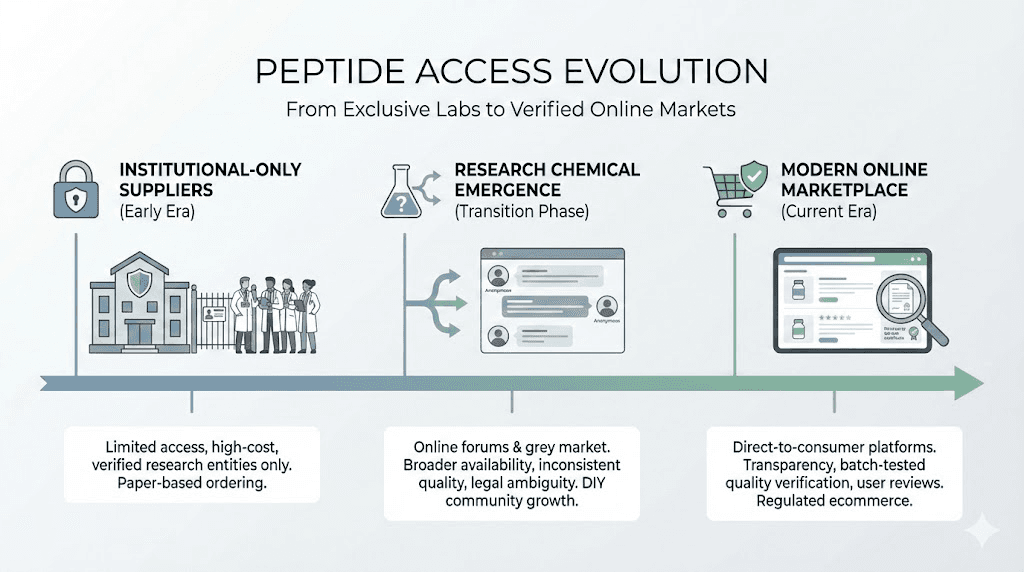
Historical context: Peptide research compounds were once available primarily through institutional suppliers serving universities and pharmaceutical companies. Independent researchers faced significant barriers including minimum order quantities, institutional verification requirements, and limited product selection. The emergence of research chemical suppliers in the early 2000s began democratizing access, though quality consistency remained problematic across the industry.
The current landscape looks dramatically different. Dozens of vendors compete for researcher attention, offering extensive catalogs covering everything from GHK-Cu for skin research to CJC-1295 for growth hormone studies to PT-141 for sexual function investigation. This competition drives both innovation in quality assurance and, unfortunately, some cutting corners on purity standards.
SeekPeptides helps researchers navigate this evolved landscape through comprehensive vendor analysis and quality verification resources.
Types of Peptide Sources Available
Compounding pharmacies: These licensed facilities prepare customized medications including peptides when prescribed by licensed healthcare providers. They operate under state pharmacy board oversight and must meet specific quality standards. Compounding pharmacies represent the most regulated peptide source, requiring valid prescriptions and offering pharmaceutical-grade compounds. Access depends on healthcare provider relationships and geographic availability of compounding facilities. Learn more about compounding pharmacy peptides and their role in therapeutic applications.
Research chemical suppliers: These vendors sell peptides labeled "for research purposes only" or "not for human consumption." They serve a diverse customer base including academic institutions, independent researchers, and individuals conducting personal research. Quality varies dramatically across this sector, from suppliers providing third-party tested, pharmaceutical-grade compounds to those selling minimally verified products of questionable purity. Understanding how to evaluate research vs pharmaceutical peptides proves essential for anyone sourcing through this channel.
Peptide therapy clinics: Medical facilities specializing in peptide-based treatments offer supervised protocols for various applications.
These clinics employ licensed practitioners who prescribe and oversee peptide use, providing medical monitoring and dosage adjustments. Geographic availability varies significantly, with major metropolitan areas offering multiple clinic options while rural regions may have limited or no local access. Searching for peptide therapy near me helps identify clinical options in specific regions.
Online Versus Local Peptide Sourcing
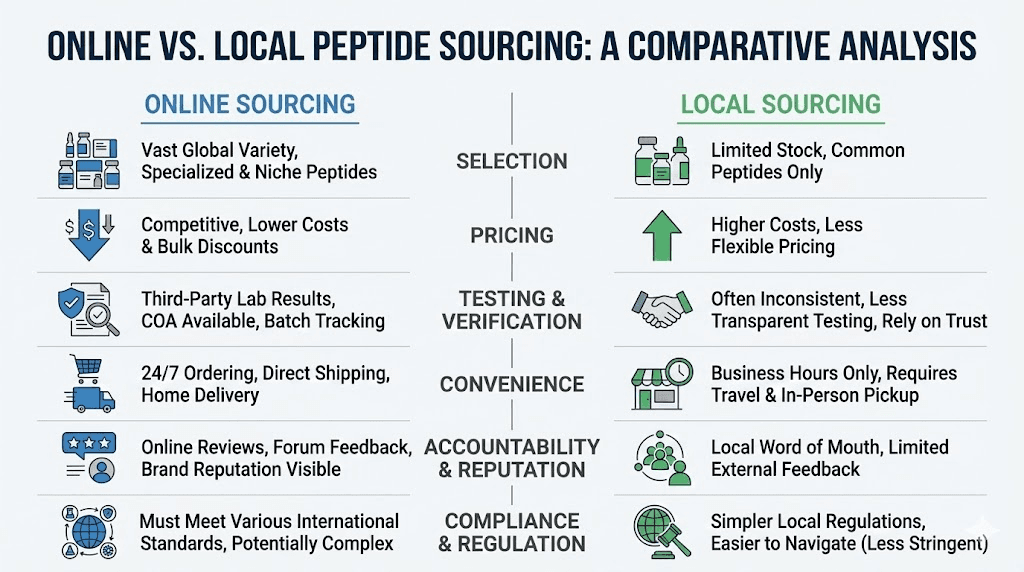
The debate between online and local peptide sourcing involves multiple factors beyond simple convenience, encompassing quality assurance, pricing transparency, product selection, and ongoing support availability. Each approach offers distinct advantages depending on researcher needs, urgency requirements, and quality expectations. Understanding these tradeoffs enables informed sourcing decisions aligned with specific research objectives.
Advantages of Online Peptide Suppliers
Product selection: Online suppliers typically offer far broader catalogs than any local source could maintain. A single online vendor might stock hundreds of different peptides, from common compounds like BPC-157 to specialized research peptides unavailable through local channels. This selection advantage proves particularly important for researchers investigating less common compounds or requiring multiple peptides for comparative studies.
Pricing transparency represents another significant online advantage.
Researchers can easily compare prices across multiple vendors, identifying competitive rates and evaluating cost-per-milligram across different suppliers. This transparency drives market efficiency and helps researchers maximize budgets. Local sources rarely offer this comparison capability, often maintaining pricing opacity that disadvantages buyers.
Third-party testing accessibility: Reputable online vendors increasingly provide certificates of analysis from independent laboratories, documenting purity percentages, identity confirmation, and contaminant screening results. These reports offer verification impossible with most local sources. When evaluating vendors, look for those providing certificates of analysis with batch-specific testing from accredited laboratories.
Community verification: Online peptide communities extensively review and discuss vendor quality, creating crowdsourced verification systems that help identify reliable suppliers. These communities share testing results, report quality issues, and track vendor consistency over time. Local sources lack this community oversight mechanism, making quality verification more dependent on individual assessment.
Convenience and shipping: Overnight and expedited shipping options mean online orders often arrive faster than arranging local pickup, particularly for researchers not located near major peptide suppliers. Cold chain shipping maintains compound stability during transit, with temperature indicators verifying proper handling throughout delivery.
Advantages of Local Peptide Sources
Immediate availability: For urgent research needs, local sources eliminate shipping delays entirely. Walking into a compounding pharmacy with a valid prescription provides same-day access impossible through online channels. This immediacy matters for time-sensitive protocols or when unexpected compound needs arise mid-experiment.
Personal accountability: Local vendors have physical presence and professional reputations tied to their community. This accountability often translates to higher customer service standards and greater willingness to address quality concerns. A local compounding pharmacy risks significant reputation damage from quality issues in ways anonymous online vendors may not.
Relationship building offers long-term advantages too.
Developing relationships with local peptide sources can yield benefits including priority service, custom formulations, and expert guidance unavailable through transactional online purchases. These relationships prove particularly valuable for researchers with ongoing, specialized needs requiring personalized support.
Regulatory compliance: Licensed local pharmacies operate under clear regulatory frameworks providing legal protection and quality assurance. Compounding pharmacies must meet state board requirements, undergo inspections, and maintain quality systems. This regulatory oversight offers assurance absent from most research chemical suppliers operating in regulatory gray areas.
Making the Right Choice
The optimal sourcing approach depends on specific circumstances rather than universal rules. Researchers requiring semaglutide or other FDA-regulated peptides should work through compounding pharmacies with valid prescriptions, prioritizing legal compliance and pharmaceutical-grade quality. Those investigating research compounds like Selank or Semax typically find better selection and pricing through reputable online research suppliers.
Consider these factors when deciding:
Urgency: Same-day needs favor local sources; planned research accommodates online shipping timelines. Budget: Online suppliers typically offer lower prices due to competition and lower overhead. Quality requirements: Pharmaceutical applications demand compounding pharmacy sources; research applications may use either channel with appropriate verification. Compound availability: Specialized peptides often available only through online research suppliers. Legal considerations: Prescription peptides require licensed pharmacy sources regardless of convenience preferences.
How to Find Quality Peptide Sources
Finding reliable peptide sources requires systematic evaluation across multiple dimensions, from basic business legitimacy to sophisticated quality verification through analytical testing. This section provides comprehensive guidance for identifying trustworthy suppliers regardless of whether they operate locally or online, enabling researchers to make informed sourcing decisions based on objective quality indicators rather than marketing claims.
Vendor Verification Fundamentals
Business legitimacy: Start with basic business verification before evaluating product quality. Legitimate vendors maintain professional websites with clear contact information, physical addresses, and responsive customer service. They provide terms of service, shipping policies, and return procedures. Research company registration, business licenses, and operational history. Vendors unwilling to provide basic business information warrant immediate skepticism.
Customer service responsiveness reveals organizational quality.
Contact vendors with questions before ordering. Evaluate response time, answer quality, and willingness to address technical inquiries. Legitimate suppliers employ knowledgeable staff capable of discussing product specifications, storage requirements, and testing protocols. Vendors providing only generic responses or avoiding specific questions may lack genuine expertise or product quality.
Payment and shipping practices: Reputable vendors offer standard payment options and provide tracking information for all shipments. Be cautious of vendors requiring unusual payment methods, cryptocurrency-only transactions, or those unable to provide shipment tracking. Professional shipping practices including appropriate packaging, cold chain maintenance where needed, and discreet labeling indicate operational sophistication.
SeekPeptides vendor comparison resources help evaluate these fundamental legitimacy indicators across multiple suppliers.
Quality Verification Methods
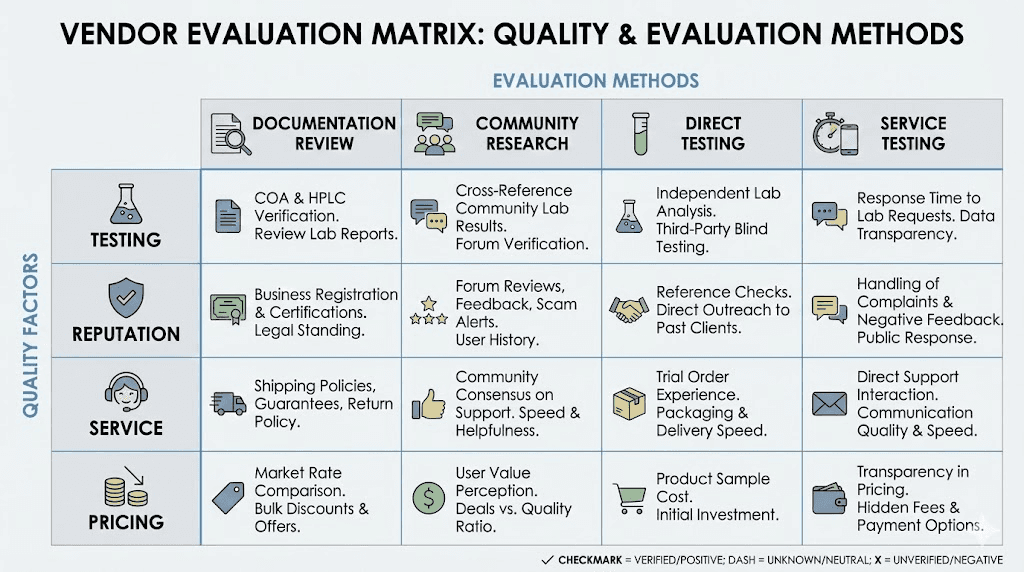
Certificate of analysis requirements: Every peptide purchase should include a certificate of analysis (COA) documenting testing results from the specific batch being sold. COAs should include purity percentage (typically determined by HPLC), identity confirmation (mass spectrometry), and ideally contaminant screening for residual solvents, heavy metals, and bacterial endotoxins. Understanding how to read peptide COAs enables meaningful quality assessment.
Third-party testing: The most reliable quality verification comes from independent third-party laboratories rather than vendor-provided in-house testing. Third-party testing eliminates conflict of interest inherent in self-reported quality claims. Ask vendors which laboratories perform their testing and verify laboratory accreditation. Some researchers commission independent testing of received products for ultimate verification.
HPLC purity analysis: High-performance liquid chromatography provides the standard method for peptide purity determination. Quality peptides typically show purity above 98%, with research-grade compounds acceptable at 95%+ for many applications. Understanding peptide purity testing methodology helps interpret these results meaningfully.
Mass spectrometry confirmation: Mass spectrometry verifies peptide identity by confirming molecular weight matches the expected compound. This testing prevents substitution fraud where vendors sell different peptides than labeled. COAs should include mass spectrometry data showing correct molecular ion peaks.
Visual inspection: While not definitive, physical appearance provides initial quality indicators. Lyophilized peptides should appear as uniform white to off-white powder without discoloration, clumping, or visible contamination. Properly sealed vials maintain vacuum indicated by concave rubber stoppers. Learn proper peptide storage requirements to maintain quality after receipt.
Red Flags to Avoid
Certain warning signs indicate vendors likely to provide substandard products or problematic service. Learning to recognize these red flags prevents costly mistakes and potential research contamination from impure compounds.
Pricing too good to be true: Peptide synthesis involves significant costs for raw materials, skilled labor, quality testing, and proper handling. Vendors offering dramatically lower prices than competitors either compromise quality or operate unsustainably. While some price variation reflects legitimate efficiency differences, extreme discounts typically indicate corners being cut on quality assurance.
Missing or fabricated testing: Vendors unable to provide COAs or providing documents with inconsistent formatting, missing laboratory identification, or suspicious testing dates warrant avoidance. Some disreputable vendors fabricate testing documentation, so verify laboratory contact information and consider requesting confirmation directly from testing facilities.
No physical address: Legitimate businesses maintain physical presence. Vendors listing only PO boxes, providing no address at all, or showing addresses that don't verify through mapping services raise significant concerns about accountability and recourse if problems occur.
Pressure tactics: Quality vendors don't require high-pressure sales tactics. Be suspicious of limited-time offers, claims of imminent stock depletion, or aggressive upselling. These tactics often accompany substandard products relying on impulse purchases rather than informed buying decisions.
Health claims: Research peptide vendors should never make therapeutic claims about their products. Those advertising peptides as treatments for specific conditions violate regulatory requirements and demonstrate willingness to operate outside legal boundaries, raising questions about other compliance areas including quality standards.
Types of Peptides Researchers Commonly Seek
Understanding the categories of peptides researchers commonly search for helps contextualize the "peptides near me" query and identify appropriate sourcing channels for different compound types. Each category presents distinct considerations regarding availability, pricing, and quality verification requirements.
Healing and Recovery Peptides
Peptides supporting tissue repair and recovery represent among the most searched categories, attracting researchers investigating healing mechanisms and athletes exploring recovery optimization. These compounds demonstrate various tissue-supportive properties through multiple biological pathways.
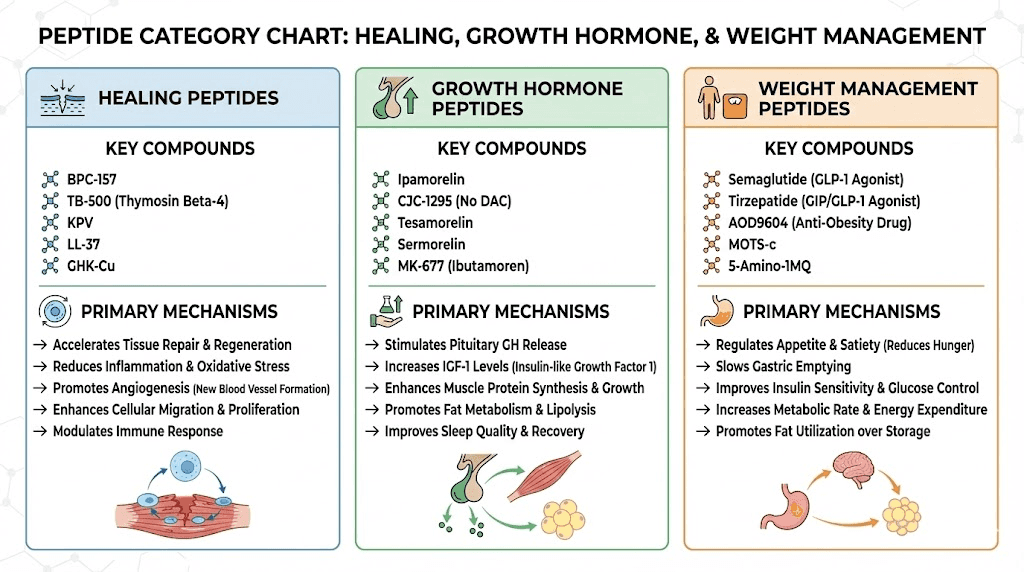
BPC-157 stands as perhaps the most popular healing peptide, a pentadecapeptide derived from gastric juice showing remarkable tissue repair properties across tendons, ligaments, muscles, and gut tissue. Research documents its mechanisms including angiogenesis promotion, growth factor upregulation, and anti-inflammatory effects. The BPC-157 dosage calculator helps researchers determine appropriate protocols.
TB-500 (Thymosin Beta-4) complements BPC-157 through different mechanisms, promoting cell migration and differentiation essential for tissue regeneration. Many researchers investigate the combined Wolverine stack pairing both peptides for potentially synergistic healing effects. The TB-500 dosage calculator supports protocol planning.
Understanding the BPC-157 vs TB-500 comparison helps researchers select appropriate compounds for specific tissue targets and healing objectives.
Growth Hormone Peptides
Peptides stimulating growth hormone release attract significant research interest for applications including body composition, recovery, and anti-aging investigation. These compounds work through various mechanisms to enhance endogenous growth hormone production.
CJC-1295 represents a growth hormone releasing hormone analog providing sustained GH elevation through extended half-life compared to natural GHRH. The CJC-1295 dosage calculator helps determine appropriate research protocols.
Ipamorelin works through ghrelin receptor activation, providing selective growth hormone release without significant effects on cortisol or prolactin. This selectivity makes it popular for research applications requiring cleaner GH stimulation. Compare these compounds through the Ipamorelin vs CJC-1295 guide.
Tesamorelin offers FDA-approved status for specific indications, representing the most regulated growth hormone peptide option. Sermorelin provides another GHRH analog option with established research history.
For researchers investigating growth hormone pathways, peptides for muscle growth provides comprehensive category coverage.
Weight Management Peptides
GLP-1 receptor agonists and related compounds represent the fastest-growing peptide category, driven by research into metabolic regulation and weight management mechanisms. These peptides typically require prescription access through compounding pharmacies or clinics rather than research chemical suppliers.
Semaglutide (Ozempic, Wegovy, Rybelsus) demonstrates powerful effects on appetite regulation and glucose metabolism. The semaglutide dosage calculator helps understand dosing progression for this potent compound.
Tirzepatide (Mounjaro, Zepbound) represents the newer dual-agonist approach, targeting both GLP-1 and GIP receptors for potentially enhanced effects. The semaglutide vs tirzepatide comparison helps researchers understand the differences between these approaches.
Retatrutide extends this approach further as a triple agonist, while emerging compounds like survodutide and cagrilintide expand research options. Explore peptides for fat loss for comprehensive weight management peptide coverage.
Cognitive and Neuroprotective Peptides
Peptides affecting cognitive function and neurological health attract researchers investigating brain health, memory enhancement, and neuroprotection. These compounds typically operate through neurotransmitter modulation, neurotrophic factor enhancement, or neuroprotective mechanisms.
Selank demonstrates anxiolytic and nootropic properties through modulation of brain-derived neurotrophic factor and serotonin metabolism. Russian research extensively documents its cognitive and mood-related effects.
Semax shows nootropic and neuroprotective properties through BDNF modulation and nerve growth factor enhancement. Like Selank, it emerged from Russian peptide research programs.
Dihexa represents an extremely potent research compound investigated for cognitive enhancement through hepatocyte growth factor system activation. Its potency requires careful consideration of dosing protocols.
Epithalon attracts longevity researchers through its telomerase-activating properties, potentially supporting cellular health and longevity through chromosomal maintenance mechanisms.
Skin and Cosmetic Peptides
Peptides supporting skin health, wound healing, and cosmetic applications represent another popular search category. These compounds work through various mechanisms including collagen stimulation, pigmentation regulation, and tissue repair.
GHK-Cu (copper peptide) demonstrates remarkable skin regeneration properties through collagen synthesis promotion, anti-inflammatory effects, and wound healing acceleration. Its safety profile and multi-mechanism action make it popular for cosmetic research.
Melanotan II affects skin pigmentation through melanocortin receptor activation, attracting researchers investigating tanning mechanisms and related applications. Understanding proper protocols helps navigate this potent compound.
SNAP-8 represents a topical peptide used in cosmetic formulations for wrinkle reduction through muscle relaxation mechanisms similar to botulinum toxin but with topical application.
For comprehensive coverage, explore peptides for anti-aging applications and mechanisms.
Evaluating Peptide Vendors and Suppliers
Systematic vendor evaluation requires examining multiple factors beyond surface-level marketing to identify suppliers consistently delivering quality compounds with appropriate documentation and support. This comprehensive evaluation framework helps researchers identify trustworthy sources regardless of their geographic location or primary sales channel.
Quality Assurance Systems
Manufacturing standards: Quality peptide vendors should articulate their manufacturing standards and quality control processes. While not all vendors manufacture directly, those reselling should verify supplier quality systems. Ask about synthesis methods, purification processes, and quality control checkpoints. Vendors unable or unwilling to discuss manufacturing indicate potential quality concerns.
GMP compliance matters significantly for certain applications.
Good Manufacturing Practice standards ensure consistent quality through documented procedures, equipment validation, and process controls. While full GMP compliance proves rare in research peptide manufacturing, vendors demonstrating GMP-aligned practices typically deliver more consistent products than those with minimal quality infrastructure.
Testing protocols: Understand what testing each batch undergoes before release. Minimum acceptable testing includes HPLC purity analysis and mass spectrometry identity confirmation. Better vendors add sterility testing, endotoxin screening, residual solvent analysis, and heavy metal testing. Comprehensive testing adds cost but ensures product safety and research validity.
Documentation practices: Evaluate COA completeness, lot number tracking, and document availability. Professional vendors maintain comprehensive documentation accessible to customers, with COAs matching products received and lot numbers enabling traceability. Poor documentation suggests inadequate quality systems regardless of actual product quality.
Customer Experience Indicators
Community reputation: Search peptide forums, Reddit communities, and review sites for vendor discussions. Look for consistent feedback patterns rather than isolated reviews. Pay attention to how vendors respond to criticism and resolve complaints. Long-term positive reputation across multiple platforms indicates reliable quality and service.
Be cautious of review manipulation.
Some vendors incentivize positive reviews or fabricate testimonials. Look for detailed reviews describing specific experiences rather than generic praise. Forum discussions typically prove more reliable than website testimonials, which vendors control. Cross-reference reviews across multiple platforms for consistent patterns.
Customer service quality: Test customer service before ordering through questions about products, shipping, or testing. Evaluate response time, knowledge demonstrated, and willingness to provide detailed information. Quality vendors invest in knowledgeable support staff capable of technical discussions. Poor customer service typically correlates with operational issues affecting product quality.
Problem resolution: Investigate how vendors handle quality complaints, shipping issues, or product problems. Reputable vendors stand behind their products with reasonable return policies and complaint resolution processes. Those refusing to address legitimate concerns prioritize short-term profit over customer relationships and quality reputation.
Popular Research Peptide Vendors
The research peptide marketplace includes numerous vendors with varying quality standards, pricing structures, and product selections. While specific vendor recommendations require individual research, understanding the competitive landscape helps contextualize sourcing decisions.
Several vendors have established strong reputations through consistent quality, transparent testing, and responsive customer service. Paradigm Peptides offers extensive testing documentation and broad product selection. Amino Asylum provides competitive pricing with adequate quality verification. Peptide Sciences maintains pharmaceutical-oriented quality standards.
Other notable vendors include Pure Rawz, Swiss Chems, Core Peptides, and Limitless Life Nootropics. Each offers distinct advantages in pricing, selection, or quality assurance approaches. Newer entrants like Klow Peptides, Glow Peptides, and Polaris Peptides compete for market share with competitive offerings.
International options include UK Peptides and various European suppliers serving researchers globally. Some researchers explore Chinese peptide suppliers for cost advantages, though quality verification requires additional diligence.
Legal and Regulatory Considerations
Understanding the legal framework surrounding peptide sourcing helps researchers navigate compliance requirements while accessing needed compounds. Regulatory status varies by peptide type, intended use, and jurisdiction, creating a complex landscape requiring careful consideration.
United States Regulatory Framework
FDA-approved peptides: Some peptides have FDA approval for specific medical indications, making them available through standard pharmaceutical channels with appropriate prescriptions. Semaglutide, tirzepatide, and tesamorelin fall into this category. Accessing FDA-approved peptides through proper medical channels ensures pharmaceutical-grade quality and legal compliance.
Compounding represents an important middle ground.
Compounding pharmacies can prepare many peptides under Section 503A or 503B of the Food, Drug, and Cosmetic Act. 503A pharmacies compound patient-specific prescriptions, while 503B outsourcing facilities produce larger batches without individual prescriptions. Recent regulatory attention to compounding, particularly for GLP-1 agonists, highlights the evolving landscape around peptide regulations.
Research chemicals: Peptides sold as research chemicals occupy a regulatory gray area. They're legal to purchase for legitimate research purposes but not approved for human consumption. This distinction creates both access opportunity and compliance risk for researchers. Vendors appropriately label products "for research purposes only" and maintain purchase records.
Controlled substances: A few peptides including certain growth hormone variants fall under controlled substance regulations requiring DEA registration for handling. Most research peptides do not have controlled status, but researchers should verify regulatory classification for specific compounds of interest.
State-Level Considerations
State regulations add complexity to peptide sourcing, particularly regarding compounding pharmacy operations and telemedicine prescribing. Some states impose additional requirements on compounding facilities, affecting peptide availability in those jurisdictions. Telemedicine restrictions in certain states may limit access to prescriptions for regulated peptides.
California, New York, and several other states maintain stricter compounding oversight than federal minimums. Researchers in these states may face different options than those in less regulated jurisdictions. State pharmacy boards provide authoritative information about local compounding regulations and licensed facilities.
International Considerations
Import regulations: Researchers ordering peptides internationally must consider customs and import regulations. While personal-use quantities of non-controlled research chemicals typically clear customs without issue, larger quantities or certain compounds may face scrutiny. International orders also involve longer shipping times and cold chain considerations for temperature-sensitive compounds.
Country-specific regulations: Peptide regulations vary dramatically by country. Australia maintains strict controls through the TGA. European countries operate under varying frameworks with some permitting research chemical sales and others restricting them. Canadian regulations differ from US rules in several respects. Researchers should understand local regulations before ordering peptides internationally.
Practical Guide to Finding Peptides
This section provides actionable steps for researchers actively searching for peptide sources, whether seeking local options or evaluating online suppliers. Following this systematic approach maximizes the likelihood of identifying quality sources while minimizing risks associated with substandard vendors.
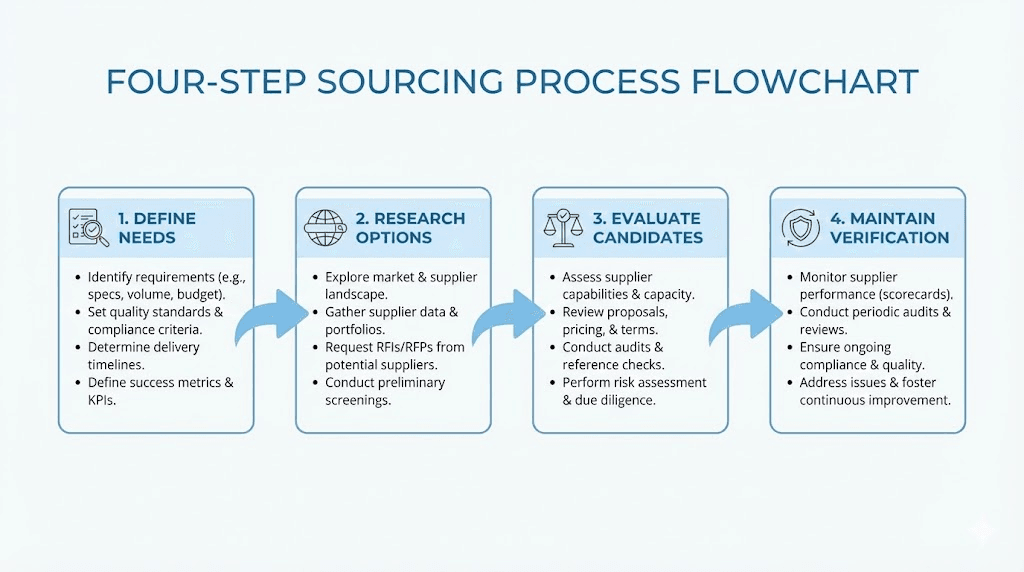
Step 1: Define Your Needs
Before searching, clearly articulate what you need. Specify the exact peptides required, including names and quantities. Determine purity requirements based on your research application. Establish budget parameters including acceptable price-per-milligram ranges. Consider timeline requirements, including how urgently compounds are needed.
Application determines appropriate sourcing channels.
Research requiring pharmaceutical-grade compounds with extensive documentation should explore compounding pharmacies with healthcare provider support. Laboratory research may find research chemical suppliers adequate with appropriate quality verification. Clinical applications require properly regulated sources regardless of convenience considerations.
Documentation requirements: Determine what documentation you need. Academic institutions may require specific vendor qualifications or purchasing approval. Personal research may prioritize COA availability. Some applications require batch-specific testing while others accept general product documentation. Clarifying requirements upfront guides vendor selection.
Step 2: Research Available Options
Online search: Search for peptide vendors using terms like "research peptides," "peptide supplier," or specific compound names plus "buy" or "source." Compile a list of potential vendors for evaluation. Note initial impressions regarding website professionalism, product selection, and visible quality indicators.
Community research: Search Reddit, peptide forums, and review sites for vendor discussions. Look for the specific peptides you need plus vendor names. Note consistent feedback patterns and recent reviews indicating current quality status. Community research often reveals issues not apparent from vendor websites.
Local options: Search for compounding pharmacies in your area if seeking prescription peptides. Contact local pharmacies about peptide compounding capabilities. Research peptide therapy clinics if interested in supervised protocols. The peptide therapy near me guide covers clinic identification strategies.
Step 3: Evaluate Candidates
Apply the vendor verification framework to each candidate source. Request sample COAs for products of interest. Evaluate testing comprehensiveness and laboratory credentials. Test customer service responsiveness through pre-purchase inquiries. Verify business legitimacy through address confirmation and company research.
Compare pricing across verified vendors.
Once quality verification narrows the field, compare pricing on equivalent products. Calculate price-per-milligram accounting for different vial sizes. Factor in shipping costs and any minimum order requirements. Consider bulk pricing if ongoing needs justify larger purchases.
Order strategically: Consider placing small initial orders to verify quality before larger purchases. Test shipping times, packaging quality, and product appearance. If possible, arrange independent testing of initial orders to verify COA claims. Satisfactory initial experience justifies larger subsequent orders.
Step 4: Maintain Ongoing Verification
Quality consistency requires ongoing verification rather than one-time assessment. Monitor community feedback about your vendors for quality changes or issues. Compare new batch COAs against previous orders for consistency. Note any changes in product appearance, packaging, or documentation. Quality can vary over time as vendors change suppliers or reduce quality control.
Develop backup sources: Avoid dependence on single vendors by maintaining relationships with multiple quality sources. Having verified alternatives enables switching if primary sources experience quality issues, stock outages, or business problems. Diversification also provides pricing leverage through competitive options.
Peptide Quality and Storage Considerations
Finding quality peptide sources represents only part of the equation. Maintaining peptide quality after receipt requires proper handling, storage, and reconstitution practices. This section covers essential post-purchase quality maintenance ensuring research integrity throughout compound use.
Proper Peptide Storage
Lyophilized storage: Unreconstituted lyophilized peptides maintain stability longest when stored properly. Keep unopened vials at -20°C for long-term storage, though many peptides remain stable at refrigerator temperatures (2-8°C) for months. Avoid repeated freeze-thaw cycles by storing vials intended for near-term use at refrigerator temperature while keeping long-term supplies frozen.
Light sensitivity affects most peptides.
Store all peptides protected from light in original packaging or amber containers. UV exposure can degrade peptide bonds and reduce potency. Opaque storage containers or refrigerator storage naturally provides light protection. Never leave peptide vials exposed to ambient light for extended periods.
Reconstituted storage: Once reconstituted, peptide stability decreases significantly. Most reconstituted peptides remain stable for 3-4 weeks refrigerated, though this varies by compound. Some researchers freeze reconstituted peptides in single-use aliquots to extend stability. The peptide storage guide covers compound-specific recommendations.
Handling practices: Minimize exposure to air, heat, and contamination during handling. Work quickly when removing peptides from cold storage. Use sterile technique during reconstitution to prevent bacterial contamination. Replace stoppers promptly after withdrawing doses to minimize air exposure.
Reconstitution Best Practices
Choosing reconstitution fluid: Bacteriostatic water remains the standard reconstitution fluid for most peptides, containing benzyl alcohol preservative that prevents bacterial growth during multi-use periods. Sterile water works for immediate single-use applications but supports bacterial growth if stored. Some peptides require specific reconstitution fluids, so verify appropriate fluid for each compound.
Reconstitution technique: Add reconstitution fluid slowly along vial sides rather than directly onto peptide powder. Allow the fluid to gently dissolve the peptide without aggressive mixing. Swirl vials gently to promote dissolution but avoid shaking, which can damage peptide structures through mechanical stress. The peptide reconstitution calculator determines appropriate fluid volumes for desired concentrations.
Concentration considerations: Higher concentrations enable smaller injection volumes but may affect solubility for some peptides. Standard concentrations balance convenient dosing with reliable dissolution. Calculate concentrations enabling practical measurement of intended doses while staying within solubility limits.
Proper reconstitution ensures accurate dosing and compound stability throughout use. The peptide calculator helps determine appropriate volumes for various concentrations and dose requirements.
Assessing Peptide Quality Post-Receipt
Visual inspection: Examine received peptides before storage. Lyophilized powder should appear white to off-white, uniform, and properly sealed. Discoloration suggests degradation or contamination. Clumping may indicate moisture exposure during shipping or storage. Damaged seals suggest temperature excursion or handling problems.
Dissolution assessment: Quality peptides dissolve readily in appropriate reconstitution fluid. Difficulty dissolving, cloudiness after reconstitution, or visible particles may indicate quality issues. While some compounds naturally dissolve slowly, unexpected dissolution problems warrant investigation.
Functional assessment: Ultimately, peptide quality shows through research results. Compounds failing to produce expected effects despite proper protocols may have quality issues. Document results consistently to identify quality variations across batches or sources. Unexpected results merit considering compound quality alongside protocol factors.
Cost Considerations and Budget Optimization
Peptide research involves significant costs that budget optimization can help manage without compromising quality. Understanding cost structures and implementing strategic purchasing practices maximizes research value from available budgets.
Understanding Peptide Pricing
Price determinants: Peptide prices reflect synthesis complexity, purity levels, testing comprehensiveness, and market competition. Longer peptide sequences cost more to synthesize than shorter ones. Higher purity requires additional purification steps increasing cost. Comprehensive testing adds expense but ensures quality. Less common peptides often carry premium pricing due to lower production volumes.
Geographic factors affect pricing significantly.
Vendors sourcing from low-cost manufacturing regions may offer lower prices, though quality verification becomes more important. US-based synthesis typically costs more but may provide quality assurance advantages. Chinese manufacturing offers cost advantages with variable quality requiring careful vendor selection. The peptide cost calculator helps compare costs across different sources and quantities.
Volume considerations: Larger quantities typically offer better per-milligram pricing but require capital outlay and storage capacity. Balance bulk savings against storage limitations, stability considerations, and capital availability. Small initial orders verify quality before committing to larger bulk purchases.
Budget Optimization Strategies
Comparative shopping: Always compare prices across multiple vendors for equivalent products. Significant price variation exists for identical compounds from different sources. Use price-per-milligram calculations enabling accurate comparison across different vial sizes and concentrations.
Timing purchases: Many vendors offer periodic sales, particularly around holidays or during promotional periods. Following vendor communications and community discussions alerts researchers to saving opportunities. Stocking up during sales on stable compounds provides long-term savings.
Group purchasing: Some researchers coordinate purchases with colleagues to achieve bulk pricing thresholds. Splitting larger orders among multiple researchers provides per-unit savings while distributing capital requirements and storage needs.
Generic alternatives: For some applications, less expensive peptides may provide adequate results. Understanding whether premium purity levels genuinely improve research outcomes helps avoid paying for unnecessary quality. Research applications may not require pharmaceutical-grade purity that therapeutic uses demand.
Working with Peptide Therapy Clinics
For researchers interested in supervised peptide protocols rather than independent research, peptide therapy clinics offer medically managed access to various compounds. Understanding how these clinics operate helps identify appropriate clinical partners and optimize therapeutic outcomes.
What Peptide Clinics Offer
Medical supervision: Licensed healthcare providers at peptide clinics prescribe compounds, establish protocols, and monitor progress. This supervision ensures appropriate compound selection, dosing, and safety monitoring unavailable through independent sourcing. Medical oversight proves particularly valuable for complex protocols or individuals with health considerations affecting peptide use.
Pharmaceutical-grade compounds: Clinics typically source peptides from compounding pharmacies providing pharmaceutical-grade quality with full regulatory compliance. This sourcing eliminates quality verification burden while ensuring legal access to prescription peptides unavailable through research chemical channels.
Clinics simplify the peptide experience considerably.
They handle sourcing, dosing calculations, protocol design, and ongoing adjustments. Patients receive ready-to-use compounds with clear administration instructions rather than managing reconstitution, storage, and protocol design independently. This convenience suits those prioritizing simplicity over hands-on control.
Telemedicine options: Many peptide clinics operate primarily through telemedicine, expanding access beyond geographic limitations of physical clinics. Video consultations enable nationwide access to peptide-prescribing providers regardless of local clinic availability. This telemedicine model effectively answers "peptides near me" concerns through virtual presence.
Selecting a Peptide Clinic
Provider credentials: Verify clinic providers hold appropriate medical licenses in good standing. Look for relevant specialization or training in peptide therapy, hormone optimization, or anti-aging medicine. Board certifications in relevant specialties suggest deeper expertise than general practice backgrounds.
Protocol sophistication: Quality clinics develop individualized protocols based on patient assessment rather than one-size-fits-all approaches. They should explain their assessment process, how they select compounds, and how they adjust protocols based on response. Generic protocols applied uniformly suggest limited expertise.
Monitoring practices: Appropriate clinics monitor patient progress through follow-up appointments and laboratory testing. Ask about monitoring frequency, what markers they track, and how they respond to adverse effects. Clinics providing compounds without ongoing monitoring prioritize convenience over safety.
Cost transparency: Understand total costs including consultation fees, compound costs, testing requirements, and follow-up charges. Some clinics bundle services while others charge separately for each component. Compare total costs rather than focusing on individual line items.
How SeekPeptides Supports Your Sourcing Journey
SeekPeptides provides comprehensive resources supporting informed peptide sourcing decisions regardless of your preferred access channel.
The extensive peptide education library covers individual compounds, mechanisms, protocols, and applications enabling thorough research before sourcing decisions. Understanding what you're buying proves essential for vendor evaluation and quality assessment.
Vendor comparison resources help navigate the competitive marketplace. Detailed reviews examine quality documentation, pricing, customer service, and community reputation across major suppliers. These comparisons save research time while identifying reliable sources.
SeekPeptides calculator tools support protocol planning and cost optimization. The peptide calculator, reconstitution calculator, stack calculator, and cost calculator help plan purchases and protocols precisely.
Compound-specific dosing calculators provide targeted guidance for popular peptides. The BPC-157 dosage calculator, TB-500 dosage calculator, semaglutide dosage calculator, and CJC-1295 dosage calculator support protocol development for specific compounds.
The platform serves as a trusted hub for peptide research, connecting sourcing decisions with educational resources and practical tools enabling successful research outcomes.
Helpful Resources
In case I don't see you, good afternoon, good evening, and good night. May your sources stay reliable, your peptides stay pure, and your research stay productive. Join SeekPeptides for comprehensive sourcing guidance and quality verification resources supporting your peptide research journey.